Lebanon, 1958. Layla, a model wife and mother, is spending a carefree summer with her family in the sacred Qadisha Valley. As two French visitors arrive, the distant echoes of conflict begin to be heard across the country — barely audible signs, yet premonitions of the end of a world. Faced with these upheavals, Layla tries to redefine her destiny in a society where gender roles are strictly defined.
Thomas Bataille, the cinematographer, tells us about his work on the film.
How did you meet Carlos Chahine, the director? What appealed to you about this project?
It was his French producer, Chantal Fischer (13 Productions), who introduced us.
The screenplay was really well written, with a singular and very interesting female character — a blend of melancholy and determination. And the setting was obviously magnificent: the Qadisha Valley in northern Lebanon, with its monasteries, cedars and breathtaking light. Carlos has a very painterly vision of cinema. He thinks in terms of compositions and colour palettes. We quickly found common ground.
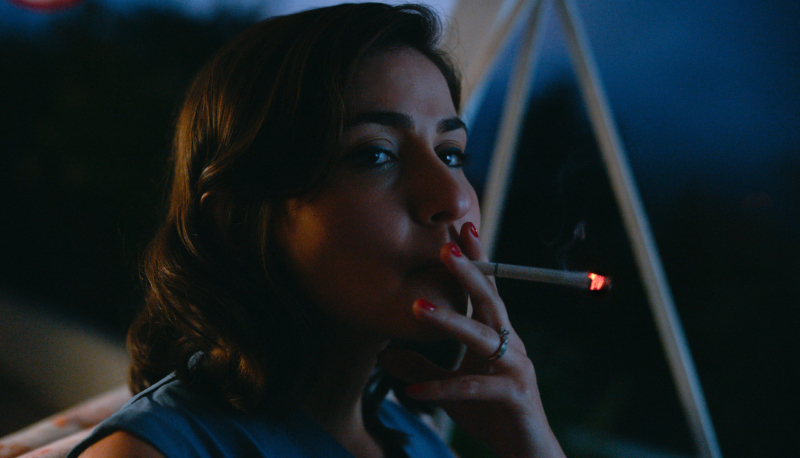
How did you approach the image with Carlos? What were your visual references?
Carlos had very precise references. He showed me paintings — in particular the work of Orientalist painters such as Maxime Du Camp and David Roberts, but also more contemporary painters. He also liked the photographer Sabine Weiss for her work on the Middle East. In terms of cinema, we discussed The Leopard by Visconti — for the sense of a world disappearing — and Atonement by Joe Wright, for the construction of a state of carefree bliss before the storm.
We opted for an ARRI ALEXA Mini with Cooke S4 lenses, which give a gentle, slightly warm rendering. We added a Classic Soft filter to soften the image without losing definition. The idea was to create an image that felt both luminous and slightly hazy, as if seen through the veil of memory.
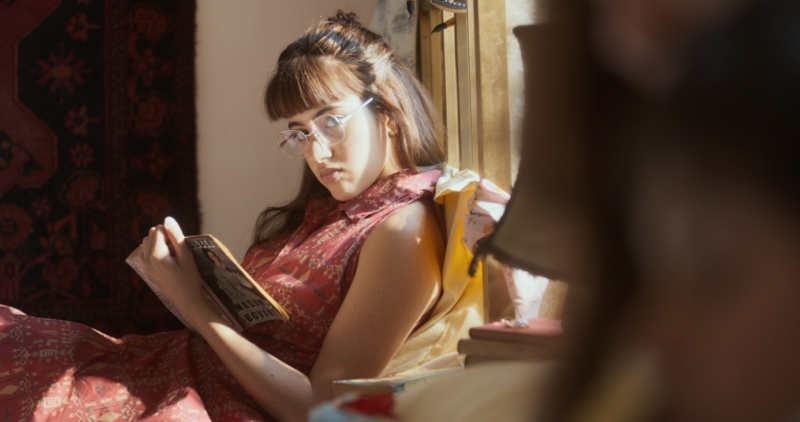
The valley is almost a character in its own right in the film…
The film was shot in the sacred Qadisha Valley in northern Lebanon. This valley is a genuine character in the film — a paradise, but one we also wanted to make unsettling. We spent a long time searching for the right vantage point over the village where the characters live (which is not the one where the street scenes were filmed). In this magnificent valley, we found many “postcard” images, but it was important that the village be situated on the edge of a precipice, a fault line — that one could feel an unstable equilibrium.
With that same thinking, we chose 1.85:1 over scope, which would nonetheless have looked very beautiful. We felt that in practice, the wider format would have forced us to pull out every time we needed to film Charles, a child, alongside an adult. The 1.85 allowed us to stay closer.
You used a Panasonic GH5 as a secondary camera. How did that work alongside the ALEXA?
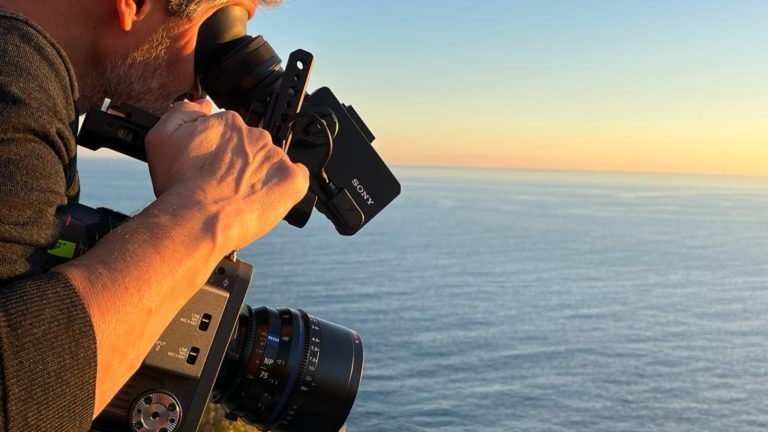
I always carry a small camera with me — I use it for location scouting, but also regularly for shots that end up in the film. It lets me capture landscapes discovered during recces that we will never see again, seize details we would not have time to shoot with the full crew, and grab magical moments when the light is exceptional — at sunrise, at dusk, in fog — without needing the main camera. I do not use it to film the actors, but thanks to its good colour sampling, it blends well with the main camera. Several shots in The Night of the Glass of Water were filmed with the GH5, including the still below.
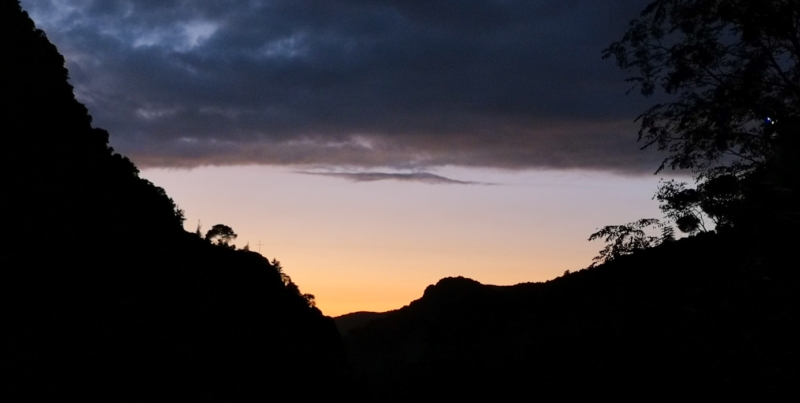
One evening, leaving a location
Can you tell us about the lighting? How did you approach it in practical locations?
Lebanon does not have the same infrastructure as France in terms of lighting equipment. We had to adapt and be inventive. For the day interiors, we largely relied on natural light, supplemented by bounced sources and negative fill to sculpt the faces. For the night scenes, we sometimes shot with an Arrimax 18 kW in the Sheikh Daoud house, which had very large windows.
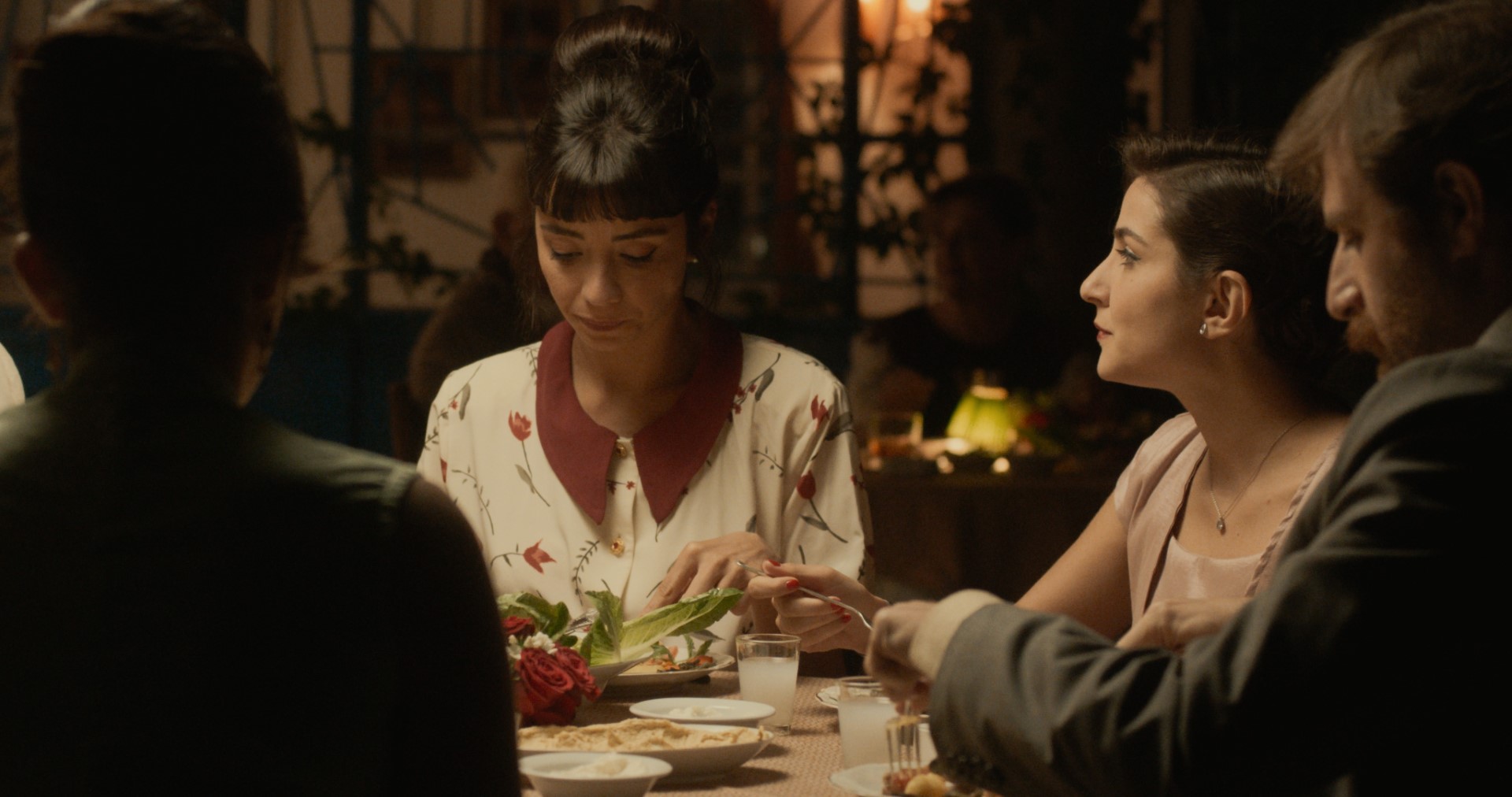
For a scene set in a restaurant, Carlos was after an atmosphere evoking 1960s America — bright and joyful (with Nat King Cole playing in the background). This ambiance had to contrast with the boredom felt by Layla.
Since it was a long conversation scene full of small talk, I suggested being able to move around the table. This allowed us to glide at times from the speaker to the listeners, all in a single shot.
We suspended a 6 kW space-light base (a large ring of Grid Cloth) above the table, supplemented by a SkyPanel 60 overhead, to create a soft, warm top light. Practicals on the tables added warmth and sparkle to the eyes. I like this approach of building a general ambiance and then placing practicals to add pockets of light and character.
How was the grade handled?
The grade was done at home on DaVinci Resolve. We built a warm palette for the daytime scenes and shifted progressively toward cooler, more desaturated tones as the political situation darkens. The idea was that the image should subtly reflect the loss of innocence — the carefree golden light of the early scenes gradually giving way to something more muted and anxious. Carlos was very involved in the process and had a very clear vision of the arc he wanted.