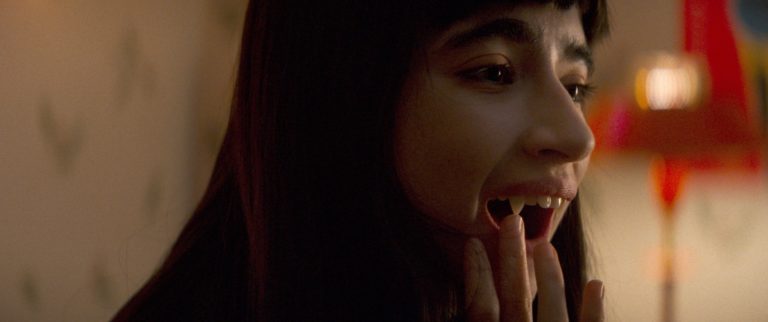
Vampire humaniste cherche suicidaire consentant (Humanist Vampire Seeking Consenting Suicidal Person), released in cinemas last March, has received numerous distinctions — notably at the Festival Chefs Op’ en Lumière, where it won both the Jury Prize and the Audience Award.
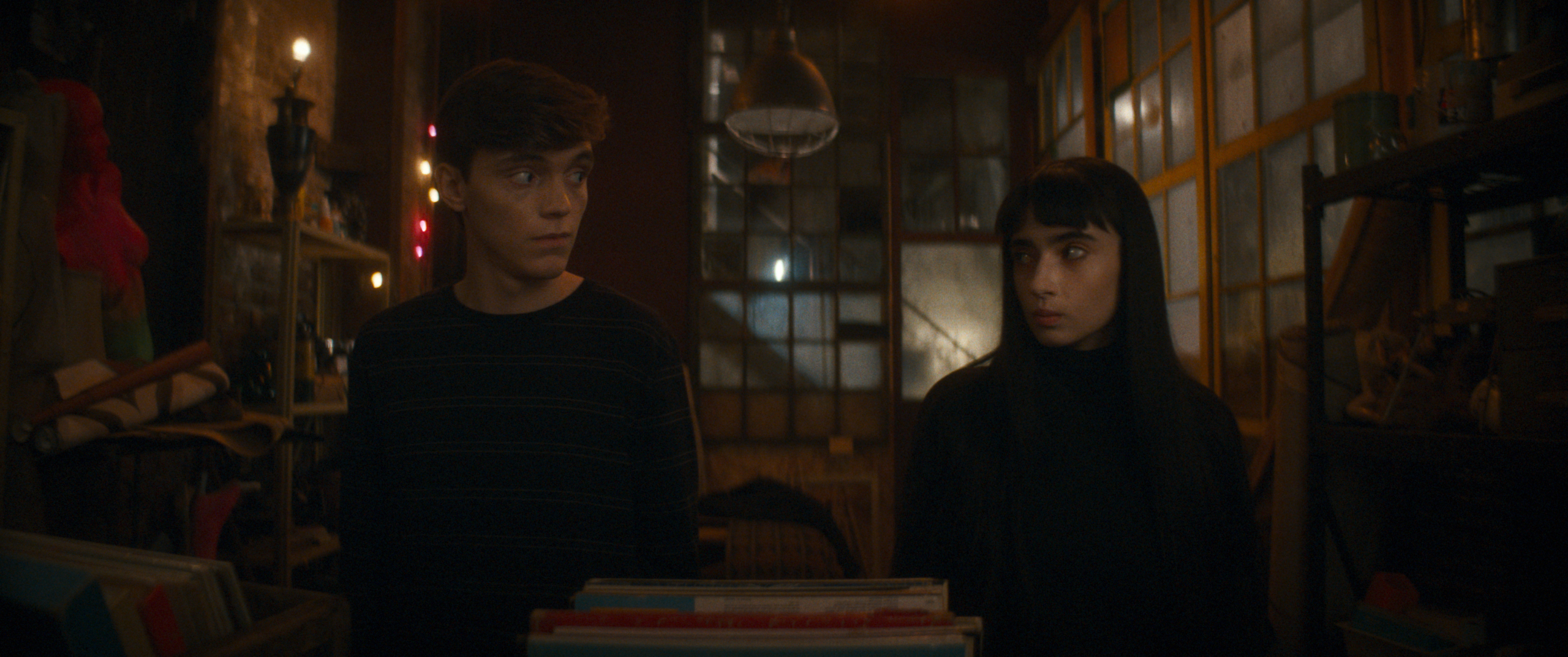
Produced in Quebec and directed by Ariane Louis-Seize, the film depicts the encounter between two very different teenagers. Sasha is a vampire who cannot accept her condition — she has too much heart to kill anyone. Paul, meanwhile, is a troubled adolescent contemplating ending his life. Through a twist of fate, they get to know each other during a nocturnal road trip full of colour.
Shawn Pavlin, who shot the film, kindly agreed to an interview in which he looks back at his aesthetic and technical choices.
Alexi Bouygues: Could you tell me how you approached the preparation of the film with Ariane Louis-Seize?
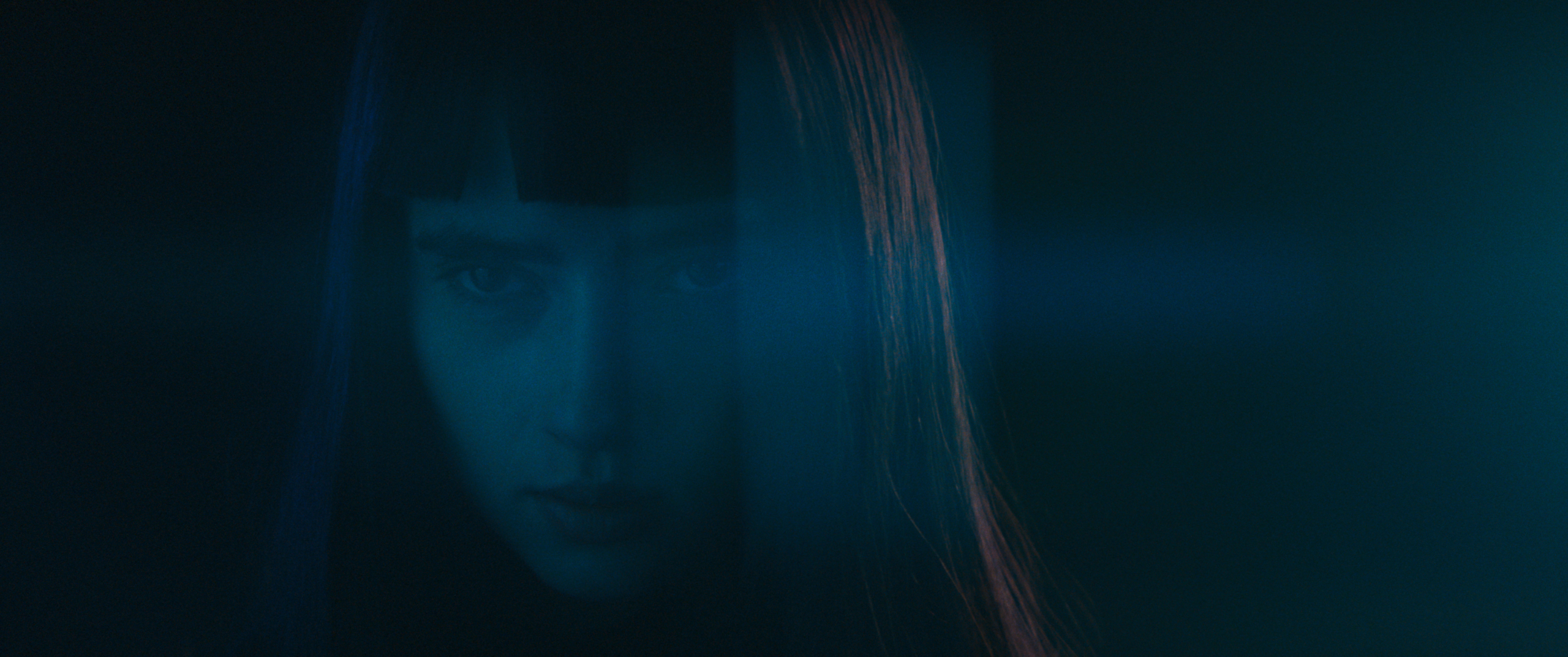
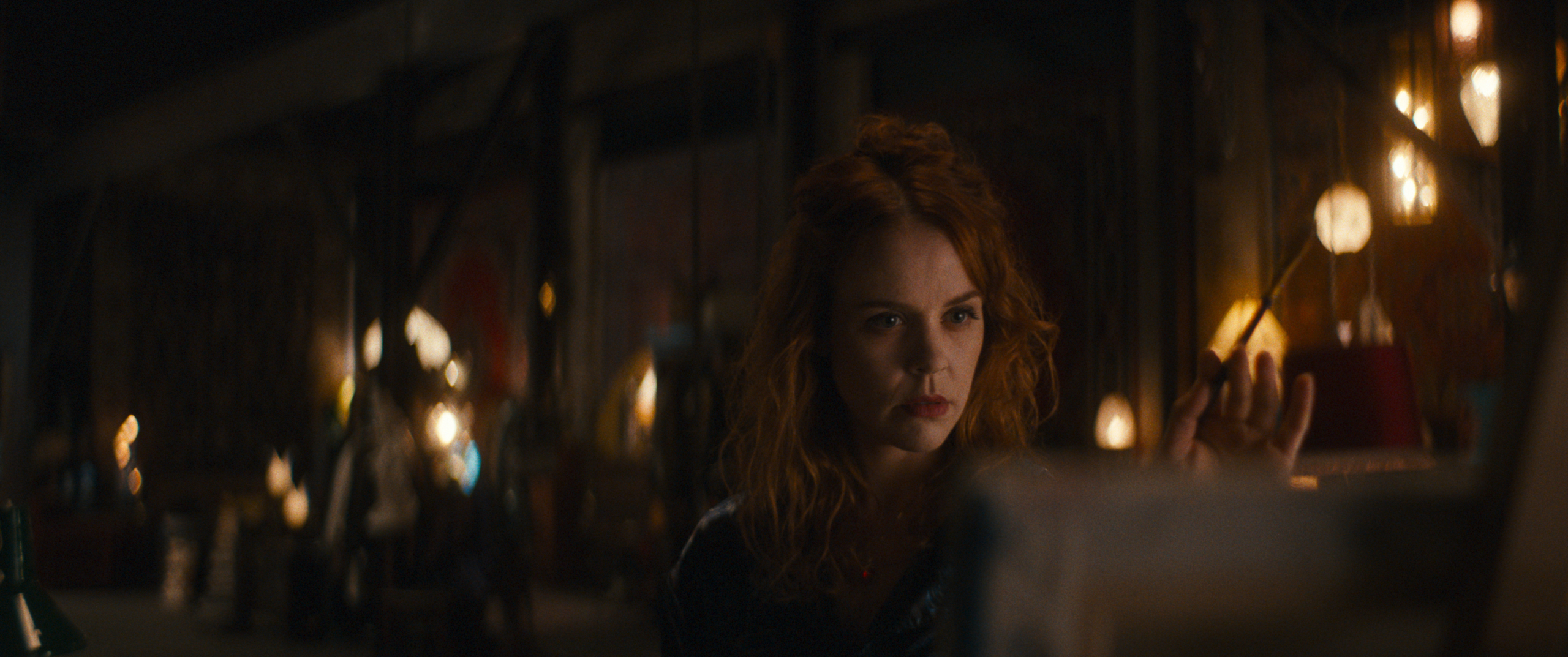
Shawn Pavlin: We are used to working together — we went to film school together. I shot her short films before Vampire humaniste. Each time, the prep is very organic. We start by exchanging references — paintings, photographs, films — and we gradually build up a visual world. For this project, we particularly discussed colour and the idea of nocturnal warmth. We didn’t want a cold, dark vampire film. On the contrary, we were after something luminous and enveloping, even at night.
A.B: What were your key references?
S.P: We looked a lot at the work of Robbie Ryan, especially on films by Andrea Arnold. We also studied Moonlight by Barry Jenkins, shot by James Laxton. The use of colour in that film, and the way night is treated as a warm and living space, really resonated with what we wanted to do. We also referenced Let the Right One In by Tomas Alfredson — for the tone more than the image itself. We wanted to find that blend of tenderness and darkness.
A.B: What lenses did you choose, and why?
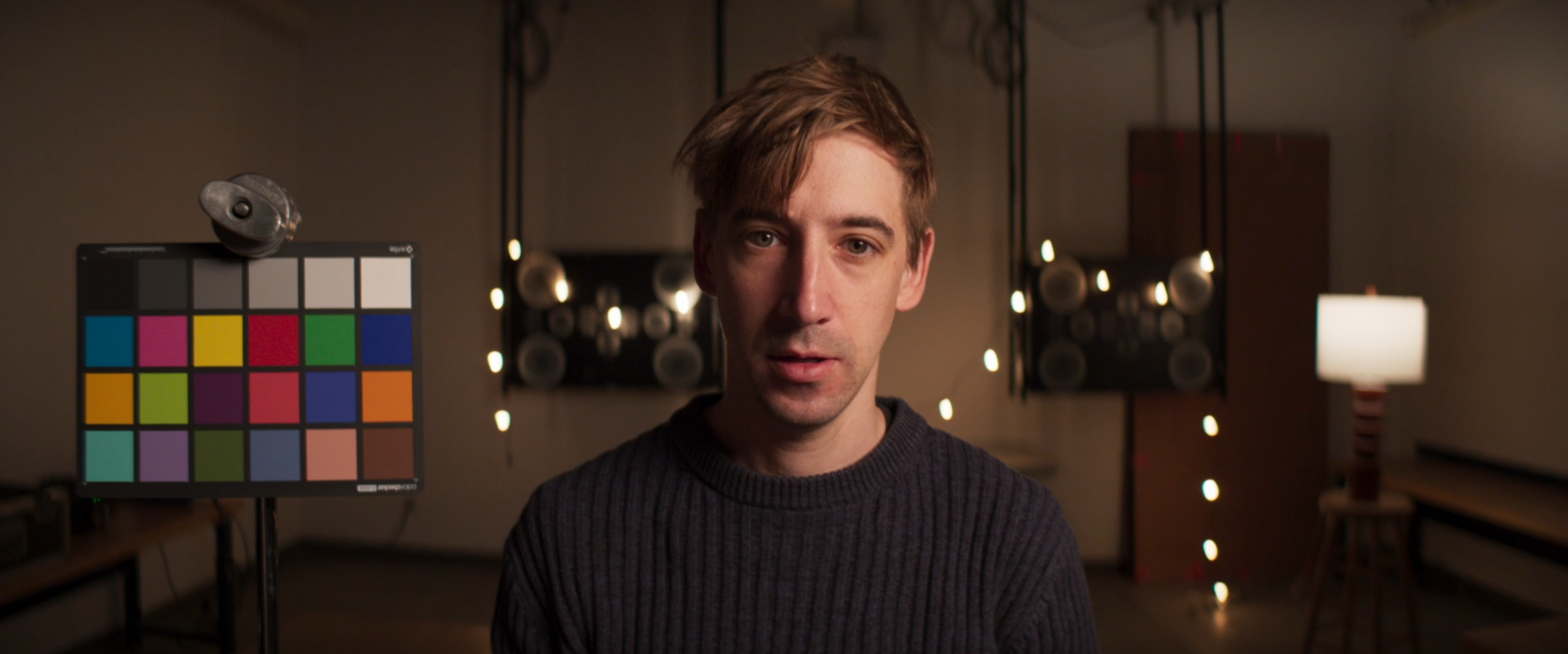
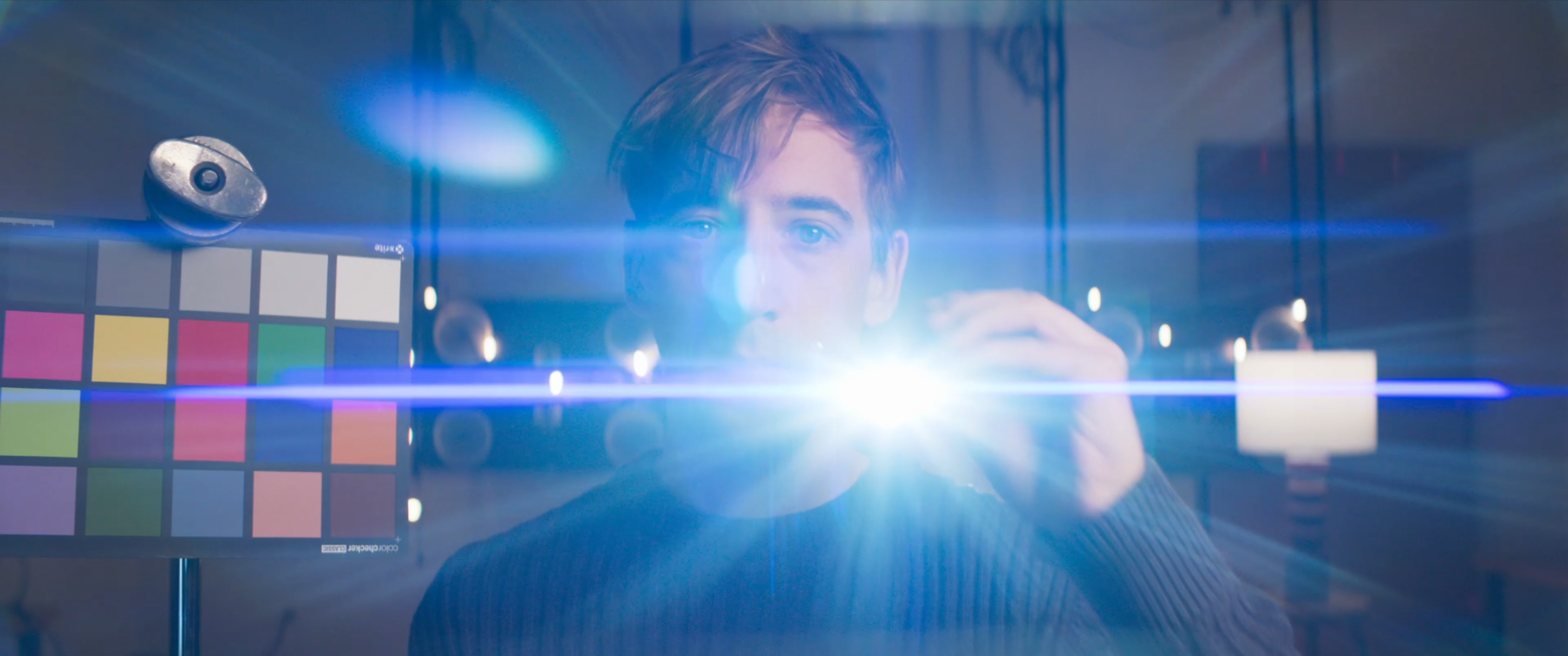
S.P: We shot anamorphic. I wanted to find lenses with a distinctive character — something slightly imperfect, with pleasing flares and a gentle fall-off. We specifically chose the Atlas Orion 2x series, which have a similar optical construction and were better suited to our shooting budget. I then looked for the “sweet spot” of each lens in the series. The challenge was to determine at which aperture we came closest to the desired image in terms of aberrations and definition.
I also like to think of certain test days as “shows” where everyone can try things out. For me, that is the moment when you can push too far into the film’s aesthetic and find what feels right.
Ludovic Dufresne, the production designer, would bring lots of props to try in front of the camera at the same time as I was testing different lenses and filters. This gave us a fairly precise idea of how costumes and make-up would render. It was important to find something that felt vampire-like but not too much — because it is a vampire film, but above all it is a coming-of-age movie, the story of two young adults searching for their place in life.
A.B: How did you approach lighting?
S.P: I built a show LUT upstream — a creative LUT that I used throughout the shoot as the basis for the look. This LUT allowed me to push things at the capture stage, knowing I could later recover detail. I like to think of the LUT as a safety net that lets me play with the limits of my image, and thus exaggerate effects during the shoot.
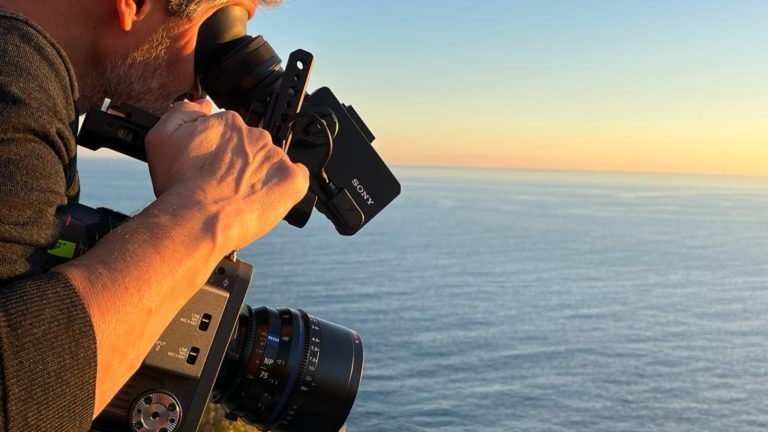
We shot on a Sony Venice set to a base of 2500 EI. Working at that sensitivity allowed me to play with the lower end of the sensor’s exposure curve. I liked the idea of pairing this modern way of working with the more classic look of the films of my childhood.
As a general rule, I always do my first pass with a light meter. I try to force myself to visualise the shot in my head before seeing an image on camera or on a monitor. This lets me form a first idea of what I want without being influenced by a pre-existing image. Then I look at the image on the monitor with my gaffer, and we refine the intensities and directions of light.
I like the idea of working as if I were a painter who first sketches his canvas before adding colour. That first light-meter pass is my sketch. Then, when I see the image on the monitor, I start refining.
A.B: How did you handle night as a visual space?
S.P: The key idea was to visualise the scene in my head before seeing an image on a monitor. The goal is not visual continuity — it is creating emotion.
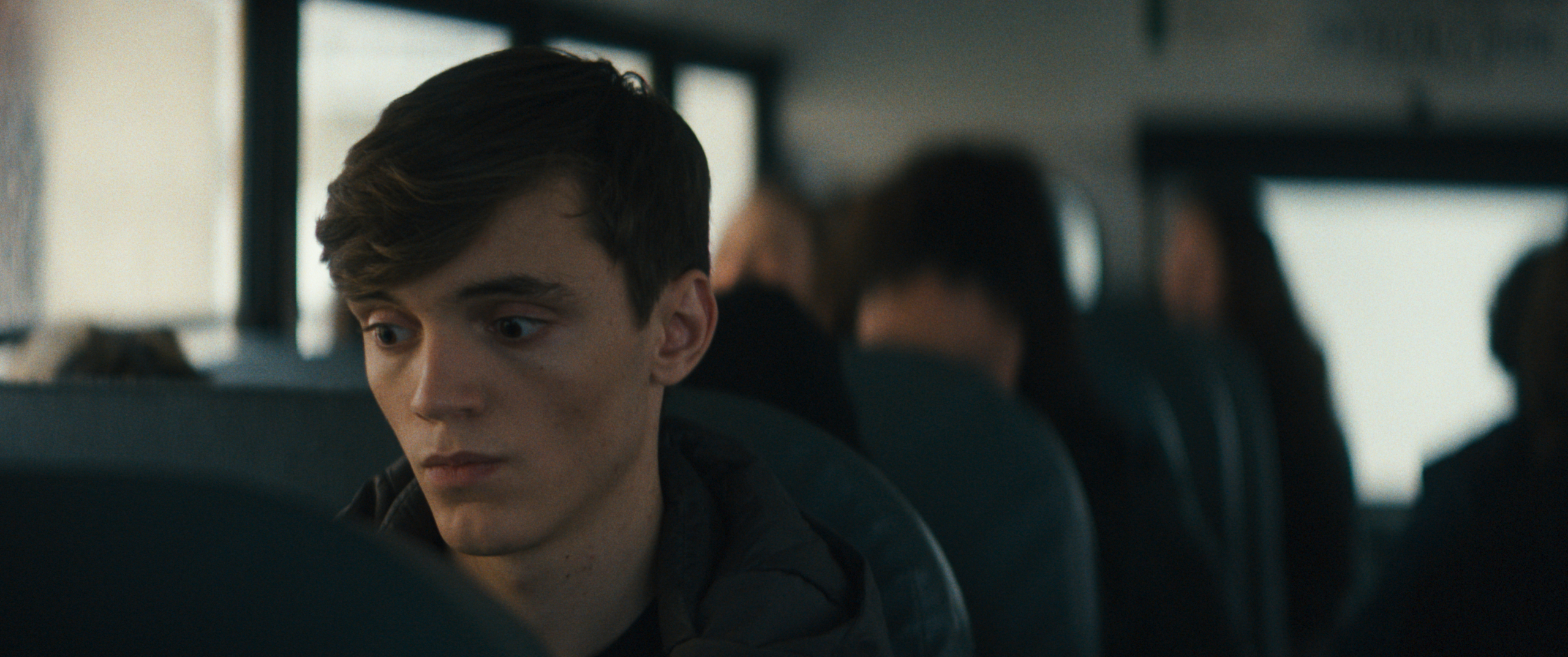
I think too easily, as a cinematographer, we want to make beautiful shots for the sake of beautiful shots. But in the context of fiction, you have to trust the story and support it by lighting a specific moment in time. The secret is sometimes managing to completely abandon reality, to forget for a moment the principle of consistency between sequences. In fact, it is in those moments that the job becomes truly interesting, in my view. For the bowling sequences, for example, we wanted a hazy, very low-key atmosphere. I wanted to accompany Sasha’s emotion as she sets foot in a bowling alley for the first time in her life, discovering what a “normal” teenage life looks like. To be in her point of view, we needed an excess of visual stimulation — neon lights, reflections, saturated colours.
A.B: Can you tell me about a specific scene and how you lit it?
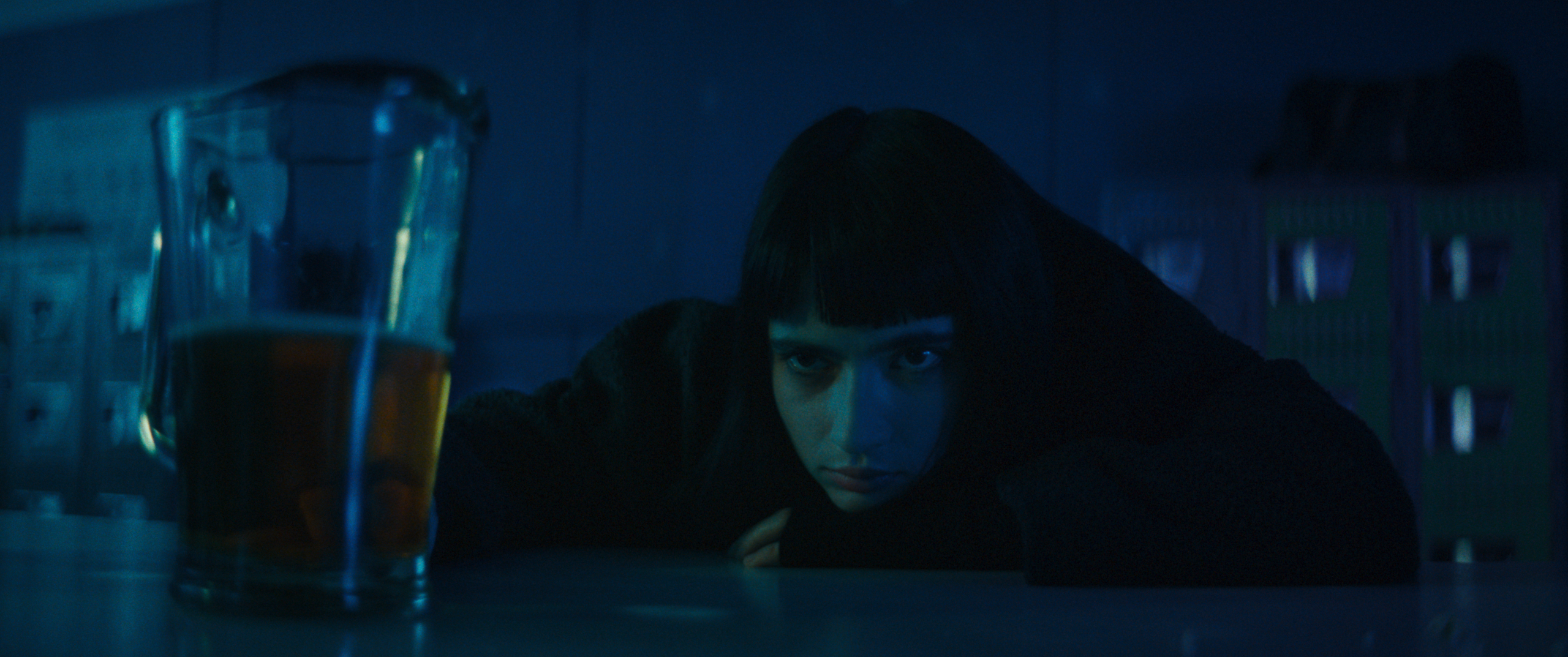
S.P: There is a scene in the film that takes place in Paul’s bedroom. It is the first time Paul and Sasha find themselves together in a more intimate setting. I remember we had started by lighting the two characters in a fairly classic way — key light, fill light and back light. Then I thought: we don’t want backlight for Sasha. I liked the idea that, being a vampire, she blends into the set.
A.B: Was it a difficult shoot?
S.P: Honestly, yes — because we shot exclusively at night on practical locations. In total, it was 29 shooting days during which we would wake up at 3 PM and be on set at 6 PM. We would start shooting when night fell, and carry on until sunrise at 6 AM. But I also have unforgettable memories. I remember one magical moment — the sequence where Paul and Sasha wander outside in the fog. It was 4 AM. We were all exhausted; it was the last sequence we had to shoot. The fog began to lift naturally, and suddenly everything came together — the light, the atmosphere, the emotion. We barely had to add anything. Those are the moments that make the job extraordinary.
A.B: How did the grading go?
S.P: The grade was done with Éric Tremblay at MELS in Montreal. We had a very solid base thanks to the show LUT. The work in grading was about refining the colour palette, deepening certain contrasts and ensuring consistency across the whole film. One of the key aspects was managing the nocturnal tones — finding the right balance between warm and cold so that the night felt alive without ever becoming artificial. We also worked a great deal on skin tones, which is always a delicate matter, especially in low-light conditions.
A.B: Any final thoughts?
S.P: I think what makes this film special is the sincerity of its approach. Ariane has a unique ability to tell a genre story while keeping a deeply human core. As a cinematographer, it is a privilege to work with a director who trusts you so completely. That trust allows you to take risks — and that is when the most beautiful things happen.