An intimate story with mystical overtones, Magnificat called for a visual language that could match its ambitions.
Noémie Gillot, who shot the film, explains how she rose to the challenge.
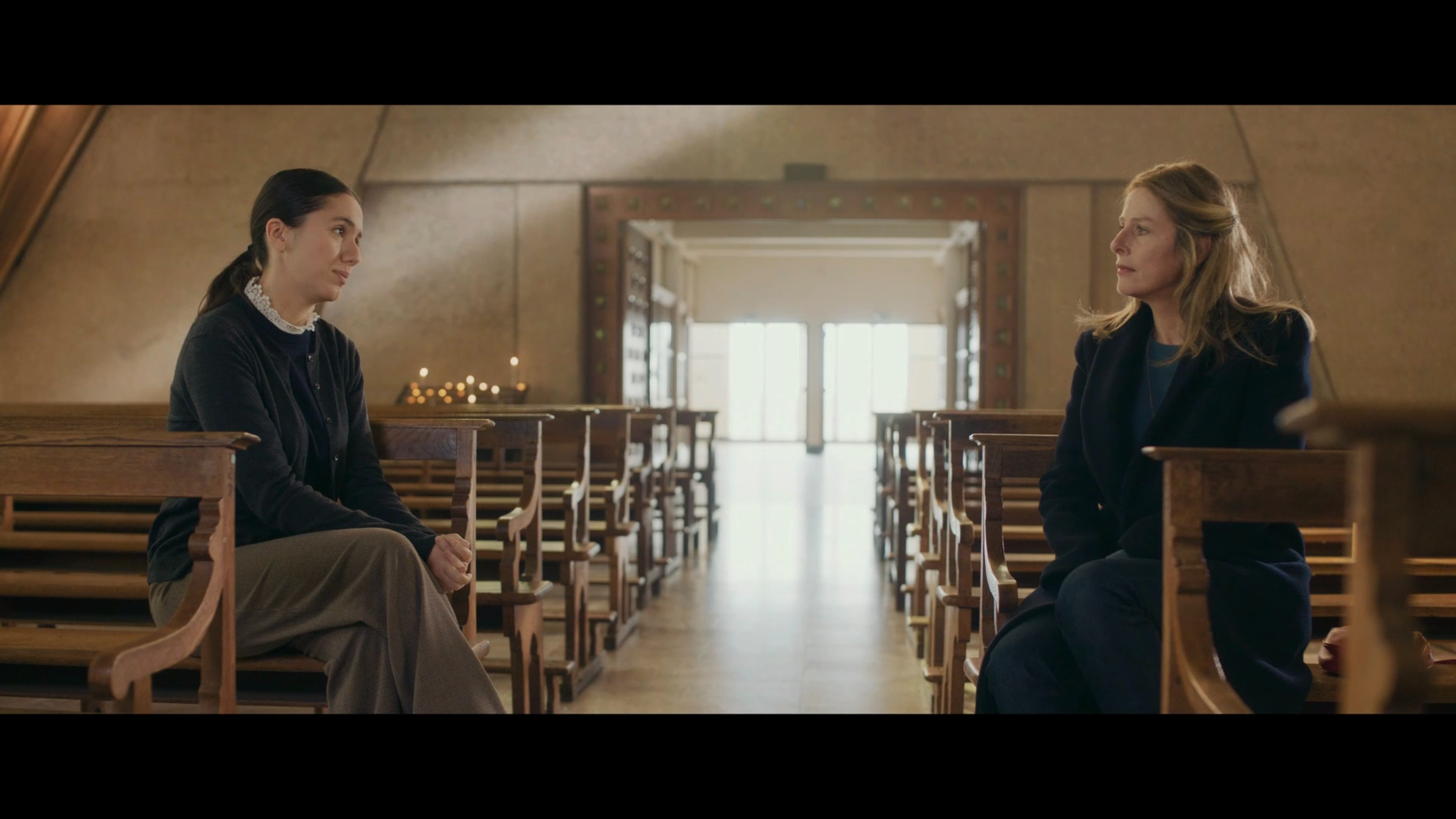
How did the visual approach come into focus?
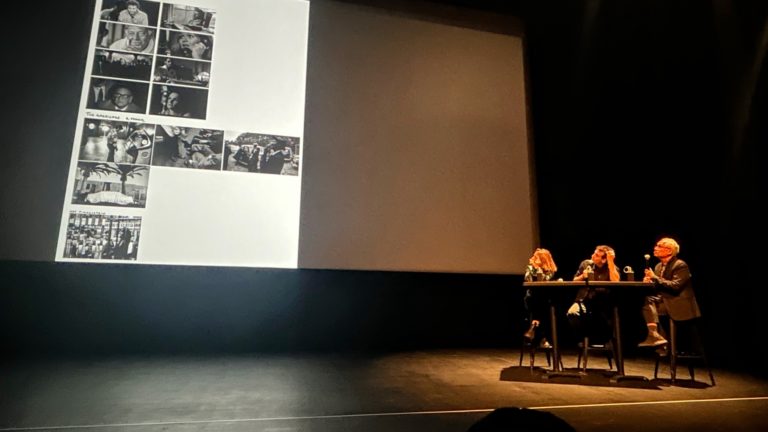
During prep, together with director Virginie Sauveur and production designer Lise Péault, we put together a hefty document of visual references — photographs, film stills, paintings — which served as a common language for discussing each type of set.
On my end, I would sort through these images and rework my location scout photos based on the effects we were after (day, night, dawn…)
Virginie had very precise ideas about the colours and motifs running through the film.
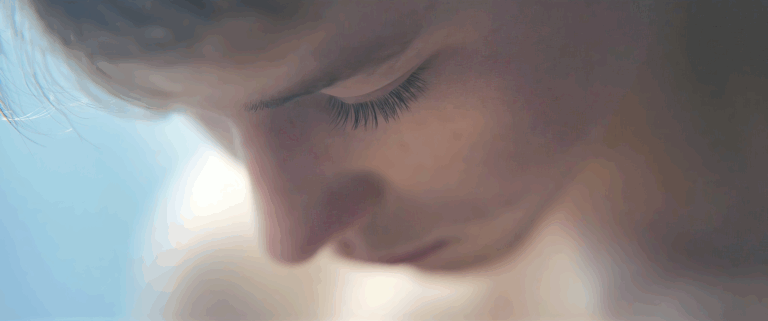
For instance, she wanted rays of light — more or less pronounced — to punctuate the sequences. It could be a crisp, bright beam marking the opening of the crematorium hatch on Charlotte’s face, or a soft sunbeam falling on the scarred body of her sleeping son, or a luminous trail escaping from a stained-glass window in the church where she talks with Anne.
During the shoot, we constantly had in mind this idea of a divine, luminous intervention, to be conjured here and there.
Why did you choose the Alexa Mini LF and Genesis G35 lenses for this film?
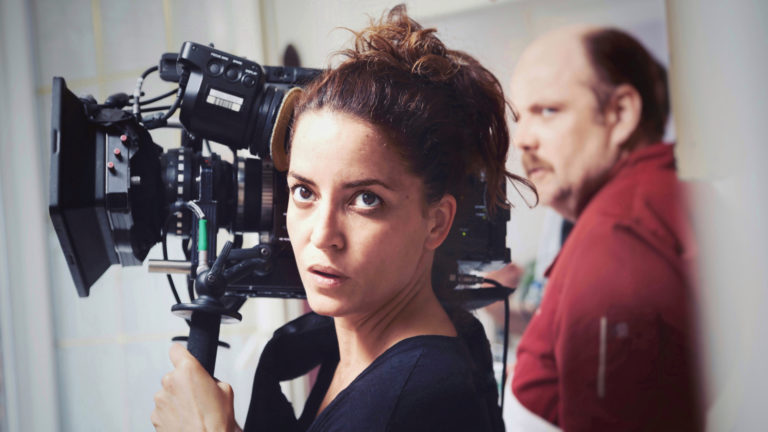
Shooting large format felt like a natural choice for this story — we needed to stay close to the lead actress while keeping fairly wide framings, across hugely varied spaces, whether vast churches, cramped camping cars, or night exteriors along the coast. We also had night scenes, so I needed a bit more sensitivity from the sensor. I’ve always loved the Alexa Mini; the LF had just come out and I have to admit I was itching to try it.
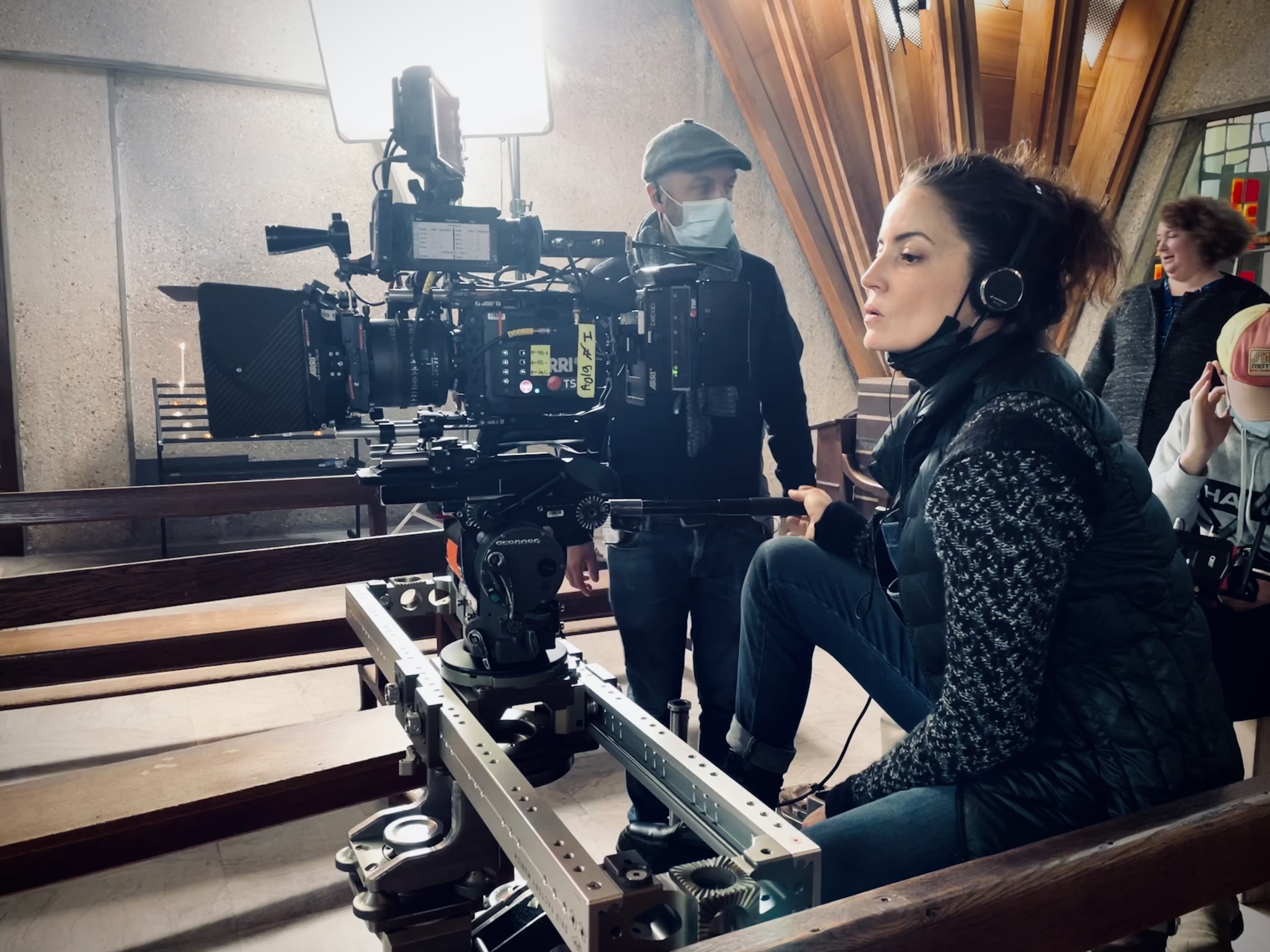
After running comparative tests at TSF, I was won over by the G35s, made in Germany by Gecko-cam. They have a slightly vintage, organic look while remaining very manageable — extremely lightweight, with a constant T1.4 aperture, and above all, I loved their texture, their flares… There were other lenses I liked, but these offered the best balance of look, practicality and budget. I’m glad I was one of the first to use them in France.
How did you handle the film’s very different visual environments — from modern and ancient churches to the nighttime exteriors at the travellers’ camp and by the sea?
Several sets were grouped together in the schedule: Father Foucher’s church, the sacristy, but also the crematorium corridor, the courthouse lobby, and the exterior of Thomas’s boarding school. Good use of time.
Overall, we maintained a sober, timeless aesthetic when filming the ecclesiastical settings (the presbytery, the diocese) — no doubt echoing the conservatism of the Church.
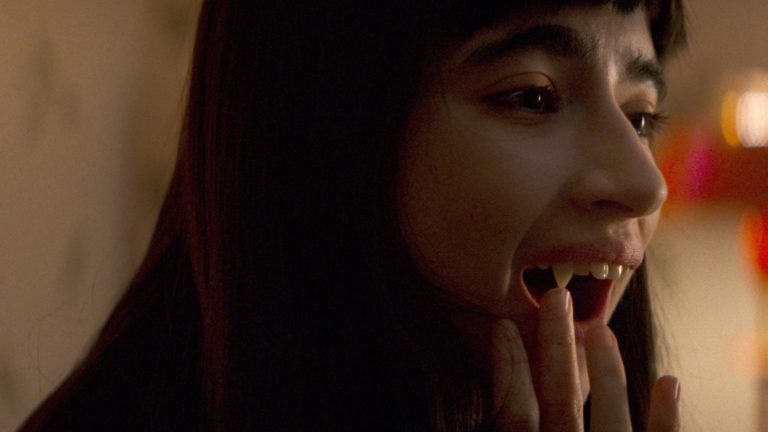
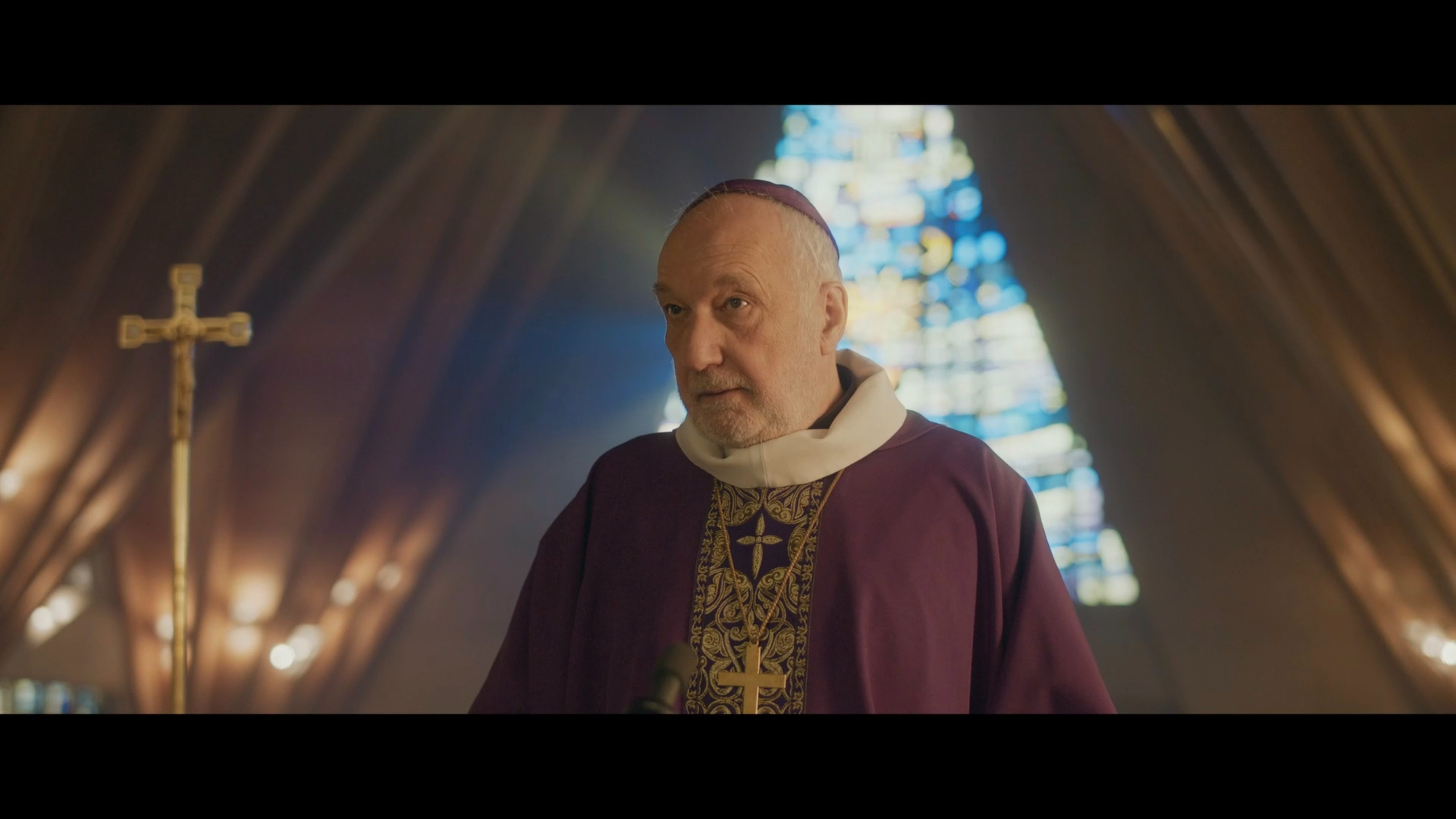
By contrast, Father Foucher’s parish with all its colourful modern stained-glass windows (not always easy to handle in terms of colour management, by the way!) and the travellers’ camp — with its fairy lights, car headlights, fire, smoke — allowed us to explore more vibrant, more colourful worlds.
Originally, I had planned to light the night beach sequence — where Thomas argues with Charlotte and plunges into the sea — with a balloon light. Unfortunately the wind picked up suddenly that evening, and I found myself having to shoot wide night shots on the beach with only a 4kW in bounce and two SkyPanels… At the time I was fairly anxious, but in the end I find there’s something interesting about the sea being a black, opaque, menacing expanse into which the teenager hurls himself. That leads us to the idea of subtly altering the texture of the image — whether by playing with blur, haze, diffusion or even slow motion — without radically changing the style, since that wasn’t what Virginie wanted.
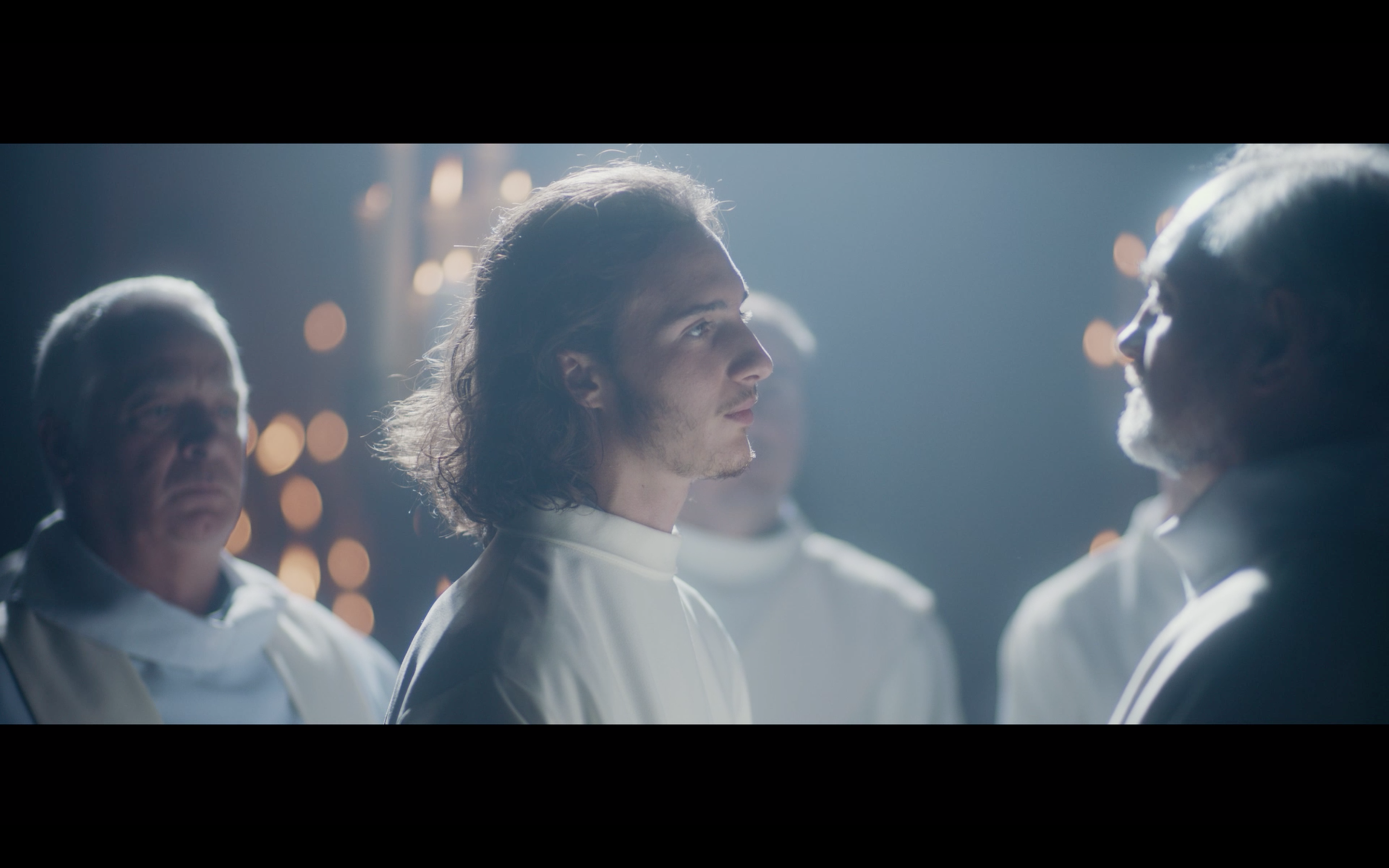
In one of the sequences, at the crematorium, practically the entire narrative is carried by the light — how did that come about?
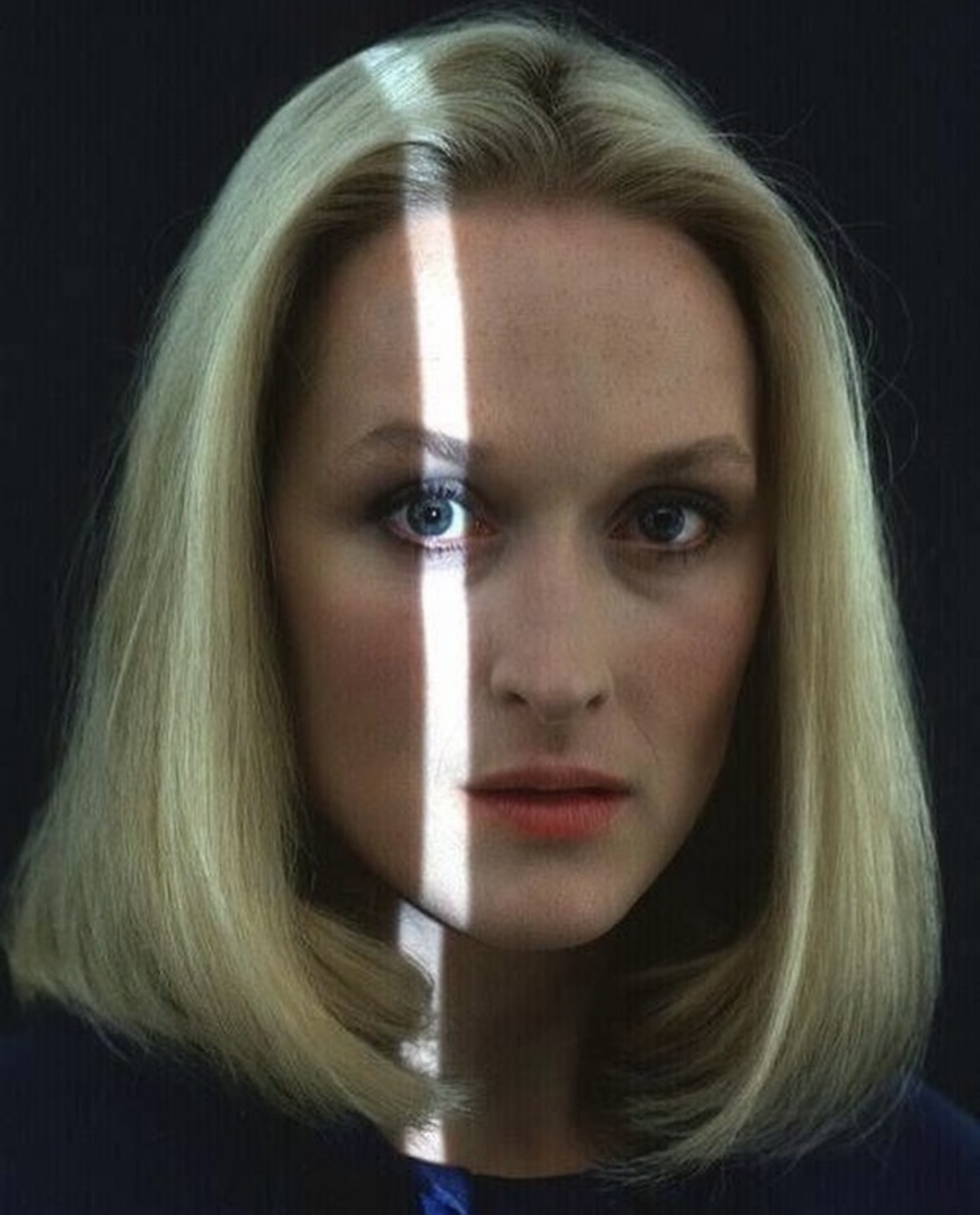
I think that sequence shot is my favourite in the film, because it has something enigmatic about it. From the start, Virginie had a very clear idea of what she wanted; her reference was a photograph of Meryl Streep taken by her son Henry Wolf. In it, you see the actress’s face crossed vertically at eye level by a sharp shaft of light, as if a door left ajar were letting through a sliver of bright light.
In the film, the cremation takes place off-screen — we only see the corridor leading to the furnace, then once the door closes, the burning of the coffin plays out solely through sound and the light effect flooding Charlotte’s face. The shot was operated on Steadicam by Marc Benoliel, so we could cross to the other side of the door. With my gaffer Adrien Chata, we opted for an automated stage light with motorised barn doors. We had to precisely calibrate the cut-off on the door’s window, then program the opening and closing rhythm on the iPad. Karin Viard had to position herself with great precision for the shaft of light to land exactly on her eye.
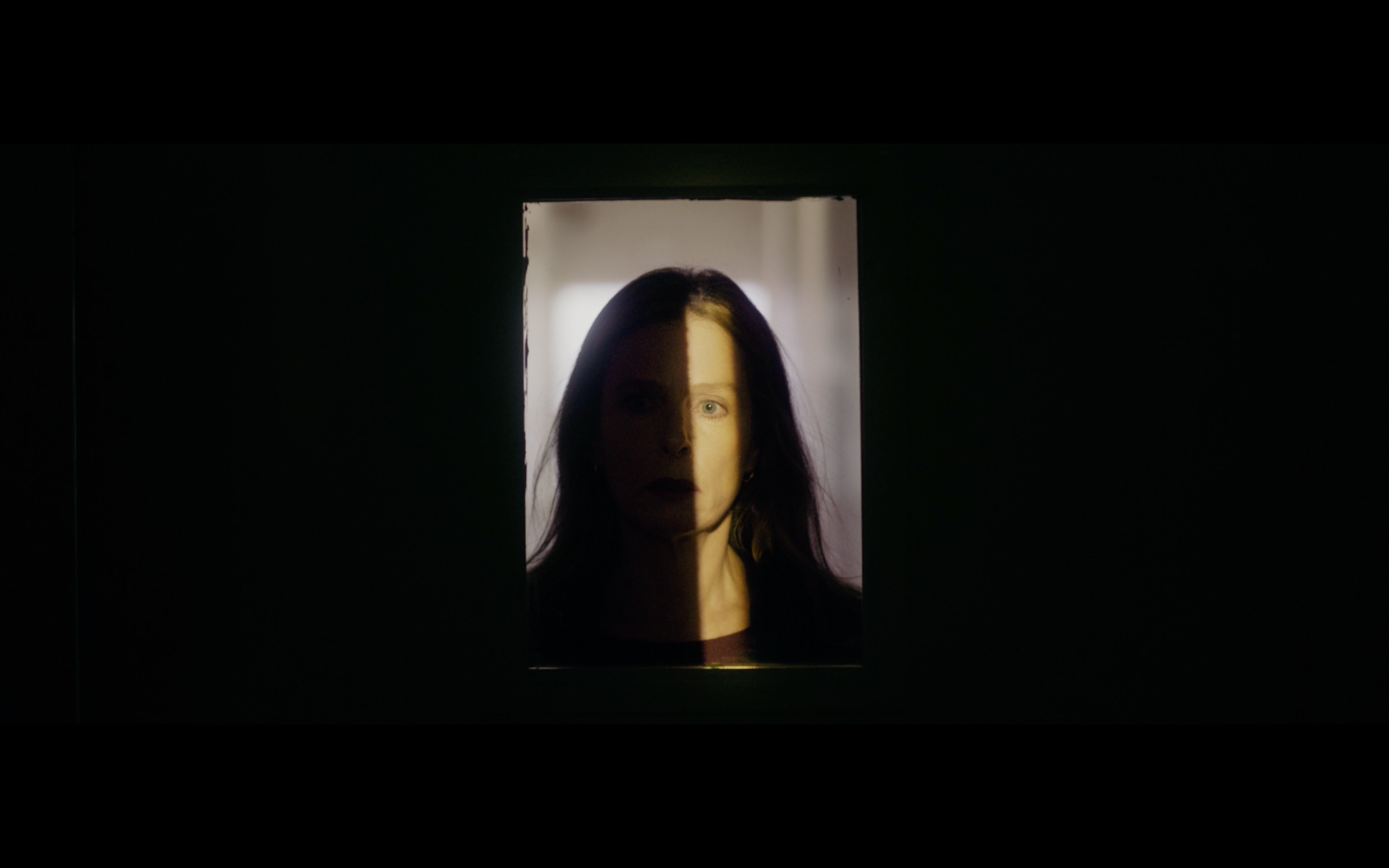
Since we had thought this effect through carefully and taken the time to test the light, this complex shot was actually filmed fairly quickly.
How did you work with Marine Lepoutre, the film’s colourist?
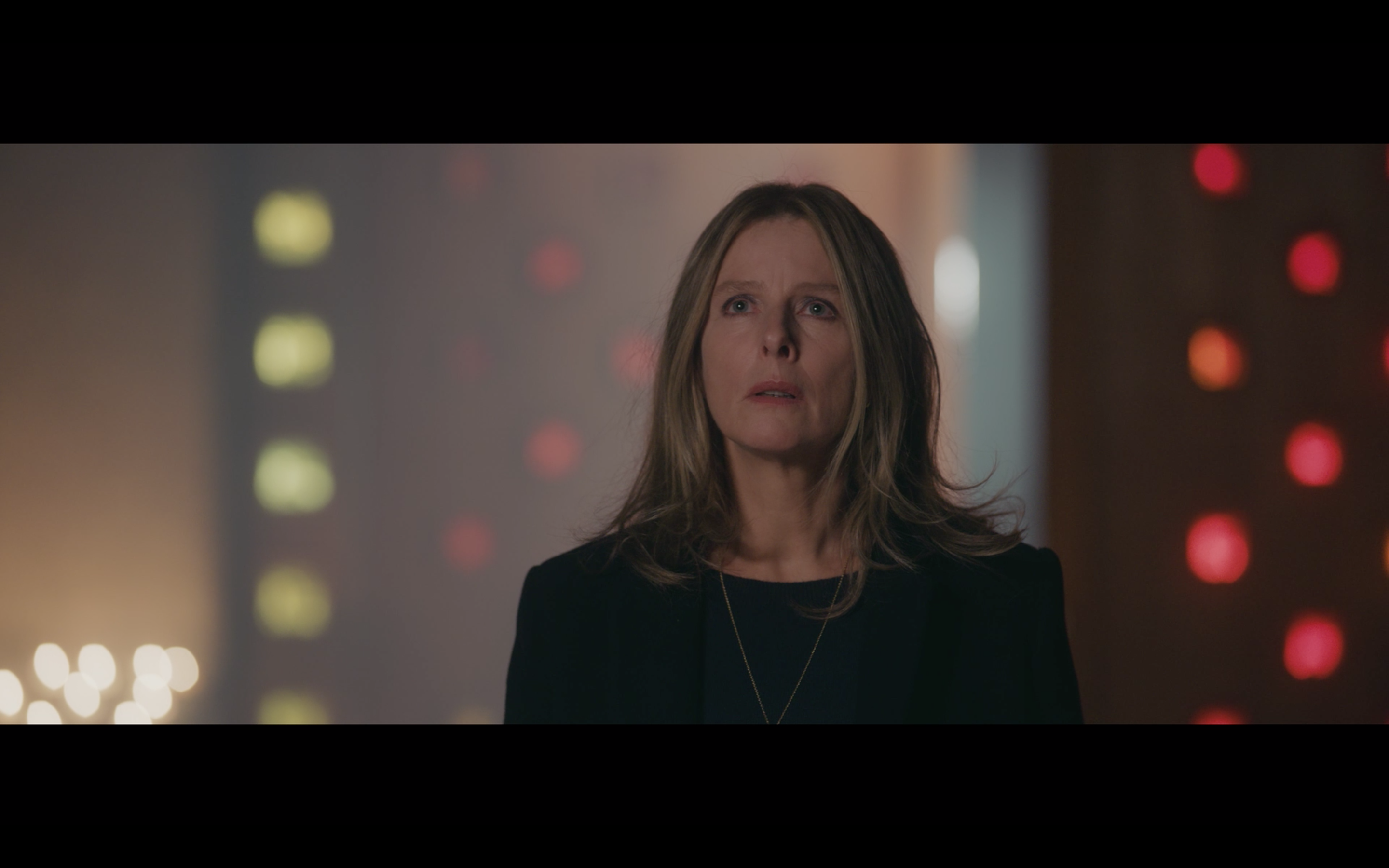
It was the first time I had worked with Marine Lepoutre and it went wonderfully. Right from prep we discussed the film’s mood document, then we created LUTs based on footage shot during tests at TSF with the actors and some set elements. There were about ten, which allowed me to adjust the contrast, density or colour temperature of each scene. In the end, during grading, we stuck fairly close to our original intentions — except, for instance, when cooling down interiors, since the presence of candles and wood in many sets (church pews, diocesan furniture) tended to push some shots warm.
Magnificat was your first experience as a cinematographer on a feature film — what did it bring you in terms of skills, knowledge and artistic vision? Has it changed the way you approach your craft on future projects?
It confirmed that thorough prep is the key to a smooth shoot. I discovered that working on a film with proper resources and an experienced crew is actually much easier and more comfortable than grinding through low-budget shorts where you’re constantly making compromises and improvising. So I was rather in awe, delighted to finally be working under “normal” professional conditions, and I also realised that before the shoot, many people had advised me to surround myself with seasoned technicians, “old hands.” But I preferred to trust my instincts and bring in long-standing comrades-in-arms — especially my first AC and my gaffer — and I was happy to find that this “gamble” was no gamble at all, given how supported I felt throughout the adventure.
Lastly, this first feature obviously brought me an enormous amount of self-confidence. Enough to shoot a second one the very next year, and with even more pleasure 🙂
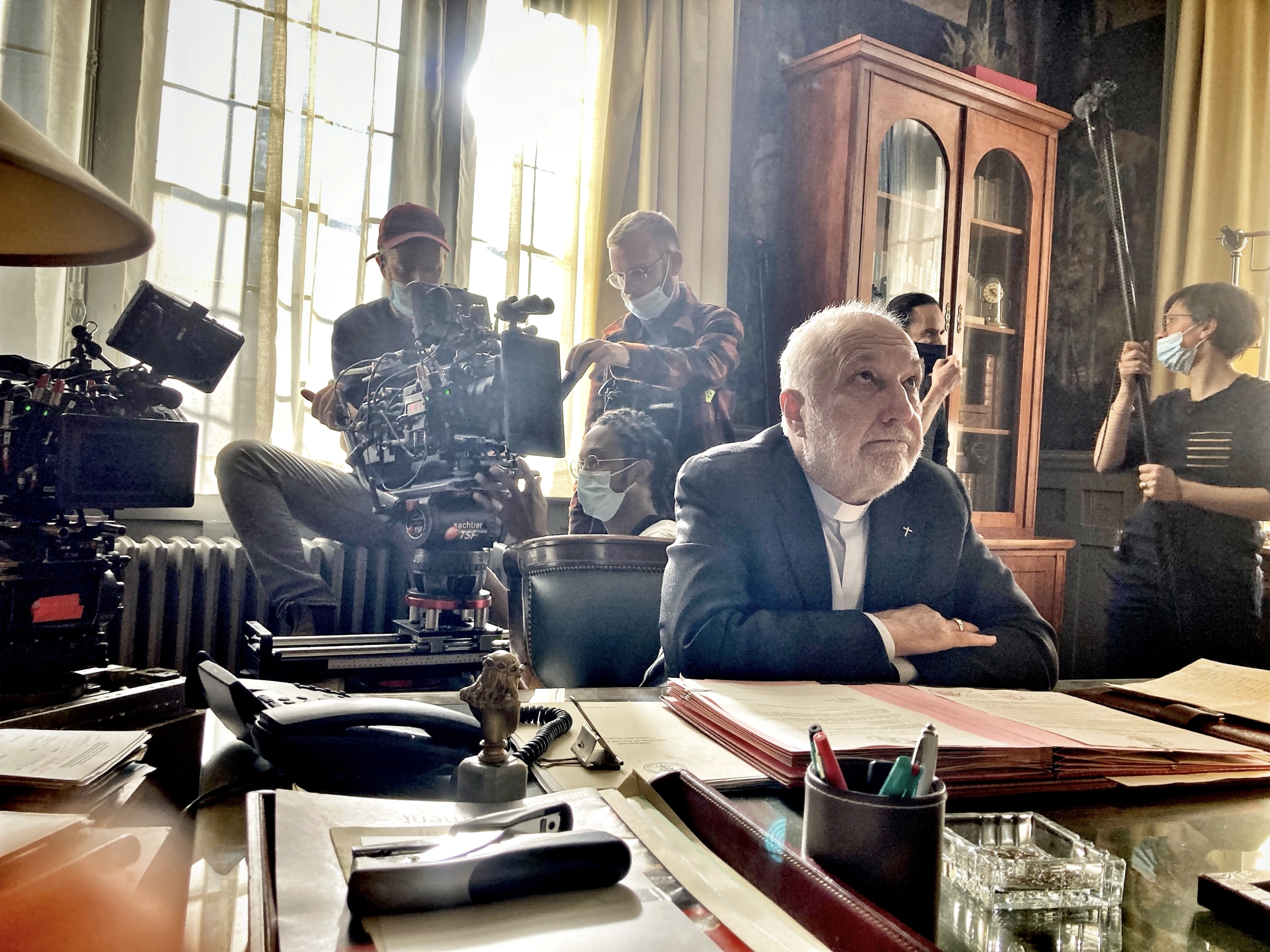
A huge thank you to director Virginie Sauveur, the producers and the entire crew, and especially the camera department:
Camera: Adrien Manant, Adrien Scheffer, Nina Richard
Electrics: Adrien Chata, Florian Desobeaux, Telma Langinieux (and additional crew Julien Malichier and Bastien Leroux-Rebut)
Grips: Eric Fodera and Félicien Forest
B Camera: Romain Le Bonniec, Simon Roche
Steadicam: Guillaume Quilichini, Marc Benoliel
Colourist: Marine Lepoutre
Post-production: Julie Lescat and United Postprod
Many thanks also to TSF: Frédéric Valay, Laurent Kleindienst, Danys Bruyère, Aurélien Branthomme, Aurélien Taquet, Serge Graber, Catherine Viejo, Franck Techer and all the teams, for their invaluable support!