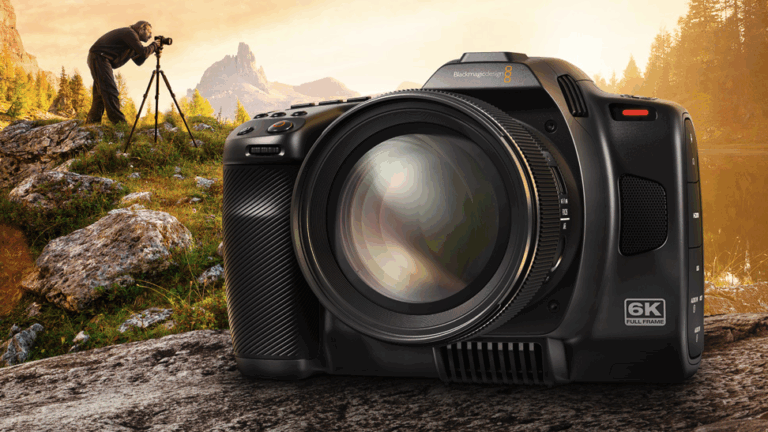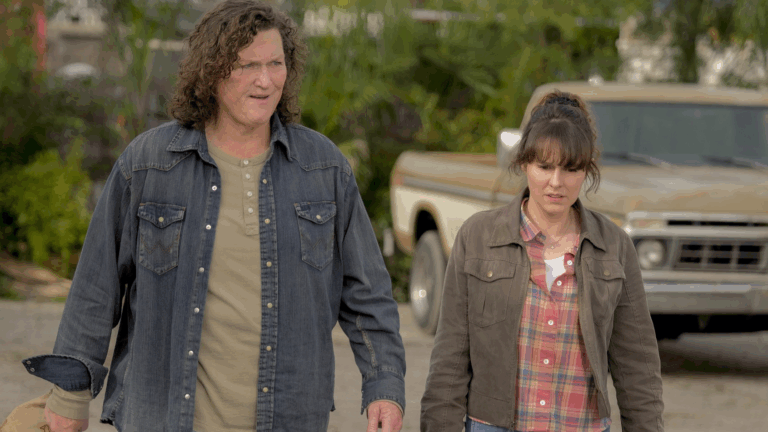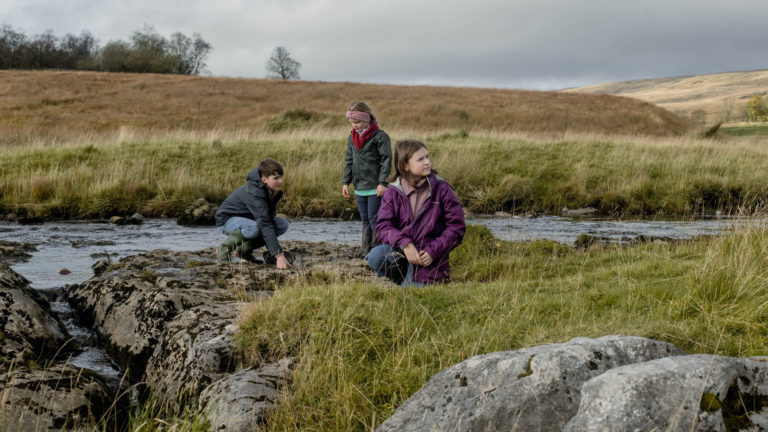
Dog is a visual exploration of memories and emotions, shot by Ben Saffer with Cooke S8/i prime lenses.
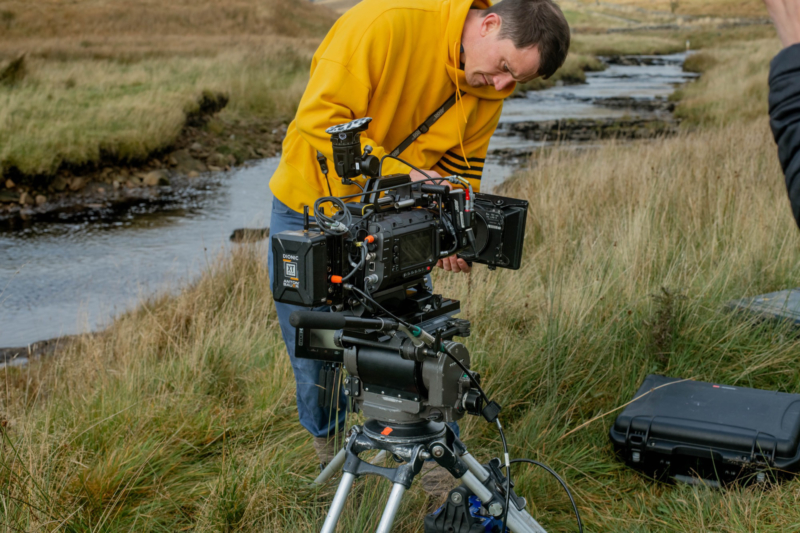
On his latest short film, Dog, director of photography Ben Saffer collaborated with director Caitlin McLeod and producer Jessica Palmarozzi of Flumeri Films to create a poignant story centered on childhood relationships. Saffer chose the Blackmagic URSA Cine 12K LF digital film camera to capture the emotional nuances and the landscapes at the heart of the story.
McLeod is a multi-award-winning theater director who has worked with the Globe, the Royal Shakespeare Company, and the National Theatre. She also directed the short drama One Like Him, also produced by Palmarozzi.
Saffer describes the film’s premise: “The parents are present but distant, leaving their children to fend for themselves. It’s a beautiful script about the struggle of three young siblings trying to connect with one another. I’ve shot more than 50 short films, and I always try to approach storytelling differently. This project offered me something truly unique.”
When he read the script, Saffer had the same instinct as McLeod: to shoot on 16mm film. “Since the film is set in the ’90s, it needed a slightly nostalgic look. But because of the shooting schedule, we opted for digital,” he notes.
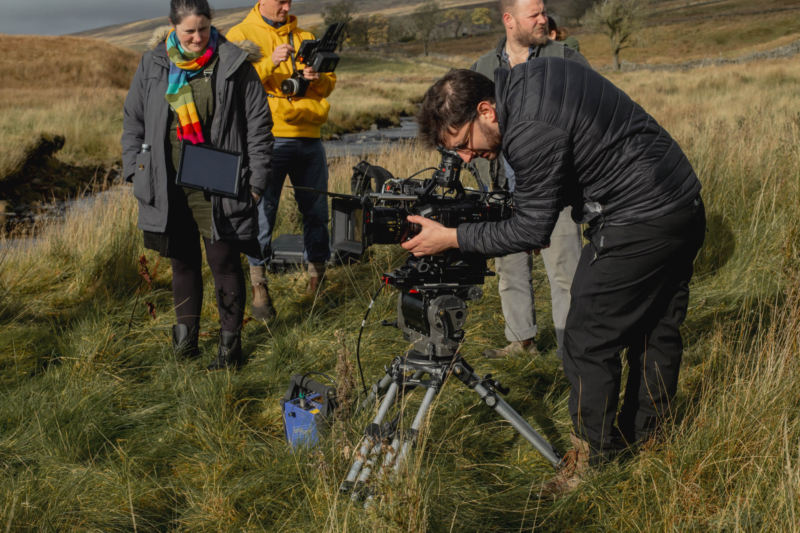
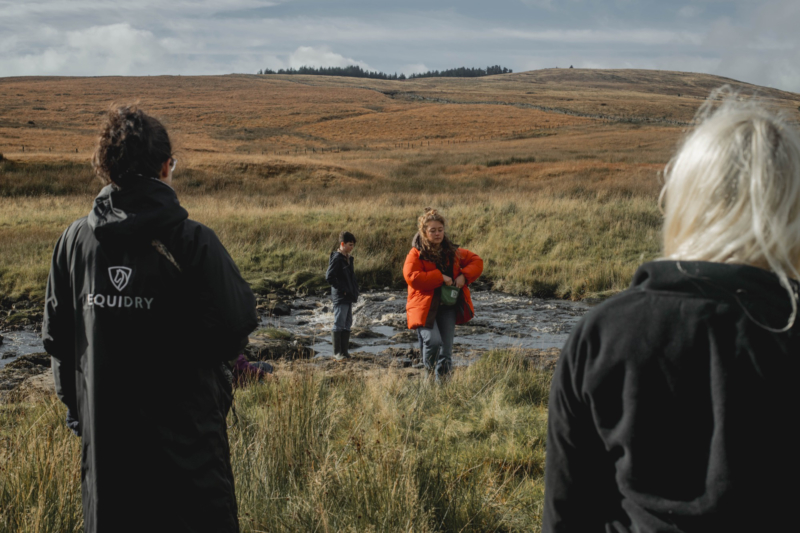
Because it is set in the 1990s, the film called for a visual style that was both nostalgic and realistic. Saffer ultimately chose the URSA Cine 12K LF, a decision driven by practical needs. “You have to be flexible when working with children. Digital let us keep rolling and not miss anything,” he explains. “The large format sensor also let us capture the vast Yorkshire landscapes, which were essential to the film’s tone.”
To soften the URSA Cine 12K LF’s high resolution, Saffer paired it with Cooke S8/i lenses and used their versatility to create a cinematic look. “We shot close to wide open to create a softness that balanced the camera’s sharpness. That gave us the nostalgic look we were after, filtered through the lens of my own memories of the ’90s.”
Creating emotional light
At the heart of McLeod’s visual storytelling was the concept of “pools of light,” with characters moving from shadow into lit areas. “Caitlin wanted the lighting to be functional rather than warm, which added emotional distance to the story,” Saffer explains.
This approach is evident in the scenes shot in the tent where the children gather. “The natural inclination was to light it warmly, like a holiday commercial. But Caitlin wanted something colder and more distant. Production designer Liz Simpson used props from the farm to heighten that atmosphere. For my part, I worked with minimal lighting to create just enough shadow to evoke a sense of isolation,” Saffer reveals.
Panalux supplied the lighting equipment, and Saffer used indirect lighting to create dynamic silhouettes for the interior scenes.
“In the farmhouse hallway, we lit through the bedroom doors, which created natural pools of light and interesting shadows. That let us build the environment subtly while staying focused on the children,” he explains. “Rather than lighting the whole room, we could direct the light through doorways or from the side, creating natural areas of light and shadow. The URSA handled these contrasts perfectly, giving us the silhouettes and depth we wanted.”
In a key scene shot in the kitchen, Saffer took a minimal lighting approach so that the camera’s sensitivity could work with the natural shadows. The children gather at the table for dinner, and when their mother comes in to serve them, her presence is felt but she isn’t seen. “We wanted to stay focused on the children while the background subtly fades away,” he notes.
Balancing technology and storytelling
The combination of high resolution and the flexibility of Blackmagic RAW allowed Saffer to capture an image that was both sharp and nuanced, one he describes as looking like a memory.
“The URSA Cine’s color science was a key factor in our choice,” Saffer reveals.
He adds: “The Blackmagic workflow is very intuitive and consistent. It let us capture incredibly rich skin tones and color textures true to the ’90s setting.”
Working in Blackmagic RAW Q1 (constant quality) at 8K, Saffer was able to maintain high image quality while keeping file sizes suited to the film’s independent budget. “BRAW is one of the best codecs available, because it strikes an excellent balance between quality and storage efficiency. It’s ideal for a short film budget while keeping everything you need in post,” he notes.
Shooting handheld was essential to keep up with the young actors. “The camera’s weight gives a grounded feel, which I prefer for handheld work,” Saffer explains. “The URSA Cine EVF also stood out, offering an image so precise that I could light directly from it without constantly needing an external monitor for reference.”
“The URSA let us strike a balance between technical precision and emotional resonance, capturing both the vastness of the Yorkshire landscapes and the intimacy of the characters’ journey,” Saffer concludes.
Dog is currently in post-production and is expected to hit the festival circuit in 2025.
Press photography
Product photos of the URSA Cine 12K LF, the URSA Cine EVF, and all other Blackmagic Design products are available at www.blackmagicdesign.com/media/images.
About Blackmagic Design
Blackmagic Design makes very high-quality products for professionals in film, post-production, and television broadcasting. Its range includes video editing tools, digital film cameras, color correctors, video converters, video monitoring solutions, routers, live production switchers, disk recorders, waveform monitors, and real-time film scanners. Blackmagic Design’s DeckLink capture cards revolutionized the market in terms of quality and affordability, and its Emmy™ award-winning DaVinci color correction products have dominated the television and film industry since 1984. Blackmagic Design continues to innovate, notably with 6G-SDI and 12G-SDI products as well as stereoscopic 3D and Ultra HD workflows. Founded by a team of leading post-production editors and engineers, Blackmagic Design has offices in the USA, the UK, Japan, Singapore, and Australia. For more information, please visit www.blackmagicdesign.com.