Manchester, United Kingdom — Wednesday, October 4, 2023 — Blackmagic Design announced today that award-winning cinematographer Judd Overton used the Blackmagic URSA Mini Pro 12K OLPF and the Blackmagic Pocket Cinema Camera 4K to shoot season 2 of Killing It, the hilarious series streaming on Peacock. It was then color graded using DaVinci Resolve Studio editing, color grading, visual effects (VFX) and audio post-production software by Siggy Ferstl of Company 3.
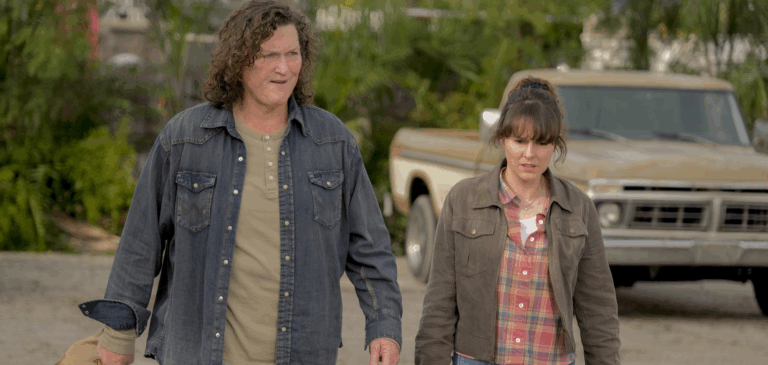
In Killing It, Craig Foster (Craig Robinson), a single father, teams up with Jillian (Claudia O’Doherty), his Uber driver, to enter a state-sponsored snake hunting contest in hopes of becoming a wealthy entrepreneur. The series quickly became a hit. In this second season, Craig and Jillian continue their pursuit of the American Dream. Both seasons were shot by Judd Overton, a cinematographer who has worked on many Australian and American series.
Overton worked closely with showrunners Luke Del Tredici and Dan Goor, as well as the producing director Mo Marable, to find a look befitting a premium comedy show. “We wanted the look of ‘Killing It’ to be a bit gritty and hyper-naturalistic, to give the impression that the action could actually be happening right now somewhere,” explains Overton.
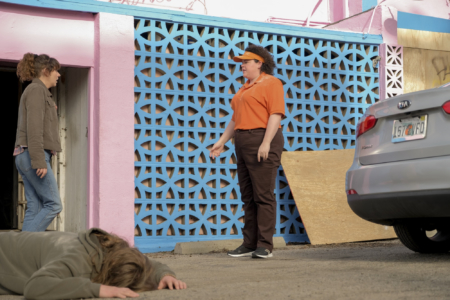
The series takes place in the swamps of Florida. Overton frequently used Blackmagic Design cameras to shoot in hostile natural locations, and was able to achieve a look and atmosphere suited to comedy, but with image quality for stunts and action scenes. On the set of Killing It, dangerous animals presented a particular challenge. Overton had to work with snakes and other uncooperative creatures, while also managing numerous action scenes, including group fights, mobile home drops and all kinds of vehicles.
To accomplish this, he shot in Blackmagic RAW with the URSA Mini Pro 12K OLPF and Pocket Cinema Camera 4K, paired with Gecko Vintage 66 and Canon K35 lenses. “Time is a constant challenge on every shoot. We had a lot of stunt scenes this season. Using Pocket Cinema Cameras for additional angles is invaluable. We can put a Pocket Cinema Camera 4K in dangerous or unusual positions and get footage that matches perfectly with the URSA Mini Pro 12K OLPF.”
“The 12K sensor is an incredible advance for independent and premium work. We shot the series in 8K Blackmagic RAW at 3:1 or 5:1 compression and the images are perfect. I love the 8K because it gives me the ability to reframe shots in post without any quality loss. The sensor in the OLPF is truly exceptional.”
Speaking of season 2 highlights, Overton recalls: “We had great ambitions for the look of the show. There’s a scene at the end of the season that’s one of the visual highlights. There are alligators, snakes, flames, explosions, stunts. We had so many things happening at once. My A-cam Blackmagic handled it all admirably. And I love that I can create great images with just the camera, the lens and natural light. We also did a night sequence in a forest, entirely lit with practicals. With the 12K’s ability to capture detail in very low light, those images are stunning.”
One of Overton’s favorite scenes takes place mid-season: “There’s a scene where the mobile home in which Craig has set up his new office is being hoisted by a crane. Craig has finally got his land, his first step toward the American Dream, and he’s ready to go big. Unfortunately, the dream turns into a nightmare when the mobile home crashes to the ground. We only had one chance for this shot. So I had to have absolute confidence in my Blackmagic cameras. To capture this sequence, we used the Blackmagic cameras’ high frame rate to create a parallel between the crashing office and Craig’s crumbling dreams. It worked really well.”
“I’ve long appreciated the way Blackmagic cameras capture cinematic images for streamlined post-production, and the OLPF 12K is a major step forward for the range. Since I shoot other series, the fact that the OLPF 12K camera is now broadcaster-approved means it can be used as a main camera or as a B-camera. The range of Blackmagic cameras and their ability to shoot in Blackmagic RAW is a game-changer. I can use any camera in any situation and the footage always integrates perfectly in post.”
“The combination of shooting in Blackmagic RAW and finishing in DaVinci Resolve Studio is a powerful pipeline,” adds Ferstl. “I spend most of my time grading creatively, rather than troubleshooting technical issues. The raw quality is excellent, and it gives me all the latitude I need to push the look exactly where it needs to go.”
“With Blackmagic URSA Mini Pro 12K OLPF, DaVinci Resolve Studio and the Blackmagic RAW codec, we have all the tools needed to create series with cinematic images that are perfectly suited to the requirements of major streaming platforms,” concludes Overton.
Press Images
Product photos, as well as all other press materials from Blackmagic Design, are available for download at the Blackmagic Design website.
About Blackmagic Design
Blackmagic Design creates the world’s highest quality video editing products, digital film cameras, color correctors, video conversion, video monitoring, routers, live production switchers, disk recorders, waveform monitors and real time film scanners for the feature film, post production and television broadcast industries. Blackmagic Design’s DeckLink capture cards launched a revolution in quality and affordability in post production, while the company’s Emmy award winning DaVinci color correction products have dominated the television and film industry since 1984. Blackmagic Design continues to develop innovative and affordable high end products for the growing video and film industry. Products are available worldwide through all Blackmagic Design resellers, as well as via the company’s website at www.blackmagicdesign.com.