Through a collection of Q&A portraits, the Union introduces the members of the association. Today, Nicholas Kent.
When and how did you become interested in camera work?
When I was about 14, I took over my father’s Olympus OM-1 and gradually taught myself to shoot on film. At the same time, I started making short films with my school’s cine-club. In Vancouver, where I grew up, there were quite a few film shoots, and thanks to a friend of my father’s I managed to land an internship in production on a short format—I was 16 at the time.
My first task was helping with the lighting and grip truck loads. I arrived early, and for half an hour I found myself alone with the company’s director. Before we’d even started loading, he offered me a job for the rest of the summer. On that first shoot, I discovered the world of the grip and lighting department, and I knew right away that this was where I wanted to be.
 Setting up a tracking shot in Moldova on Les Oubliés, directed by Mihai Tarna
Which films left a particular visual impression on you, to the point of sparking your specific interest in cinematography?
Since I grew up in Canada, I was mostly exposed to Hollywood cinema. I was in my school’s cine-club when The Matrix came out, and its visual effects amazed us. At the time we were all obsessed with green screens! I was also fascinated by the dark world of gangster films—Coppola’s and Scorsese’s universe. At the same time, I was discovering Cronenberg’s films and American independent cinema, particularly Linklater and Todd Haynes. Then gradually I turned towards European cinema, especially France and Italy. Discovering Apocalypse Now led me to Storaro’s work, which led me to Bernardo Bertolucci.
What was your initial training?
I enrolled at EICAR for a three-year programme in the international section. At the time, we still shot most of our projects on 35mm or 16mm, which was an excellent way to approach image creation. My passion for film formats grew even stronger, as did the working methods they entail. I still fondly remember many ambitious projects, a cosmopolitan student atmosphere, and creative output (which has unfortunately changed since then, by all accounts).
When and in what context did you start working as a cinematographer?
After my training, I spent a few years working on a wide variety of projects ranging from short films to music videos and features, including corporate work. My approach was to shoot as much as possible—both operating the camera and setting the lights—and also doing grip work, especially on commercials. You could say my versatility was my speciality. Over time, I developed a desire to express myself more, and I started cutting my teeth as an operator on short films. I’ve worked exclusively as a cinematographer since 2017, starting with my first feature film, Les Oubliés, by Moldovan director Mihai Tarna (currently in distribution).
 Screenshot from an early colour grading session for Les Oubliés, directed by Mihai Tarna
What types of films have you worked on, and what would be the best next project?
So far I’ve worked a lot on films that explore dark, hidden, and sometimes fantastical worlds. For me, immersion is a key element of the cinematic experience—my goal is not to showcase the quality of the images but to ensure that the image quality and the choices made during their design allow the viewer to melt into the film’s world and lose themselves in the story. I’ve mostly worked on fairly classical narrative formats, but (and this may seem paradoxical) it strikes me that series formats for streaming platforms, where one can be freer in form and content, hold strong potential.
What are your artistic inspirations?
I draw a great deal of inspiration from painting. For instance, I recently worked on a project that focused on the concept of absence, and the interiors painted by Vilhelm Hammershøi were a major reference. For an upcoming project, I’m drawing inspiration from the night exteriors of the English Expressionists, in particular John Atkinson Grimshaw. For me, one of the great pleasures of this profession is being able to make new discoveries during the preparation of every project.
Do you remember any regrettable blunders that turned out to be instructive?
I’ve made plenty—I feel like I make some on every project—and I try to note them down so as not to repeat them, or at least to be original and innovative in my mistakes. But the one that left the biggest mark was a very human error, not at all technical. I had worked extensively on the preparation of a project with the director, to the point of modelling the shots in 3D to help design the sets that were to be built. On set, our references were based on all that preparatory work, but the director had a completely different energy on the day and wanted to approach things differently. At the time I didn’t understand, but in hindsight I realised it was something sacred. That’s when I truly understood that a film’s preparation is only a starting point to enable even more creativity on set. And also that everyone has different ways of working, and that it’s often those differences that make projects interesting.
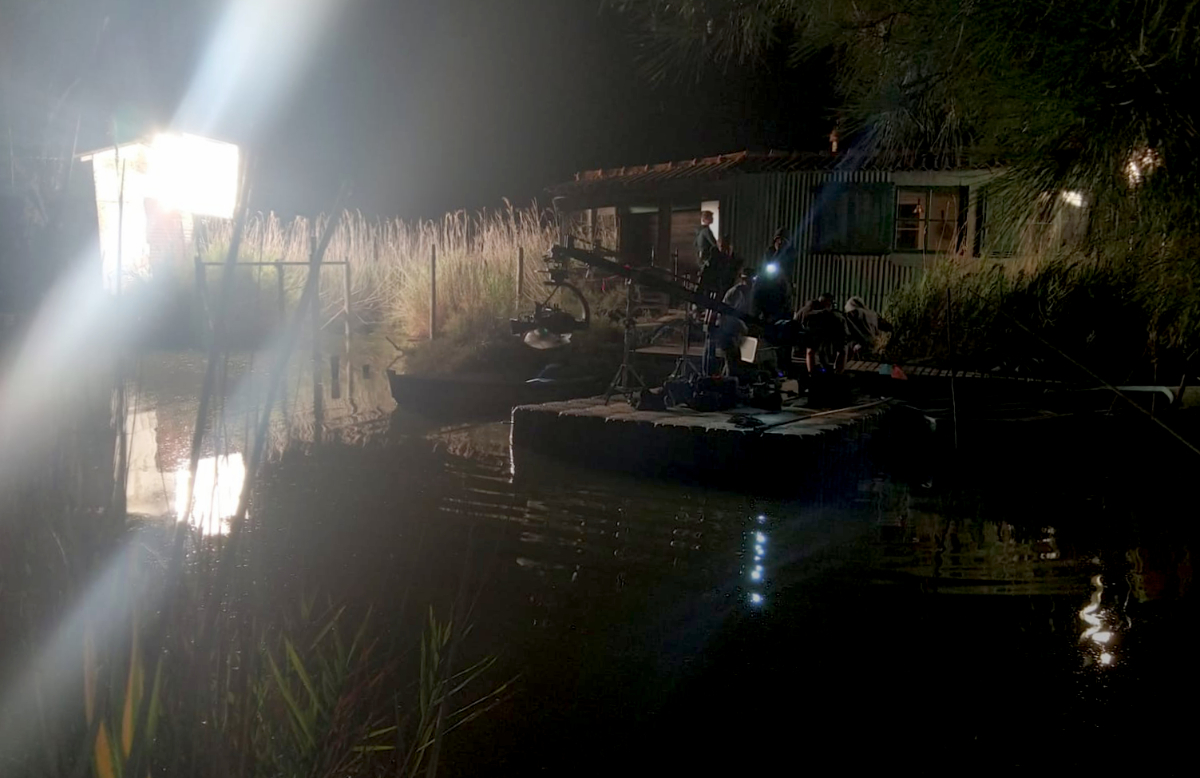 A night setup with the crane on a floating pontoon for L’Étang d’Or, directed by Valérian Denis
Have you experienced moments of doubt about your work or your profession?
I think that as a freelancer, we’re all prone to doubts whenever we find ourselves between projects. I learned a long time ago to accept that feeling of emptiness and to enjoy the free time whenever I have it.
Do you remember setting up a particularly original camera rig?
As a former grip, I have a particular affinity for certain car-rigging setups. I notably remember a shoot for a BMW commercial where we had to follow cyclists in the hills above Nice over roughly 300 km. There’s no need to go into details, but basically it involved a rather unusual setup that required constant adjustment throughout the day.
 Marny head setup for a BMW×Rapha Travel commercial, directed by Alvaro Ramirez
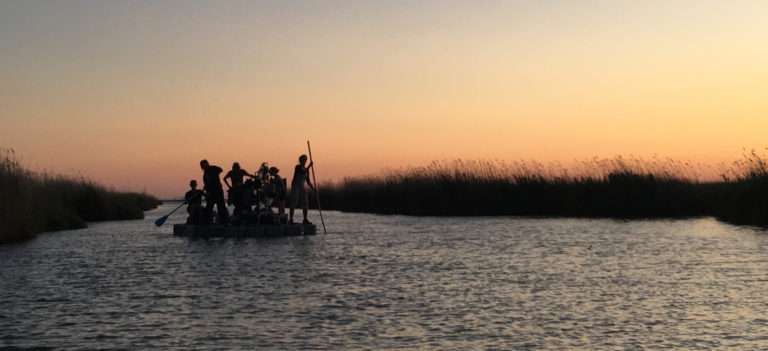
What also comes to mind are the maritime shoots I’ve taken part in on several occasions. First as a camera assistant on Naufragé Volontaire by Didier Nion (with the beautiful cinematography of Gilles Arnaud), which had us working for three months out at sea on a 2 m × 1.20 m raft with only an Aaton Penelope. Then last year I worked on Valérian Denis’s short film L’Étang d’Or, also with a Penelope, on a pond. The experience from the feature allowed me to anticipate a number of things, and with the help of key grip Titouane Savart, we installed a small crane (Panther Variojib) on a floating barge built from plastic cubes, with a Marny head at the end. It was truly a perfect configuration that allowed us to achieve some wonderful shots.
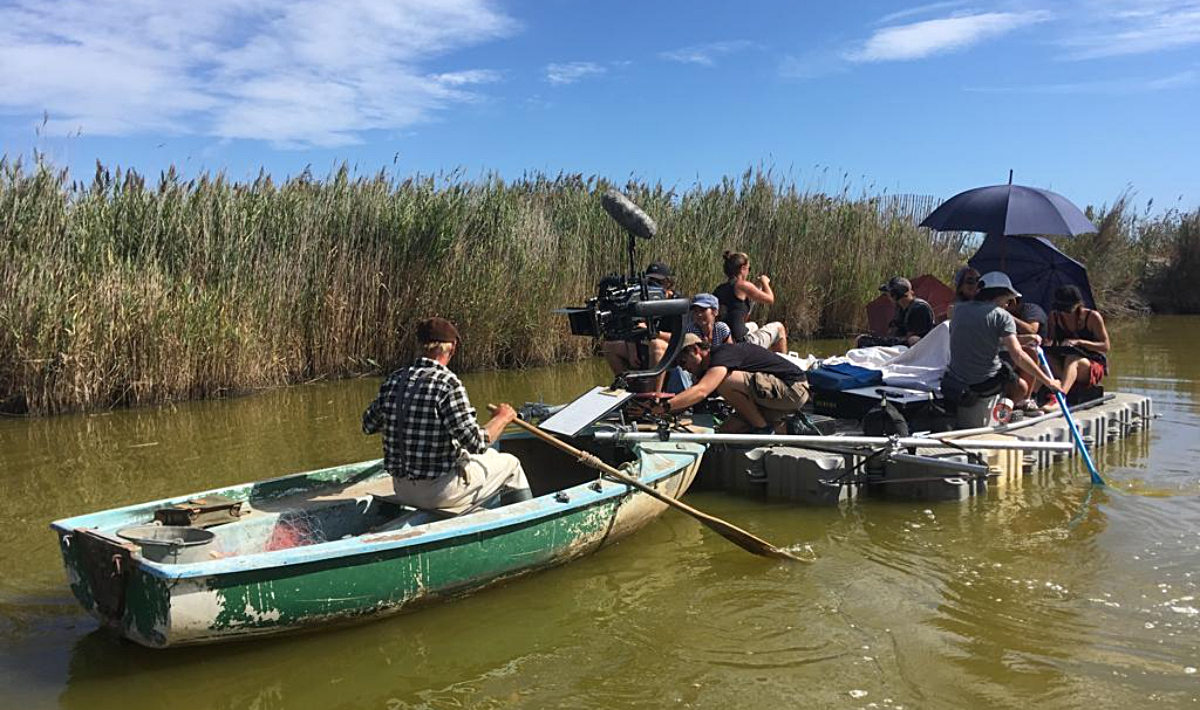 The crew of L’Étang d’Or on the tracking pontoon
Have you ever wanted to direct?
At the very beginning, when I started working on sets, I had directing ambitions, and I directed a few shorts in Canada even before entering film school. It was at school that I focused more on the technical side of the image and discovered the powerful accompanying role of the director of photography. Recently, I’ve come back to it on a small scale by directing a few small editorial fashion films. They were interesting experiences, but I don’t think I’ll push towards more constructed projects, at least for now. For the time being, I’m more comfortable in the role of amplifier and actualiser of ideas than in that of originator of ideas.
What do you love and what don’t you love about your job?
I love being immersed in a world of stories, philosophy, ideas, images. I love being on set and working with a crew to create and bring a shared project to fruition. I love being in unusual places and doing improbable things as part of a project (we’re really very lucky sometimes…). I love the unique people this profession has led me to meet.
I don’t like it when egos and personalities divide us and prevent us from creating. The constraints of this job, which often takes precedence over our private lives, sometimes weigh on me.
What advice would you give to an aspiring cinematographer?
Learn to use your tools and never forget that they are only tools (however enjoyable they may be). We have so many tools at our disposal, there are so many stories to tell—each in its own way—and there are no forbidden approaches. The most important thing is to tell the story in the way that feels the most true, the most coherent to you.
Nicholas Kent on the United Cinematographers website.
> Cover image: paddling back at golden hour on L’Étang d’Or, directed by Valérian Denis