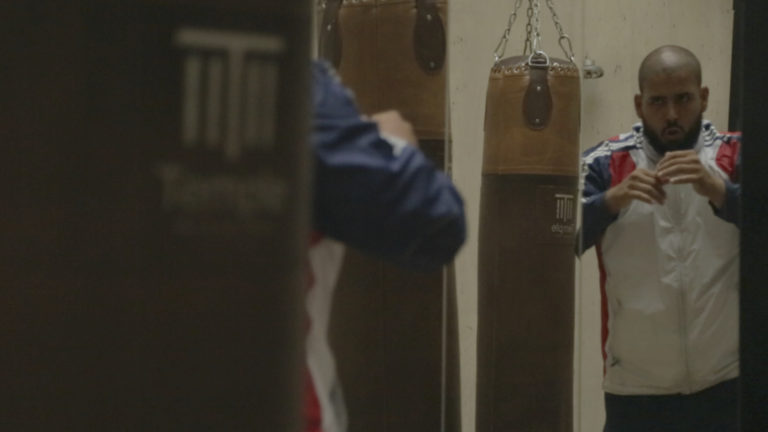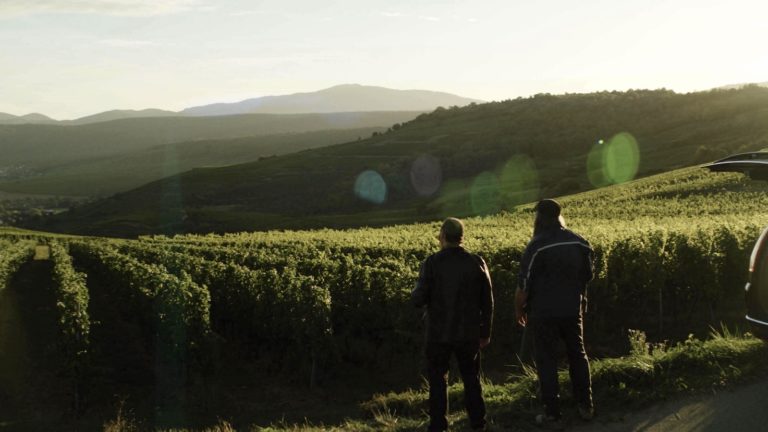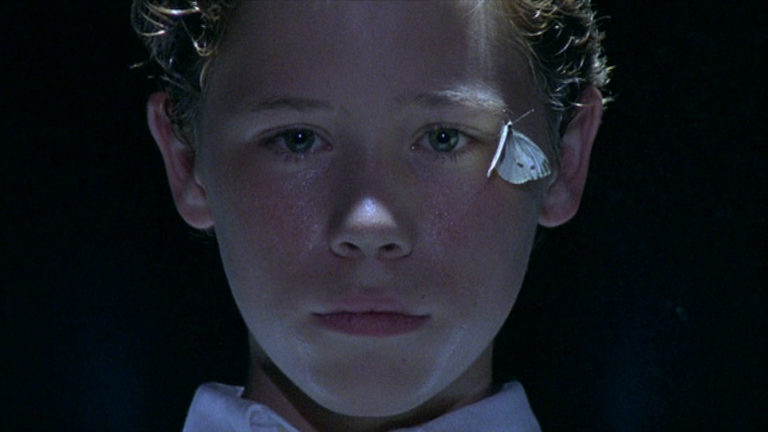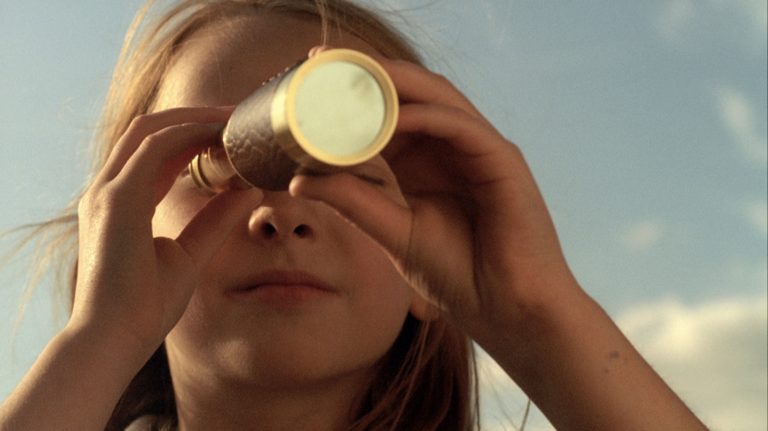
Through a collection of Q&A portraits, the Union introduces the members of the association. Today, Clémence Thurninger.
When and how did you become interested in camera work?
I fell in love with film as a child. I was born in Paris but always lived in the countryside. There was no cinema in my village. The nearest one was 15 km away—not really possible to go very often. Luckily, my parents got us a Canal+ subscription, and that’s how I was able to discover and quench my thirst for films.
Towards the end of lycée, when the time came to think about future studies, a friend told me it was possible to study cinema. I didn’t even know film schools existed! At first, knowing only that I wanted to make films, I enrolled at Paris I university. We had a lot of theory but also some hands-on filmmaking practice. That’s where I got to know the tools of the DP: camera, film stock, light. It was love at first sight!
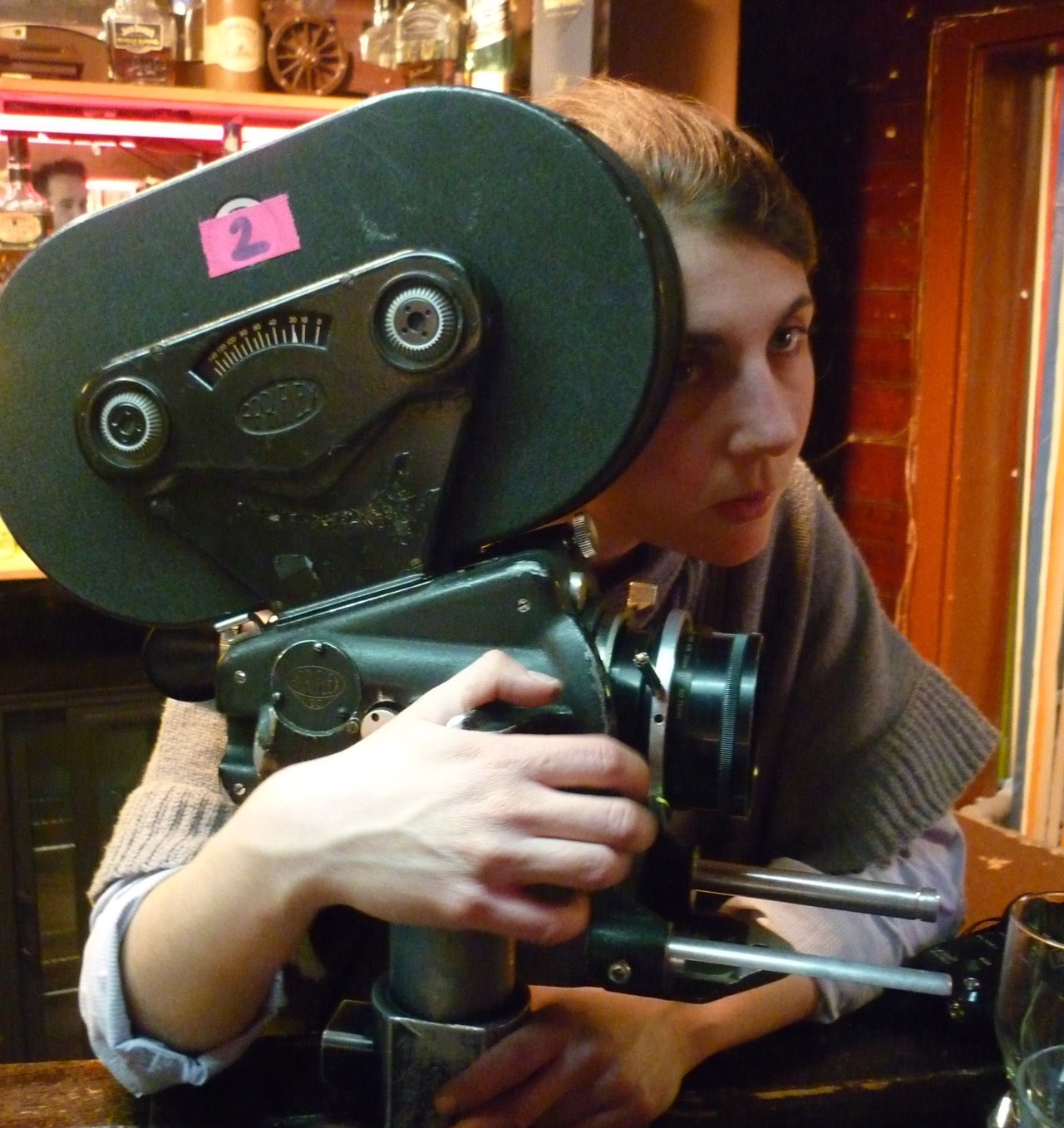 On the set of Hel, directed by Katia Priwieziencew and Paweł Tarasiewicz
Which films left a particular visual impression on you, to the point of sparking your specific interest in cinematography?
There are many films I saw before even knowing that the work on the image was the DP’s domain. It’s impossible to say which ones left the deepest impression, but I can at least name those I studied from a cinematographic standpoint as part of written assignments at university. Seven is one of them: the colour work specific to each sin, each murder, is a fine example of how cinematography shapes the viewer’s experience.
I can also mention a few other titles that always come to mind when I think of films that pushed me towards reflecting on the image:
– La Belle et la Bête (J. Cocteau)
– 3-Iron (Kim Ki-duk)
– Repulsion (R. Polanski)
But also many others!
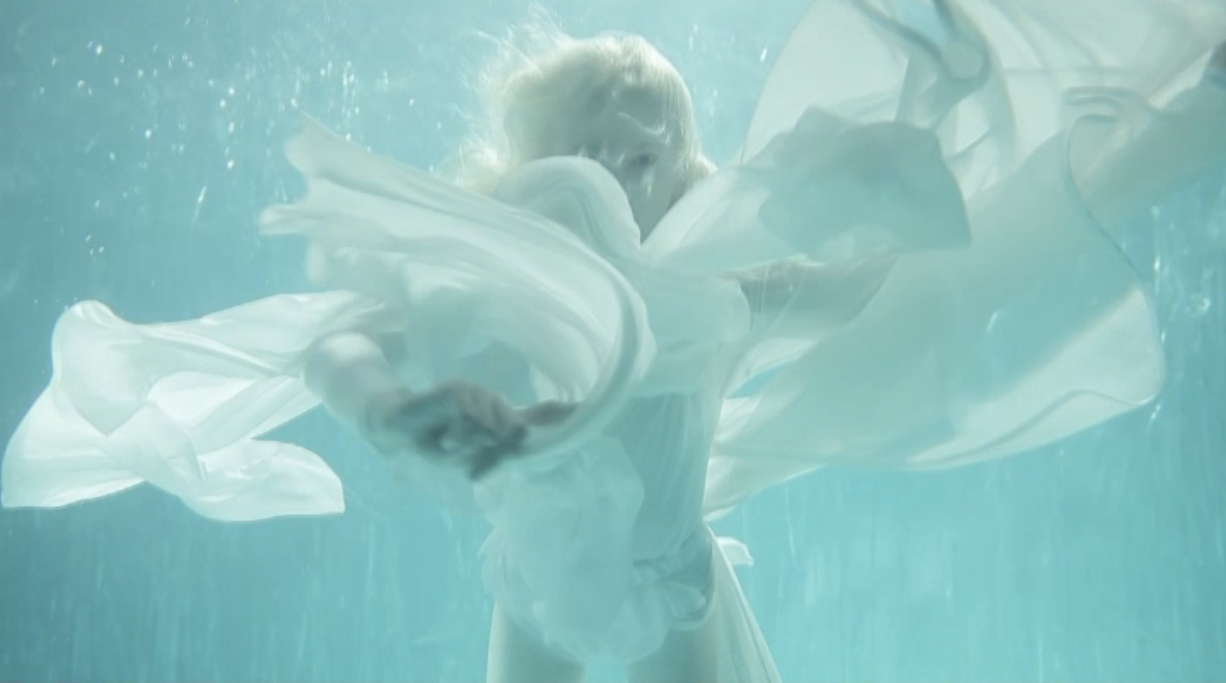 Kaukaz, short film directed by Bolek Kielak, Clem Thurninger, and Daniel Wawrzyniak
What was your initial training?
After a science baccalauréat with a maths option, I enrolled in a cinema master’s at Paris I – La Sorbonne. After two years, with my Deug in hand, I was able to sit the entrance exams for France’s top film schools (Louis Lumière and La Fémis). Unfortunately without success, so I continued my university studies. At the end of my fourth year, I’d had enough of Paris and decided to try foreign schools. The Łódź Film School, highly renowned for its cinematography department, accepted me, so I moved to Poland. After one year learning the Polish language, I embarked on a five-year Master of Arts, since my French maîtrise didn’t grant me any equivalence…
When and in what context did you start working as a cinematographer?
I took every job that came my way, whether as an assistant or as a DP. In Poland, there isn’t as much professional compartmentalisation as in France, which meant I was able to work on very different projects (a wildlife documentary with Jacques Perrin, commercials, music videos, theatre…).
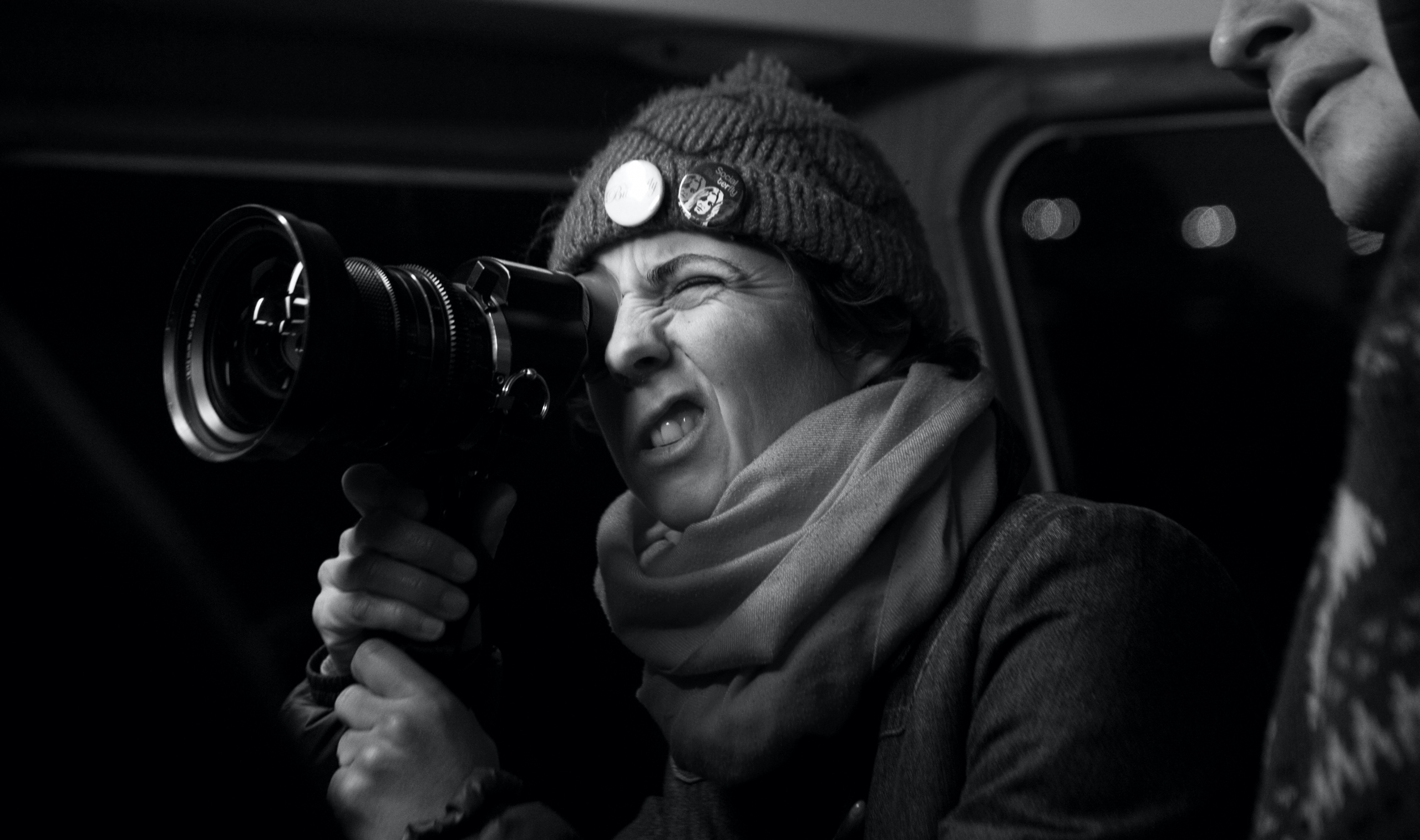 On the set of Hel, directed by K. Priwieziencew and P. Tarasiewicz
What types of films have you worked on, and what would be the best next project?
I’ve been lucky enough to work on every type of project imaginable: from fiction to documentary, through commercials, television, and even theatre or concert capture. It’s a great privilege to move from one world to another—it allows you to draw inspiration from different working methods and also from different ways of thinking about light, for instance.
The best next project is a feature film that was supposed to shoot last May/June but had to be postponed because of COVID. It’s the second film by this director, an Australian living in France—a dark comedy with a very endearing lead character despite his misanthropy. I don’t know if or when the shoot will take place but I hope with all my heart that this film will see the light of day.
What are your artistic inspirations?
I watch as many different narrative styles as possible, of course. Whenever I can, I visit painting, photography, and other exhibitions. I very much enjoy exchanging with school friends and other DPs from around the world. Thanks to my years studying in Łódź, attending the Camerimage festival, and so on, I’ve been fortunate to build an international network—it’s a real pleasure to talk about cinema and the different ways of working across borders.
For lighting, I try to observe light in everyday life: what shapes and colours catch my eye rather than others, their composition in space. Since I travel a lot for work, I like observing the similarities and differences depending on the country, the region, the people. I don’t have a very good memory, but I feel that everything I encounter can resurface spontaneously during prep or on a shoot. The associations of ideas that form during these encounters lead my thinking towards one source or another previously encountered. It happens quite organically, so I think the best way to prepare for it is to be curious in everyday life, to let yourself wander from subject to subject, from reference to reference.
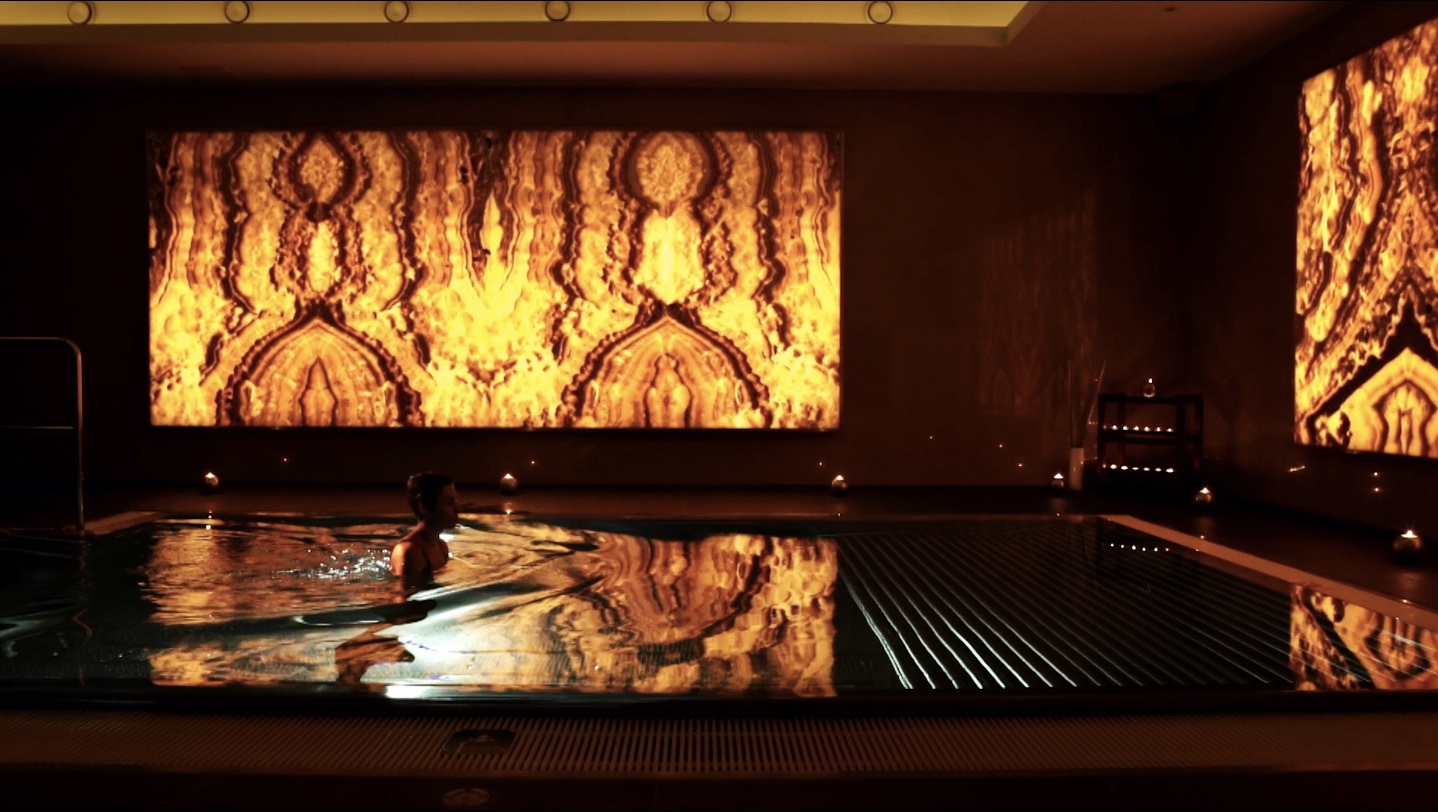 A night setup – Commercial for Hotel-Spa Bukovina, directed by Paweł Soja
Do you remember any regrettable blunders that turned out to be instructive?
More than a blunder, it was a real mistake I made… During a produced short-film shoot (I was still a student), in an attempt to save time, I tried to adjust the orientation of a Joker Bug that was rigged up high above the bed where the action was taking place. The young but talented actress was still lying on the bed, and as I adjusted it, the barn door—which was poorly secured—fell just centimetres from her face. I was incredibly lucky! I don’t think I could ever have forgiven myself if that barn door had injured or even disfigured that young up-and-coming actress. Since that day, I have always been extremely careful with safety on set—nothing is ever taken for granted. We are constantly job-hunting, and “staying in the loop” is constant work on top of our prep and shooting workload. Recently, I’ve also come to accept that reality is somewhat harder for women in this profession. That somewhat relieves my very self-critical side. Even though many women cinematographers around the world have shown that being female is not an obstacle, there is still a great deal of reluctance or blockage (often even unconscious) from producers and directors when it comes to trusting a woman. In France, the situation is better than in Poland, but apparently this observation holds true across all of Europe. The FALC collective (Femmes à la caméra), of which I’m a member, publishes a very interesting series of interviews with women cinematographers on this topic.
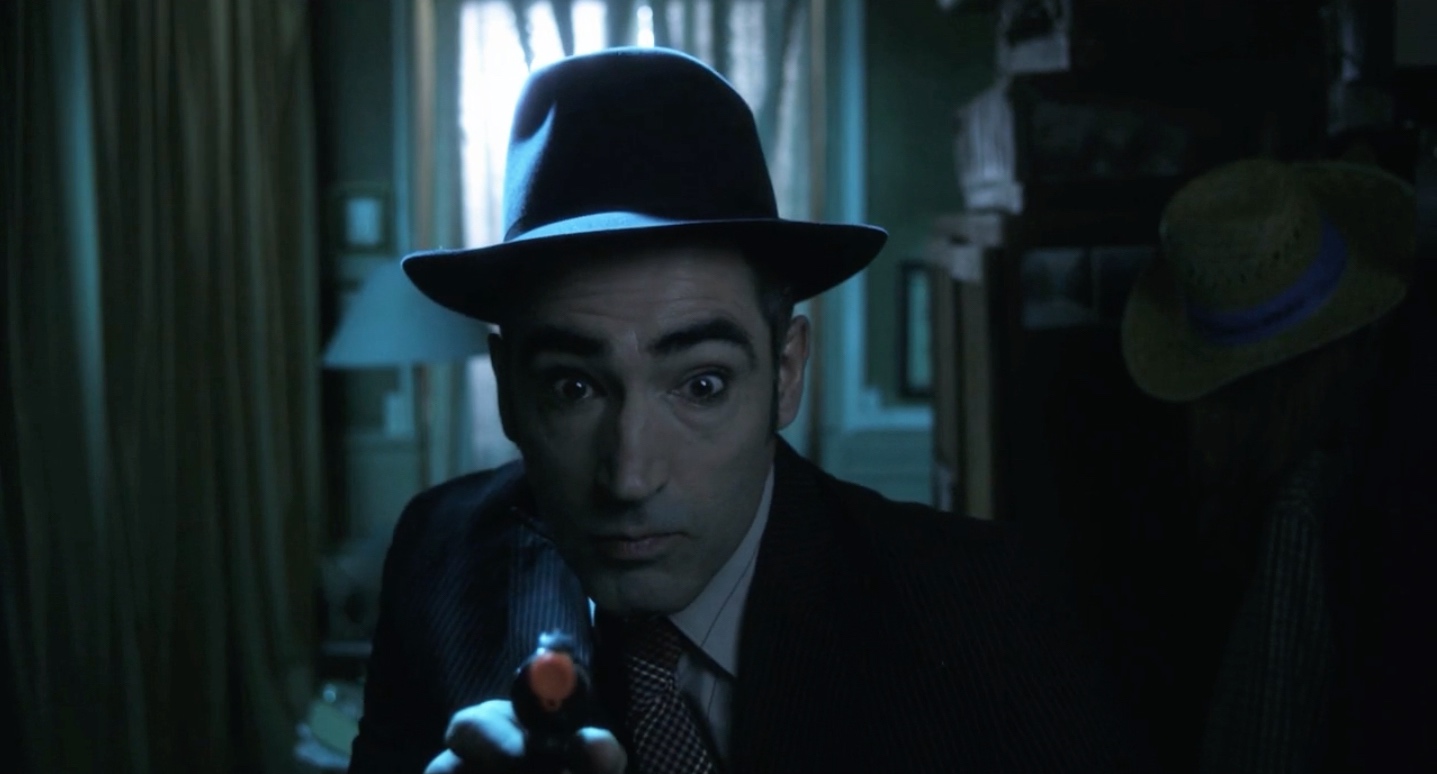 Kamel Léon, gangster, directed by Kim Camus
Do you remember setting up a particularly original camera rig?
It wasn’t so “original,” but for me, still a student, it’s remained etched in my memory as an amusing anecdote: for one of my end-of-year films, I had planned a few shots at 1,000 frames per second. At the time (2010, I think), it wasn’t so common to be able to afford a high-speed camera for a student film. One of the planned shots was a portrait of an old man, roughly at waist height. To light him properly at that speed, we needed no fewer than 35 kW of tungsten light (key light 20 kW, fill light 5 kW, and backlight 10 kW). It should be noted that we were shooting through an aquarium and therefore had to mount the camera at 90° to the floor. Today I can see that this isn’t a real challenge, but at the time it was one of those extraordinary setups for us. In the end, we got very hot in the school’s studio, but the images are superb!
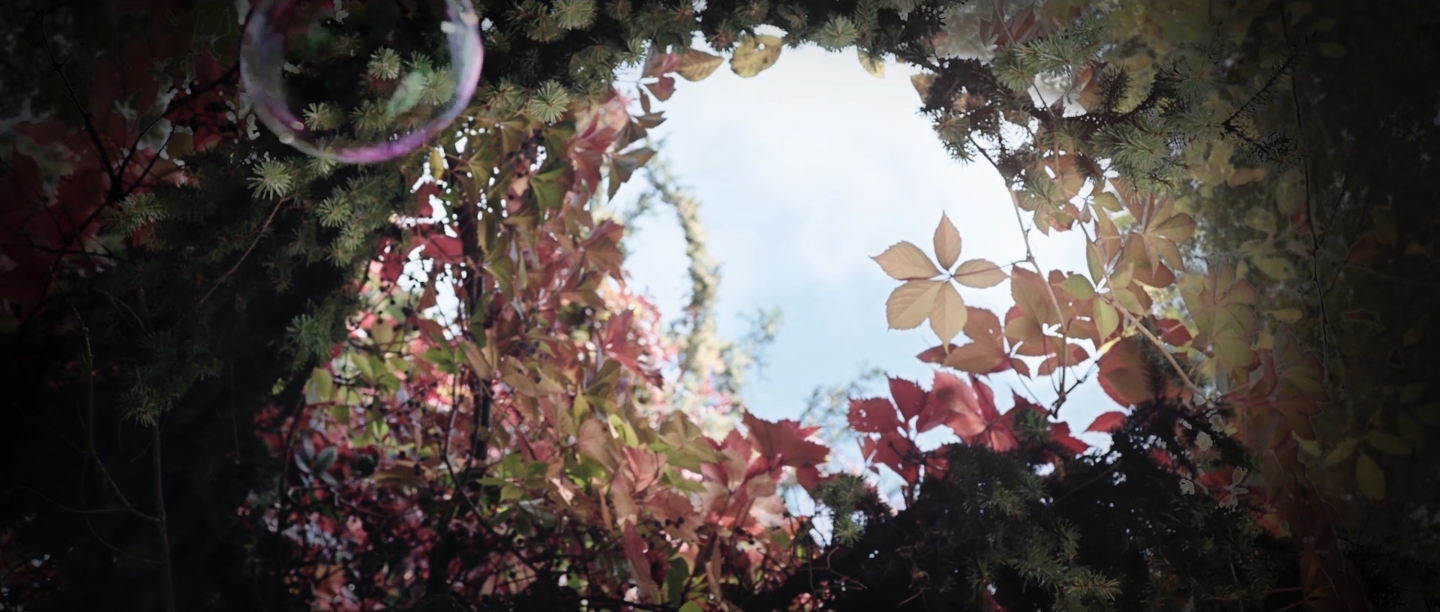 Music video Matter of Time for Night Marks Electric Trio, directed by Filip Tużak
Have you ever wanted to direct?
No, directing doesn’t really interest me. I very much enjoy working with the camera and light. But above all, I prefer to offer my gaze and expertise to an auteur with their own story. I feel more comfortable in that role. Yet I do enjoy making very personal documentaries. I’ve already directed three, and in my spare time I’m trying to get a fourth off the ground—the final part of a triptych I started nearly ten years ago. They’re all short films with a very poetic form. I’m not sure you can really call it directing proper. They’re perhaps more like filmed impressions—a DP’s film, in a way 🙂
What do you love and what don’t you love about your job?
I love the many encounters, telling stories and watching/listening to others’ stories. I particularly love working with light—a medium that is both very scientific and magical. I also love framing myself and thus being, in a way, the first spectator of the film.
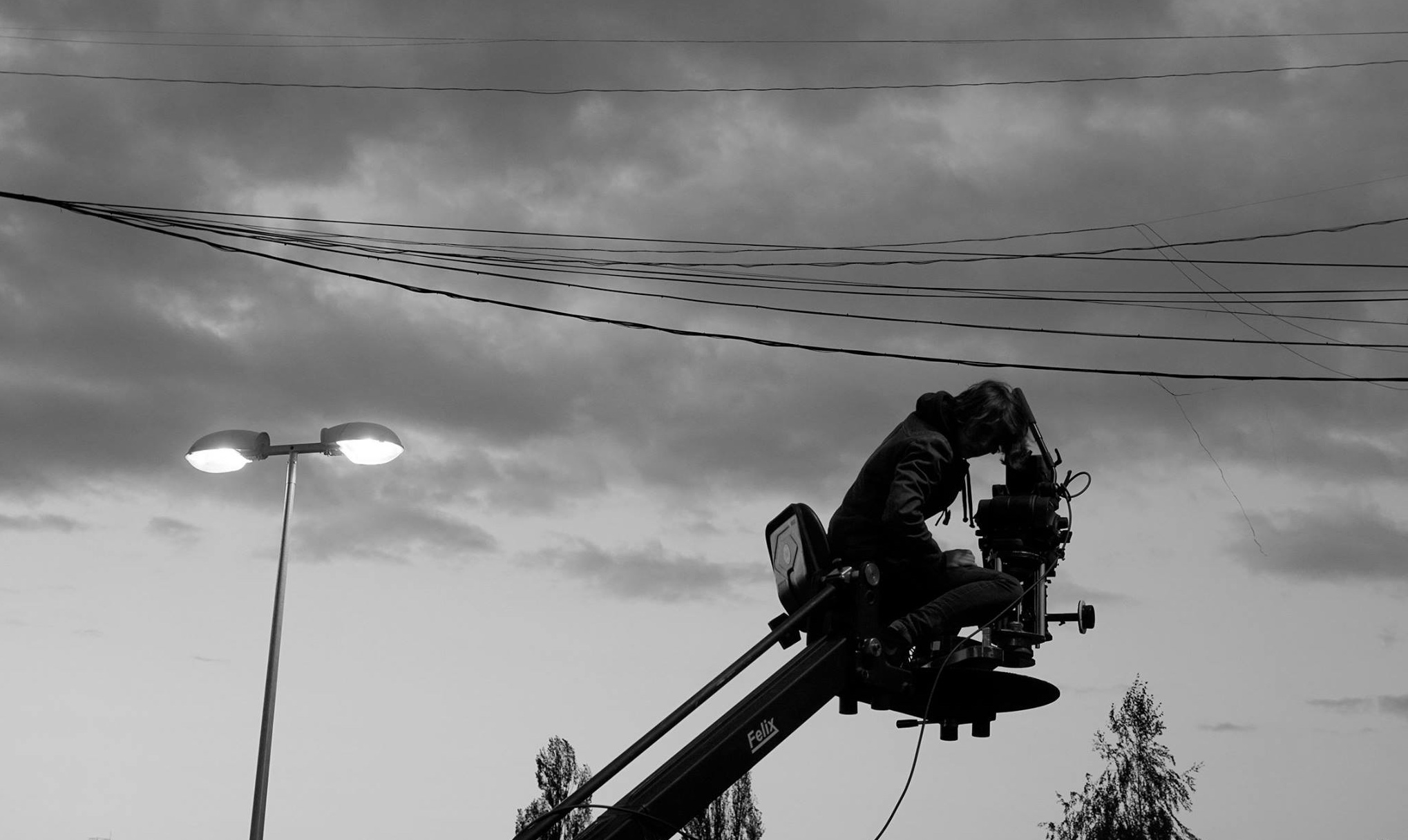 Music video Matter of Time for Night Marks Electric Trio, directed by Filip Tużak
What advice would you give to an aspiring cinematographer?
Don’t give up, even during health crises! Unfortunately, I don’t have any revolutionary advice. You have to hope for as many project offers as possible, meet as many people as possible in order to create opportunities. And above all, be inventive, because budgets and shooting schedules are increasingly tight. I’d also like to add a quote from Chris Doyle that I find very apt. In answer to a question about wanting to become a DP, during his seminar at the last Camerimage: “If it’s there, if you have a way to look at the world that gives you pleasure, do it. By all means. Celebrate your ideas — and then take them a little bit further.”
And finally, my last piece of advice would be to attend the Camerimage festival as often as possible, for the masterclasses and the encounters.
Clémence Thurninger on the United Cinematographers website.
> Cover image: Un papillon dans la gueule du loup, directed by Jorge Garcia Fernandez