“En aparté” sheds light on the professional careers of UCO members. Its aim is to reveal and analyze the portrait, the personal signature, of each member based on their practice and technical choices, whether before filming, on set, or in post-production. This article looks back at the career path of Adrian Angehrn.
Where does your love of images, and in particular of cinematic images, originate?
So, it was through painting. A partner of my mother’s, who lived with us at the time, was a painter and, as a result, he introduced me to painting. And at first it was rather sensual or aesthetic, but I began to understand that one could say things through images, composition or even color.
As for cinema, I think it came from some pretty epic films. When I was a child, we would get up early, before school, and go and steal VHS tapes of Lawrence of Arabia, Spartacus or Conan the Barbarian from the family library, my father’s library, actually. We watched them on repeat and knew them by heart.
There’s also photography: in 2014, at 22, I cycled from Paris to Casablanca, and it sparked something in me with images. Not really to document, but to try and capture a memory… And from then on, I kept taking photos. All the time, actually.
What technical training did you get in cinematography?
After my trip to Morocco, I went to Hungary to study cinematography with János Vecsernyés at the Eötvös Loránd-Budapest Film Academy (ELTE-BFA), a three-year film school. I remember bumping into Béla Tarr by chance on the street, and him saying to me, “What are you doing here studying? That’s not how you learn filmmaking. You have to make films!” It was a good lesson, in the sense that I realized you learn much more on a film set than in school.
How did you break into the industry?
In 2017, I decided to move to Berlin because there were more opportunities there. I speak German, so that helped with the technical vocabulary.
I started on the lighting team, as a gaffer. It’s a position that makes you more attuned to atmosphere. Actually, I gravitated toward lighting rather than camera work because, in that field, you never stop learning, whereas with the camera, it seemed more limited to the technical aspects. And I wasn’t very good as a first assistant camera. Last year, I worked on a feature film as gaffer, Tour One, directed by Seamus McNally, so it continues to fascinate me. It lets me watch other cinematographers work and diversify my own approach.
On the cinematography side, I tried to find young, up-and-coming directors who had something to say in their short films. It paid off, in that many of them went on to feature films. I enjoy discovering new talent and growing alongside them.
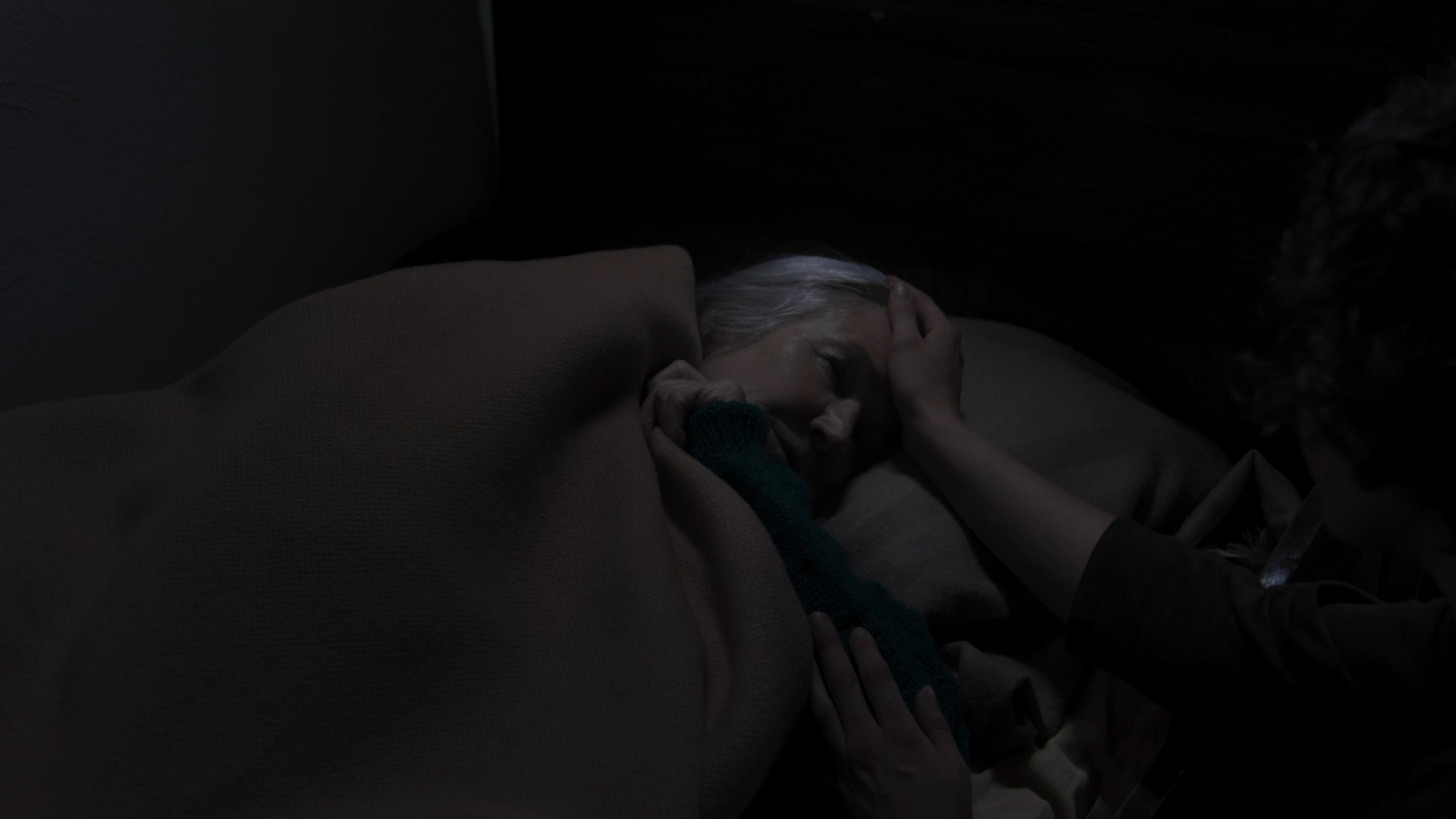
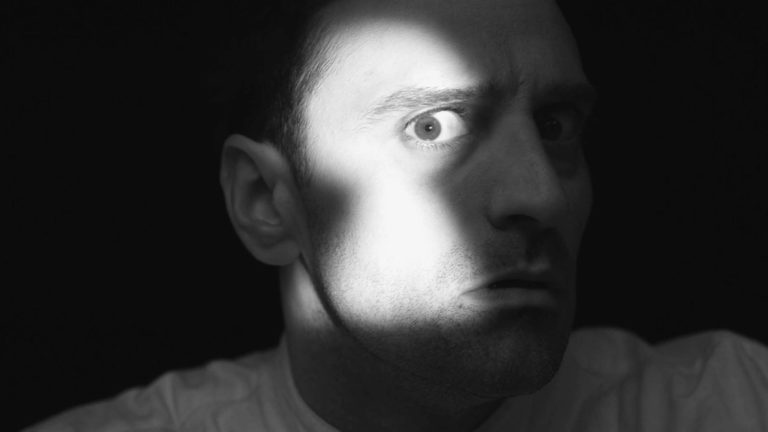
Shadow by Odeta Cunaj, 2025
What types of films have you worked on?
So, mostly fiction, I’d say, both short and feature-length. I do a little bit of advertising and documentary work, but not much. Mostly fiction.
I really enjoy the pre-production phase, where we meet with the director and can explore. We usually make notes on the script, discuss it, and the director has a specific idea, or I ask a lot of questions to try and see where they want to go. Then I create moodboards. I’m addicted to photo books, so I like to invite directors over to my place. We look through lots of photos and try to find the right direction by trial and error. After that, we get down to the shot breakdown.
For my team, I usually try to create a kind of film bible. That way, we have the main visual ideas represented and everyone is on the same page. And for the script too, I usually make little cards with, for each scene, what the emotional shifts are, how it moves the story forward, etc.
Do you remember putting together a particularly original camera setup?
In Caballito de Bronce, a short film by Christiania Krueger, there was a dream sequence, a dream of erotic jealousy. We drew inspiration from the paintings of Francis Bacon and the photographs of Antoine D’Agata, and we filmed through a kind of flexible, reflective metal plate, which created distortions in the bodies of the two actors. I found it an interesting way to create distortion in the image.
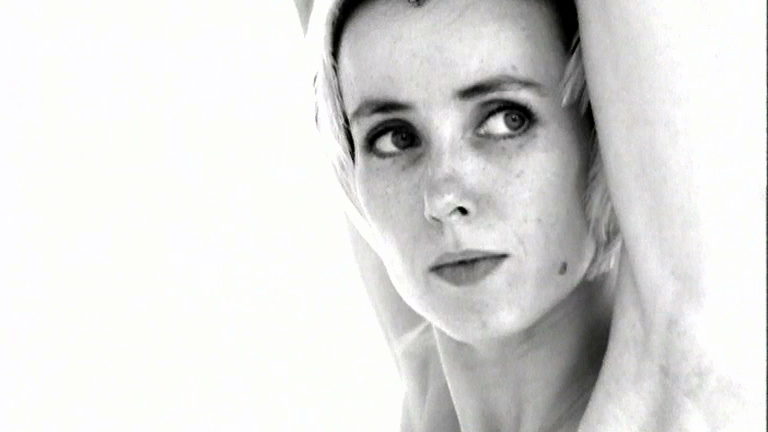
Otherwise, I remember Eraserhead in a Shopping Net, by Lili Koss, which was at Cannes in 2025, during Critics’ Week. We did quite a few tests for the final scene, where she sees David Lynch’s film and there’s a kind of connection that forms between her and the film. And, at the time, we tested an effect called “Pepper’s Ghost.” Basically, you put a mirror or a pane of glass at a 45° angle, you project an image, and it superimposes it onto what you’re filming. Today, you’d do it with double exposure, but the idea was to do everything directly in the camera. In the end, we chose a simpler effect: by mounting an HMI light on a descending crane, we were able to create the illusion of a sunset in fast motion. It really conveyed the altered perception of time that you can feel when watching a film.
Finally, with a photographer friend, we’re trying to build a 4×5 digital camera, a large photographic format. We put a digital camera behind the ground glass, and the idea is to have that feeling of a wide format, but also to use all the movements that allow us to create distortions, correct perspectives, and find depths of field that aren’t flat but diagonal, vertical, or horizontal… It’s a technical project, in the sense that it’s a prototype, but the idea is to be able to use it for filming.
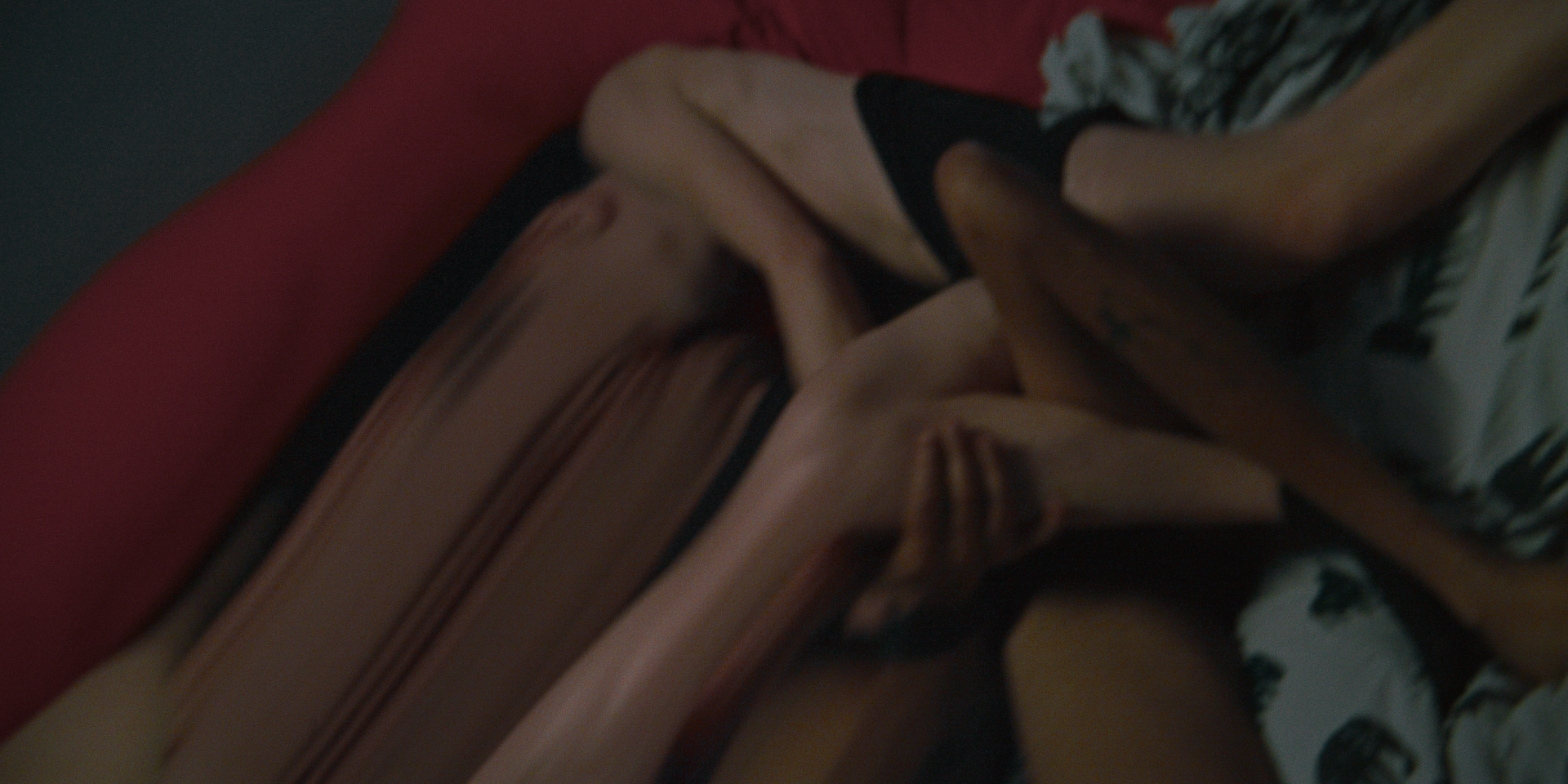
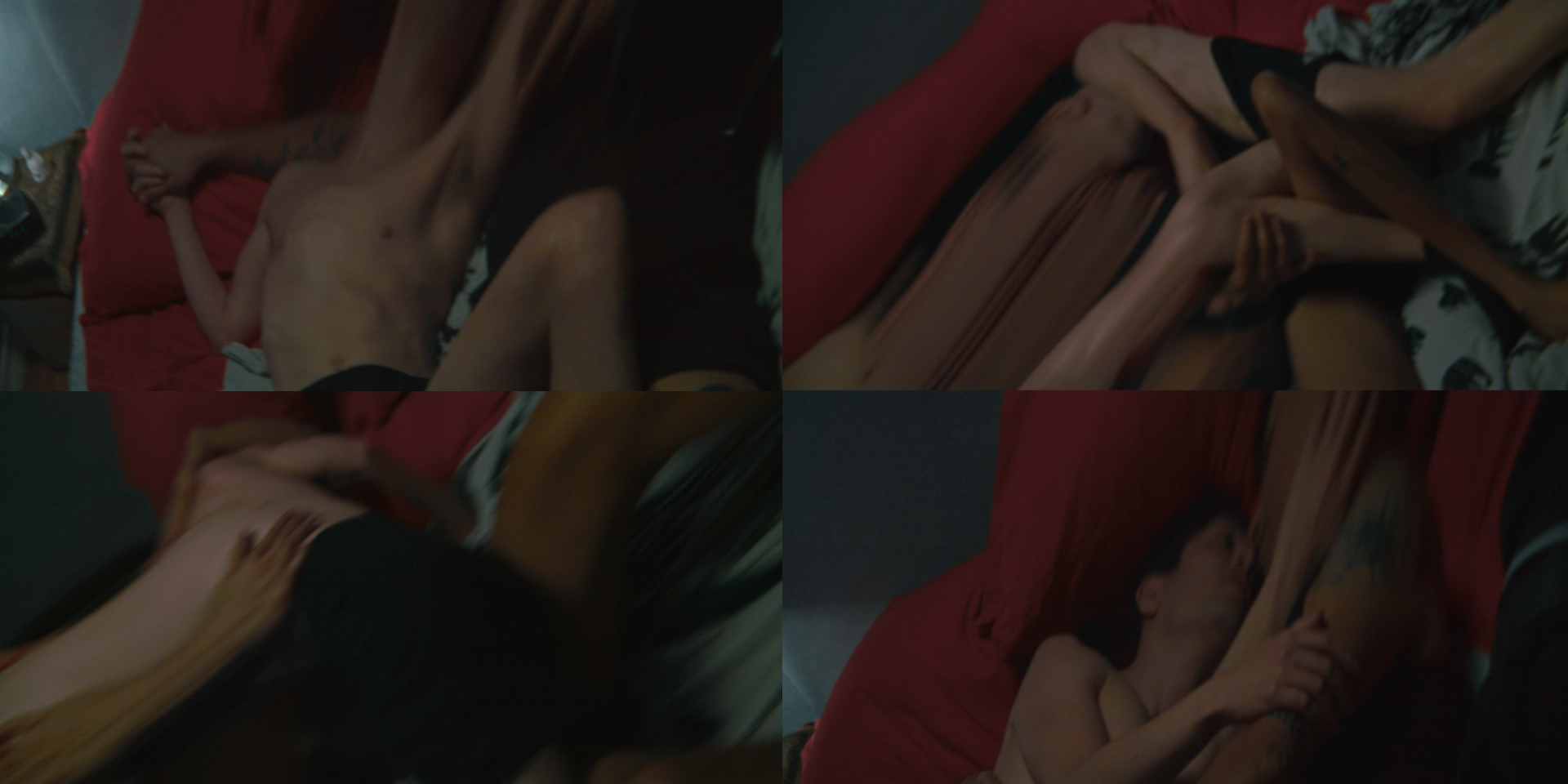
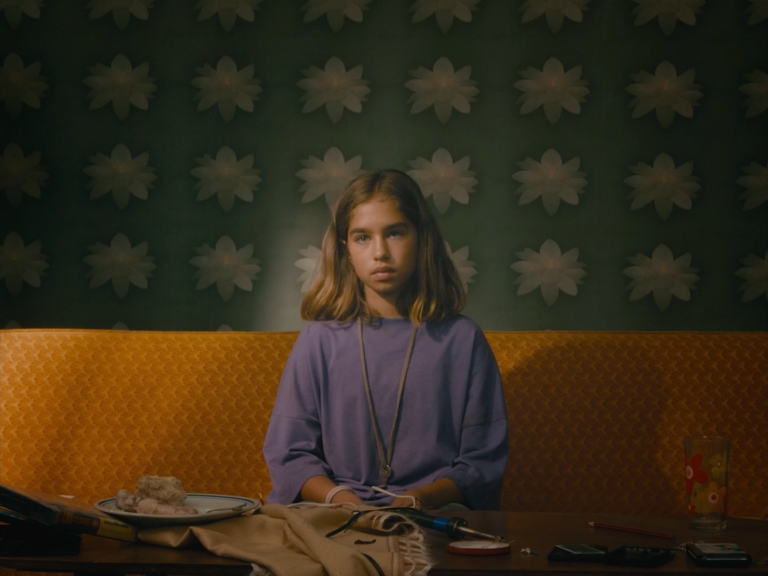
Caballito de Bronce by Christiania Krueger, 2023
What would be the best next project?
Documentaries interest me quite a bit, ideally. Not just for entertainment or personal stories, but to have a social impact. For example, director Max Michel Thillaye and I are currently filming The Second Anniversary, a documentary about people who have attempted suicide by firearm and received complete facial reconstruction. I find the subject important, with an existential and sociological dimension.
What films and aesthetics have particularly impressed you visually?
The first reference that comes to mind is Edward Yang’s Yi Yi, whose cinematography, all simplicity and restraint, is by Yang Wei-han.
Otherwise, Jonathan Glazer’s Birth and Gus Van Sant’s Elephant, both films lit by Harris Savides. I remember a quote where he said that nobody walks around with a keylight (the main light in a three-point lighting setup). His approach is about creating spaces that the actor will inhabit, not being afraid of underexposure or shadows. In short, being quite natural, simple, and close to reality.
And, in another quote, he says: if you’re making films, you have to take risks. He’s talking about coverage, about not necessarily covering everything, about having the courage to make choices rather than writing the film in the editing room. And I try to keep that in mind when I’m doing my shot breakdowns: how do you find the simplest way to express what you want to say? It’s riskier, but it interests me.
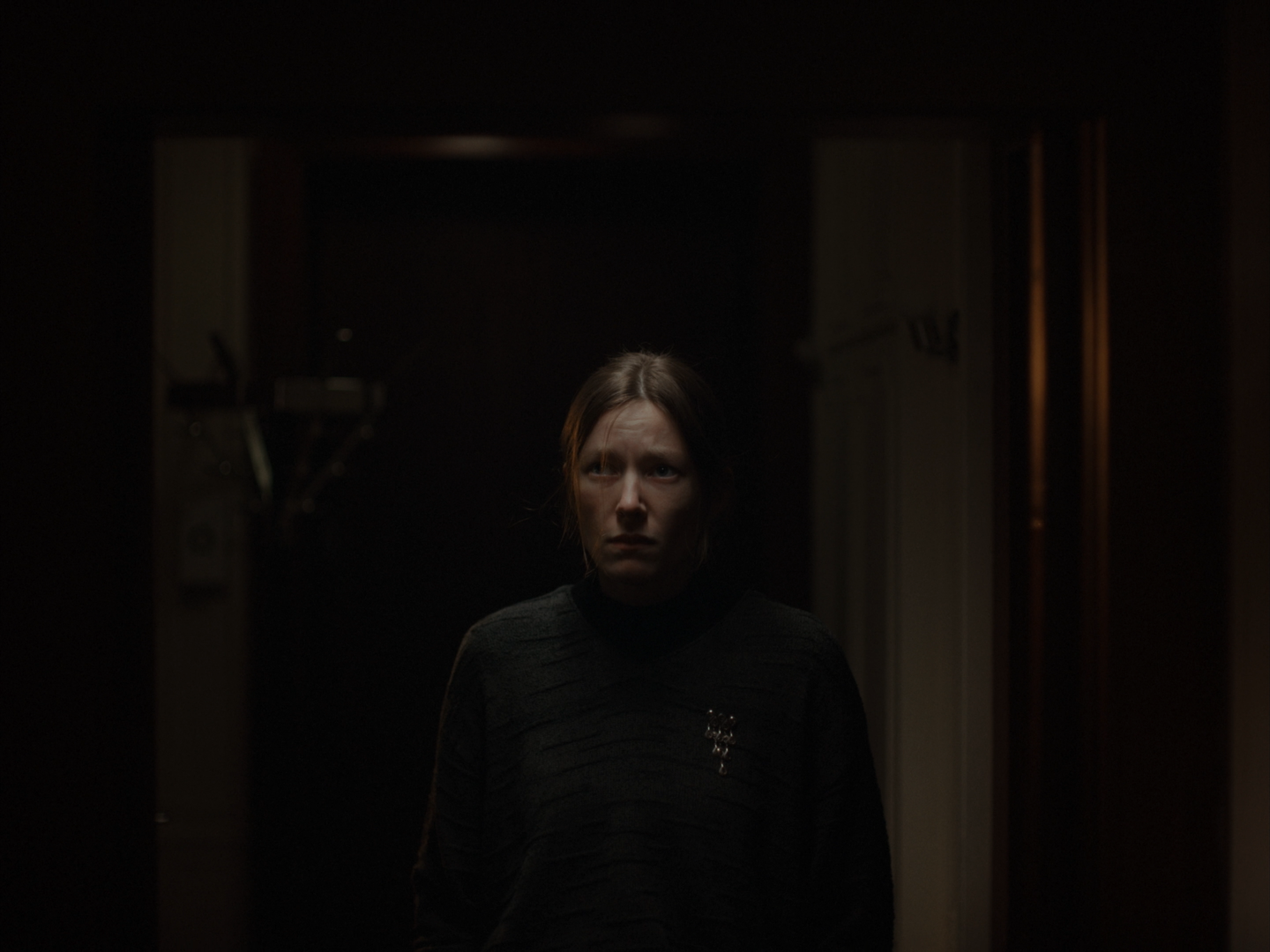
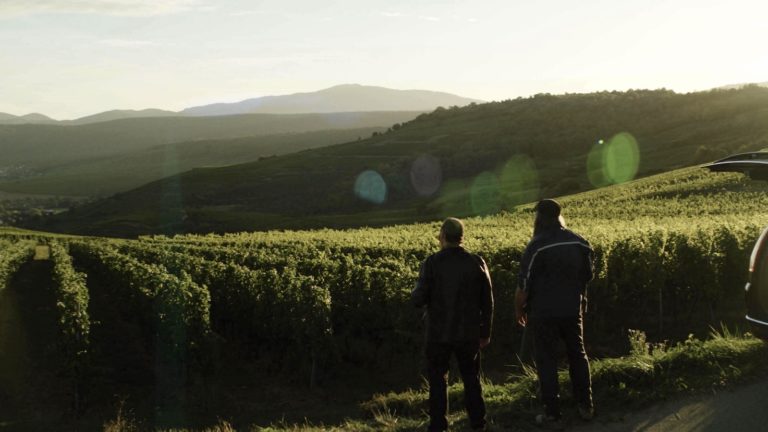
Windhund by Eloise Walker, 2026
What do you like and dislike about the job?
I love pre-production, as I’ve already mentioned. It allows you to learn, and especially to learn more about yourself through the director. And, on set, what I like best is that you have to be completely present to find quick solutions to all sorts of problems. It’s a kind of puzzle with time pressure…
What I don’t like is leaving home, leaving my family. When you go to Portugal or Bulgaria for a month, you don’t see your loved ones in the same way. The year after my daughter was born, I traveled quite a bit… It’s a little hard to miss certain moments! When you’re obsessed with your work, it’s not easy to be fully present for your loved ones; it’s a balance you have to find…
My four-year-old daughter has taken up film photography. I got her a little Kodak camera. It takes half-frames, so you get 72 photos on a roll of 36. Actually, I’m learning a lot from her because she has her own unique perspective. For example, the headroom she would spontaneously leave above a head is a little different, and it creates something… These are things you can reuse.
I try to show her photo books: for example, Highway Kind by Justine Kurland. She’s the photographer who traveled around in a van with her son throughout his childhood, taking pictures of trains. There’s also Girl Pictures, which is politically engaged. Even with photo books, my daughter asks questions. And it makes her more attentive to light. So, it enriches you too. Having a fresh perspective on the world around you is quite inspiring. It pushes you to break down your mental barriers.
What advice would you give to someone aspiring to enter the profession?
Try to shoot as much as possible, to learn, to stay curious, and to be dedicated, devoted, or committed in a certain way. In the sense that there are large sculptures, there are small sculptures, but that doesn’t define the value of the sculpture. So, when you make a short film, try to have the same passion for what you’re doing as you do for a feature film. And, in general, shoot, shoot, in the sense that you have to make as many mistakes as possible to learn…
Editor’s note: Harris Savides quotes refer to “Cinematographer Harris Savides on Trust, Birth, and Invisible Light”, The Village Voice, 2004; Alex Ballinger, New Cinematographers, Harper Design, 2004; “Interview with Harris Savides. The Filmmaking Process”, ASC, 2014.
Cover image: Eraserhead in a Shopping Net by Lili Koss, 2025.