Through a collection of Q&A portraits, the Union introduces its members. Today, Thierry Deschamp.
When and how did you become interested in cinematography?
My father, who sold VCRs and televisions (and repaired them!), was always passionate about photography. Owning several Nikon camera bodies and running a black-and-white photo lab, he passed the bug on to me, and from 1980, at the age of 11, I began developing and printing my own black-and-white photographs. I would spend entire days and nights in the darkness of the lab. Film fascinated me: the birth of an image in a chemical bath, the gradual rise of contrast.
Still connected to my father’s line of work, a second element would prove equally decisive: he set up shop next to a video rental store, so I watched a huge number of films on VHS. The visual memory of a film became as important as the film itself.
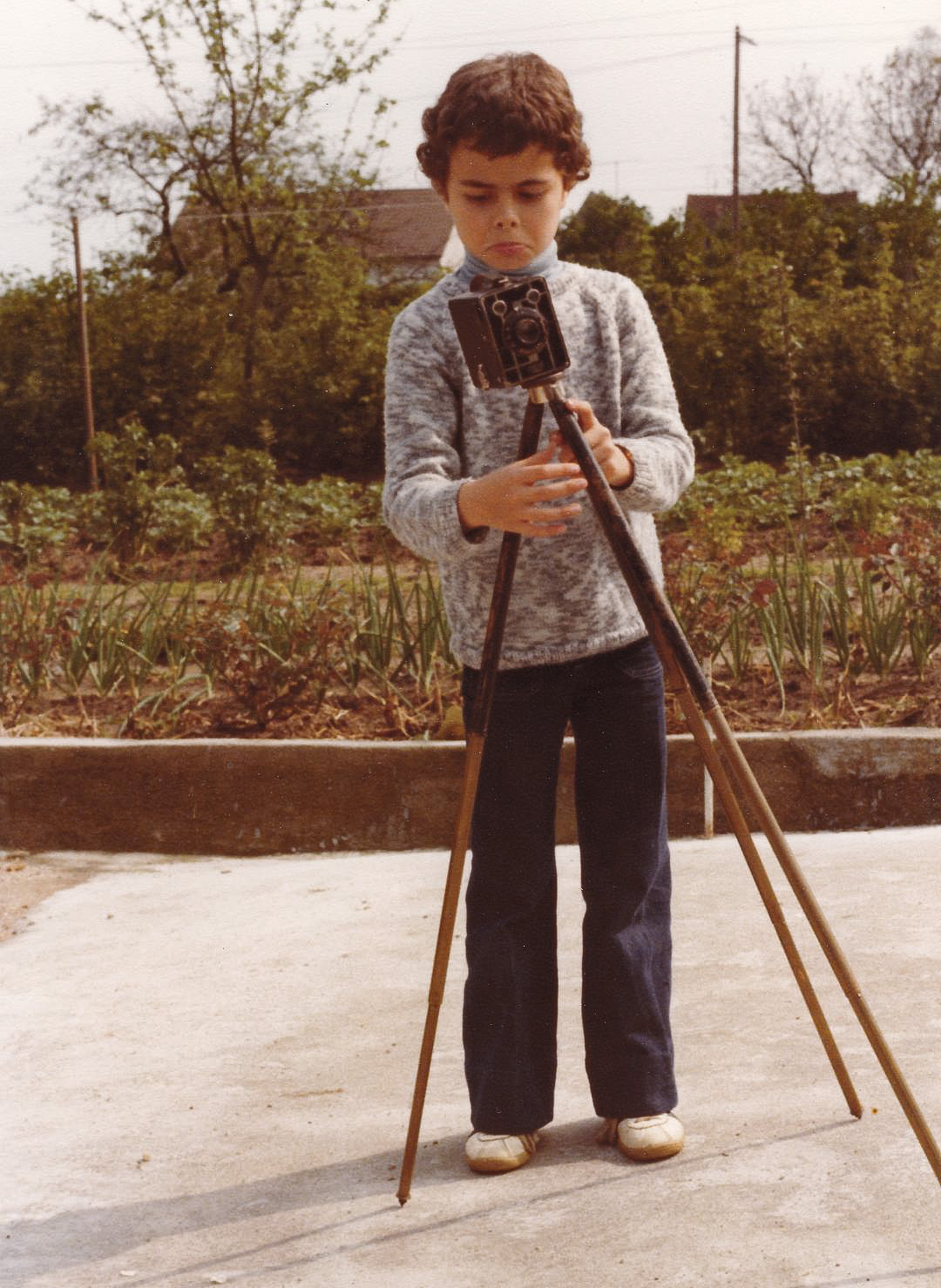 Me at 10!
Which films particularly struck you visually, to the point of sparking a specific interest in the work of the image?
At that time, many films unconsciously left their mark on me: Razorback by Russell Mulcahy, Quest for Fire by Jean-Jacques Annaud, Evil Dead by Sam Raimi, The Thing and Christine by John Carpenter, Playtime by Jacques Tati, Nosferatu by Murnau.
Genre films fascinate me.
What was your initial training?
I obtained a vocational diploma in audiovisual maintenance (MAVELEC), then completed a BTS in Audiovisual Operations and Maintenance in Roubaix in 1991 (at the time, there were only four in France). I then went on to a Master’s in Audiovisual Sciences and Techniques at the University of Valenciennes.
With a fellow student I met during my BTS, we decided to audit the film studies lectures of Louisette Faraignaux at the University of Lille 3 as independent students, allowing us to fill in the gaps in our cinema history knowledge! We finally prepared for the FEMIS entrance exam, which we both passed. He in sound and me in cinematography (8th class).
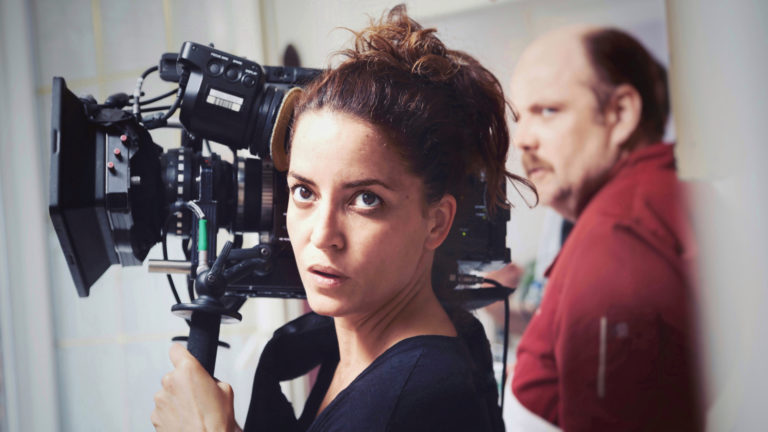
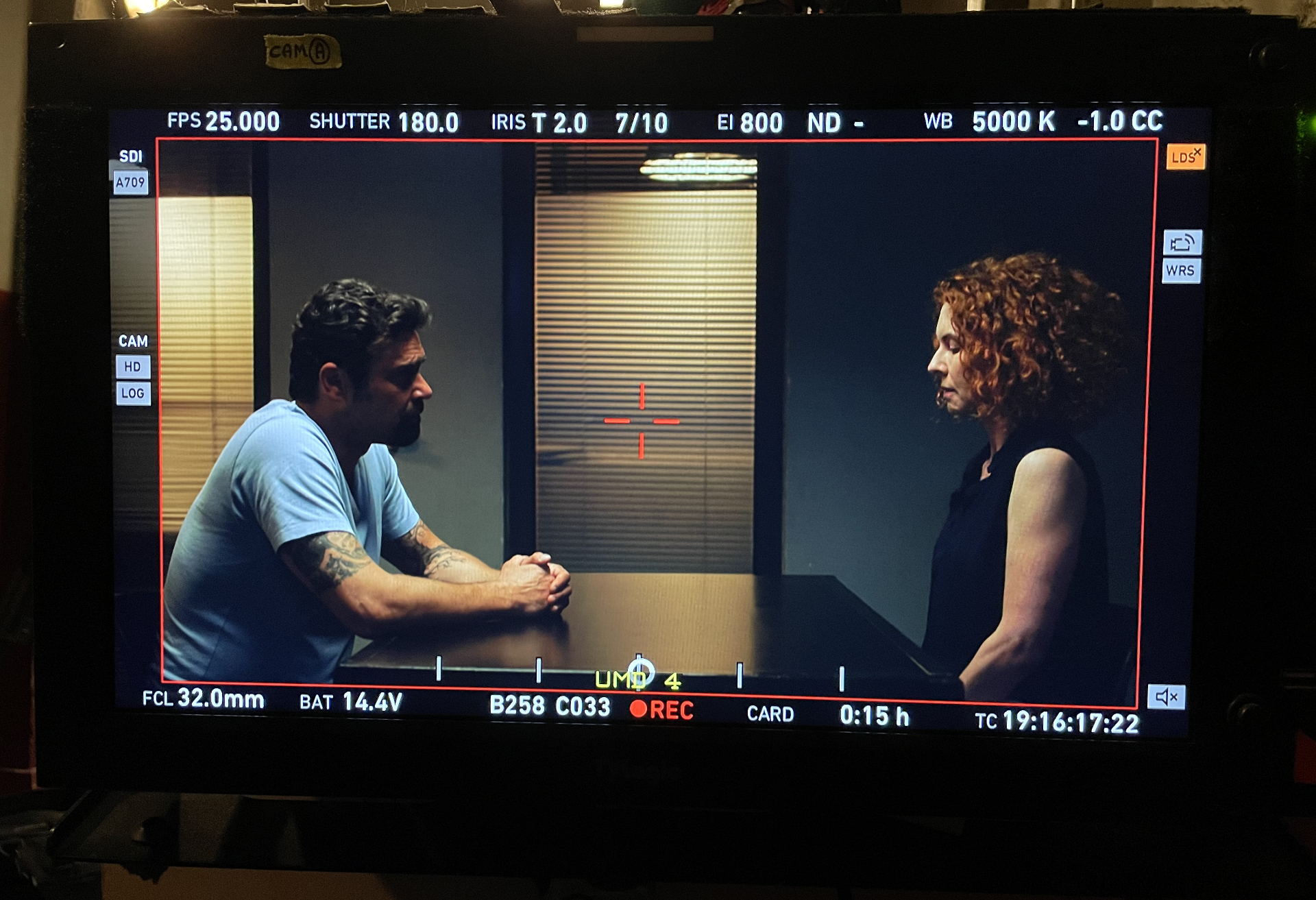 On the set of Demain nous appartient (June 2021) directed by Sandra Perrin – production Telsete
When and in what context did you start working as a cinematographer?
After three short years as a camera assistant, it was a director friend, Pascal Vasselin, who decided to get me into commercials with the company Franco-American (from 1999). At the time, the two producers Jacques Arnaud and Serge Fournier took me under their wing (Canal Sat, Danone, SNCF, Panzani, etc.).
Still in commercials, I then went on to work with the company Dissidents. In 2000, director Gilles de Maistre decided to hire me as director of photography on his feature film Féroce.
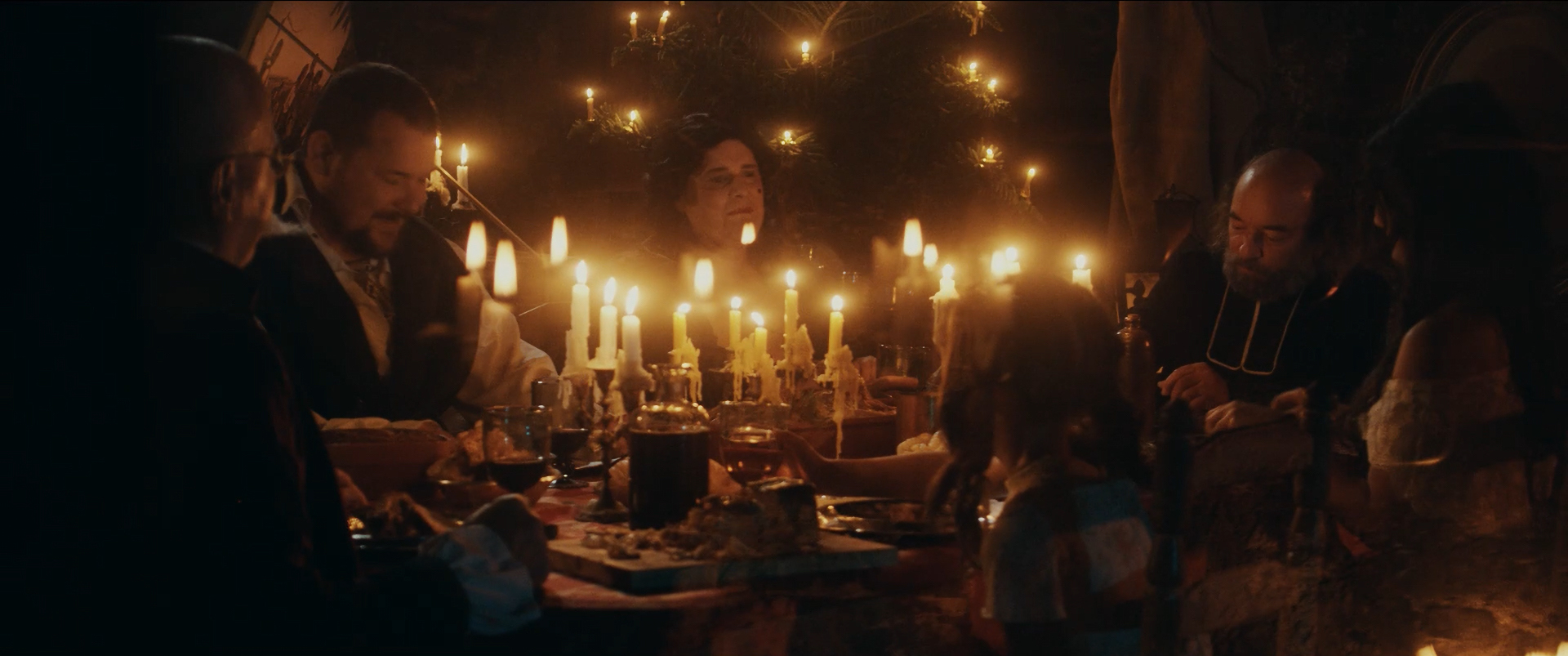 Pied’Bwa short film by Olivier Mehari – Catwell production
What types of films have you worked on and what would be the ideal next project?
Thanks to the diversity of my training, I’ve worked on a very wide range of projects.
I’ve notably worked on numerous TV movies, series, and daily soaps (Équipe médicale d’urgence, Profilage, produced by Beaubourg Audiovisuel; Elodie Bradford for M6; Interventions for TF1 produced by Gaumont TV, Julie Lescaut produced by GMT, Demain nous appartient produced by Newen), numerous music videos (for Grand Corps Malade, Arno, Lara Fabian, France Gall, Star Academy) and a fair number of live recordings (Johnny Hallyday at the Parc des Princes, Dionysos, Arthur H, Asia, Manu Katché, Black M, Gaspard Proust, Jean-Luc Lemoine, Vincent Moscato, Gad Elmaleh, Cléopâtre by Kamel Ouali)…
For me, the ideal next project will simply be the next project — whether it’s fiction, a live recording, or a TV programme, as long as it allows me to light stories and characters.
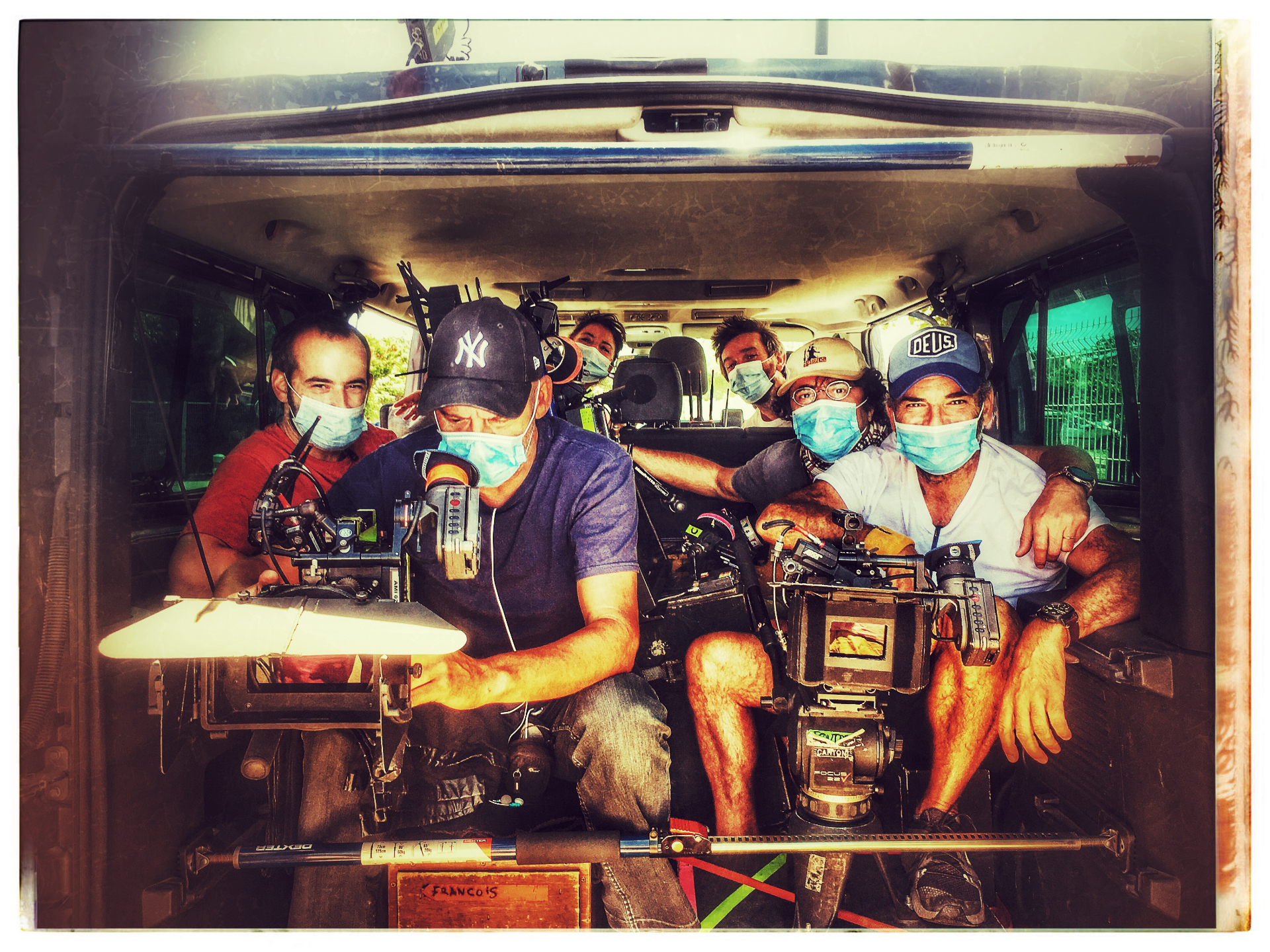 On the set of Demain nous appartient (September 2019) directed by David Lanzmann with Maud Becker and Hector Langevin – production Telsete
What are your artistic sources of inspiration?
My inspirations are manifold, but they are first and foremost shaped by mood and the present moment. They remain deeply rooted in the film culture I’ve acquired over all these years.
I’m a cinematographer who proudly claims his cinephilia, strongly influenced by filmmakers who themselves embraced cinephilia (Wenders, Jarmusch, Scorsese, Spielberg…).
I love the idea of working in collaboration with directors around cinematographic and pictorial references: a painting, a film excerpt are for me starting points for discussion and for shaping the visual identity of a project.
Do you recall any regrettable blunders that turned out to be instructive?
I remember a very funny anecdote that happened to me quite a few years ago.
I’ve been working for 20 years with Gérard Pullicino, a television director. Gérard had sold the idea, on the occasion of a live recording of M Pokora, of directing a duet music video with Robbie Williams.
I was in charge of filming all the backstage footage, handheld (the artists’ arrival, discussions around the stage…). At the end of the afternoon, when Gérard’s editor looked at the rushes, he realised that I had spent all my time filming Robbie Williams’ manager instead of Robbie Williams himself!
It was very embarrassing, but Gérard Pullicino never held it against me. We still laugh about it today!
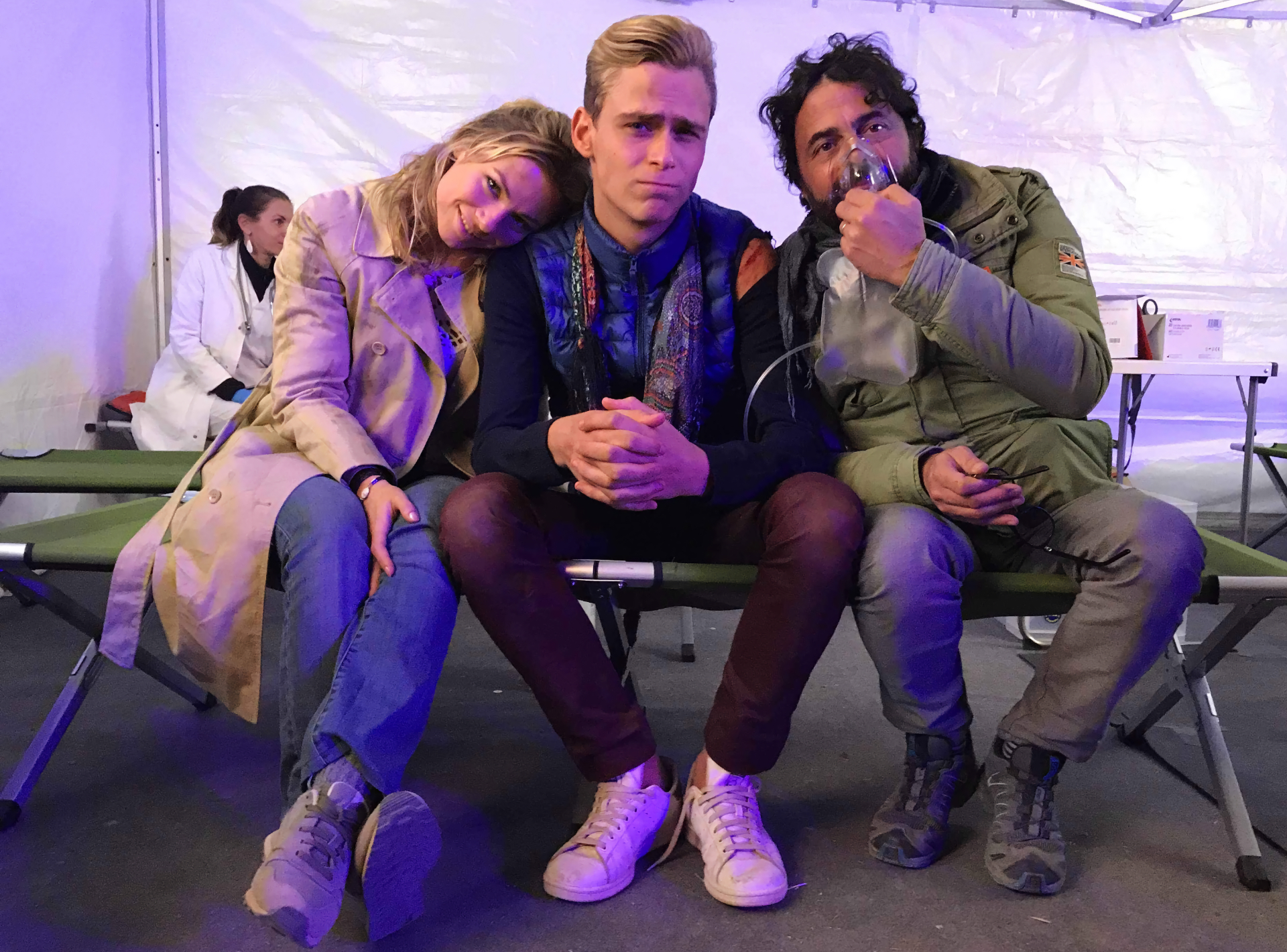 On the set of Demain nous appartient (September 2019) directed by David Lanzmann with Maud Becker and Hector Langevin – production Telsete
Do you recall a particularly original camera or lighting setup?
I recall two shoots with particularly complex setups.
The first was a Lara Fabian music video directed by Gérard Pullicino, on a 360-degree green screen with 11 different tableaux linked together. The artist moved through the different eras of her life in a single continuous movement. It was an enormous production!
The second was the shoot of the Louboutin show for the Crazy Horse in stereographic 3D, directed by Bruno Hullin, which was an incredible technical and artistic challenge.
Have you ever wanted to move into directing?
Yes, for quite some time now, and I’m doing it very gradually.
A long time ago, I directed a fun little commercial promoting a group of advertising creatives who wanted to encourage short film screenings in Paris…
I’ve been directing a small low-budget series for TF1 for 3 years (Petits Secrets Entre Famille et Voisins) and I’ve just finished co-writing a documentary project in the style of Chef’s Table with a very good director friend, Martin Day.
Directing is for me the natural extension of the profession I’ve been practising for over 20 years.
What do you love and what do you dislike about your profession?
Since I became a director of photography, I’ve never felt like I was going to work. I do what I know how to do and nothing else. I have just as much fun as at the beginning of my career and as much as when I used to recreate film scenes with my brother right after watching them.
In short, this profession is everything I love and it’s the one I’ve wanted to do since my adolescence.
What I hate most about this profession is the end of shoots: it‘s always very sad to leave a project.
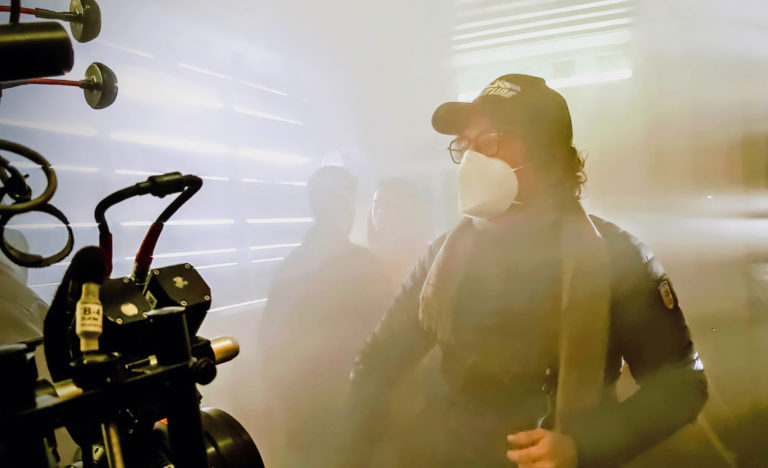
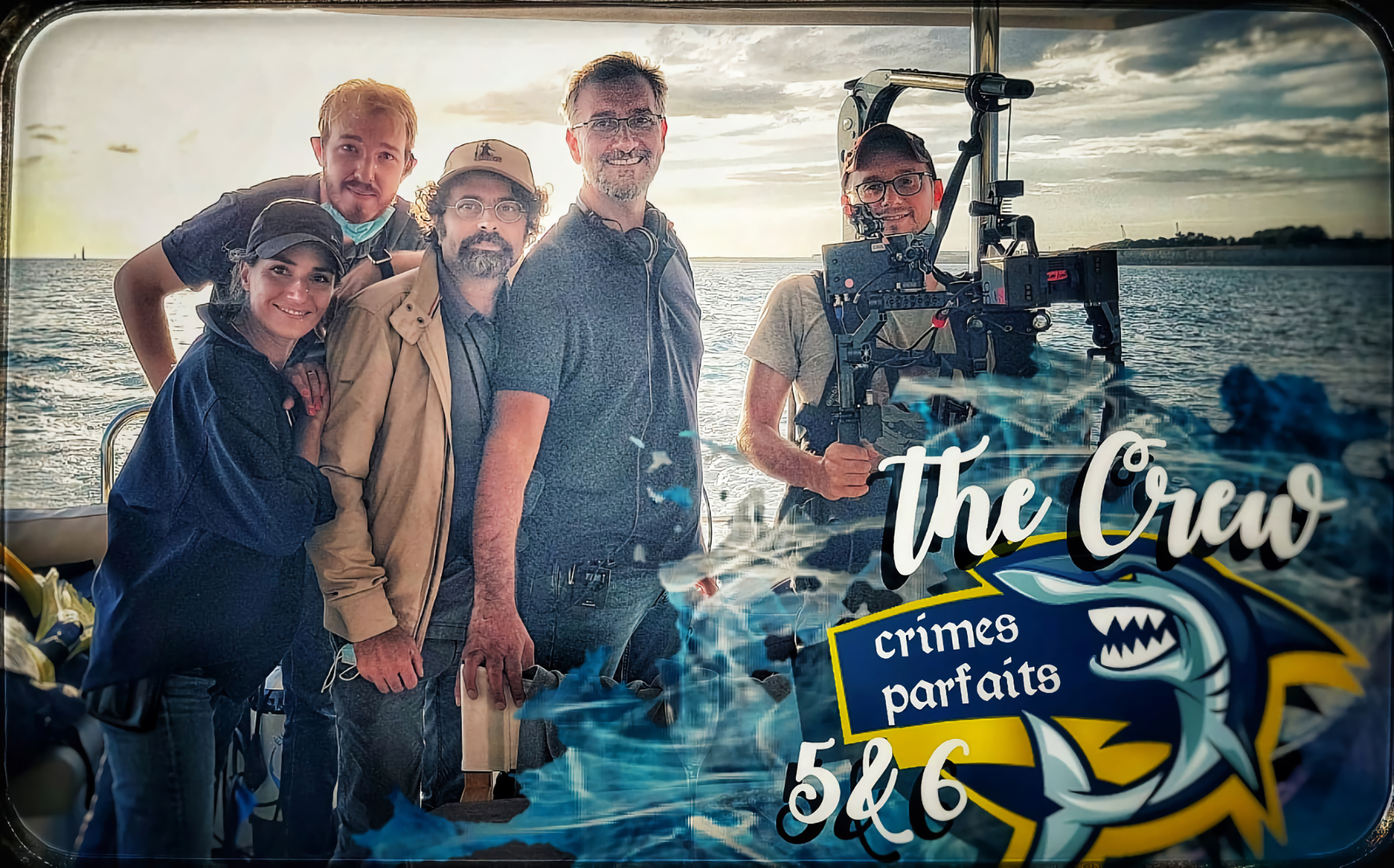 On the set of “Crimes parfaits” directed by David Ferrier – production Salsa et FTV Studio
What advice would you give to an aspiring cinematographer?
Actually, two pieces of advice:
– The road is long and impatience leads nowhere: stay true to yourself and enjoy what you do.
– Hard work creates opportunities, and always pays off eventually.
Thierry Deschamp on the United Cinematographers website
> Cover image: on the set of Demain nous appartient – production Telsete