About the film Ourse (Bear), by Nicolas Birkenstock, selected in national competition at the Clermont-Ferrand International Short Film Festival 2021.
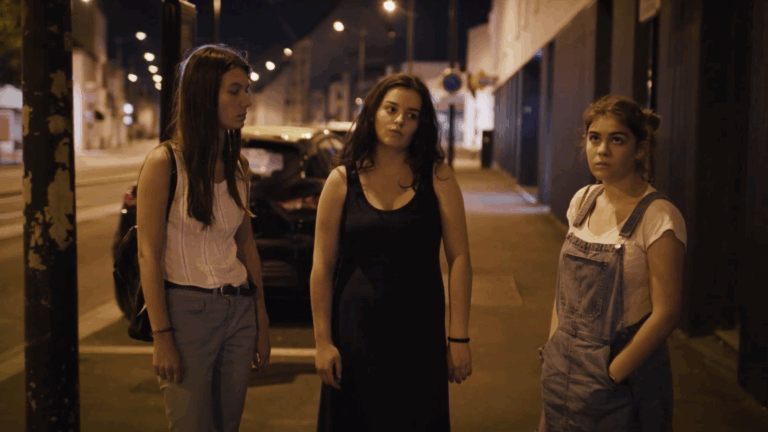
Ourse had been a carefree teenager until recently, but she has become a sleepwalker, wandering outside at night. Her mother tries to cure her of this affliction. But Ourse does not want to be cured, determined to understand where her sleep takes her.
Astronomical pre-shoot
We shot the first shots of Ourse more than a year before the main shoot. The screenplay was not yet finalized, but one of the sequences took place during a lunar eclipse. And on the night of January 21, 2019, a total lunar eclipse was visible over Paris. It was a gamble, but I was convinced that if we did not have these shots, the sequence would disappear for lack of money to buy stock footage. We had to find a location with the right orientation, high enough not to be blocked by buildings (the elevation was going to be quite low), borrow the camera from the documentary I was shooting that week, and rent a long focal length lens with a wide enough aperture. The director and I spent very cold and somewhat magical hours on the terrace of the Paris Observatory, and ultimately, the eclipse scene opens the film.
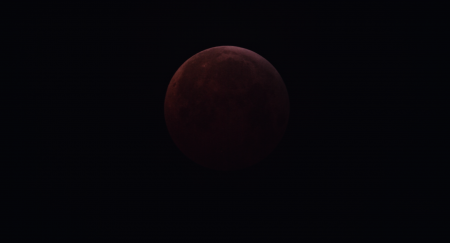
Total lunar eclipse
“Found footage”
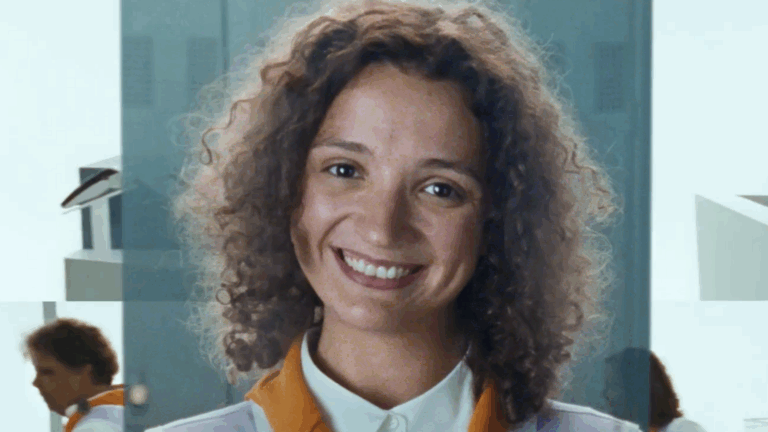
To find out where she goes during the night, Ourse’s best friend lends her a GoPro, which she attaches to a bicycle helmet and activates before falling asleep. In the morning, she can review the footage of her wanderings.
I knew that for poorly lit night exteriors, the on-set GoPro would probably not be the right camera. A few weeks before the shoot, we tested several cameras: the GoPro Hero8, an Osmo 2, a Sony DV in night shot mode, and an Alpha 7S II. Following the color grading of these tests, we decided our sleepwalking camera would be the Alpha 7S II: its extreme sensitivity was a definite asset, but we found its image far too smooth. We “dirtied” it by adding in post-production the flaws from the other cameras that we liked: the GoPro’s optical distortions and the DV grain, among others. Our sleepwalking camera would have its magic, but our main camera had to hold its own as well.
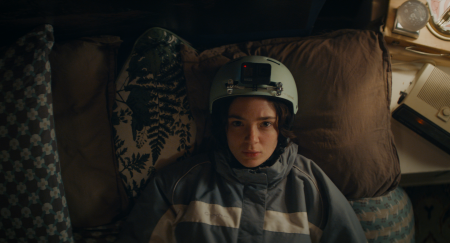
Armande Boulanger and the on-set GoPro
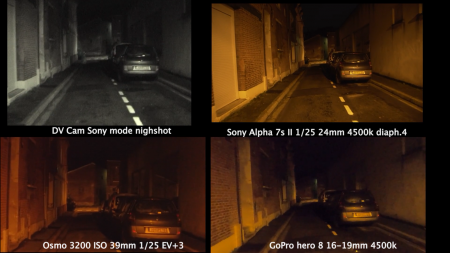
Sleepwalking camera comparison
“Teen movie”
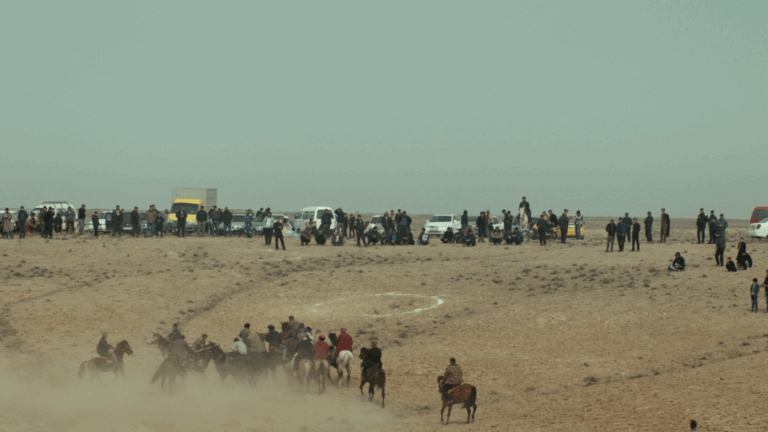
Ourse is a film that oscillates between reality and fantasy. The protagonists are at that age where one still likes to believe in the supernatural, in many ways more welcoming than adulthood. We exchanged very diverse references ranging from Tarkovsky photographs to The Blair Witch Project by Myrick and Sanchez or The Others by Amenábar. We wanted the border to be porous in the film, to feel that “reality” could tip over. We did not want a 2.35 ratio that would have seemed forced for the GoPro footage, nor vertical black bars on either side when these images were displayed full frame — the film would therefore be in 1.85 format.
However, I sensed that Nicolas would like anamorphic. Through its optical process that differs from our eyes much more than spherical focal lengths, it allows “derealizing the image” in both the so-called fantastic sequences and those of everyday reality. Also because of what it brings in terms of self-reference — the way images shot in anamorphic refer us more to cinema, and therefore to our myths, than to reality.
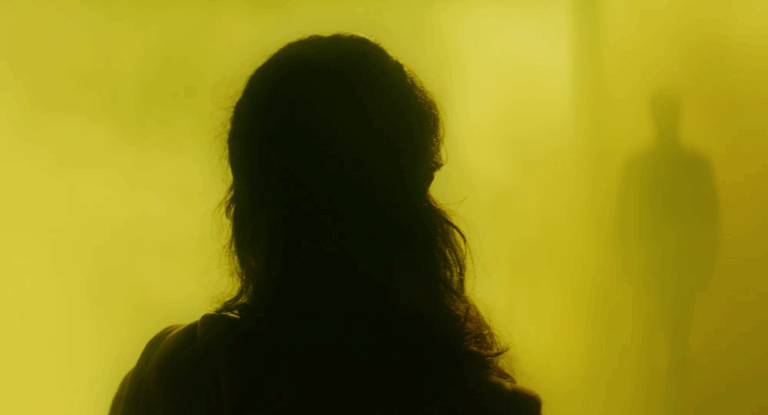
At the time of our shoot, in February 2020, Panavision could provide us with the Primo Prime (AL) series. It is characterized neither by its lightness nor its compactness, but we were won over by its rendering, as if the cinema of our adolescence had invited itself into this film about two teenagers. Better than magic: Hollywood! To complete the kit, an Alexa Mini compensated for the bulk and weight of the lenses. All that was left was to cross our fingers that our night in the Norman forest would not be too windy so the smoke would stay in place.
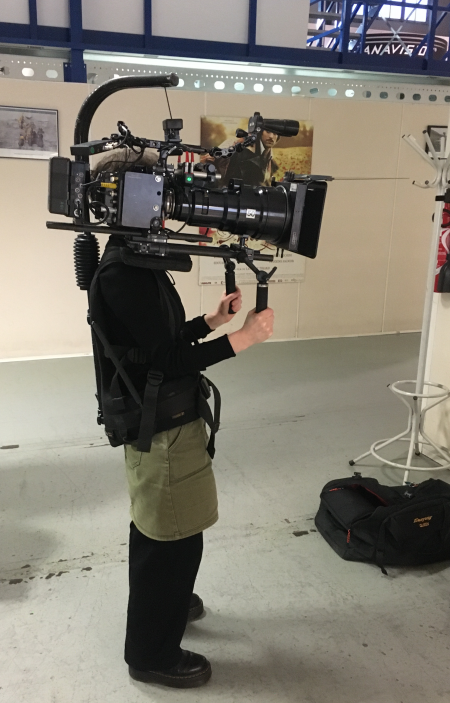
Arri Alexa Mini and Primo Anamorphic Prime 50mm
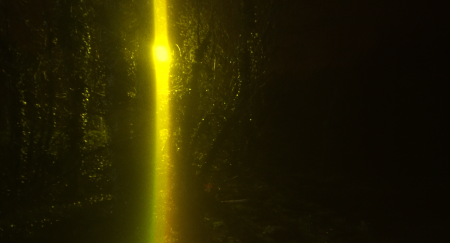
Nocturnal wandering – Alpha 7SII
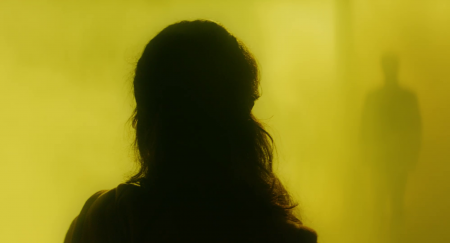
Apparition
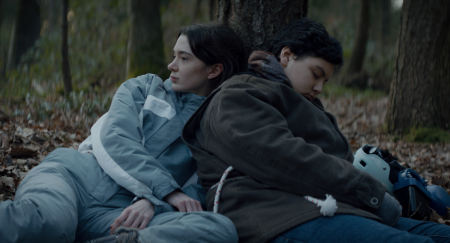
Awakening
Crew
1st assistant camera: Eléa de Celles – Gaffer: Bertrand Artaut – Key grip: Laura Marret – Steadicam operator: Florian Berthellot – Colorist: Vincent Amor – VFX: Sylvain Coisne
Technical
Camera equipment: Panavision Alga (Arri Alexa Mini, Primo Prime anamorphic series, Sony Alpha 7S II, ratio 1.85:1)
Post-production: Micro Climat