In 2014, Okjökull lost its status as a glacier, the first in Iceland to disappear. In Time and Water, Sara Dosa (Fire of Love) follows writer Andri Snær Magnason, tasked with writing its obituary, as he draws on the family and expedition films of his grandparents, pioneers of Icelandic glaciology. Presented as a special screening at Camerimage, the documentary makes these scratched, blurry home movies the very heart of its story.
At the 2026 Camerimage Film Festival, I had the opportunity to attend a special screening of the documentary Time and Water, a love and heartbreak story about Iceland and the first of its glaciers to die. It’s the latest work by director Sara Dosa, known for her Oscar-nominated documentary Fire of Love, which tells the story of volcanologists Katia and Maurice Krafft almost exclusively through their own archival images. Much like Fire of Love, this film is primarily illustrated through Icelandic archival sources, which play an integral role in its core message and in the story of its narrator, Andri Snær Magnason.
And so we follow the voice of Andri, an Icelandic poet, writer and environmental activist, who is tasked with writing an obituary for the Okjökull glacier, declared dead in 2014, for which a memorial ceremony is being held. In his search for the words that will commemorate this tragic event while prompting generations to come to reflect, he is moved to create a visual time capsule, which is revealed to us through this film.
The archive as a form of visual storytelling
What I find so unique about this documentary is the central role given to archival sources. They’re not here merely to support the story, but to act as a portal to life, history and memory itself, now accessible across generations. Through them, Andri illustrates complex and sometimes abstract concepts such as climate change and its impact on society through a deeply personal lens. He does so seamlessly, drawing from footage of his grandparents’ lives as well as his own.
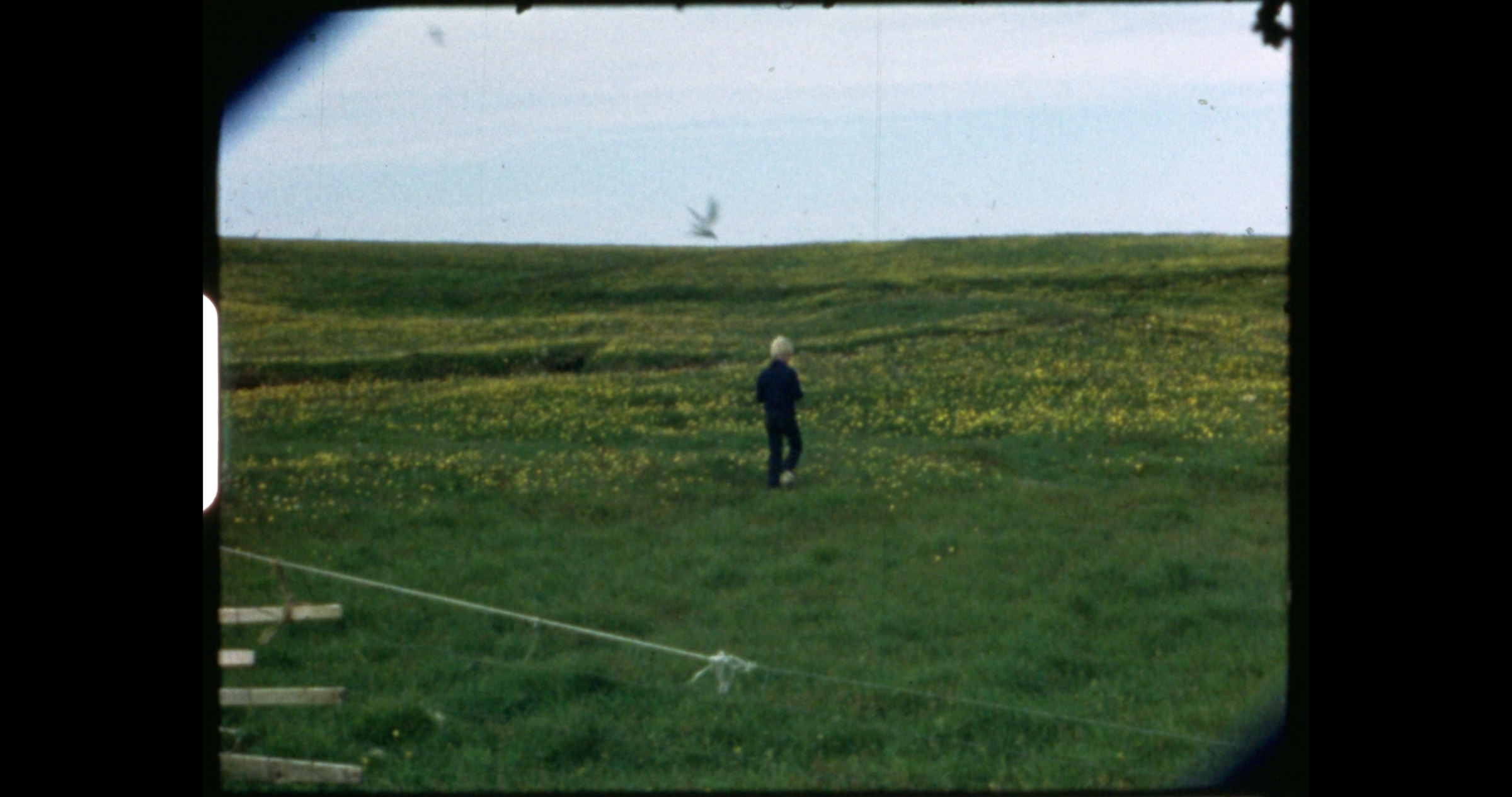
Little Andri in a field with Arctic terns flying above him. Archival materials courtesy of Andri Snær Magnason
Sara says Andri wanted to film everything he loved in his life, keeping in mind the ticking clock of human mortality. This is a powerful approach. By creating this time capsule, he attempts to echo the methods used before technology to pass down wisdom and history orally through folklore and mythology, from one generation to another.
It is not an easy task to tackle such a delicate and often polarizing subject as climate change without portraying it solely through activism. Harder still to approach it in a way that feels loving and personal. Sara was inspired by Andri’s book, On Time and Water, and moved by his ability to take overwhelming concepts and translate them into something human and accessible. This was key to communicating the heartbreaking climate crisis of melting Icelandic glaciers through his voice, which remains playful and joyful even while addressing such a grave matter.
The intimacy of imperfect images
And so we embark on a moving journey through Andri’s family memories, explorations and home movies. We encounter an array of formats: Super 8, 16mm, iPhone and DV. They’re old, out of focus, scratched and pixelated. Something that could be a cinematographer’s worst nightmare. Yet they are perfect. They are moving and convey an authentic nostalgia, not the kind we usually try to mimic through aesthetics. They contain the essence of a life fully lived in a beloved land. This is not a distant subject; we are brought into intimacy.
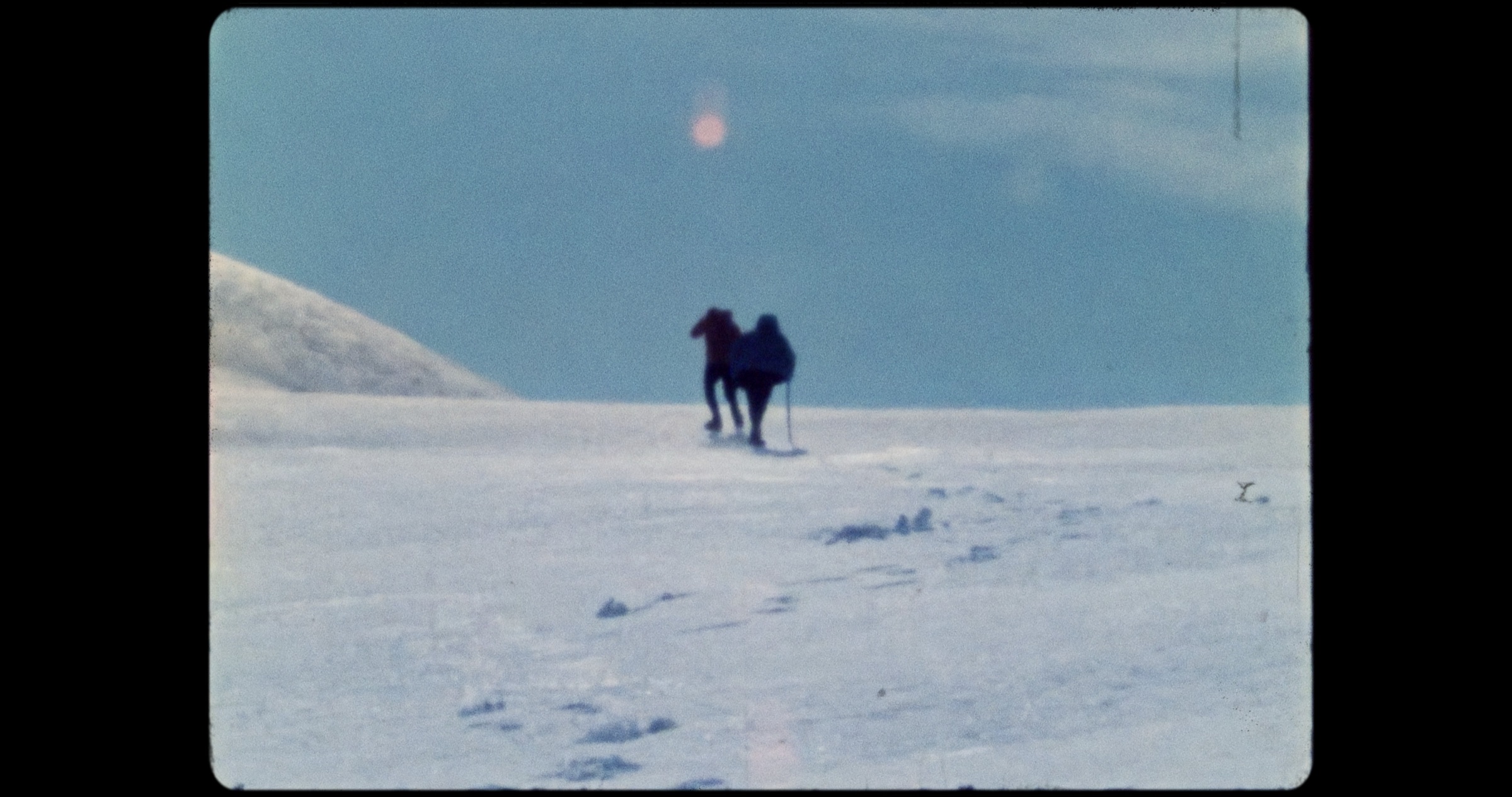
Two people hike up a slope on a glacier. Archival materials courtesy of Andri Snær Magnason
Images, memory and inheritance
Archiving is directly connected to memory: it’s a way of documenting something that will most likely change or cease to exist. And here lies the brilliance of Andri’s storytelling. His grandparents were among the first to film Iceland’s glaciers and were founding members of the Icelandic Glaciological Society. Their love of the land is deeply rooted, and he intentionally gives them space and a voice through family footage, photographs and films of their adventures, as well as the tales they recall. As he captures his family and grandparents on video, we see them evolve and grow older, but we also see nature evolve. As his grandparents begin to lose their health and memory, he draws parallels between their lives and Iceland’s climate crisis through the themes of love, grief and inheritance.
There’s a powerful passage in the film where he recalls one of his grandparents saying to him, “To hold an ice core is to hold the earth’s memories in your hand.” Frozen water stores traces of past atmospheric conditions, such as gases, dust, volcanic ash and pollutants. Yet as the ice melts, so does its memory, and that part of history is lost forever.
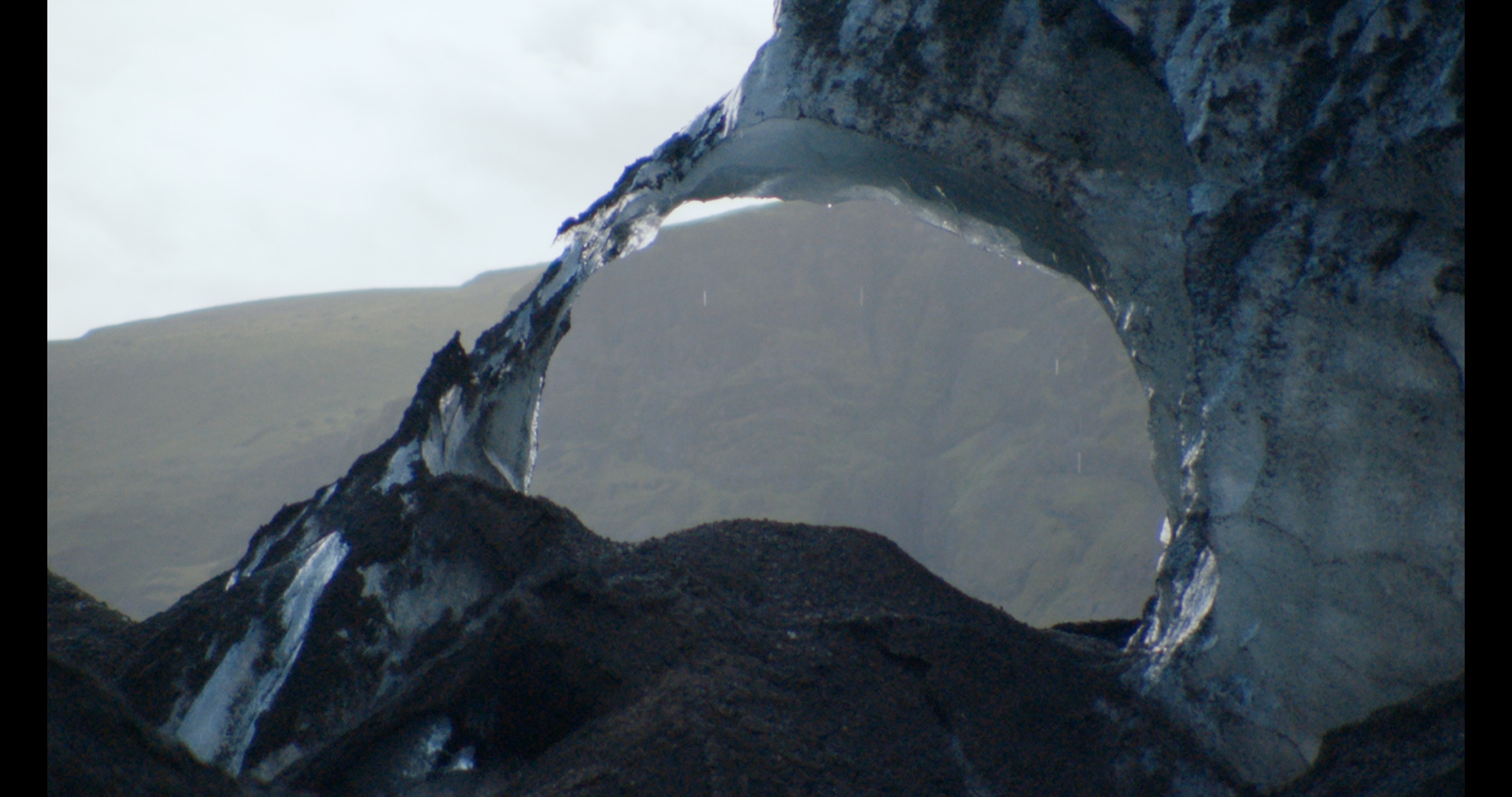
Melting arc made of glacial ice. © National Geographic
Another element in the film linked to memory is folk songs from the archives. While working at the Árni Magnússon Institute, Andri discovered a recording of folk songs (rímur in Icelandic). These were rhyming narrative song poems passed down orally across generations, recorded almost 100 years before he listened to them, among the first audio recordings made in Iceland. He tells us about one song he used to play to his son as a baby to calm him down. It is a song about the end of time. There is something almost prophetic in this: a song that might otherwise have been lost to forgotten tradition is still being passed down to his son as a lullaby, carrying a kind of premonitory wisdom about the times we are living in now.
Seeing the landscape as a living force
The documentary doesn’t rely solely on archival imagery. Present-day landscapes of Iceland, its glaciers, its nature and the Library of Water in Stykkishólmur are shot by cinematographer Pablo Alvarez-Mesa. Sara wanted an intentional approach to how they were filmed. She recalls an Icelandic woman, interviewed for another documentary project with Andri, who said she was in communication with spirits of nature. She also stated that the way you see the land determines your relationship with it. This became key to their approach to cinematography and sound design, viewing glaciers not as blocks of water but as living forces. The present-day images in the film thus become part of Andri’s time capsule: the landscapes are not merely illustrations of nature, but a testament to the life of these glaciers, what they are in this moment and how they will be remembered.
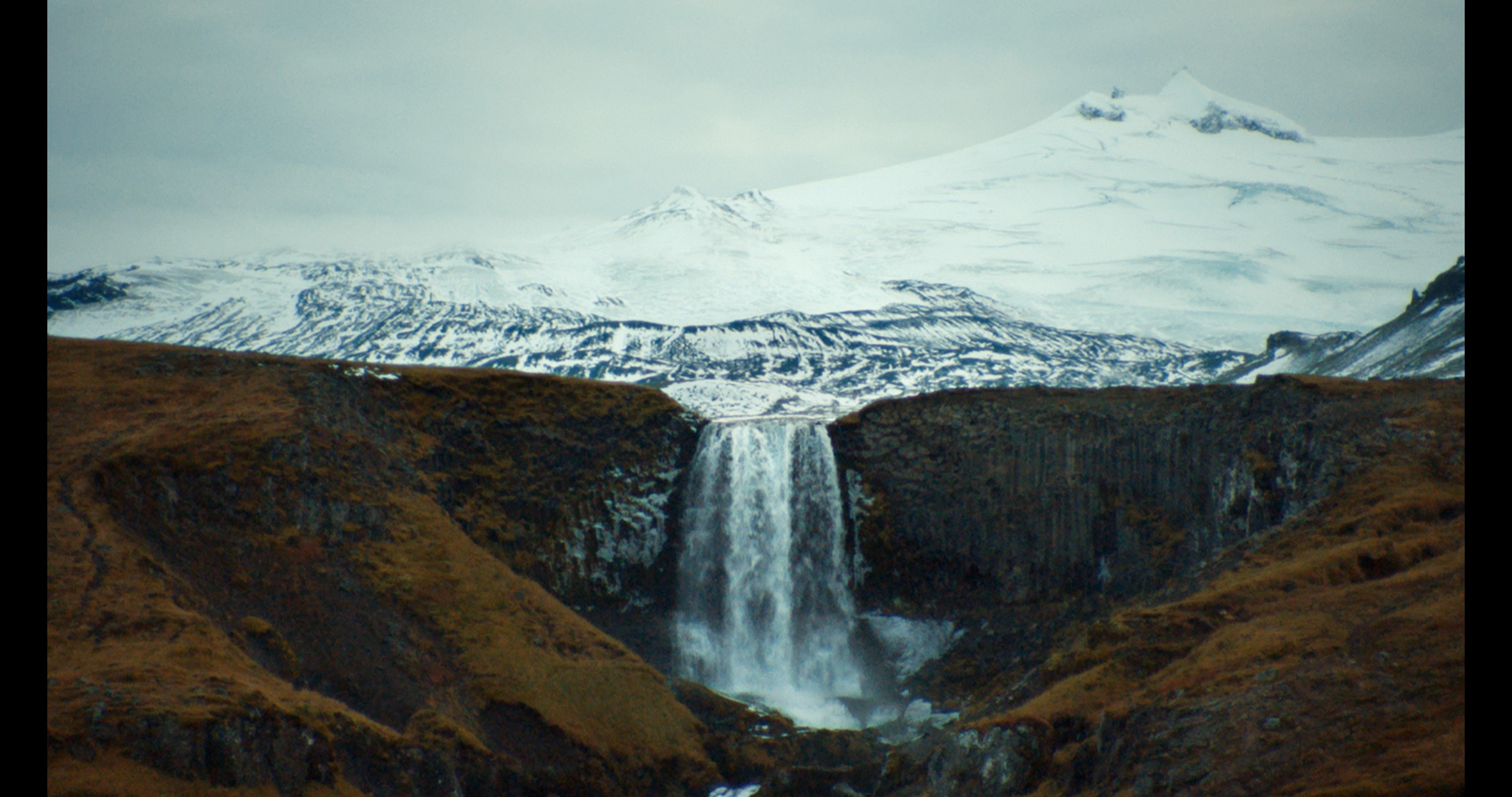
A glacial tongue behind a waterfall. © National Geographic
One of the most precious reflections I retain from this film is that nature responds directly to humanity, and vice versa. We are forever interconnected. This beautifully captivating film becomes an archival piece for future generations, allowing them to witness life as it was and as it is, while reflecting on what is to come and the role we all play in it. History and information no longer rely solely on being passed down from generation to generation; they are directly accessible to us.
As for the obituary that Andri Snær Magnason wrote for the memorial, I will let you discover it when watching the film. I can only say that his words act as a powerful mirror for self-reflection.
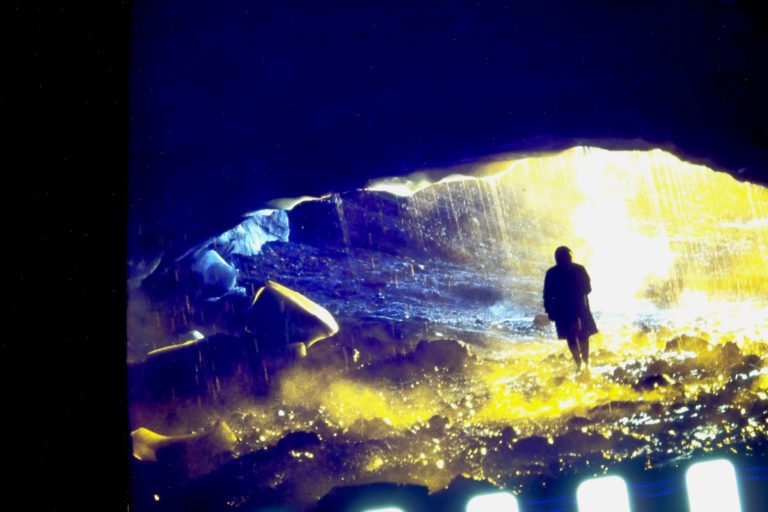
Cover image: a silhouetted person stands beneath the vaulted ceiling of a glacial cave in Iceland. Archival materials courtesy of Andri Snær Magnason.