Synopsis: “Thirty-four days before her incarceration, infamous Silicon Valley founder Elizabeth Holmes invites a skeptical film crew to document her every move.”
During the Q&A that followed the film’s screening at Camerimage 2026, the film’s cinematographer, David Bolen, told us the project came together very quickly. After an unsuccessful attempt to shoot anamorphic, he devised a setup to serve the central wish of the directors, Nathan Fielder and Lance Oppenheim: everything had to be filmable. No action is rehearsed; nothing is to be replayed for the camera.
“We were constantly shooting with three Alexa 35s. So our DIT never slept.”
David Bolen
Three cameras, no rehearsals
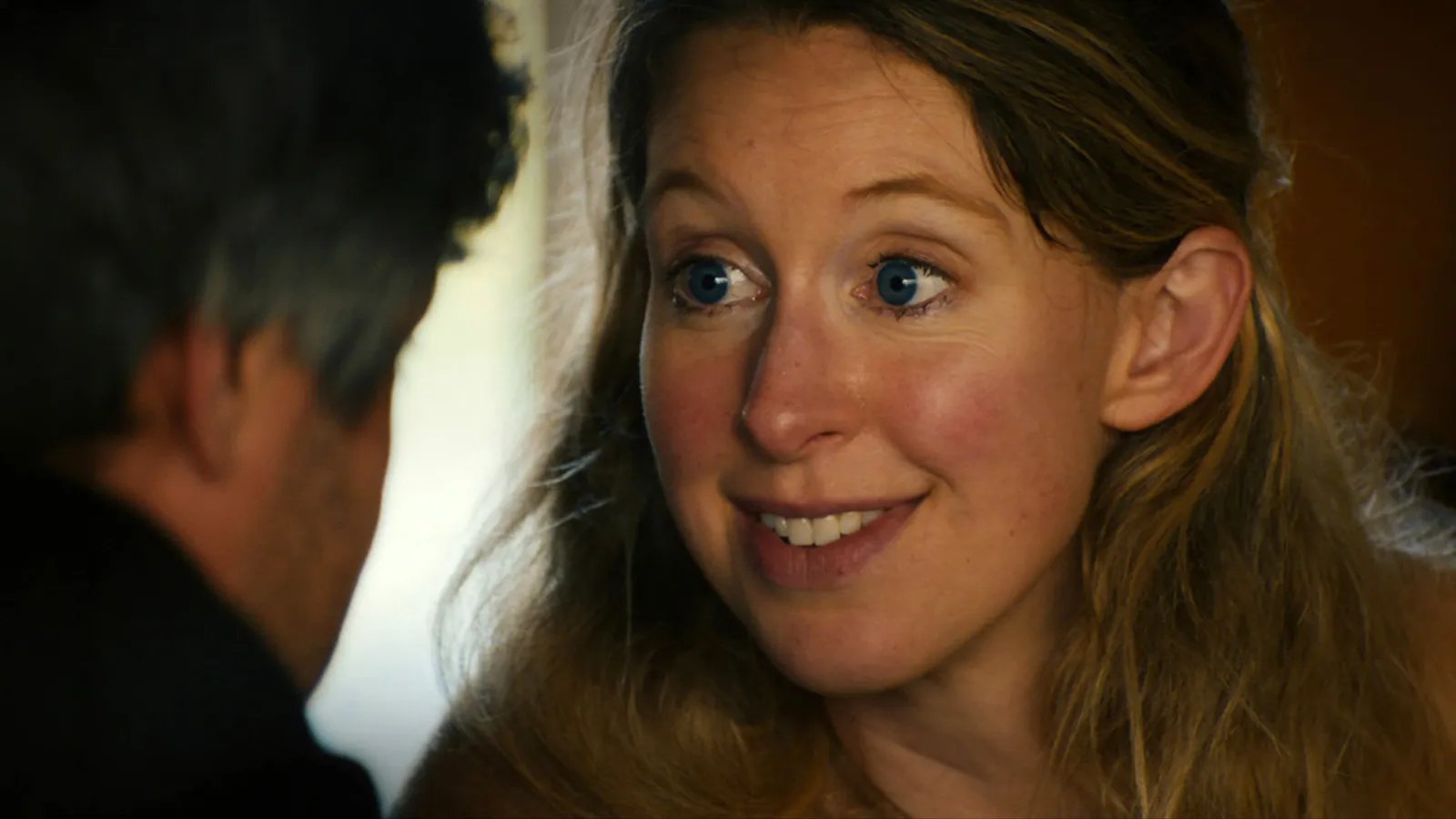
Three Alexa 35s roll continuously, up to 16 hours a day: two are fitted with 25-250mm HR zooms, the third with a 12mm that takes in the whole house. The frame is 4:3, and not a single light was set up: Bolen works only with the daylight coming through the windows and, at night, with whatever light the house provides. The setup alternates between very wide shots on the short lens, like a fly on the wall of the domestic space, and close-ups at very long focal lengths that make the protagonists’ slightest expression legible.
You Can See Everything, by Nathan Fielder and Lance Oppenheim. © A24
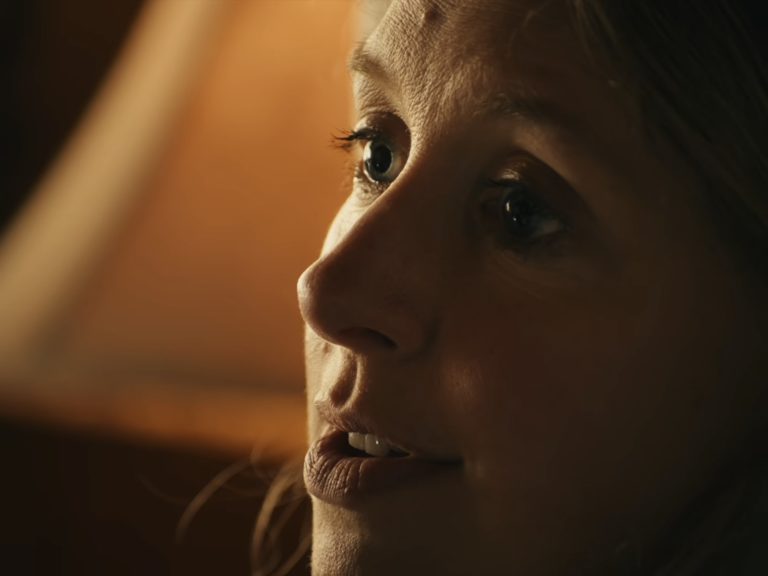
For it is Elizabeth Holmes’s face, above all, that the film studies with great care. The close-ups, with a Cassavetes-like insistence, linger on the former entrepreneur. Each one becomes the stage for an endless question: is Liz the greatest manipulator of the century, or the victim of an unfortunate chain of circumstances? The closer the camera gets, the further away the answer seems. The question gives way to the vertigo of our inability to find, in another person’s face, anything that answers it. One thinks of the successive enlargements in Antonioni’s Blow-Up. We look for the truth, and by enlarging and moving ever closer to the detail of the image, we find only grain and abstraction. The principle is the same.
Rehearsal as a magnifying glass
Fielder cultivates this vertigo in the second part of the film with the tools of his own filmmaking. He brings back his rehearsal device, already at the heart of his series The Rehearsal, and uses it as a magnifying glass. Situations that could not be recorded are re-enacted with actors so their every implication can be examined. Each turn of phrase is weighed, in the hope of bringing a truth to light. But each rehearsal, instead of settling the question, opens new ones, which unfold as in a kaleidoscope. Right up to the end of the film, they keep us wondering about what we saw, or thought we saw, over those three hours.
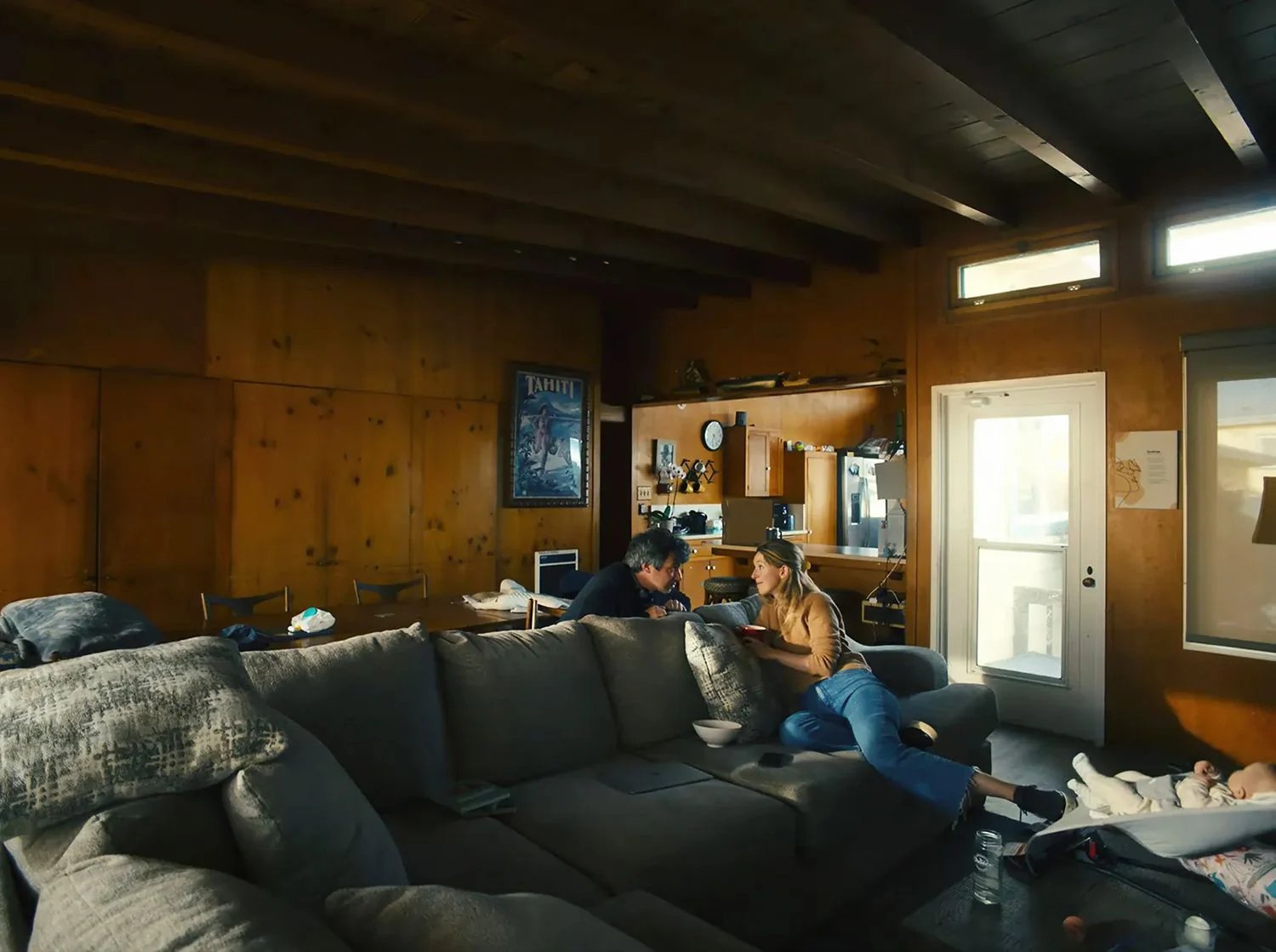
You Can See Everything, by Nathan Fielder and Lance Oppenheim. © A24
The device ends up turning against the viewer. It forces us to question our own perception, our own relationship to the truth. We leave the screening disoriented, wondering whether we have just seen one of the most important films of recent years. A must-see.
You Can See Everything opens in French theaters on December 30, 2026, distributed by Metropolitan FilmExport.