Inspired by the attempt of assassination of the Chilean dictator in 1986, the movie tells the story of several members of the Manuel Rodríguez Patriotic Front and how they set up the operation, which gathered twenty members of this armed wing of the Chilean Communist Party. Audience won’t be surprised to know that Pinochet survived the attempt, even if he suffered slight injuries.
First envisioned as a documentary, it eventually became the first feature film of director Juan Ignacio Sabatini. A few years ago, the country encountered a time of revolt, that pushed Juan to tell this story, but the idea of making a documentary movie with too few filmed documents and too few actors still alive convinced him to dive into a fictional story.
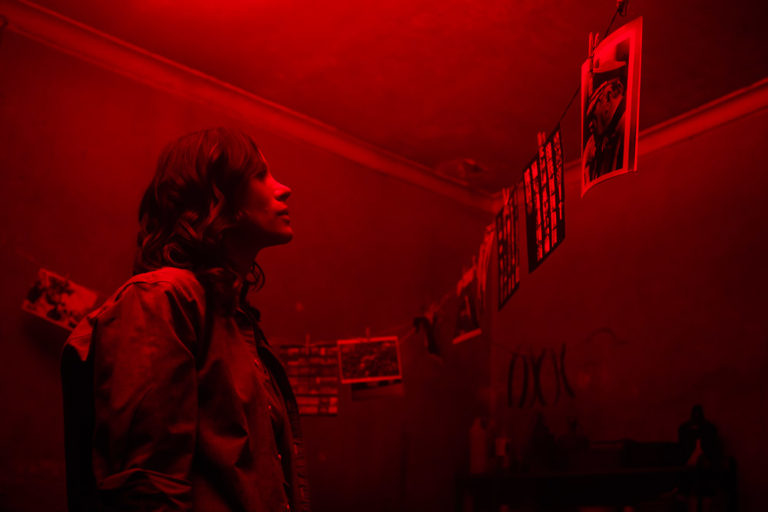
The narrative construction of Matar a Pinochet is both simple and intriguing. It describes the preparation, the assassination attempt, its consequences (betrayal and repression), and focuses on Commander Tamara, the young woman in charge of the commando, to Ramiro and Sacha, two members of the group. As the story progresses, we’re on board of a car driving to who knows where with Ramiro and Tamara, the two discussing the operation, their mutual involvement in the group and the course of their own personal lives. This “trans narrative” space in a way, is nevertheless at the heart of the outcome of the plot, which is only really considered at its conclusion. Briefly said, there’s something subtle in this efficient story-telling, as well as a very controlled image that doesn’t show off.

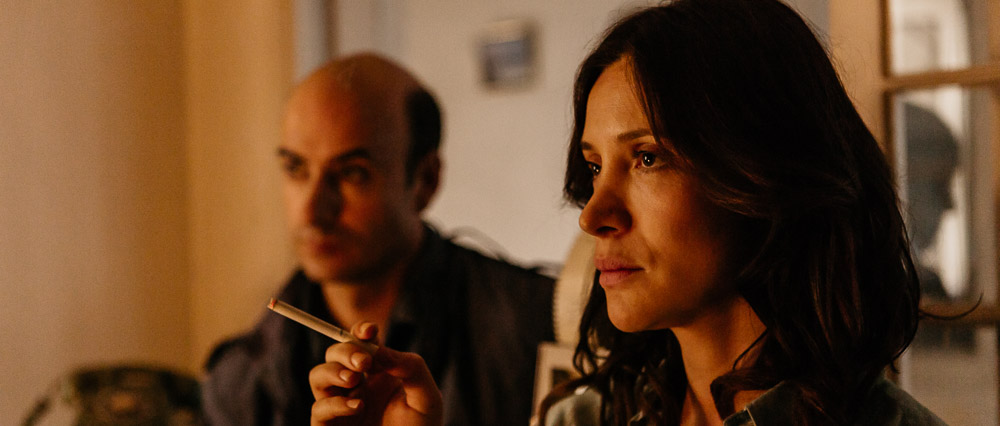
During the screening I was wondering how this organic but yet precise look was done. I first thought of 35mm film stock, but here its the answer: Alexa Mini and Cooke Anamorphic/i 2x (25-32-50-75-135). And mostly natural light except on few setups. This sparked my interest in learning more about the movie, chatting with Juan Ignacio Sabatini, director, and Enrique Stindt, cinematographer.
Moving from a documentary project to a feature project has a lot of involvements, what did you think the visual work on a fiction could bring to the story?
Juan : This is a project based on real facts that rose in my head as a fiction feature film. I always thought that this story would become more powerful if we thought about an atmosphere far away from reality.
And in many ways I think we made it.
What guided you when it came to choose the camera and lens combo for the movie ?
Juan : My first intention was to shoot in 16mm with spherical lenses. Quickly my producer refused to follow that path basically for budget considerations. So when we came back to digital cinema, we had no doubt in choosing Alexa Mini, then Enrique came with the idea to shoot the film with Cook anamorphic lenses.
I really loved the idea to put the characters in a horizontal perspective where everybody had the same value (size ?) and had a chance to get to the aberration zones, that is as a way to view them going through different kinds of challenges.
Until then, I never had the chance to shoot with anamorphic lenses and I really enjoyed the trip.
Enrique : In terms of camera, i think Alexa mini is a kind of standard choice for feature films and I know about the sensor answer, so i feel confident with it, especially in terms of low light answer. We decided to work with anamorphic lenses because of the density of image (more cinematic) but mostly to enhance this project as a fiction film, far from a documentary one. It was a real challenge to elaborate a fiction about a real situation, that is still a so sensitive theme for Chilean people. I think the Cookes gave us the necessary contrast and warm tone I was looking for.
How did you prepare the shooting? How did you choose the locations? Did you use a storyboard ?
Juan: We took the time in pre-production to discuss every single scene from the script, pursuing the spirit and the meaning of each one of them, and then we designed a first idea of how to shoot them.
About the locations, it’s not easy to shoot a story that takes place in the late ’80s in Santiago because unfortunately we live in a country with a lack of conscience about its architecture’s history. That means that in the last 20 years a great percentage of the city was destroyed to build big buildings and highways, and the rest disappeared with two big earthquakes (1985 and 2010). So we had the great idea to shoot in Valparaiso, the main port of the country that is just an hour and a half from Santiago, where we found the appropriate locations for the script.
Regarding the storyboard, the only sequence that we drew was the attempt. I’m not a big fan of drawing things because I consider that in a way things become a little bit schematic.
Juan, since you come from the documentary world, how did you meet with Enrique and what convinced you to work with him ?
Juan : I always admired the work of Enrique. He is not just a DoP, he is a multifaceted artist with an extraordinary sensibility to understand what we are doing in this world, that in many ways I agree with. I found the perfect ‘alter ego’ to deliver in real images what I dreamt for a few years of my life.
Kill Pinochet was the perfect chance to collaborate together for the first time.
Enrique, what sparked your interest in Juan’s project ?
Enrique : First, I admire the energy and conviction of Juan to face the projects. That is very important for me in every work. Then, the challenge about telling a complex real history.
What was the overall approach on lighting, and what was your light package ?
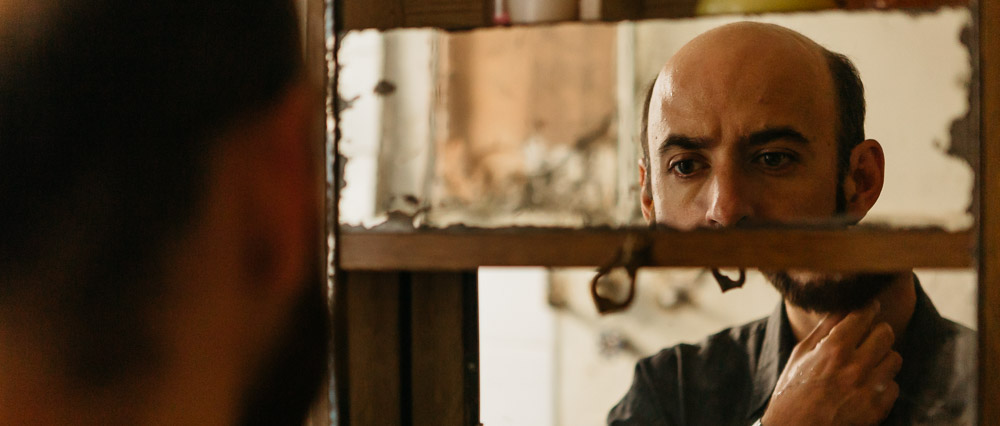
Enrique : We decided to make a raw and simple staging, in a way to avoid an epic treatment or a hip esthetic mood. So I decided to work with a small package supplemented with practical lights, all based on natural and available light. I worked with custom chinese lamps, 1.8 HMI with quarte 85 gel and 3 S60 Skypanels, plus 2 real sodium street light portable. And a lot of nets, french flags and soft diffusion.
Talking about color, did you work with some specific LUT cooked ahead of the shoot? What got you to the final grade of the film ?
Enrique : I worked with ALEXA 709 lut , and made some variations in colour temperature and ISO. When in colour grading I put some grain layers to fight against the digital definition and push toward a film look. In this way, I made some subtle differences between the present and the past, grainier in the past and less for present time. Also warm mood in the past and quiet cyan for present.
There’s a subtle balance in the movie between the group scenes and the more intimate scenes with one or two characters, I felt the camera is always at the proper distance so the audience is close to the characters anyway. What were your considerations when it comes to portraying characters, Tamara, Ramiro and Sacha for instance ?
Enrique: I think that the closeness to the characters should be just and necessary in order to empathize with them but at the same time feel their contradictions and doubts. I feel that with this idea in mind, we managed to enhance the necessary tension that the actors should transmit. Mostly using 50mm lens or close to it.
The movie has been selected at Huelva and Havana festivals, and is also available on MUBI.
More images with Matar a Pinochet ‘s trailer.