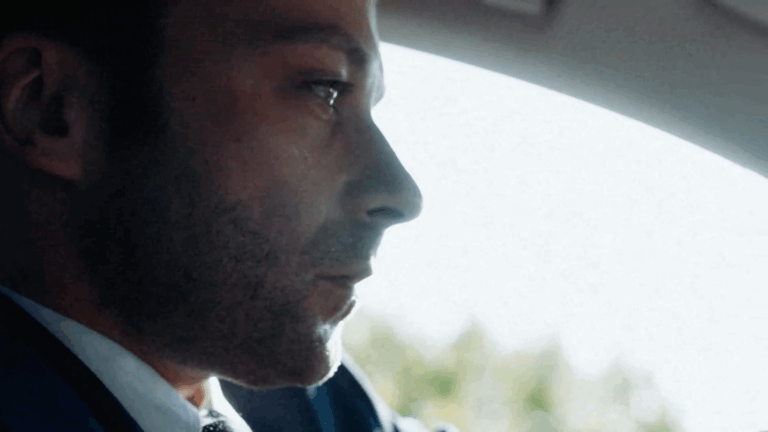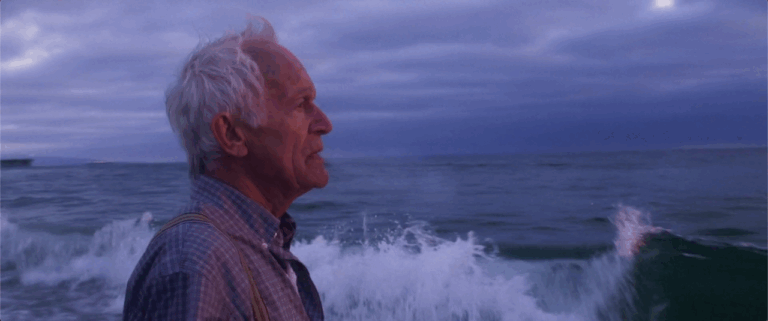
Viggo Mortensen Falling was scheduled to open the 2020 Camerimage international film festival but due to the pandemic Camerimage organized a Q&A with Viggo Mortensen and his director of photography, Marcel Zyskind. The audience could ask questions via the festival’s Facebook page with a live translation into Polish provided.
Falling is the first feature film directed by Viggo Mortensen. The actor gained international recognition after playing the character of Aragorn in Peter Jackson’s The Lord of the Rings trilogy. True cinephiles will probably prefer to mention his acting in A History of violence & Eastern promises by David Cronenberg, The Road by John Hillcoat, Captain Fantastic by Matt Ross and/or Green Book by Peter Farrelly.
During yesterday’s Q&A, Mortensen appeared extremely humble, very knowledgeable and slightly political with a small rainbow flag attached on the wall behind him.
Mortensen chose Marcel Zyskind to photograph his first film, a Danish cinematographer he met in 2013 during the shoot of Two Faces of January by Hossein Amini.
Falling talks about the difficult relationship between an old man, Willis, played by Lance Henriksen and his son John. The story as Mortensen mentioned is inspired and based on his own family relationships. While he had no intention of playing the character of John at first, it turned out that his screen presence would help fund the movie. He is therefore co-writer, director, actor, producer and composer of Falling.
Those facts tell a lot about the trust Mortensen had put in his cinematographer. Zyskind said during the Q&A session that there were times on the set where they didn’t have time to watch the playbacks and Mortensen would trust him blindly saying: “I trust you with my life.”
The movie accumulates a lot of flashbacks and flash-forwards between the past and the present. A rather cold-white present where John goes to find his father at his farm on the East Coast to bring him back to Los Angeles where he lives with his husband and their adopted daughter. A rather warm past that navigates through the seasons from John’s childhood to becoming a teenager.
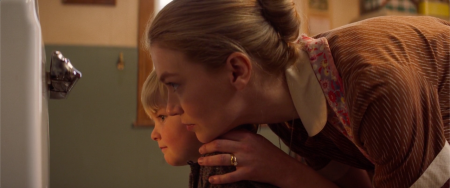
In those scenes from the past, a character radiates: Gwen played by Hannah Gross, Willis’ first wife, John’s mother. Lover of the art, she would like to expand her universe. Unfortunately she suffers alongside a man who satisfies himself with things the way they are and takes personally any criticism or any need and desire for changes from his entourage. She is the “muse” in the sense that she inhabits the dreams of both son and father.
In the edit, the transitions between these different times and places are very organic. Willis has senile dementia, sometimes he has moments of absence that take us elsewhere, sometimes flashes, sometimes entire scenes. Other times John’s violent confrontations bring us back to memories of past conflicts. A close-up on a prop, a laugh we hear, a piece of Chopin on the soundtrack or a glass of water that is served that transitions to a river, all of those elements are used to create as many bridges between what will last and remain in time and what has faded away. Mortensen insisted on the importance of the work on set by designer Carol Spier specially on the flashbacks. She is known for working with David Cronenberg and like Zyskind was hired well before the shoot.
Zyskind said he had a camera when they scouted so he could shoot B rolls of the farm and the surrounding forest with some visual atmospheres they might not be able to find again during principal photography, using Mortensen as a stand-in on those shots. Falling is shot on the Arri Alexa with a set of anamorphic optics: Panavision’s G series for the present scenes and mostly the Lomo series for the past scenes.
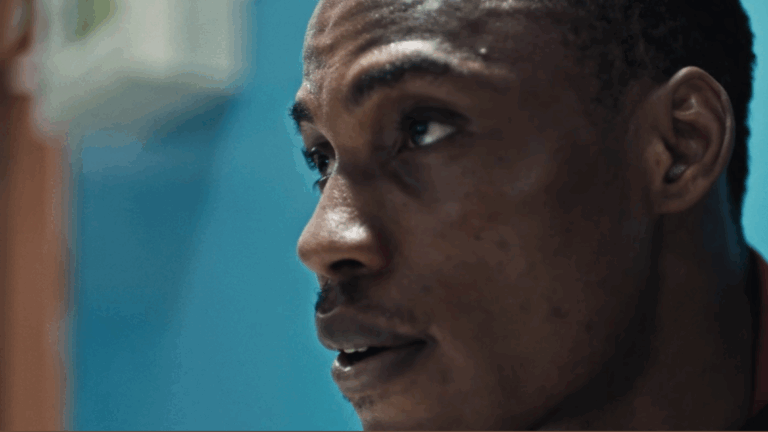
Mortensen pointed out that Zyskind’s work is not about being too showy, the audience feels what is happening without being distracted. He gave as an example a long dialogue scene between Willis and John where the light gradually and almost imperceptibly dims down in the background of Willis. Another example he mentioned has the reversal effect; the light is more present, there is a glimmer of hope, a meaning transmitted to the audience beyond the words spoken.
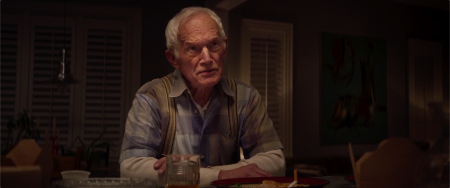
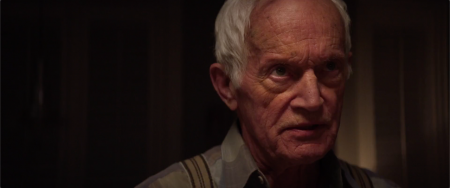
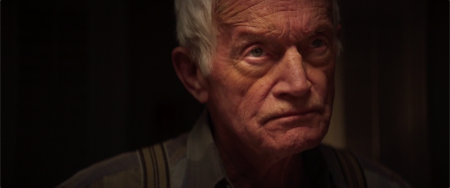
Mortensen and Zyskind exchanged multiple references: Ozu, Tarkovski or the work of Rudolf Maté, Dreyer’s cinematographer, for his work on The Passion of Joan of Arc (especially when it comes to his work on crossing the line and close-up angles). But they both recognize that in the end, the movie broke away from those references to become its own reference.
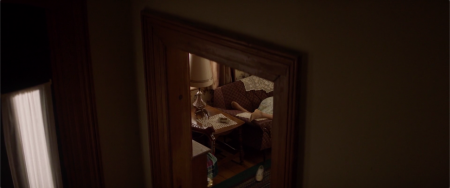
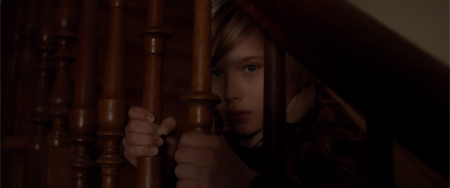
One scene particularly illustrates the strength of the movie: John, from his bedroom, hears his mother cry and comes down the stairs to see what is going on. Through a very specific choice of framing and editing, it is only after he returns to his room that the audience will see what he saw, but also feel what he felt seeing his mother in tears.
The memory is sometimes stronger than the present moment.