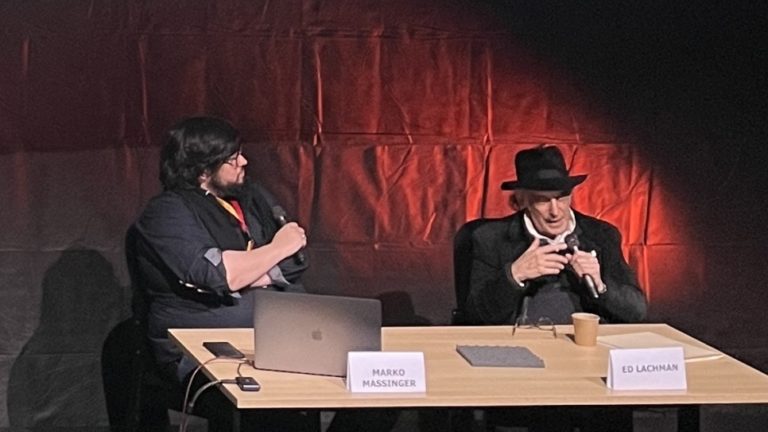
On the occasion of the ceremony of Camerimage Lifetime Achivement Award given to Philippe Rousselot, three AFC cinematographers, Caroline Champetier, Jean-Marie Dreujou and Denis Lenoir had prepared film extracts and questions. It was an exciting, humorous and highly informative tribute.
The editing of excerpts from some of his films broadcast during the opening ceremony of the festival had already jubilantly reminded us of the extent of his talent. His complete filmography proves to us that his palette is even wider.
Here are in bits and pieces, according to the film excerpts chosen by his interlocutors, what he shared about his multiple experiences and his way of approaching them.
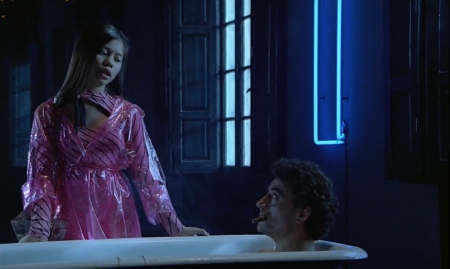
Diva by Jean-Jacques Beinex, 1980
César for best photography 1982
Inspired by Jacques Monory’s paintings in blue and black. Rousselot specifies that the monochrome exercise is complicated because in about ten minutes, the eye gets used to it and you start to get bored. That’s why if you want blue, you have to put other colors in touches to keep the blue’s value.
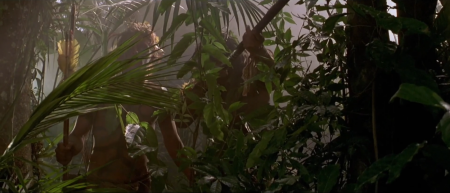
The Emerald Forest by John Boorman, 1984
Shot in the Amazon jungle, Jean-Marie Dreujou points out that these are conditions where it is extremely difficult to maintain continuity. Rousselot confirms that, in general, everything had to be articificially lit, except for the very wide shots.
The woods were so dense that he was able to shoot a daytime scene in the middle of the night, just like in a studio.
He admits that the boy’s initiation scene is not the one he is most proud of because of an unjustified backlight that he regrets having used. “I played it safe and that’s something you should never do.”

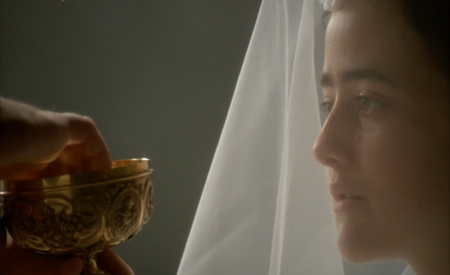
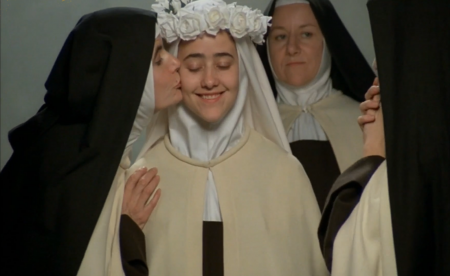
Thérèse by Alain Cavalier 1985
César for best photography 1987
No actual set , just furniture and light. Caroline Champetier points out how beautiful the carnations of the characters are in this film. Rousselot specifies that the actresses were not wearing any make-up, there was a total of 11 technicians in the crew.
Alain Cavalier had asked him to light just enough to see what needed to be seen. He sometimes had the impression on this shoot that he wasn’t doing anything, knowing however that everything depended on what he was doing. He remembers lighting in tungsten, a 10kw, a few blondes, ans some reflectors .
The light didn’t need to be justified by anything, neither windows nor scenery elements, no need to try to “be smart” Above all, he wanted to do justice to the people he was filming because emotions come from interpretation more than from light.
Hope and Glory by John Boorman 1986
BSC award 1987 and Oscar nomination for best photography 1988
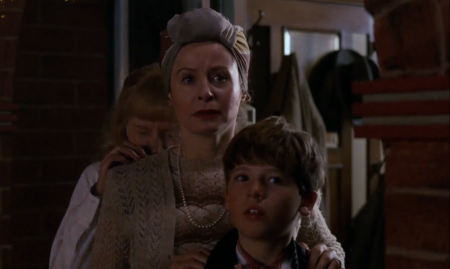
The film is set in London during World War II and is based on John Boorman’s childhood memories . No question, as is often the case with period films, of desaturating the colors, why do this? People in the 1940s saw colors the same way we do today. The accuracy of tone then depends entirely on the sets and costumes.
The house where most of the action takes place is shot in a studio, the street has been recreated on an abandoned aerodrome.
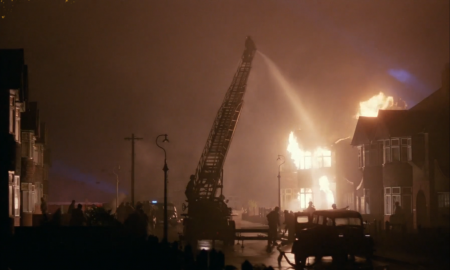
In the excerpt presented, a house on the street is in flames following a bombing. The scene was rehearsed during the day, shot at night. Rousselot had no idea what the anti-aircraft searchlights would look like at night with the smoke. And once the fire was started there was no way to stop it. But he remembers how John Boorman knew how to put him on the edge, as if his life was at stake.
The first three takes didn’t go well at all, they did another one and “we were lucky, these things happen sometimes”.
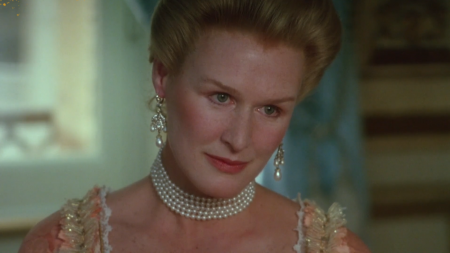
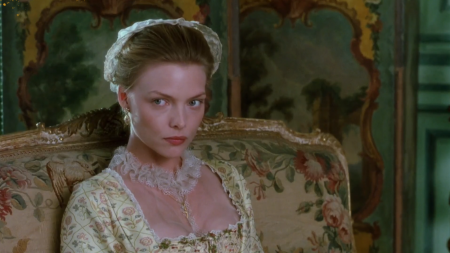
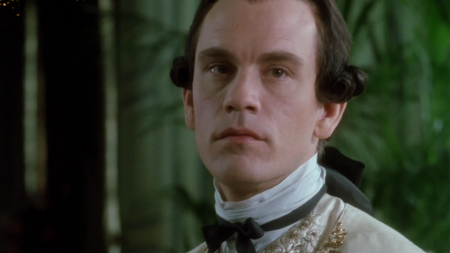
Stephen Frears’ Dangerous Liaisons 1988
Denis Lenoir notes that it’s as if the actors were wearing their own light, Rousselot laughs: “I wish they would!”.
In this excerpt the servants equip the candlesticks, they do it before dark, so it was necessary to play a very low sun effect. The lighting setup would therefore prevent filming towards the windows. To put an end to the debate between him and Stephen Frears on the subject, Rousselot told him that he would have a poster of Valmont (a film adapted from the same novel that Milos Forman was filming at the same time) placed on the other side of the window.
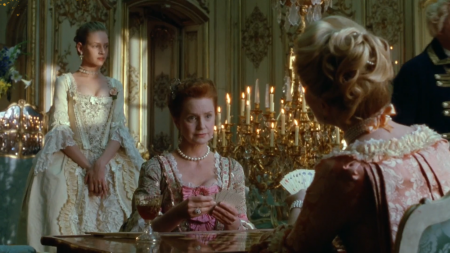
Rousselot began using Chinese paper lanterns on “Hope and Glory”. He found them practical, light, they allowed him to change his mind at the last moment. Used very close to a face, they are very soft and cast nearly no shadows, however their brightness fades very quickly, so it does not flood the background.
Even though some of the sets are beautiful, Rousselot did not want the viewer’s eye to get attached to them: this story is about people who lie, who lie to others and who lie to themselves. If you see someone lying, you get attached to their face.
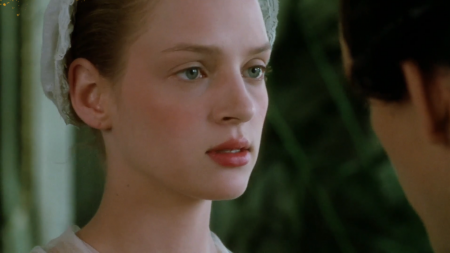
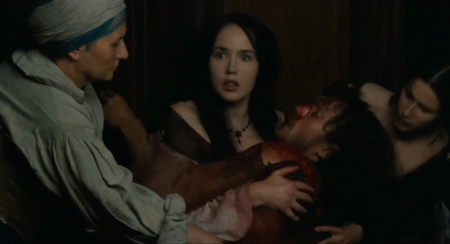
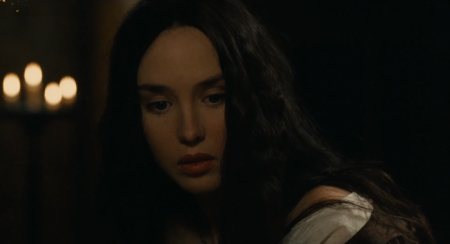
La Reine Margot by Patrice Chéreau 1993
César for best photography 1995
It is a film set at the very end of the 16th century but it had a strong resonance with current events, because at the same time Yugoslavia was devastated by war.
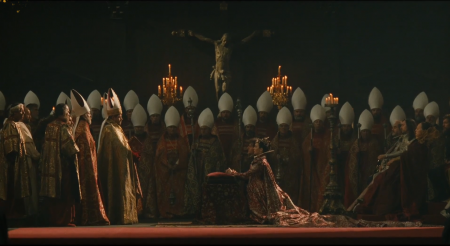
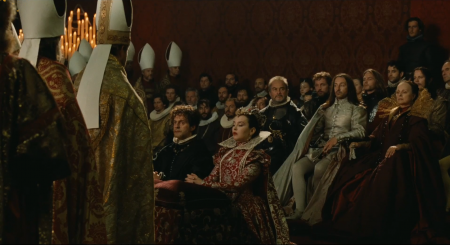
For the scene of the wedding between Henri IV and Margot, shot in the cathedral of Saint Quentin, Rousselot remembers asking Chéreau where he was going to put the camera to get some leads on how to light up and Chéreau replied “Light the set first and I’ll know”.
The background of the cathedral is lit cooler than the princely couple, but the “warmth” around them, far from being pleasant, essentially reveals an idea of confinement and oppression. Adjani is beautifully isolated.
For the scene of the St. Bartholomew’s Day Massacre, Chéreau rehearsed for an extremely long time so that each moment would be perfectly fluid. If you had put marks on the ground for every moment in this scene, the ground would have been covered with them. So Rousselot had a whole ceiling of Chinese lanterns installed and he made the adjustments from the lighting console for each situation by following the rehearsals on the video monitors. And then it was just a matter of luck.
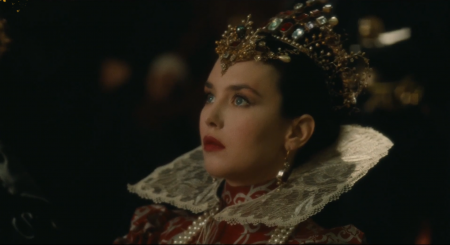
Adjani is magnificent, it was a key aspect of the story, if Queen Margot were magnetic, there would be no film. He wanted this iconic face, hence the coherence throughout the scenes on the way to light her. Usually he would have Isabelle Adjani followed with a Chinese Lantern fixed on a pole, with a very dark background and no backlight.
However, he did not try to imitate any particular painting: by imitating you degrade. But it is crucial to go to museums: it helps to understand that inspiration doesn’t come from imitation.
During this conversation, Philippe Rousselot deeply made us want not to imitate him, but to get inspired by him.