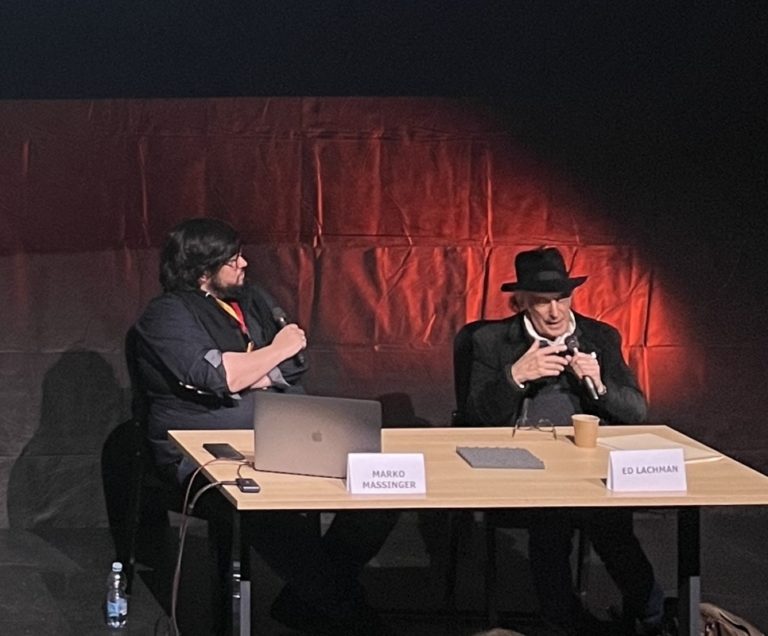
At Camerimage 2021, distinguished director of photography Ed Lachman ASC and collaborator Marko Massinger presented the EL Zone system (ELZS); a newly developed exposure tool intended to be used on digital cameras. ELZS gathered a lot of interest and enthusiasm from people working behind the cameras at the festival, but it will remain to be seen if the camera manufacturers are so eager to implement the system as a universal feature on their products. Panasonic is the first to integrate the tool into their Varicam-line, and Lachman urged cinematographers to put pressure on other manufacturers to adopt the ELZS into their cameras as well.
False Color 2.0
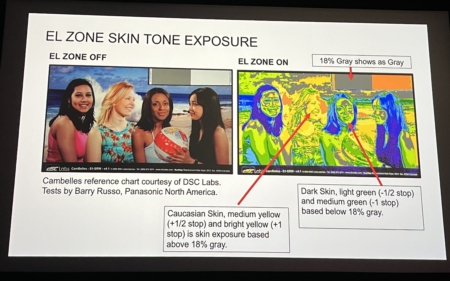
The EL Zone system draws inspiration from the well-known Zone system of photographer Ansel Adams and it is presented as an alternative to the existing false color systems that we are familiar with on many modern digital cameras. False color is referencing IRE values (based on percentages in voltage), whereas ELZS shows a color readout of stop values that matches those of our light meters and lenses. The middle value of EL ZONE is thus 18% gray (which shows up as gray), and the other colors corresponds to classical stop values. It is a total of 15 colors in the system; 13 representing a full stop, and two which represent 1/2 stop just above and under 18% gray.

For Lachman, controlling your skin tones is of utmost importance, so two half stops in this area makes a lot of sense. Lachman argues that color coding in ELZS is easy and intuitive to understand: Overexposure is represented by white, whereas underexposure is represented by black. The remainder of the Zones/stops are represented by a scale of colors that goes from cold (under 18% grey) to warm (Over 18% grey).
A uniformed system across platforms and cameras
Lachman, Massinger and their team are also working on getting the big color grading companies to implement ELZS as an overlay in their software. This could be very useful if you need to match a scene shot in intervals of days, weeks or months. It can also be valuable for pre-production if you want to check and/or match exposure from your reference images. There is also being developed a phone application so that you can use the ELZS on your phone in the near future.
Lachman and Massinger are urging cinematographers and camerapersons to request camera manufacturers to implement the ELZS feature into their operating systems. The more people demanding it, the faster such a change can happen.
Spreading the use of the EL Zone System
It seems to me that ELZS represents a big advantage compared to classic false color. ELZS will uniform an exposure tool over multiple system with matched colorcodes referencing reflected light, whereas false color are IRE/voltage based and varying in colors and what they represent from camera to camera. Ed Lachmans system matches light meter readings and lens stops, it is camera and colorgrading software agnostic.
Each Camera manufacturers will need to give access to Lachman and his team to map the ELZS correctly. Panasonic has already taken a first step and ELZS is hence available in the Varicam cameras. Let us take the advice from Ed Lachman and demand other manufacturers to follow in their footsteps and implement the ELZS system.
For further information about the ELZS, I would recommend this article by Jon Fauer