History’s darkest meets fiction: director Pablo Larraín and DP Edward Lachman’s first collaboration give birth to El Conde, a vampire tale on dictator Augusto Pinochet.
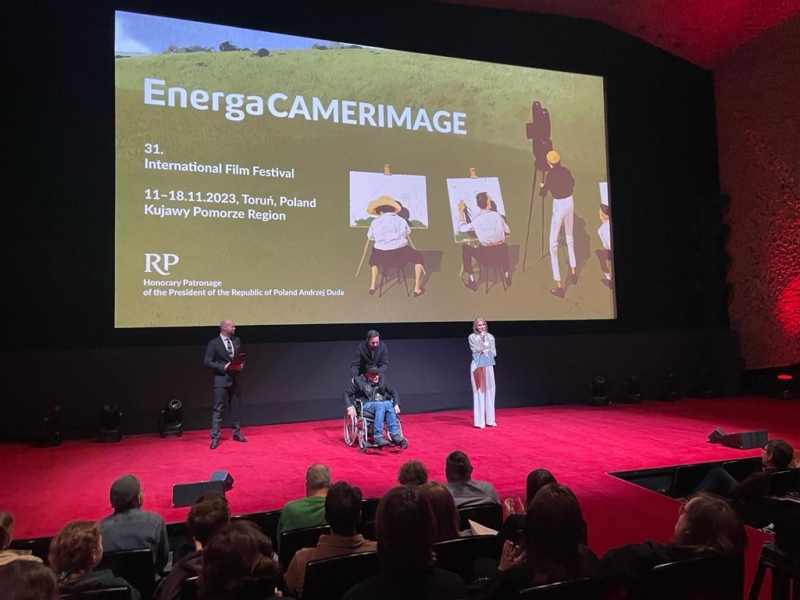
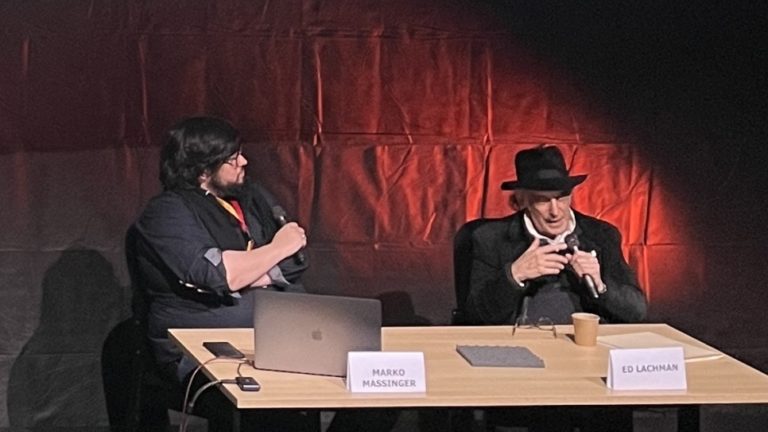
Pablo Larraín and Edward Lachman (injured on his last shoot), on the main stage of the CKK at Camerimage Festival 2023.
Larraín portrays Chilean dictator Augusto Pinochet, played by Jaime Vadell, as a rather unconventional vampire who has no problem exposing himself to daylight or being photographed. “History is never fair,” he complains, flying over the city in search of his next meal. A vampire of many lives, who took over the Chilean regime after savoring – literally – the bloody remains of the French guillotines. Beware for some quite graphic images.
Facing Pinochet is the fascinating Carmen, an exorcist nun played by the talented Paula Luchsingee. Immaculated with light in her chasuble dress and diving into the abyss of evil, mirroring the personalities of each character, Carmencita is a sumptuous blend of contradictions. Her surprising acting, angelic beauty and light blossom in the darkness, from which she never loses her original goal: “to touch evil, then to humiliate it”. To which Larraín adds, “This is where the power of the Church lies.” A power of deep conviction, which enables him to create this character oscillating between faith and desire, but whose every action is justified by intention…
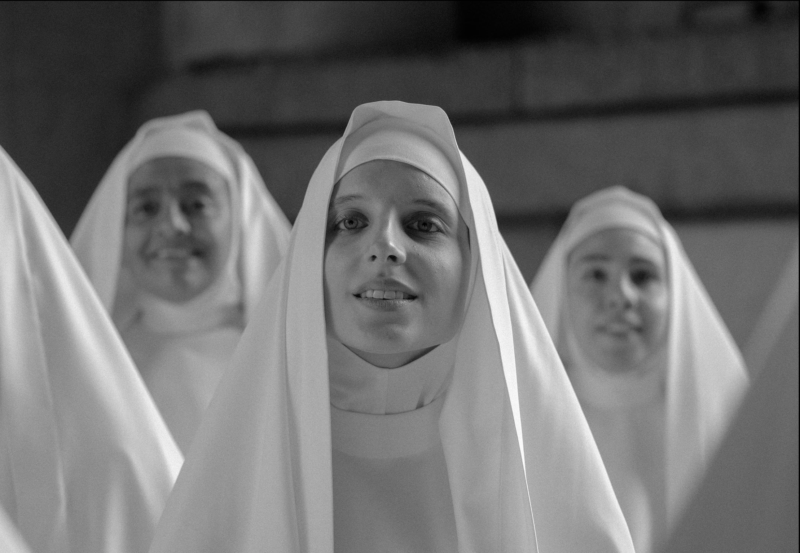
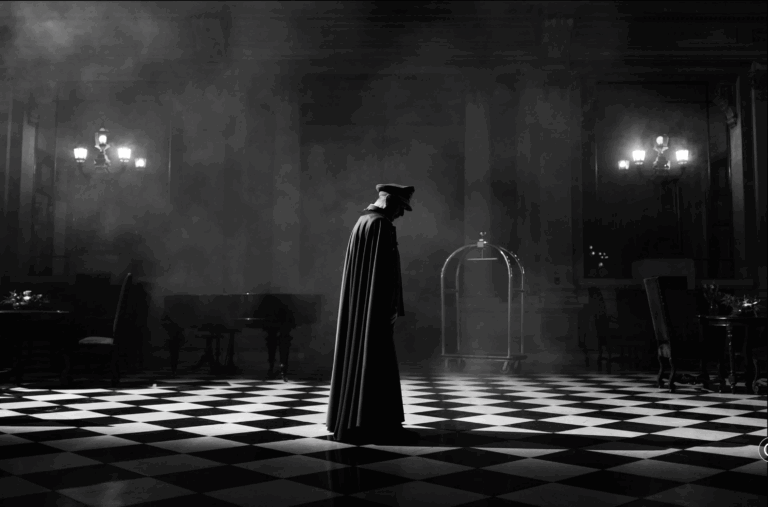
“Filming in black and white helps to create a certain theatricality as well as to induce distance between the subject and the viewer,” explains Larraín. Part of the film’s success lies in its tone – satire – and its distinctive photography, which emphasizes the strong personalities in the story. For Lachman, it was imperative to produce what he calls an invisible light. “Vampire films are traditionally shot in black and white. Blood appears less dominant in the image […] it seemed obvious to us to shoot El Conde this way.” Lachman decided to shoot digitally, as film was not an option: there was no longer any active laboratories in Chile. He turned to Arri Rental, who created a camera model tailor-made for the film: the Alexa Mini LF monochrome. For his part, Lachman composed his own vintage Ultra Baltar series, using original Baltar lenses – the ones used on Citizen Kane and The Godfather – to which he added Low Light Dispersion (LLD) filters to densify the image without losing aperture diaphragm. This very special combination gives El Conde its characteristic Hollywood look from the great classics.
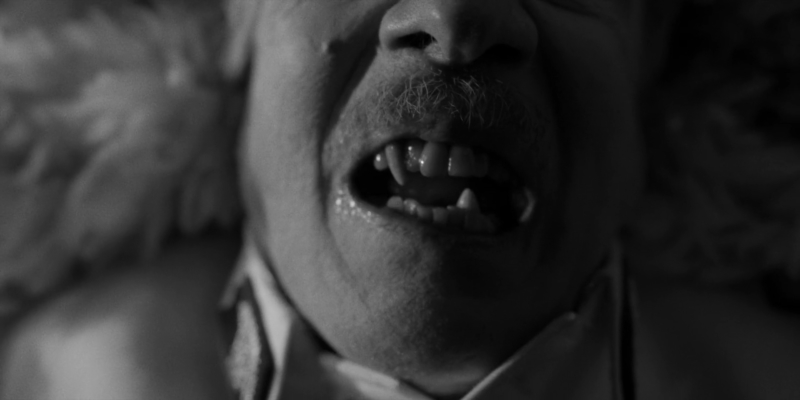
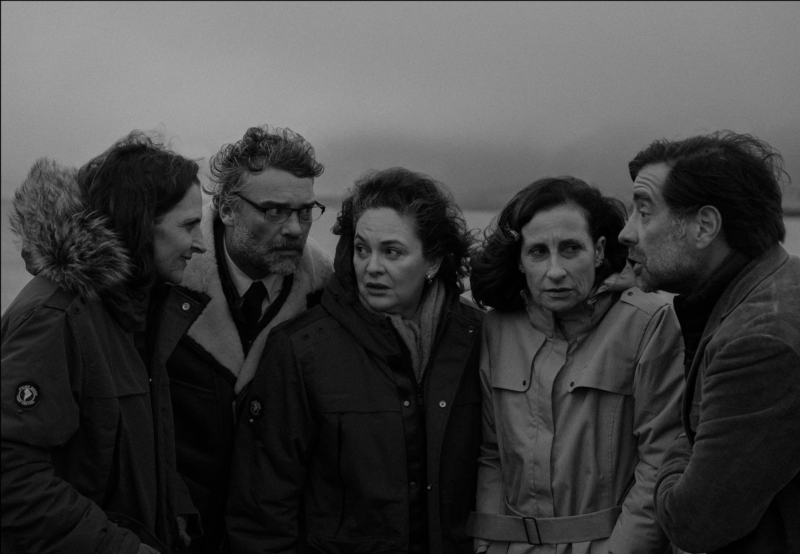
While on-screen violence is almost established as a kind of banality, as if to constantly remind us that the film is about a tyrant, El Conde allows itself a more universal framework: inheritance. A subject that is not, however, that of a tender family affair, but rather one that can be interpreted on multiple levels. When Pinochet’s relatives get bogged down in the quest to recover their father’s property, viewers can also ask themselves about inheritance in a broader sense: what do we keep from history if fiction is allowed to project an interpretation of it?
Ultimately, the film finds its balance in a kind of gray area. A palette of grays found in the exteriors, and in the fine mist of the Patagonian landscape, El Conde’s main set, shot in the summer of 2022. Larraín describes the special Patagonian atmosphere: “The sky imitated the magic hour perfectly… At any time of day! It was the ideal tone for the film’s image”. It’s against this backdrop that Pinochet emerges, like a stain, accompanied by his more neutral relatives, and facing Carmen dressed in a dazzling glow. A symbolic halo that can be seen on several occasions in the painted portrait of the dictator that hangs in the dining room.
For Pablo Larraín and Edward Lachman, this long-awaited collaboration is currently continuing on the set of their second joint project, this time in Budapest.
To conclude their work on El Conde, Larraín smiles as he recalls a memory: “I always felt I had a DP hidden inside me […] When Edward got injured on the film, I found myself alone on the set and I said to myself, this is the moment. So I tried it and… I hated it [laughs]. I have a great admiration for DPs and their work, and I’d like to see them recognized more.” And that’s exactly why we love Camerimage.