Guardians, a captivating new documentary series, highlights the courageous work of anti-poaching patrols in the Zambezi Delta, Mozambique. Produced by Conservation Film Company for EarthXTV, the 7-episode, 23-minute docu-series follows these unsung heroes who protect endangered wildlife in one of Africa’s most challenging environments.
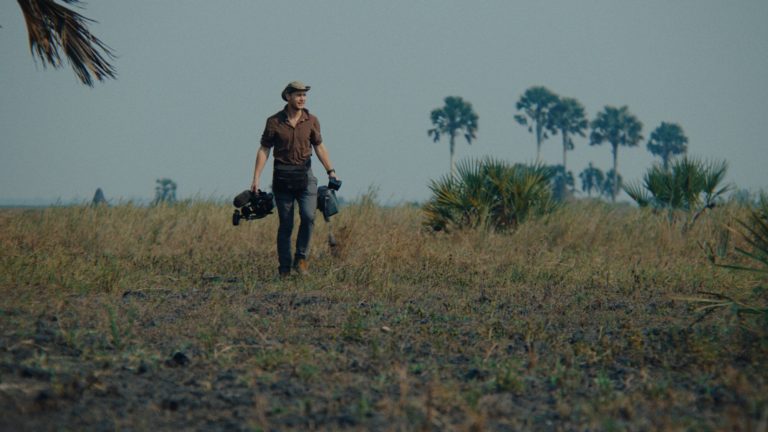
Keenan Ferguson, one of the series’ cinematographers.
Through stunning cinematography and intimate storytelling, Guardians offers a unique glimpse into the daily struggles and triumphs of these dedicated individuals.
“‘Guardians’ is a series that goes beyond what audiences are used to seeing, showing them the efforts deployed by local people on the front lines to preserve Africa’s wildlife,” explains Sean Viljoen, the series’ director (and camera operator). “We wanted to tell their story in the most cinematic way possible.”
Wildlife in danger
During the civil war that recently ravaged the country, wildlife of all species, including large mammals, was reduced by 90%. It was subsequently protected and restored, but as the population grew, subsistence poaching reappeared, along with poaching for the bushmeat trade.
Conservation Film Company spent seven weeks alongside the 19 rangers employed to protect the 2,000 square metres of the Coutada 11 safari concession in Mozambique.
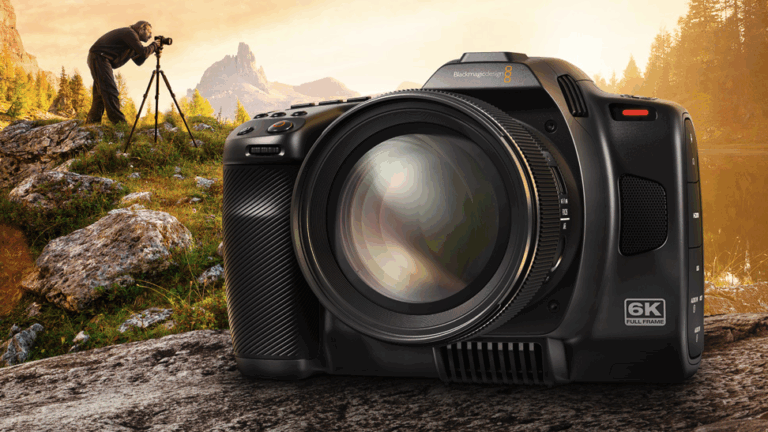
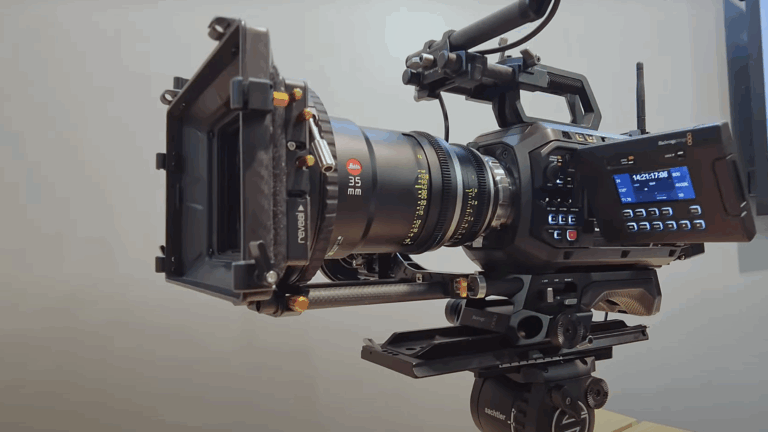
With limited resources in the field, the production team needed versatile tools to capture high-quality footage while minimising logistical complexities. For Guardians, they brought several digital cinema cameras, including the Blackmagic URSA Mini Pro 12K, the Blackmagic URSA Mini Pro 12K OLPF and the Blackmagic URSA Mini Pro 4.6K G2, along with several Blackmagic Pocket Cinema Camera 6K Pro.
“Most of the content was shot handheld. We often jumped onto the back of motorbikes with the anti-poaching patrol, which limited the amount of gear we could take with us, while there was so much different content to cover. Our camera rigs were as lightweight as possible for a run-and-gun setup,” notes Viljoen.
For most dialogue scenes, they relied on the URSA Mini Pro 12K, often using the Pocket Cinema Camera 6K Pro as a third camera, either with a Canon 70-200mm f2.8 telephoto lens or a Canon 200-400mm f4. The URSA Mini Pro 12K OLPF was fitted with a Fujinon XK20-120mm T3.5, while the URSA Mini Pro 12K was primarily used with DZO cinema zoom lenses.
The production team also had a Pocket Cinema Camera 6K with a Canon 600mm f4 telephoto lens for close-ups of wildlife. For aerial shots, they used a DJI Mavic 3 drone.
Viljoen was impressed by the image quality. “I’m very pleased with the 12K’s performance given the shooting conditions. Most of the shots are outdoors with natural light as the only source; however, the way the 12K handles highlights is particularly beautiful. The Blackmagic RAW codec also offers a great deal of latitude.”
Filming in the bush was particularly challenging for the cameras. Temperatures often reached around 40 degrees Celsius with high humidity. “As soon as the sun rises, a lot of condensation forms on your lenses, which is a real challenge. We had brought a few backup cameras, but we didn’t end up using them.”
25 TB of data under a tent: the challenge of on-site editing with Resolve
Alongside Viljoen, the team consisted of DP Bruno Austin, camera operator Keenan Ferguson and editor Joe Krenzer, who also handled DIT duties.
“As we were filming in Blackmagic RAW, we carried out all the post-production in Resolve, including editing, grading and mastering,” says Viljoen. “This gives us many advantages. Whether it’s a big-budget production with a large team at our Cape Town offices or just a solo trip with my laptop, it allows us to stay on a single platform. It’s very efficient.”
Bruno Austin applied LUTs to both URSA Mini Pro 12K cameras, which became reference looks for the series, used to match images and exposure with other cameras. “Exposure needs to be spot-on with the 12K at 3,200 ISO, and you have to keep in mind that the rendering on a bright monitor in low light can be misleading. The LUT created by Garth helped compensate for this difference,” reveals Viljoen.
They filmed in 8K with 12:1 compression for a 4K UHD deliverable. This ratio generally strikes a good balance between file size and available on-site storage. Viljoen explains: “We wanted to make the most of the image and take advantage of downsampling by shooting in 8K. We were delighted with the resulting images and the amount of information available to work with.”
Community screening
Sometimes, a series is broadcast around the world, but the people involved never get to see it. That’s why Conservation Film Company organised a special screening of the episodes for the rangers and their families at a local venue.
“It was very important to give back to the community and share what we had filmed, because apart from the rangers themselves, few locals understand everything they do to track, monitor and apprehend poachers.”
“We hope we have done justice to the remarkable work these anti-poaching rangers do for the whole world, to their inspiring actions, and that we have helped raise awareness about wildlife conservation,” concludes Viljoen.