Prevented by COVID in 2020, Blackmagic finally organised a major event this summer to bring together users of its products.
The dates were set in Madrid, Amsterdam and Berlin, with a packed programme. Nothing in Paris, but we still managed to represent UCO in Berlin.
A new camera range
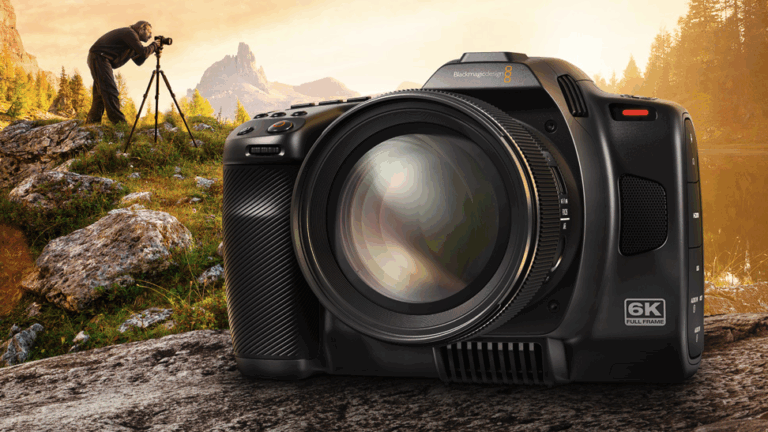
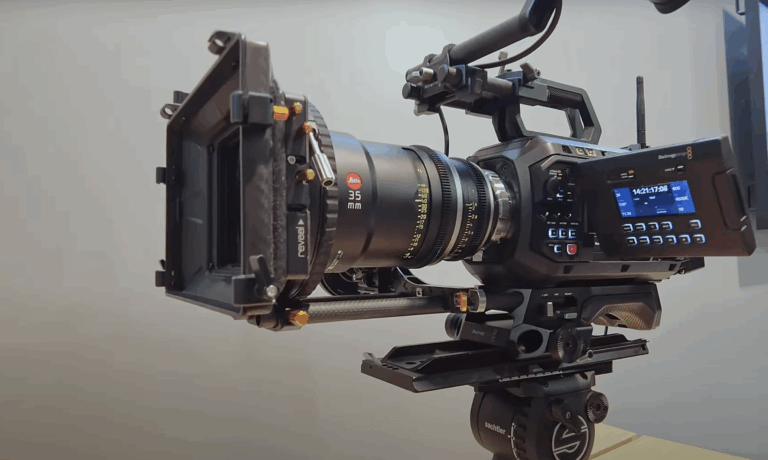
The idea was to keep abreast of both hardware and software updates. We caught a glimpse of the latest cameras, including the 12K Ciné and the Pyxsis.
These cameras herald the new generation at Blackmagic, with features that show greater maturity and more clearly defined ranges. The ciné versions offer impressive resolutions, with the announcement of a 17K in the coming months as an alternative to IMAX. And these pixel machines bring an entirely new workflow, with ultra-fast memory cards based on M.2 NVMe SSD technology, and of course the formidable Blackmagic RAW format that keeps the files manageable. As for the Pyxsis, this compact full-frame box camera is the other major new product, designed for multicam, live broadcast and virtual production — environments where a lightweight form factor becomes essential.
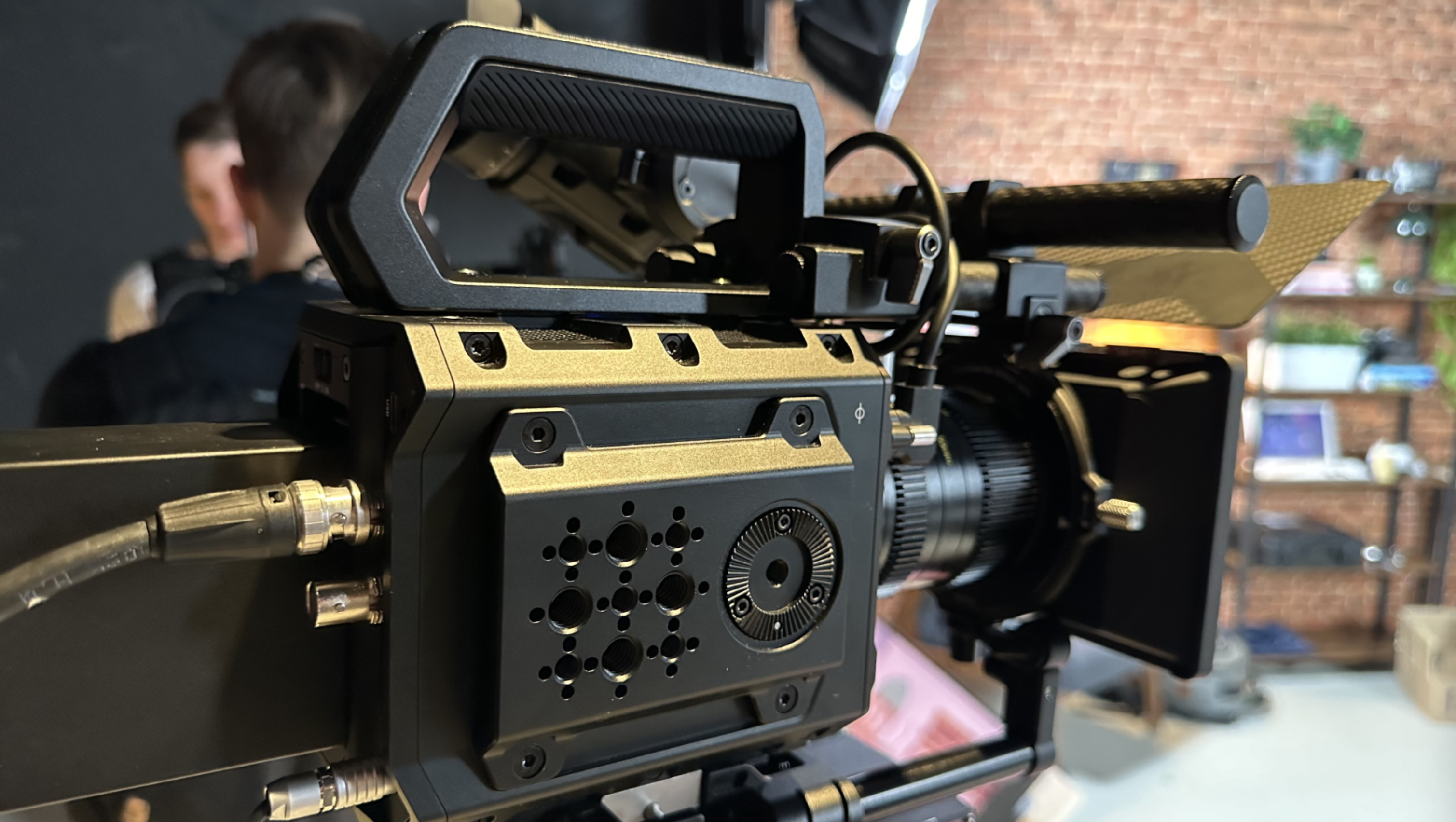
Pyxsis (pre-production model)
Presentations
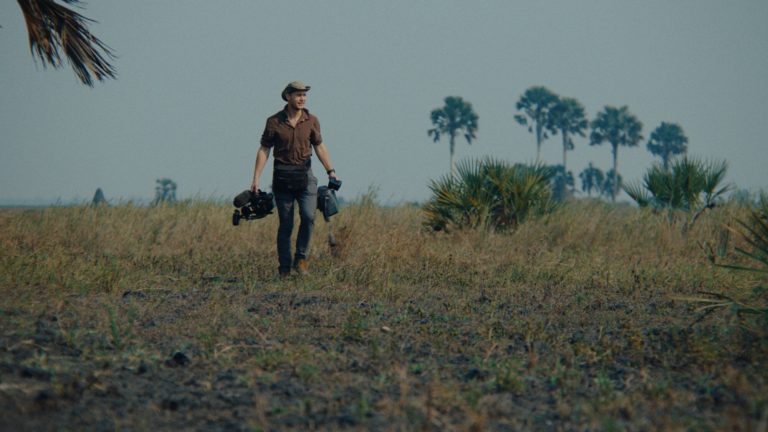
We also attended a series of presentations given by creators from all backgrounds. Very diverse profiles such as Nguyen-AnhNguyen (https://www.secondtomorrowstudios.com/) or Sean Viljoen (https://www.conservationfilmco.com/). One told us about his creative experience with Resolve and Unreal, the other about shooting in extreme conditions with Blackmagic cameras.
We could not attend every session, but one did not escape us. The highlight was the talk given by David Cole, star colourist at Fotokem, about his work on Dune 2. In masterclass mode, the presentation was full of anecdotes and offered a few recipes unique to the Hollywood studio. It gave a sense of the complexity and logic of the work without going into too much detail. One thing is certain, though: a large part of the look was created upstream — the “pre-grade” is a genuine creative step, not merely a technical baseline.
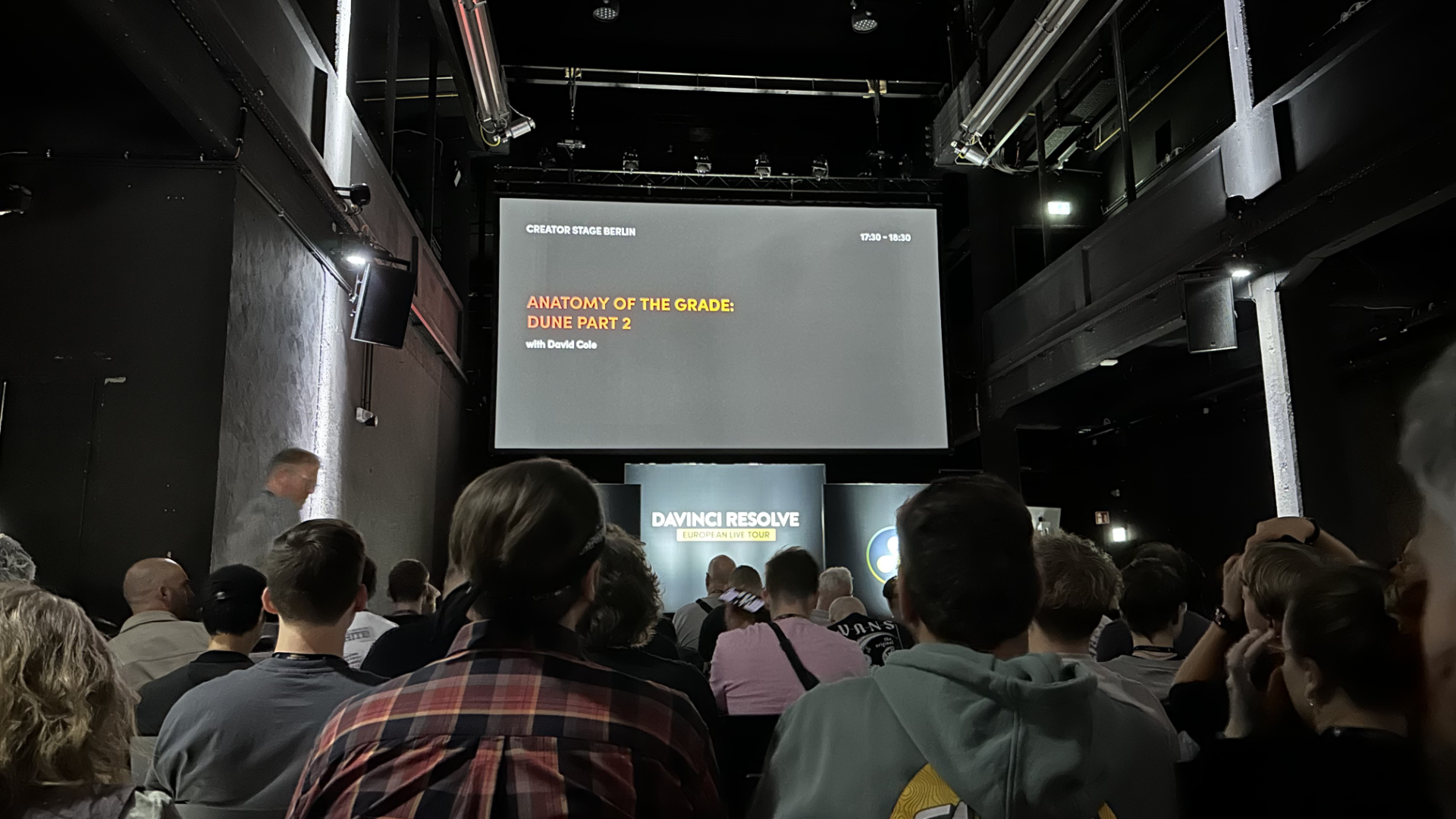
David Cole had set up an entirely controlled Resolve session (no Studio licence required, as the project was in Rec.709) with the timelines of several scenes from the film. The whole grading session was visible, node by node. One could see the sheer number of Power Windows, the “Anatomy of a Grade” as he put it, and the precise work on skies. The original footage, shot by Greig Fraser on ARRI ALEXA LF and IMAX, was already superb — but the grading added a genuine additional layer of intention.
DaVinci Resolve 19: a fast-evolving software package
On the software side, there was something for all tastes. Specific stands were hosted by ambassadors with whom it was possible to talk in person. The collaborative cloud, new colour-grading tools such as “Color Slice” or “Film Look Creator”, Fairlight and its Artificial Intelligence integrations, new control surfaces… YouTubers such as Daria Fissoun, Darren Mostyn and Leon and Natalie Barnard, famous for their high-quality tutorials, were also on hand to answer visitors’ questions.
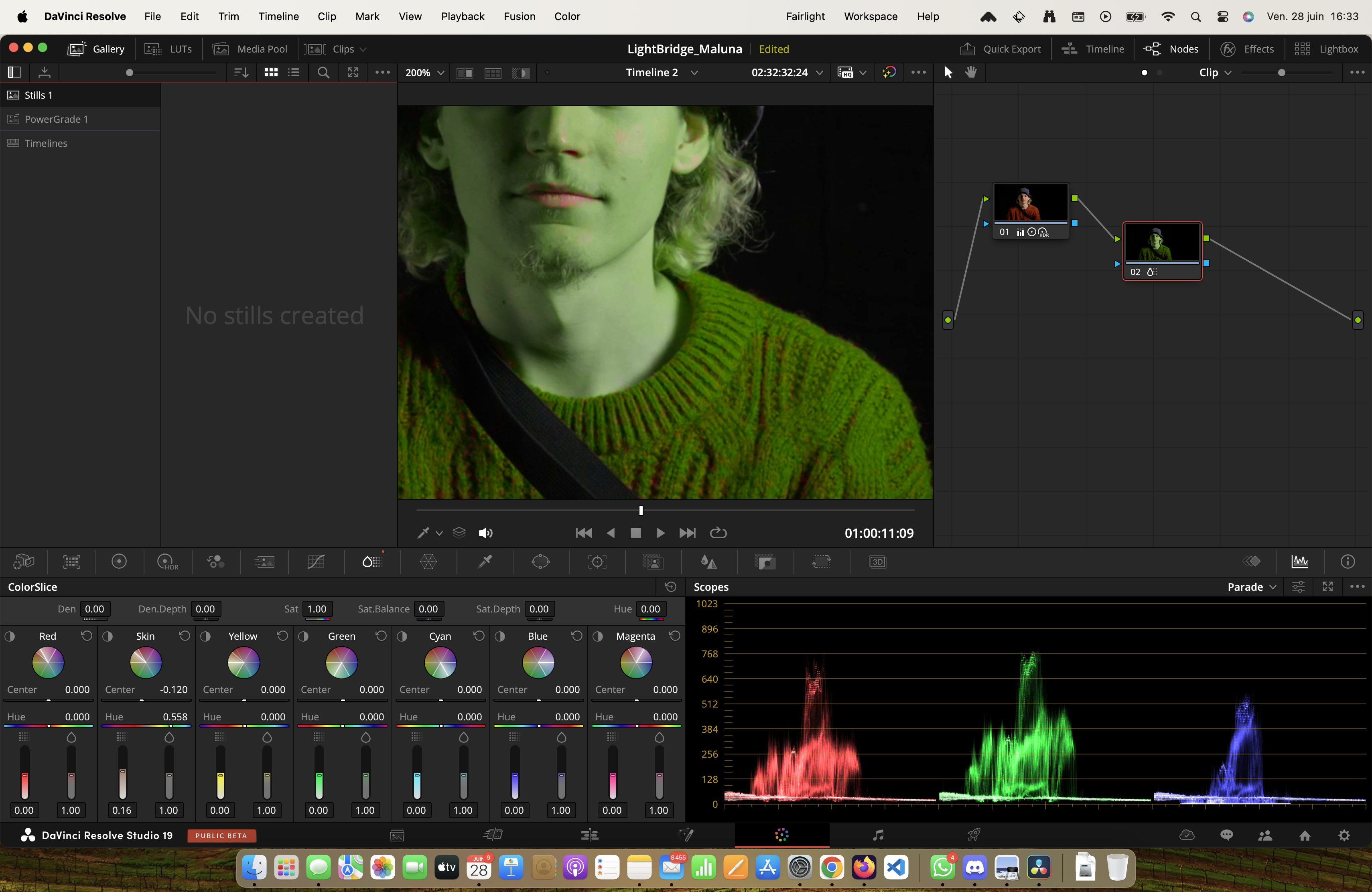
The new Color Slice tool in Resolve 19
Conclusion
Blackmagic Design continues to push the boundaries in terms of price-to-performance ratio. With this Live Tour, the company showed a genuine desire for openness towards its community of users, offering a space for dialogue, sharing and discovery. Whether you are a professional cinematographer, an independent filmmaker or a post-production enthusiast, the ecosystem keeps growing and the tools keep improving.
We look forward to the next edition — perhaps in Paris this time.