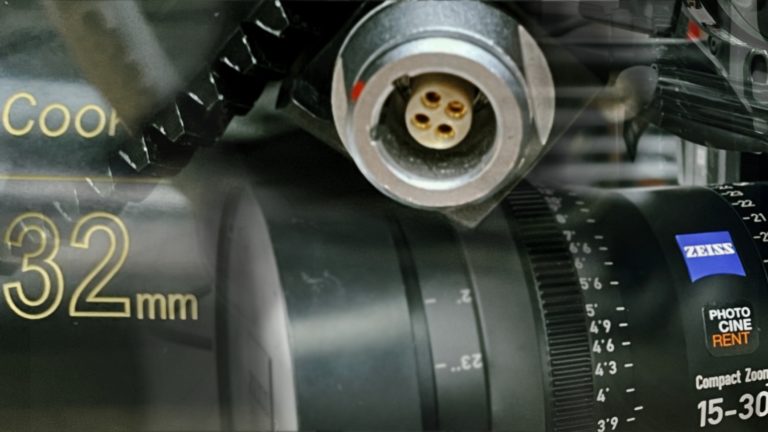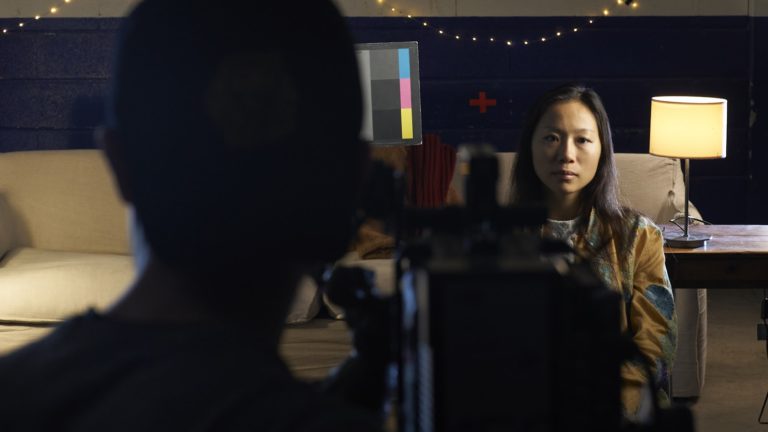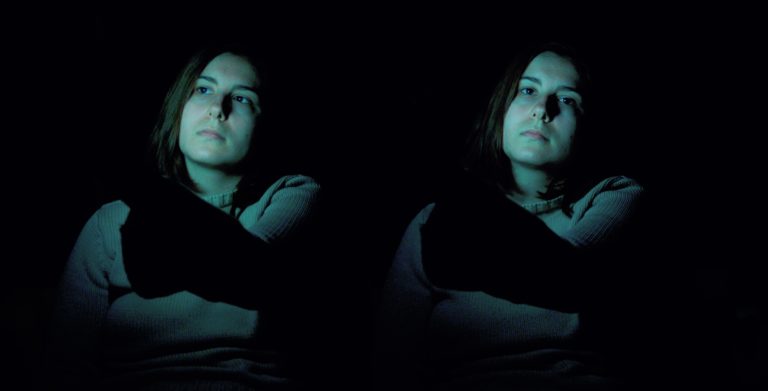
On Saturday April 23, 2022, the FALC (Femmes à la caméra) collective screened graded test footage: RAW / ProRes comparisons, Dual ISO tests, and camera noise behavior comparisons.
Four separate, uncoordinated groups conducted tests at Direct Digital, at the invitation of the rental house in Porte d’Aubervilliers, a partner of the Union of Cinematographers. Sylvie Petit then gathered this material to manipulate it in color grading and find the right points of comparison. During the screening, the way the images were organized allowed us to discuss our impressions. We were able to observe that each manufacturer’s philosophy significantly influences the results obtained: the RAW versus ProRes comparison at ARRI does not yield the same results as at RED. RED’s Dual ISO does not entail the same processing as Sony’s. The tests designed by the cinematographers and camera assistants of FALC were rooted in our everyday realities: filming at night alongside colorful shop signs, dealing with fluorescent street lighting, getting close to a face and judging skin tones, having a moving subject pass through mixed lighting, and many other real-world scenarios from our daily shoots.
These tests gave rise to technical conclusions, some well-known, others more surprising. But the most significant thing that emerged from these tests is the question of the wider paradigm at work. Because there is an inversion of the paradigm.
Pre-graded images, even in wide gamut, reduce the comparison to an adjustment of contrast and saturation curves. Pre-graded color spaces, whether they come from the manufacturer or a custom LUT, contain a philosophy of color that determines the comparison. Comparing images through the lens of a graded “look” amounts to comparing the “looks” themselves, and each “look” privileges certain cameras.
With the advent of wide gamut and ACES (Academy Color Encoding System), and the ability to work in wider color spaces — ACES with its minimum of 16-bit floating point, its artificial primaries, DaVinci and Avid spaces in 32-bit floating point — the whole question of camera comparison shifts. In these ultra-wide spaces, when you start from the raw sensor data without any manufacturer “look,” the cameras become remarkably similar. It would no longer make sense to compare cameras for their image-specific characteristics but only for their ergonomics. The occasional red or green tints sometimes attributed respectively to RED and ARRI become trivial, and it is the obsolescence of ShotOnWhat that is announced. ACES, its minimum of 16-bit floating point, its artificial primaries, the color spaces of DaVinci and Avid in 32-bit floating point, color management, and all the current professional developments invite us to this paradigm inversion by reinvesting in the creation of images starting from the look — and this has been the case for several years already.
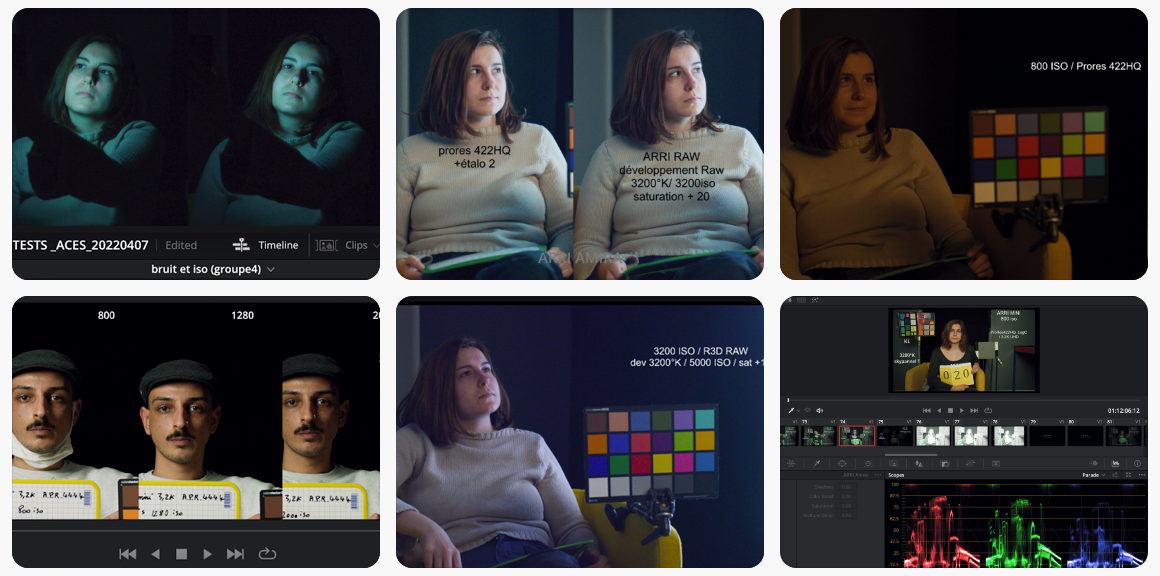
No longer having to fight against the limits of equipment — the prospect is dizzying. Some of us are already adopting these workflows (by sheer evidence because that is how it is, because they have mastered them, and sometimes unconsciously through a logic of distinguishing oneself in a market that has long cultivated the mythologies of one camera brand over another). But the profound nature of this paradigm shift has not yet been widely discussed. Shooting in wide gamut and ACES does not just mean adding new tools to our arsenal. It means going beyond the limitations that have historically defined our creative choices. It is a change in the very philosophy of approach to the image.
This philosophy of broad spaces invites us to rethink our creative process from its foundation. Rather than being constrained by the specific characteristics of a sensor or a manufacturer’s color science, we can start from the desired look and work backward to achieve it. The comparison between cameras then shifts from “which produces the most beautiful image” to “which offers the best ergonomics, the best reliability, the best integration into my workflow.”
But let us not be naive. If these large color spaces promise a form of equality between cameras, the habits and sensitivities that we have built over years of practice do not evaporate overnight. Part of this philosophy of large spaces exists as established practices that we do not always wish to question, but they constitute a mystique of the craft, sometimes an ethic (in the name of technical sobriety, for example), in any case a narrative of our practices through which we lead our teams as much as ourselves. Some of the love for our profession rests on stochastic resonance, epiphany, the irrational. We adjust machines, but we also chase miracles. And without even deliberately seeking trouble, it is far from rare on our productions that we step outside the -3 +3 range, whether by choice, constraint, or accident. Once exposure is returned to the science of color, there will always remain the charm of the optic, one might think. Except that the logic pushed to its extreme is even more disconcerting: modern lenses are now so good and uniform (see the AFC comparative tests) that we are led to recreate flaws. And the emulators are so effective that this can be a digital operation. Rather than using old lenses for their character, one can simply apply an optical emulation filter. The Cooke or Panavision “look” can become a software setting.
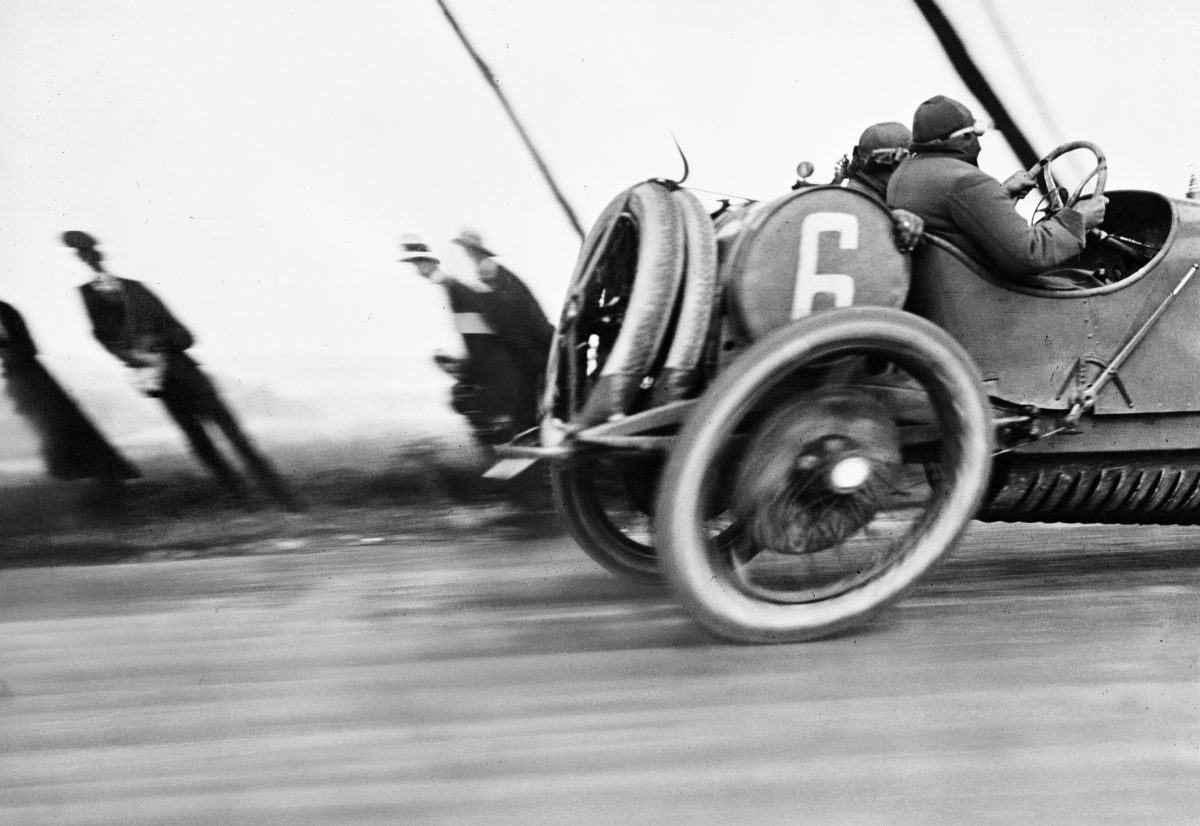
I believe there is no reason to fetishize technological progress, nor to resign oneself to a reflexive reaction against the course of events. I believe there is an approach to technology that passes through demystification: taking and understanding the tools for what they are, with their power and their corollaries. In short, mastering and questioning the tool rather than enduring it, and continuing the dialogue with colleagues, colorists, labs, manufacturers, and rental houses. One can keep production conditions in mind while allowing oneself creative ambitions. Rather than using vintage lenses for their optical defects, one can also cook the film — and it works — though not every time*.
Nicolas Contant thanks
Sylvie Petit and Charlotte Michel who contributed to the writing of this article
Aurélien Branthomme,
and FALC (in particular Sarah Blum, Diane Donahue Guyot, Carmela Duport, Salomé Gadafi, Emmanuelle Gary, Noémie Gillot, Charlie Laigneau, Aloïse Leledy, Charlotte Michel, Sara Massaroni, Rhaissa Monteiro Pinto, Celine Pagny-Ghemari, Sylvie Petit, Valérie Potonniée, Marion Rey, Nina Richard, Clémence Thurninger and Laure-Amélie Vilanova who shot these tests).
FALC thanks
Morgan Angove from Direct Digital and the entire Direct Digital team,
Isabelle Barrière, colorist, for her advice and hospitality,
Studio Belleville for its hospitality,
Aurélien Branthomme, le Cercle Rouge, TSF, for the screening,
as well as Clement Lieby and Josephine Santraille.
*soak an XQD card in coca for 1 hour, put it in the oven for 10 minutes — apparently it produces a magenta shift in the highlights… In organic kombucha, the shadows turn into Smurfs…