Optical metadata #4: LDT-R2 + RED = metadata within R3D!
We’re meeting at our partner TSF‘s premises on April, 27th ’23 for our third lens metadata (LD) harvesting session.
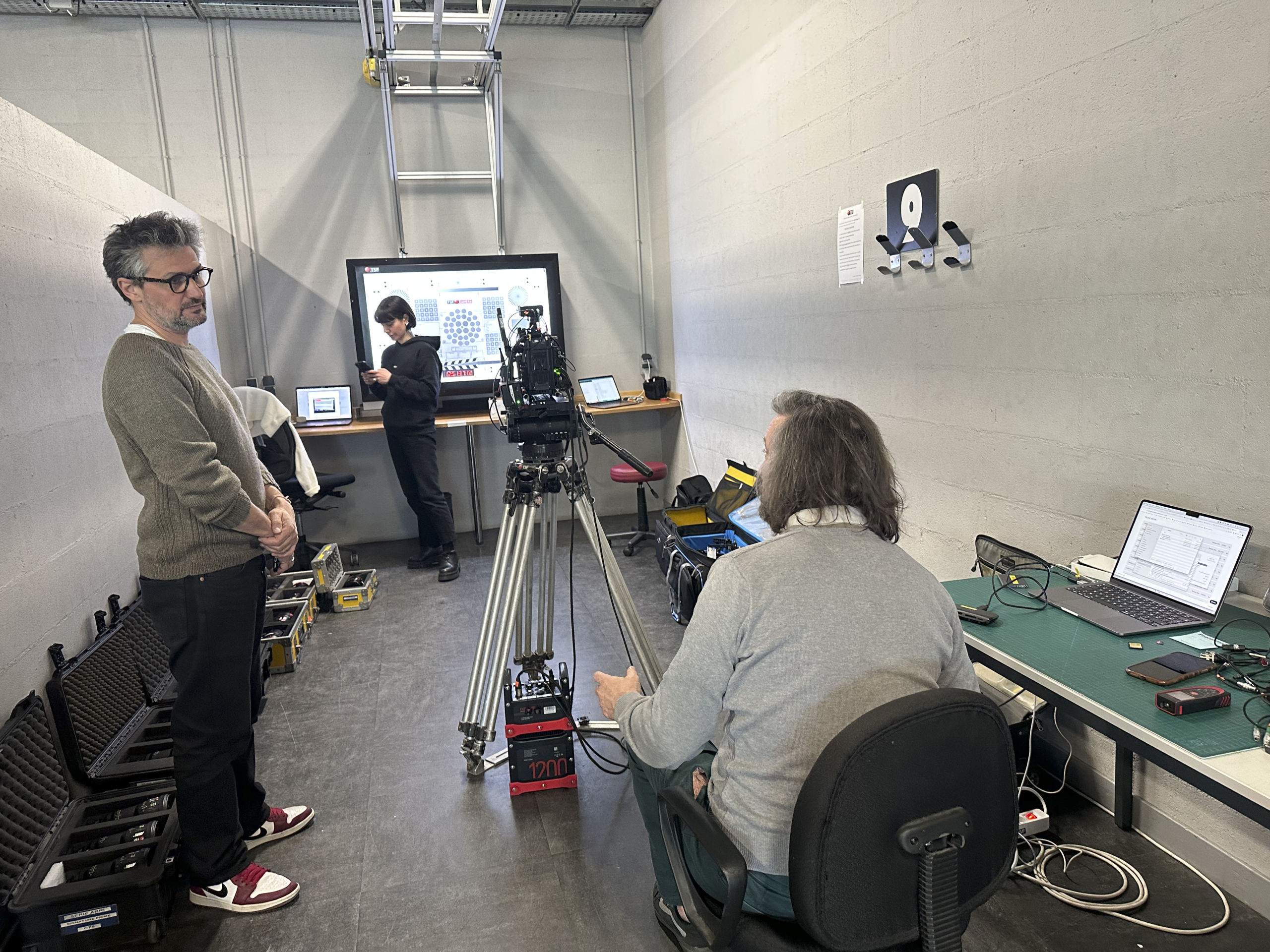
Thomas Bataille-Valentine Lequet-Grégoire Ausina / Camera test bench TSF
As part of our technical study, which extends from shooting to post-production, we are including a variety of lenses and camera bodies. Some of these lenses can generate metadata, but this requires compatibility with several elements : mounts, cables, LDA reader boxes and timecode generators. Ensuring this compatibility is a critical point in our tests. In addition, it is essential to check that the rental companies have all the necessary equipment.
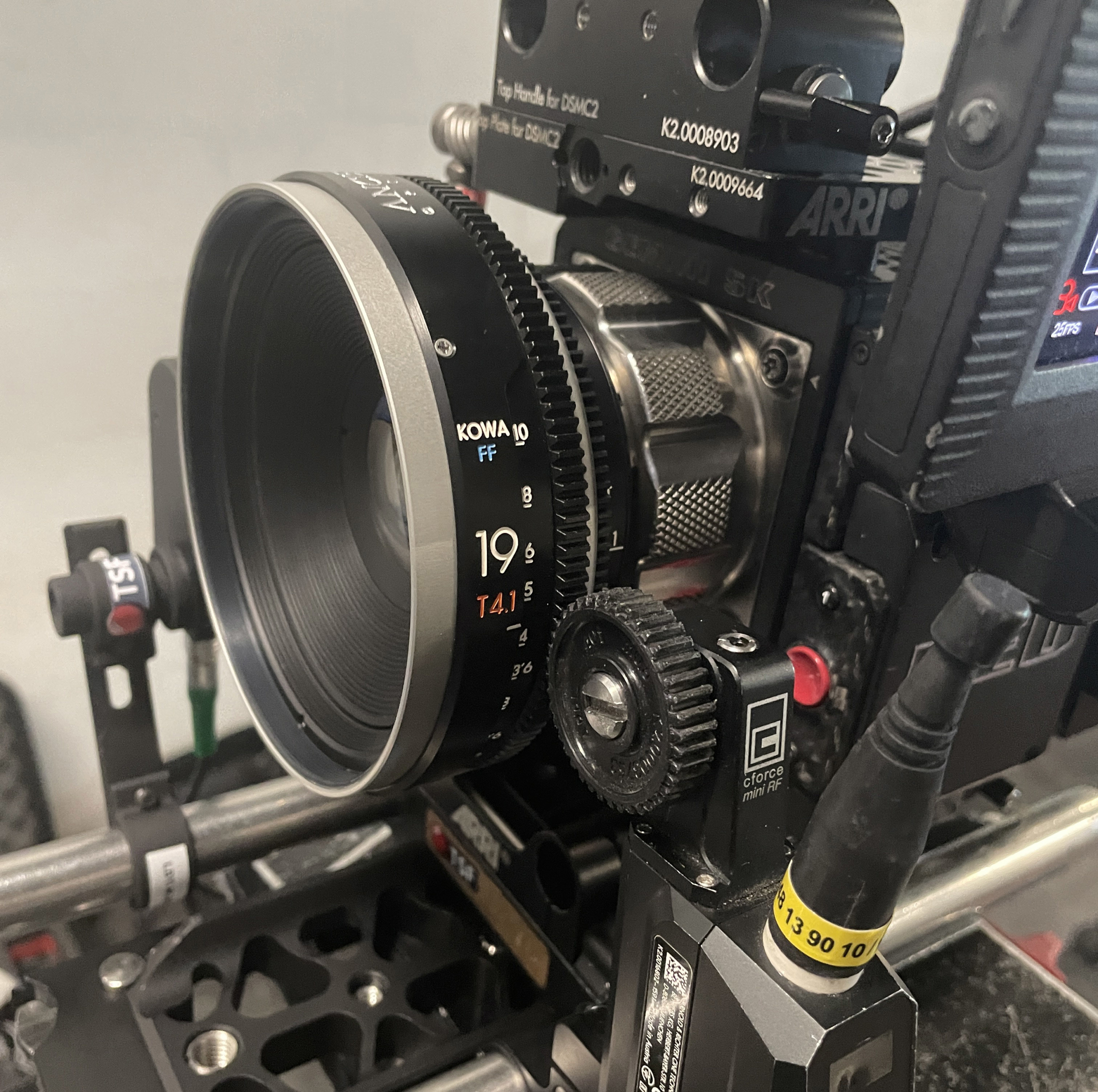
To extend the tests and try to overcome our first failure with the DCS LDT-R2, TSF provided us with a series of spherical Kowa Vintage FFs and a RED Gemini 5K DMSC2.
The aim here is to see if it is possible to write FIZ lens metadata (i.e. primary Focus/Iris/Zoom metadata) in the camera’s image files. We need to find out how to produce this metadata from these vintage lenses, which have no electronics whatsoever.
To achieve this, we will need to use the LDT-E1 encoder associated with the LDT-R2 housing.
Setting up
Following our protocol, we used a 19mm (T4.1), we shoot a lens deformation grid.
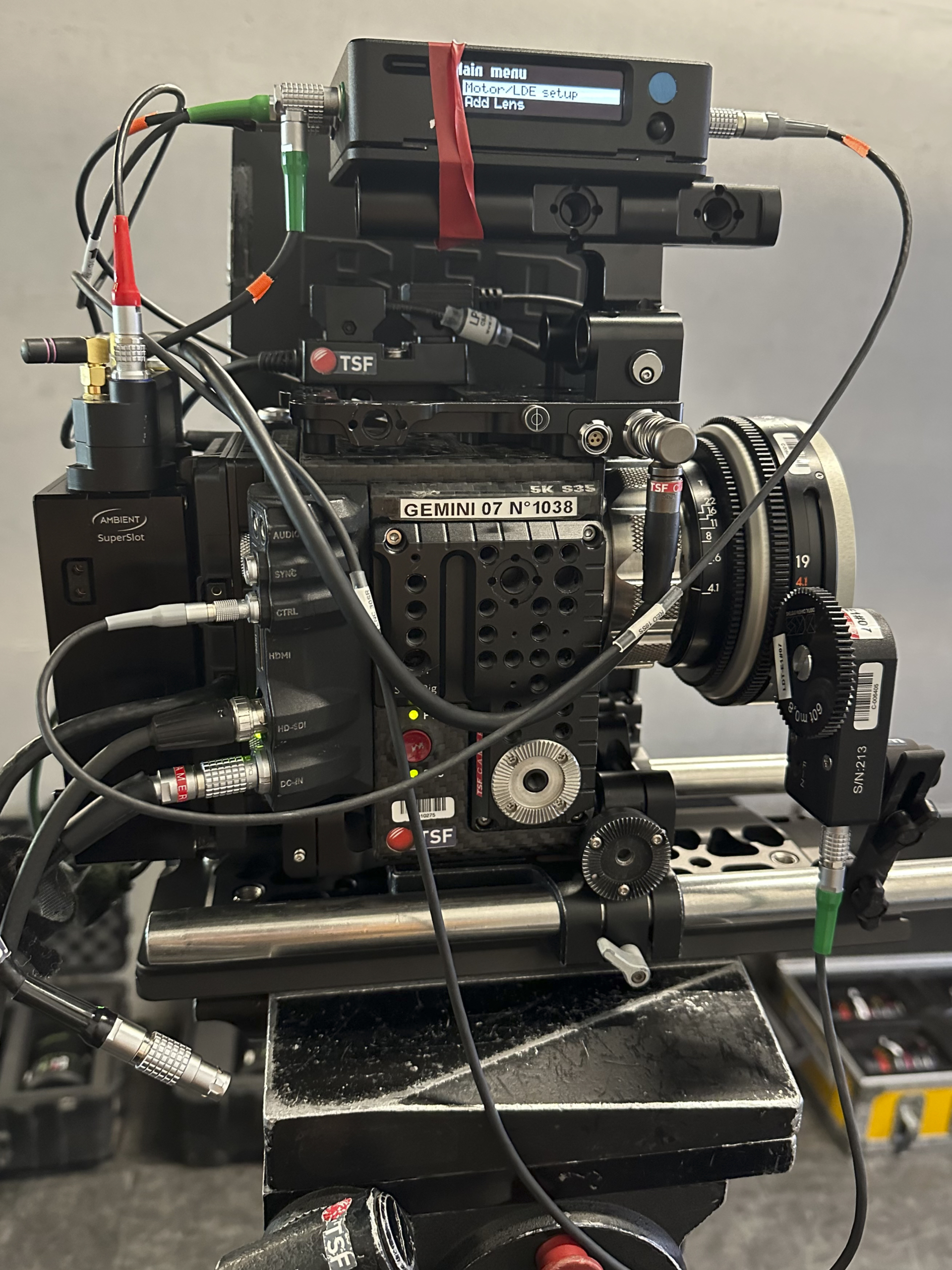
The Ambient Lockit+ is powered via the camera’s V-Lock port.
The TC out port ofthe Lockit+ is connected to the TC in port of the LDT-R2.
The LDT-R2 CAM port is connected to the Gemini CTRL port.
The LDT-E1 encoder (out) is connected to the LDT-R2 ENC port (in)
The PWR port of the LDT-R2 is powered via DTAP.
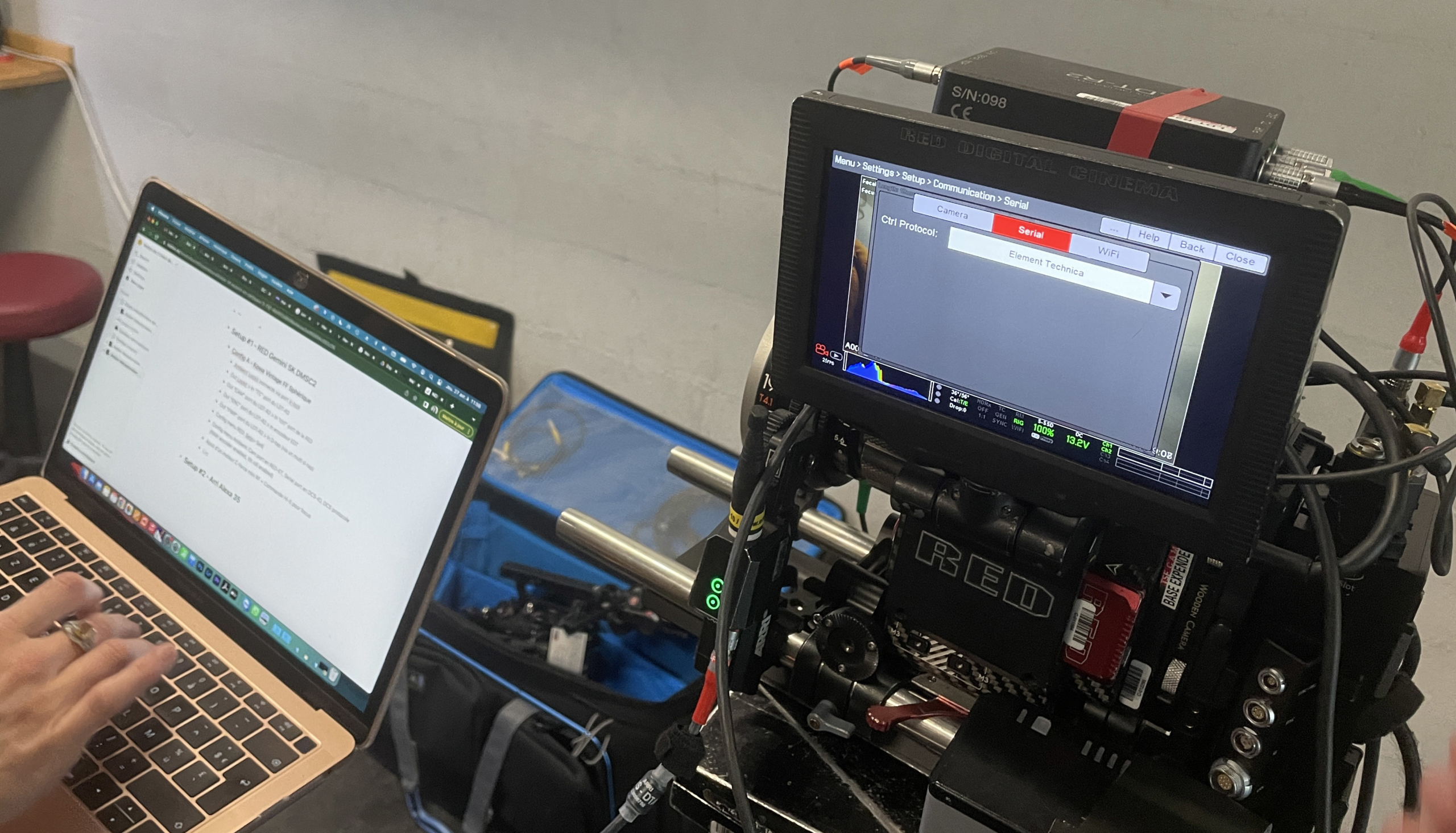
In the Gemini camera menu: Settings > setup > communication > serial (ctrl protocol = element technical).
In the Lockit+ box menu: Cam port in RED-ET, Serial port in DCS-IO, DCS protocol (RAW encoder enabled, tilt roll enabled).
Finally, we added a C-Force mini RF motor and a Hi-5 remote.
In terms of camera settings, we chose an iso of 800, 25 fps, 5K sensor ratio 1.7:1 and rec in RAW 8:1.
A conclusive test
Consulting the manufacturer’s documentation, collecting the necessary cables, understanding and choosing the settings in the camera and the housings, all this takes a certain amount of time… As we don’t have any LDA for the Kowa series, we also have to create an LDA manually, at least for the lens chosen for our tests (to be repeated with all the focal lengths in the series !).
After an initial recording that didn’t seem successful, we modified a final parameter in the Gemini menu: Settings > Setup > Lens (deactivate ‘Enable power to Lens’ and ‘Auto Detect PL Lenses’ – we then had to recalibrate the LDT-E1 encoder wheel). New recording of a focus rack shot.
After checking on a computer using RED Player, the metadata do appear in the R3D RAW file, including the focal length, focal distance and variations resulting from the focus shift !

It should be noted that tilt and roll data also appear, not from the lens or camera but from the LDT-R2 box himself, which has the ability to generate gyroscopic data.
We have seen that with the Sony Venice 2, the LDT-R2 is not yet fully operational (it lacks the famous ‘specialist mount’), while with an Arri camera, the LDT-R2 is not operational, the Ambient Lockit+ and Arri’s UMC-4 being complementary in the event that not all the information can be recorded in the image files via the PL/LPL mount.
In a RED ecosystem, however, it could prove to be a real added value.
What next?
Several reflexions conclude these various test phases :
- These configurations require a particularly long time to check the end-to-end data chain. For the moment, we’ve confined ourselves to checking the presence of the metadata we shot. The next stage will see us evaluating a few shots in post-production to compare actual distances with 3D track solutions. But it’s reasonable to imagine that in production, the testing time and uncertainties about technical feasibility must be difficult to manage.
- The devices (protocol, boxes, specialist mount) are still under development and sometimes require direct technical support from the designers. The systems are being pushed to their limits and it is sometimes necessary to seek help from the experts, and the online manuals are not always up to date.
- We have seen that it is possible to assign metadata to lenses that are intrinsically deprived of it, but this requires a considerable effort for a much less rich and precise result than with ‘modern’ electronic lenses.
In other words, using vintage lenses on films requiring VFX is a fairly technical challenge that should really be justified artistically, especially when we see the arrival of turnkey systems developed by certain manufacturers.Translated with www.DeepL.com/Translator (free version) - The next stage of this work will be in post-production, to demonstrate the usefulness of metadata with our media. The idea is to explain the principle of 3D tracking (as a calculated solution to the movement of the virtual camera in space) in order to understand the potential benefits of live tracking (physical position of the camera measured to create the virtual camera) with devices such as Cincraft Scenario, version 2 of which has just been released by Zeiss, or Eztrack, with which Cooke has formed a partnership.With equipment that is currently undergoing constant development, this study dedicated to metadata gives us a glimpse of other sessions to come. We’ll be sure to keep you posted.
Many thanks to Valentine Lequet, co-president of UCO, Sarah Guillaumin Haddad, Charlotte Michel, Sara Cornu and Thomas Bataille.
A big thank you to the TSF team for their warm welcome and commitment.