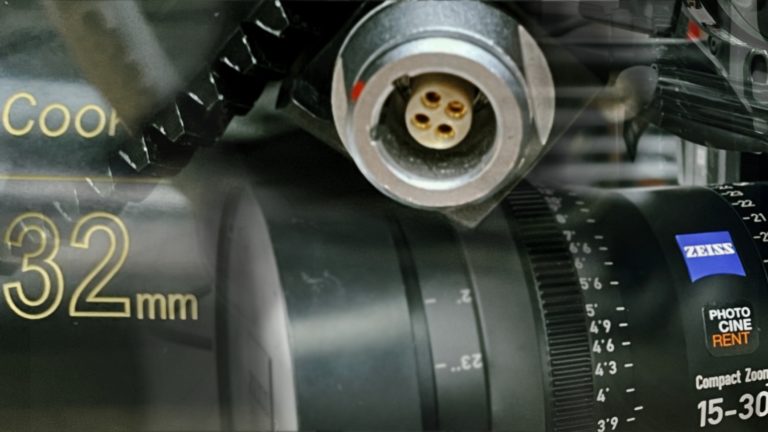
To understand the value of on-board electronics in modern optics, but also to respond to specific requests, we have asked ourselves how we could “create” useful metadata for VFX, in the old-fashioned way. LD (Lens Data) of the FIZ (Focus, Iris, Zoom) type, of course, but we also tried our hand at deformation test patterns to add this data, which greatly improves the precision of special effects.
We found this approach interesting, not only to observe the path taken by metadata, but also to be able to propose technical solutions in what we might call atypical configurations…
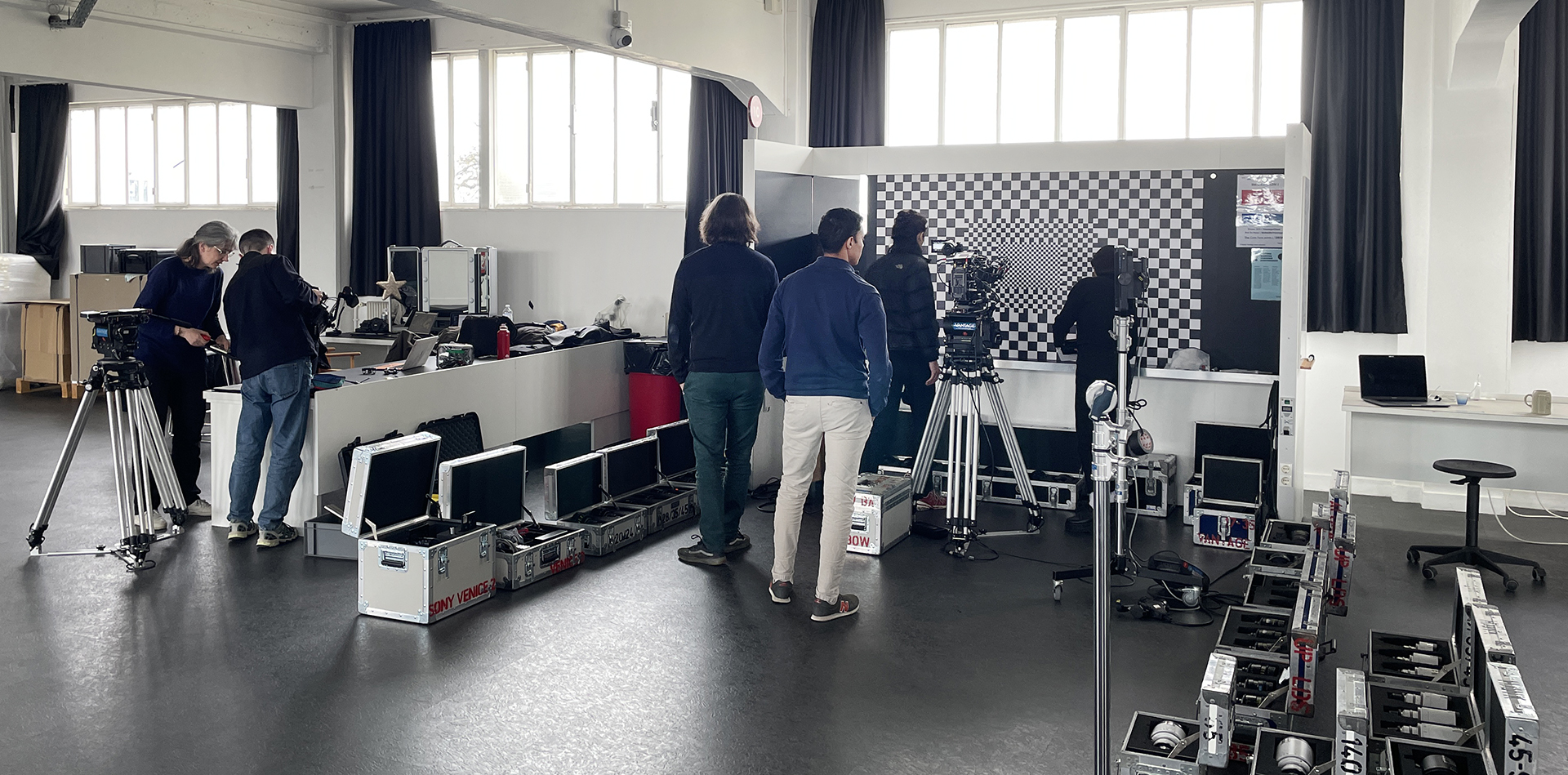
For this second session, on Wednesday April 26, several UCO members met up at our partner Vantage, that designs, manufactures and rents Hawk optics (but not only !). Camera-wise, we continue to use the Sony Venice 2 and an Arri Alexa Mini LF. Added for this session is an URSA Mini Pro 12K from Black Magic Design, also a UCO partner.
The idea is to find out what works and what doesn’t, because since our first guesses, we’ve found in the field that there’s not a unique formula that works for all camera + lens configurations.
A new box
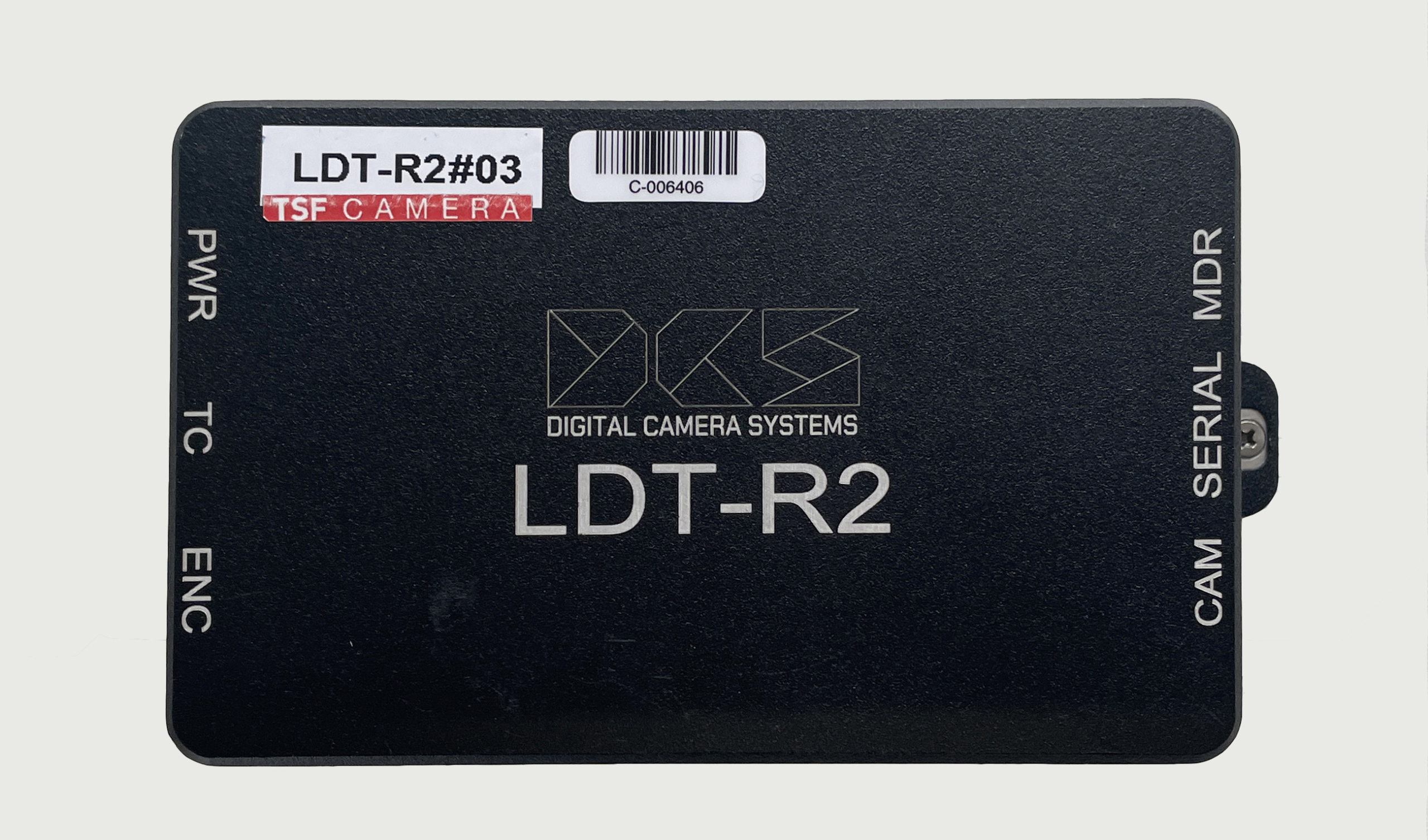
The LDT-R2 from British company DCS is the latest addition to our range of accessories for processing lens metadata. It’s a dedicated device that’s apparently uncommon in France, but seems to be more widespread across the Channel. The LDT-R2 should potentially enable us to encode FIZ data for non smart lenses, as well as inject dynamic data into image files recorded by cameras. The wrapping of data in raw files would be the big improvement for us. It remains to understand how to make this work.
The importance of LDAs
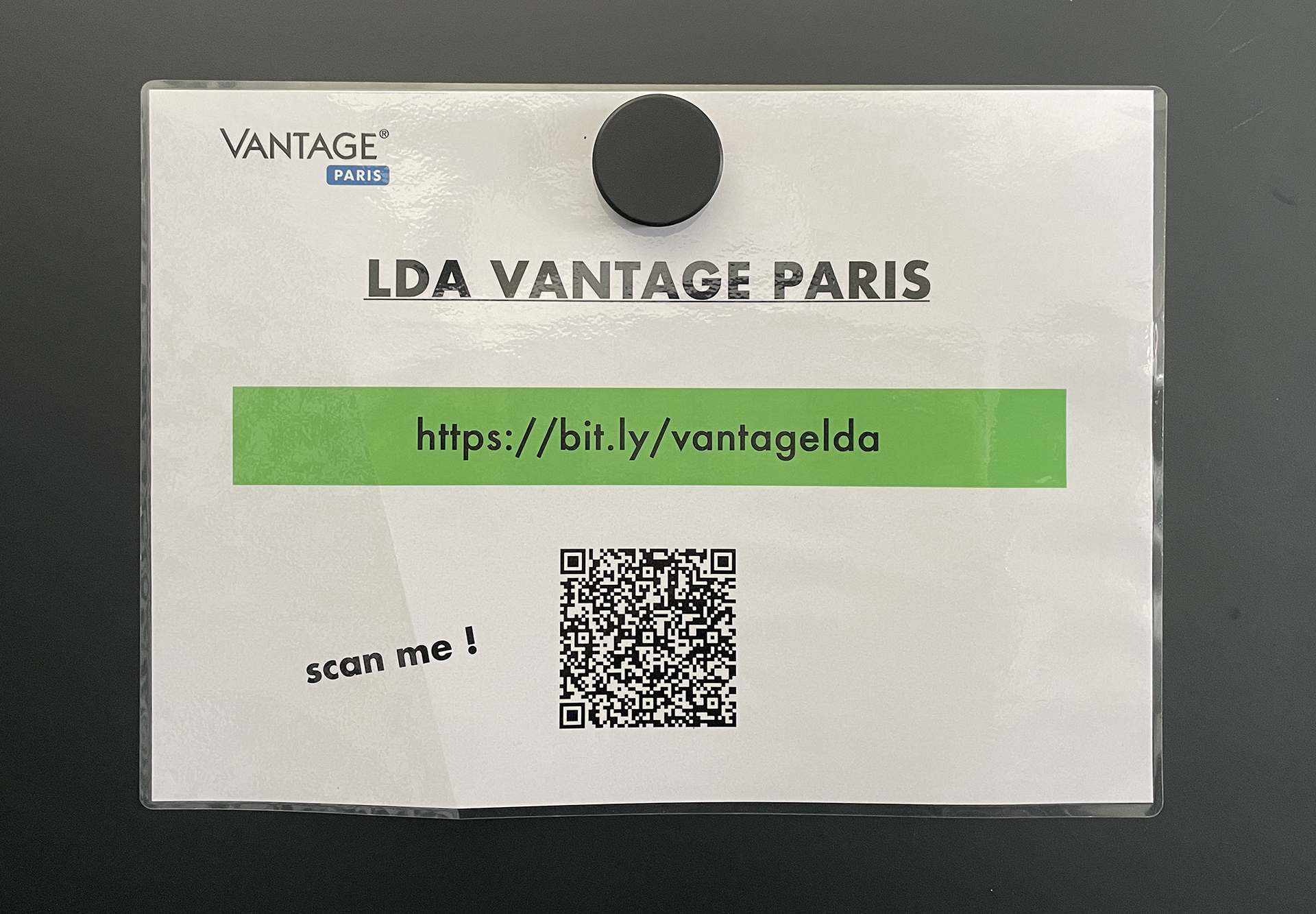
In the large room provided by Vantage, we immediately noticed the QR codes for access to the LDA database for rental lenses.
In fact, Vantage strives to create LDA files for all the lenses in its rental fleet, which means that when a new lens is introduced, a specific file is created including the stops of all the rings. This enables the system to convert the angular position values of the motors into useful FIZ values. In other words without LDA no metadata.
UMC-4 still a must
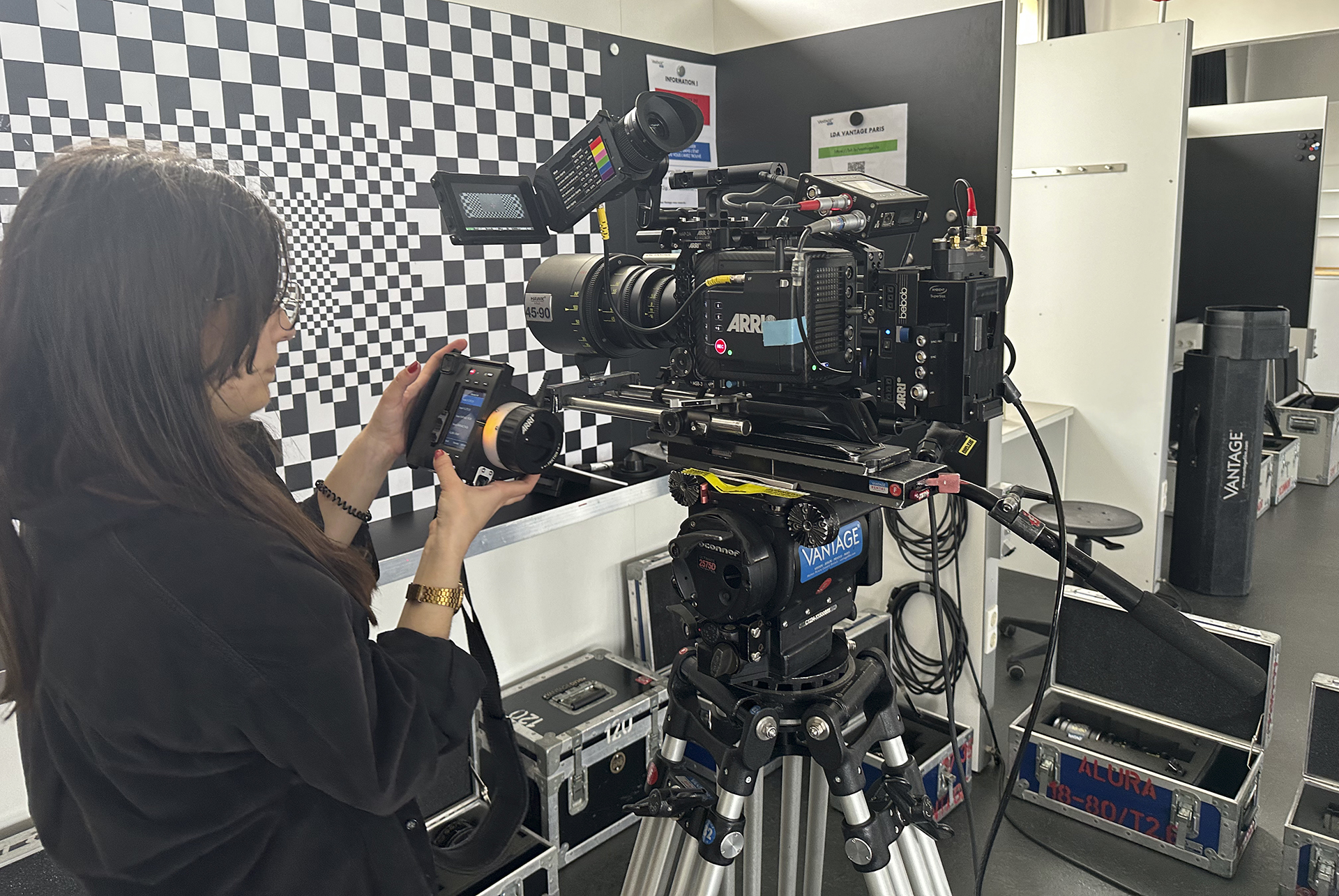
With the Mini LF positioned 4’2” from a checkerboard pattern, we install a mini RF motor (iris) and a mini C Force (focus), operated with an Arri Hi5 control. The LDAs already present on the UMC-4’s SD card facilitate operations. The Ambient box feeds the camera and therefore the UMC-4 with timecode, but without a Lemo connector on the lenses, it is impossible to retrieve metadata in the Lockit+.
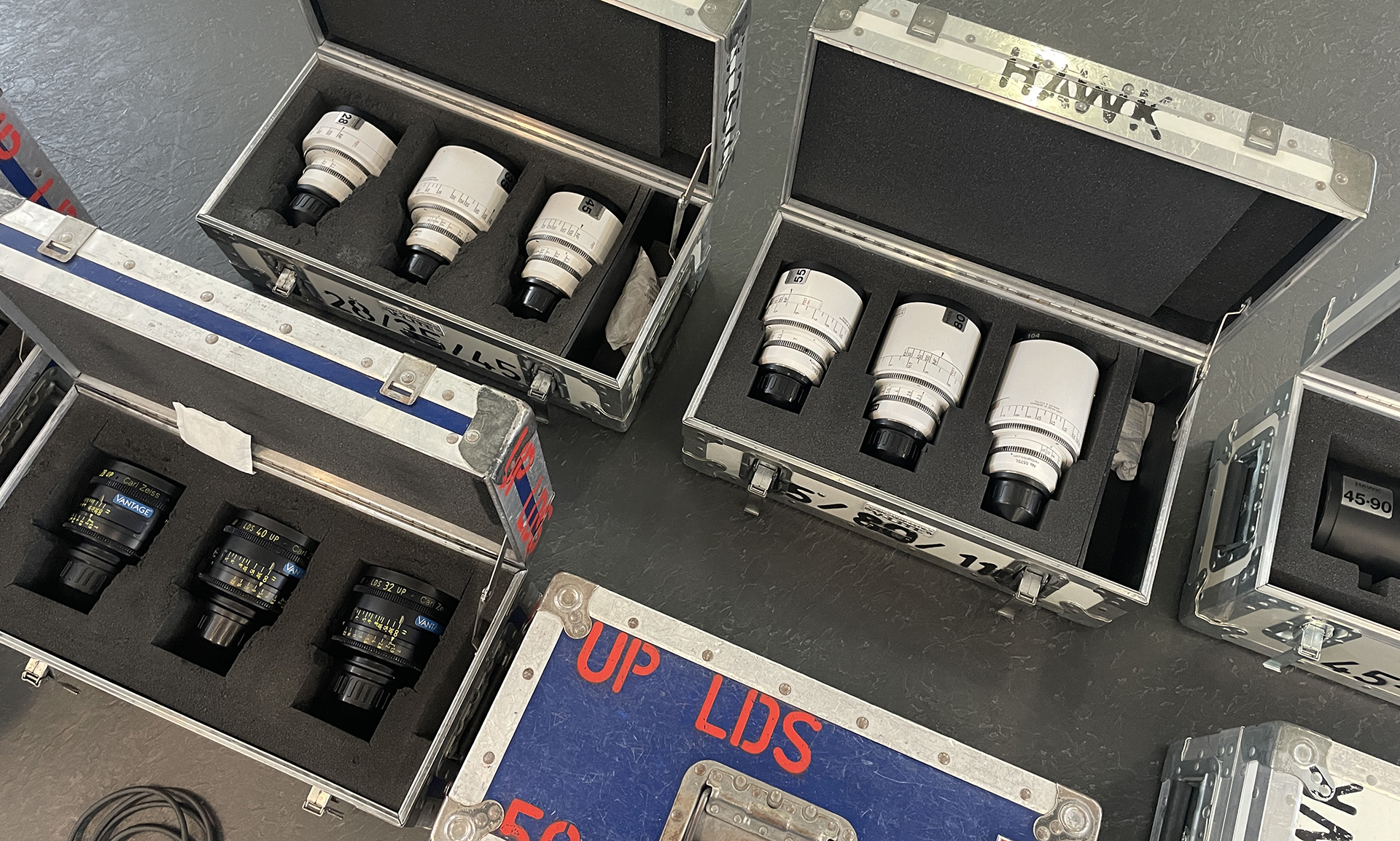
This is followed by a series of short shots of the test patterns with the beautiful optics we have available, to highlight the role of the LDAs and record the metadata transmitted by the motors on the UMC-4’s SD card. We’re going to supply the VFX with a test pattern with the following metadata : name of lens, focal length and distance.
- Vantage One 17.5 mm (Too much vignetting on the Mini LF, we’re excluding this lens from the tests)
- Vantage One 21 mm (Rack focus)
- Vantage One 25 mm
- Hawk SuperWide Zoom 10-24mm (Zoom in/out on 20mm to 24mm)
- Vantage LightWeight 17-35mm (Zoom in/out on part of the focal range)
- Zeiss Ultra Prime LDS 20 mm
- Zeiss Ultra Prime LDS 24 mm
- Fujinon / ARRI Allura 18-80 mm (Zoom in/out)
- Hawk V-lite Vintage 28 mm 2x (Rack focus)
- Hawk V-lite Vintage 35 mm 2x (Rack focus)
- Hawk V-lite 24 mm 1.3x (Rack focus)
- Hawk V-lite 28 mm 1.3x (Rack focus)
- Hawk V-Plus 45-90 mm 2x (Zoom in/out, rack focus) – Distance change, step back to 6′
- Hawk Vintage ’74 55 mm 2x
- Hawk V-lite 55 mm 1.3x
- Hawk Vintage ’74 80 mm 2x
- Hawk V-lite 110 mm 1.3x
- Hawk Vintage ’74 110 mm 2x
Then we move on to the protocol including the trackers set up during our first work session :
- Hawk Vintage ’74 – 28 mm 2x: steady camera (slow and fast rack focus betweeen tracker 1 and tracker 2 ), handheld camera: lateral movements, back and forth, slow rack focus, fast rack focus, iris change
- Hawk V-lite – 24 mm 1.3x: steady camera (rack focus track 1/track 2 slow and fast), handheld camera : side-to-side movement, front-to-back, slow rack focus, fast rack focus, iris change
- Vantage One – 25 mm: steady camera (slow and fast rack focus track 1/track 2 ), handheld camera (same as above)
- Hawk SuperWide Zoom 10-24mm: steady camera (slow and fast track 1/track 2 rack focus), handheld camera (same as above)
- Zeiss Ultra Prime LDS 20mm: steady camera (slow and fast rack focus ), handheld camera (same as above)
The LDT-R2 on the Venice 2 : not quite there yet !
We’re mounting a 24mm Zeiss Ultra Prime LDS on the Venice 2, equipped with DCS’s LDT-R2 box. It seems that LDS Arri was implemented on this series, presumably before Zeiss decided to develop its own eXtended protocol. In theory, metadata should pass through the lens mount.
With this configuration, we seem to have reached a dead end.
It would appear that this series is too old (LDS vs eXtended). Furthermore, while desperately trying to connect the Venice to the camera, we learn that DCS recommends a specific mount (Specialist Lens Mount) that would allow optical metadata to be injected into X-OCN files.
After investigation, it seems that this famous mount is at the prototype stage, manufactured in a few copies but still unavailable for sale ! To date, the transmission of metadata to RAW files would only work with RED or PanaDXL (RED-based) cameras…
We’ve also learned that Venice has a specific function to be activated to use metadata from Zeiss lenses (Enabling Metadata for Sony Workflow – manual link here).
The LDT-E1 encoder wheel associated with the LDT-R2 allows manual calibration of the stops, while a minimal LDA (name and type of lens, iris values, focus values) must be created by the user. The camera’s menu interface is rather minimalist. We tried to record data on the LDT-R2’s micro SD card without success. Adding Lockit+ to feed timecode makes the recording work, which seems logical : without timecode, there’s no dynamic metadata. The data is recorded on the camera’s micro SD and the basic LDA we created appears. Without a dedicated mount, tests with the Venice seem pointless with this DCS box.
It’s worth noting that DCS offers a range of various devices for various camera bodies, mounts, control systems and types of production (traditional or virtual studio set). As we have seen, it’s important to ensure that these devices are actually operational, depending on the production setup.
It should also be noted that, to date, the LDT-R2 box seems incompatible with an Arri LPL mount.
Are lenses reliable telemetric measuring instruments ?
At the end of the day, we test a completely different configuration, on a Blackmagic Ursa Mini Pro 12K (S35 sensor). The 12K image files (17:9 / Q0 / BM RAW / constant bitrate) are recorded on an external Samsung T5 SSD.
We position 10 trackers at depths of around 10-15 meters, the idea being to check whether the metadata correctly transmits the distance values (between tracker and camera and between trackers) to create a virtual camera in a 3D set. The actual measurements are taken using a decameter with the camera on a stand.
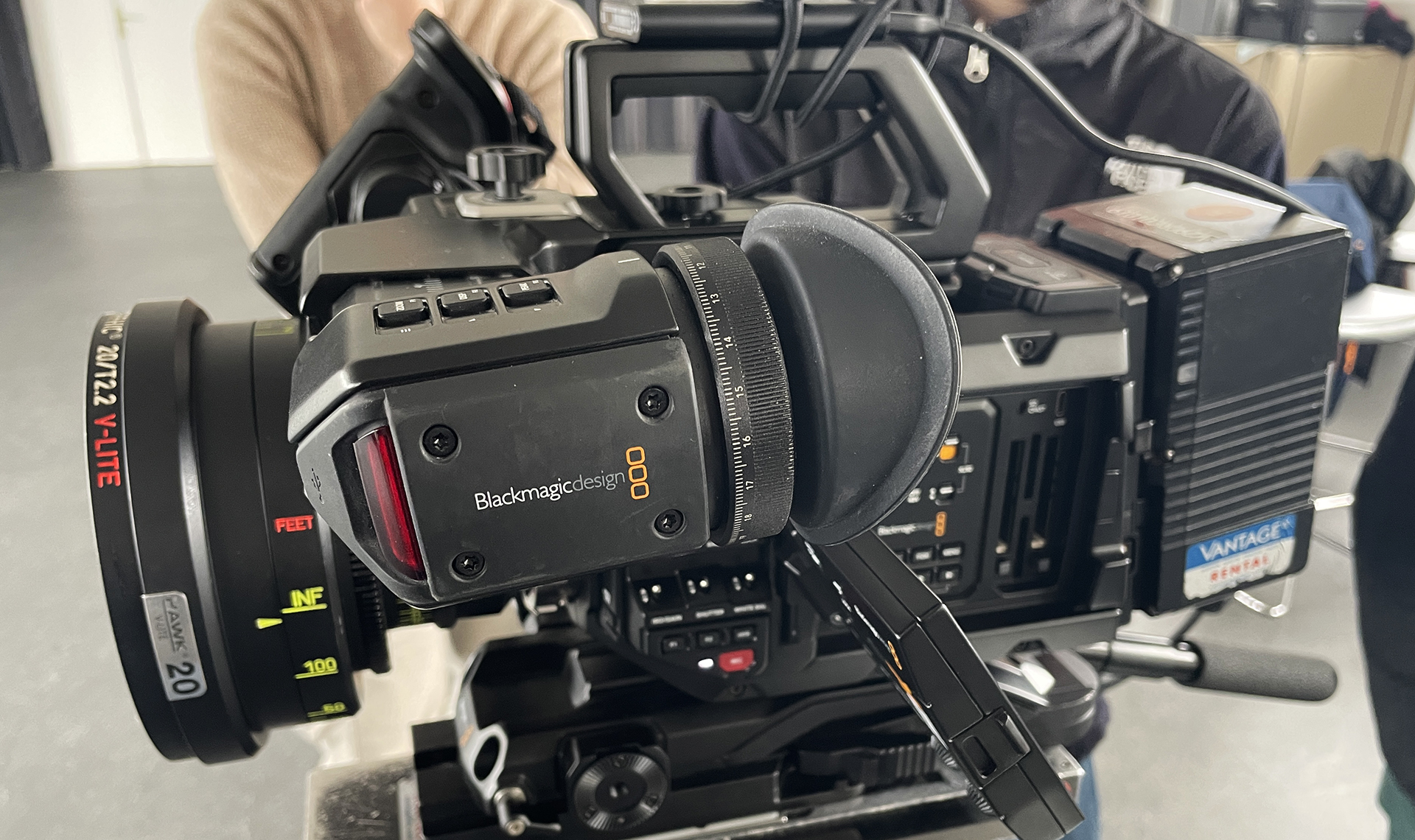
We record several files according to our usual protocol, including handheld cameras, lateral movements and focus switches.
The first lens is a Hawk V-lite 20mm 1.3x, the second a 24mm Zeiss Ultra Prime LDS.
The Hawk V-lite 20mm 1.3x is accompanied by a C-Force mini RF motor for focus and C-Force mini for iris, Hi-5 control and UMC-4 box.
Although supposedly a smart lens, the 24mm did not communicate any metadata to the three cameras. We had assumed that the Mini LF would be compatible, but this was not the case. We tested another focal length in the series, but with no further results. Perhaps this series is too old, while the Mini LF is too new…
While the URSA Mini Pro 12K cannot record any optical metadata in its image files with these lenses, the UMC-4 can nevertheless retrieve FIZ data (Focus and Iris) transmitted by the motors.
Today’s assessment : in the configurations we tested, the Arri UMC-4 box seems to be an essential tool, rustic and efficient if you have pre-encoded LDAs. The Ambient, with our metadata-free lenses, was reduced to the role of timecode generator.
In our forthcoming article, the challenge will be to have vintage glass LDs recorded in image files. To be continued !
Thanks to Valentine Lequet, co-president of the Union, Sara Cornu, Mykhailo Husak, Sarah Guillaumin Haddad, Djamel Bertal and Élise Filaferro, camera assistant.
Many thanks to the entire Vantage team for their warm welcome and dedication.