Vincent is looking for love, working with his ex, and deserves a few slaps, but probably not what happens to him: persecuted by perfect strangers, he is launched into a mad race to save his skin.
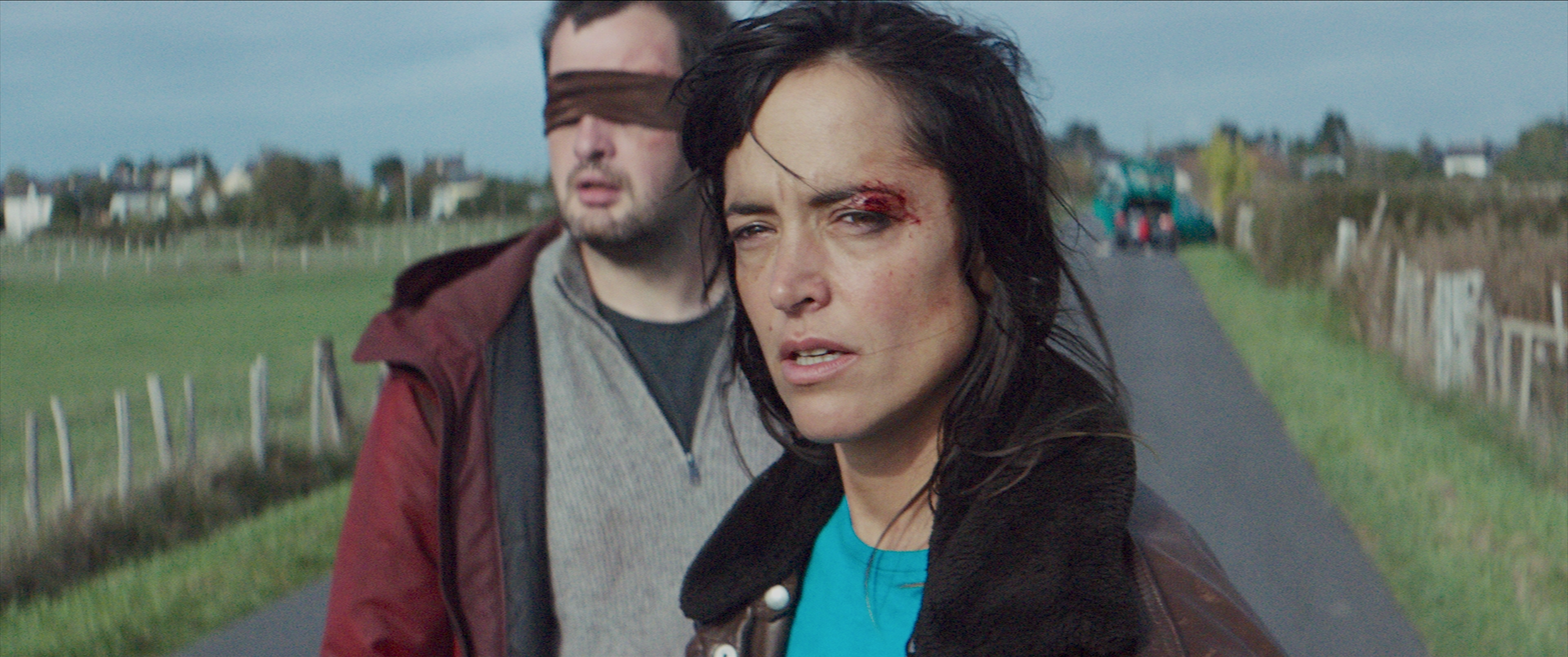
A genre film, road movie, and modern romance, Vincent Must Die (Vincent doit mourir) is afraid of nothing. References can be found in American films of the 1970s, with increasingly striking artistic choices as the film leaves the city to take to the open road.
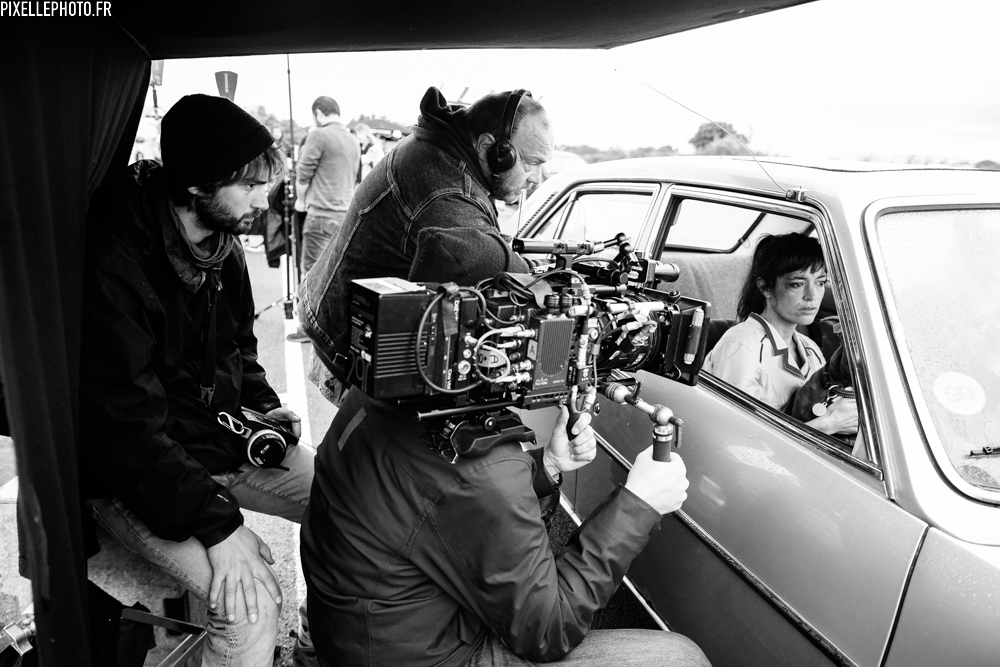
We met with Manuel Dacosse, the film’s Belgian cinematographer, who was in Chalon-sur-Saône to accompany his director and present the film at the “Chefs Op’ en lumière” festival.
—
First of all, you already gave an interview to François Reumont for the AFC about the film, which can be found here. So we are going to talk about other things.
You studied at IAD in Belgium. What do you think is the particularity of this school?
IAD is quite similar to INSAS (the other major Belgian film school), except that its entrance exam lasts one year. At INSAS, they select six or ten people, while at IAD, they keep thirty for the entire first year. Then they let through ten in my time, and 16 today, into the second year.
I hadn’t been accepted at INSAS, so I did a year of photography (which I completely failed) and then IAD in three years (today the school lasts three or four years to get a master’s degree). I teach there from time to time.
It’s accessible from the end of high school. There are people who have never done cinema, but they progress and discover themselves during the year. As you have a year to prove yourself, the school is more open (including to people who might not be very good at competitions) and the profiles are more varied: DaVinci geeks, more “arty” profiles, and there is gender parity. Which is also new. They try to have 50/50 in the second year (as far as possible). When I was at school, there was only one girl in my class of ten students. She stopped after 10 years; maybe if there had been five, at least one would have continued.
Did most of your classmates continue?
There is especially Yves Sehnaoui, one of my best friends, in Egypt and Lebanon, and for whom I was an assistant. After IAD, I did news reporting at TV Brussels for a year (because it was the company that had taken me on as an intern). When I started to get a bit bored, I left to join Yves in Lebanon. There, I worked from 2000 to 2006 as a camera assistant.
At the time of the war between Hezbollah and Israel, everything stopped. And I started working again in Belgium on Flying Cam, camera mounted on helicopters. I was also doing a lot of motorcycle running footage. I was filming motorcycles on racetracks. It was quite formative for learning to film speed and learning to handle pressure. Then, I didn’t go back to Lebanon, because in the meantime, Dubai had entered the market. There were technicians on site. I had even trained some myself, who came from the rental companies.
Then in 2008, your first feature film as a cinematographer was released, Amer by Hélène Quattet and Bruno Forzani, with whom you made a lot of short films before and with whom you will make a lot of feature films afterwards.
In 2008, my first feature film was released. Then in 2011, I stopped Flying Cam and motorcycle commercials because I was making a living as a cinematographer. In the meantime, in 2010, De leur vivant was released, a small feature film shot with a Canon 5D in natural light with Géraldine Doignon.
Then, one or two films per year followed, with names that kept coming up: Fabrice Du Weltz, Quattet and Forzani, then François Ozon a little later. In the interview you did with AFC, you said that you had made a film with François Ozon and that you wanted to do something else, and that it was while reading the script of Vincent Must Die that you let yourself get carried away.
Yes. You always follow up a well-funded film with a slightly risky one… when you’re lucky enough to be able to do so (because there are years when you have less choice), but that year, I read the script for Vincent quite early, knowing that Ozon’s film was going to be made, so I thought: since Mon Crime financially secures me, I can afford to make a slightly less established film.
You also have to choose your commercial films. There are comedies that you maybe shouldn’t do anyway. But on a François Ozon film, I also have the opportunity to meet great teams: the set designer Jean Rabasse, the costume designer Pascaline Chavanne, alongside whom I learn a lot. And they have the means to express themselves there, which is a bit more difficult on smaller films.
By keeping your directors loyal, you also maintain a trajectory.
I don’t really ask myself the question… And then there are also disappointments. For example, when Lucile Hadzihalilovic offered me her second film, Fabrice’s film was happening at the same time. These are horrible decisions, knowing that if I choose Fabrice, Lucile will make her film with someone else, and he will do his job very well, so she won’t come back to me.
The year of Mon Crime and Vincent Must Die, you had time for both films. And that’s when you met Stéphan.
I had also seen his short film, “Final”, which was really good.
The choice is to like the script, then to meet the director and have a good evening, and then to look at their work. And seeing where I am now, I can say: yes!
Stéphan had shot his films in self-production. Of course, he had never made feature films, but he knew all the stages of making a film up close. I imagine that after twelve years of career in feature films, and even being a teacher, you don’t necessarily want (and it’s maybe not even very healthy) to be in a pedagogical position towards your director.
It’s something I never do, even with someone who has no experience. I always find it lame when people say: “I’ve never experienced this, you have to do it like this because that’s how it is”. Young people are there to challenge you. You can say: “Be careful there… but if you want to go for it, let’s go!” It’s not my thing to play the role of the dad. I already have children. On set, I hope to continue working with younger directors who bring their ideas, and I come with my experience, without needing to express it. Or even on the contrary, my experience will allow me to defend their ideas against the concerns of the production.
In the end, does experience bring solutions to support choices that seem naive?
Yes, and on the other hand, sometimes I can say from experience that the production is not wrong.
While seeking, for your part, a collaboration that remains horizontal.
Yes. However, I no longer do short films now. You can’t take everyone’s work. My students who graduated ten years ago, they also need to make their films.
There were 40 shooting days on this film.
Yes, I saw it as a small budget but with 3.5 Million, we were in Annex 1.
The film lasts 1h48. Which brings it to less than 3 useful minutes shot per day, which is the Cinema ratio that we learned, and which is regularly nibbled away. For a first feature, it was quite comfortable. Sometimes on first features, we want it not to be too expensive, so shot quickly.
Whereas yes, what is comfortable is having time. That’s mainly why you need to have money. We were also able to shoot the film in chronological order, or almost.
How did the preparation for the film go?
We watched films together. I have a hard drive with lots of films that I like. When talking about the breakdown, we say to ourselves: “Oh, did you see that passage in such and such a film?!” and we watch the film or the excerpt together. That’s how the discussion around the images is created. When breaking down the script, we can take our time. It’s one of the rare moments when you have the director just for yourself. Later on, this is no longer the case, there is always someone else. There, we can run with ideas. And images emerge. I also use the Film Grab site a lot.
It’s interesting, this importance of creating a relationship of trust and defining the universe before shooting. And even having a vocabulary: “what if we went a little more ‘Bullitt’, and if…” In fact, during shooting, it’s no longer the time to do it.
We did everything on Zoom, then a weekend that I spent at his place. It makes for long working days but it’s the best way to create the bond. Once on a film, with a German director who always asked for that, we had ten days together to break down the whole film. And it was great. And it was paid.
After finding the film’s palette of references, how did you reconcile a desire for American cinema with a French-Belgian co-production?
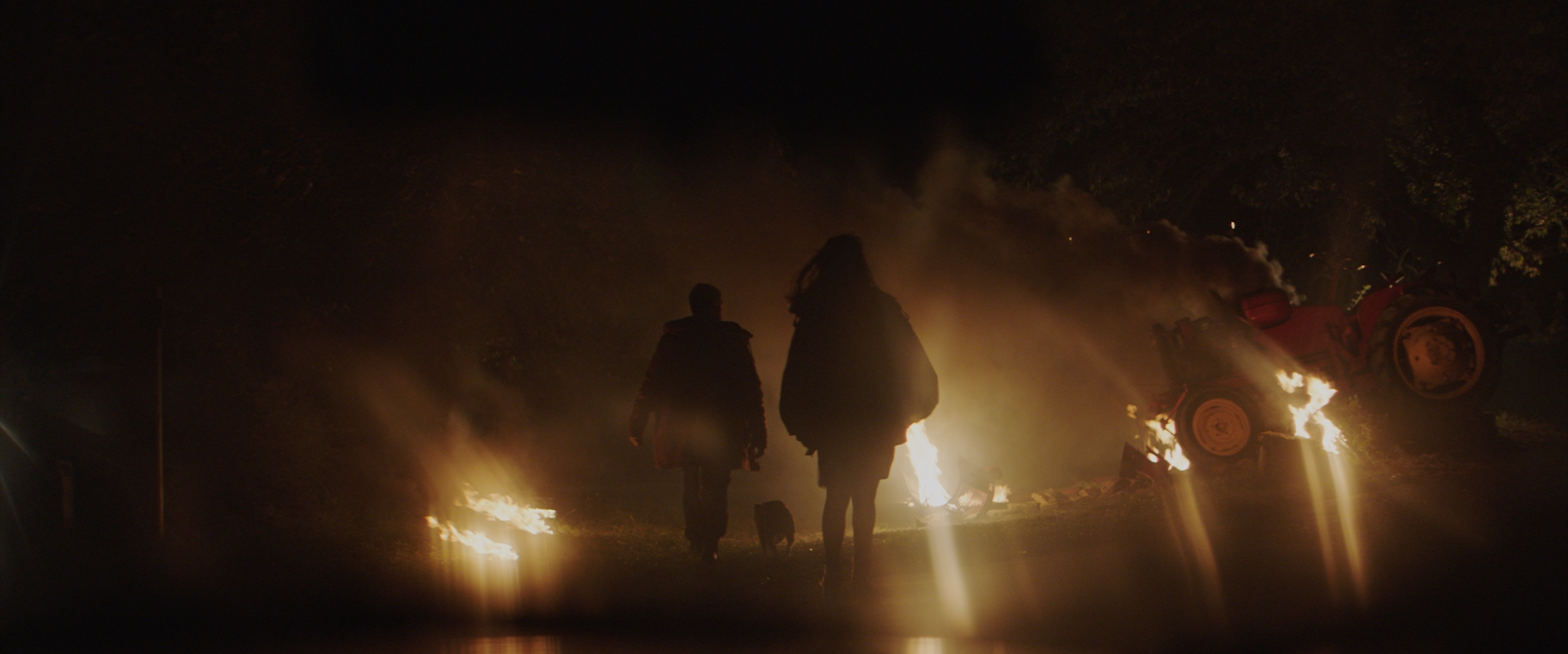
Well, the anamorphic scope helped. And then the search for sets, favoring large spaces. We can have sets with a lot of depth, here as elsewhere. We also looked for somewhat unique sets, like the snack bar with all its neon lights. You shouldn’t want to make American cinema too much because we don’t have the means. But we can still invest in the sets like the Americans do: by putting in smoke, putting in rain or wetting the floors. When we asked for that ten years ago, we were yelled at, but it’s becoming more and more common. Everyone understands that it’s a real asset in photography. You gain depth and you need to light less. It’s understood. American films have been doing it since the 50s. Maybe in France, it was the New Wave that was a bit opposed to that, because these effects were present in old French films.
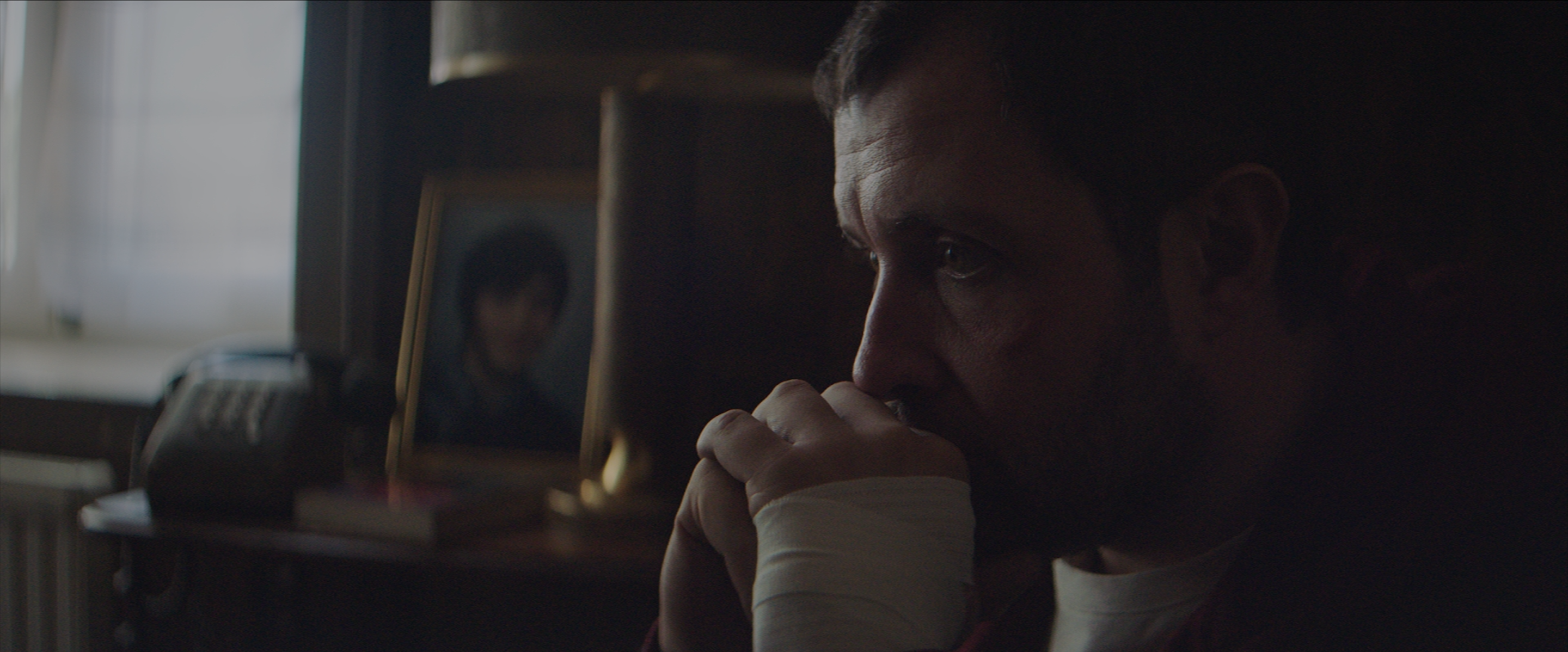
In fact, “making an American film” doesn’t mean much. But it comes from an analysis of what we like in those American films of the 70s: the backlighting, the silhouettes, the lighting by the practicals, justified, a slightly grainy texture, fairly saturated colors. It’s an inspiration.
People shouldn’t say to themselves when seeing the film: “Hey, it feels like an American film”. …Even if there are also borrowings from the western.
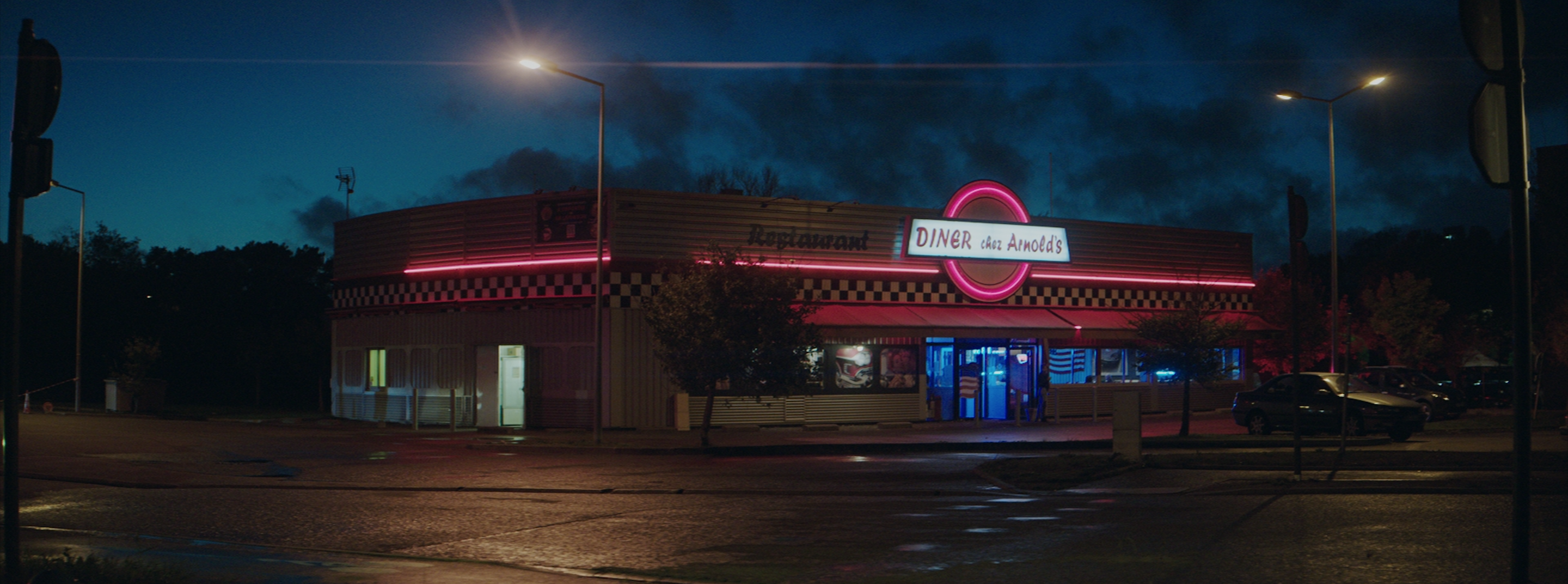
There are iconic elements: the diner waitress uniform is an American object. But since it’s a burger restaurant set, we’re almost meta. American soft power is ultimately quite present here.
I’ve also shot in Canada and the United States. And the approach was the same, but it’s true that I found this kind of set everywhere. A motel quickly becomes a graphic space. Here, we find that in supermarkets or commercial areas, with neon lights everywhere. Once everything is wet, you’re in the United States.
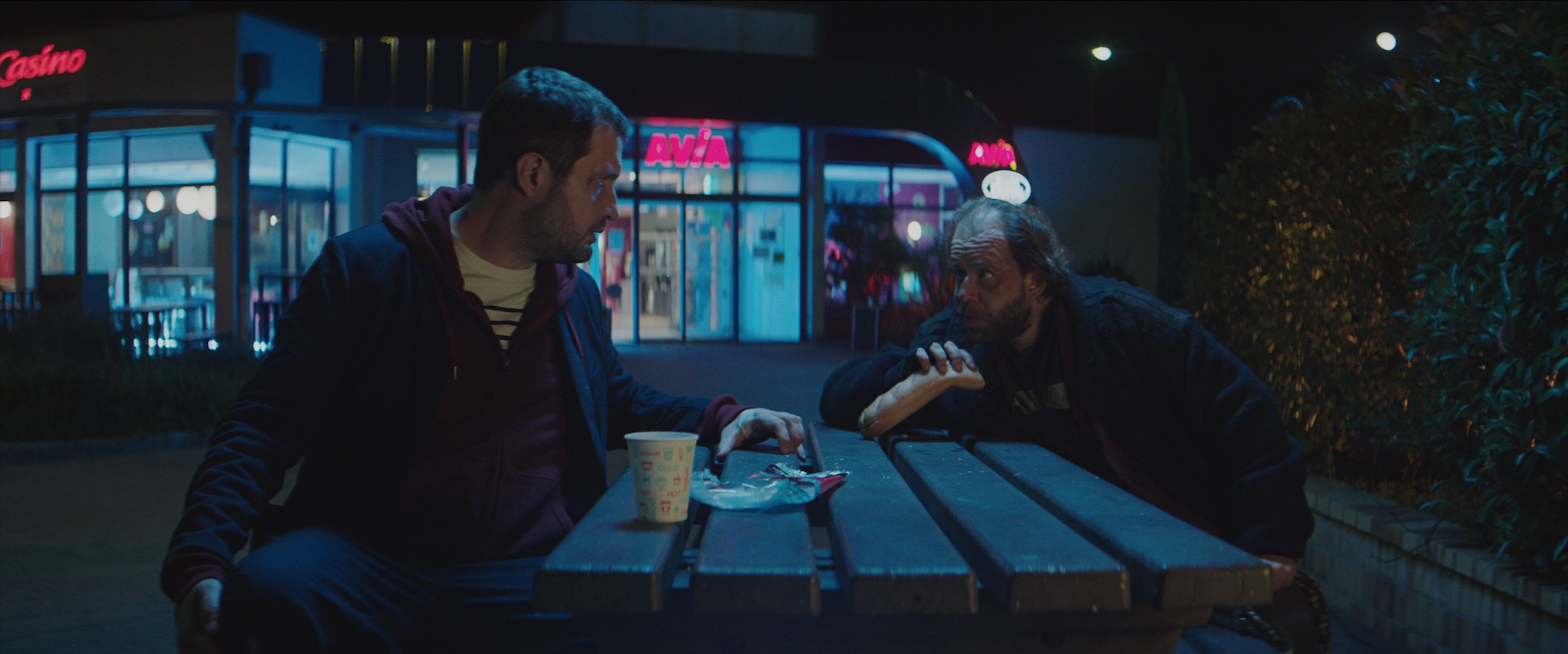
In terms of lenses, you worked with long focal lengths and zooms. Which is a bit 70’s too. Is playing with focal lengths, changing focal lengths, part of the film’s grammar?
Yes, and yet we hadn’t really thought about it at the start. It’s something that came naturally, from shooting in increasingly open sets. I love doing wide shots with very long lenses, which is not possible in the small streets of Lyon, or in a boat. But in a field with pylons, I quickly came back to it.
We often think that a wide angle will give the measure of a large space. But I think that sometimes, it’s the opposite that must be done. I manage to better show the wandering of a character with a very long lens. The character and the landscape are then in the same frame, and that’s what makes the expanse interesting. With a wide angle, the characters are tiny and they can walk a hundred meters, they won’t move.
For this film, you mixed Angénieux zooms, a Cooke techno series and a 14mm spherical Cooke S4.
Yes, because it’s complicated to find a wide-angle anamorphic lens. I had a mix of series from TSF Belgium.
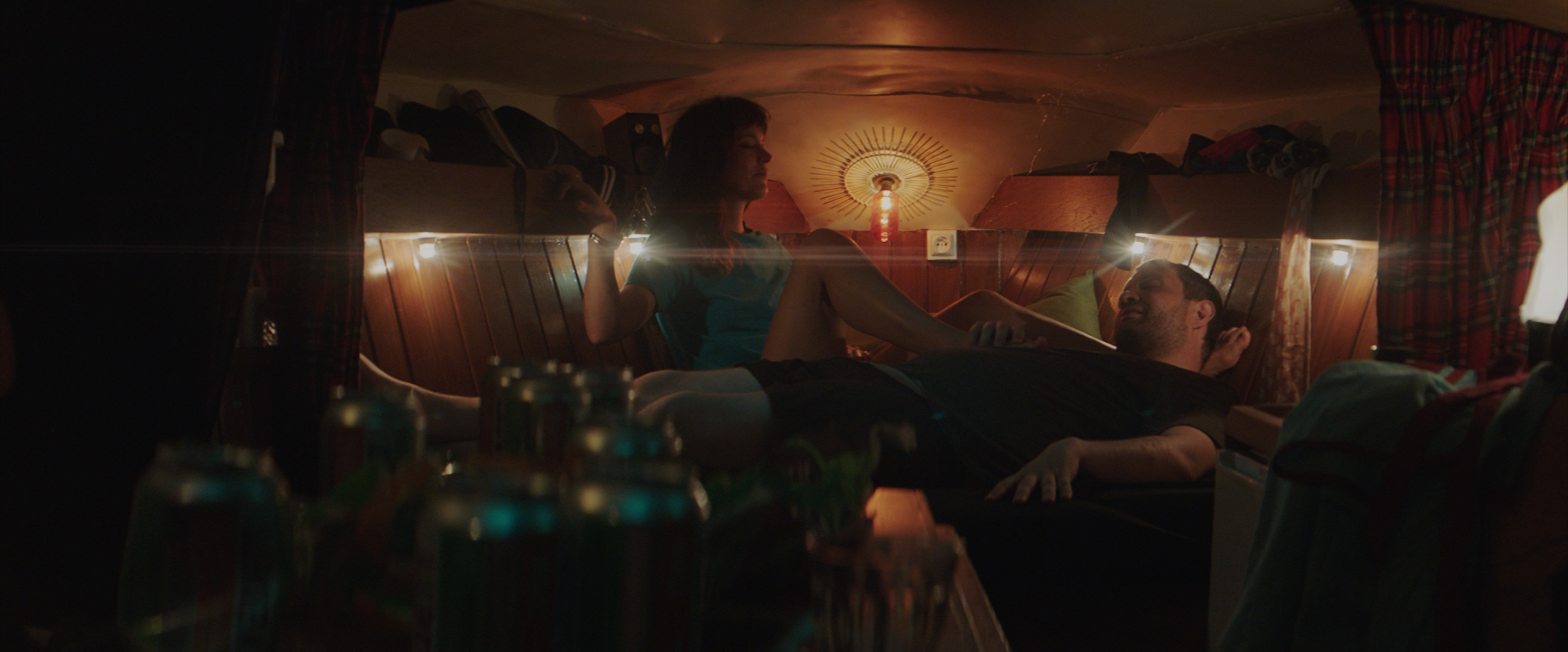
You worked in color grading to match these lenses?
Yes, I worked in color grading with Elie Akoka. We mainly worked on sharpness. We didn’t look for special plug-ins. There was also the grain that came to unify everything.
I love color grading. We are part of this generation that has known both: simple color grading for film and digital color grading. And then at IAD, I started tinkering on Photoshop. When I started making short films, I would take photos that I would rework by making masks. And when I had time between films, I would do Photoshop, which allowed me to be quite precise in my color grading requests. I was pretty good in the end. I’ve regressed a bit since then, but I still color grade my scouting photos on LightRoom. DaVinci, on the other hand, I’m still pretty bad at. I should get into it more seriously.
Do you work with LUTs?
I don’t work with LUTs on set. I work with 709 in the camera. But I have pre-grading LUTs that I apply to the rushes. I watch the images at noon and in the evening with my DIT.
It’s a trend to have LUTs for specific effects (for example, day for night) to be able to present them on set, but not to use them for the rest. Especially when shooting with Alexa (as was the case on this film), which is a What you see is what you get camera. By putting a LUT, we risk unconsciously correcting things that shouldn’t be.
Exactly. Once I used a very low contrast LUT, in 2018 (the Low CC), for nights, on the advice of my camera assistant, and then I realized that I was really under-exposed, but then… well.
In Vincent, we feel the taste for a richness of colors, and the contrast is sometimes between colors that respond to each other. You used the Astera quite a bit.
I like them. I’m from the Kinoflo generation, and for me it’s like Kinoflos, except that you can change the colors. It’s even possible to put them in Kinoflo trays.
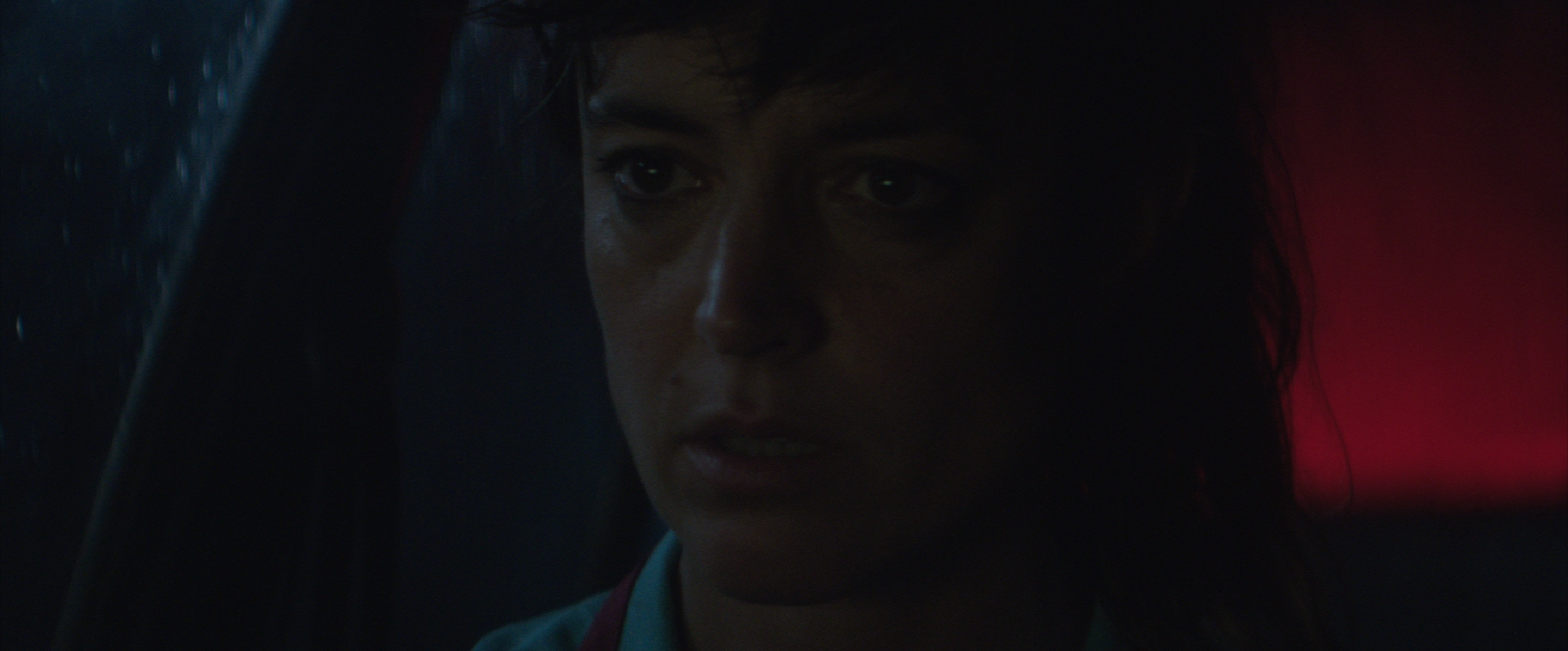
Do you have your own Ronin?
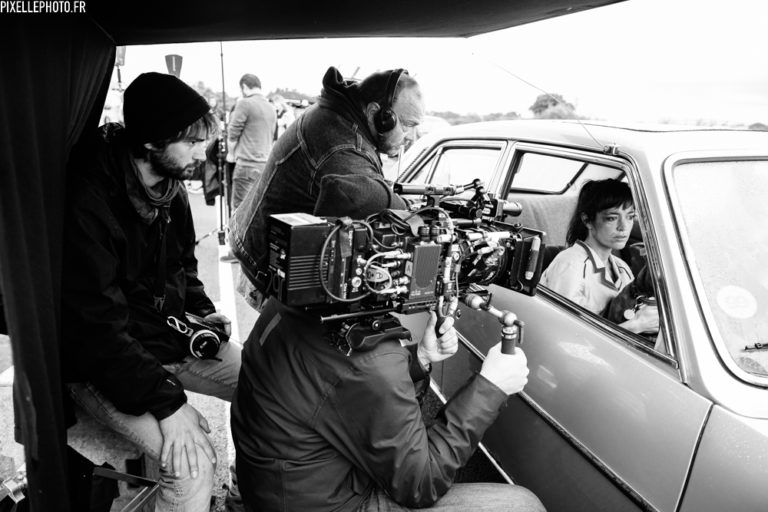
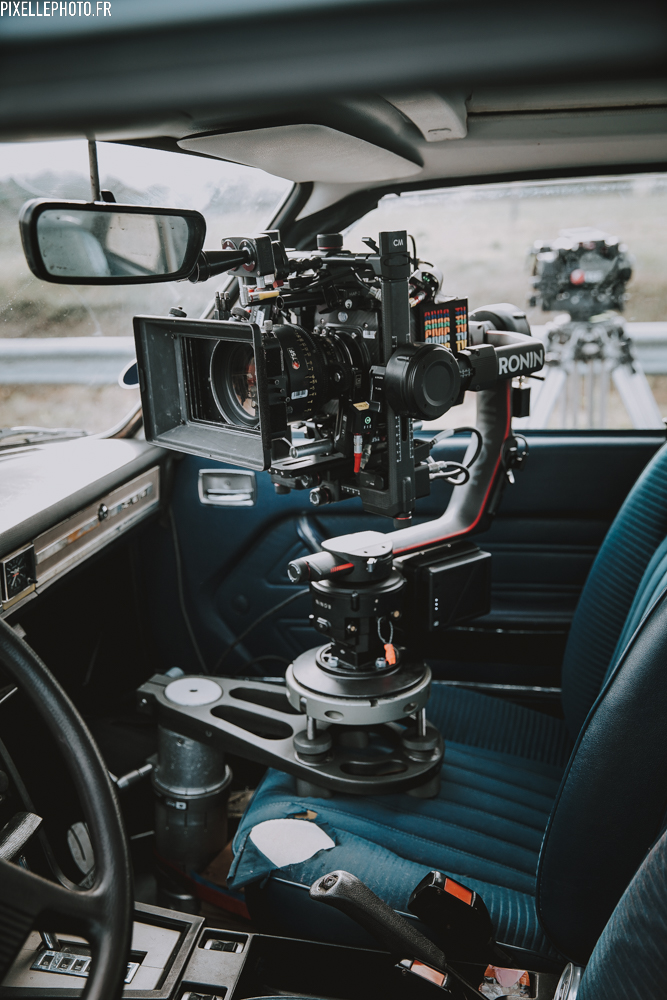
Yes, I have a Ronin, which I sometimes frame with cranks. I bought the Ronin, and the cranks (there’s also the Microforce system, which allows you to frame with a fluid head, but I prefer the cranks). I have always dreamed of having a two-axis head, but it’s way too expensive. The Ronin allows me small luxuries, without costing the production too much. If I mount it on a Long John, I can go up to 7 meters and frame from the ground. It’s cheaper than a basket or a crane.
The Ronin has its limitations, but for straight movements it’s perfect with the cranks, and if you can’t have a Steadicam, it can save shot ideas from time to time. I was also told to buy a Black Arm for vehicle mounts… but I didn’t.
That said, on the film, everything that’s rolling is on a Black Arm + Ronin, and for the final shot (where we are still at 100mm + doubler, so 200mm), with a Black Arm and a Ronin, on a boat, we are really stable. In reality, I don’t often carry it, but I use it a lot as a remote head: for example, I mount it on the dolly and I remote control it with the cranks. Or I have grips carry it. And… also I use it for safety, if the camera is at the edge of the road with cars passing at full speed: it’s on the Ronin! And I frame it from a little further away.
(On the question of shooting in the studio for certain parts of the film, I refer you to the AFC article)
The film won the 2024 Magritte for Best Foreign Film in Co-Production. You, who regularly work between France and Belgium, do you think there are things in the way of working in Belgium that we should import to France?
I don’t really know. When I come to work in France, I find the same state of mind as in Belgium because I look for people who are like me. It’s more a matter of personality in fact. In France, I work with people who are funny and calm, and everything goes well. Typically, in machinery, I often work with Jonathan Ly, and if he came to work in Belgium there would be no difference. I look for people I get along with in each of the two countries. In Germany too. Or in Canada. I look for people who have a bit of humor, and who, when faced with a crisis situation, won’t freak out. When I have to do interviews, that’s what I explain. I also don’t like people who lie (it’s happened to me once or twice and it’s a shame).
The only little thing is that in Belgium we are a bit more of a Swiss army knife. In France, there are the advantages and disadvantages of the fact that cinema is present on an industrial scale. There is a specialization that sometimes allows us to go very far, but sometimes it’s also a bit sad, if people are less involved or more stressed. It must be said that life in Paris is already quite stressful. In Lyon or Saint Nazaire, it’s already cooler.
And is it true that in Belgium (I heard this one day), salaries are more transparent than in France?
Oh no, at least in France you know what a union minimum is. In Belgium it doesn’t exist. Everyone negotiates. There are scales that are passed down in the teams. But the system is not very regulated, neither on salaries nor on the number of hours.
So you could copy our collective agreement and we could import being funnier and calmer?
I didn’t say that! I very easily find funny and calm people in France too.
—
Released in France in November ’23, the film is available for streaming on Canal+ and on VOD, DVD and Blu-ray