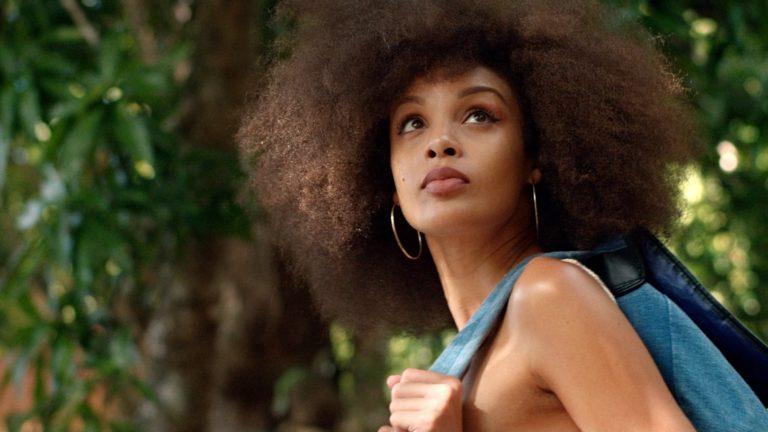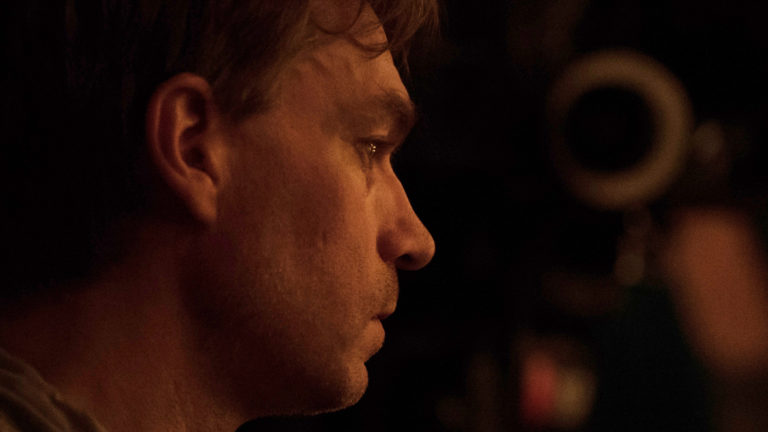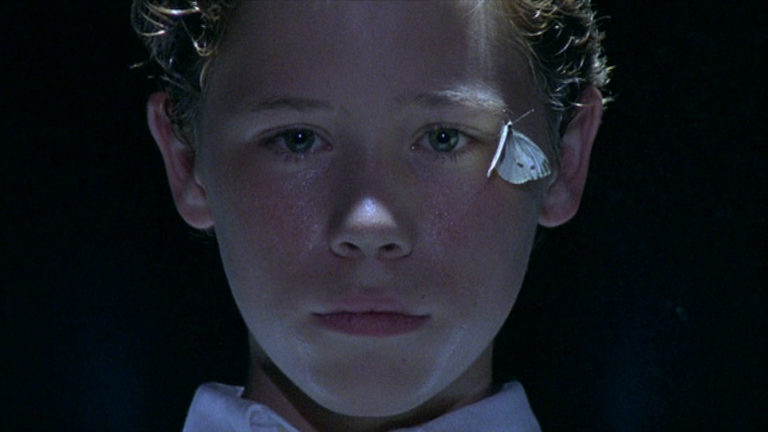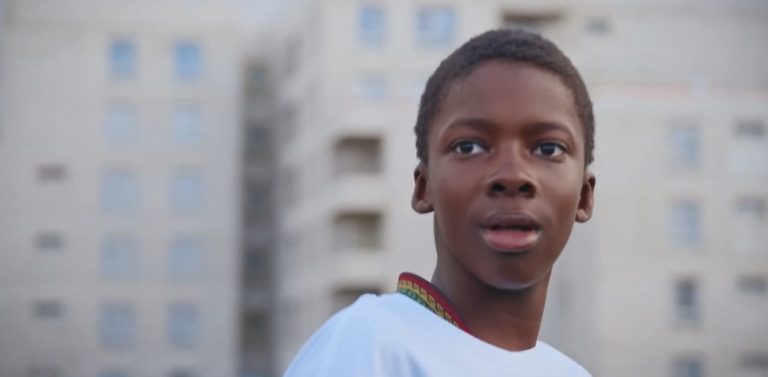
” En aparté ” sheds light on the professional careers of UCO members. The aim is to reveal and analyze the portrait, the personal signature, of each individual through their practice and technical choices, whether in prep, on set or in post-production. A look back at the career path of Cécile Bodénès.
Where does your love of images, and in particular of cinematic images, originate?
I grew up near Brest in France and during my teenage years, cinema quickly became my main hobby. Marcel Carné’s Les Enfants du paradis was, I think, my first cinematic discovery, when I was in middle school. I remember being completely captivated by this film, which I watched with my mother on television. All the emotions I experienced at the cinema, as a viewer, made me want to make it my career. No one in my family works in the film industry, nor is there a strong film culture, and yet, without any apparent misgivings, my parents supported my choice of studies.
After graduating from high school, I managed to get into Nantes Ciné Sup, a preparatory course for Louis-Lumière and La Femis film schools. I was fortunate enough to build my film knowledge there. Every week, the school brought in a 35mm print from the Cinémathèque Française for screenings, just for us! The very first one was Orson Welles’s Citizen Kane: I remember the joy of discovering that film under those circumstances. What a revelation!
As for my job as a director of photography, I remember exactly when this choice became obvious to me: it was during an exercise we were doing in our first year of preparatory school, simply filming in the courtyard of the high school where classes were held. Until then, I had never looked through the viewfinder of a camera.
What technical training in filming have you received?
After preparatory classes and a year of theoretical courses for my bachelor’s degree at the University of Saint-Denis, I enrolled at INSAS in Brussels, Belgium, specializing in cinematography. It was there that my appreciation for documentary filmmaking truly blossomed. We also learned to work with limited resources. So, my technical training consists of film school and fifteen years spent on fiction film sets. But, of course, in our profession, we are constantly learning and developing.
For me, technique is a tool that we put at the service of filmmakers to tell stories. What fascinates me is the visual representation of a point of view.
How did you break into the industry?
Alongside my studies at INSAS, I quickly began working as a second assistant camera on commercials in Belgium. After graduating in 2001, I worked in fiction as a camera assistant and returned to Paris to establish my career.
At that time, I had two separate networks: the one I had built up while working in Belgium and the one from my preparatory class. My classmates had gone on to either La Femis or Louis-Lumière. I started working as a camera assistant, on television films on the one hand, and on auteur films on the other. Becoming a director of photography came later, because I was working a lot as an assistant.
It was women documentary filmmakers who gave me the opportunity to make the switch in 2014. Then, as a cinematographer, I worked mainly on documentary films that dealt with social issues and on some fiction films, such as Mona et ses voix, a musical comedy by Jeanne Delafosse, with Clotilde Hesme, filmed in June 2025.
It just so happens that I work mostly with women. When I started out, even female directors preferred to work with men; it reassured them. And now, over the last twenty-five years, there’s been a shift where female directors coming up want to work with other women. They genuinely have the curiosity, the desire, to film with women.
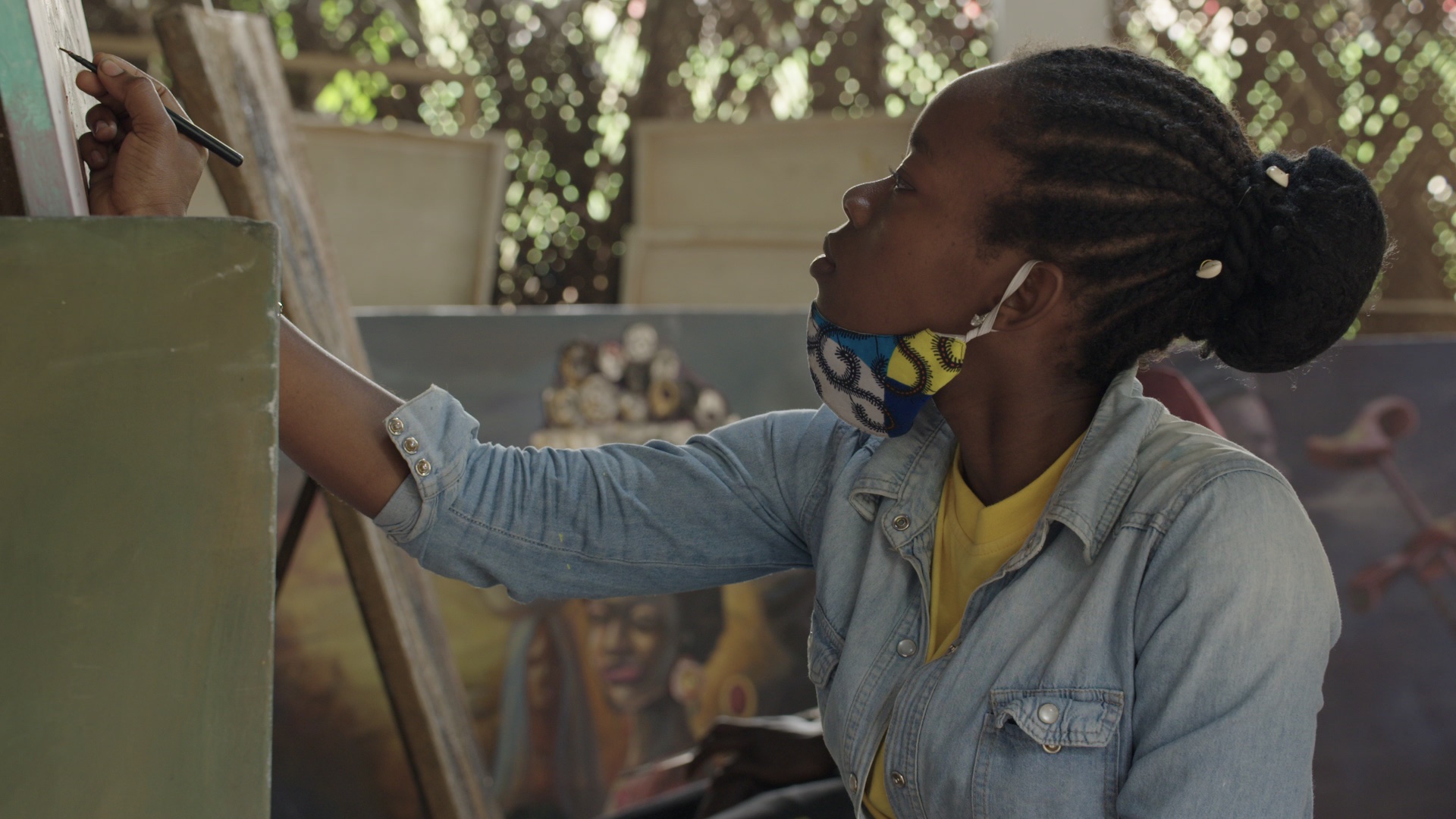
Restoring Africa to its masterpieces by Nora Philippe, 2021.
Can you describe your first experience as a director of photography?
The first major documentary I made, which was produced and released in theaters, was Pôle emploi, ne quittez pas by Nora Philippe. It was a film that immersed the viewer in a Pôle emploi (former French public employment service) agency. The studio was located in Livry-Gargan, a suburb of Paris. The space was very limited, so I found myself alone with the sound engineer, while the director stayed outside the rooms with a communications technician. I was the one who chose the camera angle based on what was being said. If the interview stalled, the director would let us continue filming and go elsewhere in the agency to see what interesting things were happening and prepare for the next part of the shoot.
These were the first cameras that used log. Log is a recording format, a way of capturing images that allows you to retain latitude between highlights and shadows. On this documentary, I often found myself shooting into the light, and having log allowed the camera to handle backlighting, which wouldn’t necessarily have been possible with another camera.
The shoot lasted two months; it was quite intense. By contrast, I made a film about Alzheimer’s disease, called L’Aventure Alzheimer, which followed families of patients for a year. Today, I continue to work with the director of that first documentary, Nora Philippe.
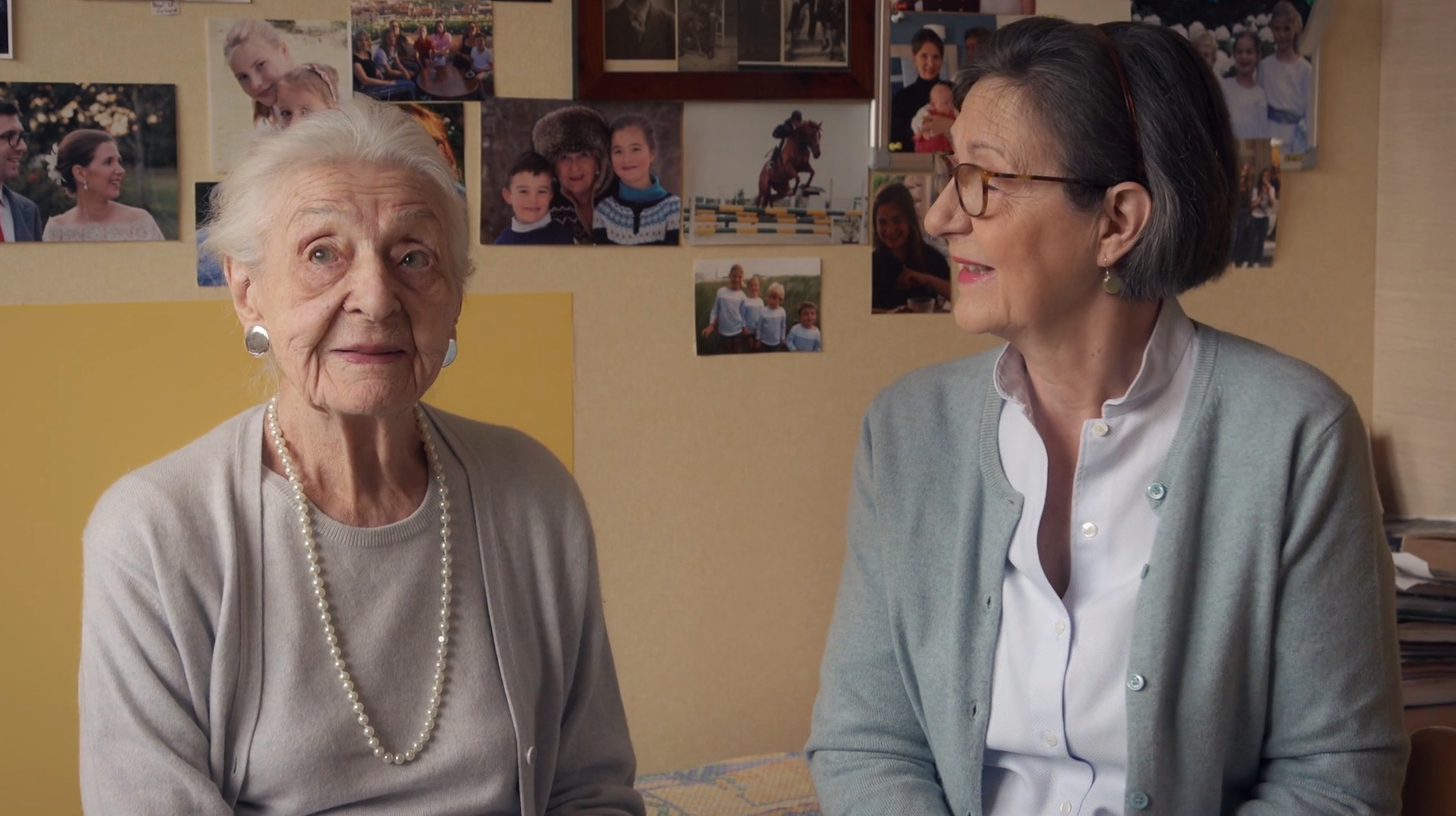
The Alzheimer’s Adventure by Marie-Pierre Jaury 2020
Do you remember setting up a particularly original camera setup?
The most unusual project I’ve ever worked on was for Marie-Pierre Jaury’s documentary, Option éducation sexuelle (Sex Education Option). She conducted a casting process at a technical and vocational high school, bringing together 13 tenth-grade students from different tracks. It was a very specific selection, because tenth grade is often the year when students begin exploring their sexuality. On top of that, it was during the height of the Covid pandemic (the school and parents had allowed students not to wear masks), and the teenagers were all in lockdown, feeling depressed. Talking about sexuality with people who weren’t their teachers or parents was bound to pique their interest and make them listen attentively.
Everything was scripted for the film: the workshops, the exercises they were given. A common room in the boarding school was transformed into a studio with a lighting setup, and a guest speaker was also chosen for the film. We filmed with three cameras simultaneously: one camera focused on the speaker and two cameras on the young people, one of which I operated myself. We did four filming sessions, with two sound engineers, 13 wireless microphones, and no boom operator on set. The director knew exactly where she wanted to take these young people. She would tell me, based on the questions, who we would focus on. In the final minutes, there was a kind of catharsis where, almost as if in the edit itself, each person recounted the traumas they had experienced in previous years.
This is the context and setup of this documentary, which was very scripted, for once.
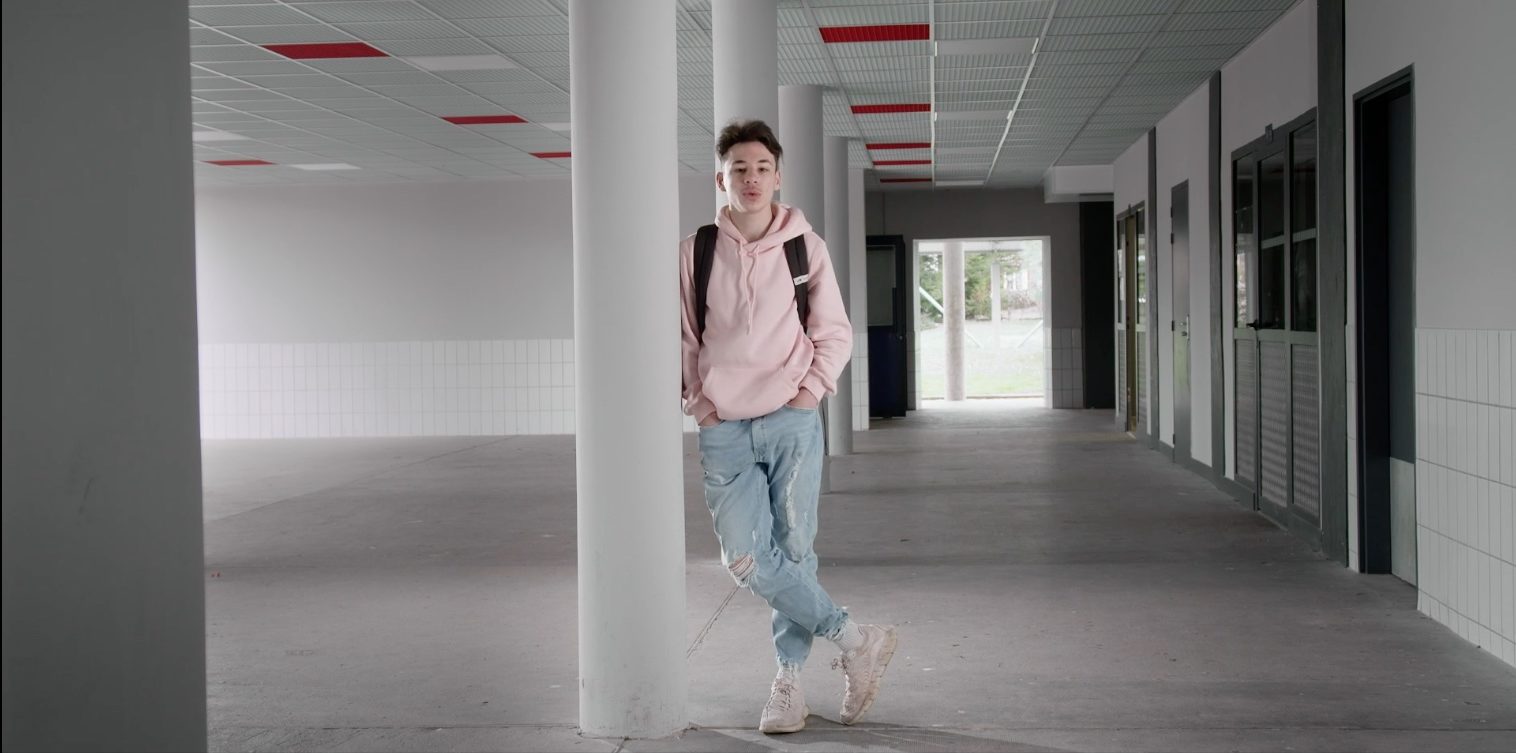
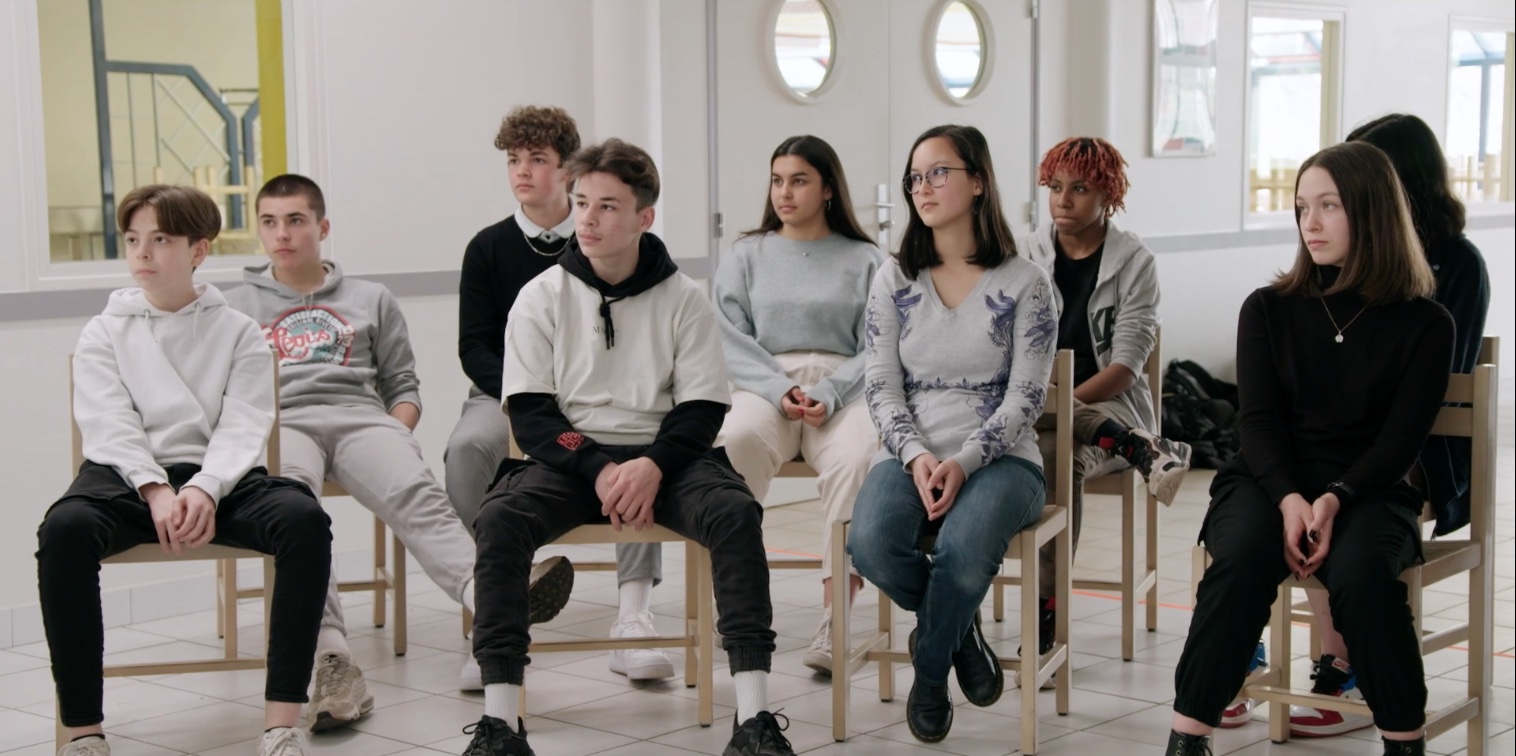
Option sex education by Marie-Pierre Jaury, 2021
What would be your definition of a documentary?
What truly nourishes me in a documentary is the encounter with the people I’m filming. That’s why interview-style films frustrate me somewhat: I set the scene, as visually appealing and evocative as possible, but I don’t connect with the people. They just sit down, talk, and then leave. For me, documentary filmmaking is about genuine encounters.
What films and aesthetics have visually impacted you?
In my youth, I was deeply influenced by the world of Éric Rohmer. I loved the naturalism of his images, shot by Nestor Almendros. I also greatly enjoyed the work of Michael Mann and his cinematographer, Dion Beebe, on Collateral and Miami Vice. Recently, I saw Poor Things by Yorgos Lanthimos (dop: Robbie Ryan): while I don’t usually like working with short focal lengths, when they become a true storytelling tool, I find it magical!
I assisted Laurent Desmet for a long time, particularly on films by Emmanuel Mouret and Sarah Leonor. His working methods and exacting standards shaped me immensely. He works primarily with natural light, not that he wouldn’t enjoy lighting, but in France, we rarely have the resources the Americans have – trucks and trucks of lights – to recreate natural light. It’s more about choosing when and how to shoot; I’ve somewhat moved away from that school of thought…
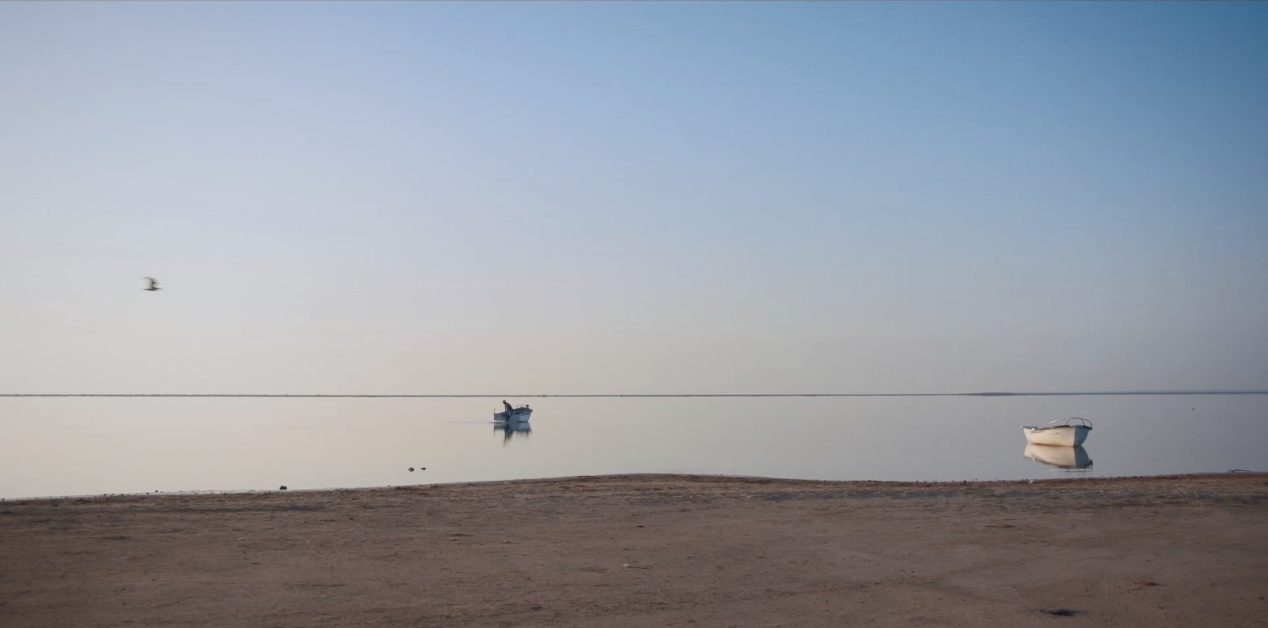
2005, State of Emergency, a series by Marie-Pierre Jaury, 2025
What do you like and dislike about the job?
I enjoy supporting directors throughout the directing and cinematography process. As a director of photography, I’m involved very early in the filmmaking process, which allows me to best understand the vision of the person who wants to tell us a story, whether fiction or documentary. And I’m fortunate to often work with the same people.
What I dislike about current production constraints is that producers are often unaware of all the preparatory work and support done by the cinematographer. The gap is widening between those who make films and those who finance them.
What advice would you give to someone aspiring to enter the profession?
What allowed me to get started was saying yes to every type of project. So, here’s my advice: don’t close any doors.
Cover image: 2005, State of Emergency, a series by Marie-Pierre Jaury aired on France TV