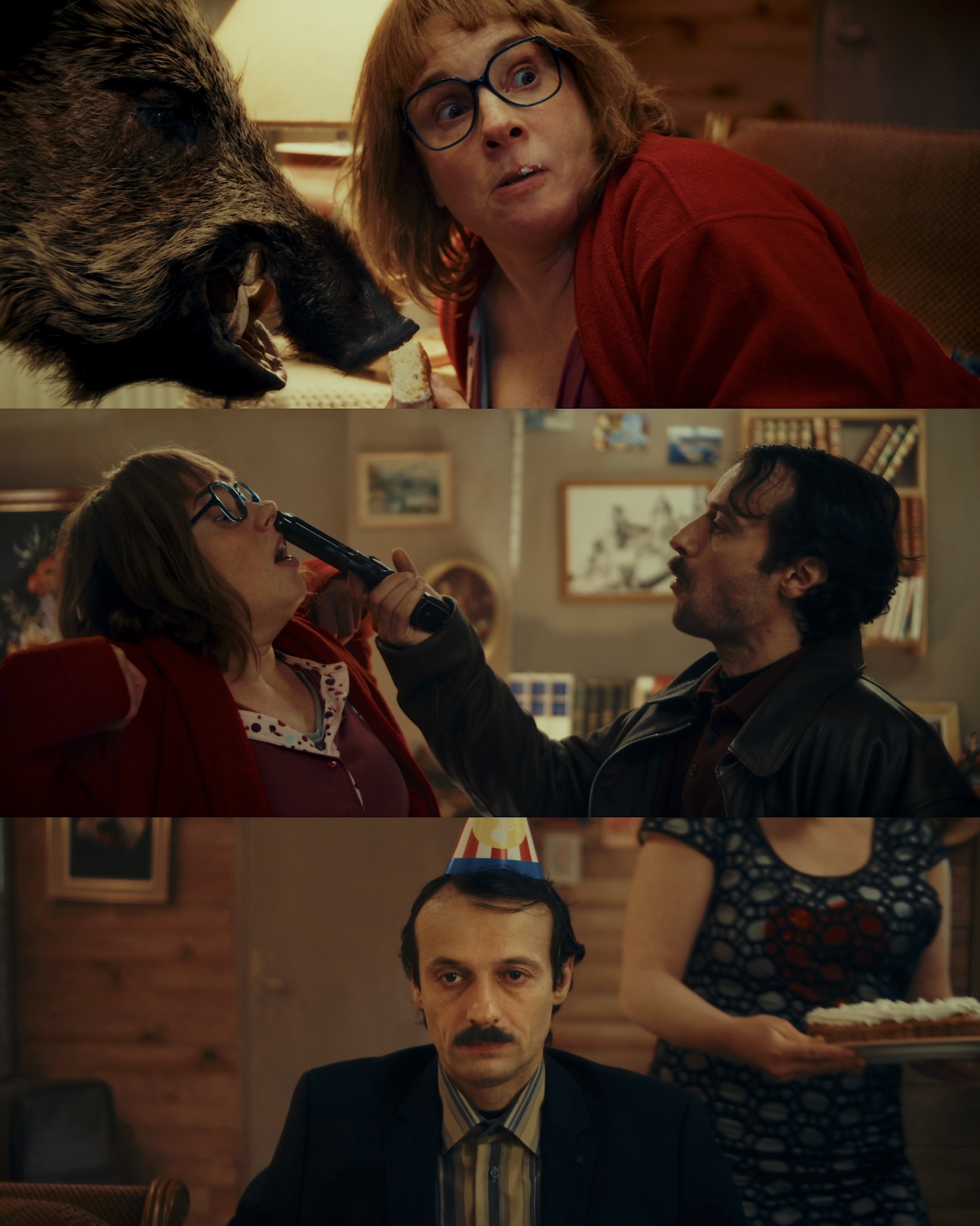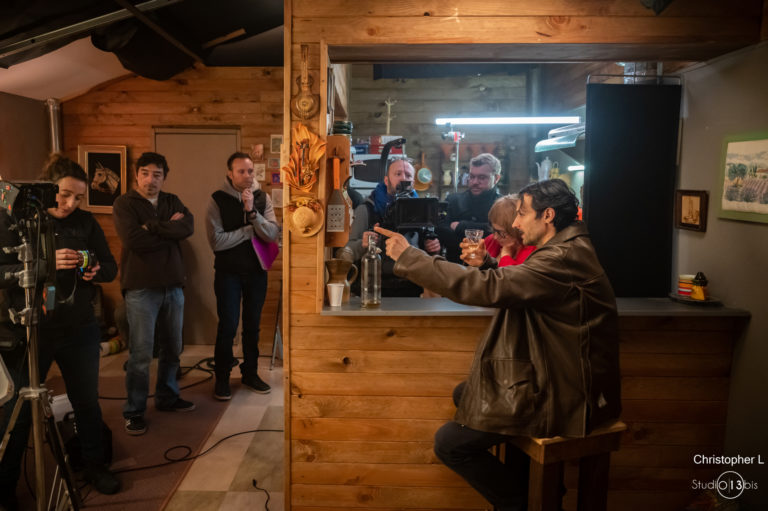
A disused medical practice converted into a studio in Limoux, a dream team of volunteers, four days of shooting for a cheeky and offbeat film: a dive behind the unusual scenes of Happy Birthday Margoline.
Cinematographer Aurélien Dubois tells us about the unconventional making of this gem, selected at the Alpe d’Huez Festival this year.
Q: How did you meet director Olivier Riffard, and how long have you been working together?
A: Olivier and I have known each other for nearly 20 years now. We met on a short film during the first edition of the 48h Film Project in Paris. He was in production management, and I was already on camera. Happy Birthday Margoline is our third short film together. Over the years we have developed an artistic complicity and a genuine complementarity in our work — which is essential for carrying out ambitious and unconventional projects like Margoline.
Q: How did the idea of shooting in a disused medical practice come about? What were the advantages and constraints of this unusual location?
A: This project was born from a desire to create something ambitious with limited means. One of our friends, Élodie, had just bought this former medical practice in Limoux. She offered to let us use it as a film set — and better still, to transform it into the set we needed. The advantages were considerable: total freedom to modify the space, no rental costs, and full availability for the shoot and all the preparation. On the other hand, we had to build everything from scratch — sets, electrics, rigging — in a space that was not designed for filming.
Q: You designed a bespoke set within the space. Can you describe the production-design approach and the creative choices you made?
A: The idea was to create a deliberately unrealistic universe, tinged with absurdity, in keeping with the tone of the film. We wanted the set to be a character in its own right. We built walls, installed wallpaper, found period furniture and created a quirky 1970s colour palette. Every detail was thought through to serve the narrative: the colours, the textures, the objects. The whole team got involved in building the set — it was a genuine collective adventure.

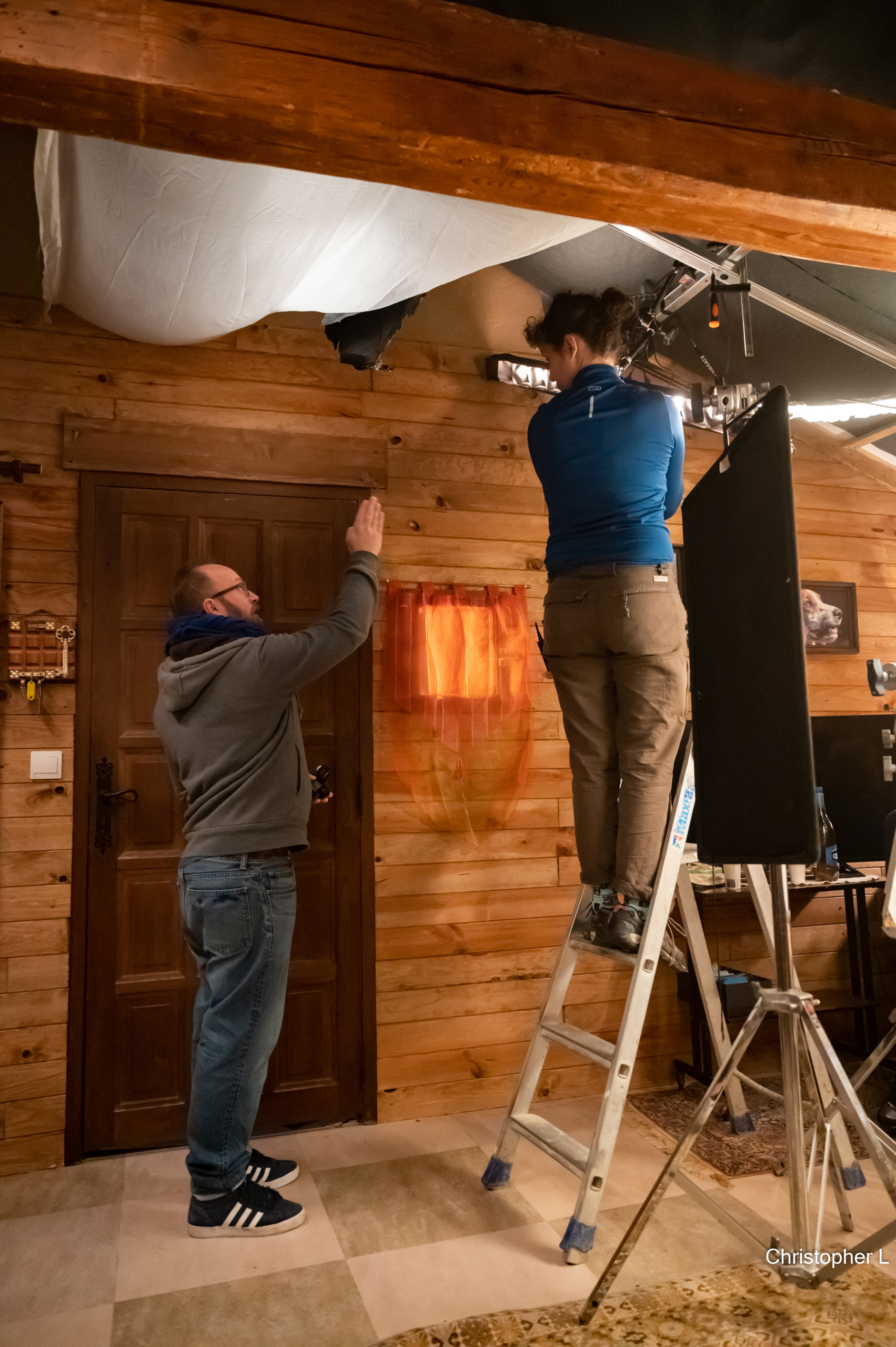
Q: The set had no practical lighting fixtures. How did you go about integrating motivated light sources into this makeshift set?
A: Indeed, this handmade set had no integrated light sources whatsoever. We had to find lighting solutions despite the very low ceiling height. I had a technical grid installed using a few plasterboard rails fixed to the exposed beams, so we could hang lightweight, compact fixtures: Astera tubes and Rubylight Boa Flex units proved very useful for this purpose. For contrast reasons, and because the sources were almost all flush with the ceiling, I also asked for the entire ceiling to be covered in black.
Since the story takes place entirely at night, we also held a “casting” of bedside lamps and mood lighting that we fitted with Aputure B7C RGB LED bulbs, so they could be integrated credibly into the set while giving us control over colour and intensity remotely via an iPad.
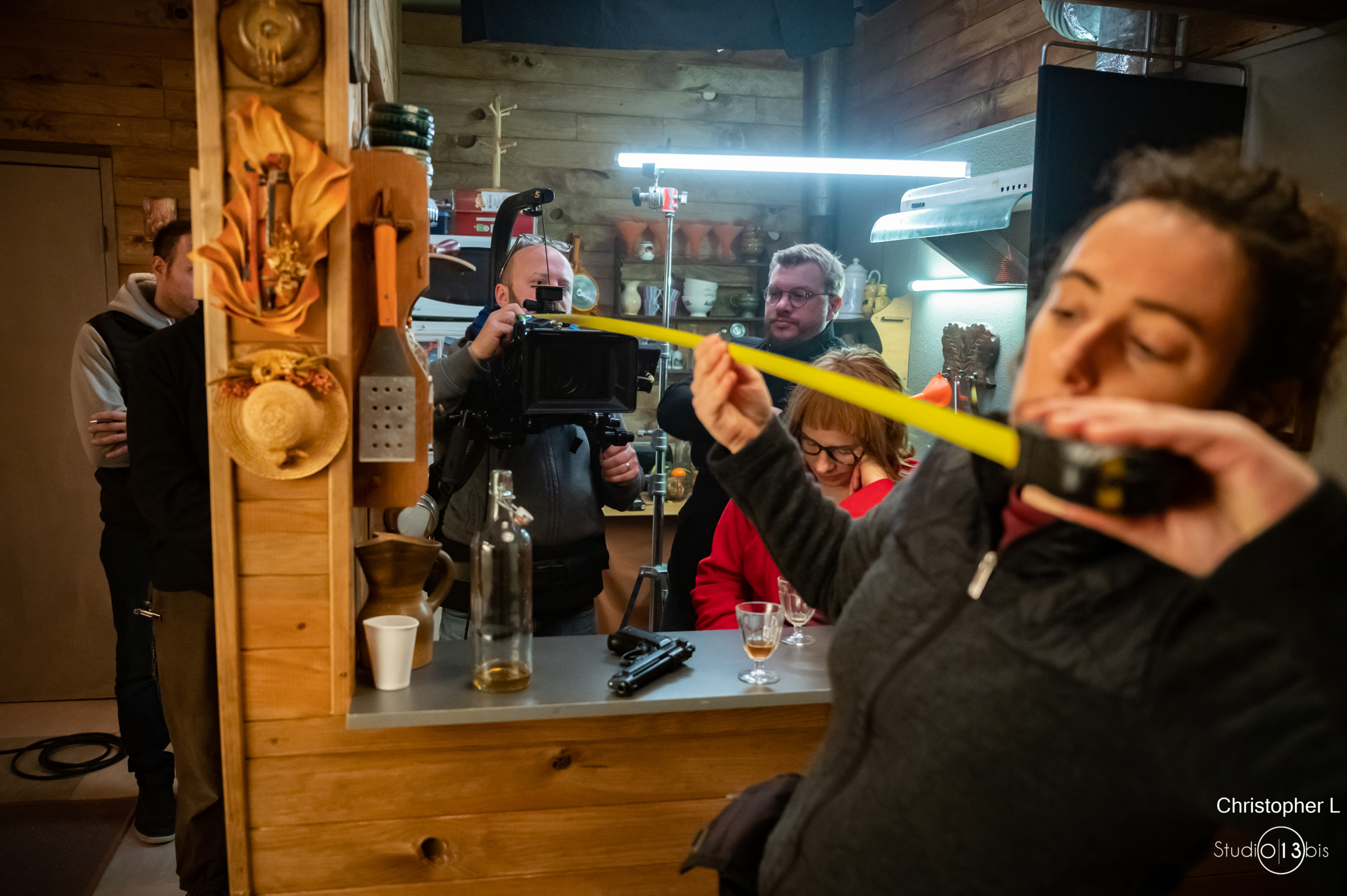
Q: What visual references guided you?
A: With Olivier, we had films like Delicatessen and especially Le Père Noël est une ordure (Santa Claus Is a Stinker) in mind. So before the shoot I built a custom LUT that we used on set and as a grading baseline. Later, in post-production, I sought to “dirty up” the image with pushed contrasts and colours and a grainy texture evoking Super-16 film.
Q: Can you describe your remote grading workflow with the director? What difficulties does it present, and how do you overcome them?
A: For both financial and practical reasons, I handled the grading myself. With Olivier in Limoux and me in the Paris area, we had no choice but to work remotely over an extended period. This meant precise, structured communication — annotated stills, video calls — to stay aligned despite the distance. It requires trust and rigour, but it worked very well in the end.
Q: You chose the RED Komodo paired with Leica R lenses. What motivated this combination, and how did it serve the film’s aesthetic?
A: The RED Komodo is a camera I love for its compact size and the quality of its sensor. On a set this small, having a lightweight camera was essential for manoeuvrability. As for the Leica R lenses, they bring a rendering I really enjoy — gentle, slightly imperfect, with a warm character that suited the retro, handcrafted universe of Margoline perfectly. Their optical imperfections, far from being a drawback, added a vintage texture that enhanced the overall feel of the film.
Q: What was your main technical challenge on this shoot, and how did you solve it?
A: The main challenge was undoubtedly managing such a confined space. With low ceilings, narrow corridors and a set that left little room for the crew, every camera position had to be planned meticulously. We worked with very short focal lengths to gain depth, and every lighting setup had to be compact enough to remain invisible in shot. It was a real exercise in precision and adaptation — but those constraints ultimately became the film’s strength.