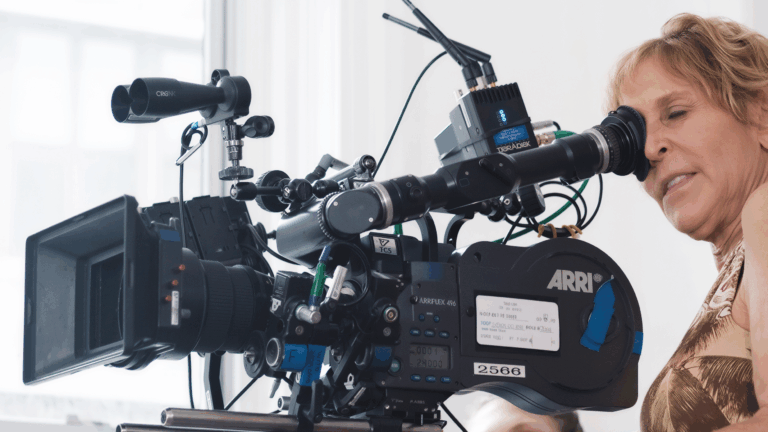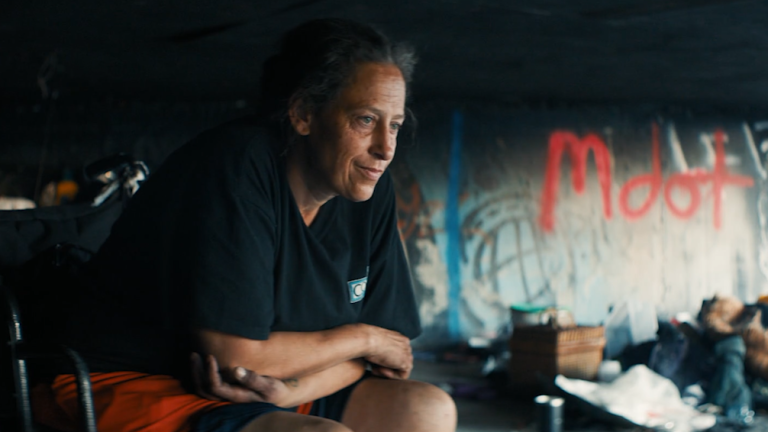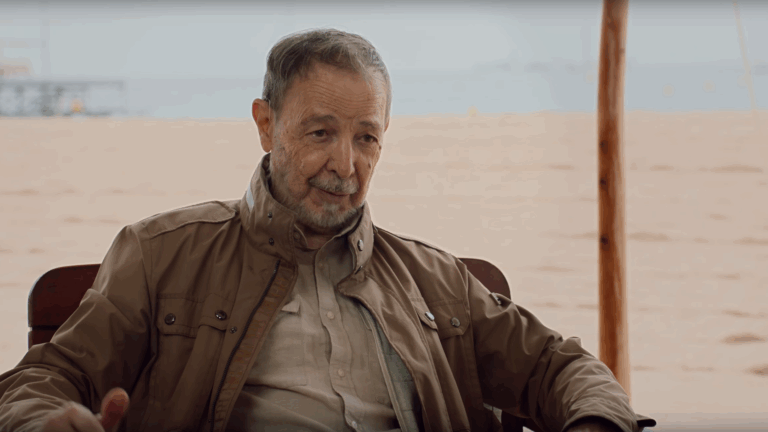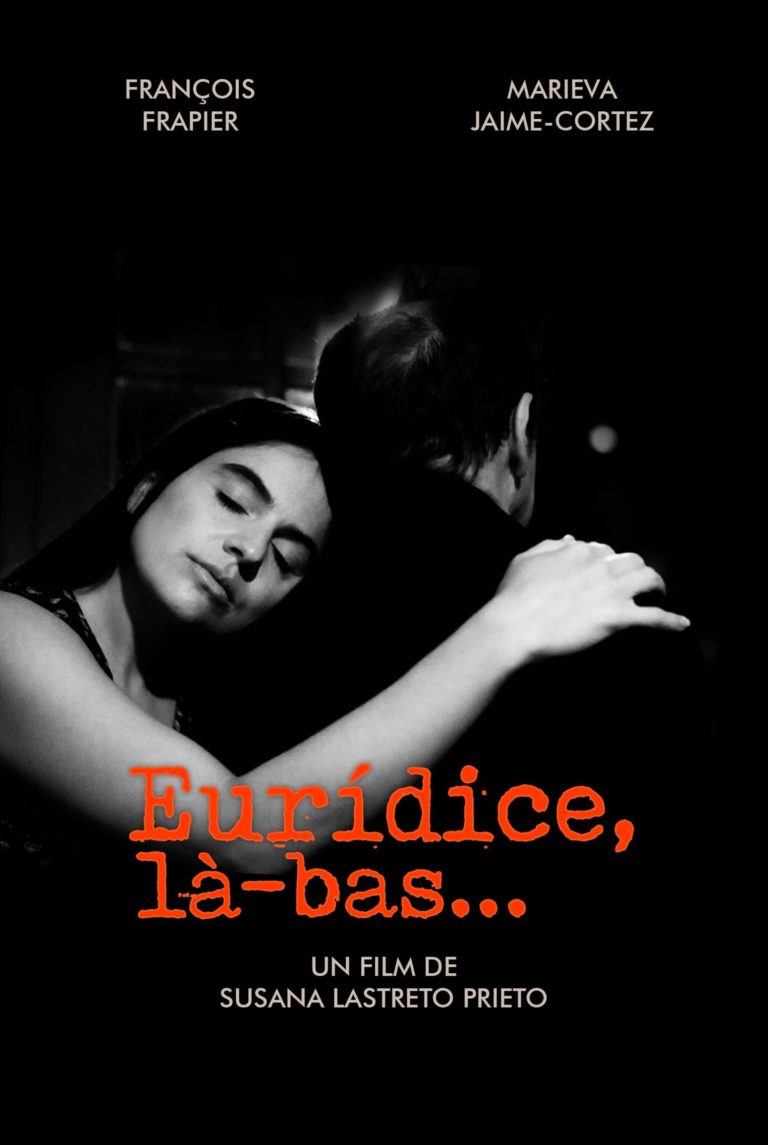
Guy Chanel, you shot Susana Lastreto’s latest film, released in January. It is a rather unusual love story. Can you tell us more about it?
GC – Without giving the whole story away, let’s say it is a very personal film for Susana, partly recounting her own past as a Uruguayan woman living in Paris since the 1970s. The film draws on a very painful memory from that distant yet still present time, the era of the Uruguayan dictatorship. The main character is a Frenchman in his sixties who discovers Uruguay while searching for a lost love. He is confronted with memories, apparitions, characters emerging from the past, ghosts or real people, who inform him and guide him through the Montevideo of the author’s childhood. He comes to realize that dictatorship, whatever its origin or the country it belongs to, can leave painful scars on generations to come.
https://vimeo.com/624567080
The film was shot in late 2018. How did the production get off the ground?
GC – For more than 10 years, Susana Lastreto had been trying to put together the production of Cet infini jardin, a superb feature about five children confronted with the adult world in a country doing business with former Nazis. The film ultimately did not get the funding it hoped for. That is why Susana hurriedly wrote Euridice, là-bas, a story that had long been in her memory and now needed to be made. In the fall of 2018, a €100,000 loan from an investor and the availability of her brother’s apartment in Montevideo for four weeks allowed her to take the plunge, with the following constraints: a tight shooting budget, 4 weeks of shooting, and the need to decide very quickly. After 4 weeks of prep, we started shooting, beginning with the nights, following the Uruguayan work pace: 12 hours a night, 6 days a week.
Under those conditions, what camera did you go for?
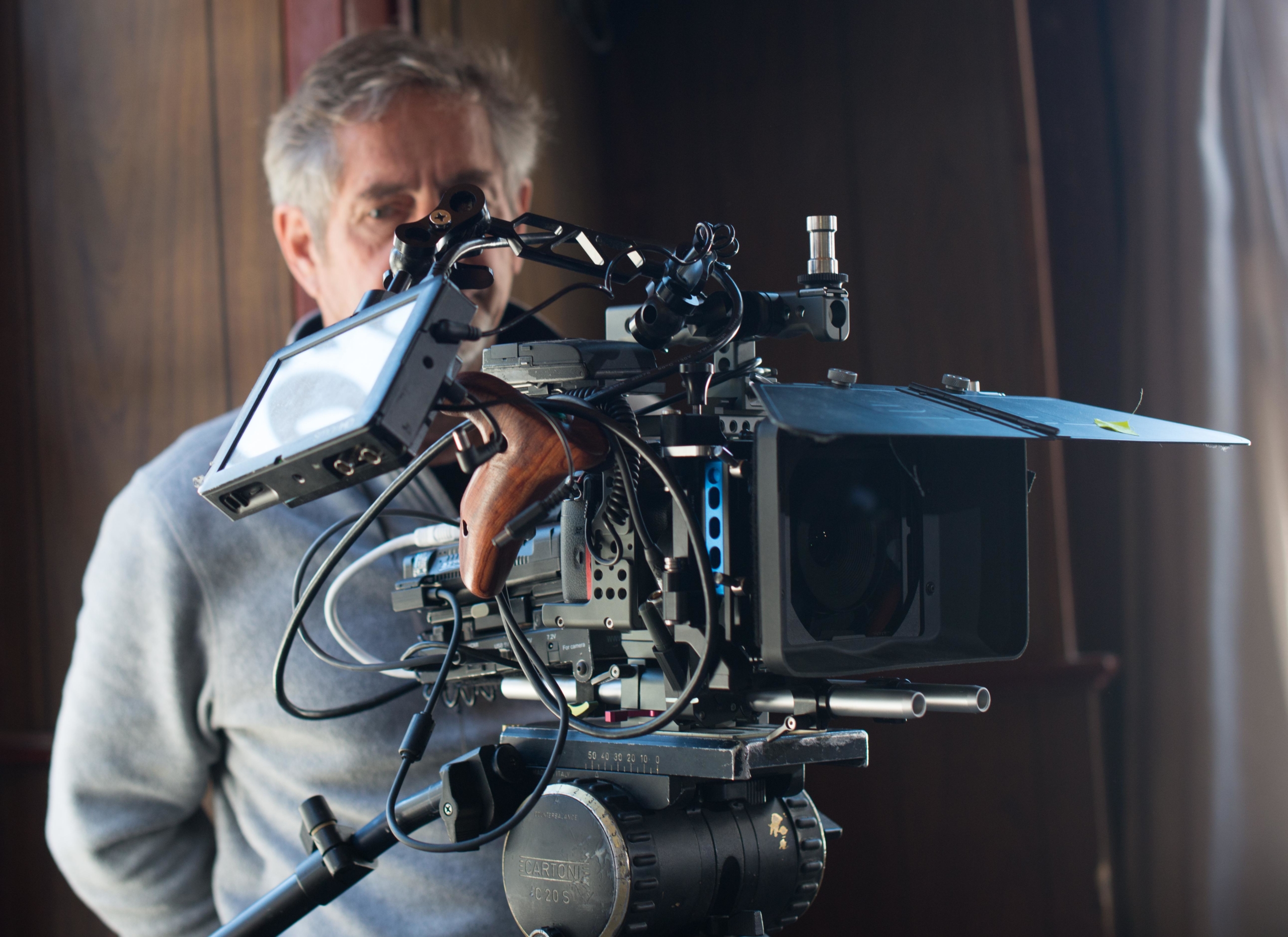
GC – We chose to shoot with compact, inexpensive, quality equipment, capable of shooting in low light. The Panasonic GH5S had just come out. We decided to buy two bodies and tracked down a set of secondhand Veydra primes. We completed the kit with the right accessories (cage, matte box, follow focus). The whole crew was hired locally, a very competent crew, by the way, but I asked to bring my camera assistant, who came with all his equipment (Nucleus, matte box, follow focus, SmallHD, etc.).
How did you work on the signal?
GC – Being able to load LUTs into this camera is a real plus. I ran tests to build a LUT, with a Fiilex P360 400 W as an effect light, an ARRI SkyPanel S30-C at 3200K and 80% (with a Chimera and a SnapGrid) as the key, and a 575 W ARRI HMI Fresnel as the backlight. The tests were done both with the V-Log L curve and with the Monochrome D profile available in the camera menu. The Panasonic GH5S’s Monochrome D is a very beautiful, very contrasty black and white, perhaps lacking a little detail in low light. But there was of course no question of not taking advantage of V-Log L. With my friend Forest Finbow, we worked in Resolve to get as close as possible to the Monochrome D curve. After trying most of the Panasonic curves, Forest finally found a Canon curve that came closest to the curve in question. He reworked it to correct and improve it, and that gave us a LUT that suited me perfectly. We even used two: one that took into account a contrast filter in the red/orange range for skin tones, and one without.
And by the way, why black and white?
GC – That’s the question that often comes up about this film. First of all, it’s the director’s choice, a strong intention she had from the start. I think black and white gives the film a universal, timeless quality. It invites viewers to reflect on their own time in light of the one the film tells them about. It is also a way of creating a particular atmosphere: black and white is sometimes associated with poetry, with pure emotion, with the beauty of features. The director of photography then has to work on the contrasts and textures of the image, giving each color, as it is translated into a gray value, its own identity. Each shot has to be worked like a painting. Black and white goes to the essentials; it forces viewers to focus on the characters, the sets, the atmosphere.
During my training at the École Louis-Lumière, and then in contact with more senior cinematographers over the course of my career, I had already developed a strong interest in monochrome. First on film, then in digital, which requires a different way of thinking about one’s working reflexes.
We also had a large number of reference films for black-and-white lighting. Before leaving, I was able to see Pawel Pawlikowski’s black-and-white film Cold War. What images, superb! Even though I’m not a fan of the 4:3 frame, I have to admit it suits the subject and the sets perfectly. It was shot on Alexa over 56 shooting days, with a year of prep and a substantial budget; I should point out that we did not enjoy such production conditions.
Among our black-and-white references, we also had in mind: Dead Man and Coffee and Cigarettes by Jim Jarmusch, Tetro by Francis Ford Coppola, Memento by Christopher Nolan, The Artist by Michel Hazanavicius, Persepolis by Marjane Satrapi and Vincent Paronnaud, Good Night, and Good Luck by George Clooney, Embrace of the Serpent by Ciro Guerra, The Girl on the Bridge by Patrice Leconte, and The Man Who Wasn’t There by Joel Coen.
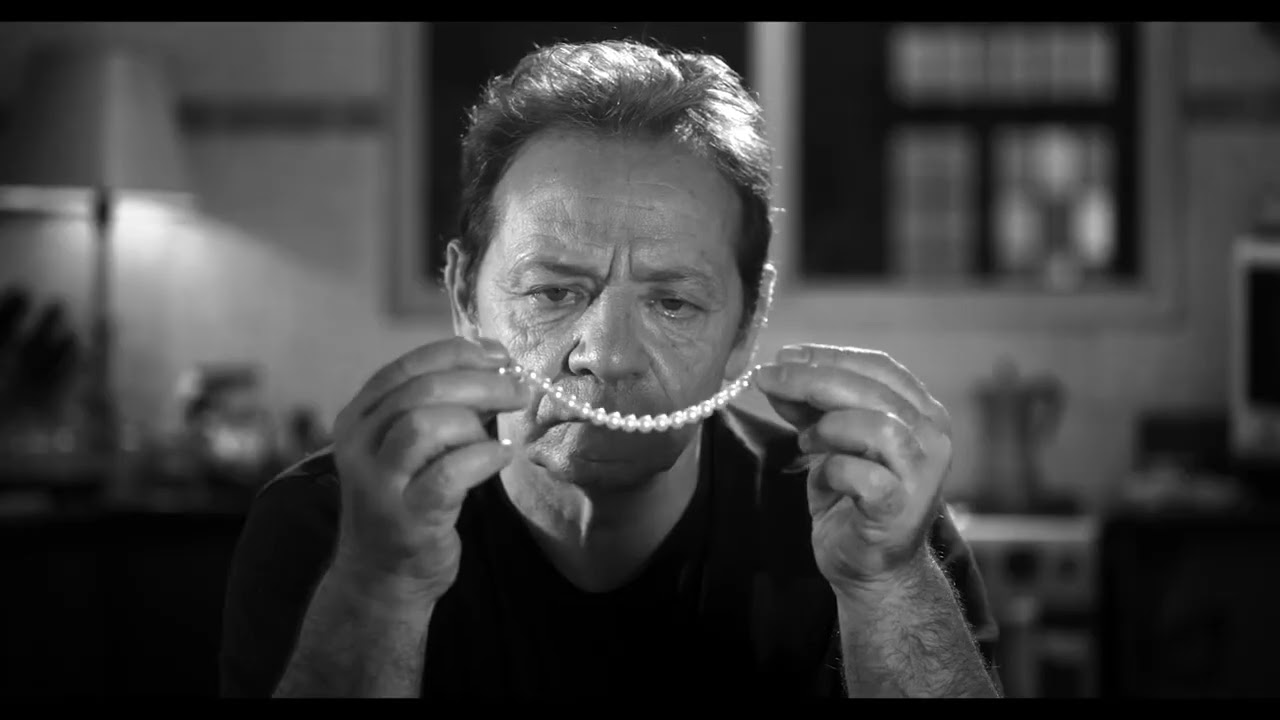
Much of the film takes place in night interiors. What did that involve artistically, and for the lighting in particular?
GC – Yes, 90% of the film takes place indoors. We shot in a 300-square-meter apartment with a 30-meter-long corridor and windows that didn’t open. We were on the fifth floor, the second-to-last, so there was no way to put lights outside. And three quarters of the film takes place at night.
The night scenes were mainly lit with the two 2 kW units, their Fresnel lenses opened up, used either as a three-quarter key or head-on, to get a hard night light with very pronounced shadows. We made intensive use of backlights (a 400 W Joker, 300 W units, or a 400 W Fiilex). Although mixed color temperatures are not a problem in black and white, I did take care to use key lights balanced for the camera so as not to throw off the LUT with its skin detail. We also used a lot of barn doors, flags, cutters, and fingers to shape the light. The subject allowed me not to always keep lighting continuity, since the story involves apparitions, ghosts, dialogues with the disappeared. So I played with that, even overdid it, and in the end each effect corresponds to very specific situations that come from reading the script.
By day, the 575 W HMIs with frames of 1/2 White Diffusion predominated.
It’s a film about light. And it’s rare for a director of photography to have the chance to light such a world. It was a real joy.
The result is quite striking. A very contrasty black and white that flatters the actors’ faces while plunging them into a mysterious atmosphere.
How did you work with the Veydra series?
GC – I worked wide open to compensate for the small size of the Micro Four Thirds sensor and to reduce the depth of field a little. The very beautiful Veydra lenses did the rest. Beautiful bokeh, good definition, and flare control thanks to effective anti-reflective coatings: those are the qualities that stood out to me with this series.
At the beginning of the film, we are in a classic environment, with well-defined framing and very realistic lighting, using long focal lengths to focus on the characters, who are very real. Little by little, we sink into the past, the imaginary, memories, the disappeared who return, and the light becomes a participant, enveloping and mysterious. Short focal lengths then predominate: they give the spaces greater depth, but also a more receding, distant perspective, making the set a character in its own right. Objects and verticals that tilt to the verge of distortion surround the main character, who also sometimes becomes strange, extravagant.
Can you tell us a few words about post-production?
GC – The film was edited by Paola Termine, a young and talented editor. The edit took several months, and a new form of writing emerged from it that suits the story perfectly. Susana knew she could count on the wealth of material shot during the production. The result, a very tight edit, 1 h 20 min long, yet with long, slower, more inward moments, above all preserves the emotion.
And what about the grade?
GC – The grade was done by Daff Schneydher at Colour, Grading & Finishing Studio, a lab in Montevideo, while I was on Skype from Paris. I was a little reluctant at first about not being able to be there, but I have to admit their system is well oiled. At the lab were Daff, the colorist, and Susana. On my side, I followed in real time via Skype. I could see the film image and the various adjustments the colorist made at my request on my computer. We did have to take some time to recreate the LUT exactly so that it fit the chosen workflow. Once that step was behind us, I was impressed by how attentive Daff was and by everything he tried to achieve the result I wanted. It must be said that the lab doesn’t often get the chance to work in black and white, and they took up the challenge with great enthusiasm. I thank them for it; the result is superb.
Thank you. The film is no longer in theaters, but it can be seen on VOD on Ciné Mutins.
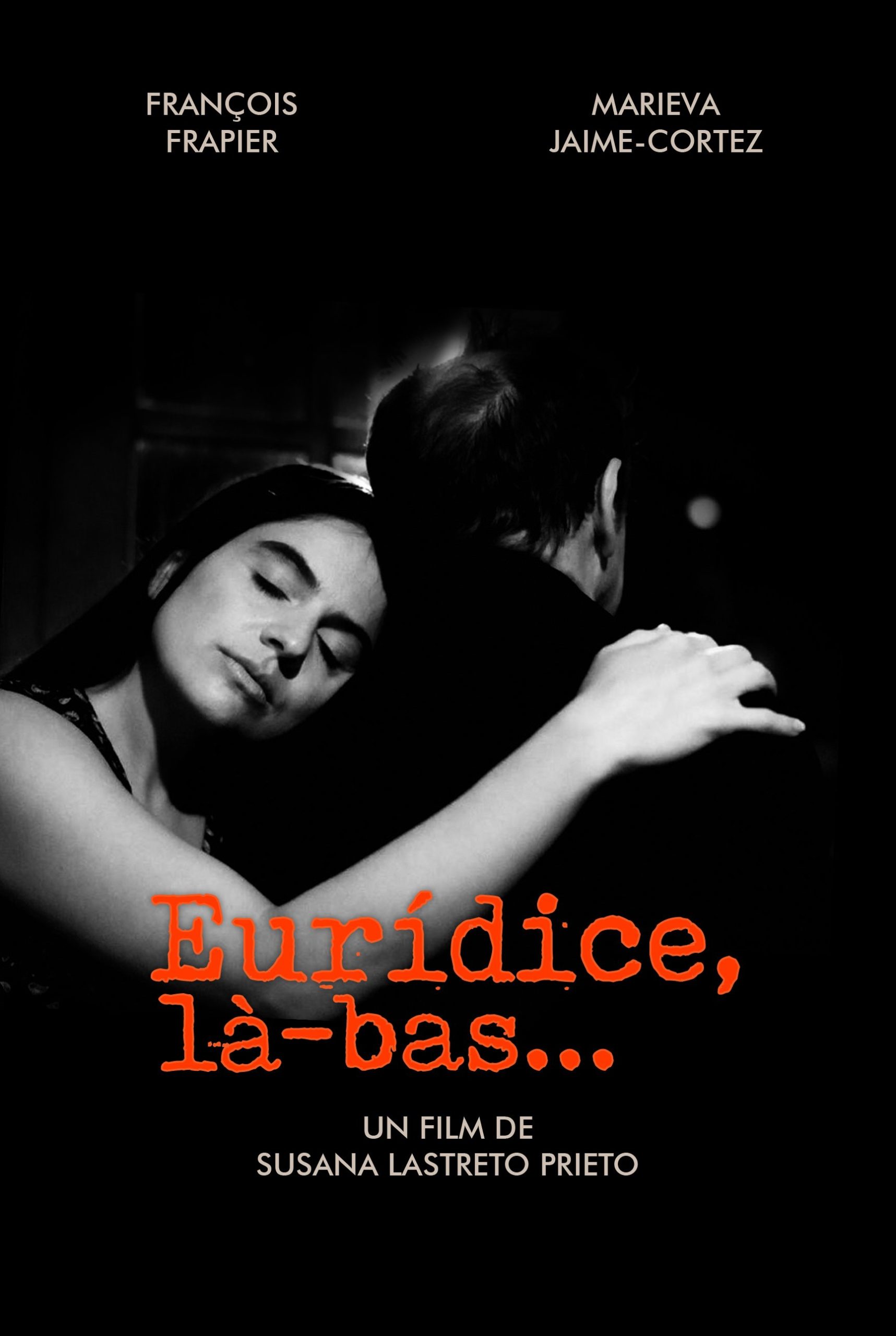
Euridice, là-bas by Susana Lastreto
- Location: Montevideo (Uruguay)
- Shooting period: 4 weeks, in November and December 2018
- Prep: 3 weeks in France, 1 week in Uruguay
- Shooting budget: €100,000
- Aesthetic choice: black and white, 1.85:1 format
- Camera: 2x Panasonic GH5S, M4/3 (MFT) sensor
- Format: Cinema 4K 24p NTSC 4:2:2 10-bit 400 Mbps All-Intra, V-Log L curve
- Lenses: Veydra series 12mm-16mm-25mm-35mm-50mm-85mm T2.2
- Grip: Tilta G2X fluid head tripod and handheld.
- Lighting: (rented locally)
- 2x 2 kW Fresnel
- 2x 575 W HMI Fresnel
- 1x Joker-Bug 400 W
- 2x 300 W ARRI Fresnel
- 2x 400 W Fiilex P360
- 2x 150 W ARRI Fresnel
- 2x 200 W Fiilex P180
Crew
- Writer/Director – Susana Lastreto
- Director of Photography/Camera Operator – Guy Chanel
- First Assistant Camera – Guillaume Brandois
- Sound Engineer – Fernandon Serkhochian
- Sound Assistant
- First Assistant Director – Léandro Barneche
- Makeup Artist
- Props – Marta Zerbino
- Gaffer
- Grip – Roberto Gazano
- Directing Intern
- Production Intern