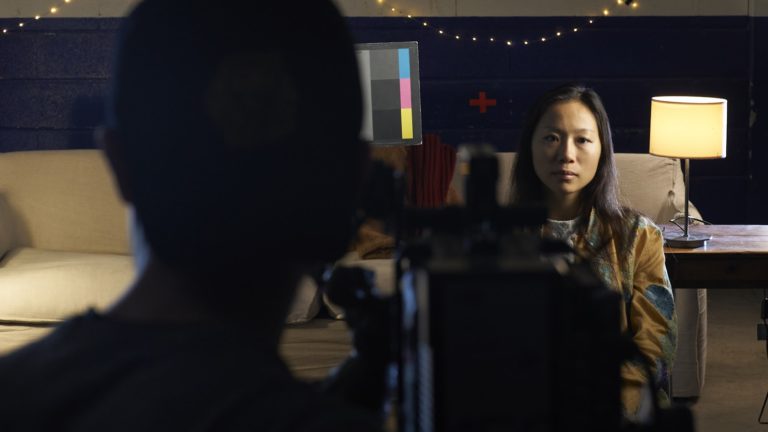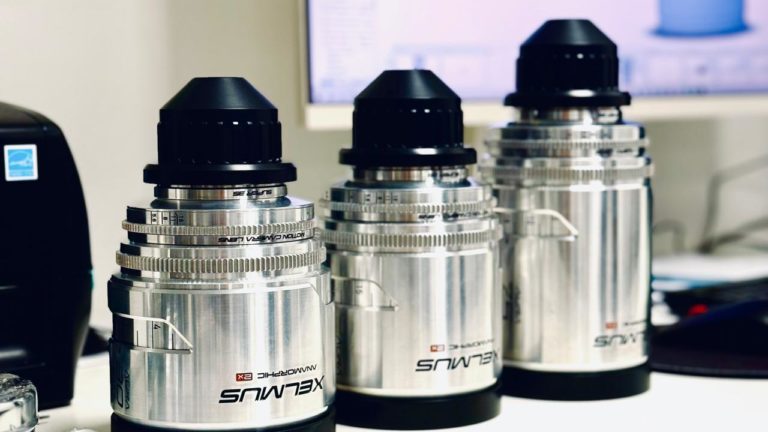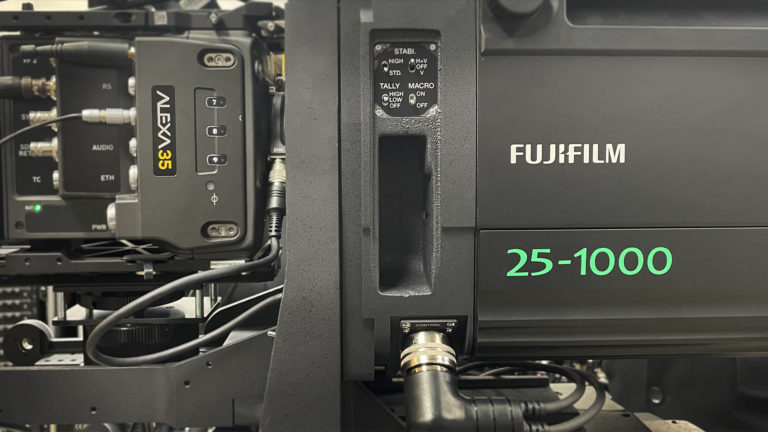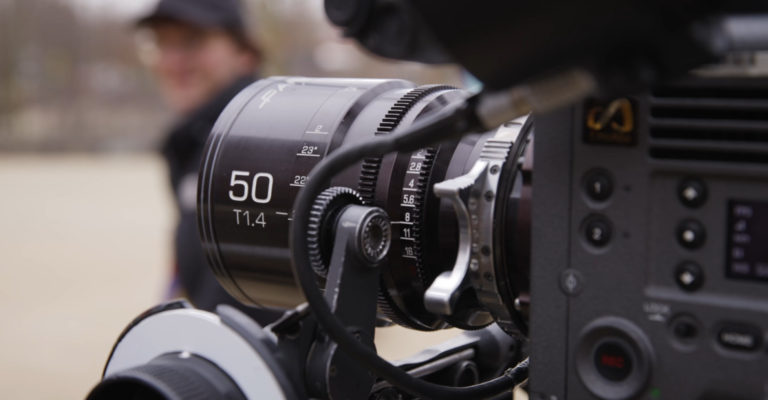
Our partner Panavision warmly welcomed UCO members for a tour of its facilities, an overview of its services and organization, and a hands-on look at some of its lens series. The visit was also an opportunity to run side-by-side tests on three lens series selected in advance: the Primo Standard (not to be confused with the Primo Classic), the Primo Anamorphic, and the Panaspeed, a more recent addition to the Panavision catalog.
Panavision suggested these series largely because they are readily available: the company stocks them in large numbers and rents them on more flexible terms than some of its other lines.
The video below covers our tests on the 35mm, 50mm, and 75/80mm focal lengths:
We shot on a Sony Venice, testing each lens at several apertures and adjusting exposure with the camera’s internal NDs.
The Primo Standard series was originally designed for Super 35, a format the Primo Anamorphic series also covers. The Primo Standard lenses still cover full frame from the 35mm up, which makes them worth comparing with the Panaspeed series, designed for full-frame or large-format sensors.
Lighting
Here are the lights we chose and what each was used for:
Key light
• A Vortex8 with an Octa 5, metered at f/5.6.
Fill light
• An SL1 bounced off a poly board, metered at f/2.8.
Backlight
• An Aputure COB 300 and a SkyPanel S60 (with diffusion), used together to separate the model from the studio’s black backdrop.
Practicals (flares and bokeh)
• String lights and an Aputure 300 with a Fresnel lens, placed in the set to show how each lens behaves in real-world conditions: highlight handling, flare shape, and bokeh texture.
Camera and settings
Sony Venice settings:
• Spherical: full frame, 6K 3:2
• Anamorphic: 4K 6:5, 2x desqueeze
• ISO 500
• White balance: 5500K
These tests gave us a clearer sense of what sets the three series apart, and they will serve as a reference when we choose lenses for upcoming shoots.
UCO ran a similar exercise with the Hawk and Vantage lens series at Vantage Paris.
Many thanks to the whole Panavision team for hosting this workshop and for their continued support.
Special thanks to Nicolas Bouchard, Guillaume Demaret, and Benjamin Bourla, whose time and help made these tests possible.