Cinematographers’ interest in images spread across large photosensitive surfaces is nothing new, but thanks to technological progress, large-format digital shooting is becoming more and more common, now that the full-frame sensors of professional cameras have caught up with those of stills cameras (24×36).
This development naturally appeals to many of today’s cinematographers, who see new aesthetic paths in it. In that spirit, we wanted to highlight the characteristics of medium-format film-era lenses when put to work for cinema and video.
With Vincent Duverger, technical manager of the camera department at Direct Digital, we noticed that very little had been published on the subject. So with these first tests, we wanted to open a discussion about using medium-format lenses on shoots. We focused on a Zeiss series in Hasselblad mount, but other series remain to be explored, notably Mamiya lenses, which are very popular with photographers. The idea is not to reach a conclusion or cover the whole subject, but rather to present the visual aspects that result from combining a full-frame digital sensor (here Sony’s FX9, with a 35.7×18.8mm sensor) with modern Hasselblad lenses (55mm image circle). The images in this article are open to everyone’s analysis and interpretation, and will come fully into their own on a real set, with real directing and real lighting!
- PHYSICAL ASPECTS
For these tests, we used two adapters: first, on the camera side, a Sony E-mount to PL adapter, and then, on the lens side, a PL to Hasselblad V-mount adapter.
Despite the double adapter, we noticed no play in the mount when handling the lenses, and we kept a flange distance that allows focusing to infinity on every focal length. Both adapters (Metabones and C7Adapters) have a very sturdy metal finish. As with all film-era lenses, the focus rings may be a bit stiff on some focal lengths, so it’s advisable to use a fairly robust wireless focus motor such as a cforce mini rather than a manual follow focus. With a wireless motor, and thanks to a very long focus throw, focus pulls are very gradual and very precise for the focus puller. The series includes the following focal lengths: 40mm F4, 50mm F4, 60mm F3.5, 80mm F2.8, 100mm F3.5, 120mm F4, and 180mm F4.
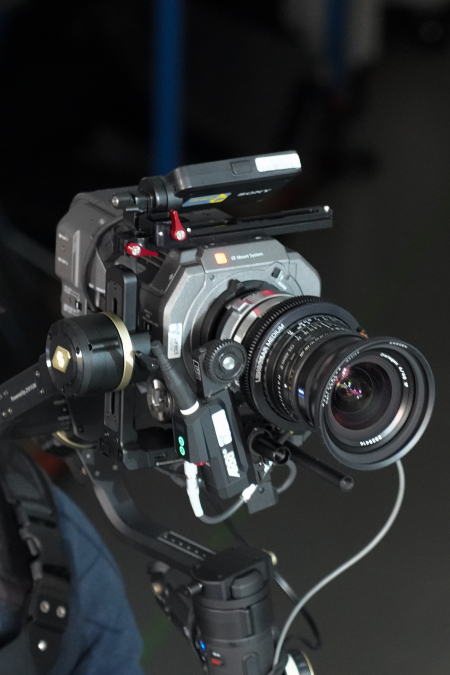
Hasselblad 40mm + Sony FX9 + Cforce mini
- Part 1 – FIRST IMAGES WIDE OPEN
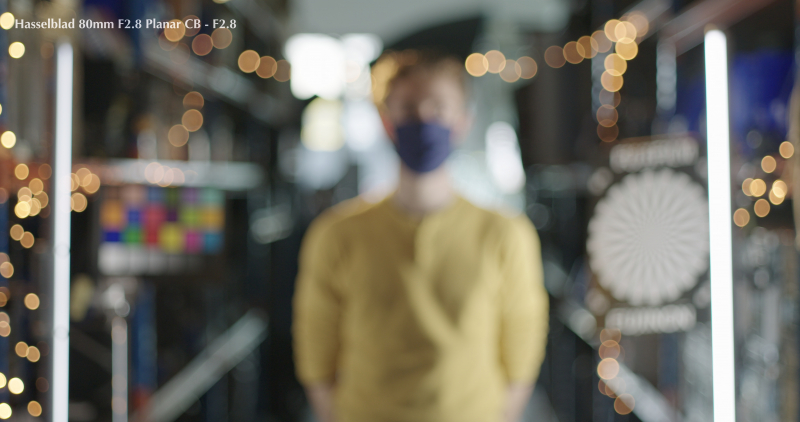
For this first part, we chose three focal lengths: the 40mm F4 Distagon, the 60mm F3.5 Distagon, and the 80mm F2.8 Planar, each at its widest aperture. By shooting wide open, we are initially trying to avoid the particular characteristics these lenses show when the light is reduced by the aperture blades. Those characteristics will be highlighted later.
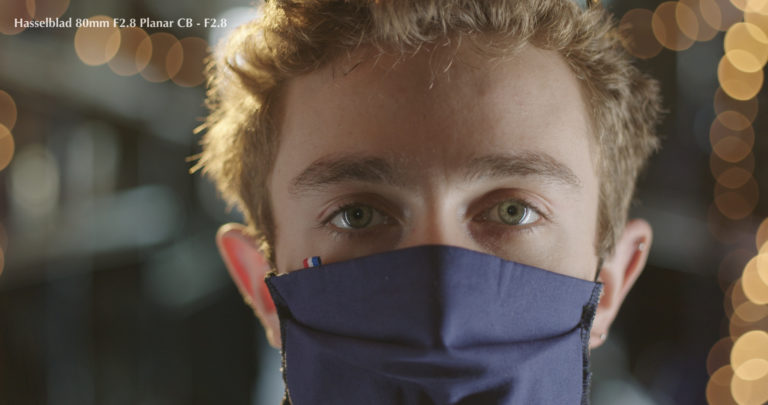
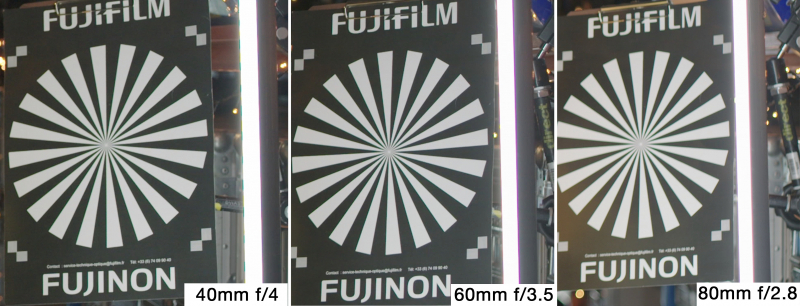
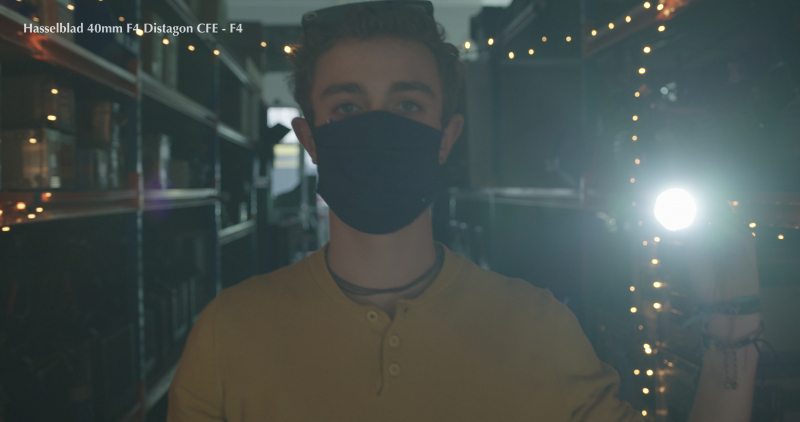
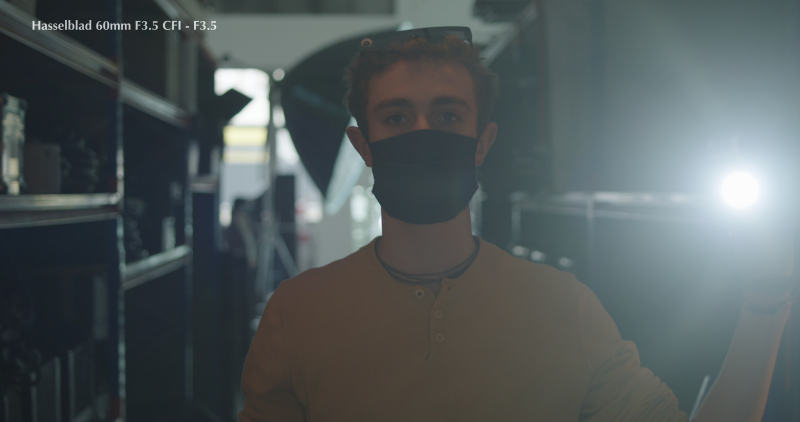
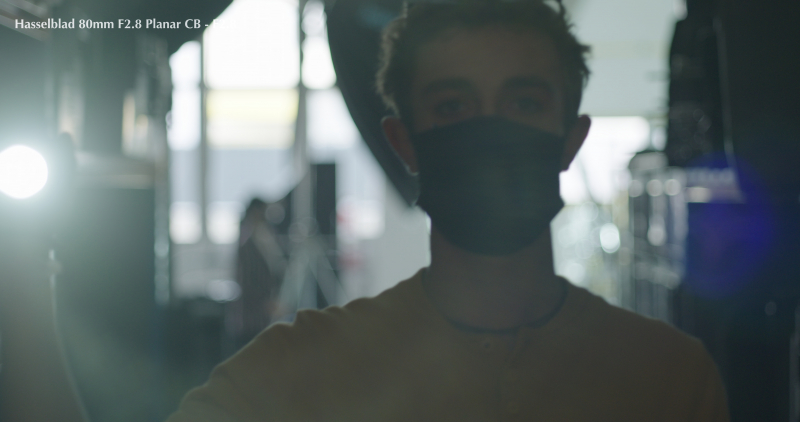
Wide open, we are looking for optical “imperfections”, the personality of the lens: chromatic aberrations caused by refraction, sharpness/softness, and depth of field. This first phase also lets us analyze a few optical aspects in motion: possible geometric aberrations, flares, ghosts, bokeh, rendering of fair skin, color rendering (here on the FX9 sensor), possible breathing, depth of field over the focus throw, possible ramping, and sharpness.
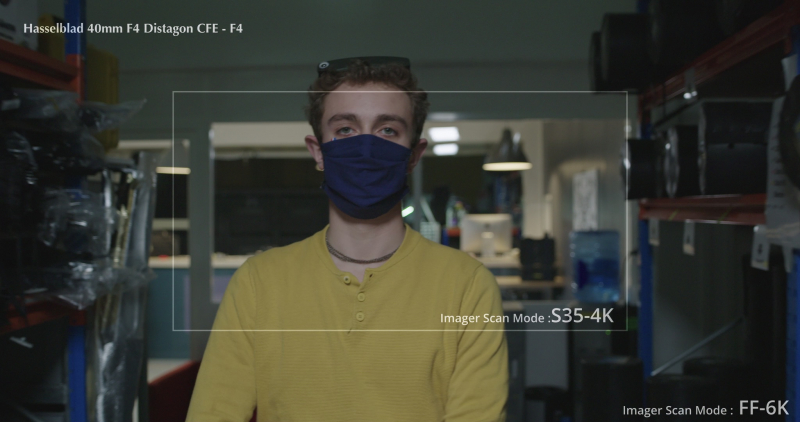
Hasselblad 40mm F4 Distagon on Sony FX9 FF 6K Sensor
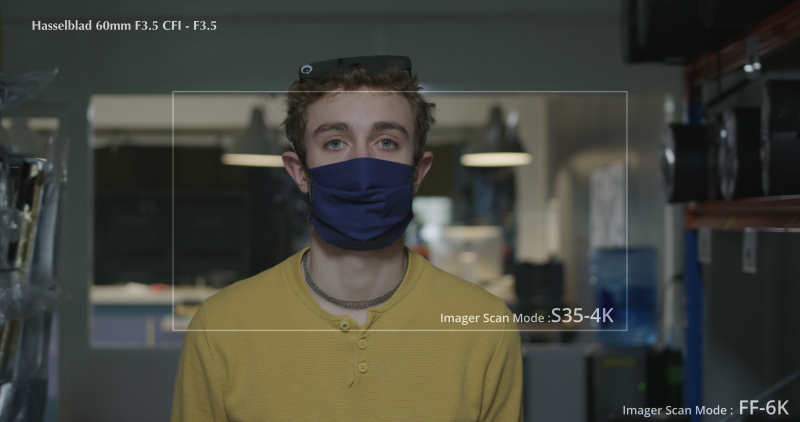
Hasselblad 60mm F3.5 Distagon on Sony FX9 FF 6K Sensor
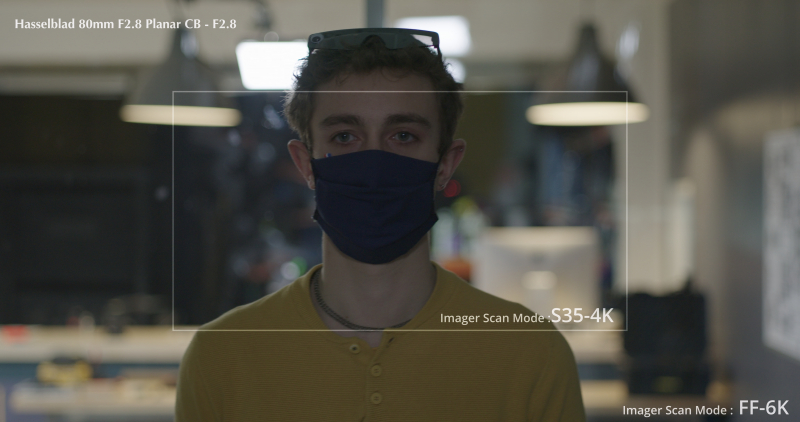
Hasselblad 80mm F2.8 Planar on Sony FX9 FF 6K Sensor
56.5 mm Medium Format on a 35.7 mm Full Frame
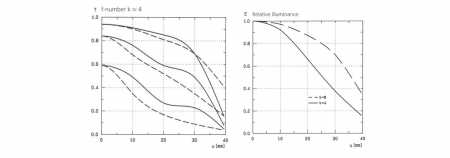
Using only a small part of the lens’s image circle lets us avoid possible edge imperfections and distortions and keep a uniform image. This is illustrated by the MTF (Modulation Transfer Function) charts for the 40 mm F4 Distagon published by Zeiss*:
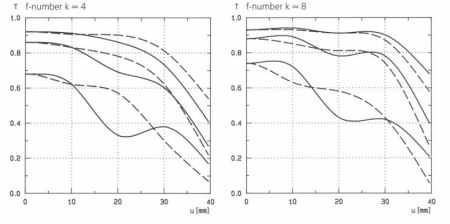
These curves show a common characteristic of lenses: the gradual loss of contrast and sharpness from the center to the edge of the image circle. On the horizontal axis, 0 mm corresponds to the center of the projected image and 40 mm to the edge of the image circle. The upper part of the vertical axis represents maximum contrast and sharpness, and the lower part represents low values. On the FX9 sensor, in Full Frame 6K, the width is 35.7 mm, which corresponds to 63% of the lens’s 56.5 mm medium-format image circle. Using only the central part of the lens thus means benefiting from its most consistent zone (between the center and the edge of the image recorded by the sensor).
This also helps minimize vignetting and distortion:
SHOT SIZE AT MINIMUM FOCUS
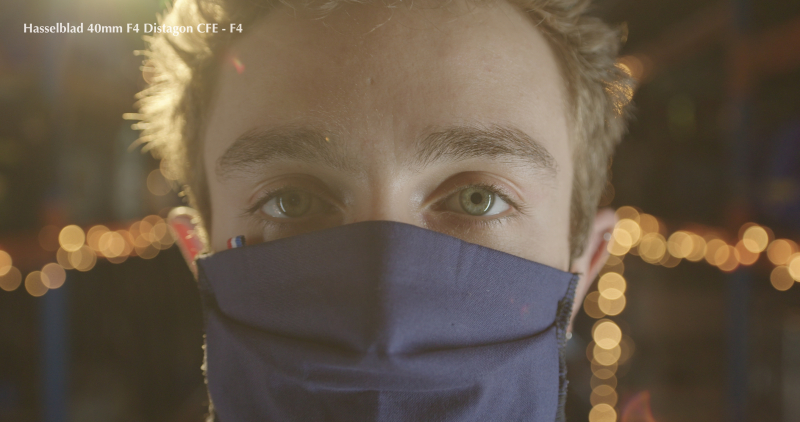
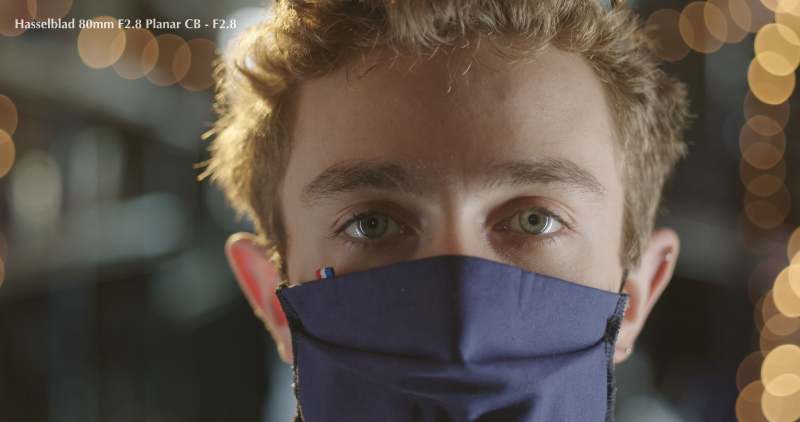
At the lens’s minimum focusing distance (close focus), we see a fairly similar shot size on our three focal lengths. With the 60mm, the ratio between the field of view and the minimum distance allows more latitude.

BOKEH
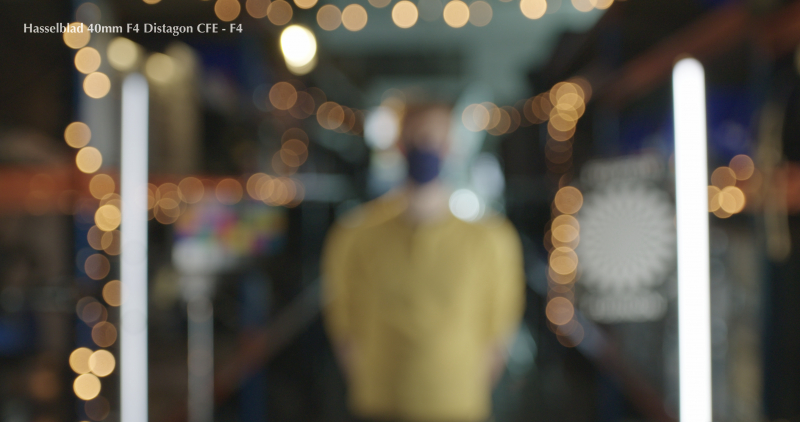
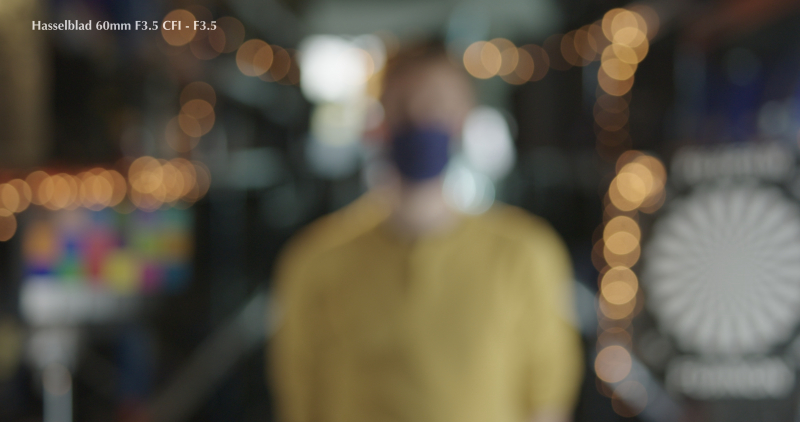
Wide open, the image shows a fairly round bokeh with well-defined edges and no visible outline. Later on, we will stop down to highlight the shape of the bokeh created by the arrangement of the lenses’ aperture blades.
CHROMATIC ABERRATION
FLARES
- Part 2 – APERTURE SHAPE
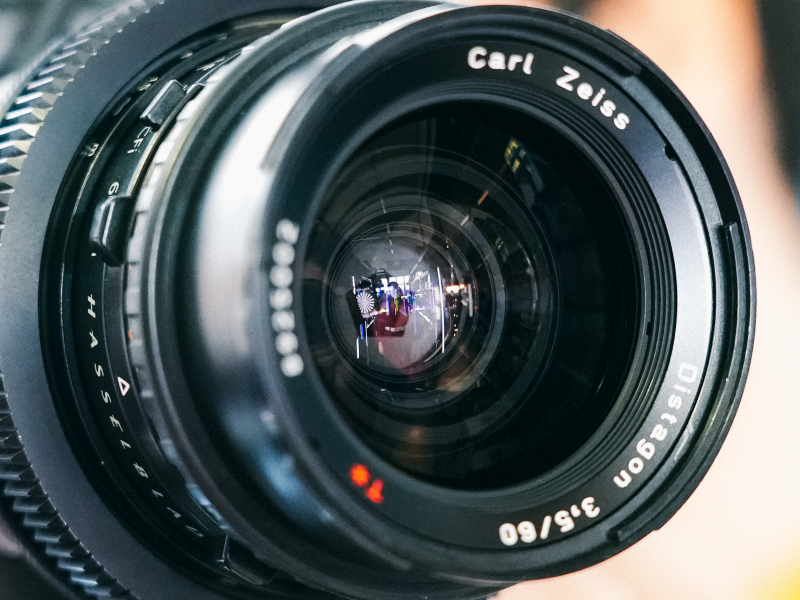
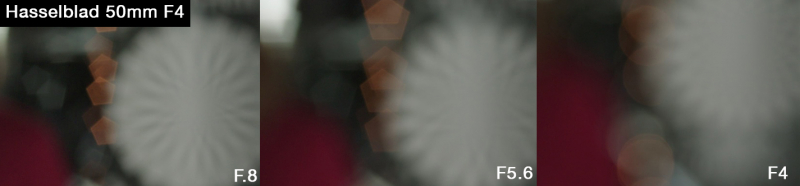
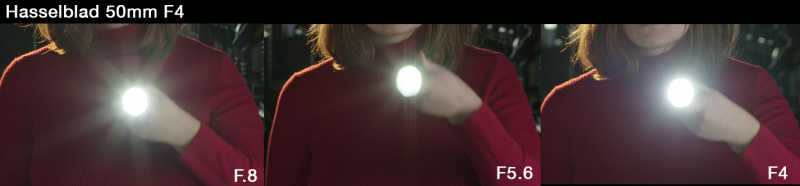
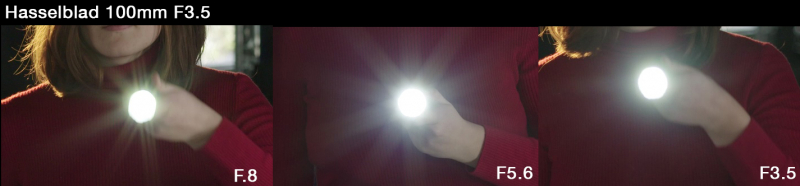
In this second part of the tests, on a tripod, we highlight the pentagonal shape of the aperture and how it renders point sources, flares, and bokeh.
In terms of focal lengths, we chose the 60 mm F3.5, to connect with the first part of this article, plus the 50 mm F4 and the 100mm F3.5, with three different apertures for each focal length.
Hasselblad 50mm F4 Distagon on Sony FX9 FF 6K Sensor
Hasselblad 60mm F3.5 Distagon on Sony FX9 FF 6K Sensor
https://vimeo.com/531228283/2189a5523d
Hasselblad 100mm F3.5 Planar on Sony FX9 FF 6K Sensor
https://vimeo.com/531229561/aa19413c00
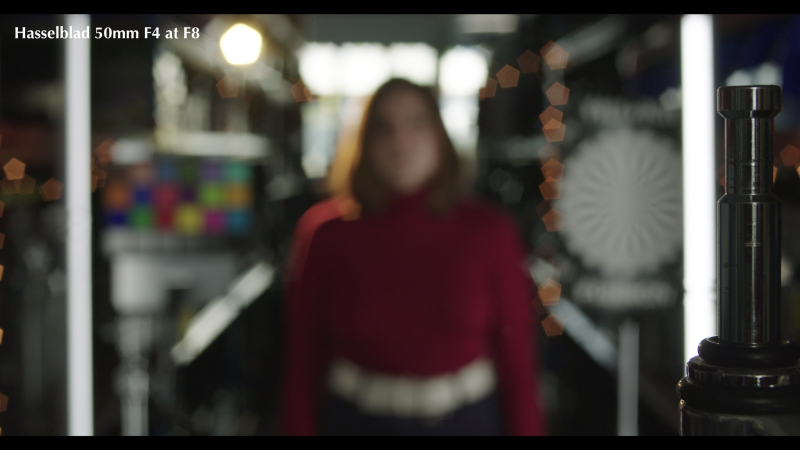
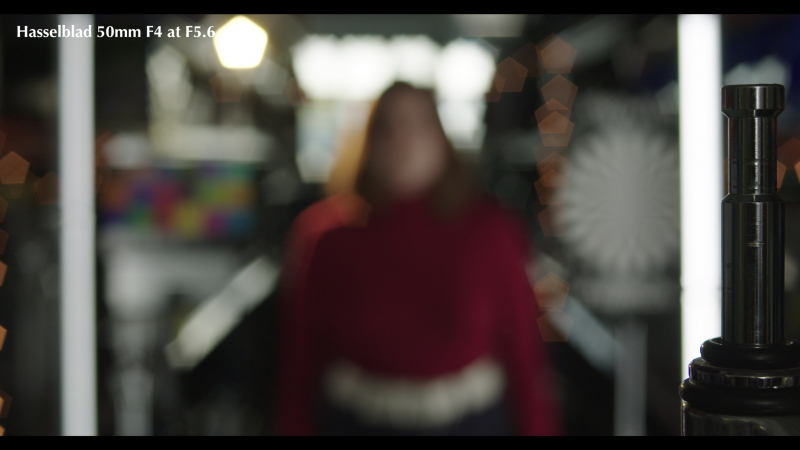
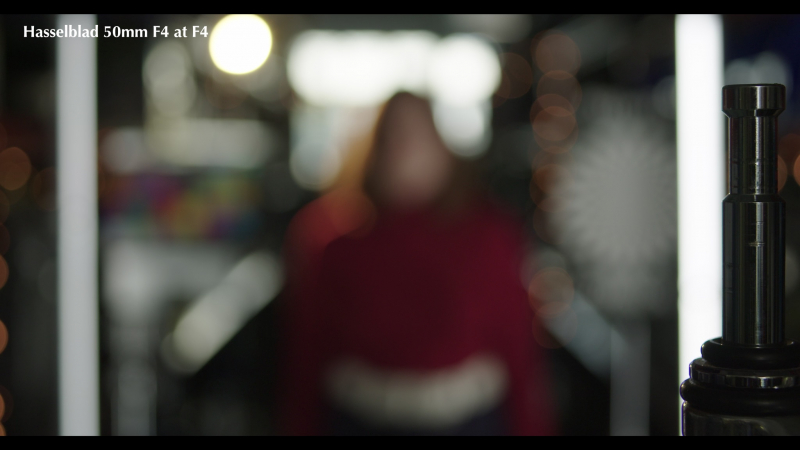
In these images, we can see the pentagonal shape of the bokeh and the star-shaped flares on a point source. One of the characteristics of these lenses is that you can get two looks from a single lens series: for a classic, cinematic round bokeh, the trick is to shoot wide open without changing the aperture (for this, the internal variable ND filter of Sony cameras is very useful!); to explore the visual specificities of the aperture at work, you only need to stop down by 1/3 of a stop to start seeing the characteristic pentagonal and star shapes.
We see in this the prospect of an aesthetic (and ultimately cultural) discussion about the shape of bokeh and the round, constant aperture imposed by classical rules.
Medium-format stills lenses have been used in the past by experimental cinematographers, but given the creative and visual options they offer, we have no doubt that their use will become more widespread, since the playgrounds and distribution formats for images are so varied today…
As a follow-up, a future article could for example look at Mamiya lenses on a full-frame (FF) sensor with a Metabones Speed Booster, which would make it possible to use the lens’s entire image circle… The field of exploration is vast!
We would like to thank the Direct Digital team, who made these tests possible. Direct Digital will be happy to welcome cinematographers who would like to test the equipment configuration described in this article.
USEFUL LINKS
- http://www.hasselbladhistorical.eu/pdf/lds/CF40.pdf
- https://www.zeiss.com/content/dam/consumer-products/downloads/historical-products/photography/hasselblad-cf/en/datasheet-zeiss-distagon-450-en.pdf
- http://www.hasselbladhistorical.org/pdf/lds/CF60.pdf
- http://www.hasselbladhistorical.eu/pdf/lds/CF80.pdf
- https://cdn.hasselblad.com/913e88b6-c98c-4c0f-9e59-a01c463b7068_x-h-system-lenses_v2_28feb2017_a.pdf
- https://www.hasselblad.com/inspiration/history/victor-hasselblad/
- https://www.direct-digital.com/fr-fr/louer/hasselblad-60mm-f35-cfi-v-fit?pos=1
- https://www.direct-digital.com/fr-fr/louer/hasselblad-50mm-f4-distagon-cfi-v-fit?pos=2
- https://www.direct-digital.com/fr-fr/louer/hasselblad-40mm-f4-distagon-cfe-v-fit?pos=1
- https://www.direct-digital.com/fr-fr/louer/hasselblad-80mm-f28-planar-cb-v-fit?pos=4