Diachromie and Diaphanie officially broke out of development in mid-November 2025. These two color grading plugins, developed by a French team, garnered significant attention from numerous professionals during their development phase, and rightly so. They were awarded the César for Innovation at the 2026 César Awards.
Based in Paris at Polyson, Olivier Patron, DIT, Martin Roux and Paul Morin, cinematographers, joined forces to develop these tools. Initially for their own use, but encouraged by those around them, they decided to turn them into marketable products.
This approach to creating a look fits perfectly with the current trend of parametrically emulating a filmic aesthetic. The idea behind it is to retain the aspects of film processing that we love, whilst also being able to tweak its components to craft a specific look. All the film typical hallmarks are present and clearly identified, making it easy to adjust their proportions and even deviate from them to create a completely original look.
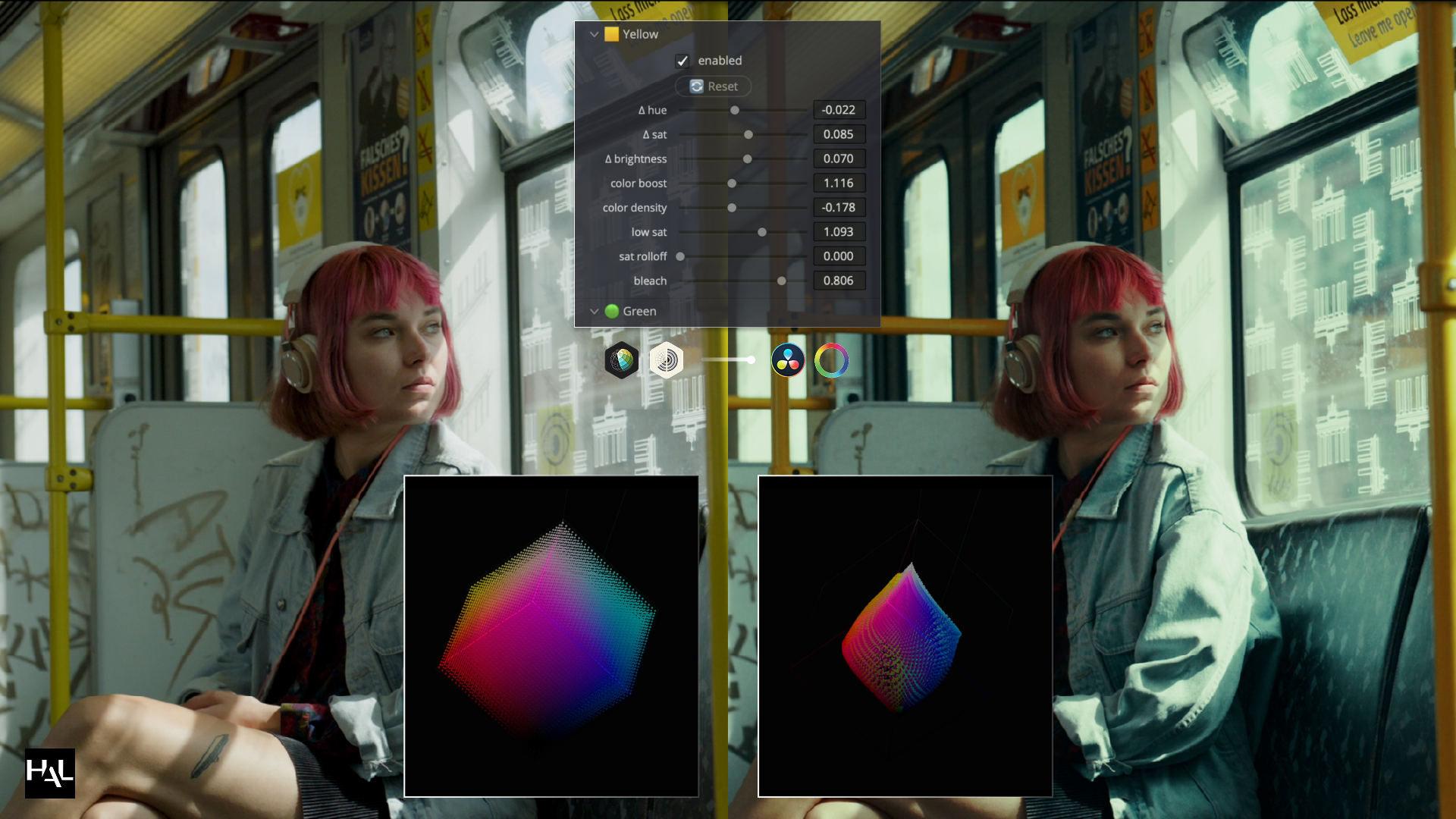
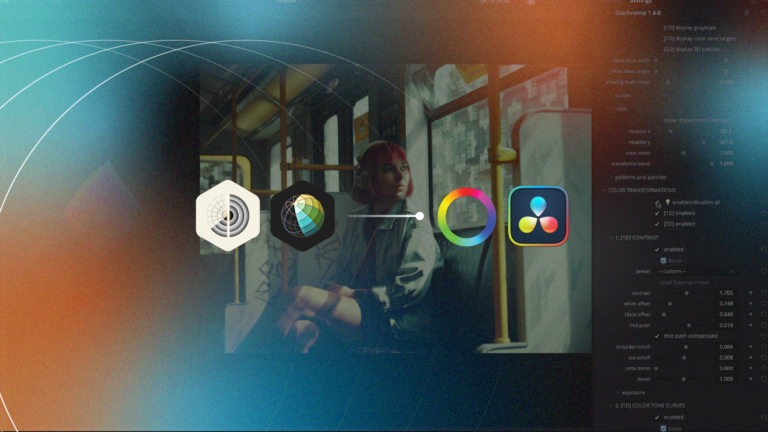
In practical terms, the system is divided into two parts: diachromie for all colorimetric transformations, and diaphanie for texture transformations, such as grain, halation, etc…The two OFX plugins, compatible with Resolve and Baselight, integrate seamlessly into an ACES workflow, but not only that. It’s possible to specify the color management settings. Therefore, it’s also possible to export a log-log LUT, which is very useful for Arri’s new Reveal color science that separates the look from the DRT. Cinematographers will appreciate this.
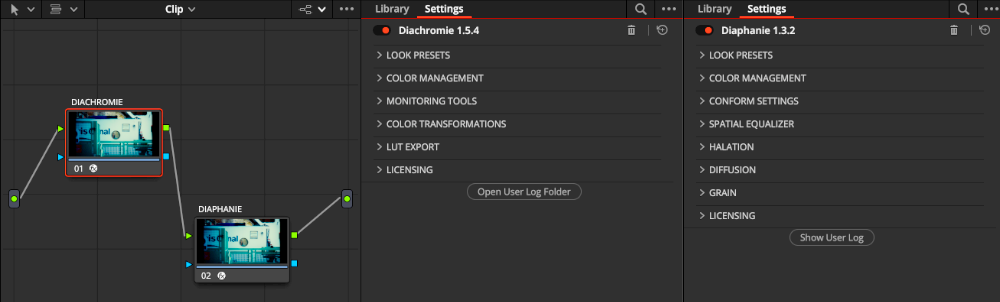
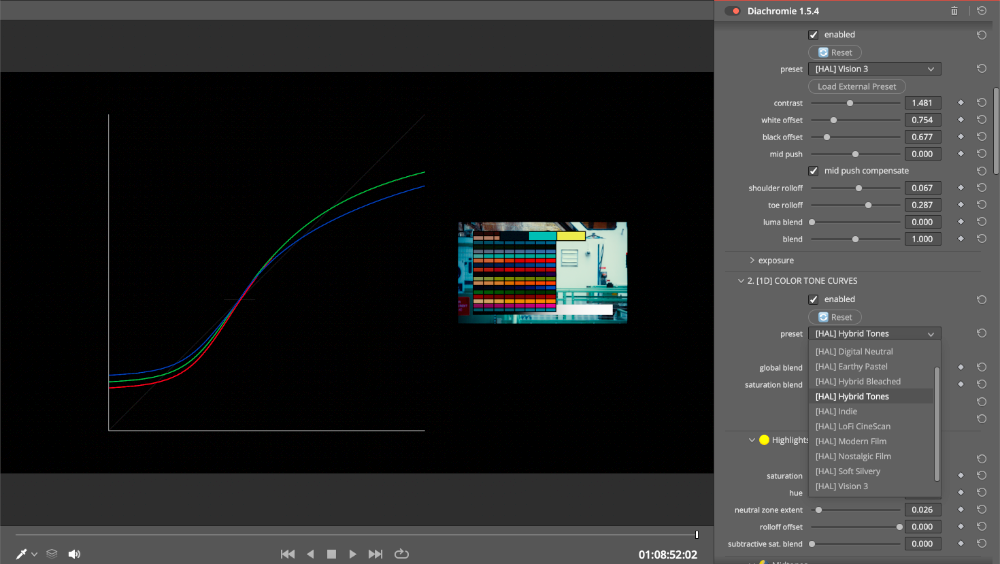
The interface allows for a very chronological methodology. You really get the feeling that the choices are presented at the right time, which is a plus given the sheer number of parameters. A preset system for each module lets you start with solid foundations and referenced looks. Then, from session to session, or even film to film, you can develop your own library. This allows you to start simply and then capitalize on time and experience to find your own unique style. If we had to look for an improvement, it would be the ability to map certain commands to control surfaces. This will surely be available soon if the host applications allow it. Another very important point for cinematographers is that the transformations preserve neutral gray by default, because it makes sense that a look shouldn’t alter the exposure to remain consistent in all situations. It’s therefore very easy to create show LUTs that also preserve exposure.
Feel free to try the demo versions available at Hal-pictures. And while you’re at it, the team provides a very useful online toolkit (https://toolbox.hal-picture.com) that you can share with directors to discuss your intentions in detail.