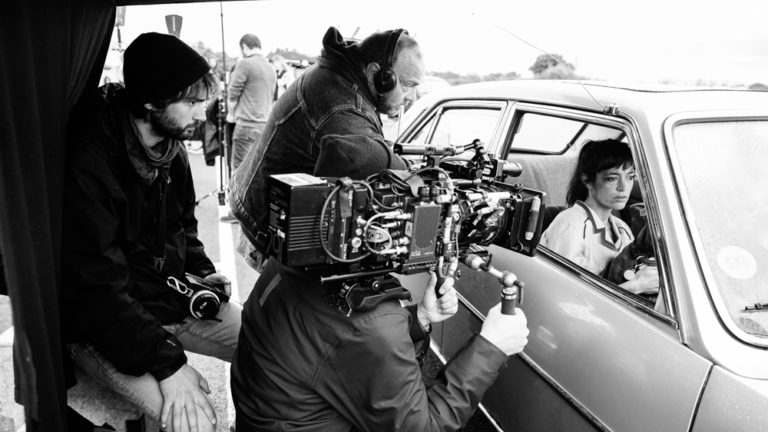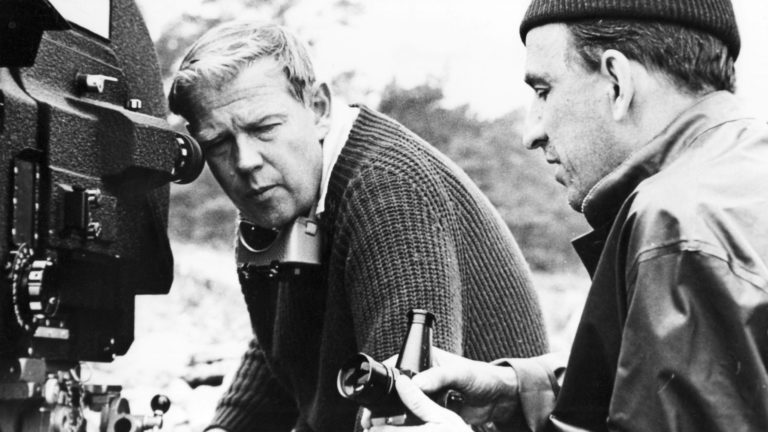
Coming from a member of an association of cinematographers, the question may seem surprising. Of course we know what we’re doing when we do this job!
When you have a camera to lug around and a crew to manage, and it’s raining, and night is about to fall, and the production is breathing down your neck, you have other things on your mind! And yet the question remains. It stares at me without tenderness, stubborn as ever. It is the expression of a deep doubt. An existential doubt. Do I know what I’m doing when I work as a cinematographer? Perhaps this doubt affects only me. Perhaps it only comes to me after so many years of wandering behind cameras, through my own fault, my most grievous fault. That’s my problem. It’s nobody’s business but mine. But no amount of rationalizing settles the matter. No certainty comes to shield me from doubt.
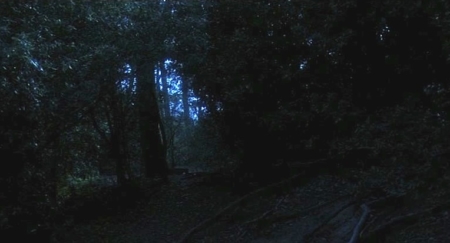
About fifteen years ago, on the last day of shooting a short film in a forest, I wondered aloud in front of the director, suggesting a different shot size from the one he had planned during the location scout. Wider to tighter, or the other way around; I no longer remember. I was simply considering a possibility. But the director felt himself called into question, down to the very foundations of his desire to make films. He took it very badly. He literally spun out, fleeing in despair deep into the woods. I had to set up the shot in question on my own, then go looking for him, try to talk him down, and ask him to forgive me. We were then able to finish the shoot. But he and I had been hit full in the face by the way we had each negotiated our respective positions throughout the shoot. Technique, it seems to me, is the core of our expertise as cinematographers. It is my job to relieve the director of it. That director was far from technically incompetent, but over the course of the shoot I had gradually made many technical decisions in his place, sometimes high-handedly, under the pressure of a shoot that depended heavily on the weather. I laid down requirements and tried to meet them, according to my idea of the professionalism the director expected of me. Sometimes according to my own reading of the film as it was being made, anticipating his, presuming his answers. Sometimes without going through him at all. His meltdown on the last day was the result. By what right had I put myself in his place? Where does the cinematographer’s role end, when at every moment the cinematographer is making decisions that have an aesthetic impact?
In my experience as a cinematographer, which not all cinematographers necessarily share, technique is secondary. Such a statement is not without risk. It is no small thing to say it here, in an association of cinematographers, before an assembly of peers. If technique is secondary to me, it is certainly paramount when a production company or a director chooses to work with me. All the more so when they know I have long experience behind the camera, experience that has a lot to do with their choosing me. Saying that technique is secondary is a bit like sawing off the branch I’m sitting on. I am expected to deliver, I am expected to reassure, I am counted on to state: “this camera,” “these lenses,” “this light,” “set up like this, in this spot,” “this piece of grip equipment for this type of shot,” “in how much time,” “with a crew of so many people,” and so on. These requests are legitimate. I answer them as precisely as the film’s development allows before the shoot. But that in no way settles the question of where I stand in relation to the film being made: should I disappear behind technical skill? Or is it my duty to weigh in on aesthetic decisions? Certainly. But to what extent?
When the client is, say, an advertising agency, the answer is obvious. The same goes for a musician looking to promote their music. Or an institution or a company keen to demonstrate its efficiency. In these cases, the project is clearly defined in industrial or commercial terms. No one expects me to question the meaning of what we are making together.
But when a way of seeing (or rather, a relationship to the world) asserts itself at the helm of the project, we enter another dimension, one where a kind of intimacy is shared with the director. It is still a matter of serving them, but on ground where the alchemy of the encounter and the relationship brings its share of mystery and unease. On most documentary shoots, for example, where the technical side is kept to a minimum, often because budgets are tight, this alchemy is the essence of the job I do. A risky job.
I have worked on several intimate documentaries in which the director appears on screen. In that case, the person in charge of the film is in my frame, interacting with the characters, and I cannot communicate with them while we shoot. So I have to make a great many framing and lighting decisions on the spot, decisions that will give the film its body. Editing and mixing will remain to bring the meaning of the film in line with the director’s intentions. But they will still have to live with the decisions I made alone, based solely on my own reading of the film as it was being made.
Of course, these decisions are informed by prep, which includes many meetings and conversations with the director. Sometimes we have exchanged references: paintings, people, films. Technical considerations too. Sometimes we will have worked out a strategy. But now we are in the thick of it. I decide, I cut, I choose, alone. I sometimes sacrifice technical quality, such as the steadiest, most balanced frame, to the sheer need to record, right there and then, the event the director has set in motion. When they later discover the dailies, in the best case they are happy with them, and we carry on. If not, we talk again, refine our approach, and try not to repeat the same mistakes. This is how the film’s strategy develops, through iteration and trial and error. The director draws up the battle plan, with my help. But when the battle comes, I am still the one leading the troops, alone.
Here is another story that questions the limits of our profession. A director had trusted me to shoot a film about her grandfather’s murky past during the German occupation of France. The idea was to investigate among what remained of their family in Corsica, with the help of the director’s two daughters, aged 11 and 14. History with a capital H would be approached through the intimate, and the two girls were at the heart of the process, as the essential recipients of the reconstructed past. The shoot stretched over nearly a year, in several sessions. During the next-to-last one, however, the director sensed some reluctance about her approach on the part of the sound engineer and me, and she was not wrong. We, the two crew members who had been with her from the start, had come to feel that she was exploiting her children too much, giving them no respite, placing them too obsessively under our gaze, within our hearing. As the instruments of her own attention, we had come to question the nature of that attention. Although we had resolved not to judge the way this mother cared for her children, the nagging feeling ended up affecting our commitment to the project. The director then asked us point-blank: what the f*** was our problem? The sound engineer and I tried to answer as honestly as we could. Perhaps the method needed some nuance? She did not agree with us, but she listened, shocked as she was by our reluctance. The session wrapped a few days later. Neither of us, head of sound or head of camera, was called back to finish the shoot.
For my part, being let go brought me back, brutally, to the narrow limits of my position as a technician. It was not my place to judge the directing as it unfolded. I simply had to carry out what I was asked to carry out. My mistake was to assume that, because I was carrying the director’s gaze, I was also entitled to exercise its judgment. A “mistake”? Yes, since that assumption led to a sanction.
Despite these difficulties, which many of us may have encountered (I don’t know; you tell me?), I am sometimes very proud to have brought certain films safely into port. The images I am proudest of are not the ones that demanded the most technical skill. They are not the ones that were hardest to make. They are the ones for which I had to step out of my position as a technician, sometimes to the point of becoming a mere spectator again, caught up in emotion. That emotion has nothing to do with whatever technical skill may have gone into making the images in question. The number of lights changes nothing. Nor does the type of camera. Or the length of the dolly track. Or even the length of the shot. I would say these are only means, mysteriously converging toward a sublime point. It is this point that draws my practice like a magnet.
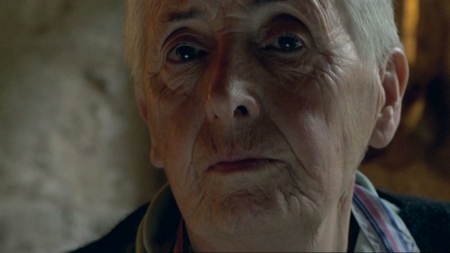
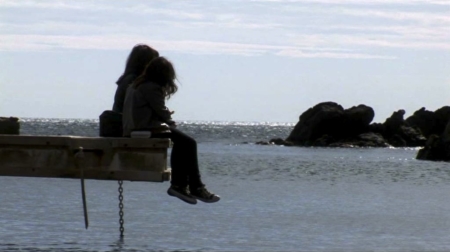
Most often, these are images of a person. Of their presence. Of their being-in-the-world. That pensive old woman resigning herself to selling her house. That famous writer ranting, legs apart, on the very spot where his murdered mother’s body was found when he was a child. Those two girls (yes, the very same) swinging their legs over the edge at the end of the pier in Erbalunga. That young woman asserting herself as she proudly strokes her belly and the child to come. That Chinese painter taking long, rebellious strides among his works.
Fiction or documentary, these faces come together. These images did not require feats of invention from me. Sometimes I simply happened to be there. The director gave me the chance to concentrate their story, their gaze. It happened to fall to me, but someone else would have done no worse. The fact remains that I eagerly seek out such encounters, because they take me out of my condition as a technician. They are still rare. I miss them.
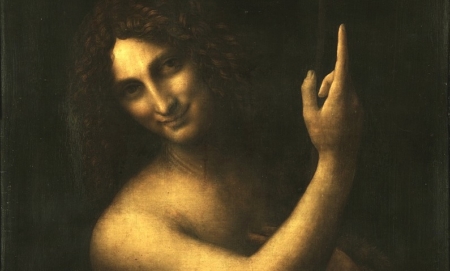
At the Louvre. Saint John the Baptist smiles at me. Leonardo painted him centuries ago. Tender John the Baptist. His index finger points at who knows what, up there, and invites me to follow. The other hand on his breast, that offering. I know almost nothing of the technique the painter used to capture the essence of this marvelous young man. The light, diffuse, seems to come from a point above his eyes, somewhere to the left. It seems not to fall on his face but to emanate from it. It fills the museum. It pierces my heart. I am in its presence.
This text owes a great deal to the discussions of the “Philosophy of the Gaze” group. My thanks to its members.