And nothing would ever be the same again
I still remember that screening at the 2009 Micro-Salon that had us all glued to our seats. We were in the large auditorium on rue Francoeur, contemplating the superb images shot by a photographer, alone on assignment in Africa… stunning. Then, on a small table where an object had been hidden from us, the body behind these images was revealed: the 5D Mark II. A small DSLR was therefore capable of shooting in 1080P on a full-frame sensor, with depths of field never seen before in digital. The handling was the polar opposite of our practices, but that day we discovered that a cinematic image was now within everyone’s reach.
Mixed years
Then came the first cameras in the EOS Cinema range, with the highly controversial C300. The ergonomics were singular and disconcerting; nevertheless, it flooded the market and many cinematographers adopted it.
The C300 Mark II also had its moment of glory with its new 4K resolution and its first and highly appreciated 422 10-bit 400 Mbps codec on CFast cards. Then, since 2017, no more major commercial success. There was the very anecdotal C700, the largely unknown C300 Mark III and C500, then the C70, which certainly benefited from the Sony FX3 and FX6 shortage during the lockdown year. Yet the C70 won over many of those who tried it, but it remained a camera to “own,” seldom requested for rental.
The new cameras put to the test
Last December, I took part in a discovery session at TRM for the C400 and C80, released in 2024. I was won over by the new features of these two cameras. They are both full frame and record internally up to 6K in RAW. They offer a triple native ISO (800, 3,200 and 12,800!) and appear to finally have a worthy autofocus. Is Canon back in the game?!
As a UCO member, I invited Lionel Cavadini and Cédric Martin to test these two cameras, Canon having had the good idea of lending them to us. What we did at the end of March with fellow members Fabien Lamadie and Thomas Faverjon.
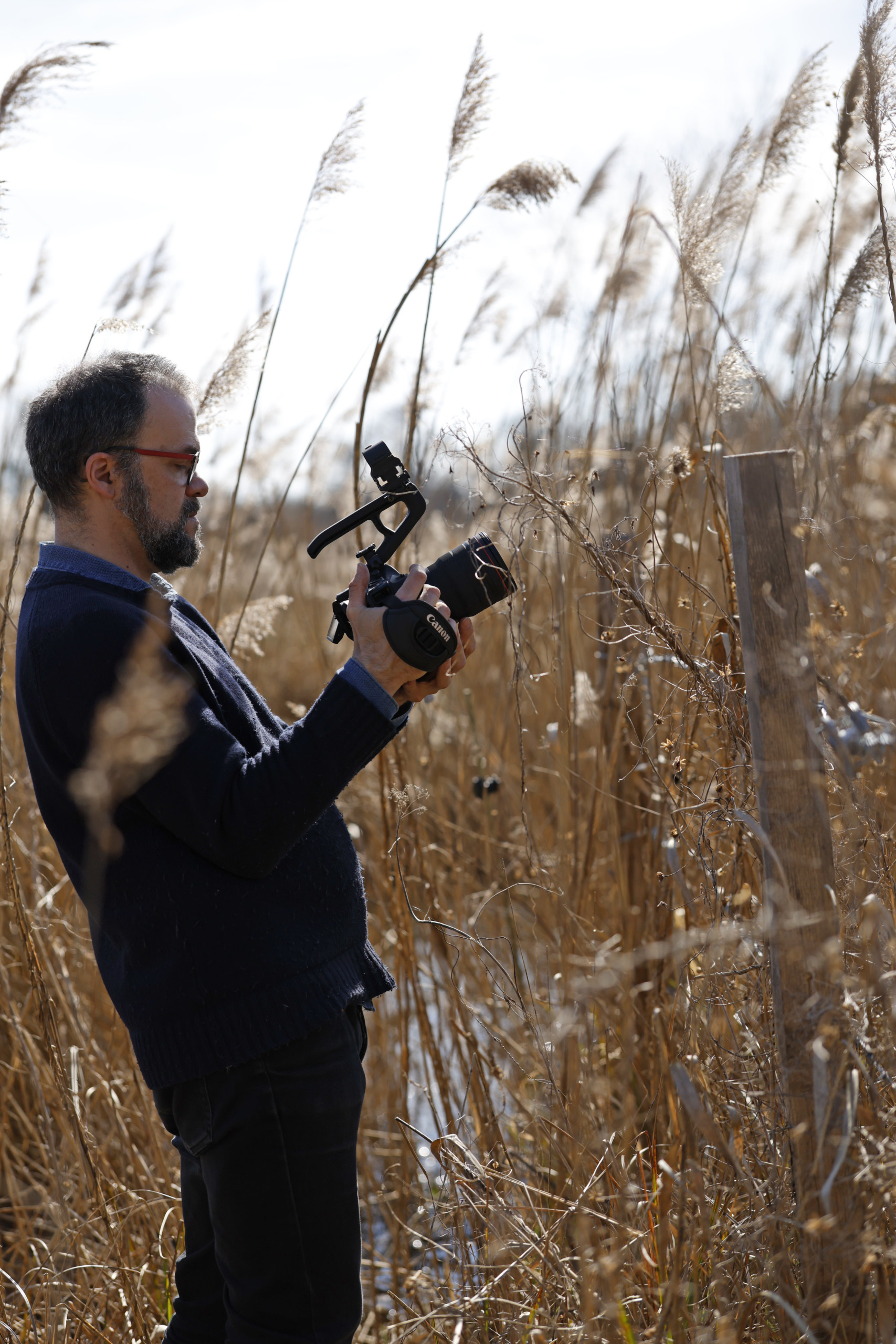
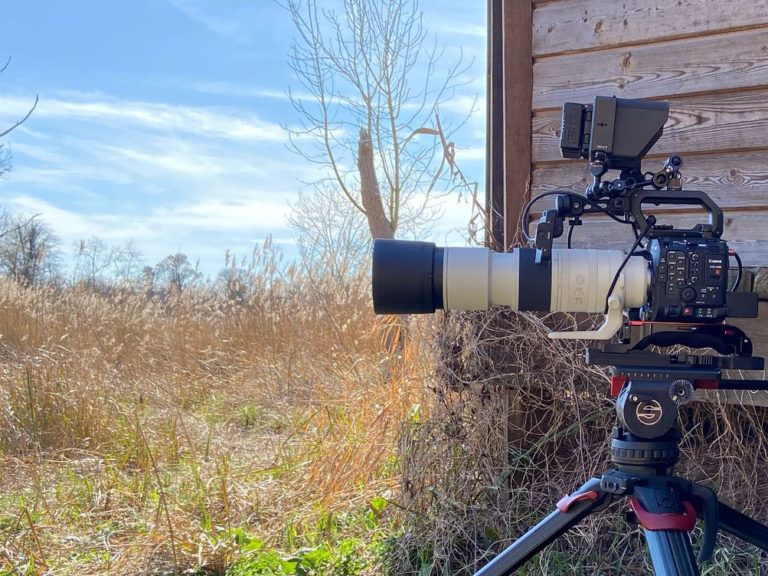
We first spent a day on a test bench at Telline in Malakoff, then went to a splendid body of water, the marshes of Fontenay-le-Vicomte: a remarkable location for filming birds. Canon lent us a C400, a C80 and zoom lenses: the 15-35, the 24-105 (at f2.8!), the 70-200 and the 200-800, all in RF mount of course.
The RF mount allows for more compact optics, since the distance between the last lens element and the sensor has been drastically reduced (no more need for the space dedicated to the reflex mirror, which has definitively disappeared).
What immediately struck us was the number of shortcut buttons: 13 on their respective bodies (with 5 more between the handle and its screen for the C400). These preset shortcuts are labeled and can of course be reconfigured according to one’s usage. An important point for night shoots: they are backlit.
The scrolling menu is fairly clear and intuitive.
The list of recording formats is very (too?) dense. For example, on the C400, at 25P, we counted no fewer than 15 possible settings: from Full HD 420 8-bit to 6K RAW 12-bit, including 4K Ciné and UHD.
Maximum frame rates are 60 fps in 6K, 120 fps in 4K and 180 fps in 2K on the full sensor.
On the C400, there are 3 sensor format modes: Full Frame, Super 35 and Super 16! Very practical when you are limited in focal length.
Like Sony, Canon offers two recording Logs: Log 2 and Log 3. However, it’s the opposite of Sony: Log 2 is the flattest and most optimal (16 stops) while Log 3 is more contrasted (14 stops).
LUTs can be loaded into the C400 as .cube 17 or 33. For our tests, I had obtained LUTs from a friend who shoots Canon, who recommended those by Taylor Edwards (see link below). In practice, we didn’t use them since we couldn’t load them on our two cameras.
For the shoot, we chose the “BT 709 Wide Dynamic Range” LUT, which seemed the most attractive to us in high-contrast situations.
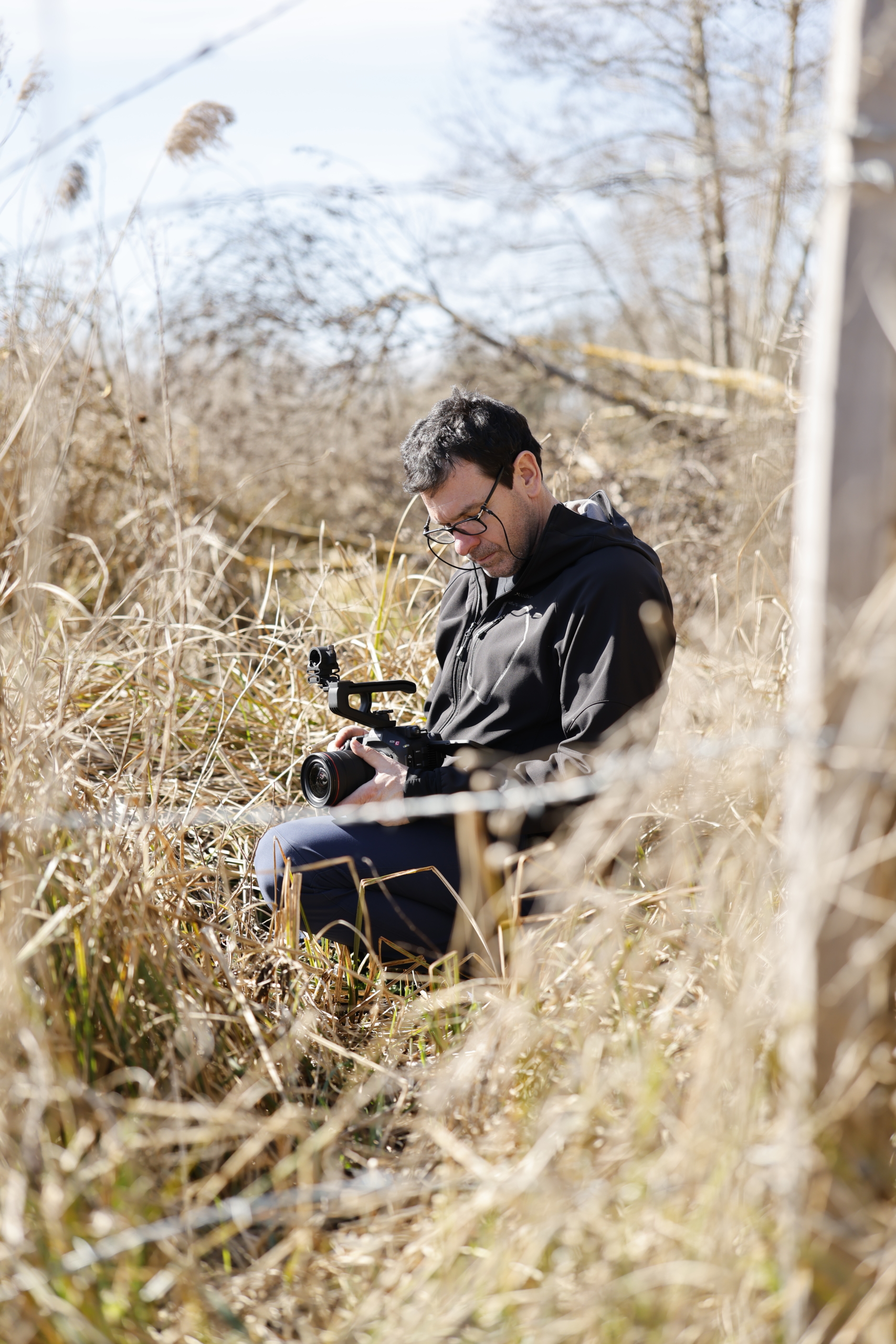
Since the weather was beautiful, we regretted the lack of a viewfinder like the famous Canon EVF-V70, which was available on the C700, 500 and 300 Mark III. The demand for a viewfinder is a priori being taken into account by the parent company, but today you have to go through an equipment manufacturer like Zacuto. The Z-Finder remains quite cumbersome to set up, otherwise you need to switch to the Gratical.
Fortunately, the camera LCDs are bright enough and we were able to get our shots without too much difficulty. The internal NDs allow compensation of up to 10 stops. However, beware of stacking ND filters which, beyond 6 stops, shifts the focus point at full zoom.
I never use a shoulder kit (I’m too tall and it restricts me for high-angle shots), so I was very eager to try the C400 in a run-and-gun configuration, meaning handheld with the side handle. I fitted the 24-105 RF zoom, which weighs only 1.3 kg at f2.8, and parfocal at that!
For shoulder shots, I shot with both internal stabilization modes (IS mode). The first one crops about 10% of the image and gently compensates for bumps. The second crops about 20% of the image as it holds the horizon much more aggressively. Further testing would be needed to truly understand the limits and strengths of these two stabilization modes.
We will review the footage and put together a short edit of our images, which we will share very soon.
In the end, from a practical standpoint, these two days of testing clearly left us with a positive impression. It should be noted that the triple ISO up to 12,800 opens new perspectives for the range, and the versatility of the 24-105 (f2.8) will undoubtedly appeal to many of us.
You can sense that Canon has listened — at least in part — to feedback from the field, and is making a serious attempt to return to the race against an ultra-dynamic competition. Will these cameras become indispensable references like the 5D Mark II and the original C300 once were? It is probably still a bit early to say. But one thing is certain: they mark a real turning point and make you desperately want to take them on projects where lightness, versatility and image quality must coexist without compromise. The question remains whether cinematographers will follow.
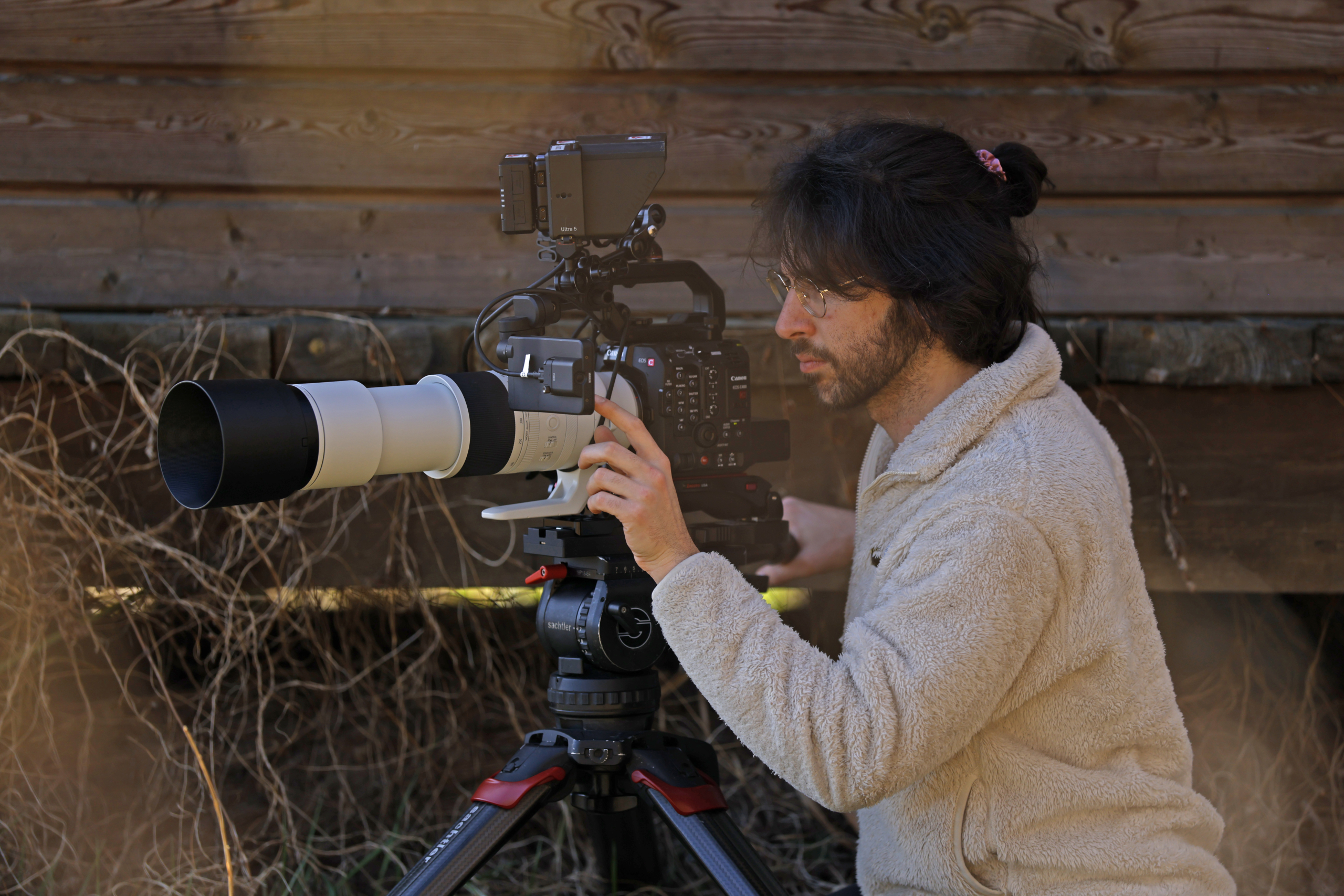
Comments by Fabien Lamadie:
“Memory: the 5D MkII is for me THE camera of my entry into this profession. I believe its impact on creative work can be compared to the technological advances in mobility that made the Nouvelle Vague possible. It was a whole generation that had the opportunity to create thanks to this camera.
The C300 Mark II also accompanied my early steps. It was the camera on the first produced series I worked on as a second assistant camera, and I had it in my hands many times on all types of projects.
Regarding my impressions of the new C400, I have two essential observations: The first is the ergonomics, how it feels in the hand. It seems more assertive, more straightforward, more rectangular than the curious aerodynamic shape of the C300 was at the time.
The second, and most important: the lightness. I was blown away by the weight of both the C400 and the C80. Paired with the 24-105 f2.8, the C80 weighs barely 3 kg. It is hard for me to imagine today a lighter configuration that remains as functional.
On the downside: I am still bothered by the playback which does not allow displaying the LUT used. A detail that is not specific to Canon, but which I hope to see fixed in future firmware updates.
The menus are fairly clear, but still very — and too — extensive, which reinforces my view of it, like the C70 before it, as a very good camera to own or to use on long projects with a small crew. I can well imagine setting up all these buttons and shortcuts according to my own preferences and habits, until I can use it without even needing to look at it.
The autofocus seems to be heading in the right direction. I mainly used it on animals and in bright environments, and in those situations, it hardly ever let me down. It would now be a matter of comparing it on humans and in low light against the performance of Sony cameras.”