* * *
Iron Butterflies: Autopsy of a Mass Murder
When faced with human tragedies, one might simply ask : what can documentary cinema achieve ?
On July 17, 2014, a Malaysia Airlines Boeing 777-200ER flying from Amsterdam to Kuala Lumpur (flight MH17) crashed in eastern Ukraine, killing all 298 people on board. An international investigation later determined that the plane had been shot down by a Buk 9M38M1 surface-to-air missile of Russian design, launched from an area controlled by pro-Russian separatists in the Donetsk region.
This harrowing attack, with international ramifications, and the subsequent investigation and trial, exposed Russia’s direct involvement. Later events would reveal the broader scope of Moscow’s ambitions, culminating in the full-scale invasion of Ukraine in 2022.
Awarded at Sundance and the Berlinale and celebrated at numerous festivals worldwide, Iron Butterflies, directed by Roman Liubyi, was also screened this year at Camerimage. This feature-length documentary explores every facet of the tragedy, from the weapon’s design to the lives of some of its victims. In parallel with its journalistic work, the film demonstrates what cinema can achieve: telling stories, expanding the imagination, and deepening the narrative of events and their consequences in unexpected ways.
Kinoko at Camerimage
To learn more about the context and creation of this poignant film, we spoke with Andrii Kotliar (via video call), director of photography for Iron Butterflies, and Anastasia Tykha (interviewed on-site), programming director of the Ukrainian film festival KINOKO. Since Russia’s full-scale invasion, this festival has been hosted by Camerimage.
Anastasia, Andrii, and Roman, the film’s director, were among the many young people who participated in the “Revolution of Dignity,” also known as the Maidan protests, between late 2013 and 2014. Then students in film, they documented this historical moment in their own ways, later continuing their commitment as part of the Babylon ’13 collective. This generation of young filmmakers carries a deep spirit of resistance as the Ukrainian film industry develops further.
Until 2022, Kyiv was producing feature films, commercials, and both local and international projects. In previous years, the Kinoko festival had grown as a modest but rigorous celebration of cinematography, following in the footsteps of Camerimage, with which it has historical ties. Since the invasion, European solidarity has been expressed in various forms, including cultural support for Ukraine during the war. Naturally, Camerimage embraced Kinoko by hosting a program of four films reflecting the challenges faced by Ukraine’s destabilized film industry, which had already endured COVID-19 disruptions before the Russian invasion.
A cinematic investigation
Iron Butterflies demands solemnity due to its subject matter. Yet beyond the emotion, the filmmakers have created a profound cinematic work that immerses viewers in the extraordinary complexity surrounding the MH17 crash.
The film opens in Ukraine’s archives, showing a propaganda film about the Buk missile. In this chilling sequence, the filmmakers appear in lab coats and surgical masks, as if they were examining a crime scene. This sets the tone, encompassing both the broad investigative framework and the weight of Russian propaganda.
Around the moment the missile struck the Boeing, Iron Butterflies weaves together a rich tapestry of fragments and diverse imagery: traditional documentary footage, found internet videos, mobile phone clips from a witness at the crash site, animated sequences based on children’s drawings, Russian television archives, and choreographed black-and-white scenes reminiscent of dance films.
Viewers see Amsterdam’s airport, track the flight path via FlightRadar, hear separatists’ conversations, and witness footage of the wreckage filmed by an Associated Press journalist under strict surveillance. They see social media images of separatists posing amidst the debris and Russian experts spreading official propaganda on bombastic talk shows to deflect responsibility.
Amid these startling and grim materials, the filmmakers restore sensitivity and meaning. This is achieved in several ways.
Through this sequence with Robbie, a Dutchman who lost his cousin and her partner in the crash, visits the site in Ukraine and mourns the couple through his own musical compositions.
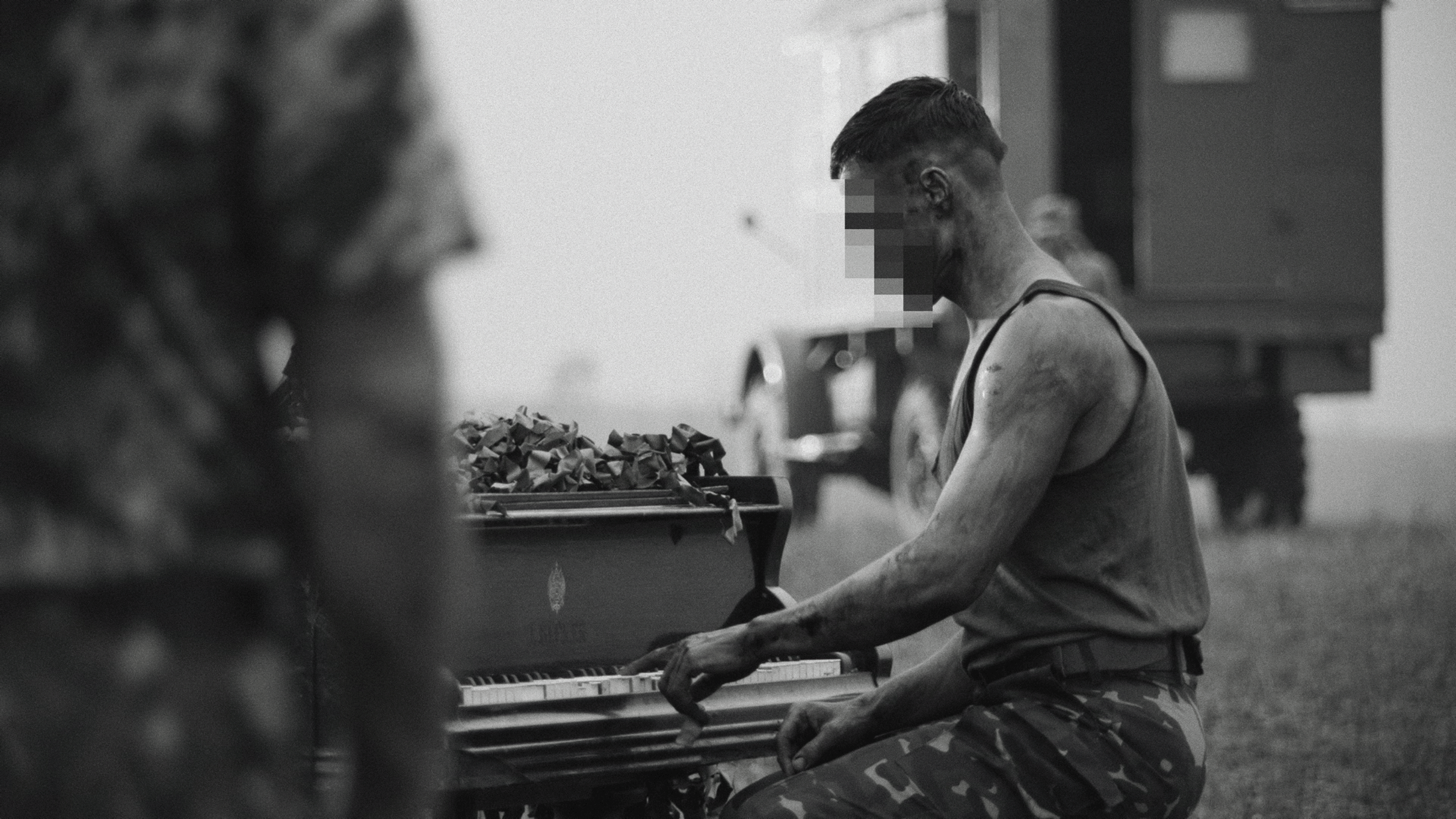
Through soldiers depicted in a desolate countryside with pixelated faces, their propaganda-obscured responsibilities contrasting with their movements, choreographed into gestures of defiance.
Through an animated sequence featuring a bird escaping its cage aboard the MH17, inspired by the director’s background in animation.
Through a poignant moment where the director’s daughter plays with shrapnel fragments from the Buk missile, shaped like butterflies, which pierced the Boeing’s cockpit.
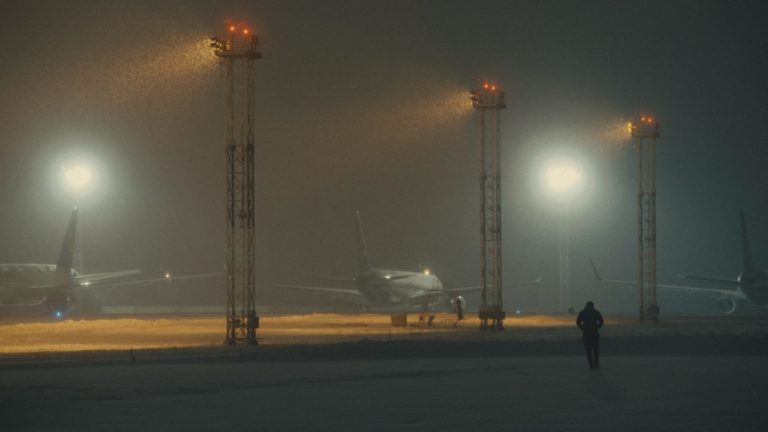
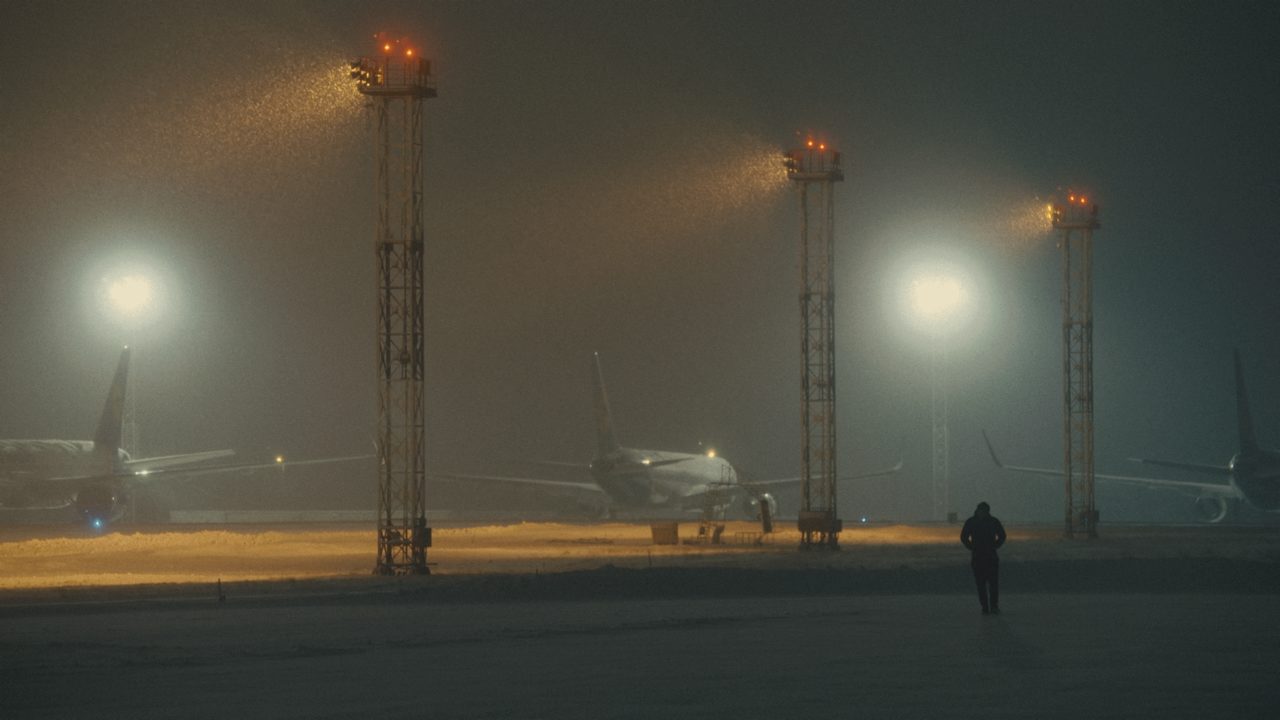
Also through a snowy airport night scene where a character recalls the researchers lost in the crash en route to an AIDS conference in Australia.
And through the raw depiction of the war’s onset in Yrpin, filmed during Russia’s full-scale invasion, capturing the harrowing reality faced by Ukraine.
Filming is resisting
Given their history, Ukrainians are well-versed in countering Russian propaganda. Since 2014, Roman, Anastasia, Andrii, and many others sensed that Russia wouldn’t stop at the Donbas. In 2019, when Roman began researching MH17, the Dutch courts hadn’t yet delivered their verdict. By late 2022, after the judgment and condemnation, Russia had launched its full-scale war. The question remained: if a passenger plane could be downed with impunity, what limits would there be?
The invasion stalled the film’s production for six months, but Iron Butterflies was completed thanks to the European Solidarity Fund for Ukrainian Films, which supports the industry under dire circumstances. Making a film under normal conditions involves uncertainties; in wartime, everything is unpredictable—power outages, curfews, supply issues. Ukraine’s skilled professionals also face challenges in assembling teams as many are drafted into the military. Since the war began, Iron Butterflies has lost three crew members : the pyrotechnician who was killed in action, a set designer and an archival researcher who both disappeared, probably killed. The chief electrician was also injured.
In such circumstances, fiction suffers whereas documentary filmmaking resists. Even though survival now takes precedence over cinema, as Andrii aptly puts it: “Faced with Russians trying to steal the joy from our lives, it’s important to keep doing what we do.”
Thank you to Anastasia Tykha Andrii Kotliar.
Check out the movie’s trailer here.