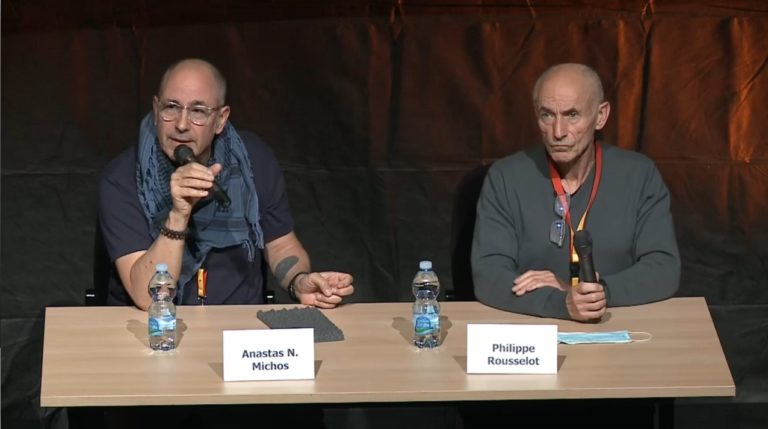
« Cinema doesn’t work without collaboration », a discussion between Philippe Rousselot (AFC, ASC) and Anastas N. Michos (AFC) on the relationship between the director of photography and the cameraman.
Several meetings at this 2021 edition of Camerimage focused on the collective and collaborative aspect of cinema. A masterclass brought together director of photography Philippe Rousselot and camera operator Anastas N. Michos, who have worked together on numerous feature films, and shared their common thoughts, enriched by anecdotes illustrating, with a certain sense of humour, their complicity.
The origin of this meeting stems from Rousselot’s observation that although he admits to sometimes behave in a tyrannical manner on set, he nevertheless feels like a true anarchist, who does not like to command or respect a hierarchy.
While in France today the cinematographer is most often responsible for both lighting and operating the camera, in the United States the rule is to separate the two positions, first to respect union rules, but also because on very large projects lighting is already a big deal so it would be too much work for the cinematographer to also take care of the frame. This need to divide the tasks has increased with the complexity of the tools, as well as with the transition to digital. Appearance of video monitors has distanced the director from the camera. The cinematographer needs to be close to the director to discuss the shots and has neither time nor energy to waste going back and forth… Finally, when three or four cameras are shooting at the same time, it is better to let the camera operators manage their positions and movements so as not to encroach on their respective fields, there is already enough to do to adjust the light for all the frames!
Now a cinematographer, Michos deeply enjoyed his position as a cameraman because he only had to focus on how to best execute each shot, whereas the cinematographer has to deal not only with making the best possible light, but also with discussing with the director, with the first assistant director (notably for the management of extras), with the set designer, as well as managing the lighting and camera crew at the same time. This sometimes leads him to shoot even though he is not fully satisfied in order not to sacrifice the other shots and the whole sequence. Sometimes what is best for a shot is not what is best for a film, if it costs too much money or too much time. One always have to keep in mind that it’s not about making your « masterpiece shot » but about telling a story and making a movie.
Moreover, having been lucky enough to work as an operator for talented cinematographers, Michos has learned a lot about lighting just by watching them work.
The cinematographer is still responsible for the choice of the operator
While it is important to admit that there are better people for certain tasks, the cinematographer is still responsible for the choice of the operator. This implies having high expectations of him or her. Rousselot explained that he is looking for a cameraman who would be an « idealised clone of [himself]», as he would tend to be more forgiving towards himself. Their exchanges make clear that they share high expectancies regarding professionalism and quality of work. They both mention the virtuoso dimension of the cameraman, who, unlike the director of photography, holds an instrument in his hands and must master it to perfection.
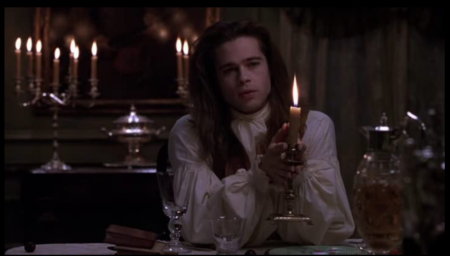
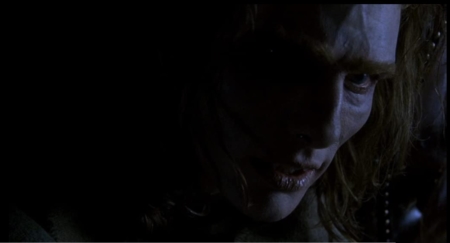
Entretien avec un vampire de Neil Jordan
Michos tells us that on the first day of shooting Interview with a Vampire, Rousselot, who was setting the light, asked him if anything was in the frame. Michos was about to look through the eyepiece to check, but Rousselot stopped him and asked him to use his knowledge of optics to answer instead.
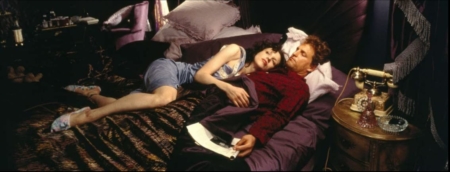
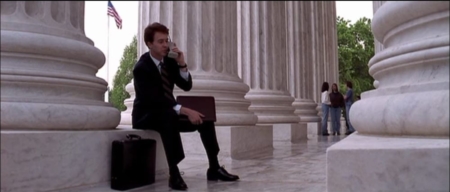
Larry Flynt de Milos Forman
Rousselot needs to completely trust in his operator. The cameraman is the first audience of the film, even more so in analog. Michos tells us that for the confession scene of Brad Pitt’s character, the director of photography had set up a very dark atmosphere and came to ask him « can you see anything? » Rousselot likes to have this kind of collaboration where he can rely on the feelings of his operator and take them into account, especially if the operator tells him that something is hurting his eye. Hiring a camera operator who is also a director of photography is rather an asset. Not operating the camera is not a frustration, as there is the pleasure of seeing someone talented doing it.
Hiring a camera operator who is also a cinematographer is rather an asset. Not framing is not a frustration, as there is the pleasure of seeing someone else do it with talent and benefiting from another view of the light.
Beyond technical skill, it is obviously essential that the cinematographer and the camera operator share the same conception of the movie for their collaboration to be successful. Although the camera operator is generally entitled to fewer days of prep than the cinematographer, it is still essential that the camera operator join in the rekkies, in particular in order to be able to give his or her opinion on the technical choices, as the cinematographer generally has a better grasp of the tools, depending on the set and the planned break down, but always based on the narrative and expressive intentions.
When setting up a shot, especially if it involves complex camera movements, you have to remain critical to determine what works and what doesn’t, to determine whether the chosen tool is the most suitable, to understand how the camera should be positioned to capture the issues of the sequence.
Having been less immersed in conceiving the visual design of the film during pre-production, the camera operator can also bring a fresh eye. Even though the prep is important, particularly regarding the break down, it remains abstract until you are on the location, on the set design and the actors. Beyond what was pre-planned, the frame is also an emotional response to what is happening here and now, during each take. Having experience in documentary shooting is therefore a plus when you are a camera operator, because in this king of shooting you have to constantly think about what you want to say and about the editing. This constant attention also allows you to keep in touch with the action and the atmosphere of each take, and not to fall into a mechanical execution. While the camera is rolling, the operator is also performing, acting -and reacting. Operating the camera is a matter of composition but also of rhythm, and to be right you have to stay alert to be precisely in tune with what is happening in each take. Just like when you work on a piece of music, the work is the execution and not the conception: how do you concretely reflect what you conceived in prep?
Some improvisation
In the same way as it is in jazz music, the production of a shot starts from a thread to which is added some improvisation, it is an interpretation. Rousselot emphasises that being a good cameraman means being able to tell at the end of a take whether the actors were good or not. If you pay close attention to the actors and keep the whole scene in mind, you are able to judge whether a framing mistake or an undesirable element in the field is really a problem or whether that part will not be in the edit anyway.
The physical proximity to the actors is also an emotional closeness, it is important to give them a warm feedback. When you operate the camera, you need to love the actors, you are the first to be moved by their performance, you don’t have the same relationship with them than the director has.
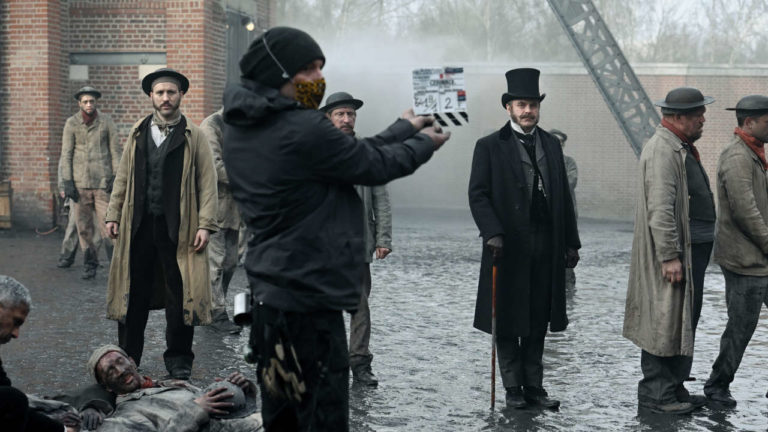
This long discussion between two enthusiasts gave a glimpse of their great complicity. Their symbiosis had reached such a point that Michos tells us that they even shared the tilt and pan on some shots of Mary Reilly !
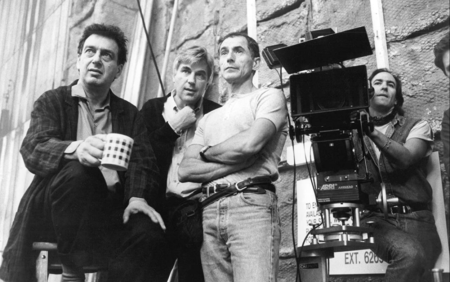
Sur le tournage de “Mary Reilly” de Stephen Frears