I had the chance to attend Camerimage last year in the flesh. When we go to Camerimage, we know we’ll be able to see Nordic films. A kind of mood we can get also in the picturesque town of Toruń, with its chilling wind, 4PM nightfalls that drive us to the warmth of the cafés… We miss it all.
So for this year’s virtual edition, I was willing to see a Norwegian film.
Hope is Norwegian director Maria Sødahl’s latest effort after Limbo, her first film.
Hope’s Cinematographer, Manuel Alberto Claro DFF, is of Chilean decent and grew up in Denmark. He worked with Lars von trier on Melancholia and shot Limbo, among others.
After winning an award at the Berlinale 2020, Hope has just been selected to represent Norway at the Oscars.
The screenplay, written by the director, has an autobiographical basis, about a woman who is diagnosed with an incurable brain tumor a year after having lung cancer. The film takes place during the Christmas holidays and is set in Norway. Anja, the protagonist, battles the disease but also wrestles with her life with her husband and children.
The film is called Hope, but in fact Anja is hope-less, the hope residing solely in the film’s title.


Between Christmas and New Year’s Day, the disease’s ominous countdown keeps us on tenterhooks, “as if to tire out the viewer,” explains the director. But there are also those lapses of time when the characters seem trapped in a bubble, within their room or their car.
Hope speaks deeply about love : how to give and receive it, how time can both wear it down and amplify love tenfold.
It is also a film about women and men involved in their intimacy, family and professional lives. How daily life, work, can lead us to distance ourselves from each other. There’s a lot of emotion despite a certain restraint, a dramatic atmosphere that doesn’t fall into melodrama. That’s the director’s talent : to deal with such serious subjects as illness or death in such a simple way…
A dark film is not necessarily a cold film, says Maria Sødahl : in fact the film was shot in a rather relaxed, warm atmosphere.
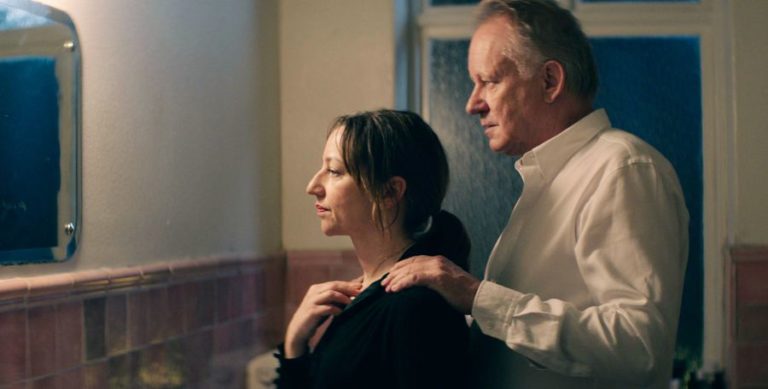
The “darkness” is, however, present in the film’s image which plays on contrast, with deep blacks, particularly in the interiors, in service of the film.
There’s also a clear desire to underscore the ambivalence of the characters’ feelings, contrasting the warmth of the Christmas lights and candles in the interiors with the Nordic cold outside, especially in rain soaked exterior scenes, which erode the fairytale image of Christmas.
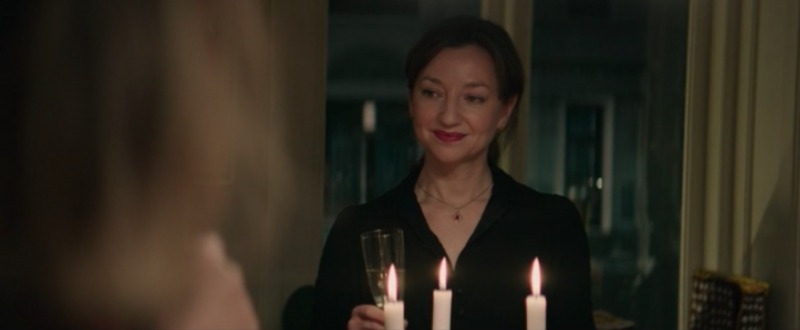
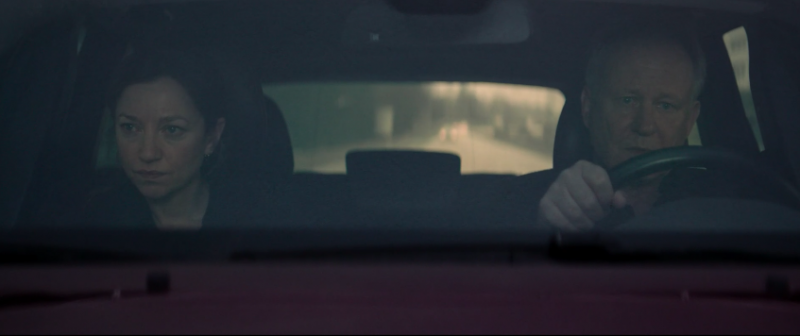
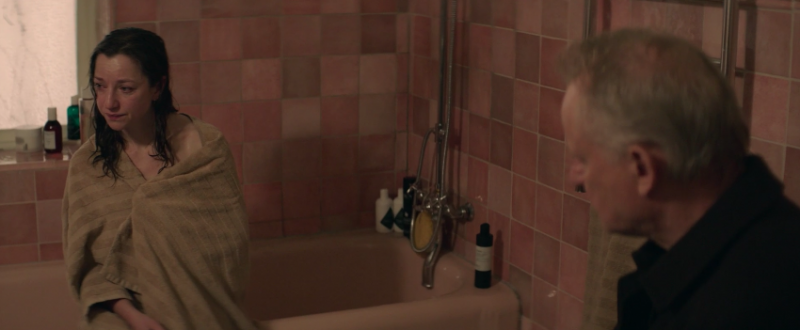
The camera is often handheld, immersing us in the characters’ intimacy, offering an embodied, deep gaze to detect the intimate, far from the shamelessness of voyeurism. There’s also a willingness to leave a lot of space for the actors, without artifice, as Manuel Alberto Claro says.
The film has also been meticulously prepared to achieve a very powerful realism and naturalism in an apartment recreated in studio.
This preparation continued through a precisely conceived (and executed!) shot list and numerous rehearsals on the set, so that the director could devote herself exclusively to directing the actors (Andrea Bræin Hovig and Stellan Skarsgård, remarkable) while having total confidence in her director of photography.
Mastery and precision, therefore, for filming the fragile reality of a family at the tipping point.
“Did you really have to have the death penalty for you to do the right thing when it was already over,” Anja tells Thomas in the film.
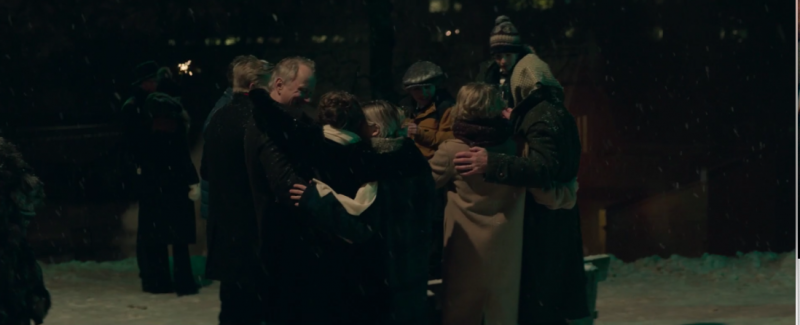
The film was shot on an Arri Alexa Mini pushed to 1600 ISO using Hawk Lite Anamorphics. The shoot lasted six weeks, three of which were spent in the studio. The apartment set is lit mainly with inlets and practicals with a few Litemate 2s or 4s and sometimes Dedolights.