Camerimage 2020 : La Llorona, when reality is dark, the search for beauty through magic
Shown during Camerimage 2020, La Llorona, a feature by Jayro Bustamante, is photographed by Nicolas Wong Diaz.
Outside : the Trial
This is Guatemala in 2013 during the trial against Rios Montt, a dictator who was in power from 1981 to 83. During those 18 months, every month more than 3000 people were murdered or disappeared. Under his mandate, approximately 125.000 people were killed, all of them from the Mayan Ixil community. This is called genocide.
The trial actually took place, a documentary film was shot at that time El buen Cristiano by Guatemalan director Izabel Acevedo and photographed by Pamela Albarrán. Following the trial, the dictator was condemned by the court for genocide and crimes against humanity. It is said that in order for a country to rebuild itself, justice must be made. But the judgment was suspended by the Constitutional Court for procedural irregularities. Rios Montt was acquitted and able to return home. In the end, justice has been taken from the victims.
Jayro Bustamante is part of a generation of filmmakers who grew up in the 1980s during the dictatorship of Rios Montt in Guatemala. The history of the genocide, the trial that took place against Rios Montt and his absolution are subjects that are present in contemporary Guatemalan cinema. Society still has difficulties confronting this terrible period, the wound is still open and these young filmmakers need to talk about it.
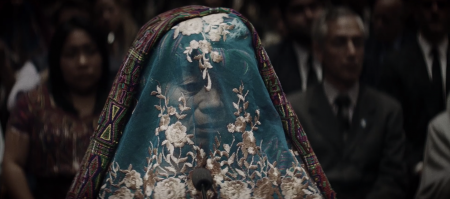
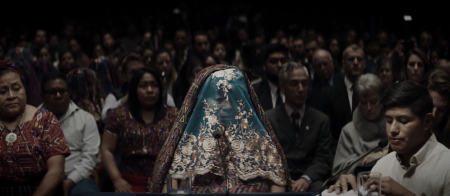
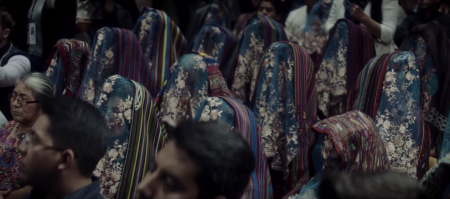
In La Llorona, the trial is beautifully filmed, with two sides confronting each other, survivors (mostly women) on one side and the former soldiers and their families on the other.
Ones are white, others are from the Maya Ixil community. The director films with sobriety the two camps, we are in “reality”. He says he wanted a cinematographic aesthetic by isolating the characters during the trial and his cinematographer created an atmosphere with a lot of contrast. Heads are melt into the darkness, the walls become invisible, infinite.
Inside : the house, the magic realism
Monteverde in the film (the director changed the name of Rios Montt to make it universal) is locked up with his family in his own house. He represents all the military/dictators who committed genocide and atrocities against the civilian population.
Alma arrives and with her comes a new dimension of reality. The magic realism (a literary current notably represented by Garcia Marques, especially in his novel 100 years of solitude).
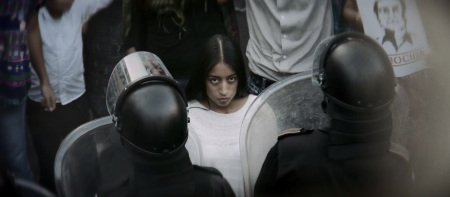
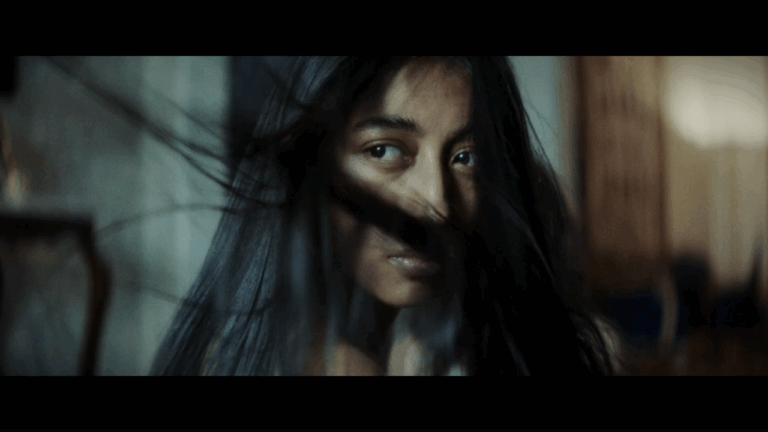
This opens a new aesthetic for the film : image becomes dreamlike. Alma, the Llorona, in her white dress, in the water, under water, becomes ghostly, she is real but carries a more metaphysical world, the buried memories come back, the ghosts of the murdered Mayans come closer…
Alma in the night mourns her murdered children, but only the guilty ones can hear her.
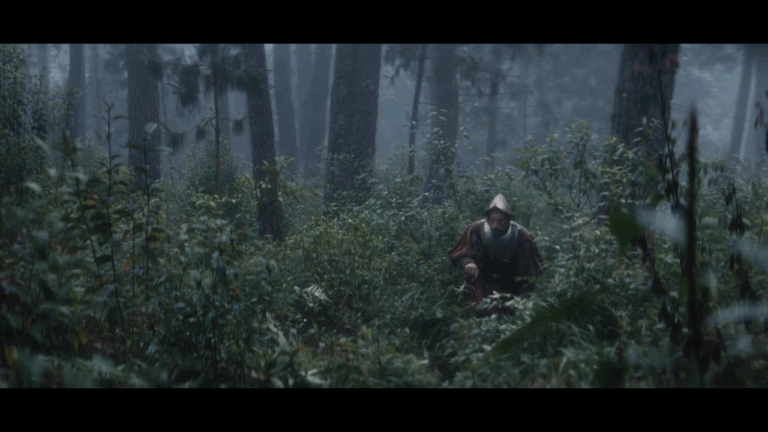
The narrative changes and so does the work of the image. The blue nights reveal a parallel world, something supernatural enters the image. We no longer know when we are in the real and when we switch to the supernatural, the film becomes poetry. It’s breathtakingly beautiful. The cinematographer Nicolás Wong, contacted by Pamela Albarrán, says: “The film is a hybrid of several cinematic genres (drama, horror, and magic realism), often horror films use a lot of well-known visual artifices. We wanted to move away from this convention by looking for a more sober, more intimate look that could better express this mix of genres”.
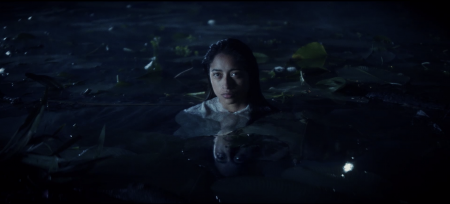
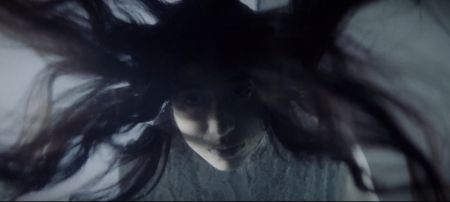
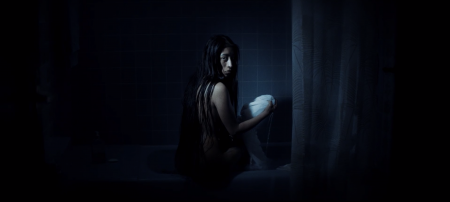
The Omen (Richard Donner, 1976), The Witch (Robert Eggers, 2015) and the work of Gregory Crewdson have been our references in defining the mood, camera movements and color atmospheres.
The camera movements were defined according to the point of view of the story; even if we are inside the general’s house (the house of evil), the gaze did not belong to the family, the gaze is the one of Alma, her arrival must have felt like a bad omen. In order to create a ghostly dimension in the frame, she would have to move very slightly and almost imperceptibly. We only used very slow dolly shots and zooms back and forth as a way to accentuate the rhythm of the spirit entering, haunting the characters. The only sequences where the camera moves more freely are those of the dreams of Carmen, the general’s wife”.
Originally, the story takes place in a large, almost immense house. Eventually the production had to shoot in a smaller house, the challenge was to give this house a larger dimension. “The solution was to not show the same spaces more than twice. We used doors, furniture, and background and foreground elements to create depth in the image”.
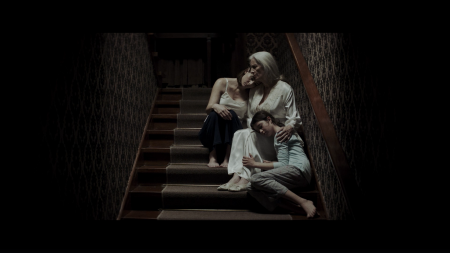
Mounted on Alexa Mini, Nicolás chose old Japanese anamorphic lenses for their texture and aberrations : these distortions on the edges of the frame give the sensation that the walls of the house move, breathe.
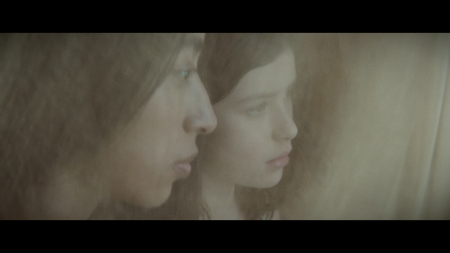
Bustamante uses the mythical Mesoamerican legend of the Llorona (a sort of White Lady) as a metaphor for Latin America “Mother Earth” who mourns her missing children. For him, this character is a sort of vigilante. “How do you avenge a genocide ? What do you do when the justice of your country doesn’t work ? Well, you appeal to ghosts, to magical realism”.
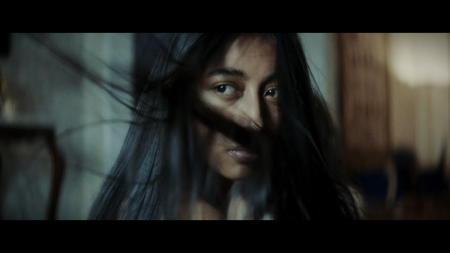
Camera: Alexa Mini, shot in Arriraw Open Gate
Optics: Cineovision anamorphic, old zoom Angenieux 25-250
Colorist: Tony Orozco
La Llorona is part of the “Contemporary World Cinema” section at Camerimage.