499, a poetic balance between reality and fiction
Latin American cinema often uses magical and metaphorical ways to talk about its complex reality. This is the case of the Mexican documentary “499” directed by Rodrigo Reyes and photographed by Alejandro Mejía, AMC. The latter received the award for best cinematography at the Tribeca Film Festival and more recently the Golden Frog at the Energa Camerimage in the Docudrama category.
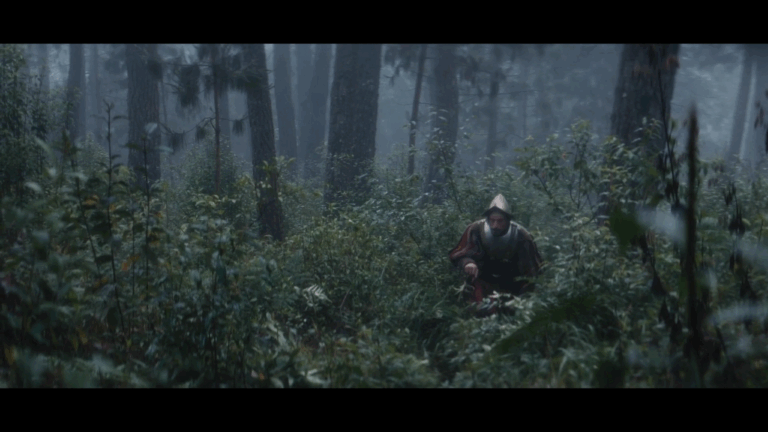
The film confronts two worlds in a somewhat unconventional way : the ghost of a Spanish army soldier, who landed on Mexican soil in Veracruz 499 years ago, finds himself propelled into our present. Like in a road movie, the conquistador crosses again the road he traveled five centuries ago under the orders of Hernán Cortés, from the Atlantic coast to the capital. During his journey, this anonymous soldier meets and listens to the inhabitants of this territory and region by region he discovers what New Spain has become.
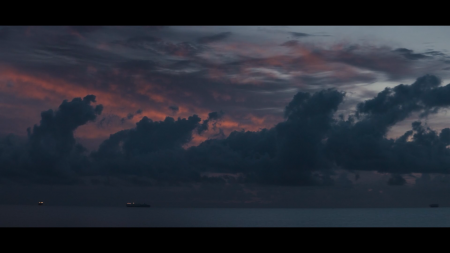
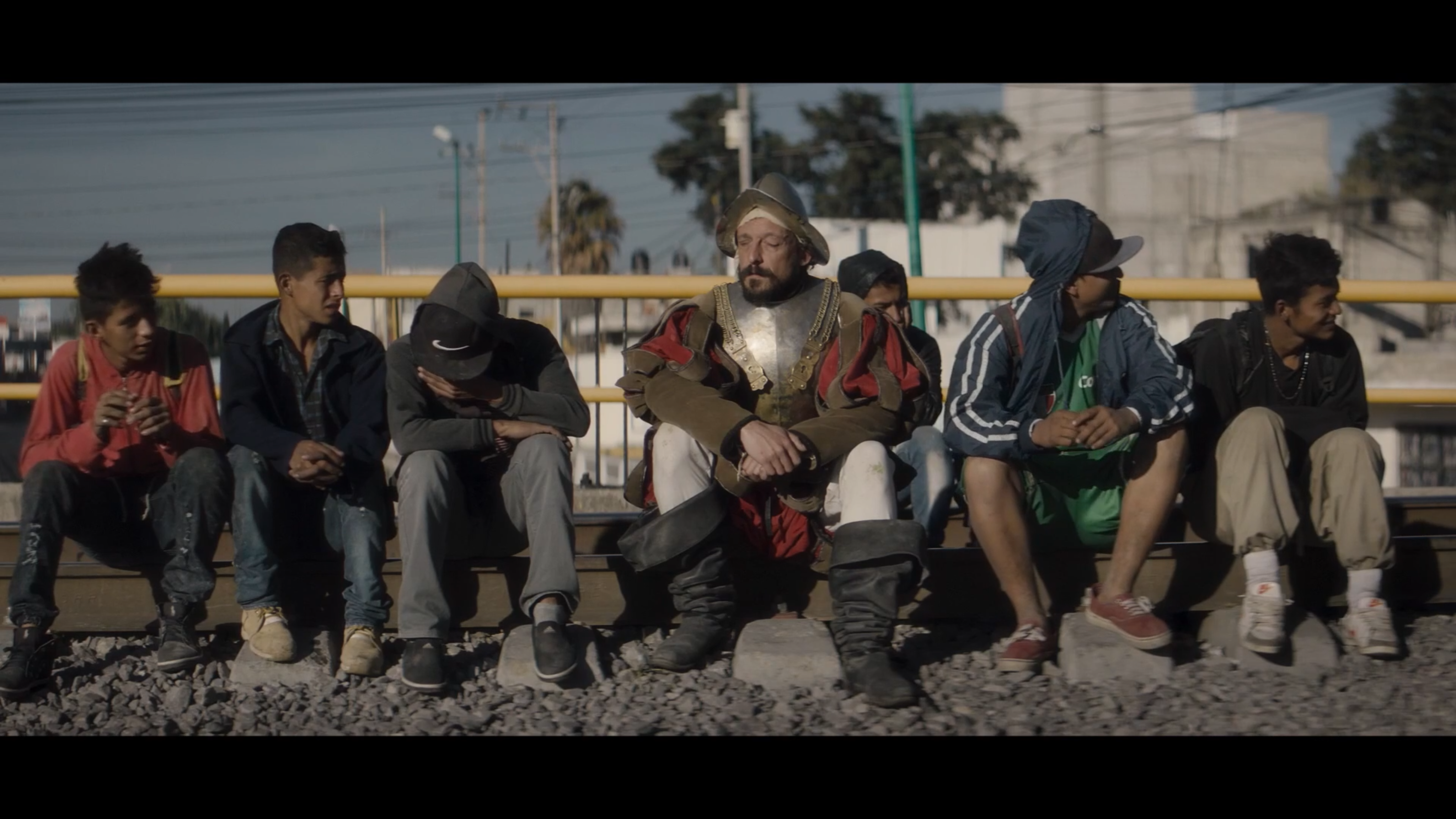
We could say that these narrative freedoms are the hallmark of fiction, but in this overwhelming documentary, the ghost of the conquistador juxtaposes the country’s bloody past with a very real present embodied by the testimonies of our contemporaries. The intrinsic violence of the Conquista seems to be unwilling to disappear despite the passage of time. Today, as 499 years ago, the country counts its dead and disappeared by the thousands.
I had the opportunity to speak with Alejandro Mejía, AMC, about his extraordinary work.
– How did you construct the visual universe of the film ?
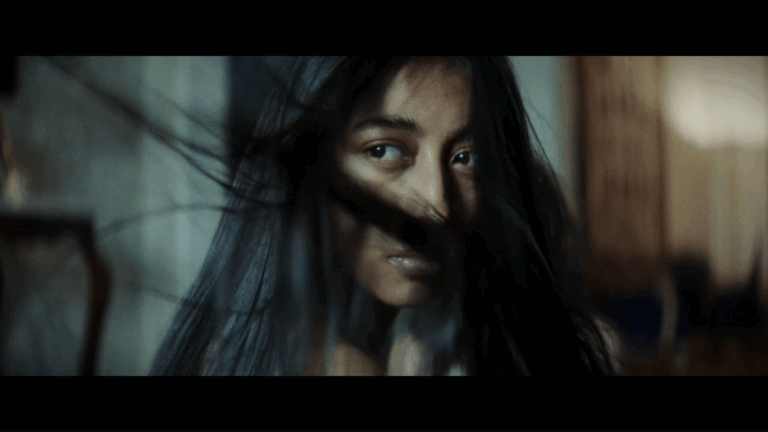
Alejandro : “499” was an experimental bet. The film illustrates a completely surreal encounter : a traveler through time dressed with a 16th century costume in the middle of 2019. We ran the risk of becoming a farce, a joke. The most effective way to give a serious and legitimate tone to the story was through cinematography.
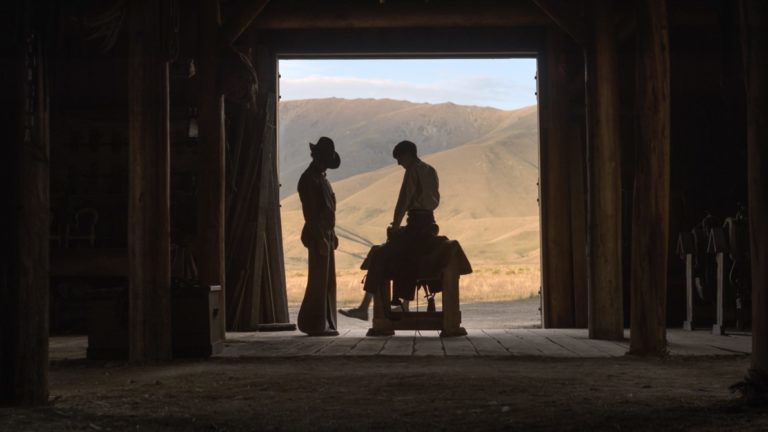
So we stablished a kind of “dogma” throughout the film : a stable camera, as often as possible on a tripod, using only natural light and in an anamorphic aspect ratio. I’m not used to rely too much on precise references to this or that film, our only visual references for this movie were Goya’s paintings and the frescoes by the Mexican muralists showing scenes from the Conquista.
It was clear to me that the image had to be as accurate and beautiful as possible, so we took the greatest care. We had to be sensitive to the poetry that the space and the characters gave us. I traveled with all my senses on alert.
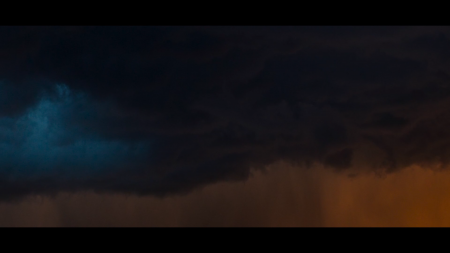
One of the biggest challenges was to shoot with natural light : in Mexico light is not easy to manage. We shot in May and at this time of the year the light moves faster, it’s rather a hard, white light. So even though we didn’t have time to do location scouting, I knew we had to anticipate these conditions ; I decided to prepare a LUT in advance to better manage the highlights and the contrast. In short, it is necessary to take advantage of the limitations and the unexpected.
– Tell us about your professional path. How has your experience influenced your work as cinematographer for this movie ?
I didn’t go to film school, at first I studied black and white analog photography, I was lucky enough to have Graciela Iturbide as a mentor, her work and that of photographers like Manuel Álvarez Bravo have always influenced me. I spent a large part of my early years studying their way of photographing Mexico and its landscapes. Finaly, my career as a photographer took me to find cinematography.
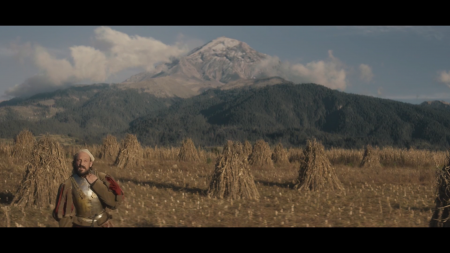
During the shooting of “499” in particular, intuition played a decisive role. In Mexico everything is unpredictable, you have to be open-minded, ready to adapt to the best and the worst. During the shooting, for example, we would sometimes find, as we were going to the location, a beautiful landscape, a unique light atmosphere, like a cornfield flooded with fog, in the middle of nowhere. We would stop, the actor would quickly put on his costumes and we would shoot. On the contrary, it also happened that the twilight light was beautiful, and we had to leave in a hurry because the area was becoming dangerous.
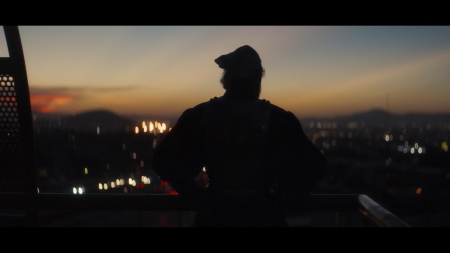
– In the film, the character of the soldier meets the mothers of the victims, migrants, sicarios (killers), people with very strong experiences. How did you live this experience ?
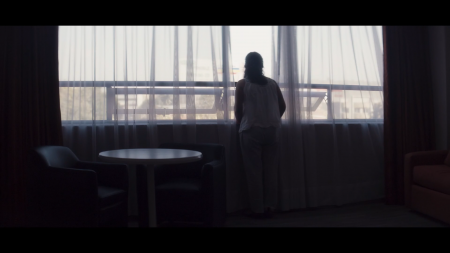
It was an exhausting emotional and physical experience. We traveled for 6 weeks, we met several people with extremely hard stories, they opened their hearts and confided in us. Empathy and respect were the key to the whole process. In order not to intrude on their intimacy, we chose to be minimalist in terms of equipment. No artificial lighting, the crew had to remain as invisible as possible for them. One of the last interviews of the film was a very heartbreaking testimony of a woman who had lost her twelve years old daughter, this woman has received several death threats, we had to shoot in a hotel room in Mexico City, the walls were white and the only source of light came from the windows. Given the emotional strength of the sequence, the image atmosphere had to be more dramatic and contrasted than the real conditions of the room. I achieved this by partially adjusting the opening of the curtains and relying on lenses possibilities : the final shot of the sequence was a close up of the soldier, I put a macro lens on a wide-angle glass so the background becomes distorted and blurred and the selective focus remained on the devastated gaze of the conquistador.
Since Rodrigo and Alejandro have not lived in Mexico for a while, this experience was a kind of a love letter and farewell to their country.
Recently Werner Herzog stated: “What a documentary can and ultimately should do is aim towards poetry, towards some deeper insight and illumination into what might be truth”.
Camera: Alexa Mini – Apple ProRes 444
Lenses : Kowa Anamorphic