One spring evening, Nino, a young writer of flamboyant and kitsch melodramas, finds himself catapulted into the late-night bar of a city at the edge of the world. How did he end up in this place? Between drinks, under the benevolent gaze of Rosa, a philosopher barmaid, and Al, a young patron, the memories of his extraordinary evening gradually rise to the surface, like the fragments of a love story that has not yet found its ending.
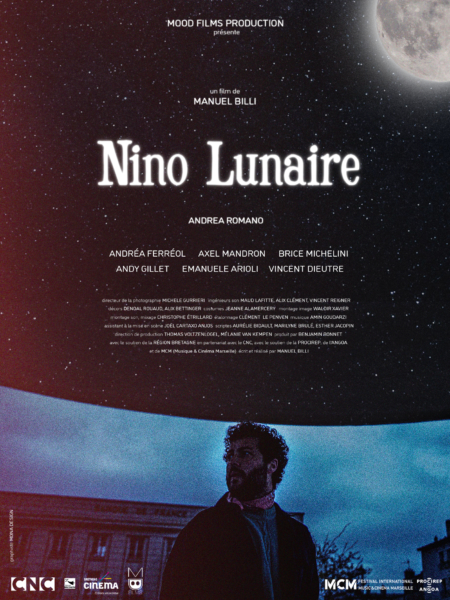
Nino lunaire began first and foremost as a wonderful encounter with Manuel Billi, an Italian director, a Parisian by adoption like myself, with whom we share a great deal. It was a mutual friend — director, screenwriter, and novelist Laure Desmazières — who put us in touch after sponsoring one of Manuel’s feature film projects during a writing residency. We share many things: a deep love for cinema, a taste for film references, Italy, a passion for actors, and a very “old school” approach to filmmaking that rejects the all-digital, all-LED, all-screen trend.
Our encounter quickly gave rise to a first short film, Sole, which had a very strong critical and festival run. After that experience, when Manuel told me about the Nino lunaire project, I was immediately enthusiastic: a melodramatic, kitsch, queer, cinephile comedy with film-within-the-film sequences paying homage to Douglas Sirk and Rainer Werner Fassbinder — it was impossible to say no!
We chose to shoot in CinemaScope to give the film a sense of scope, to draw the viewer into the frame. I love CinemaScope because it forces you to compose thoughtfully, to use the width of the frame to create relationships between characters and space. It is a format too rarely used in short films and I find that regrettable, because it immediately gives a short the visual ambition of a feature.
The film-within-the-film sequences required special attention in terms of image texture. We initially discussed the idea of shooting certain passages on Super 8 or 16mm, but this proved too complex for obvious budget reasons and also because fully pursuing this idea would have required multiplying formats and complicating the workflow.
Mood Films had planned to work with Panavision, where Nicolas Bouchard followed our project. Our camera choice fell on the Alexa Mini, paired with a set of Cooke S3 lenses and a Cooke 20/100 zoom, plus a 180mm Cooke S4 — a special-run lens — for insert shots. I would have liked to combine Cooke S2s with S4s to get at least two different textures, but Panavision couldn’t accommodate that and offered me the Cooke S3s instead, which I’ve shot with many times and whose softness and bokeh I greatly appreciate. I also added an old Cooke 20/80 zoom to the list.
The film is entirely filtered with Mitchells. I’ll come back later to the image texture of the “film within the film” sequences.
A passionate cinephile and film historian, Manuel multiplied the references: Querelle by Fassbinder, obviously, which remained above all an ideal reference, a state of mind, a kind of patron saint of queerness (Fassbinder’s portrait is actually hung behind the counter of the Petite Féria, just as we can see Sirk’s on Nino’s bedside table), the lighting and colours of Lola (1981, DP Xaver Schwarzenberger), the framing and camera movements of Ali: Fear Eats the Soul (1974, DP Jürgen Jürges) and certain shots from Fox and His Friends (1975, DP Michael Ballhaus); the lyricism and Technicolor palette of Douglas Sirk’s melodramas, in particular All That Heaven Allows (1955, DP Russell Metty), the shot compositions and lighting of Josef von Sternberg, Pedro Almodóvar’s universe, the colourful and festive aesthetic of Jacques Demy…
For the first of the film-within-the-film sequences — the entrance of Numa, played by the magnificent Bastien Music, into the hallway of his mansion — we chose a frontal staging, with the camera placed at the end of a long corridor. The character advances towards us with a deliberate, theatrical walk, surrounded by baroque decor. The lighting here is entirely frontal and direct, with strong colours, drawing on the aesthetics of Douglas Sirk and his way of illuminating faces — like Garbo or Dietrich in the films of Josef von Sternberg.
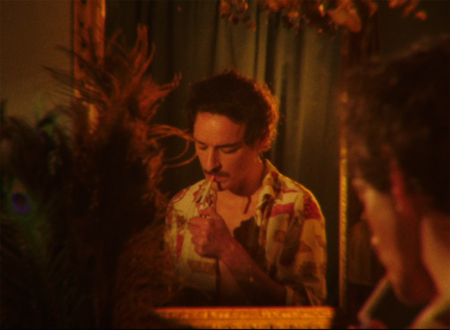
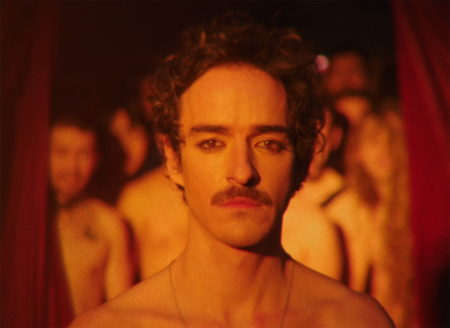
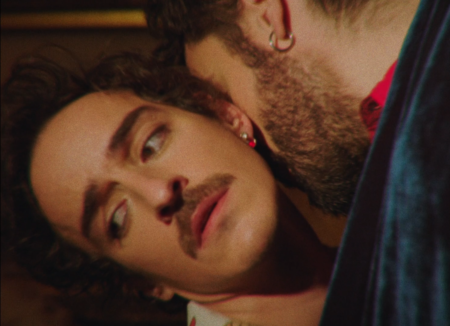
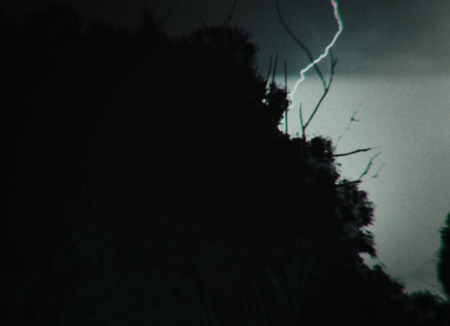
In the night sequence that reproduces the one from Now, Voyager, I deliberately exaggerated the “lunar” backlight and embraced the continuity mismatches between the medium shot and the close-ups, following a logic that belongs more to the 1930s and the representation of female stars like Garbo or Dietrich in Josef von Sternberg’s films.
More broadly, in these two sequences I lit the characters exclusively with direct light, often using tungsten Fresnels fitted with optical cones, facing the actors at a 45-degree angle. The camera movements were a mix of dolly and zoom for the shot where Numa descends the staircase to welcome one of his lovers, as well as for the orgy sequence. The dead leaves seen at the end of the tracking shot are a nod to the opening credits of Written on the Wind (Douglas Sirk, 1956, DP Russell Metty).
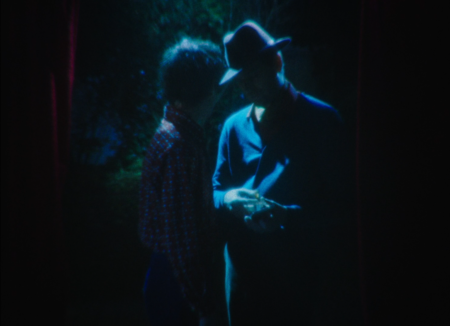
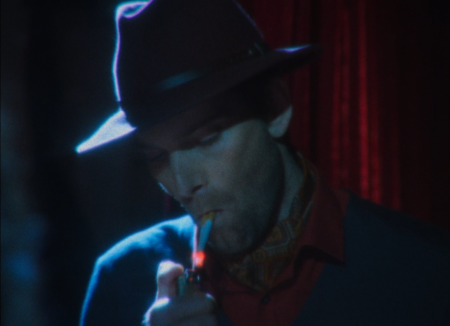
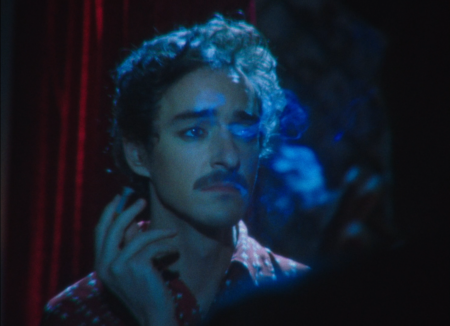
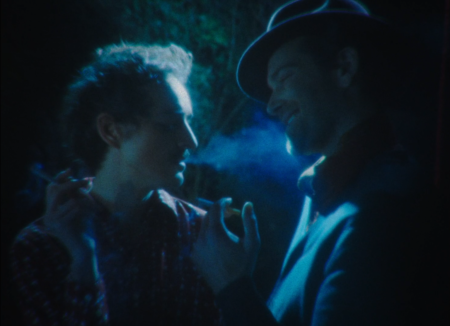
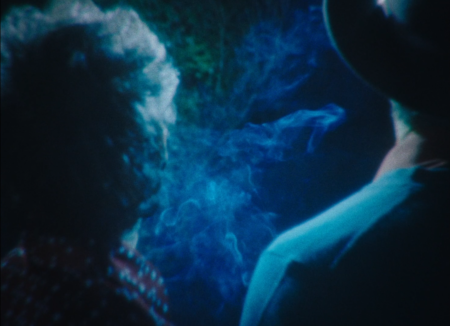
For the Unknown Sailor sequence — a shared film fantasy between Al and Nino’s characters — we drew inspiration from the visual universe of Jean Genet, particularly Querelle by Fassbinder (1982, DP Xaver Schwarzenberger / Josef Vavra), with its theatrical, expressionist decor bathed in warm golden light. We built a simplified set evoking a ship’s hold, with coloured gels and strong backlighting creating silhouettes and halos. The whole sequence was lit almost entirely with Fresnels and PARs, without any diffusion, to maintain hard shadows and a deliberately artificial, dreamlike quality. I used exclusively the 40mm and 50mm Cooke S3 lenses for a slightly compressed perspective that reinforces the claustrophobic intimacy of the scene.
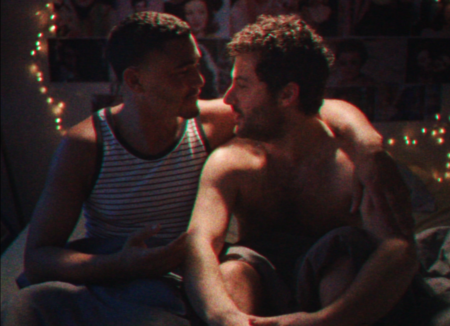
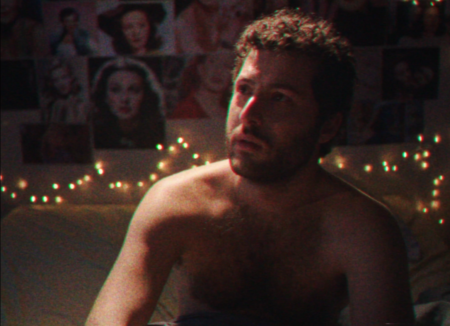
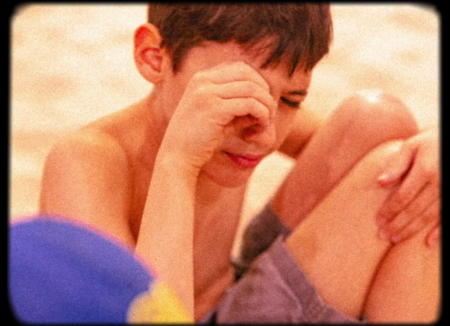
For the short childhood flashback sequence — a kind of epiphany that surprises Nino when he tastes an ice cream at the bar counter — we wanted a visual rupture. Manuel and I decided on a warmer, softer image with a hint of overexposure, reminiscent of the idealised glow of childhood memories. I lit with a large soft source from above, complemented by warm bounced light, to create a gentle, enveloping atmosphere. The camera movement is slow and fluid, a gentle dolly-in that draws us into the memory. We added denser Mitchell diffusion for this sequence to further soften the image and create a dreamlike haze.
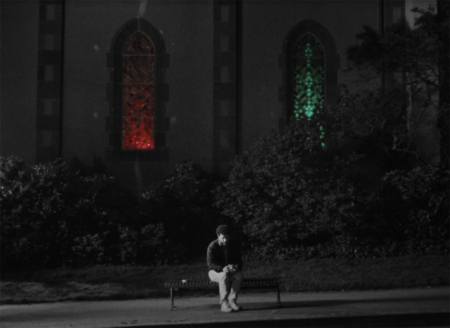
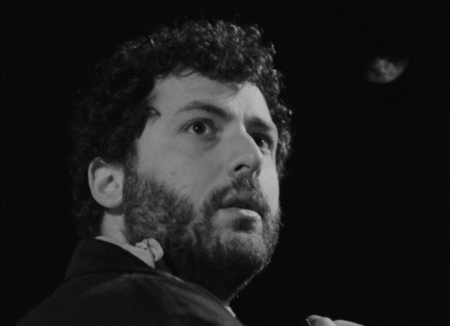
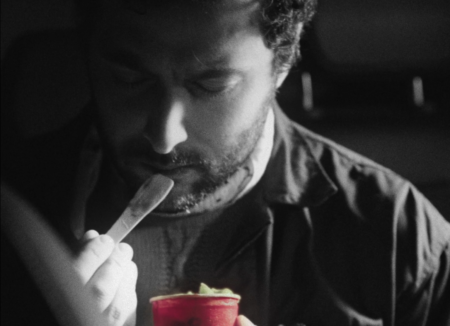
For the flashback sequences, from the moment Nino recalls meeting his actors in the theatre dressing room a few hours before arriving at the bar, we had initially considered with Manuel a bleach bypass look. I had therefore opted for more contrasted lighting, deep blacks and more pronounced directions, quite saturated in colour, following Vittorio Storaro’s approach in films like Dick Tracy by Warren Beatty (1990, finished with the ENR process); for the urban chase scene, Manuel wanted a mobile, nervous camera, a jerky direct-cinema style from the 1960s, so we shot several takes with the Cooke 20/100 zoom. At the grading stage, we decided on full black and white, but kept certain elements in colour: the church windows, which anticipate the red and green ice cream tub — the tipping point towards the film’s dramatic denouement: the reunion of Nino and his childhood friend. This partial desaturation gives the flashbacks a unique texture, halfway between memory and fantasy.
The core of the film takes place essentially in a single location: a bar-nightclub. Finding the right place was crucial. We scouted several venues in Brittany before falling in love with the Cabaret Vauban, a bar-nightclub in the Saint-Martin district of Brest. As soon as I walked in, I told Manuel: “This is it, we don’t need to look any further.” The place had genuine character, true depth, beautiful existing practicals — neon signs, coloured light strips, a mirror ball — and a layout that allowed for varied framings and camera movements. The main room offered a stage, a dance floor, and a long bar counter — three distinct areas that the script used extensively.
Location scouting at the bar-nightclub Le Cabaret Vauban in Brest
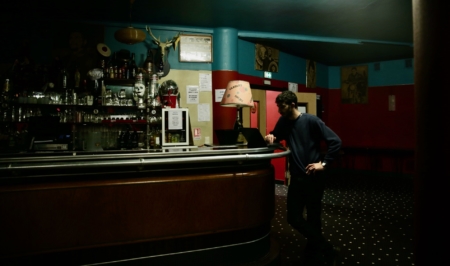
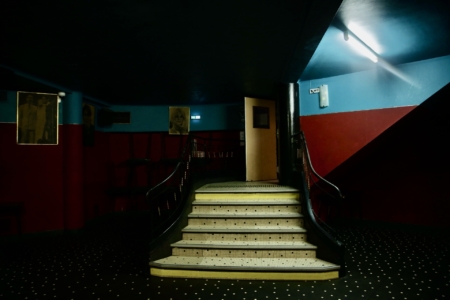
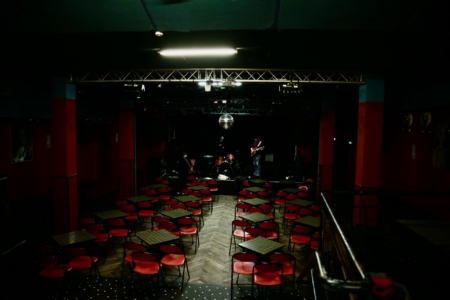
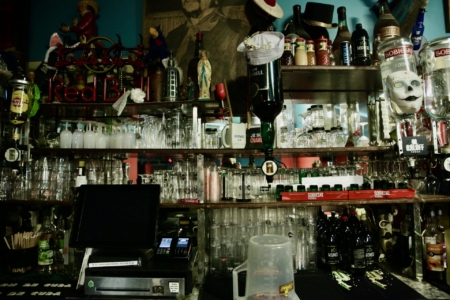
However, the counter, though magnificent, had a configuration that made it complicated to install a technical ceiling for lighting. Moreover, Manuel and I wondered about the lighting atmosphere to choose for the many scenes taking place around the counter. For this kind of situation, one of my absolute film references is Barfly by Barbet Schroeder (1987, DP Robby Müller).
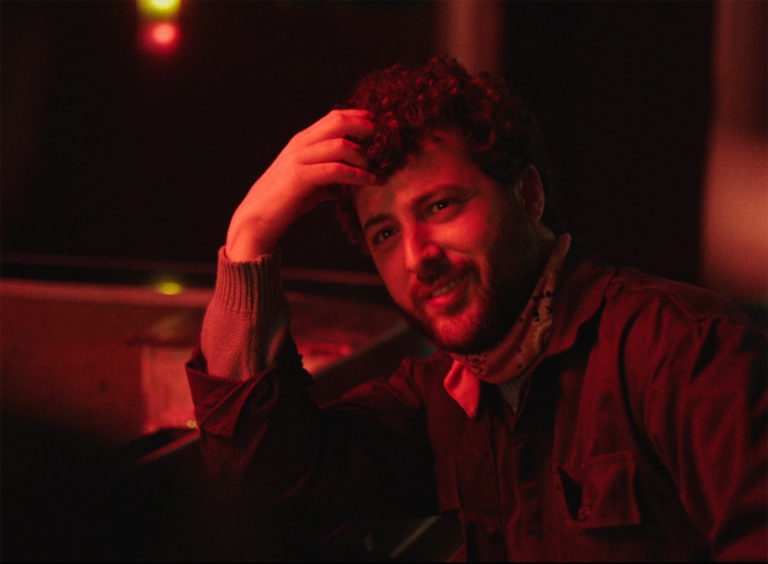
But while watching an American horror comedy, Frankenhooker (Frank Henenlotter, 1990, DP Robert M. Baldwin), I came across a punk bar counter sequence with a leather-clad barmaid who reminded me of Rosa, the barmaid in our film, and a very camp magenta lighting. Manuel loved it, and we went in that direction, choosing instead a red colour that resonated with the decor and the passionate, amorous theme evoked throughout the film. I placed a long strip of red LED tape behind and beneath the counter, invisible to the camera, which created a warm, seductive low-angle glow on the actors’ faces. I complemented this with tungsten Fresnels for backlighting and side modelling, and a few touches of blue and green from small LED sources scattered around the room to create depth and colour contrast.
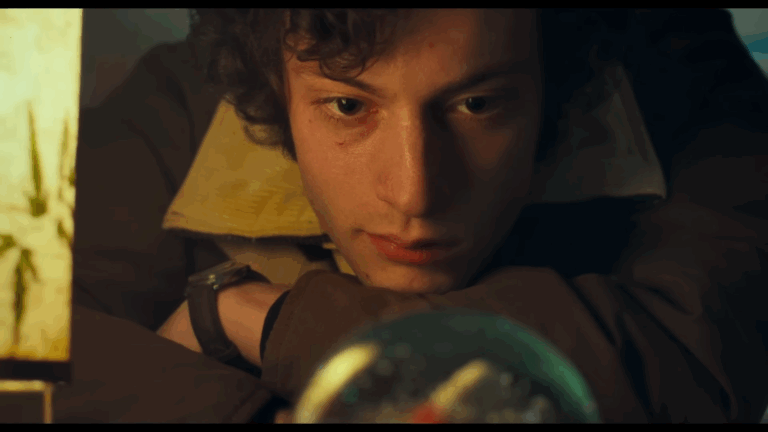
For Nino’s apartment above the bar, which we see briefly, I wanted a completely different atmosphere: cooler, bluer, more melancholic. A space that reflects Nino’s inner solitude when he’s not performing for the crowd downstairs. I used soft bounced light and practicals — a desk lamp, the glow from a TV screen — to create an intimate, contemplative mood.
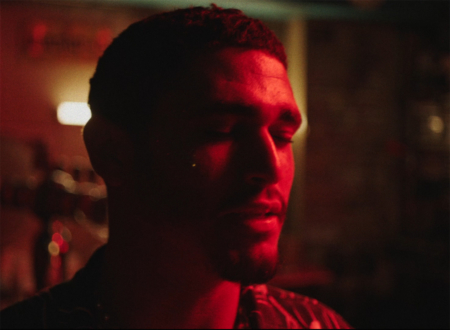
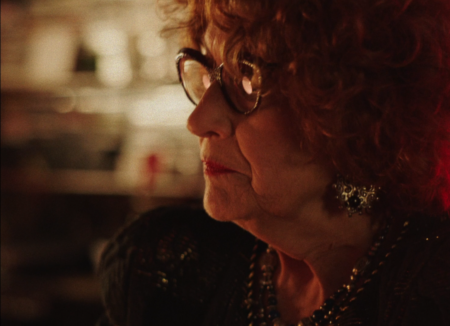
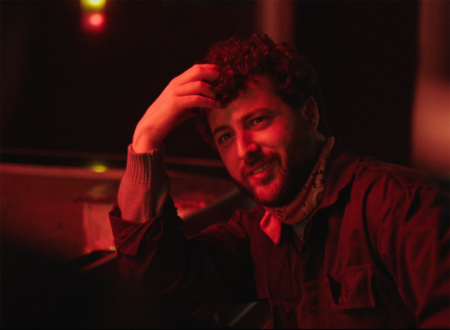
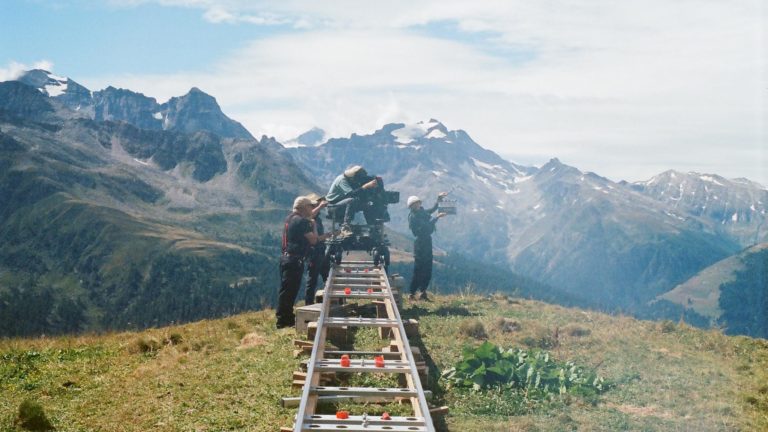
For the final sequence shot, magnificently executed by Steadicam operator Grégory Duppé and choreographed by Manuel with his assistant Joël Cartaxo-Anjos, we had around sixty extras and a camera rotating 360 degrees across nearly 100 square metres with a 25mm lens. In the edit, the shot stops on Nino, but in reality it was even longer and more complex. It was a particularly exciting moment of the shoot, nailed in only six or seven takes, carried by the music that I had strongly encouraged Manuel to play on set. I often sense in films when dance scenes have been shot without music playing, and I don’t like it.
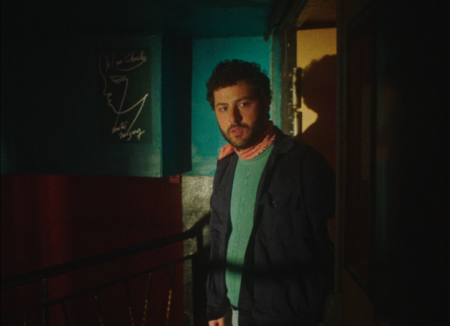
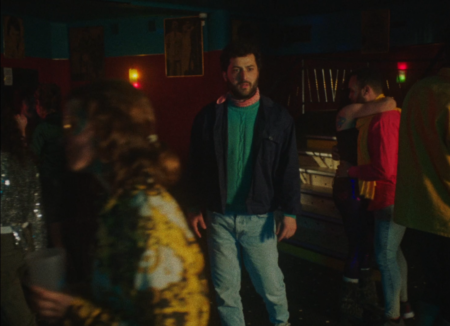
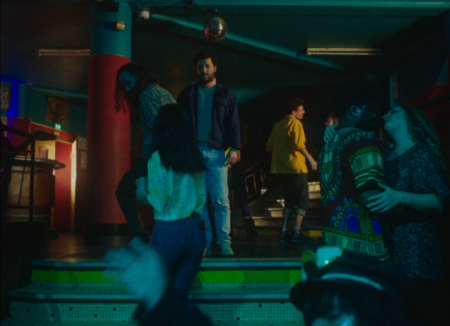
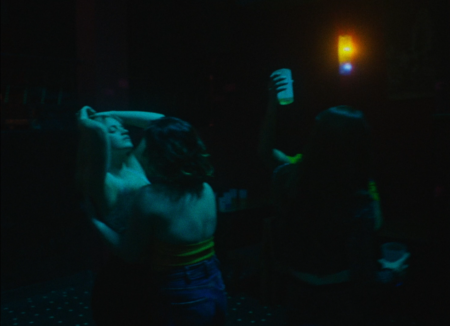
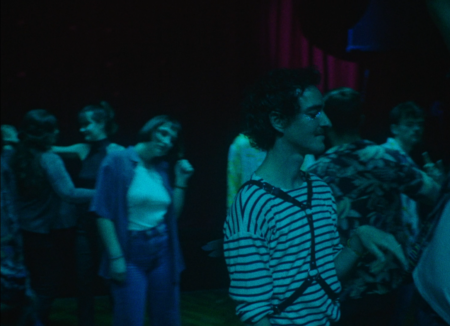
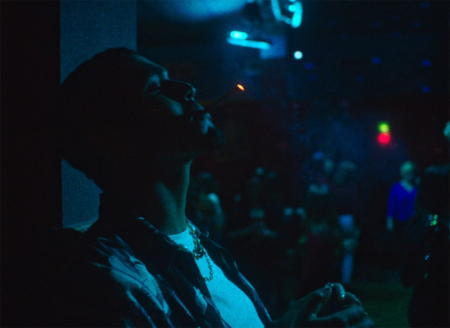
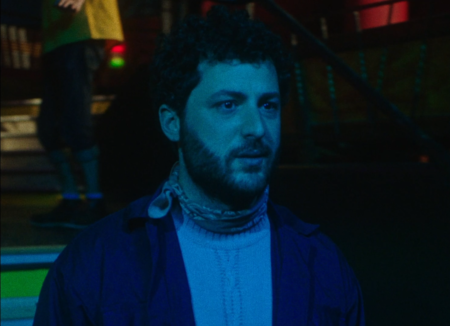
The night exterior scenes in Brest were a tour de force: many different locations, a slightly lighter crew enhanced by the enthusiastic young Steadicam operator Indiana Lavinal, sources often on batteries and sometimes complicated interactions with Brest’s Saturday night revelers (a passerby, for example, stopped the shoot around 3 AM hurling homophobic insults, and it was a courageous Brest actress, a figure of the city’s nightlife, who confronted the individual and made him leave, to the great relief of the crew).
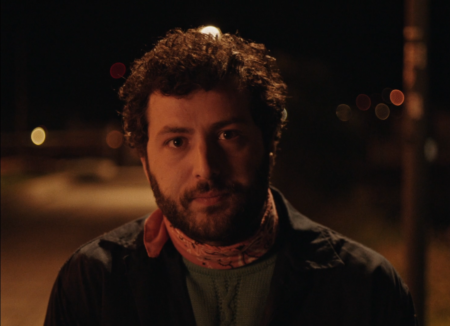
The central moment of the film, the reunion between Nino and his first love Guido (Emanuele Arioli, a young Italian actor and medievalist with the air of a young Charlie Chaplin) was shot in the simplest way possible, a shot/reverse shot with an almost direct-to-camera gaze, in order to convey the idea of this ephemeral and moving bubble closing around the two former lovers. The long tracking shot following Nino’s arrival at the marina dock required lighting the boats in the background with mercury lamps over several dozen meters, which was quite a challenge for a tight short film budget and forced me to push the Alexa to 1600 ISO, with a nonetheless convincing result.
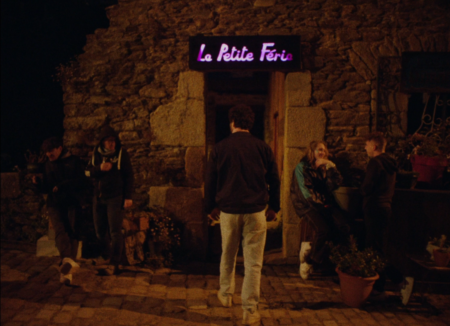
The entrance to “La Petite Féria” was recreated on rue Saint-Malo, one of the rare streets of Brest untouched by the bombings. Several openings in the stone facades had particularly appealed to us, so together with assistant set decorator Alix Bettinger, we simply designed a backlit retro sign.
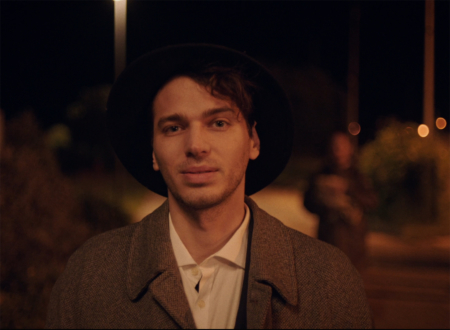
This shoot was an incredibly enjoyable and creative experience, a pure pleasure of cinema that I am particularly proud of.
The editing of the film, whose rushes would have allowed an even more nested and labyrinthine narrative, was long but it paid off. The film found its ideal form, a sort of matryoshka of stories and emotions that perfectly reflects Manuel’s vision and our shared passion for the art of cinema.
Nino lunaire has been selected at numerous international festivals and has received several awards. It is a project that I hold dear, both for the quality of the artistic collaboration and for the creative freedom that Manuel granted me.
Technical credits:
Director: Manuel Billi
Cinematography: Michele Gurrieri
Steadicam: Grégory Duppé
1st AC: Simon Music
Camera and lenses: Panavision Alga — ARRI Alexa Mini, Cooke S3 primes, Cooke 20/100 zoom, Cooke S4 180mm
Filters: Mitchell
Lighting: Panalux
Colourist: Yov Moor
Production: Mood Films