Winner of the Palme d’Or at the 2023 Cannes Film Festival, Anatomy of a Fall is a family drama that tells the story of the sudden implosion of a normal family.
Directed by Justine Triet, the film is her fourth feature. It paints a dizzying portrait of a woman accused of murdering her husband, in a suffocating atmosphere. Colourist Magali Léonard takes us behind the scenes of her work on this film, looking back at its artistic and technical challenges.
“Director Justine Triet and cinematographer Simon Beaufils contacted me very early during the camera tests, even before shooting began on Anatomy of a Fall. I had already done the colour grading on Justine’s previous film, Sibyl, for which Simon was also the cinematographer. This is my second collaboration with Justine and my sixth with Simon. Having worked together several times allows us to collaborate more effectively.” …
“Simon and Justine were deeply involved throughout the image processing, and thanks to this close collaboration, dialogue and attentiveness, Leonard was able to translate the film’s singular atmosphere into the grade. ‘It was a stimulating and exciting process,’ she confides.”
Implementing the artistic vision
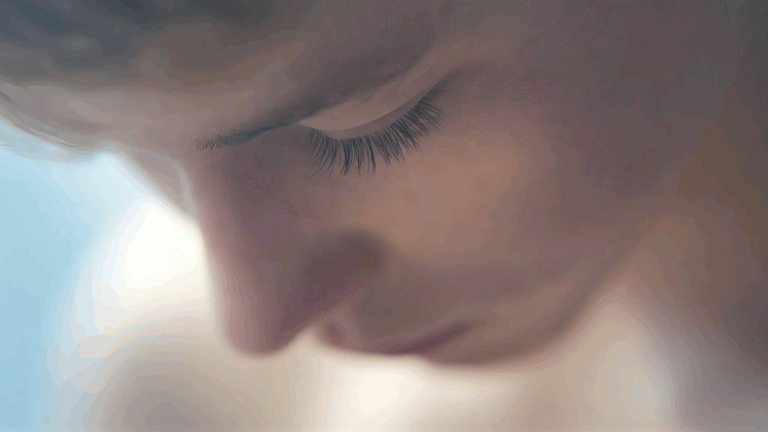
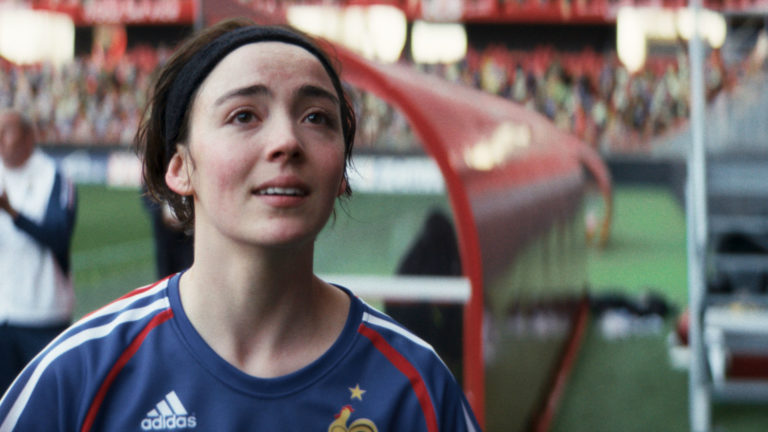
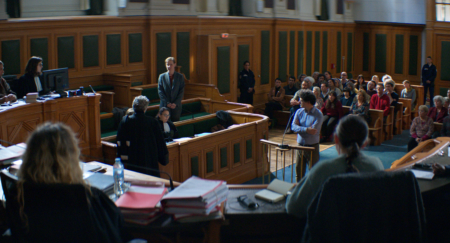
“For her film, Justine wanted a raw, contrasted look that captures imperfections and flaws while creating something carnal and sensual, with reddened skin, sweat and exhaustion, particularly in the trial scenes.”
“I took her words and Simon’s and translated them into images, paying particular attention to faces and skin. Triet, Beaufils and I collaborated closely on establishing a look, starting with extensive camera tests involving hair, make-up and costumes.”
Early in the project, Simon shot tests on 35mm 2-perf film so that Leonard could get closer to the film look when grading the digital camera tests. “That was our starting point for finding the mood and visual identity of the film,” she explains.
Triet and Beaufils chose the Alexa Mini LF with Hawk V-lite anamorphic lenses, even though the film’s aspect ratio was 1.85, Leonard revealed. “The V-lite brings a certain softness, a richness of colour, flares and special bokeh, which contrast with the digital sharpness. The collaboration with Simon was fantastic; he created magnificent images that convey very complex emotions.”
“I worked on the visuals iteratively, playing with contrasts using DaVinci Resolve’s custom curves, then on colours, saturation and highlights. I then added grain to create a more pronounced look, which we applied from the rushes, giving us a good basis for the film’s overall mood.”
Fine-tuning and collaboration
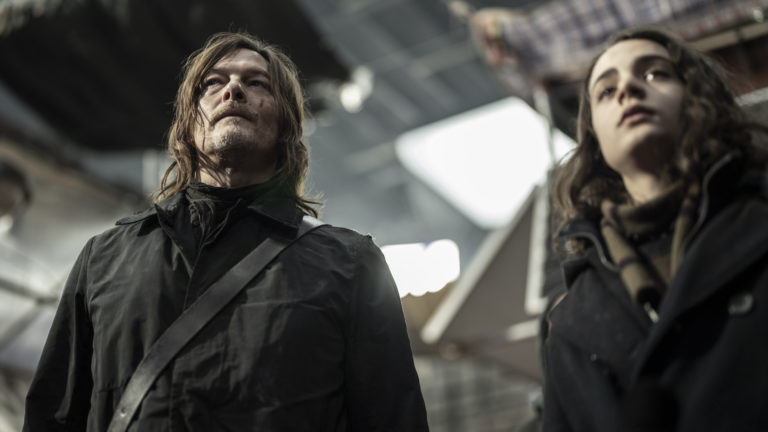
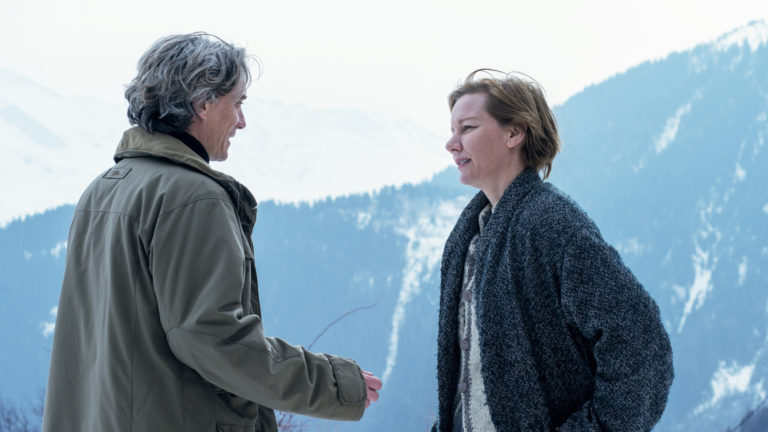
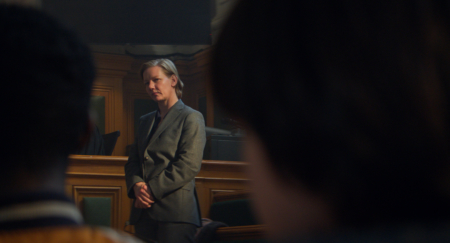
During the final phase of the DI (Digital Intermediate), Leonard returned to the nodes used to establish the initial look in order to refine the quality. “I then made bolder suggestions, particularly for the different atmospheres. I also worked on the nuances of highlights and specular lights, adding subtle diffusion, pushing saturation in the blues, for example, while maintaining the raw look present in the set design and costumes.”
For the courtroom scenes, the grade evolves over the course of the hearings towards a heavier, more golden atmosphere. It was important to accentuate the actors’ faces while maintaining the initial look of a somewhat raw and textured visual, a palpable and living material. I like the idea of letting the images express their full potential as the story unfolds.
Over the course of the year, we went several times to the Max Linder cinema to view the film under theatrical projection conditions, which gave me a certain perspective on the visuals and allowed me to make finer adjustments to the final look. For example, we noticed during these screenings that certain scenes would need more saturation or contrast, for instance.
– Magali Leonard, senior colourist and founder of Chroma Shaper
– Graded at M141 on DaVinci Resolve Studio
– Anatomy of a Fall: Released 23 August 2023