Through a series of 110 specific questions, the online survey conducted by the UCO between June and December 2023 gathered accounts from 238 professionals working in French documentary, revealing a detailed picture of their working environment.
Working in documentary often means that cinematographers have to navigate major technical and artistic challenges on their own.
Our role is not limited to lighting and framing: we accompany directors in building the narrative, breaking down the shots, and developing a visual style. Beyond carrying the camera, we bring a vision, engaging in a creative dialogue and investing ourselves physically, intellectually, and even emotionally.
In recent years, however, additional responsibilities have considerably increased our workload. The growing scarcity of camera assistants on documentary shoots has expanded our role: logistics, securing backups, managing power for a wide range of equipment. What’s more, sound recording, which requires specific expertise, is increasingly added to our long list of technical and artistic responsibilities. It is striking that these additional responsibilities rarely affect our pay, despite overtime that has become almost systematic and is rarely compensated.
To give a concrete picture of our working conditions in documentary, here is a digest of the responses gathered by the UCO’s Documentary and Fiction group.
About the survey
This pioneering survey of camera professionals in the documentary sector set out to provide an accurate picture of their day-to-day working lives, based on accounts gathered through a detailed questionnaire. Designed to cover every aspect of the profession (from workload and working hours to pay, equipment, travel, accommodation, relations with production companies, and physical and mental well-being), the questionnaire consists of 90 multiple-choice questions and 20 open-ended questions, aiming to capture the essence of the realities of shooting (see the raw results).
With 238 responses collected between June and December 2023, 55 from women cinematographers (23%) and 183 from men (77%), the survey reveals a deep commitment to documentary: more than two thirds of participants say they work regularly or mainly in this sector. Moreover, three quarters of respondents have been active in it for more than five years, reflecting considerable experience, with 57% working in it for more than ten years.
A few figures* on the health of documentary in France
- 73% of French people watch a documentary at least once a week
- Documentaries make up 18% of the programming offered by all national channels
- On VOD and catch-up TV platforms, documentaries are the third most-watched genre, after films and series, and ahead of children’s programs
- The volume of documentaries on subscription video on demand has tripled since 2018 (Netflix 1,240 titles, Prime Video 601 titles, myCANAL 472 titles)
- Arte and France 5 make documentary their backbone, with more than 7,000 hours broadcast per year, or 68% of their programming
- The France Télévisions group pre-bought 755 hours of documentary in 2022
Arte France 234 hours in 2022 - Documentary is the genre that receives the most CNC support, accounting for 41.7% of the hours supported by the CNC
542 documentary producers received CNC support in 2022 - CNC support covers a larger share of budgets than for other genres: 19.2% vs. 13.6% for all genres combined in 2022
- International sales of TV documentaries totaled €36.8 million in 2021
Composite profile of the respondents
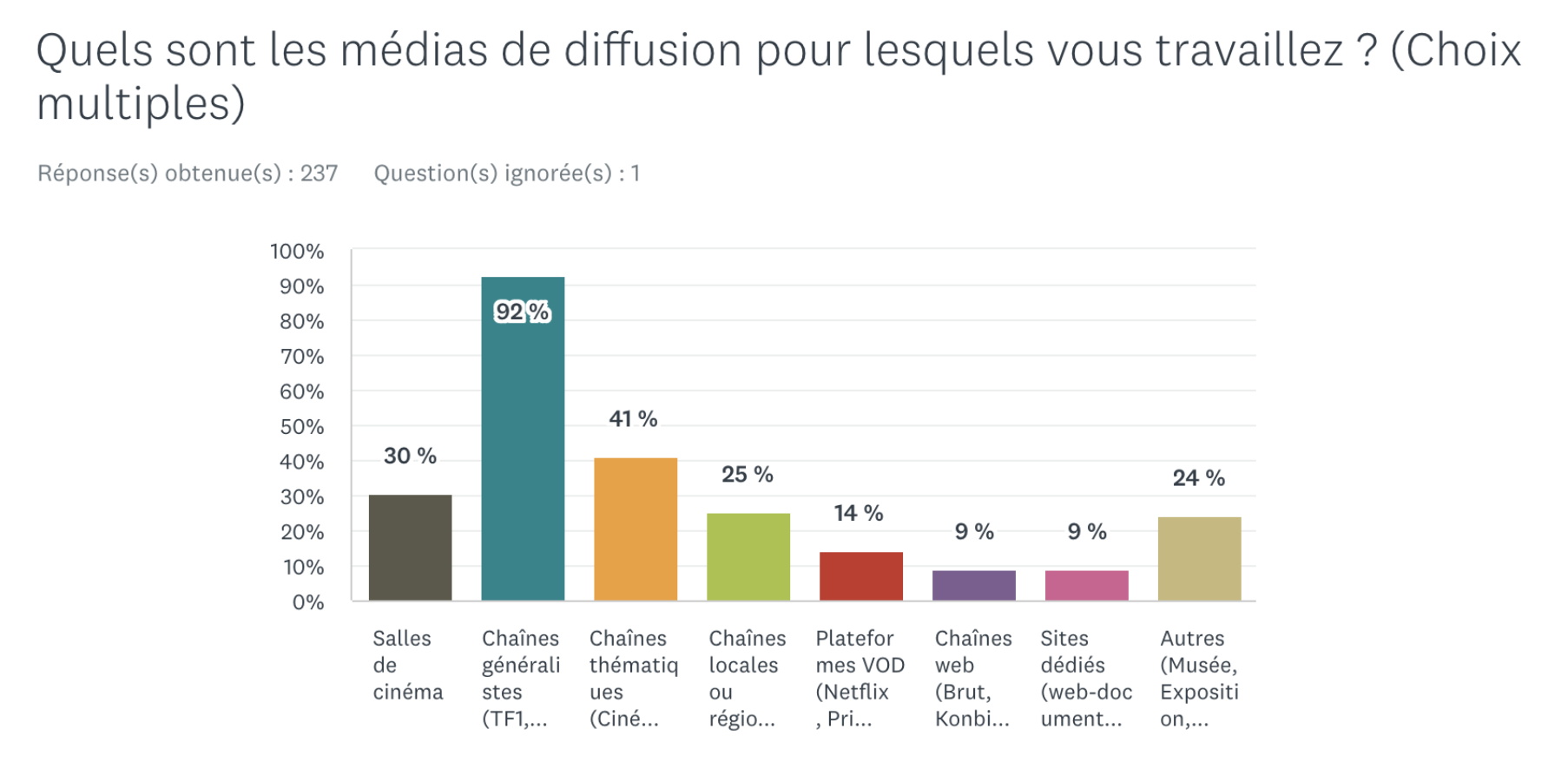
These professionals, who work with traditional TV channels as well as emerging digital platforms, mainly use their own equipment (58%), while 68% of them regularly supplement it from rental companies.
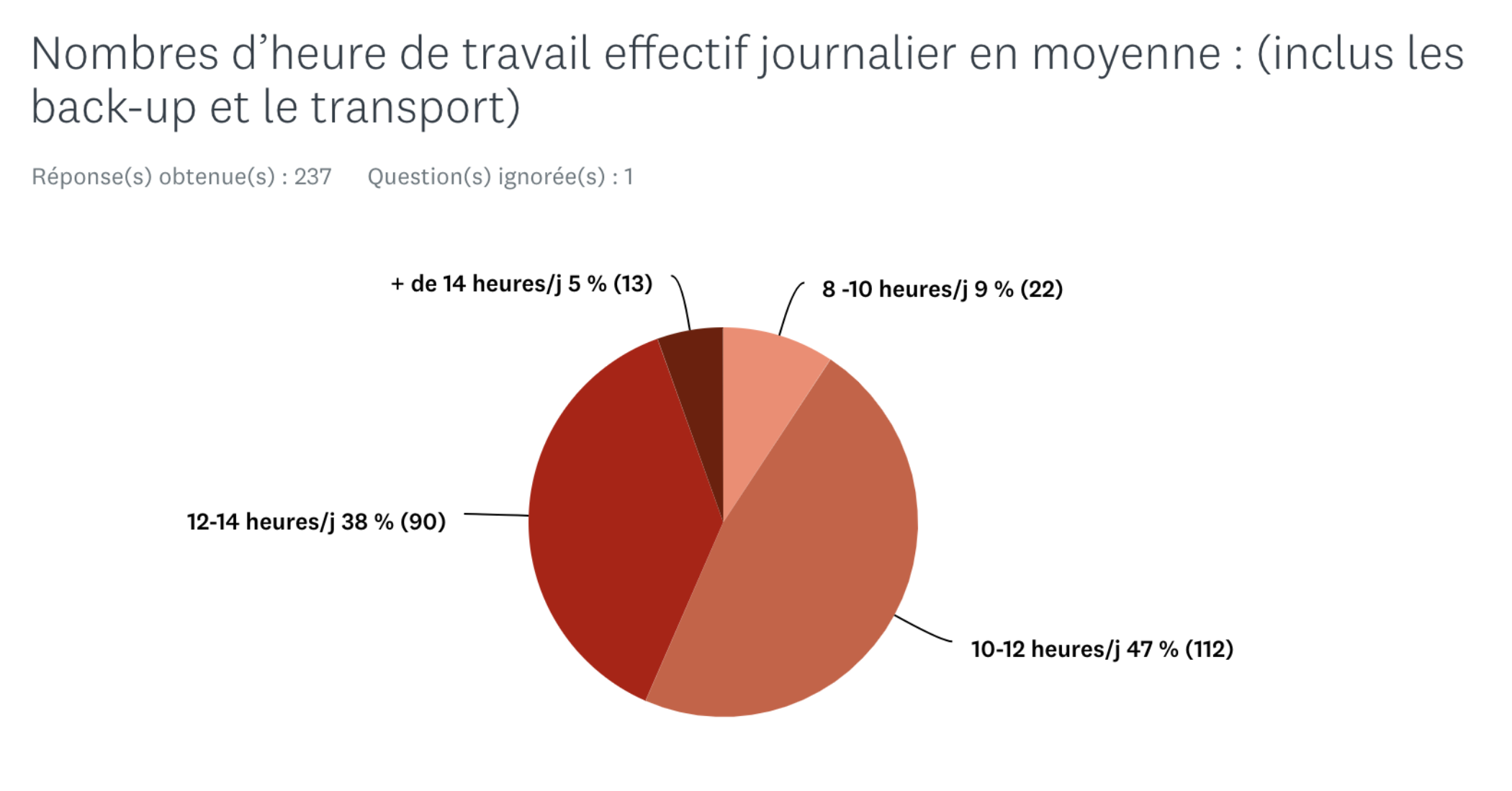
Their working days often run beyond 10 hours, sometimes up to 14 hours for more than a third of respondents, which is both physically and mentally demanding. Their stamina is all the more tested as 25% of respondents regularly find themselves both directing and shooting, illustrating the versatility this field requires.
Difficulties and incidents reported by the cinematographers surveyed
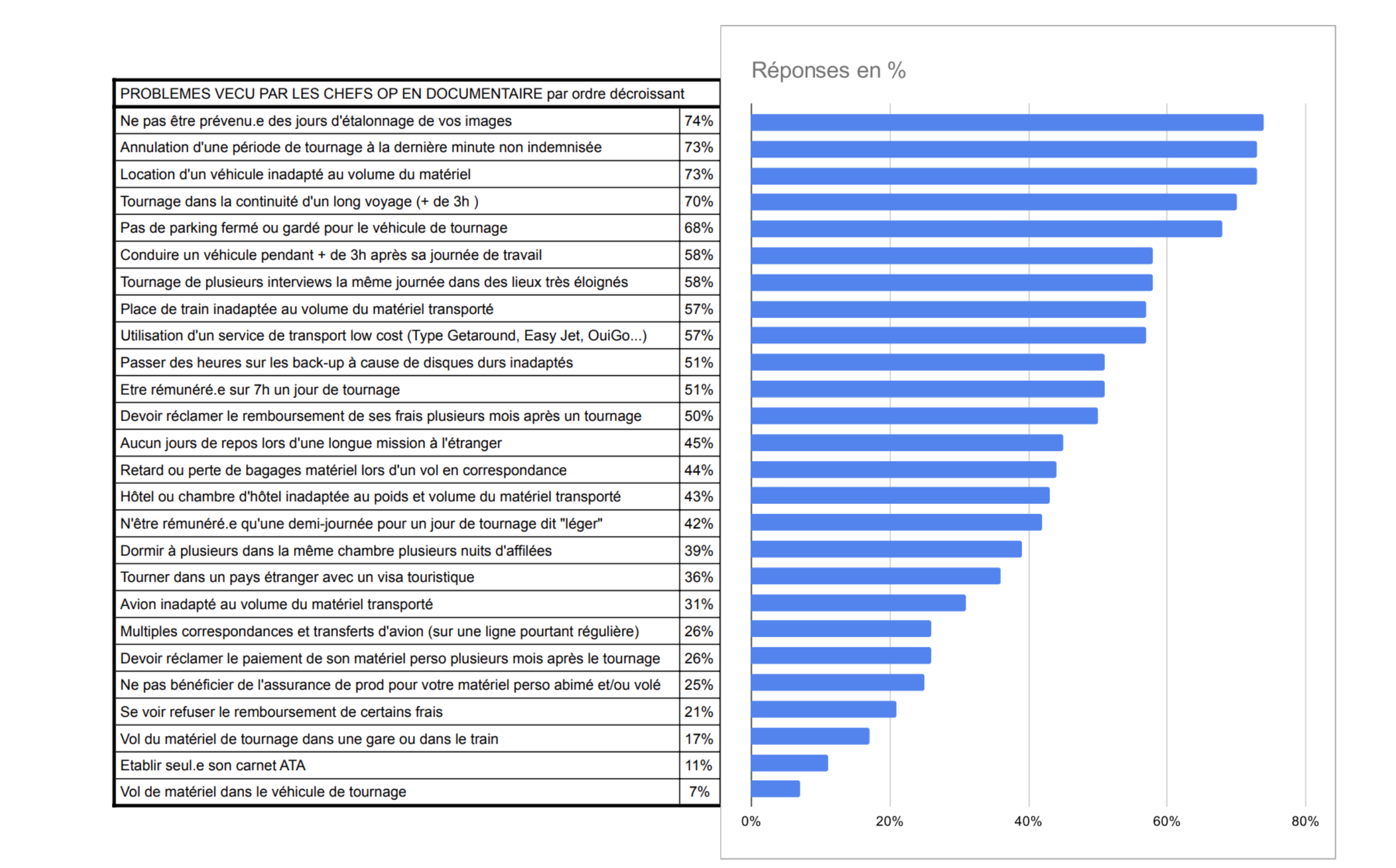
Key figures from the survey
Income:
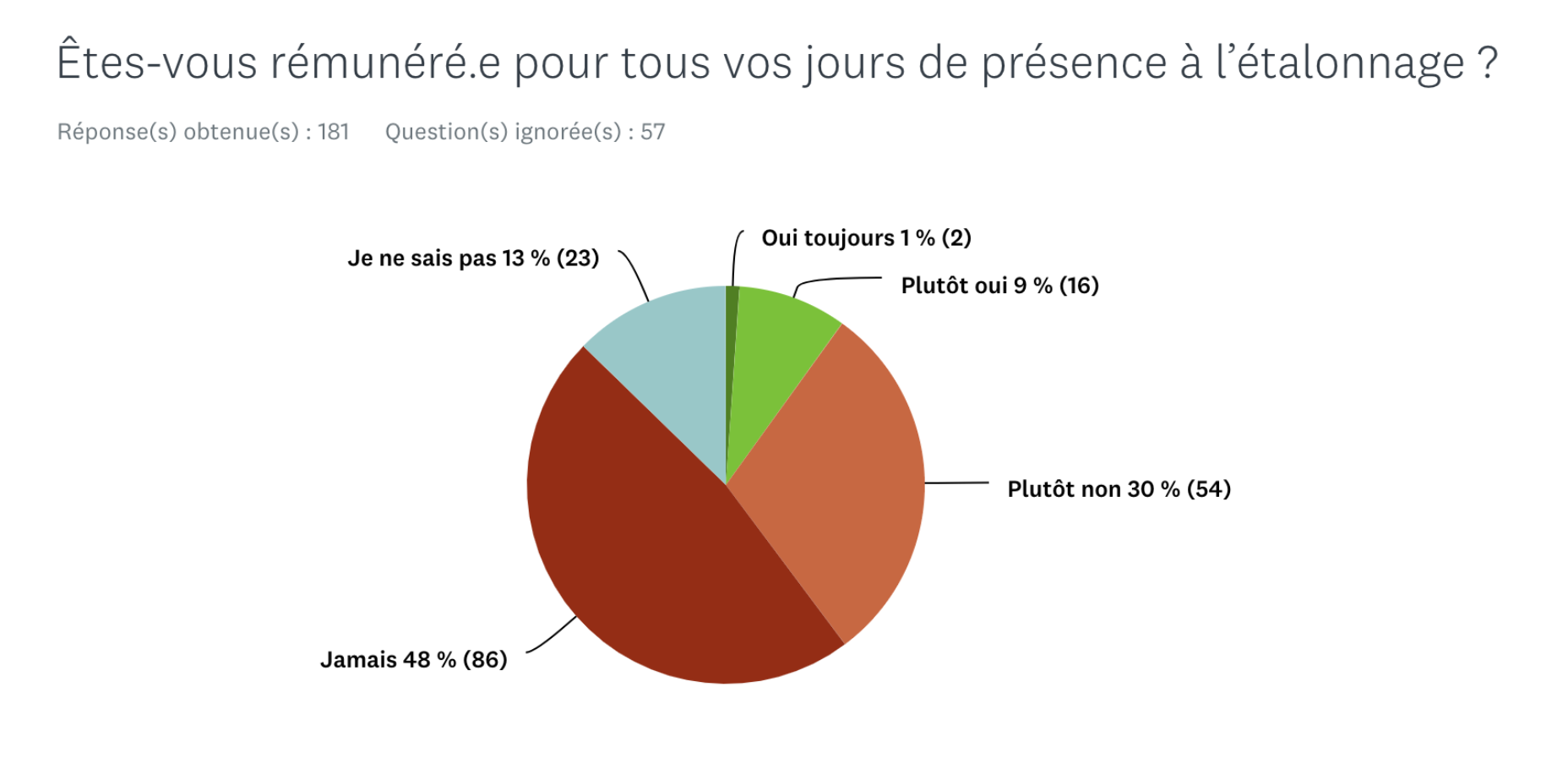
- 81% of respondents say they are paid only the minimum set by the collective agreement, and 17% of them are not paid for all their shooting days.
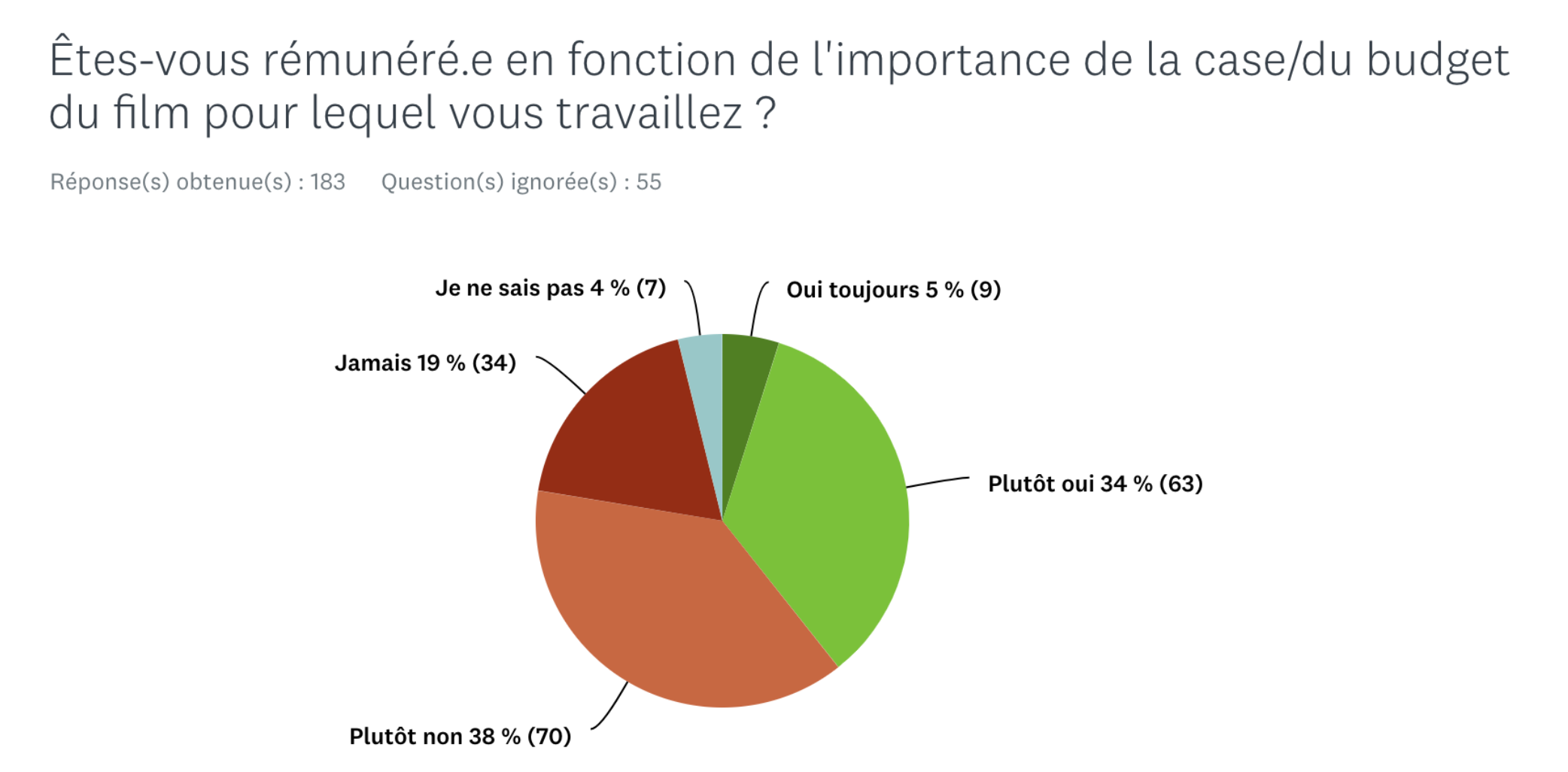
- 57% say their pay does not reflect the film’s budget and therefore stays at the collective agreement minimum.
Overtime:
- 43% estimate they work more than 4 extra hours per day on average
- 91% estimate they work more than 2 extra hours per day on average
- 1% manage to get paid for the overtime they work
Unpaid or uncompensated working time:
- 89% are not paid for camera test days or for packing the equipment
- 49% are not paid or compensated for travel days and travel hours
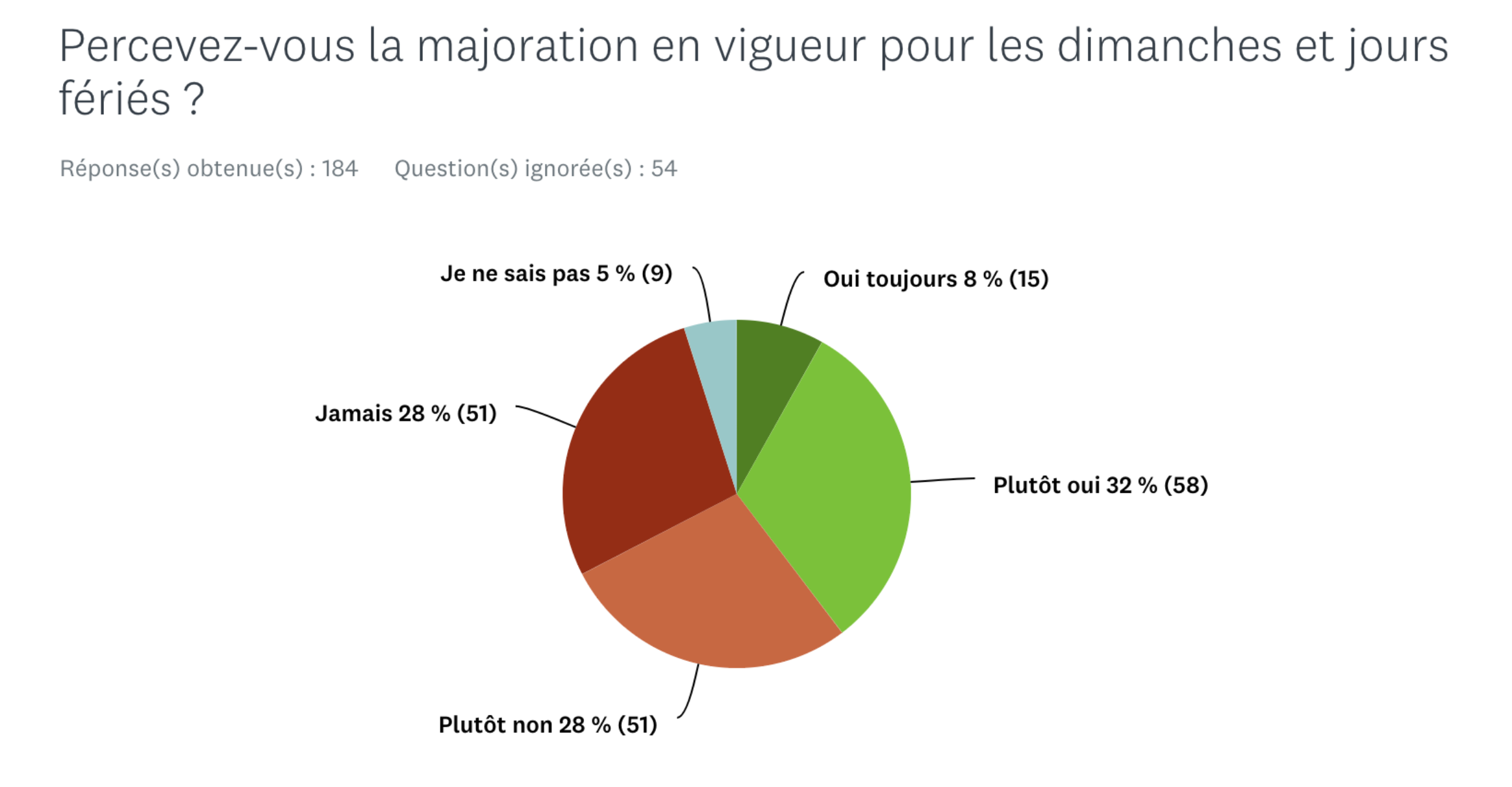
- 56% get no premium pay for Sundays and public holidays
Combined roles and unrecognized work:
- 74% sometimes record sound in addition to shooting
- 23% always handle sound in addition to camera
- 97% are not paid for this extra workload
- 72% believe that sound recording is not part of the cinematographer’s job
- 78% are not paid extra for shooting fiction or re-enactment sequences
- 75% of drone operators are not paid for their drone shots
- 78% are not paid for the days they attend the grading of their images
Occupational health:
- 79% say their physical workload is excessive
- 76% have physical health problems caused by their work
- 75% seek medical care for work-related conditions
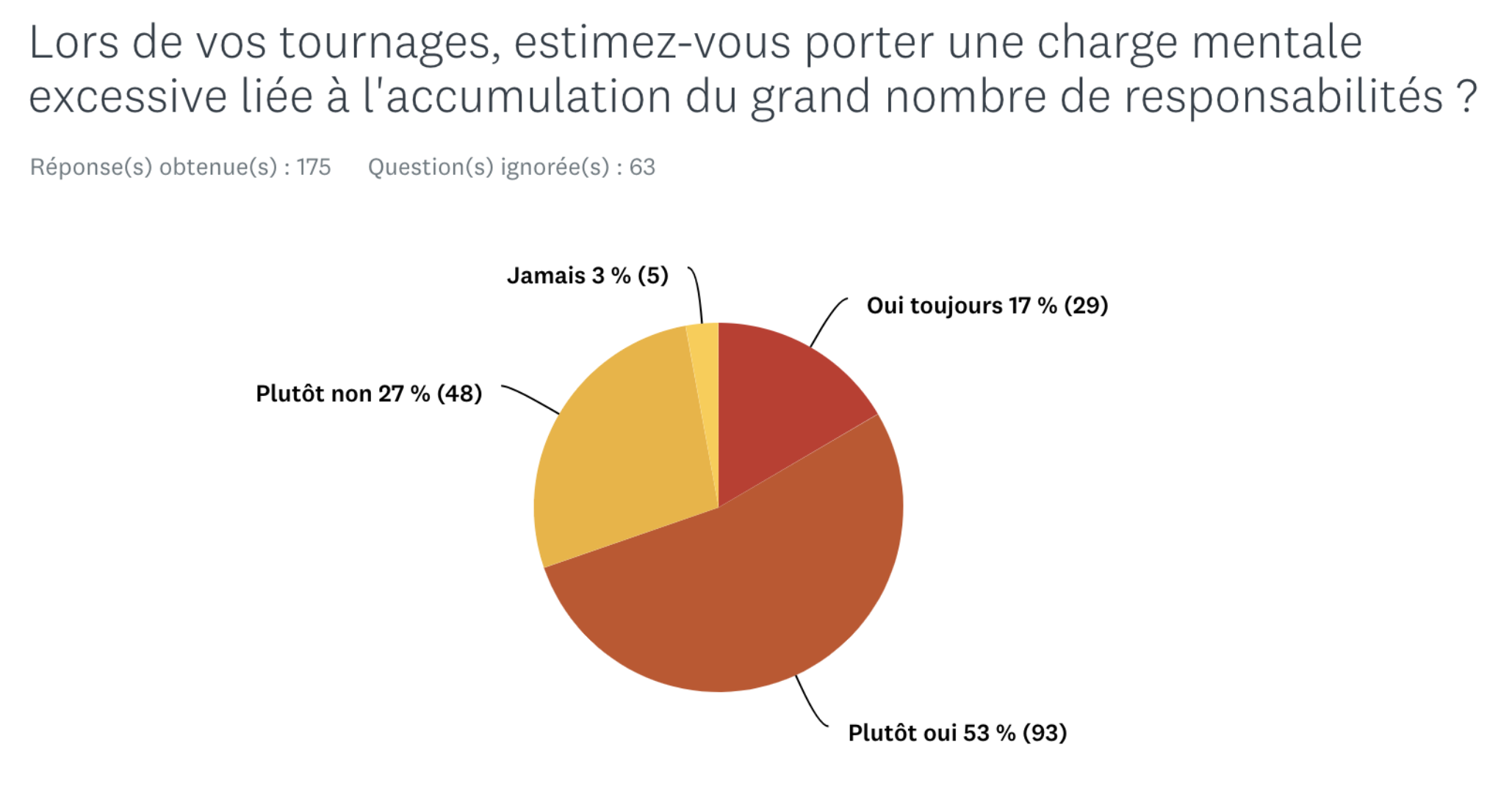
- 70% feel an excessive mental load
Relations with production companies:
- 87% of respondents check the production’s logistical choices before their shoot
- 71% run into practical and logistical problems caused by production choices
- 88% feel that production companies are unaware of the volume and weight of the equipment being transported
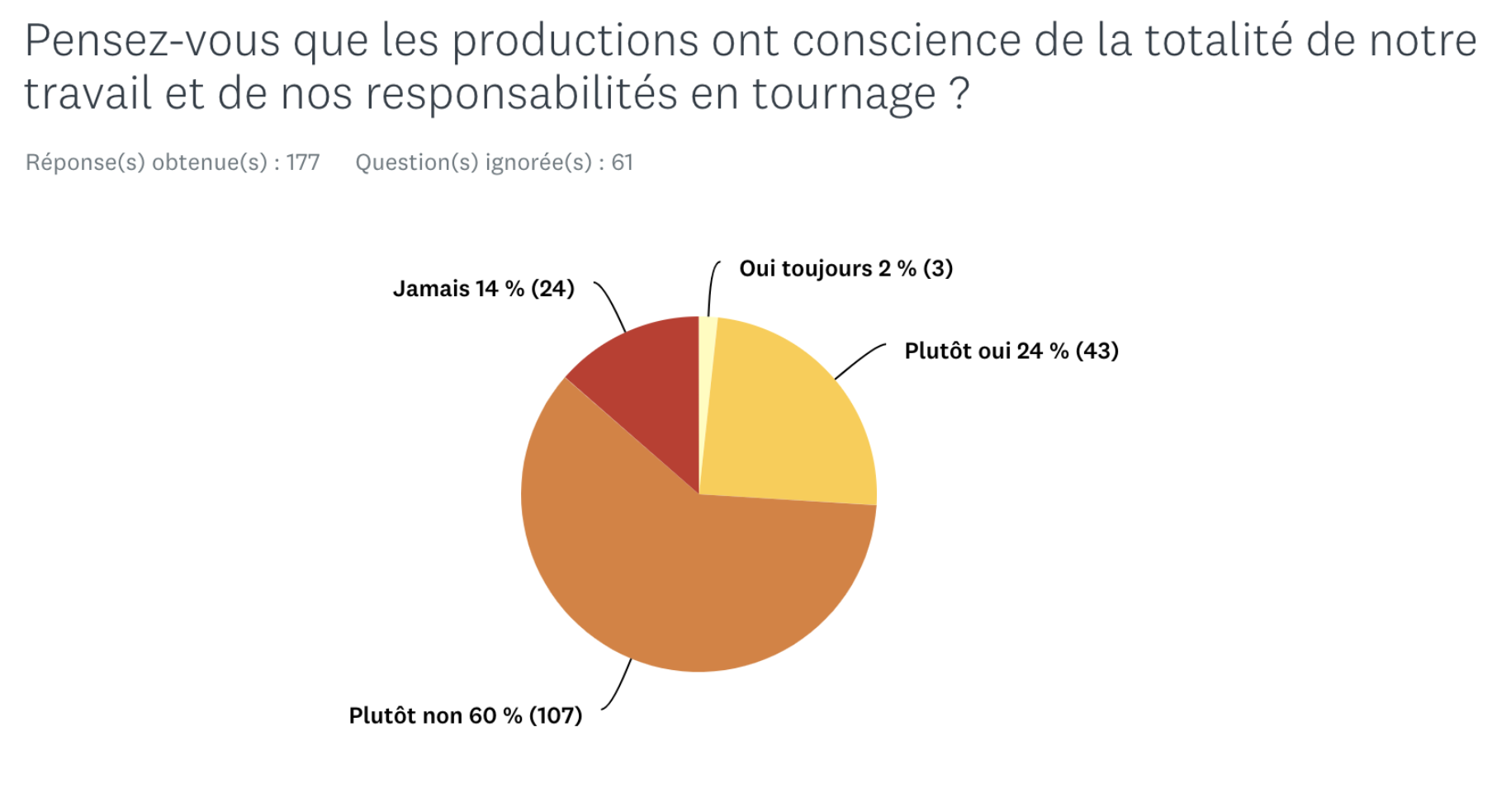
- 74% think that production companies are unaware of all the work done and the responsibilities handled by cinematographers during a shoot
Analysis of open-ended comments on the documentary cinematographer’s profession
The most representative comments, grouped by theme and by the number of comments along the same lines:
On long working days:
- (about backups) “They take time and concentration: we’re talking about securing the day’s work, and yet it’s completely disregarded…”
- (also about backups) “It’s a time when you need to be really focused, and it should count as working time.”
- “Driving 4.5 hours at night on the 8th shooting day in a row, copying the footage, and heading out again very early the next morning…”
On combining roles:
- “Recording sound with several wireless mics requires a recorder in addition to the camera, so you have to handle the settings, the levels, the monitoring, carrying it, and slating! You become a one-man band. It’s crazy, and so much for sound quality.”
- “When there are only two of us (director and cinematographer) shooting a documentary, we both end up handling far too many responsibilities.”
- “These are two different professions!!!” (about combining the roles of cinematographer & sound recordist).
Pay:
- “My daily rate has barely changed in 15 years.”
- “In documentary, for me, it’s the union minimum at best!”
- “I see the day rate has gone up a few euros in 20 years… My experience isn’t valued at all…”
Equipment prep:
- “… I’ve never been paid for any prep work.”
- “The flat fees offered are sometimes below the collective agreement rate, and equipment prep is rarely paid.”
- “Equipment prep never paid…”
Grading:
- “Not paid and, above all, never informed or asked…”
- “The regrettable habit in documentary is not to consult the cinematographer and, more often than not, not to include them in the grade.”
- “In documentary, production companies don’t always let cinematographers know, which is a real shame.”
Physical health:
- Many respondents report recurring musculoskeletal disorders (back, shoulders, elbows) caused by the physical load and by carrying heavy equipment. Some explicitly mention having to carry this equipment alone, without assistants or production staff.
- Many mention sessions of osteopathy, physical therapy, or acupuncture. A few also mention back surgery.
Mental load:
- “The mental strain comes from the fact that we often share the films with the directors and help them do their job.”
- “We have to carry everything physically, and carry exhausted directors mentally…”
- “The mental load often comes from poor logistics, being made responsible for sound at the expense of our own work, or managing the equipment in transit…”
- (From a young cinematographer) “…They ask far too much of us, and even though it doesn’t affect me much now, I think that in a few years, as it builds up, it won’t be sustainable anymore…”
Relations with production companies:
- “The more you try to be professional and conscientious before a shoot, the more production sees you as a whiner or a ‘pain in the ass’…”
- “Having to take charge of the day’s organization and logistics because the production assistant lacks experience.”
- “Documentary production companies often use interns to handle very important logistical matters. That’s not right!”
- “Production companies treat travel days as days off!”
- “Most production companies are well aware of our problems. That doesn’t mean they take them into account. They count on cinematographers’ goodwill.”
Passion that leads to acceptance:
- Many comments express above all a real passion for documentary work, a source of rich and varied human adventures. One cinematographer sums up this feeling by describing how lucky he is to discover such different worlds with each film.
- At the same time, however, he deplores unacceptable working conditions regarding prep, grading, and days worked but not paid. This contrast between a fulfilling creative dimension and difficult practical working conditions recurs throughout the comments.
- Many begin by praising the exciting aspects of the job, whether travel, meeting extraordinary people, or telling moving human stories. Then, very quickly, they switch to the darker side: deteriorating conditions, cut-rate pay, and contempt from production companies. You can sense the constant gap between intrinsic motivation and the harsh reality on the ground.
- This visceral attachment to the heart of their work, almost vital for some, leads them to accept all kinds of abuse. “We do the job; it’s our passion, our mission,” one of them insists. In the name of this love of documentary, they are willing to endure grueling schedules.
- One admits that he sometimes wonders whether he should “quit it all,” while another explains that his only reason for carrying on is his love of the job, despite the current “deterioration” in how it is practiced.
Fear of being blacklisted:
- Fear of being “blacklisted” is a recurring reason given for accepting harmful conditions. One cinematographer warns of the “real risk of being blacklisted or passed over for interesting projects” if you say no.
- This unspoken threat hangs over cinematographers, who must bow to every demand or risk no longer working. It considerably tilts the balance of power in favor of production companies.
- Some explain that the fear of being “blacklisted” pushes them to accept pay that does not comply with all the rules of the collective agreement. As a result, practices that were considered abusive only a few years ago have become completely routine and normalized today.
Conclusions of the survey
- The cinematographers who answered the questionnaire are seasoned, experienced professionals who, despite their passion for their work, operate in an environment marked by real precarity in terms of working hours and responsibilities. Since their skills cover the entire technical chain, from equipment prep to storing the footage, the survey above all reveals the extent of the additional tasks and the many hours of unpaid overtime.
- Working days, often comparable to marathons, are extended by unavoidable hours after the shoot, especially for backing up the footage. The growing absence of sound recordists frequently forces them to combine two roles, without adequate compensation.
- The survey also highlights work-related physical and psychological suffering, leading many to seek treatment for occupational disorders.
- The lack of transparency about budgets limits the possibilities for fair negotiation, creating a climate of mistrust between production companies and shooting crews.
- Despite a certain weariness, attachment to documentary remains strong, motivating the majority to stay in the sector.
- The answers to the questionnaire reveal alarming facts that highlight the urgent need for collective action.
- At a time when documentary holds a prominent place in the French audiovisual and film landscape, it is clear that this damaging situation could ultimately undermine the creative excellence of our documentaries.
We are convinced that the seriousness of these findings calls for a constructive dialogue between cinematographers, producers, broadcasters, and regulatory and funding bodies such as the CNC, to reassess the recognition of our profession. The data gathered through our questionnaire already sketch the outlines of practical solutions, on which our thinking is now focused.
An overwhelming majority, 83% of respondents, strongly supports, for example, the idea of a “Guide to good practices”. Intended to reshape the professional framework, this guide would aim to provide pragmatic recommendations suited to the specific demands of documentary. It would also highlight legal obligations, with specific reference to the relevant collective agreements, notably the audiovisual production collective agreement, which currently applies to the vast majority of documentaries, whether made for theatrical release or for television.
This document could become a reference for the profession, helping to handle everyday challenges in the most appropriate way and to strengthen respect for professional standards and workers’ rights in the sector.
See the detailed answers to the questionnaire here.