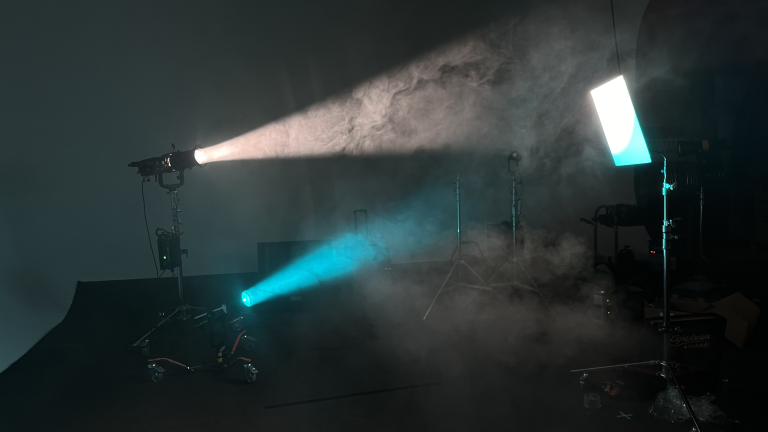
Our new partner Zebra (formerly Cartoni) invited us to Studio LB on March 5th. On the agenda: exploring the range of projectors and their accessories dedicated to reflected light, and measuring the photometric efficiency of these mirrors that are making a comeback.
Lightness, Diversity of Diffusions
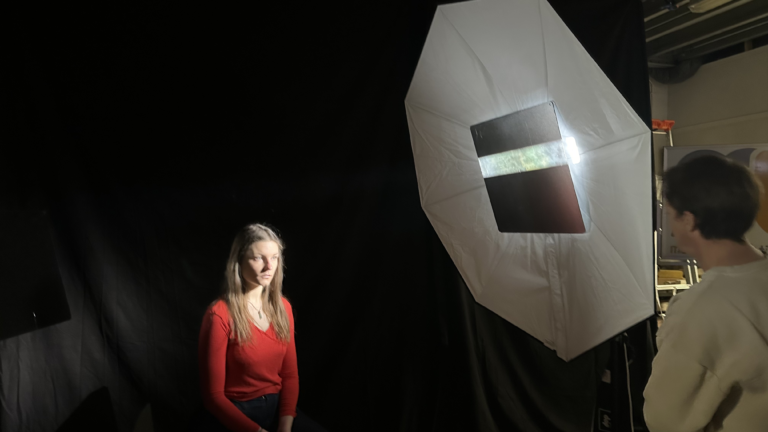
In recent years, several manufacturers have returned to working on this way of lighting. Several interesting aspects deserved further exploration. The benefit of moving a light source without moving a projector is trivial, but there are other advantages that are not necessarily obvious at first glance, such as the ability to shape the beam with different surfaces, or even multiply reflections to create a complex result. We allow ourselves to try more things because we are less hesitant to hang a mirror than a 50 kg projector.
Furthermore, using a mirror reduces the amount of heat transmitted to the subject, which is particularly appreciated in certain situations (close-ups on faces, fragile objects, food, etc.).
Inverse Square Law of Distance
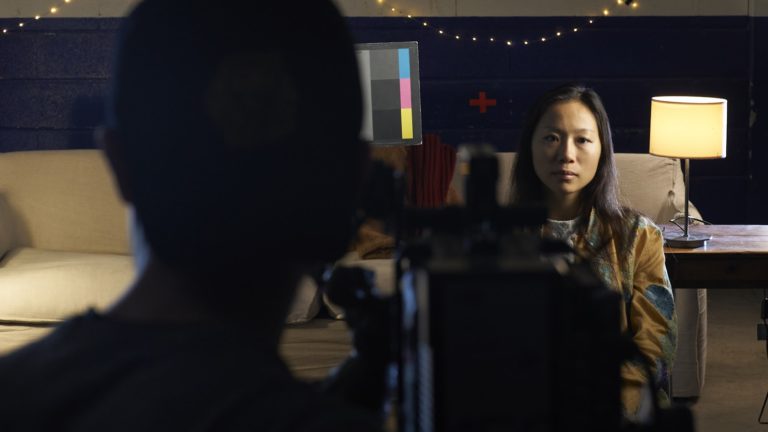
A fundamental advantage is the control of distance. If needed, you can considerably increase the distance traveled by light before it reaches its subject through a series of reflections. This produces an effect that can be particularly sought after: very little luminance variation on a moving subject. For example, think of a person walking or the common issue during an interview where the subject keeps leaning forward then sitting back in their chair. If it is a bit warm, the skin rendering can also vary noticeably depending on whether the face is close or far away. This is where the inverse square law of distance is our friend. But a question arises: is there a loss of power when bouncing a beam off a mirror?
Optics for Projectors
A first very simple solution to preserve luminous energy is to ensure that the light beam remains parallel when it reaches the mirror, so it stays parallel after reflection. This is the purpose of the DPBA lens, which creates a perfectly collimated beam. This makes the reflected beam extremely efficient regardless of the distance traveled.
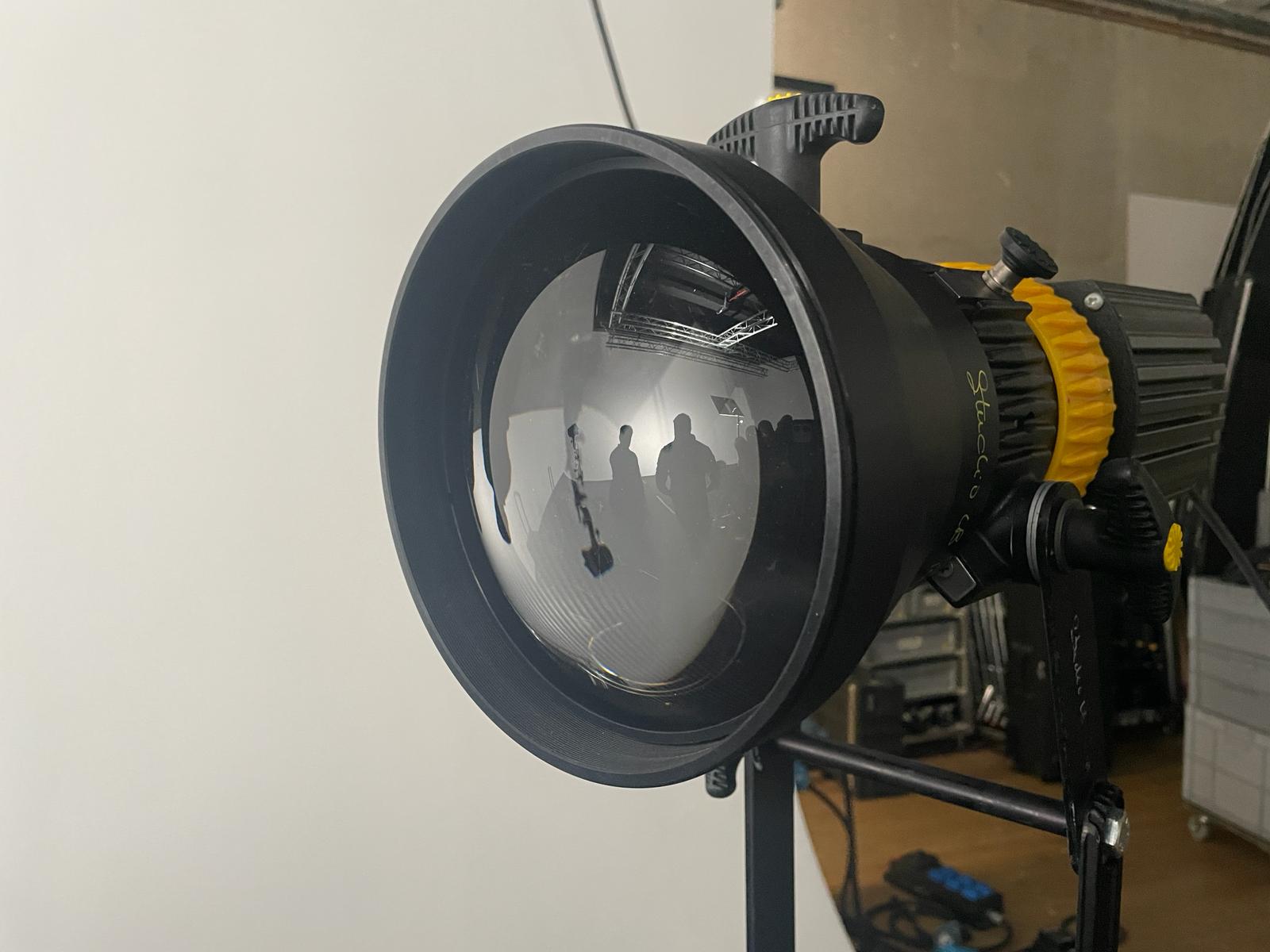
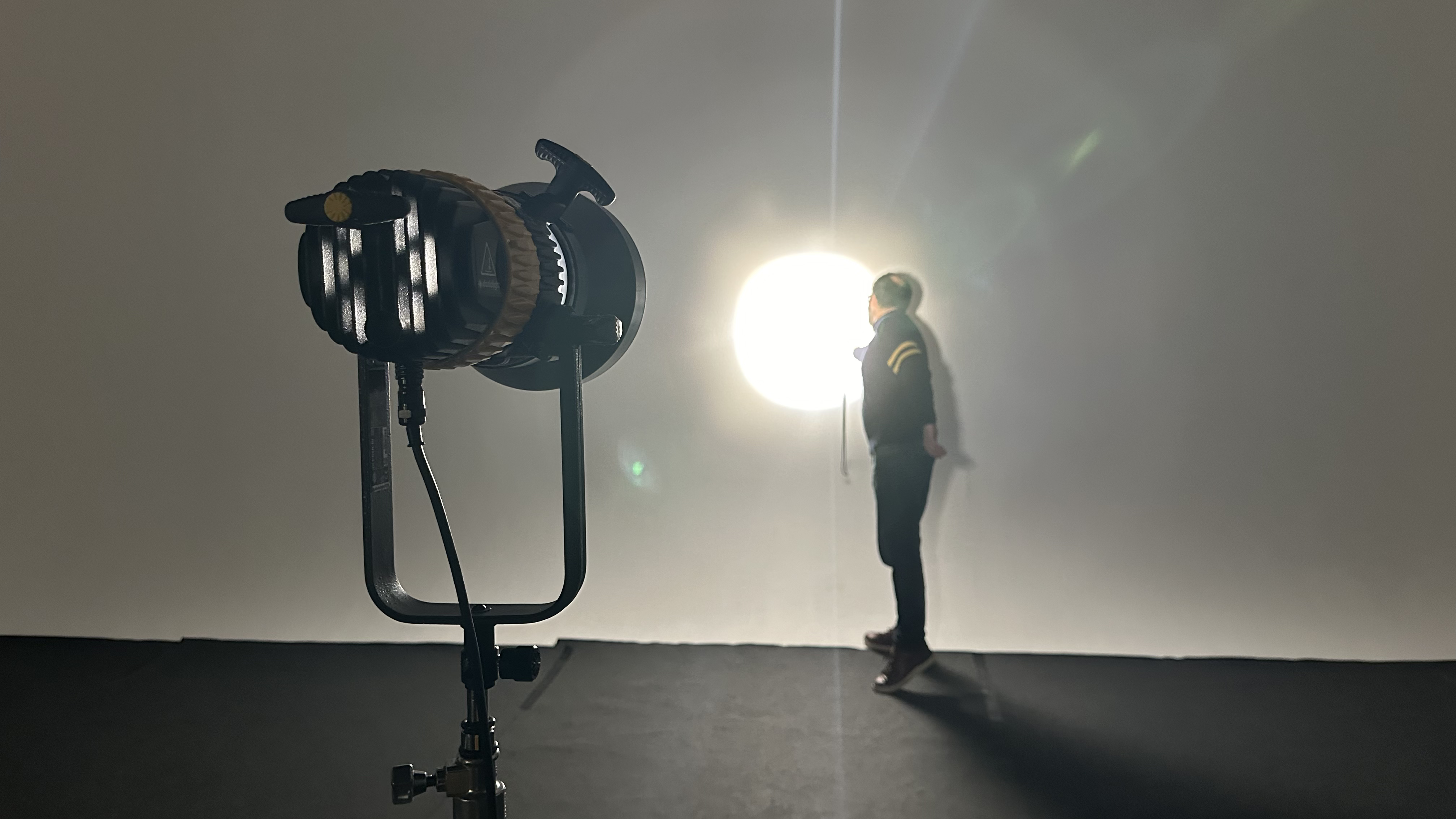
According to the manufacturer, these lenses have been designed to multiply by 2 or even 3 the output of projectors compared to a Fresnel lens.
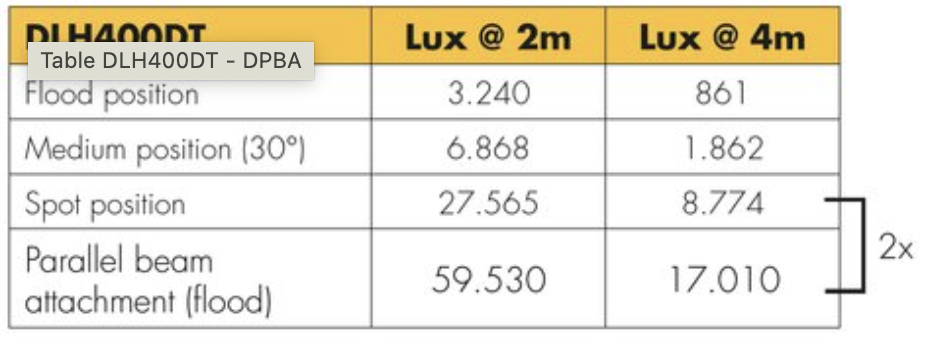
In our test, at a distance of 5m, we were able to measure an f-stop of 8 + 3/10 for the Dled9 set to spot, versus 16 + 1/2 when adding the DPBA (note that the projector must be set to full flood when used with the DPBA)!
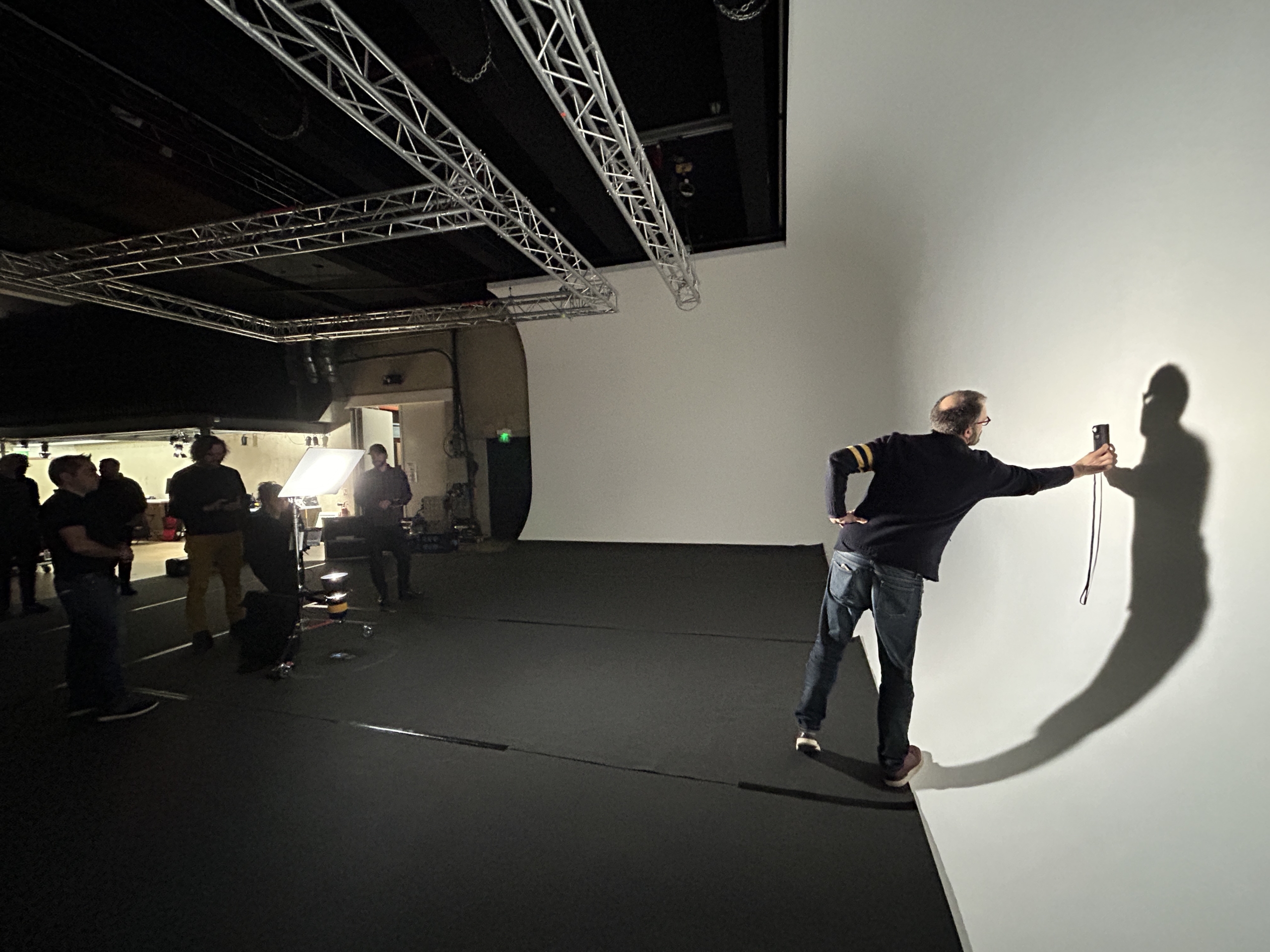
Our Photometric Measurements
At the studio, we tested several configurations and attempted some comparisons. We compared a beam from an Aputure 600 equipped with an optical snoot with one from a DLED9 equipped with the adapted DPBA lens. The efficiency of the direct beam is far superior with the DPBA lens, and the bounce at 2m off the cyc widens the gap even further.
Thus, for camera settings of 800 ISO (@25fps, shutter at 180°), the Dled9 equipped with the DPBA and aimed at a mirror 4 (one of the softest) achieved essentially the same f-stop (2.8 + 1/3) on the wall at 5m as the Aputure 600X with spotlight set to 50% and aimed at the same mirror 4! While the 600X consumes 600W when used at 100%, the Dled9 only consumes 90W.
measurement at 5m |
|||
lux |
f-stop |
||
Dled9 direct
|
Spot | 2080 | 8 +3/10e |
| + DPBA | 7810 | 16 + 1/2 | |
| + DPBA + nid d’abeille | 7030 | 16 + 2/10e | |
| + mirror 1 | 4640 | 11 + 6/10e | |
| + mirror 2 | 1300 | 8.0 | |
| + mirror 3 | 563 | 4 +9/10e | |
| + mirror 4 | 180 | 2.8 | |
Dled9 sur mirror 4 |
Spot | 2.0 | |
| + DPBA | 2.8 | ||
| + nez optique | 1.4 + 1/2 | ||

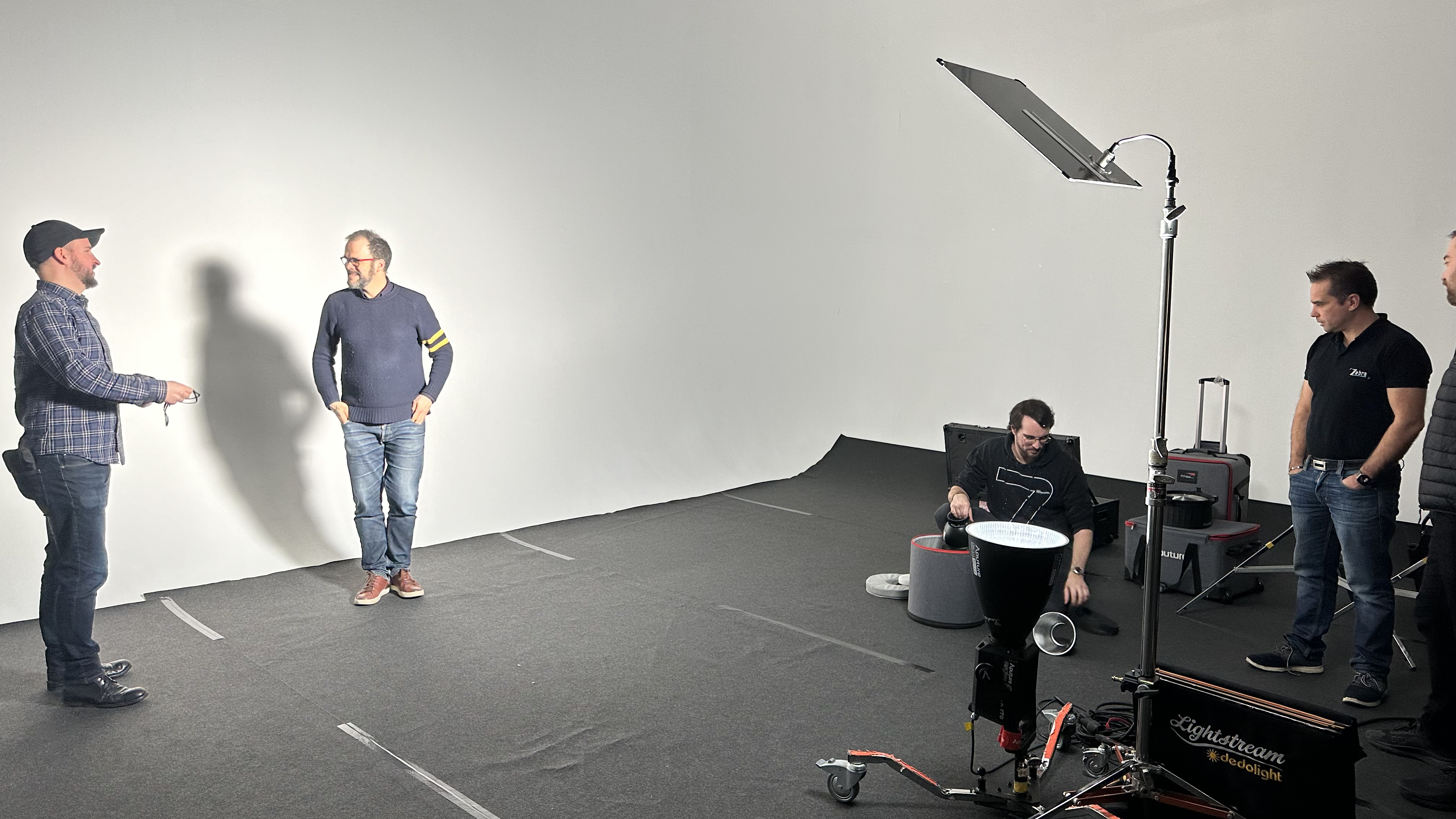
Some Practical Comparisons
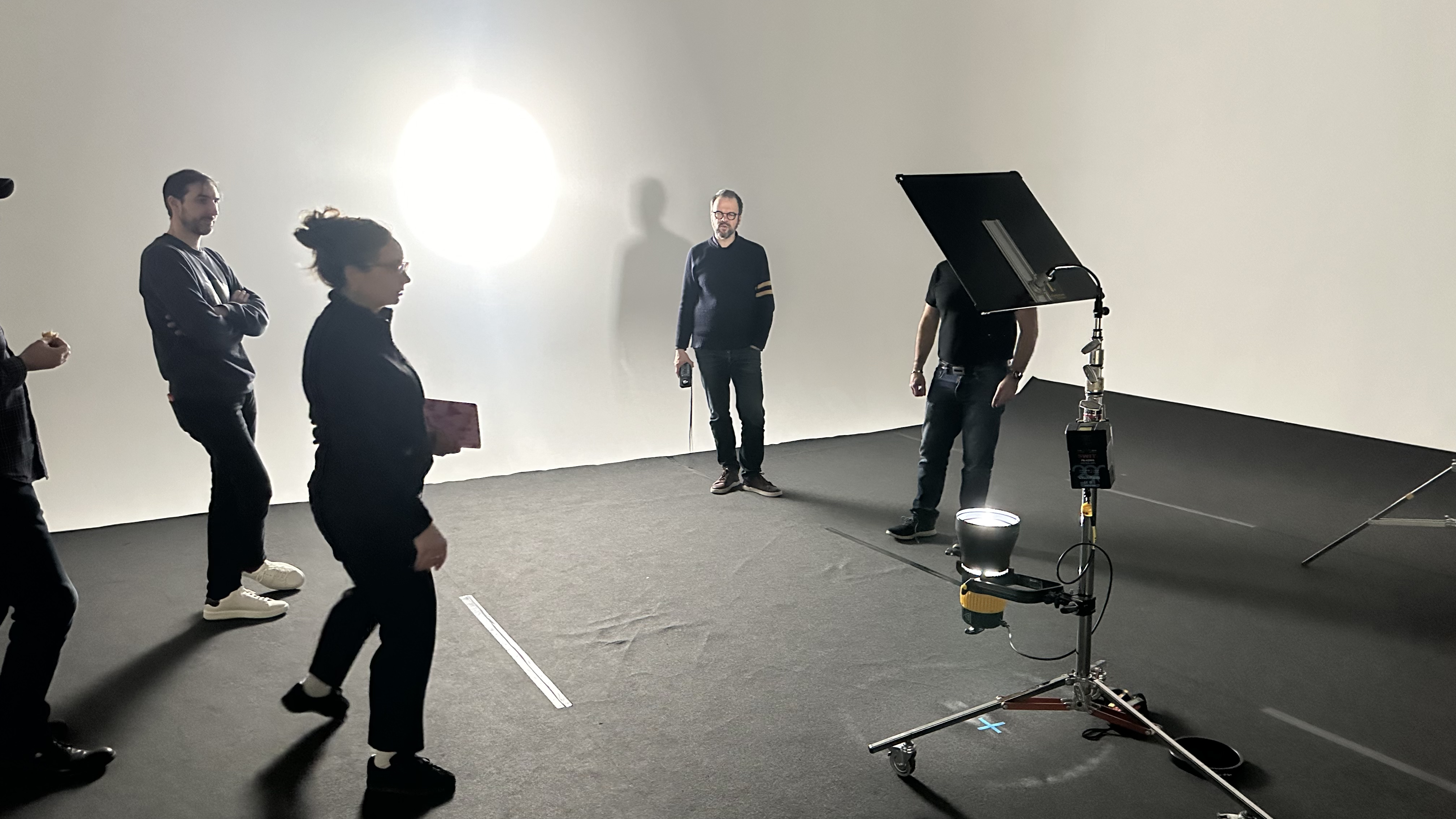
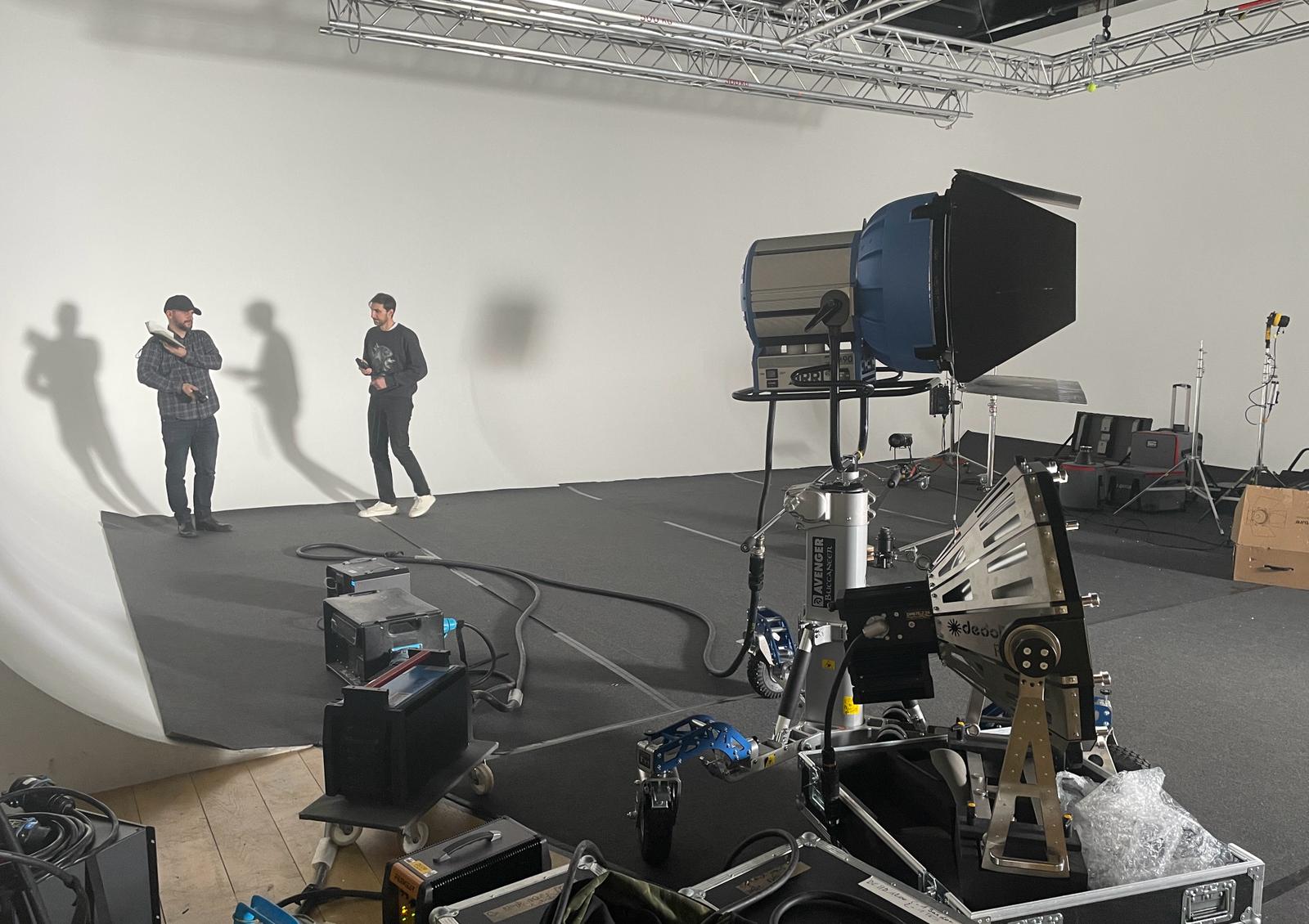
Another test closer to a real-world use case with higher power: filling the range of a 120x120cm diffusion frame. On one side, we used a Dedolight DPB70 projector with a 1x1m reflector no. 4, and on the other, an Arri M90.
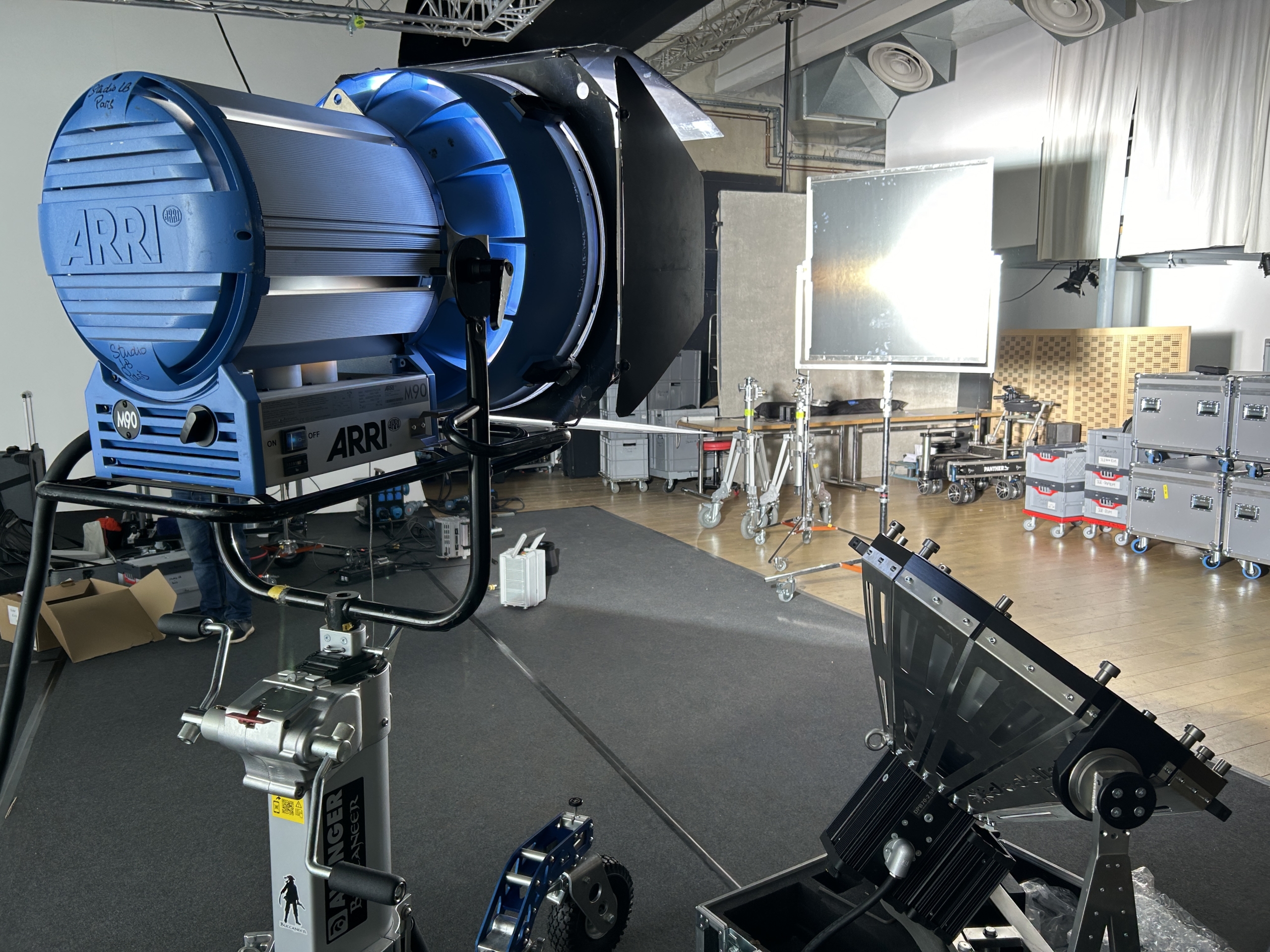
We positioned the projectors to obtain a measurement of 16 f-stops in the frame across the entire range. Then we moved the M90 back 4 meters to measure the power loss: 4 f-stops.
On the DPB70 side, we moved the reflector back 4 meters without observing any loss whatsoever!
How to Integrate These New Tools?
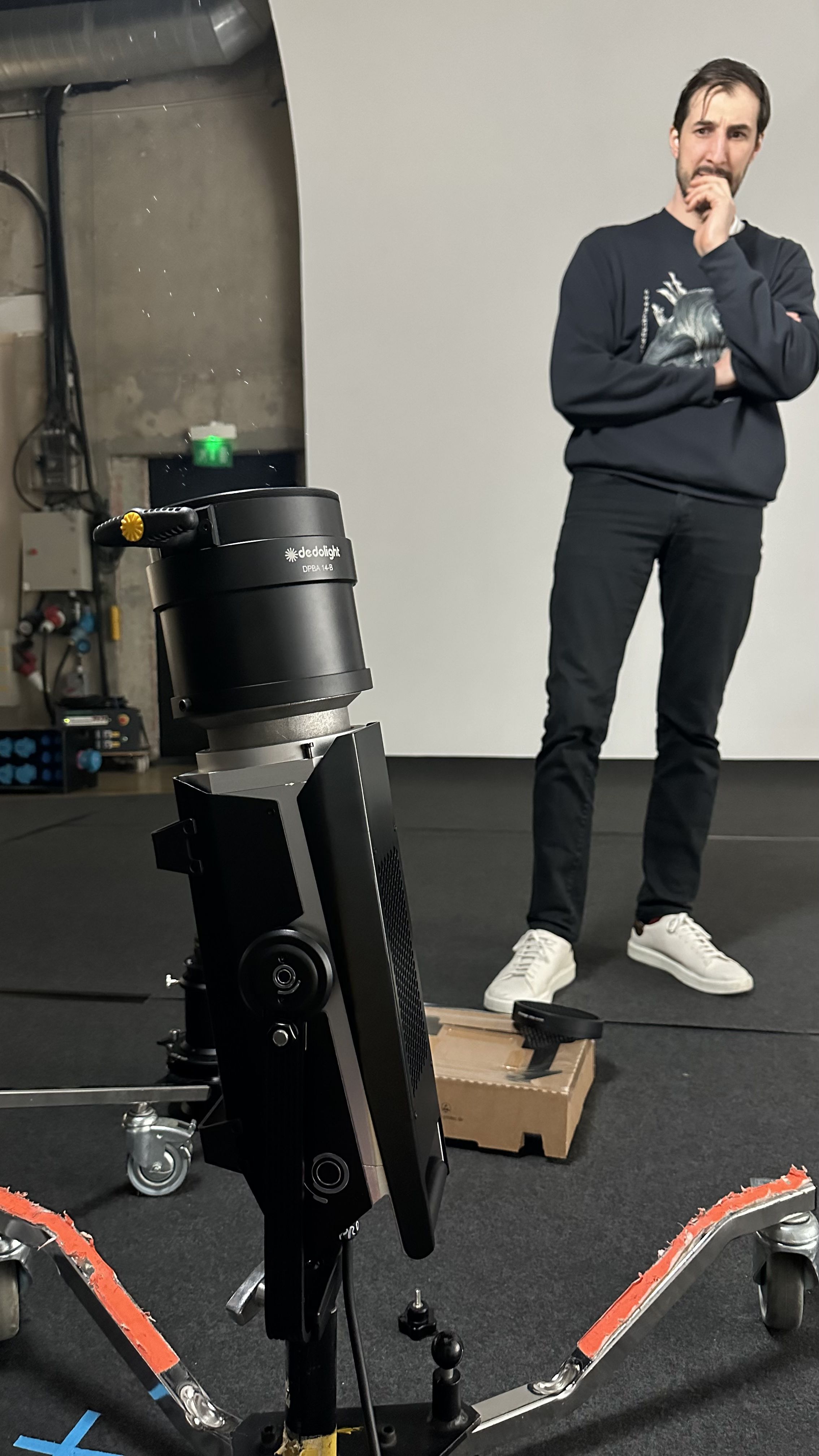
Another question raised during this workshop: the compatibility of DPBA lenses with other brands, or how to benefit from this innovation without having to change all our equipment lists. The main consideration would be to find a way to become familiar with these tools without changing all our habits, particularly through hybrid configurations. Here, for example, we tested a DPBA lens on a Prolycht projector, the Orion 300, which offers undeniable advantages in terms of power and color consistency.
We also explored the use of optical snoots, even though the flux loss is logically greater since the barndoors cut the edges of the beam to prevent it from spilling over.
Some Interesting Extras
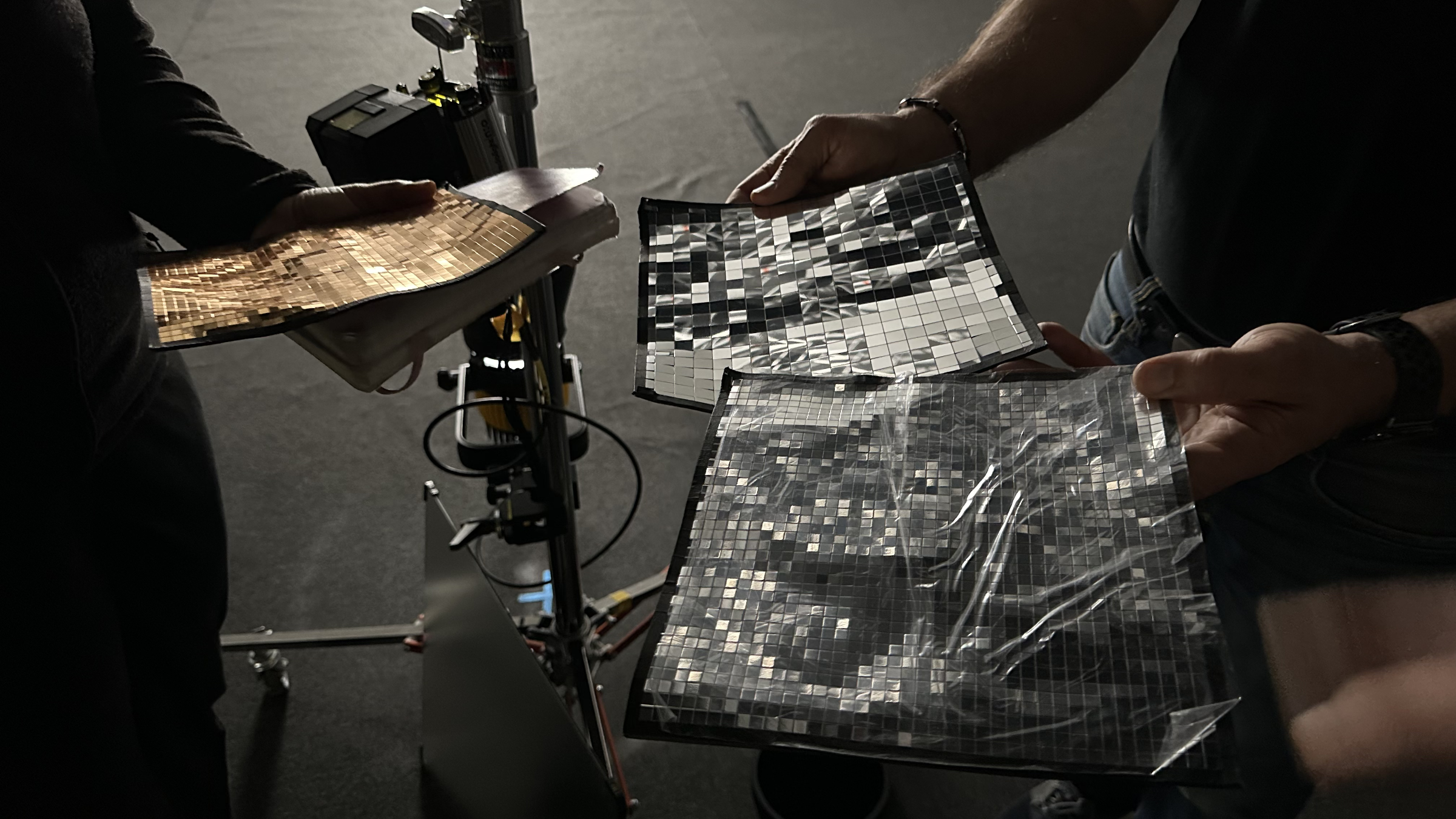
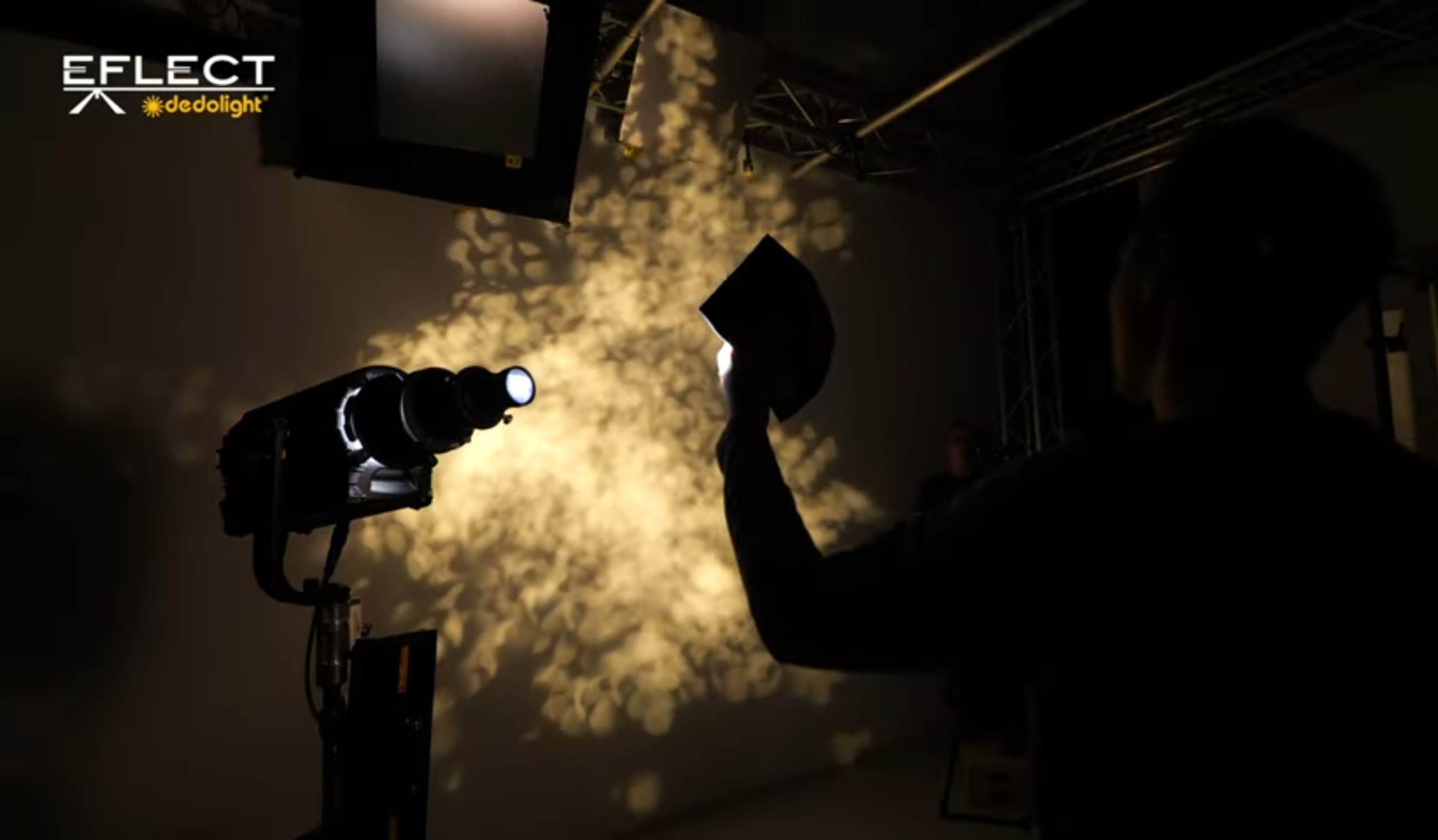
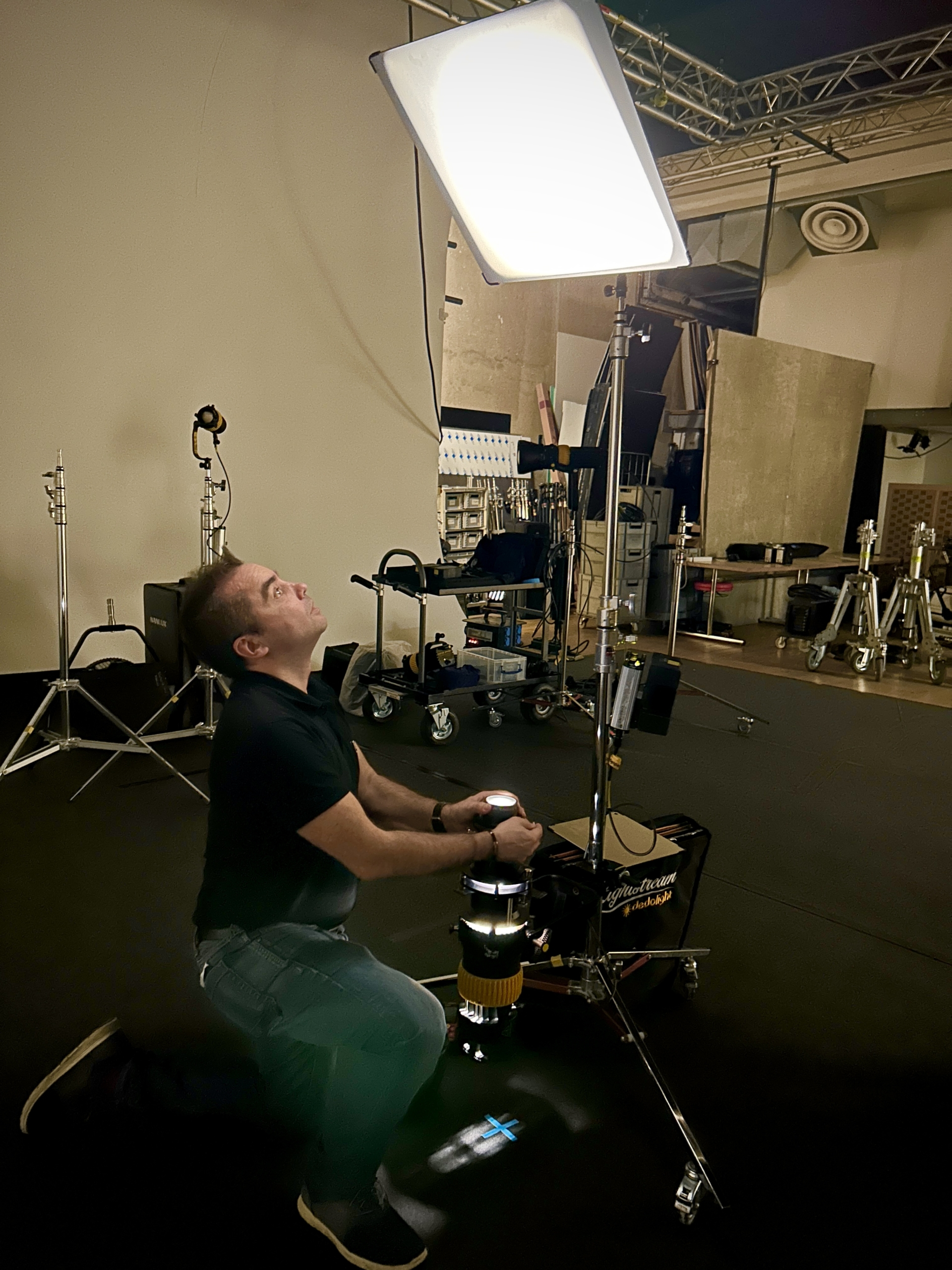
To conclude this workshop on a slightly less technical note, we played with the colors and reflections made possible by these parallel beams. Dedolight offers a range of little-known accessories that allow texturing a background through reflections on flexible mosaics of different sizes: the Eflects.