A house with no electricity deep in the Auvergne, a grandmother who is the village bonesetter and whose health is failing… The Blade, The Wound (Le Couteau et la Plaie) “sort of tells the story of the end of a world,” says Lucas Minier, its director and cinematographer.
Screened in the student program of the 47th Manaki Brothers festival, this graduation film from the cinematography department of La Fémis explores, beyond what its story tells, how the things that “make” a film documentary are an integral part of fiction. We met Lucas in Bitola, North Macedonia, during the festival.
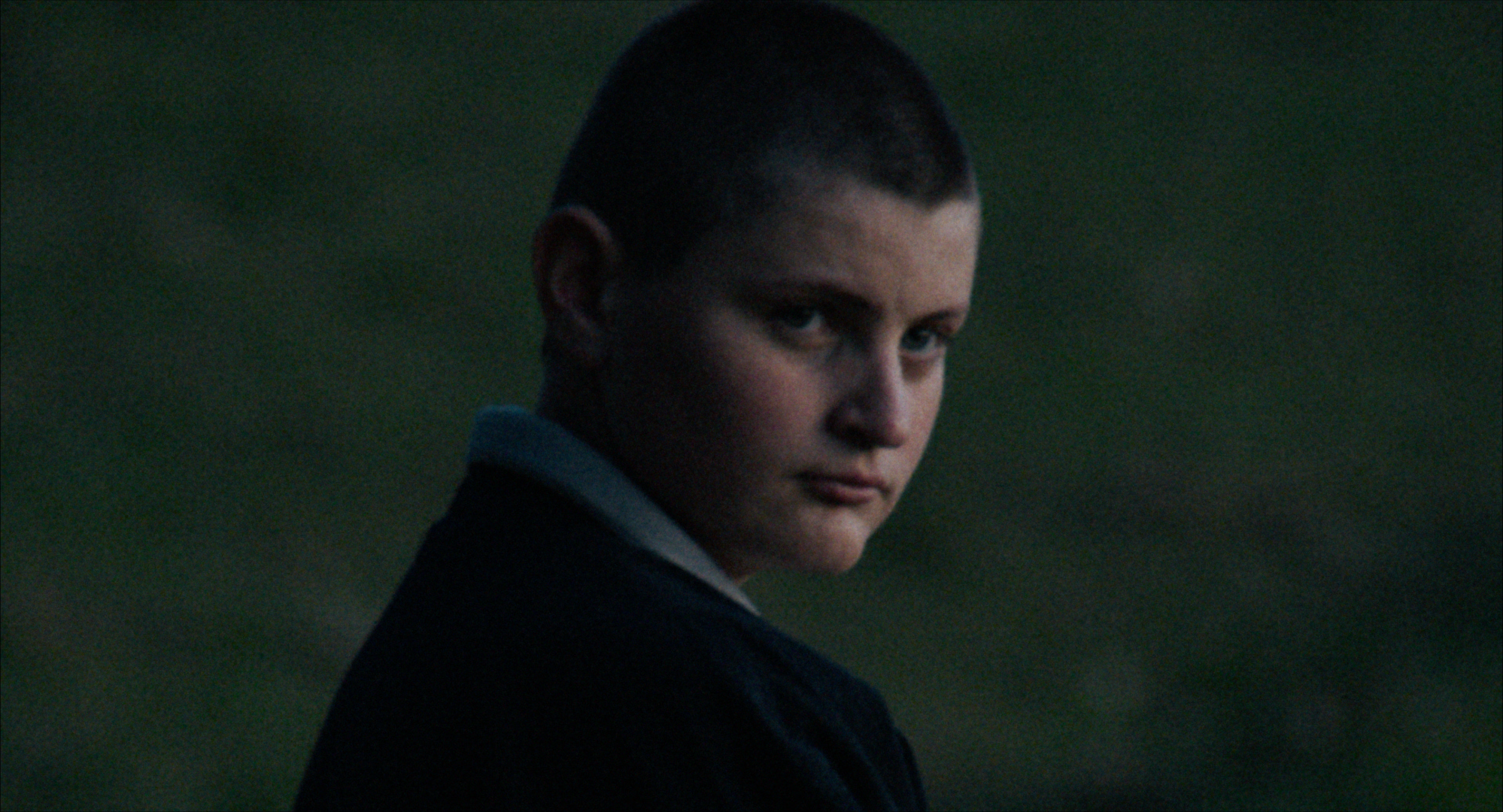
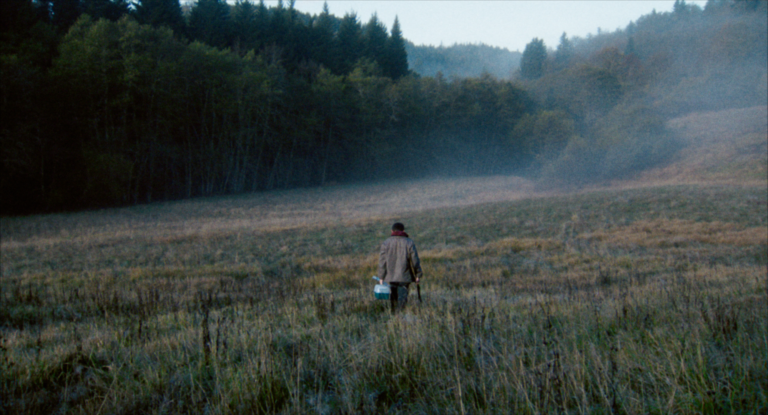
Still from The Blade, The Wound, directed and shot by Lucas Minier
“I didn’t belong there at all”
Thomas Lallier: I’d like you to describe your path, what led you to film school.
Lucas Minier: When I finished high school, I wanted to be a vet, so it had nothing to do with this. I started a science prépa (the preparatory classes for France’s elite schools), lasted six months, and realized I didn’t belong there at all. I wasn’t a film buff at all; I’d just made two or three little videos with friends. I changed course and got into a BTS, a two-year vocational degree in audiovisual production, in Angoulême, where I picked up scraps of film history and, above all, a lot of technique.
I’d been lucky enough to do an internship on a feature, as a camera trainee, and being on set had convinced me: I wanted to make films. So I moved to Paris to find work, a bunch of us from the program shared a big apartment, and I worked for three years: internships, then third camera assistant on TV series, a bit of advertising, until I moved up to second.
Then came Covid, which was my turning point. I told myself: I like being on set, but actually, I don’t like what I do. I didn’t feel I belonged as an assistant; I felt I wasn’t bringing much. They’re very physical, technical jobs, and when you’re third camera assistant, you’re pretty far removed from filmmaking. I’d shot a few projects as DP, mostly music videos.
I’d never have gone back to school if it hadn’t been a public school, and I think I needed to meet people my age who also wanted to make things. After the lockdown, I only worked on series, projects I didn’t even feel like fighting for. I took the La Fémis entrance exam, which takes six months, and when I found out I’d got in, I told myself: right, I’m saying goodbye for a few years…
T.L.: To the professional world.
L.M.: To the professional world. That didn’t stop me from working on the side. The program is a crash course when you don’t really have any technical experience, because it’s all hands-on, but I needed more projects. So I kept shooting shorts outside school, as DP, and working as an assistant to make my hours. But that’s something I try not to do at all anymore.
T.L.: Did you still manage to get your intermittent status [the French unemployment insurance scheme for freelance film and entertainment workers, Ed.] while you were studying?
L.M.: Just after my final year. When I started at the school, I had intermittent status, so in my first year I was still getting benefits. After that, there was far too much to do at school to put in 507 hours [the annual minimum required to qualify, Ed.]. I could have worked in the summer, maybe, but summer is when all the directors are bursting to use their free time: we made films, lots of extracurricular projects, often unpaid.
T.L.: So that’s when you became a film buff, during the BTS?
L.M.: Not during the BTS, after! When I moved to Paris, there was a period of several months when I was looking for work. I lived in Choisy-le-Roi (in the Paris suburbs), on the RER C line, a few stops from the Bibliothèque François-Mitterrand and Line 14 to get to Bercy. I spent every single afternoon at the Cinémathèque française. That was the trigger: films I didn’t know, retrospectives, discussions, film clubs. Especially Jean Douchet’s, a great man full of ideas, with a fairly precise vision of the cinema he wanted to champion. I was hooked.
T.L.: In your class, were there others with that kind of path, who didn’t come straight from their studies?
L.M.: There was one other guy who’d worked quite a bit before, the oldest in the class, who’d actually worked even more than me.
T.L.: Is that Tommy Boulet?
L.M.: Yeah, that’s Tommy. The others had wildly different profiles: art schools, lots who had only ever studied, a straight-line path. What I found surprising was that everyone arrived with strengths in different places, and that it all evened out quickly: those who had no basic technical knowledge caught up super fast.
“You’ve got to watch this”
T.L.: If we talk about documentary: quite classically, the way people perceive cinema goes largely through fiction; it’s what gets the widest distribution, what’s most canonical, in a way. What led you to the documentary form? I prefer to say documentary form rather than documentary.
L.M.: I’ve only shot one documentary, in my second year, because at the school there’s a year really dedicated to it. Before that, I was super naive. I pictured something where reality had authority, as if you had to work with it and not alter it by reshaping things. The film I shot as DP made me realize that the result was very different. A documentary isn’t a form of “manipulation,” it’s a discourse about things. There isn’t one documentary form, there are loads of them. The simple fact that it’s a point of view on this world, on an experience, already steers things: there isn’t one representation of the subject you’re filming, there are lots.
It also comes down to how the camera behaves. There are films where the setup (the dispositif) is openly acknowledged, where the person filming addresses the person being filmed, and films where, on the contrary, there’s a kind of withdrawal, of respect for what’s happening. Either you get very close to what you’re filming, or you step back, because the situation calls for it. I feel that documentary involves human relationships far more than fiction does.
T.L.: I can pinpoint the moment I found myself facing documentary cinema and a door opened in my brain. Was there a film where you thought, “Oh, OK, so you can do that!”?
L.M.: The films that have stayed with me the most are ones where I almost felt I was formally watching a fiction, while knowing full well that what was happening wasn’t controlled, wasn’t restaged. Direct cinema in general, and more specifically one film that was a shock, Pierre Perrault’s The Shimmering Beast (La Bête lumineuse, cinematography: Martin Leclerc). There’s also Gigi, Monica… et Bianca, by Yasmina Abdellaoui and Benoît Dervaux (cinematography: Benoît Dervaux), which was a revelation, and Birthplace, a Polish documentary by Paweł Łoziński (cinematography: Artur Reinhart).
What these three films have in common is the way the camera behaves: you feel there’s a human being behind it, carrying it; all three are shot handheld. And at the same time, the editing arranges the shots so as to create continuity; you feel you’re watching a fiction film. What was groundbreaking about direct cinema was the absence of voice-over: you tell a story solely from blocks of present time, arranged to build a discourse purely with the tools of cinema. That’s what moved me most, apart from the stories themselves, which are obviously incredibly powerful.
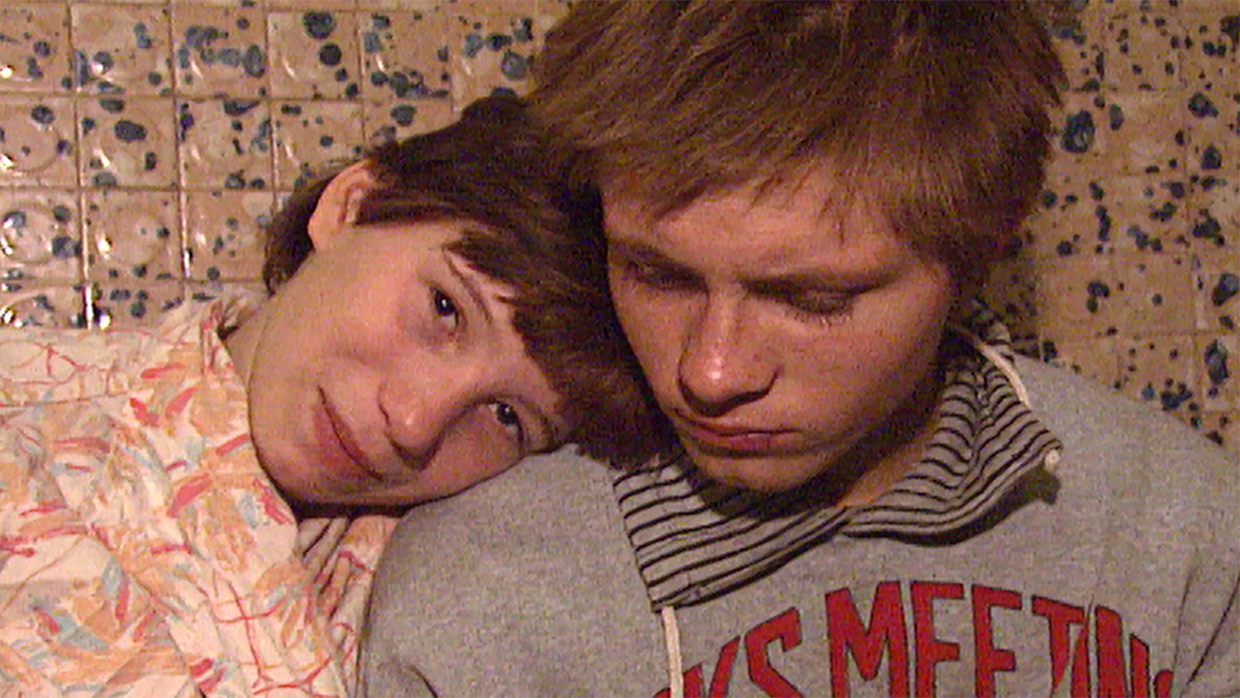
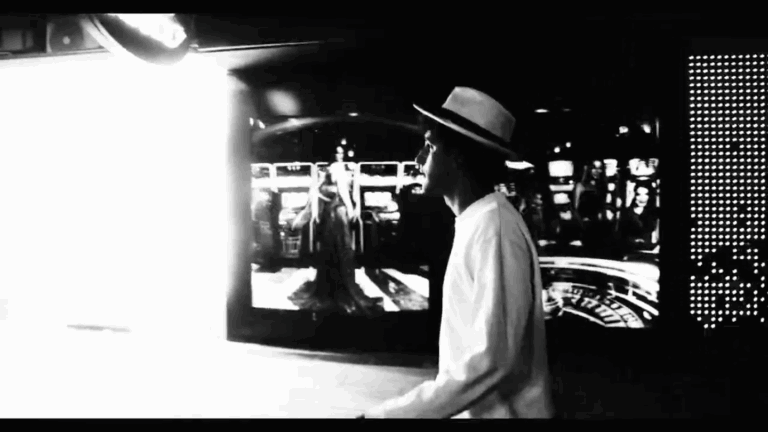
Gigi, Monica… et Bianca, by Yasmina Abdellaoui and Benoît Dervaux (1996). Cinematography: Benoît Dervaux
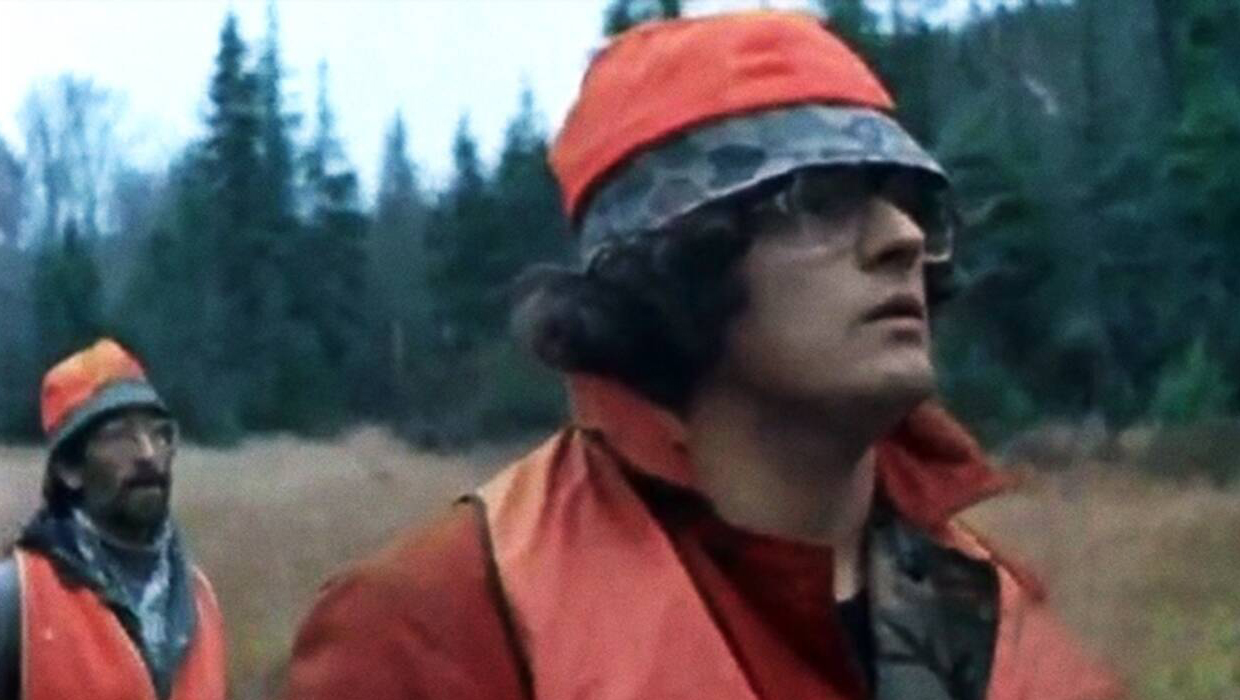
The Shimmering Beast (La Bête lumineuse), by Pierre Perrault (1982). Cinematography: Martin Leclerc
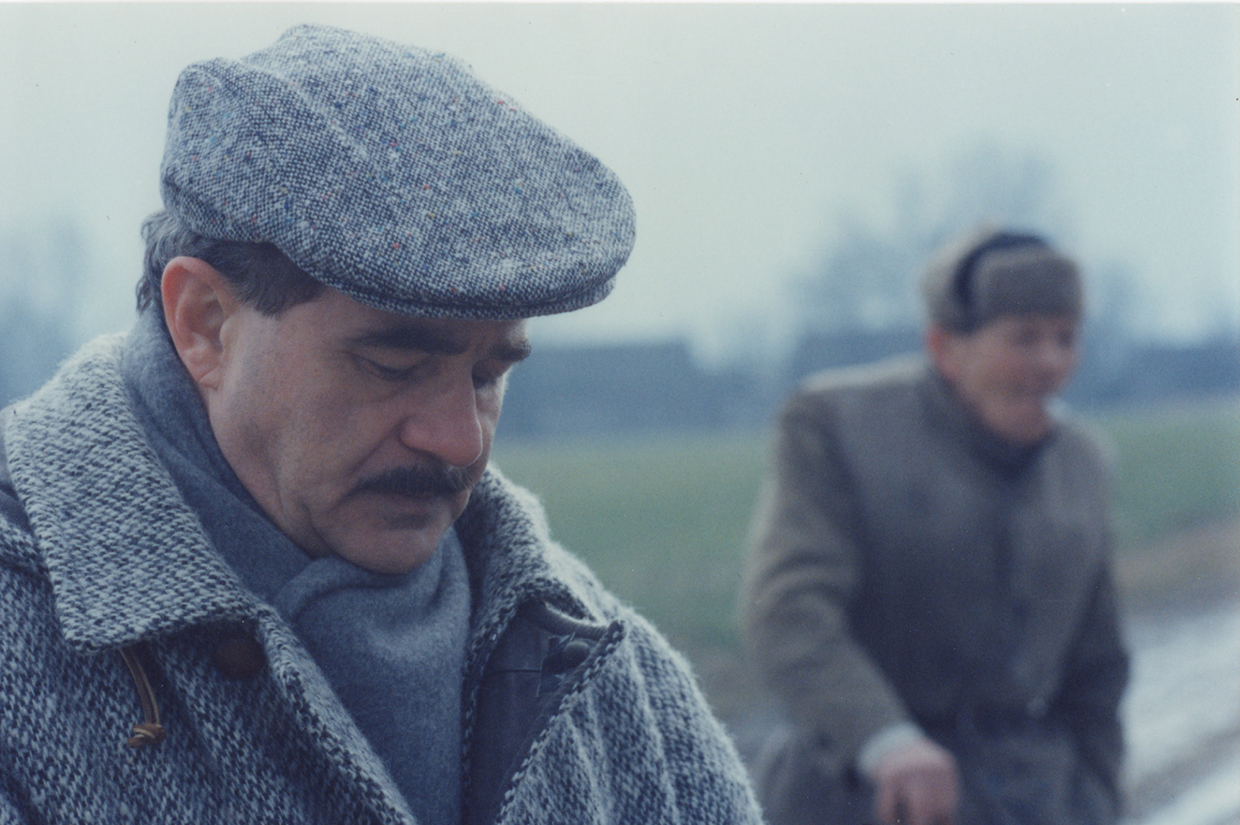
Birthplace, by Paweł Łoziński (1992). Cinematography: Artur Reinhart
T.L.: Were these films you saw during your studies, or ones you found on your own?
L.M.: The first was Gigi, Monica… et Bianca. I worked with Benoît Dervaux, who is the Dardenne brothers’ camera operator and cinematographer, and one of my favorite documentary filmmakers. But it wasn’t even him who told me about this film: it was his assistant, with whom I’d made a film before. Because of the conversations we’d been having about cinema, he told me: “You’ve got to watch this.” And it really was a kind of shock. The others I discovered later, during my studies, but not as part of the curriculum. What about you, what was it?
T.L.: When I was 17 or 18, I ended up at a film summer camp organized by the City of Paris, at a festival in Prades, in the Pyrenees. And that year, there was a Louis Malle retrospective.
L.M.: I didn’t know he’d made documentaries, actually…
T.L.: Louis Malle started out as a cameraman for Cousteau, on The Silent World, then he directed fiction films, Elevator to the Gallows (cinematography: Henri Decaë), Zazie in the Metro (cinematography: Henri Raichi)… And from the late ’60s on, he also made documentaries. In ’68, he went to India and shot a documentary series, Phantom India (cinematography: Étienne Becker), in which he travels and tells the story of his India in the first person. In France, he shot Human, Too Human (cinematography: Louis Malle and Étienne Becker) in the Citroën factories, with the assembly-line workers, which really fascinated me, and Place de la République (cinematography: Étienne Becker), a series of man-on-the-street interviews that is truly joyful. While continuing to make fiction films, he later made several documentaries in the United States…
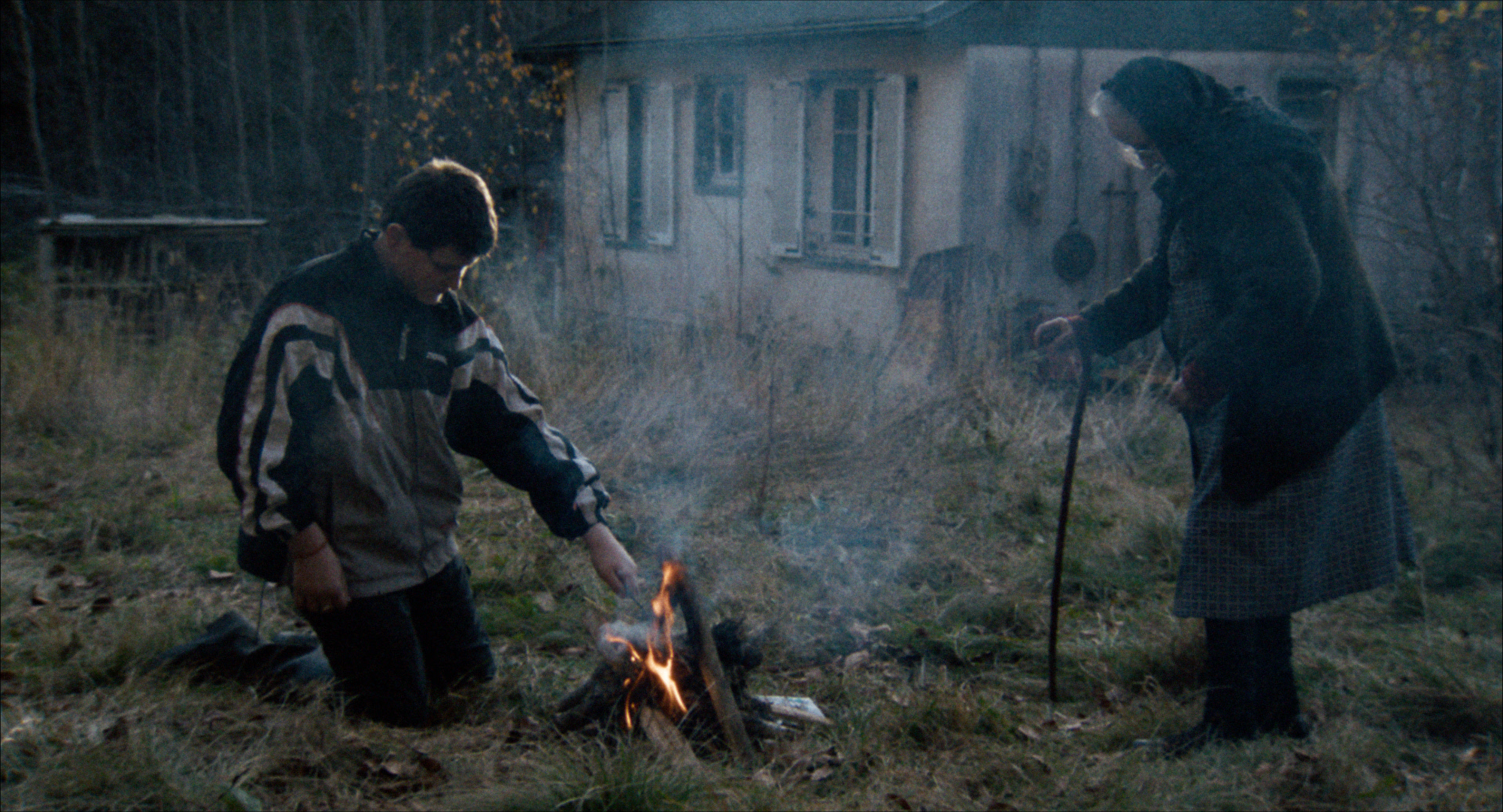
Still from The Blade, The Wound, directed and shot by Lucas Minier
“The reality of bodies”
T.L.: To go even further into these modes of film storytelling: for you, what “makes” a film documentary?
L.M.: It’s a question I tackled head-on in my graduation thesis. What makes documentary, for me, is a kind of irruption, of overflow, that you couldn’t normally get in fiction. As a viewer, you feel you’re witnessing something beyond human imagination, something only real people are capable of inhabiting. In documentary, things happen that are so out there that you think: if we’d tried to write it, no way, no human brain could be twisted enough to imagine that.
And from a formal point of view, a number of codes that came out of documentary, especially direct cinema, have been collectively absorbed, and they turn up in fiction.
T.L.: A floating camera…
L.M.: Exactly. It’s the legacy of a setup that tried to adapt to reality by shrinking the crew and the equipment. There’s a rather interesting document about this, a talk Mario Ruspoli gave at a conference on direct cinema (actually a report written for UNESCO and presented at the Beirut round table in October 1963, Ed.), where he describes the “lightweight synchronous film unit” (groupe synchrone cinématographique léger). There’s this notion, fairly revolutionary at the time, of synchronizing picture and sound: a tiny crew, able to record picture and sound at the same time, to move around, to move as one, to take up as little room as possible. Cameras got smaller, zooms were developed so you wouldn’t have to change lenses, to capture the flow of life. And these new tools created new forms.
So what makes documentary, roughly speaking, is the handheld camera, the visible use of the zoom, those things where you feel there’s a human behind the camera who isn’t in control of everything that’s happening but adapts to it. And above all a very embodied gaze, one that observes and behaves according to what’s happening. Whereas in a whole strand of classic industrial cinema, you build a discourse out of things you know are going to happen, on the assumption that a given camera move, a given distance, will create meaning in the edit.
T.L.: Hence the impact the long take has on the viewer.
L.M.: Totally. The longer the shot lasts, the more overflow you get, and the more you feel you’re witnessing live what’s happening. It’s this way of approaching reality that creates a believability that survives the edit. For me, believability is the coherence of the story, of the characters, of the film you’re offering: it’s not about making people believe they’re watching something real, it’s about making them believe in a coherent whole… You can stray from realism as far as you like, people still believe in that whole.
T.L.: What might distinguish documentary from fiction lies partly in technique, but obviously not only. When I discuss the ways documentary is filmed with students, I talk a lot about the stance of the person filming, which is at once physical, intellectual and moral.
L.M.: You have an extra responsibility when you shoot a documentary, because a contract is established between the viewer and the person filming. That’s the moral part. On the physical side, a sentence struck me in my research: Jean-Louis Comolli said that documentary is defined by the reality of bodies, from the moment a body gets to work, goes into action, whether it’s restaged for the film or captured on the fly. I feel this physicality is closely tied to documentary practice.
T.L.: Some great cinematographers, Roger Deakins for instance, say the best film school is documentary. Both for learning how to look and for knowing where to stand, physically, to take the viewer into the story.
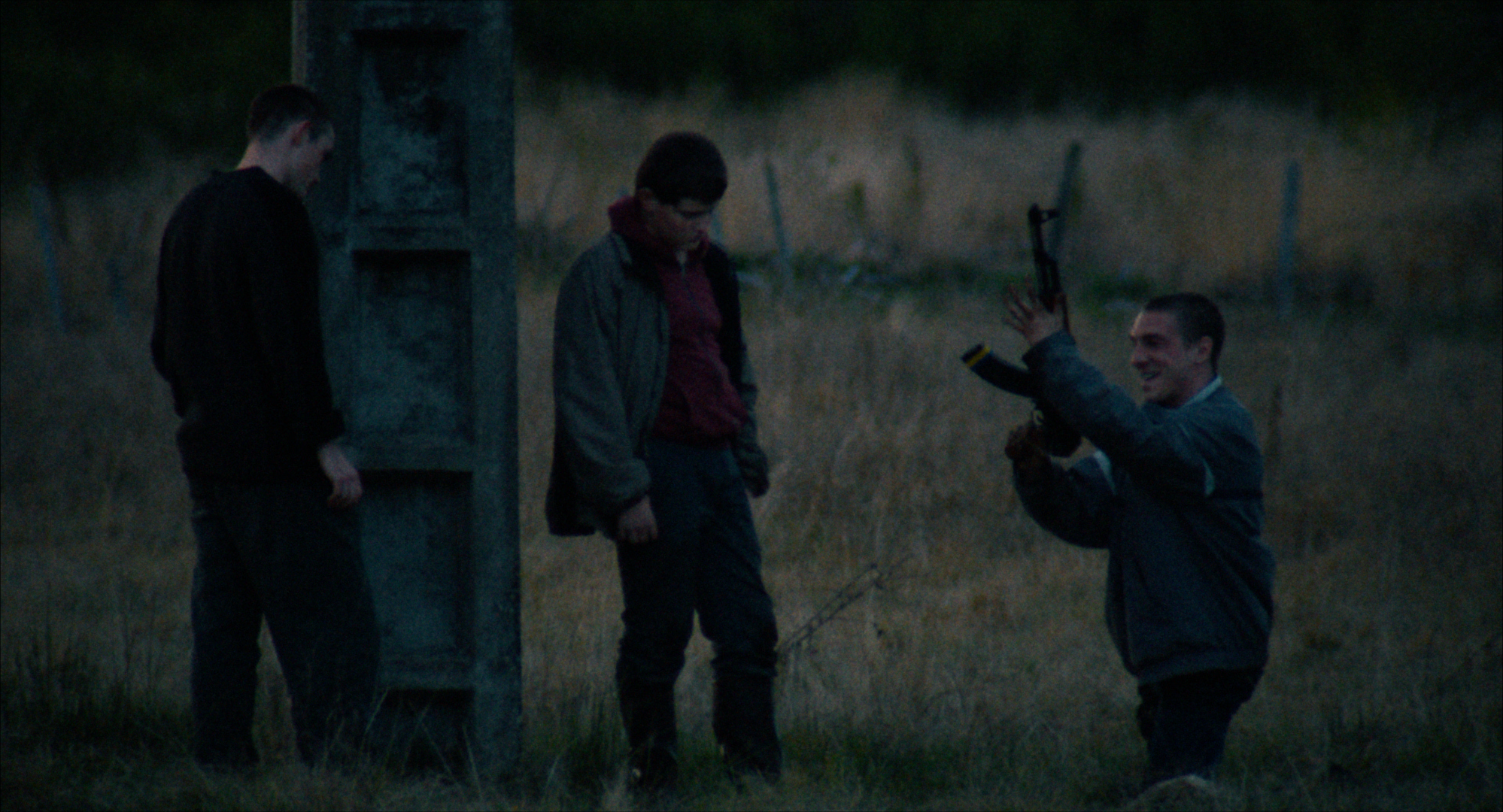
Still from The Blade, The Wound, directed and shot by Lucas Minier
“A big playground”
T.L.: What were the production conditions of the film we saw here? What made you choose this story, and how did you build your crew?
L.M.: When I started at the school, I was so happy to have access to equipment that I already pictured myself making a classic fiction film, with a truck full of gear. And in the end, my years at school only strengthened an idea that kept growing over time. Most of the films that interest me are shot with very little, and I feel there’s a kind of urgency to look for other ways of making films, outside the industrial circuits, in terms of film narratives but also for very concrete reasons of production and means.
I wanted to make films the way I like to make them: with far fewer constraints than a classic fiction. So we worked in a much more horizontal way; everyone pitched in a bit everywhere… I set up in an area I knew well, the Auvergne: I have a friend who lives there and I’ve been going there very often for about ten years. I called on lots of people I know there. It took me six months of prep.
I wanted to start from improvisation with the actors, and free myself from planning the shot breakdown in advance: to go through the experience of shooting a documentary, but having set up all the conditions for what I filmed to have a narrative thread. I’d have loved it to be a real documentary, but the film veers a bit into dystopia, and I would never have found that as is.
T.L.: How did that translate in terms of crew? Were you on your own, were there people with you, did you do any lighting?
L.M.: We set up a big playground, that house and the land around it, where the actors could move freely, and where I could focus on them and on the frame, without controlling where they went. That meant lighting as little as possible. There was no electricity in the house, so we brought in light mainly for the night scenes. We never relit the day scenes: it’s really the natural light of the house.
That said, I did build that light, because we completely redressed the interiors. With the production designer, a friend of mine who isn’t a designer by trade, we worked on the density of the walls, the dressing of the rooms, the props: everything was reshaped for the film. We designed the contrast ratios we created with paint and patina so there’d be no need to relight. And that’s great, because I could shoot 360 degrees. I didn’t necessarily do it, but at no point did I feel constrained by anything.
On set, I was assisted by a classmate, Quitterie Huchet, as camera assistant, who also helped me when we did lighting. There was a sound recordist, who also held the boom, and friends who produced the film, for logistics and above all to help me see more clearly. Wearing two hats (I’m directing and shooting at the same time), it’s good to have people to talk things through with. There was no written dialogue, just situations, which we went over with the actors and non-actors at the start of each scene.
As viewers, we need to hold on to pre-established narrative patterns, to a dramatic arc. That’s something I wanted to question a bit, because in documentary it’s much freer. The film is much more abstract than a classic fiction. It makes for a film that works somewhat through impressions, with a rather hazy plot, and I completely understand that some people might have a problem with that. Anyway, from a technical point of view, I don’t know if it’s interesting to talk about it?
T.L.: Yes, absolutely.
L.M.: I used the school’s Alexa 35, in Super 16 mode. I didn’t want to reduce depth of field, but above all, the school’s equipment included Super 16 zooms (a Canon 11–165 mm, Ed.), and I’ve kept using those lenses on lots of other projects. They have huge focal ranges, they’re super light, super compact, and handheld they’re incredible. No lens built since then ticks all those boxes. Aperture-wise, I think it opened to 2.5, so that’s fine, and you can push the Alexa 35’s sensitivity. Super 16 mode was to match the lens coverage, so it wouldn’t vignette.
I used the camera’s in-camera textures, Nostalgic: not the harshest, not the softest, the one in the middle. I’d done tests, and it brought a certain softness. In Super 16 mode, the texture is more pronounced: it doesn’t adapt to the sensor area you’re using; maybe there have been updates since, I don’t know… The texture is set for one area, and when you crop in, it stays the same, so on screen it looks more visible. In post, we added even more texture, because I had in mind documentaries from the ’60s and ’70s, the films of the NFB (National Film Board of Canada), Pierre Perrault’s, Michel Brault’s, whose visual texture interested me.
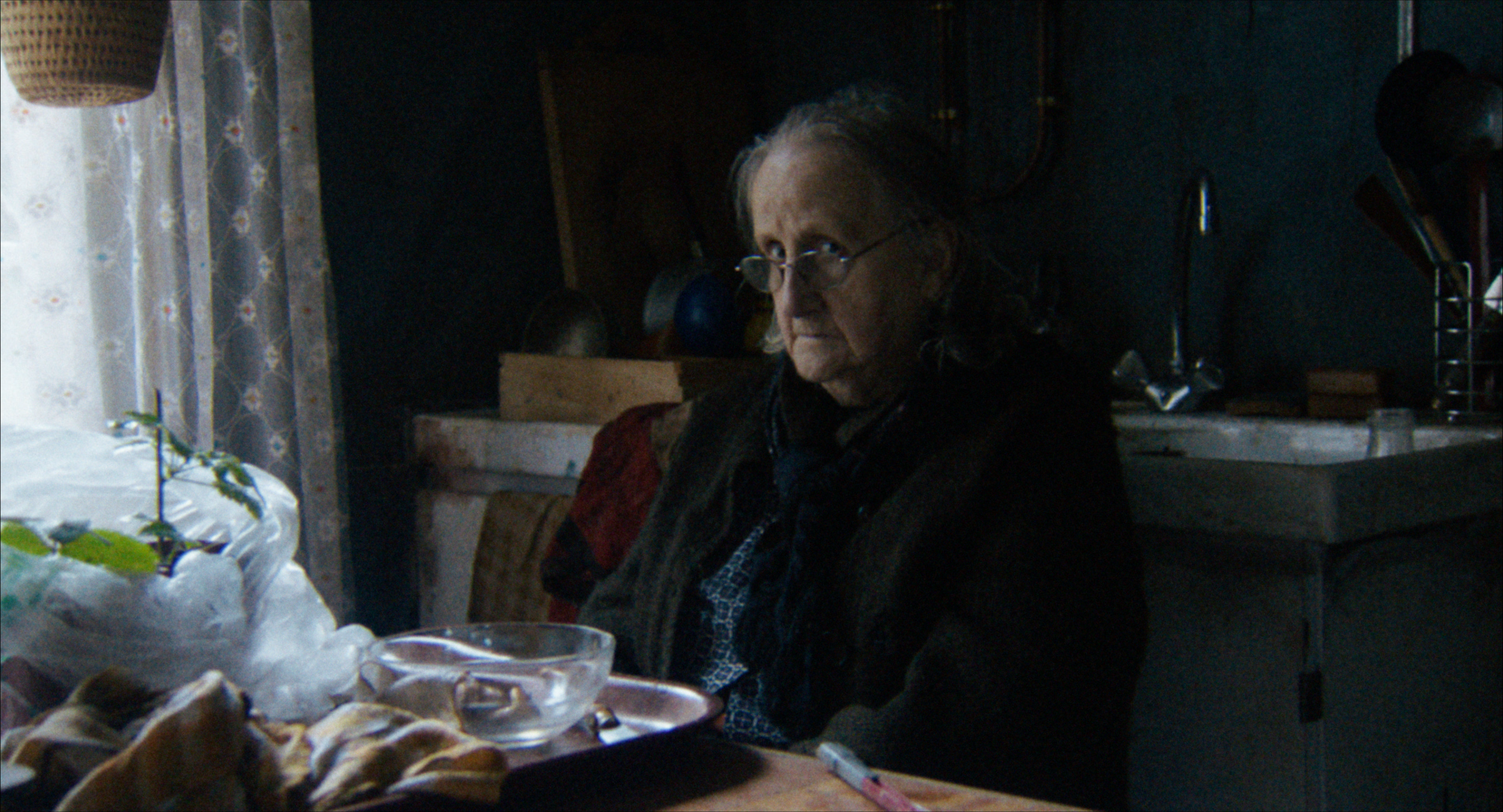
Still from The Blade, The Wound, directed and shot by Lucas Minier
T.L.: When you say you added texture in post, what do you mean? Did you put grain back in, a bit of bloom?
L.M.: Grain. The lens already had character: depending on the focal length, the edges are much softer, you get chromatic aberrations. We added grain, and it works really well. The camera’s internal texture and the added grain play off each other; there’s a bit of a double-layer effect. It speaks to me much more than other attempts I’ve made since, where there’s no texture in what you shot.
T.L.: And you think that’s down to the Alexa 35?
L.M.: I think it’s really tied to the texture option. Lots of DPs say you shouldn’t do it. The main line I’d heard until then was that it’s better to do it afterwards.
T.L.: It’s scary, because it’s destructive, but I think it’s very successful. You managed to translate visually everything we’re talking about here. You can clearly see you were after that slightly dated look, and it’s very effective.
“Something that is dying out”
T.L.: What were you after in the grade, in terms of hues?
L.M.: I came in with references from films shot mostly in Eastern Europe, with landscapes and weather very different from the Auvergne, where at the time of the shoot there were still autumn colors, a bit warm. The grass was still a bit yellow, there were slightly fluorescent yellow leaves, and that wasn’t the film’s image. The palette was already largely defined by the production design, the costumes… It’s a film that’s pushed quite hard in contrast, a bit desaturated, with rather cold hues almost all the way through. I don’t know how to say it without sounding too literal, but there’s something wintry about it. For me, the film sort of tells the story of the end of a world, the disappearance of something. It’s part of my imagination, and I share it with lots of people: something that is dying out.
T.L.: This dulling of the hues is fully part of the visual perception; your choices are completely in tune with the narrative intent. And I think you can feel it in the skin tones too.
L.M.: I often watch films shot on film to try to understand what a skin tone is on screen, because everyone has very different opinions about it. I feel there’s a tendency to always want to liven up skin by warming it. We talked about it a lot with the colorist (Guillaume Schmitter), and we didn’t go down that road. I don’t think we cooled them: to begin with, the characters had fairly cool complexions, or a bit of redness from the cold. But we didn’t warm them up…
“One day behind”
T.L.: Was there someone to give you feedback during the shoot? A script supervisor, someone at the monitor? Or were you really the first and only viewer of the images, the one making all the decisions?
L.M.: It was a fairly horizontal experience. The camera assistant had a monitor, and the two producers, who weren’t there as producers in the traditional sense but also worked as ADs, wardrobe and location managers, had a video feed and gave me feedback. The other particularity is that we brought the film’s editor (Titouan Ropert) onto the shoot. Every night, he went through the rushes and started cutting the scenes shot the day before: he was always one day behind. That was incredibly valuable for understanding which direction the film was taking, and for his take on how I was approaching the shoot. We’d analyze all that together in the evening, and his view was quite liberating: he helped me really throw myself into the film with the camera and control what was happening as little as possible.
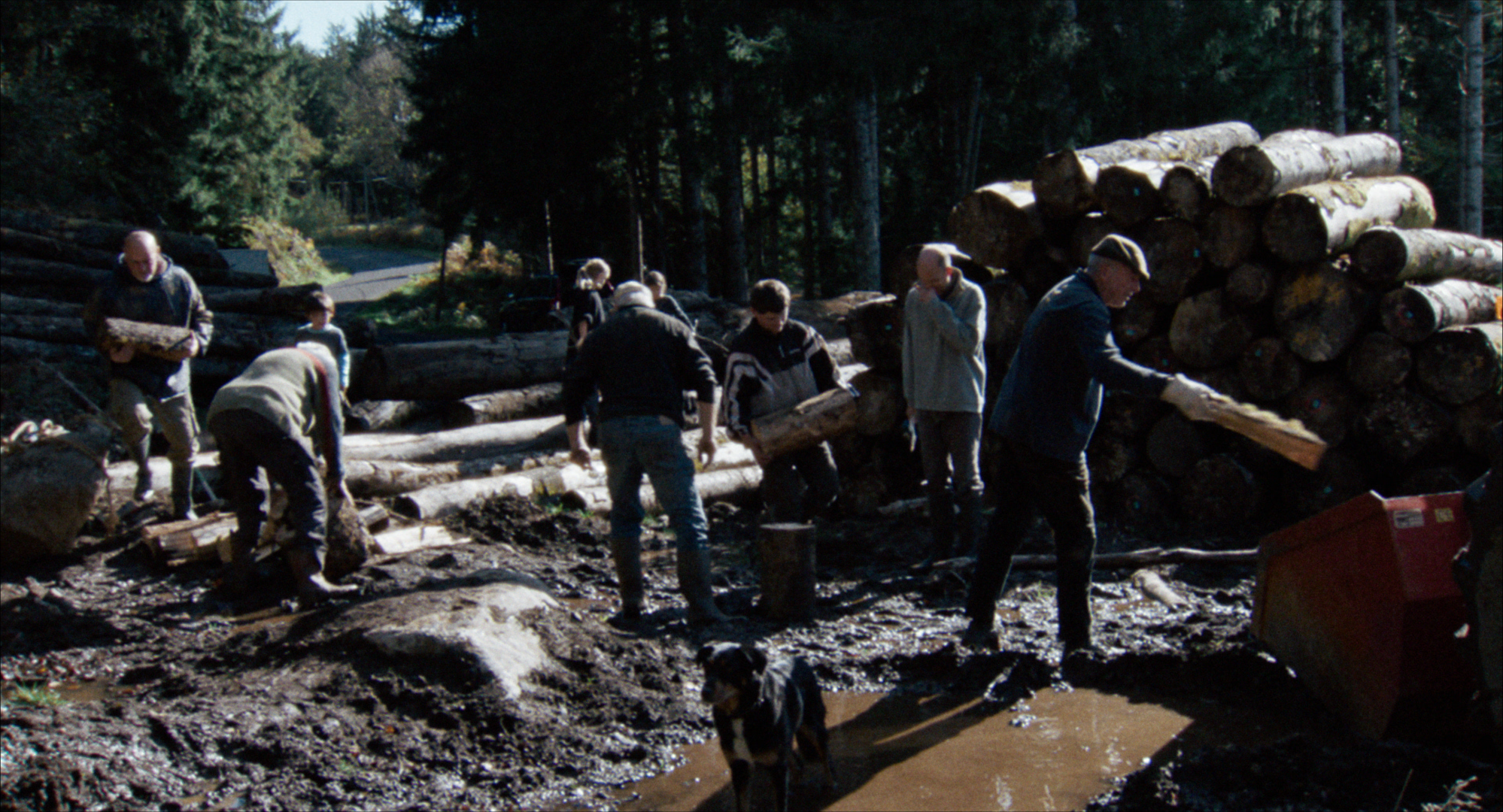
Still from The Blade, The Wound, directed and shot by Lucas Minier
“Making room for the Real”
T.L.: I’d like you to talk a bit about your thesis. I imagine it responds to the film: what did you say in the thesis that you didn’t say in the film, or vice versa?
L.M.: The heart of my thesis is questioning the way films are made. Industrial fiction cinema is financed on the basis of the script and the stars, well-known actors, roughly speaking. One way of approaching it differently, and lots of filmmakers do it, is to build the film around a setup, a dispositif. That’s what I wanted to do with The Blade, The Wound, and it’s what I argue for in the thesis.
I’d also say that documentary isn’t really something you can assign a form to. Films that ape documentary by borrowing its codes, for me, that’s not enough. They’re coming at the problem from the wrong end: it’s rhetoric, essentially formal, to create immersion, to make people believe… They’re completely mistaken about what documentary can bring to fiction.
The thesis then goes on to put the setup back at the center of filmmaking, which means asking how to make room for the Real. And you can make room for the Real in a fiction film: by choosing your tools, defining a shooting method, a dogma, by stripping back everything you can. I shot my film before writing the thesis, so when I wrote it, I was still charged with what I’d experienced on the shoot.
T.L.: Today, to finance a documentary, you have to produce a statement of intent, a script; it really requires writing a proper screenplay. It requires knowledge of dramaturgy, with that rather misleading business of trying to pin down the accident, which by definition is unpredictable. Whereas on some of my films, I discovered the film’s deep, underlying meaning during the shoot, and that convinced me, deep down, that I hadn’t missed my film!
L.M.: For me, all of that has a hugely political dimension. Making films is a human experience, something you share with everyone you make the film with. But the funding system doesn’t take that into account at all. It’s based solely on projections: how you’ll manage to make possible an idea that’s been laid out on a table, with masterminds who know perfectly well how to produce it. Error, accident, what I called overflow at the start of our conversation: there’s no room for that. Whereas I’m convinced you have to embrace it fully.
When I say it’s political, it’s just that we’re human beings, and what makes it beautiful and powerful is the overflow, the accident. It’s not the performance of trying to stick as closely as possible to something you imagined. It’s taking into account that the world is crossed by a great diversity of things, that you’re not alone in the world when you make films, that you can create a space where you can welcome these phenomena and represent them as truthfully as possible.
T.L.: As far as I’m concerned, I keep making films to try to answer that question: what does it mean to make films? Deciding to make a film is a pretty crazy undertaking; you put a lot of time into it, a lot of yourself, and what comes out is an attempt to answer that question. I haven’t found a better way to put it.
L.M.: I’d say that making films is perhaps an attempt at communication between human beings. Communicating, and conveying an experience lived by human beings. Maybe that’s a bit limiting… It’s hard, you know. But I think the notion of communication is definitely there.
Still from The Blade, The Wound, directed and shot by Lucas Minier
“The right distance”
T.L.: What did you take away from this experience of being your own cinematographer on a film you directed? We cinematographers work in a state of extreme concentration; we try to keep everything in our heads to be as accurate as possible in our approach. And when you’re directing as well, especially in documentary, everything rests on your shoulders. What did it trigger in you, or confirm?
L.M.: A kind of letting go, of accepting that you can’t always control everything. I learned it in several stages, but this film sort of crystallized it. There are loads of details you pay attention to as a DP that aren’t important at all, neither for the film nor for the story you’re telling. You have to focus on the essence of what you’re filming, and sometimes sacrifice desires, aesthetic impulses, to adapt and be as accurate as possible. It’s pretty basic, but that’s really what it is: being completely at the service of the bodies moving in front of us, and of the mise en scène.
And it sharpened the question of distance for me: the relationship between focal length and how far to stand to respond to a situation. There was something (I don’t really like the word) instinctive about it: I had to respond to a situation as if it were real. That was my setup; I didn’t theorize what I was doing with the image. On the other hand, at several points, I felt I wasn’t in the right place, not at the right distance. I felt uncomfortable in my own body, in that spot, at that moment, in relation to a situation I had written myself. But since I was really living it as something happening in front of me, I felt it.
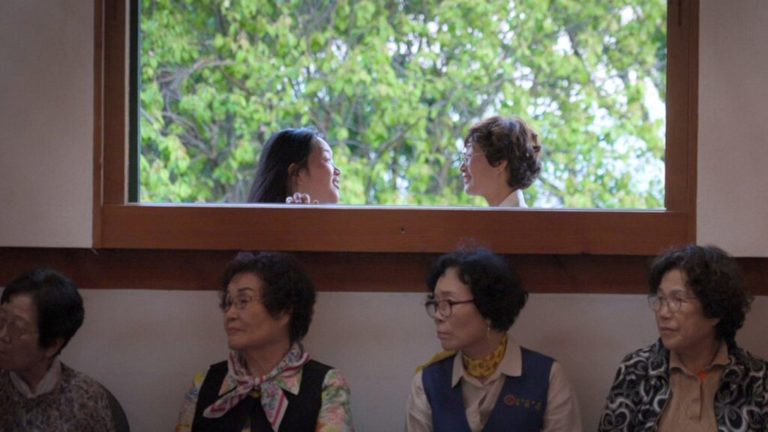
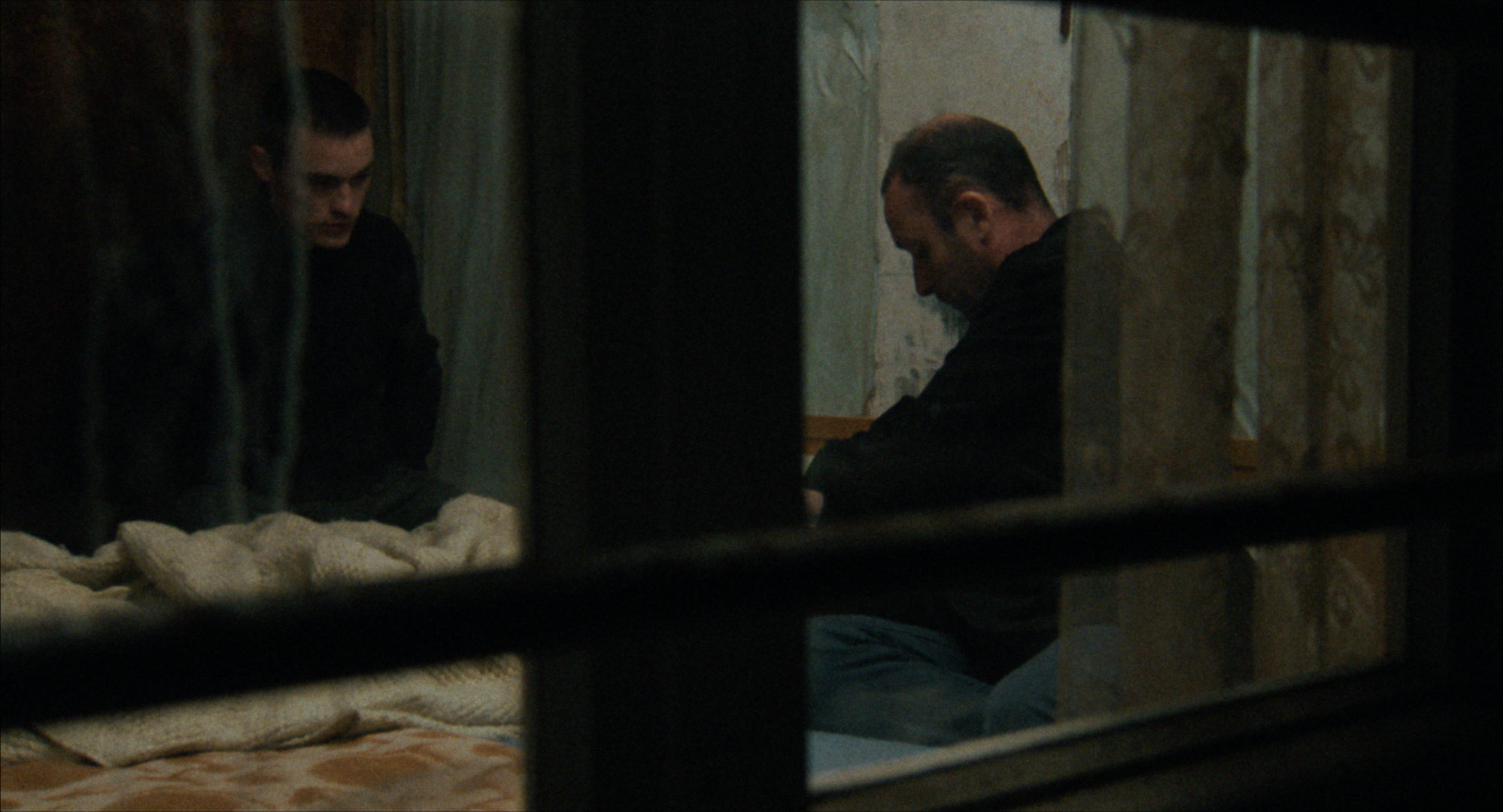
Especially at the end of the film, when the grandmother dies and the doctor comes to certify the death. We searched a lot. At first, I was in the room with the characters, I could hear everything being said, and I really felt like some kind of intruder. I told myself: if there were a dead body, a doctor coming to announce the death in the middle of the three grandchildren, I would never take up that much space in that little room. Then I stepped back into the hallway, and there was something a bit voyeuristic about it; I still didn’t believe in it. In the end, I went outside, walked around the house and filmed through the window. And I think it has a lot to do with sound. In theory, it doesn’t remove the voyeuristic side at all, especially since you have foreground elements framing the shot… But it brought far more restraint, because you can’t hear what’s going on: there’s a boundary. The only sound we kept was the soft patter of the rain, something much gentler, and very strong too.
So that’s what I took away: really considering position, just where I put myself, and how much it matters. I find it a really interesting way of approaching filmmaking.
T.L.: Being at the right distance.
L.M.: Exactly, that’s it. The right distance.
The film’s page on the La Fémis website (in French)
The student program of the 2026 Manaki Brothers festival