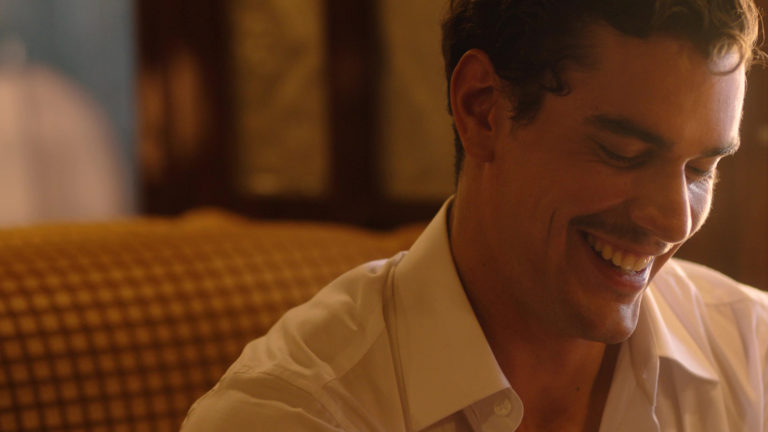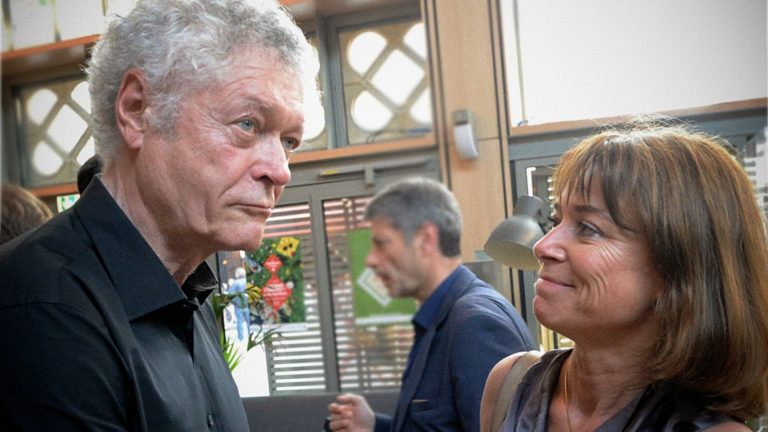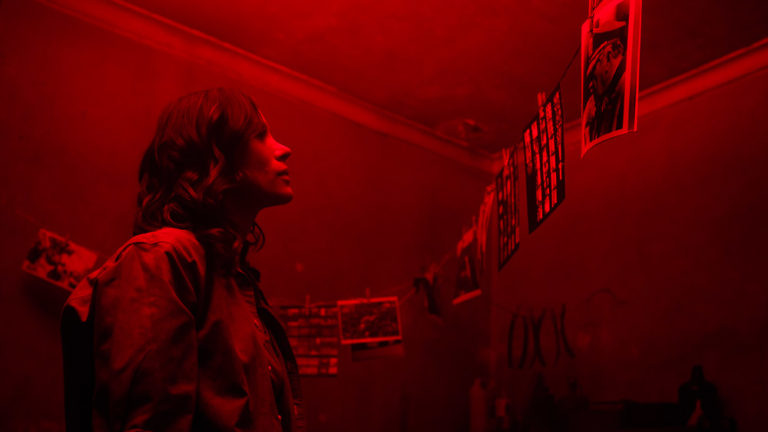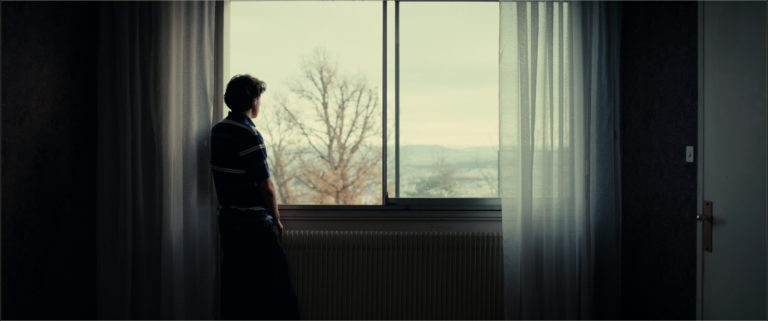
Thomas wakes up in the hospital after three years in a coma. He remembers nothing. A psychologist tells him that his family was murdered and that he is the sole survivor of the massacre. She helps the young man piece together his fragmented memories. Unsuspected truths and terrifying memories then emerge from this mental labyrinth. Pierre Baboin tells us about his work on Christophe Charrier’s new film, broadcast on Friday, October 28, on Arte.
Le Patient isn’t your first collaboration with director Christophe Charrier. What was the first step in your approach to the cinematography for telling this story? How did your prep work on the film come together, and did this long-standing trust open up wider fields of exploration for you?
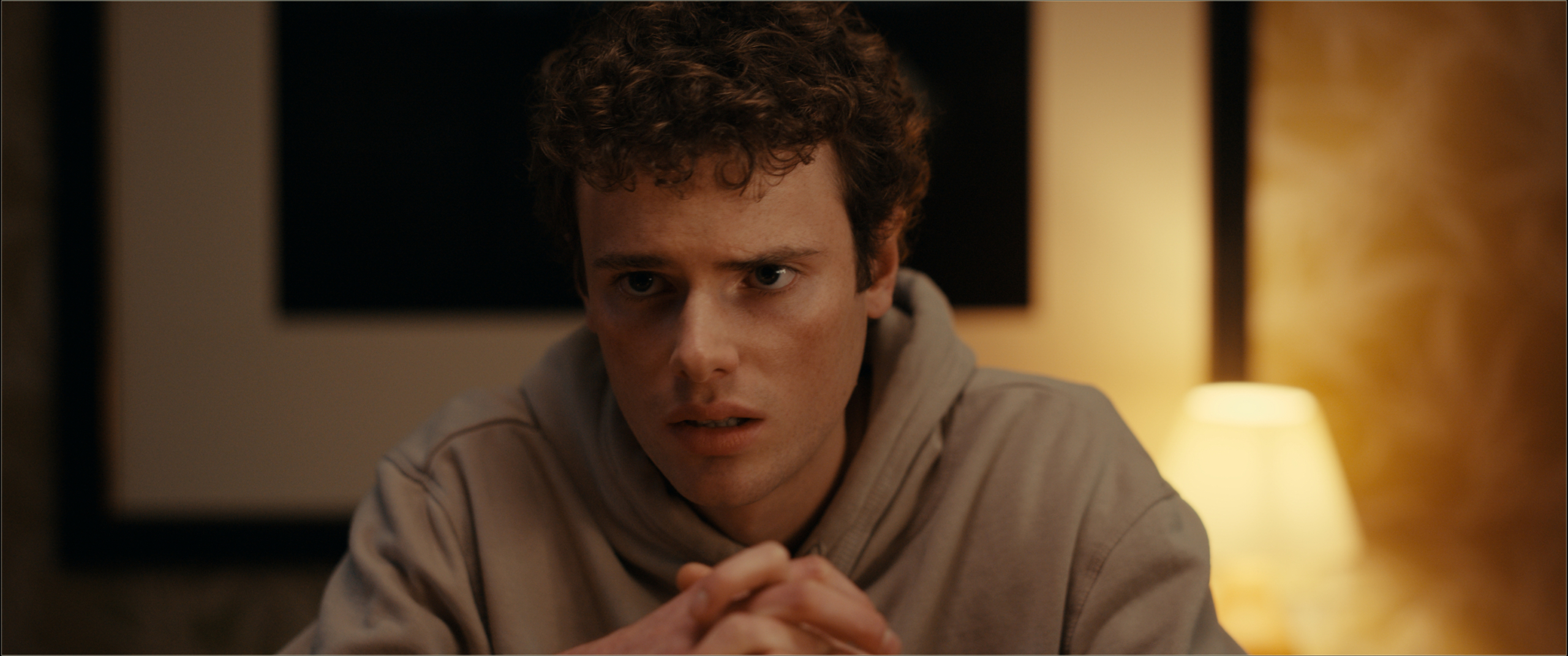
Christophe knew right away that he wanted an autumn film, so the color palette, the density levels, and the mood quickly became obvious. Then the choice of locations and of the region (Clermont-Ferrand) allowed us to refine the visual direction further.
During prep, Christophe fed me all sorts of references, notably The Outsider for the dark silhouette and the mood, Elephant, and a photo of a young man sitting with his head in his hands against the wall of a room at the end of a corridor, and we started gathering visual references and building a mood board. I like this process: by crossing different references, it lets me gradually grasp the atmosphere the director wants. Working with production designer Clémence Pétiniaud was also essential, because it ensures real consistency. The idea was to create a strong image that was still grounded in reality. To carry the story without being aestheticizing or artificial. The cinematography also had to be timeless, not subject to any trend, both in the choice of focal lengths and in the way of lighting. The story is set in the late 1990s / early 2000s to sidestep cell phones, but it could take place at any time.
Christophe and I have worked together on other projects, and of course on his film Jonas (Arte). It’s very pleasant to work with a director who trusts you and whom you know well. I know right away what he will like or not, so my suggestions go in that direction. We save time. Christophe is very good at sharing his vision and getting us on board. He gives a real artistic direction, and everyone finds and takes their place. As for me, as the cinematographer, my job is to translate his vision into images. When that vision is clear, the work flows naturally.
On the contrary, I think this long-standing trust allows for more refined work that goes further each time. Knowing exactly where we want to go, on the other hand, lets me explore new ways of getting there, give my crews clear instructions, and move together in a direction everyone understands. When you’ve worked together for a long time, you get straight to the point!
Since this film is an adaptation of Timothé Le Boucher’s graphic novel, how did you approach your relationship to the original work, and to what extent did its imagery inspire and guide you?
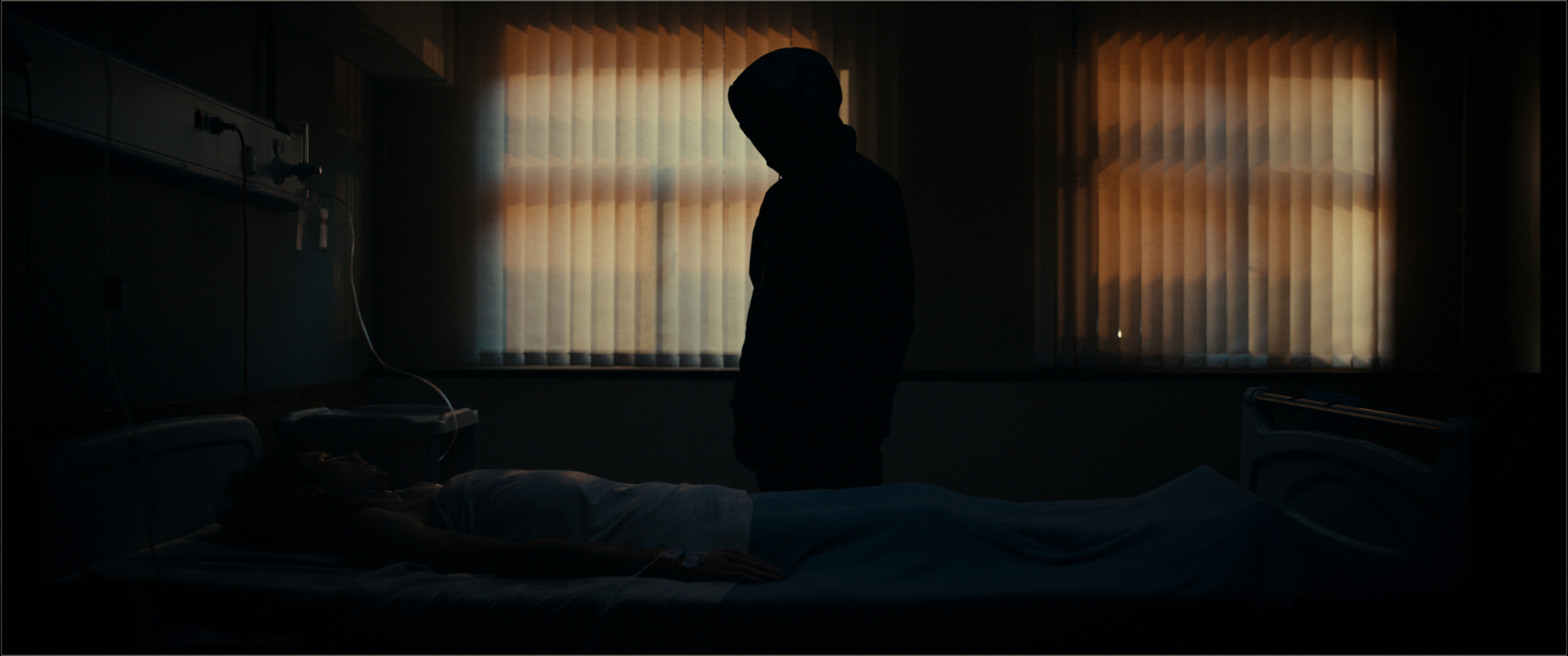
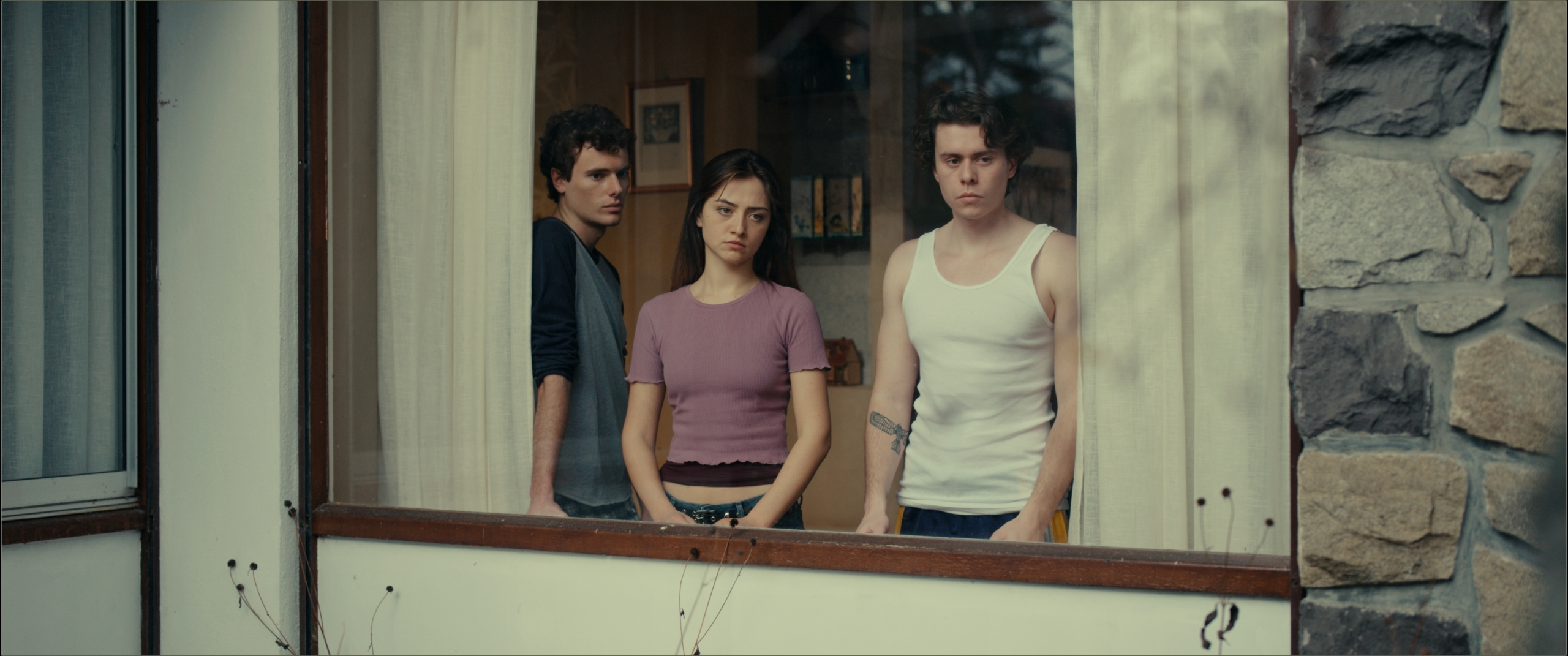
In terms of story, Christophe moved quite far away from the original work. The premise is similar, but the characters follow different paths, and some aren’t the same… Visually, certain panels made a particular impression on us, notably Thomas’s hospital room, the dark silhouette crouching on his hospital bed, and the Grimaud house. These images stayed with us during scouting, and of course during the shot breakdown, which Christophe does on location with his stills camera. Some shots were meant to be very graphic, very “framed,” in the spirit of the author’s work. Apart from these few references, we didn’t try to stick to the original; it was more of a starting point.
The viewer is plunged into the labyrinthine thoughts of this young amnesiac trying to reconstruct the sad reality of the day of the crime. You did an enormous amount of work building a constantly shifting mental space. Can you tell us more about your thinking on how to visualize these paths of thought? About the transitions between memory and reality, between day and night, and about suggesting absence?
In the very first minutes of the film, we learn that Laura, Thomas’s older sister, is missing. The absence of this sister does hang over the whole film. One character replaces another, memory warps, the frame empties. Thomas’s obsession with his sister feeds and steers his memories. When he comes out of his coma, he is disoriented. His memories blend and evolve as his work with his psychologist progresses. He even enters his memories “in real time” and shapes them, with his therapist’s help.
It’s a constant back-and-forth between partly fabricated memories and present reality; the timelines shift. Thomas’s path can take him from his recurring memory to that of the night of the murder, which means a change of time within a continuity of place. So, for example, we had to bring on nightfall and a storm as he walked through a door from a day exterior. Beyond the technical complexity of pulling that off, our goal was to create a shifting space-time and to lose the viewer. To change memories within a single shot, or over the course of a sequence. Staying with Thomas’s point of view was our obsession, and the whole shot breakdown was designed with that in mind. The back-and-forth between flashbacks and memories was worked so that they merge and blend. But it is Thomas who remembers, so it’s his gaze that determines the camera’s point of view. We never show anything he couldn’t have seen.
The empty room in the Grimaud house, at the end of that long dark corridor, was a way of giving weight to Thomas’s wanderings through his memories, like drifting through a labyrinth. This corridor echoes the one in the hospital where he is staying. There’s a whole interplay in this film between what happens at the hospital in the present and the memories that certain objects or situations evoke. A bit like in a dream, where an outside sound can steer what happens in the dream.
The famous dark silhouette in a black hoodie, oppressive in its repeated, unexpected appearances, like hallucinatory flashes, is everywhere. It exists only in Thomas’s head.
Did you set up a particular workflow to help you manage the complexity of the different space-times?
I generally work with a single LUT per film, except when there are timelines or places we want to treat very differently. I like the idea of one overall “sauce” per film. Of course, the grade lets us bring in color variations to give the film its rhythm, but when watching the dailies, you are in a strong, uniform atmosphere, in the tone of the film. I think it’s important for the broadcaster, the production, and the director to feel “inside the film” when they watch the dailies. With Thibaut Pétillon, my colorist, we used the images from the filmed tests with the actors, costumes, and set elements… to build a fairly complex LUT that would give the film its chroma and contrast. This LUT, which exists in two versions (the one used on the camera during the shoot is a little more neutral), turned out to be quite close to the film’s final image.
Because of his long coma, Thomas can’t move around on his own and is often bedridden. There’s a real interplay between horizontality and verticality in the composition. How did you approach this?
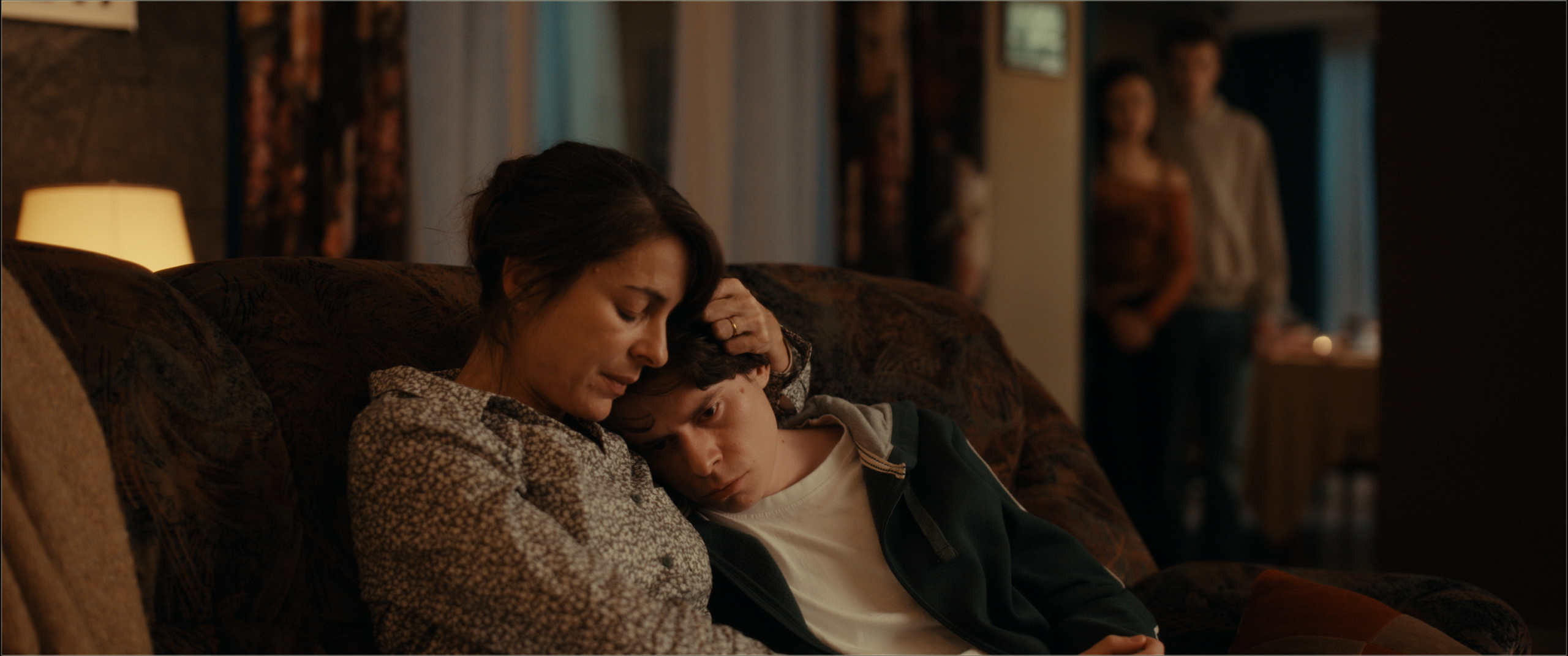
First, there’s the question of the aspect ratio. Scope is a horizontal format, and Thomas does spend much of the film in bed. So it’s naturally quite well suited. But beyond that, scope gives you set around the characters. Thomas sits in the middle of a frame that is bigger than him. Even in close-ups, the sets are present. For this film, it was important to give weight to what happens around our character. The context.
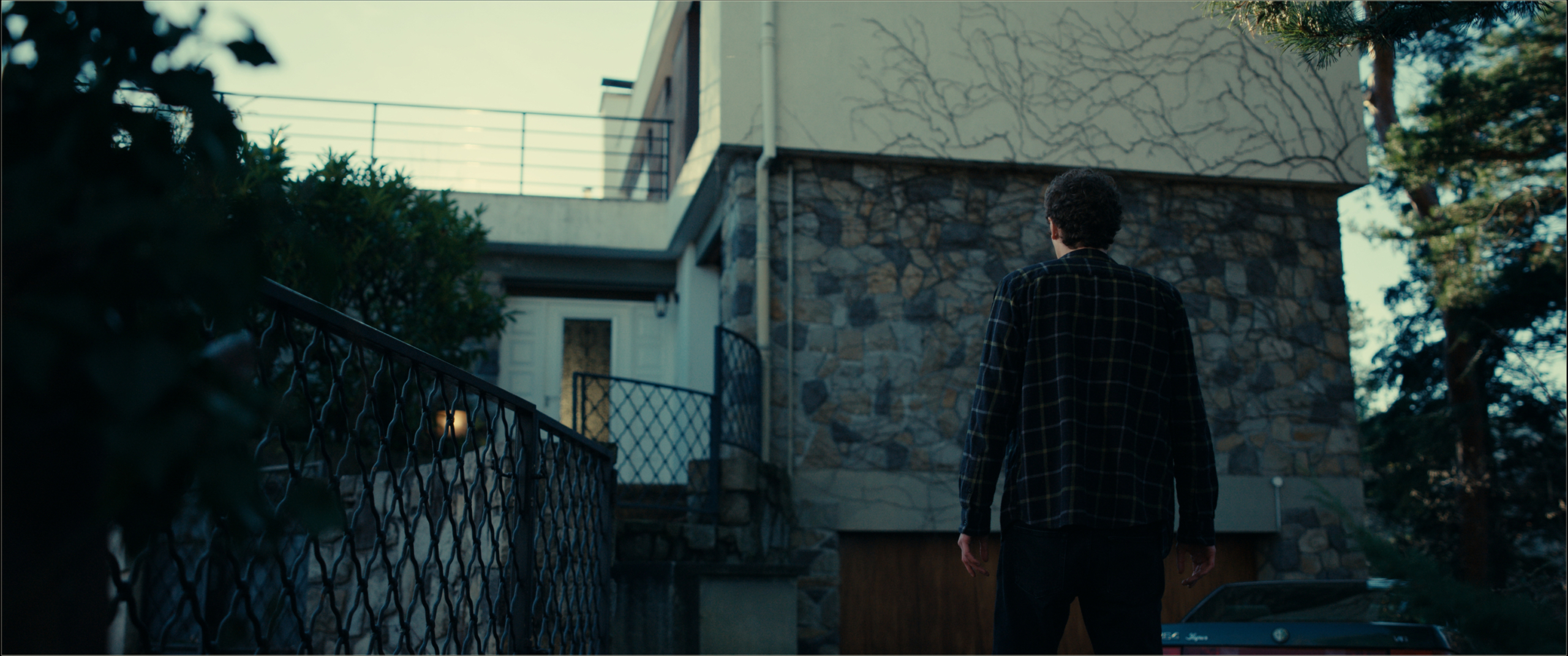
Christophe is a director who loves movement and stages accordingly. The challenge for Erik Bonnaire, my key grip, lay in the almost surgical precision of the moves he had to execute. In Thomas’s hospital room, despite the small space, we did shots moving more than 180° around the bed. This horizontal format is also very well suited to confrontations between two characters.
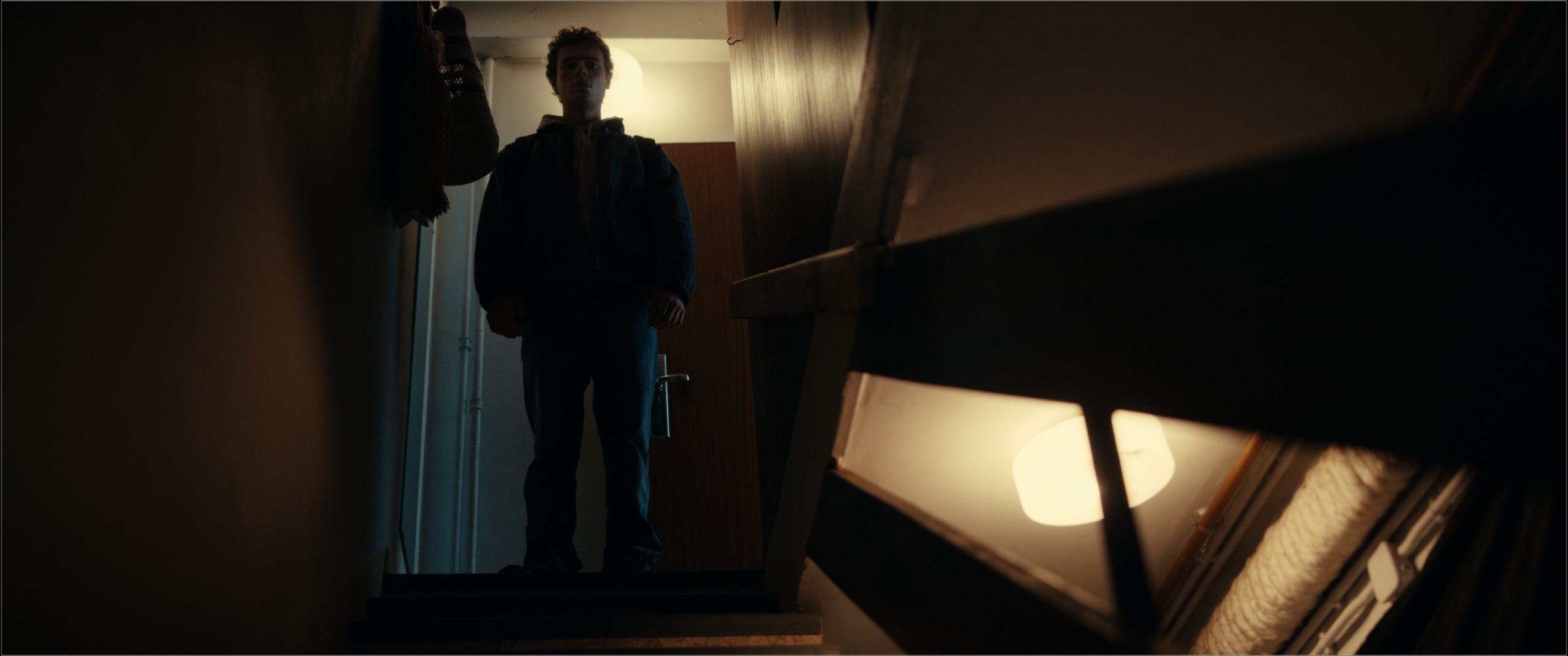
Verticality lies more in the storytelling. The empty room upstairs, Thomas’s room downstairs. And those stairs, climbed again and again!
On the technical side, how did you choose the equipment?
I really like the Sony Venice for the richness of its colors, its dynamic range, and its ergonomics. The choice was made fairly quickly for these general reasons, bearing in mind that I attach much more importance to lenses, which give an image real style. I challenge you to walk out of a movie theater and say for sure that you recognize the style of this or that camera, whereas with lenses, it can be done!
We worked with Transpa as our partner. I went to do preliminary tests with Baptiste Brandily, my camera assistant, to decide which lenses we would use. We compared Master Anamorphics, Signature Primes, and Optimo Primes. I quickly felt that the Optimos would suit this film. This new series was fairly limited, since not all the focal lengths had been delivered yet, but I was won over by their warm, round rendering and their particular charm. Later, I ran into Angénieux’s engineers, who were at Transpa during the camera tests, and they showed us customized versions. This series can indeed be modified by the rental house by swapping front or rear modules to get different renderings. You can even change the shape of the iris to get, for example, an oval or triangular bokeh! These options weren’t available yet, but I find the concept promising.
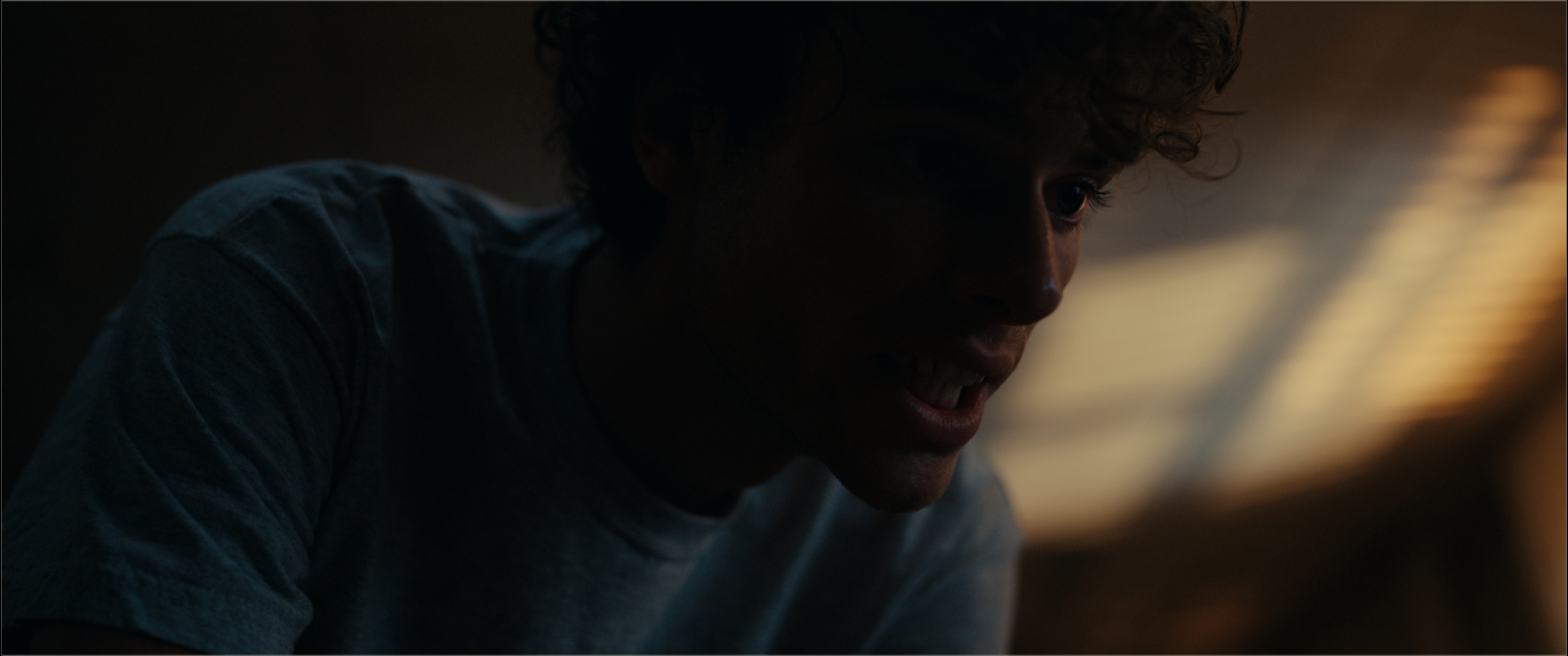
Our lighting challenge was to create a stormy night in sequence shots that could start with a door open onto a day exterior and continue up to the second floor in day-for-night. To do this, we used lightning machines combined with SkyPanels and Vortexes, all linked via DMX to a tablet. Mickael Radke, my gaffer, had his team build various programs combining the many sources so they could be triggered randomly and the effects would never repeat.
Shooting Christophe Charrier’s Le Patient gave me the chance to take on challenges, and the ambition of this project carried me along. I’m very proud of this film. I hope you enjoy it!
The film will be available to stream on Arte until November 26, 2022, then on Netflix worldwide from November 30, 2022.
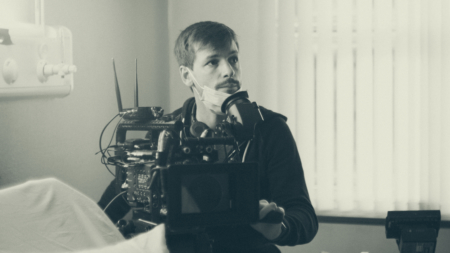
Pierre Baboin on the set of the film ©Fanny de Gouville
- Director: Christophe Charrier
- Screenplay: Elodie Namer, Christophe Charrier
- Based on the graphic novel Le Patient by Timothé Le Boucher
- Production: Stromboli Films, ARTE France
- Producer: Juliette Sol
- Cinematography: Pierre Baboin
- Editing: Stéphanie Dumesnil
- Music: Alex Beaupain
- Cast: Txomin Vergez (Thomas), Clotilde Hesme (Anna Kieffer), Rebecca Williams (Laura), Audrey Dana (Betty Grimaud), Stéphane Rideau (Marc Grimaud), Matthieu Lucci (Dylan), Alex Lawther (Bastien)
- Costumes: Marine Galliano
- Production design: Clémence Pétiniaud
- Commissioning editor: Isabelle Huige
- Country: France
- Year: 2022