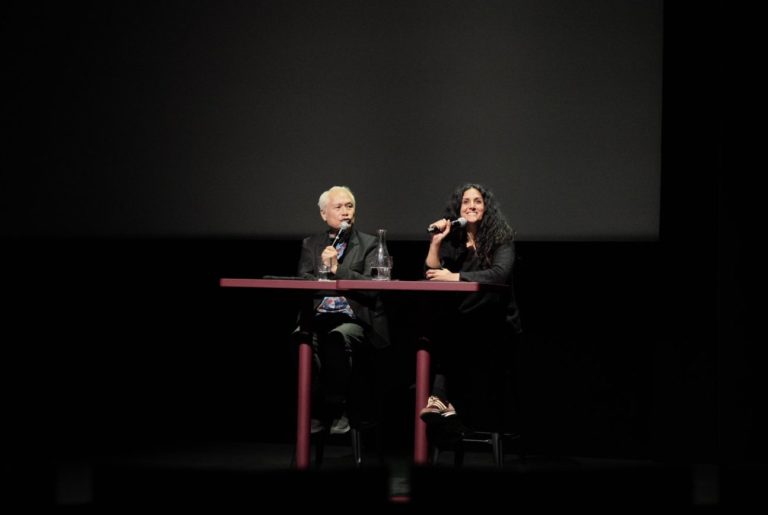
Spotlight on the career of Frida Marzouk, to whom the Chefs Op’ en Lumière festival dedicates a time of exchange, moderated by NT Binh.
Frida Marzouk is a French-Tunisian cinematographer, a member of the AFC (French Society of Cinematographers) and the UCO (Catholic University of the West). Born in Tunisia, she grew up and studied film in France (at the Sorbonne-Nouvelle in Paris) before continuing her studies in New York, where she worked for about twenty years, before returning to France. She has worked in numerous countries, including the United States, Tunisia, Palestine, and Egypt, in both fiction and documentary. Her experience with cinematography began with the films of Abdellatif Kechiche, first as a video intern on Blame It on Voltaire (cinematographers : Dominique Brenguier et Marie Spencer), then directly as first assistant camera on the director’s next two films. Her experience on Kechiche’s films truly confirmed her desire to work with cinematography, in a context where improvisation is key. The need to do everything by eye was evident to her from the very beginning, since a great deal of freedom was given to the actors who, as a result, had no marks on the floor.
With these experiences under her belt, the world of lighting beckoned: she felt the urge to understand and manipulate this living material. It was in New York that she continued her journey, working as an electrician, chief electrician, and gaffer on numerous films (notably Birdman, dir. Alejandro González Iñárritu – cinematographer Emmanuel Lubezki, and The Immigrant, dir. James Gray – cinematographer Darius Khondji, to name just a few). In 2015, she lit her first feature film, Tunis by Night, directed by Elyes Baccar (with cinematography by Baccar himself and Achref Debbeche). Then, in 2021, she shot Under the Figs, directed by Erige Sehiri.
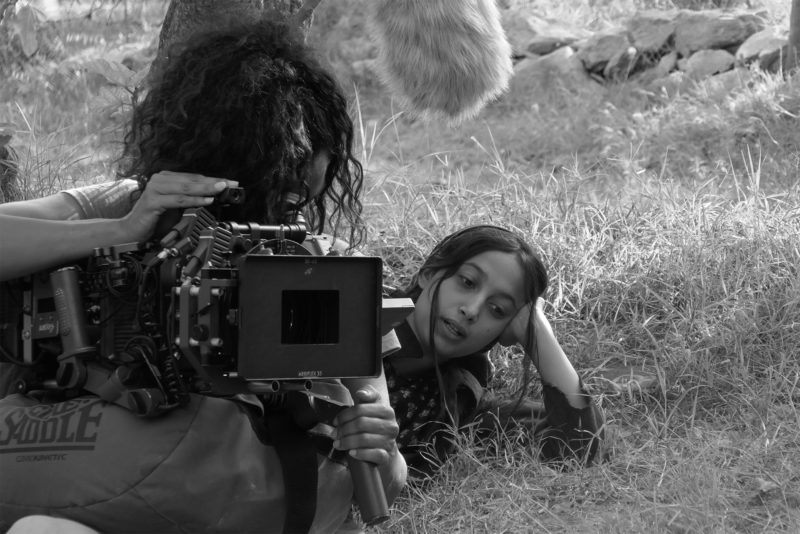
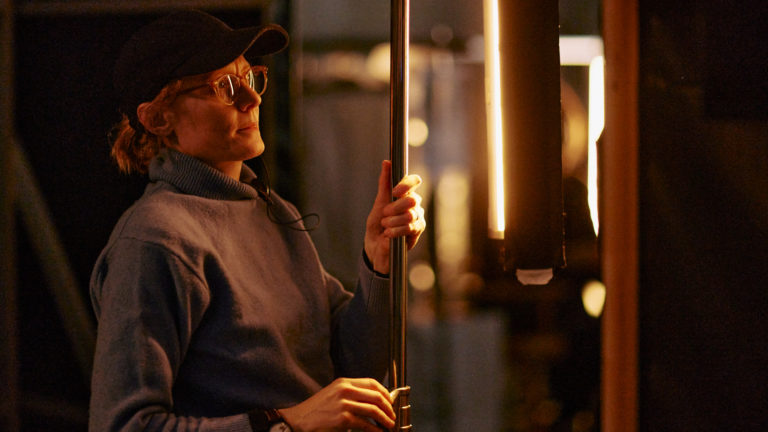
On the set of Sous les figues, directed by Erige Sehiri.
A breath of freedom
Between the lines of her professional journey, one senses in Frida an attraction to what defies the prescribed script. She has a particular fondness for handheld camera work and setups that allow her to be as close as possible to the actors. She has regularly worked in fiction with characters played by non-professionals, in countries or regions that take her into the realm of reality.
This is particularly true of Chronicles of Haifa: director Scandar Copti chose not to give the actors the complete script in advance, so that the action would unfold day by day. Just like in real life: we don’t know what will happen tomorrow.
In Erige Sehiri’s film Under the Figs, there was also a great deal of freedom since the characters were played by real people. There was no pre-planned shot breakdown. There was a narrative structure, of course, and specific stakes for each scene to build the story. The filming therefore took place in a documentary style: we didn’t know if a character would move or not, who exactly would speak, or when the scene would end. We had to be reactive and move around in such a way that the dialogue made sense and could be edited later.
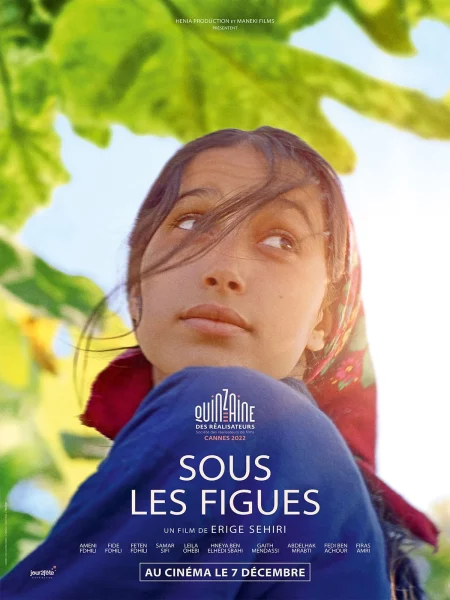
“Under the Figs” directed by Erige Sehiri
For this film, two months were spent on location to familiarize ourselves with the place and the characters. There was no budget for equipment or lighting, but a small camera list was available.
Generally speaking, it is the actors who give her energy; she really likes the bond of trust that can arise from it.
A question from the audience brings up the name of one of the films that greatly influenced him in the way he filmed intimacy with a handheld camera: The Dreamlife of Angels (directed by Érick Zonca – cinematography: Agnès Godard and Dominique Le Rigoleur).
The freedom she finds on set is a pleasure, as it allows cinematographers greater freedom of expression, Frida tells us. She’s one of those who feels a progression in her approach to framing reality with each shoot. “There’s a before and after Under the Figs.” Her feel for the subject becomes more refined with practice. Since Erige Sehiri’s film, she’s experienced an evolution in her sense of direction, allowing her to know when to trigger movement or, conversely, to hold a shot on a character.
I believe these words invite us to question the role of intuition in the profession of cinematographer. An intuition that is orchestrated before filming, within a preparation process involving discussions and the selection of suitable collaborators.
Human collaborations
In every new project, meeting the director is her initial motivation. This crucial starting point quickly gives way to the film’s subject matter. Over time, she has realized that she tends to work with female directors from countries that are often overlooked, whose stories tell of cultures and communities largely invisible to cinema. She feels she is contributing to the emergence of this kind of cinema, which leads her to travel to several countries, speak multiple languages, and stand alongside deeply rooted realities.
Furthermore, working with diverse crews is a real challenge because you need to get along well both personally and technically; the skills aren’t always where you expect them to be, and you have to constantly adapt. Color grading, for example, is a crucial step: “that’s where the work is finished.” You have to find someone you feel comfortable with and who understands what you’re trying to say, especially when you’re talking about something as abstract as lighting.
Having worked in very large teams before working as a director of photography, Frida now works with smaller teams but admits to loving shoots that do everything “on a grand scale”, and that it would be a pleasure for her to return to that.
Frida’s masterclass, led by NTBinh, gives way to a screening of her latest film, “Promis le ciel” (Promised by Heaven), by Erige Sehiri. Shot entirely with professional actresses for the main roles, the film’s handheld camera elegantly captures the four women featured in this film, which is rendered in cool colors yet bursts with life.
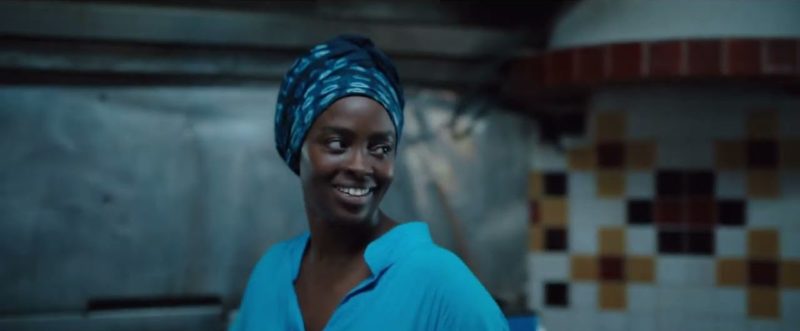
Promis le ciel, directed by Erige Sehiri (Image: Frida Marzouk)
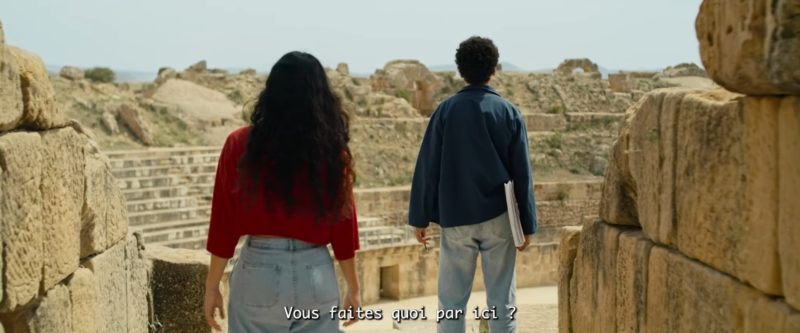
Where Does the Wind Come From?, directed by Amel Guellaty (Image: Frida Marzouk)
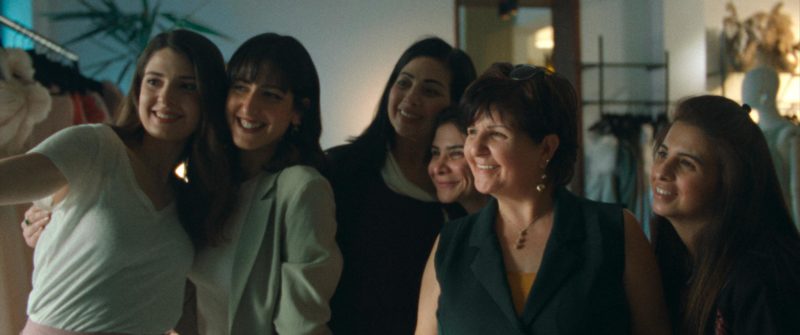
Chronicles of Haifa, directed by Scandar Copti (Image: Frida Marzouk)
Article cover photo ©David Quesemand