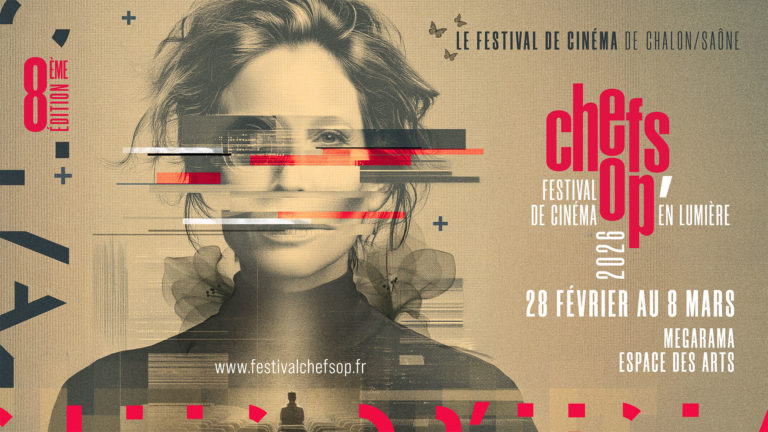
As part of the Chef Op’ en Lumières festival, this round table dedicated to the relationship between director and cinematographer brings together two tandems with different backgrounds, who have come to share their experience of working with images, in fiction as well as in documentary.
The discussion is moderated by Lauriane Jussiau, project manager at APARR, who facilitates the exchanges between the speakers.
Mathilde Soares is a filmmaker trained at the Beaux-Arts in Paris and also has a background in theatre. Her work lies at the intersection of fiction film and contemporary art, where she develops projects that blend different artistic practices. Here, she collaborates with Léo Schrepel, a self-taught cinematographer based in Paris who honed his skills through the increasing accessibility of filming equipment and direct experience on set.
The second duo brings together Jean-Luc Cesco, a sound engineer by training, who then turned to documentary filmmaking and has since directed several produced films. Here, he works with cinematographer Rémi Jennequin, who trained in cinematography after a two-year technical degree in audiovisual studies and then at La Fémis, from which he graduated in 2012. He subsequently deepened his documentary practice with the Master’s program in creative documentary filmmaking at Lussas and now works primarily on creative documentaries.
These two duos embody two approaches to image-making: one stemming from fiction and the visual arts, the other rooted in documentary and the observation of reality. Their experiences allow us to explore concretely how the dialogue between directing and cinematography is constructed.
A documentary is currently being filmed.
Jean-Luc Cesco: Our meeting with Rémi took place around a documentary film that’s in development. So it’s true that it’s a bit different from a film that’s already finished and that we can talk about. In the documentary economy, the development phase often tends to be lengthy. And it sometimes overlaps with the filming, especially because there are also timing constraints for filming. So, what we film during development will, in principle, be in the film. It’s not just: “Hey, let’s film,” as if it were simply location scouting. In fact, the very term “development” is a bit strange. You could almost wonder what it even means. Because in reality, we’re already making the film, while not yet having enough money to enter into a real production. So we remain very constrained. And that also affects the working relationship, in a way. We don’t have the same freedom in terms of timing and budget.
Lauriane Jussiau: Of course. But you would still say that there is an element of research, a way of testing a first collaboration, at least for the two of you?
Rémi Jennequin: Jean-Luc is right to point out the film’s production conditions, because they aren’t simple. And unfortunately, this isn’t an isolated case. Right now, I’m working on three documentaries simultaneously, which are being filmed over several months, even two years. And all three films are… in development. But we’re already shooting them. And we’ll probably finish them like this, because broadcasters aren’t committing. So we find ourselves in a rather unusual situation: how do you set up a technical setup for a film where, theoretically, you’re still scouting locations? In fact, you quickly realize that you have to make choices right away, because you’re already shooting the film. Even with a limited budget. Jean-Luc and I, for example, initially thought, “We’re scouting locations, we have time.” But in reality, we quickly realize that we’re already in the thick of it. And that also affects how we work together. Because if we only film for a few days at a time, due to a lack of budget for several consecutive days, we meet on location in the morning, film all day, and then in the evening: “Ciao, see you next time.” Then everyone goes back to their busy lives. As a result, it’s not always easy to do real in-depth work on the visuals. Production conditions play a huge role in this. We know that a film is always made under constraints, but this is especially true for documentaries. Films remain in development for a long time because there’s a bottleneck with broadcasters. It’s they who, by committing financially, shift a project from development to production. In theory, we’re “in production” when the funding is secured. But in documentaries, we don’t control everything. We’re often dependent on a schedule that’s beyond our control. So sometimes we have no choice: we have to start filming. That’s the whole ambivalence of documentary filmmaking. In fiction, it’s different.
Finding a common language between staging and image
Lauriane Jussiau: But in the discussions you’re preparing, do you start by talking about the artistic aspects before discussing the technical means? Because ultimately, artistic choices also have production consequences: we’re all constrained by a budget, so we have to choose where to put the money. How did you both approach this?
Léo Schrepel: For me, what draws me to a project is first and foremost receiving a proposal or having a call with the director who tells me about their vision. Very quickly, we start talking about images. Then there’s a meeting, where we delve deeper. And that’s when I start thinking: OK, what are the main intentions of the film? From there, of course, everything depends on the budget. But I come from a self-taught background: I started making things alone in my bedroom with cameras. So I remain convinced that all intentions are achievable with any budget. You just have to know how to adapt, to be resourceful. And that’s where constraints become exciting. I remain convinced that everything is possible, even without money, as long as the initial intention is clear.
Lauriane Jussiau And how do you manage to understand Mathilde’s intentions precisely? Obviously you read the file, the funding applications… but I imagine there’s also a kind of chemistry between you? Because a film also involves a lot of time spent together.
Léo Schrepel: Yes, absolutely. During the first meeting, you already get a sense of the person you’re facing. You also start to see the references you have in common. And sometimes there are those moments of realization. For me, the holy grail is when I feel like I’m an extension of someone’s mind. When we start to understand each other almost without speaking. At that point, it’s a done deal. Because on set, everything runs smoothly. And it also frees up the director’s mental energy, allowing them to rely on me for the technical aspects. And sometimes I’ll spontaneously suggest something that corresponds exactly to what the director would have proposed. And then everything goes faster, which is essential because on a film set you’re always working under time constraints.
Mathilde Soares: And you were talking about language: it’s true that, since I come from an art school background, I tend to speak more in terms of images, colors, things like that. So Léo would say to me, “Ah yes, we’ll do that, that’s it.” He has the technical language, whereas I tend to go off in all directions trying to make him understand what I want. Then we communicate a lot using visual references. We also worked a lot on the technical breakdown. There, really, everything was a bit choreographed in space: there were diagrams on the tablet. We were thinking about the characters’ movements. Léo would say, “I’ll put the camera there,” etc. So it happened gradually. It’s true that we speak two different languages, but we manage to understand each other. Léo translates technically what I’m saying with colors and images. So basically, he translates my artistic ideas technically. And then, with the somewhat simplified explanations he gives me, I can mentally picture what it might look like and say: “OK, now we’re good.” 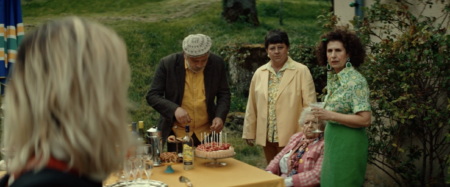
Visual references and preparation
Lauriane Jussiau So you could “switch” quite quickly. And in terms of visual references, since you also come a bit from the art world, did you make mood boards or anything like that?
Mathilde Soares: Yes, I had made quite a few mood boards. Léo also suggested some things to me. We had a lot of directors we liked. So yes, it was very visual. We showed each other a lot of images.
Léo Schrepel: Initially, we exchange a lot of references. I also give them to make sure I understand the direction. And sometimes it happens very quickly: it comes down to two or three images. You receive one, you send back two, and suddenly you feel it’s the right direction. From there, you dive right in. And generally, it works quite well. And then, being well-prepared allows us to adapt during filming and go in a different direction if necessary.
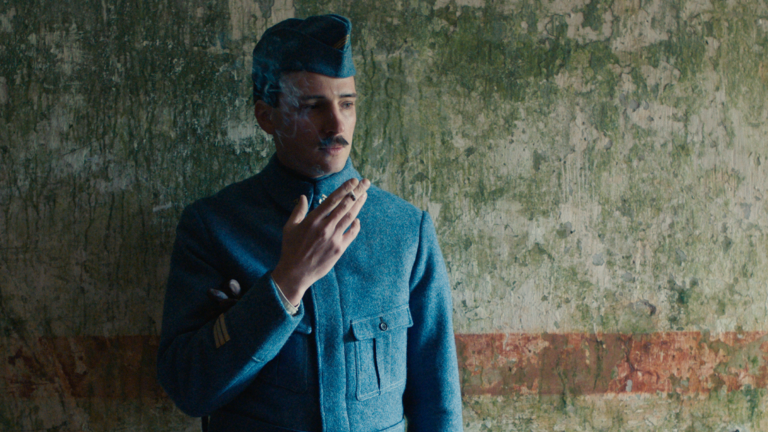
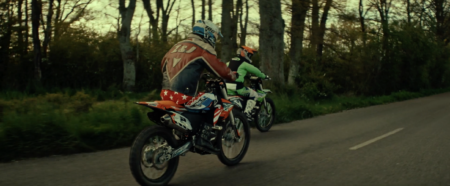
Léo Schrepel: For example, there’s a motorcycle sequence in the film that illustrates this well. The film takes place in a motocross world and also tells the story of the relationship between a sister and her brother. The motocross sequence is the only real action scene with the motorcycles. It serves to show their growing closeness. So, it was essential to be able to follow the motorcycles very closely to convey this intimacy.
Mathilde Soares: The film is called A Sacred Flower . It’s the story of Meryl, a young motocross champion who returns to her village in Burgundy. She discovers that her twin brother has fallen into drug addiction. And little by little, she tries to help him, in a family where there are many unspoken secrets. Motocross is important to the story: the dealers are on motorcycles, a bit like cowboys in this rural setting. At this point in the film, the brother gets back on his bike. It’s a moment of liberation. But at the end, he was supposed to crash, because in reality, he’s been going through withdrawal from the beginning. So it was a challenge to film that stunt… which ultimately didn’t happen. We cheated in the editing.
Filming reality: constraints and adaptations of documentary
Lauriane Jussiau Let’s move on to the documentary now. Jean-Luc and Rémi, can you briefly introduce your film?
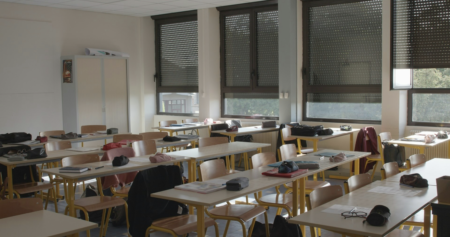
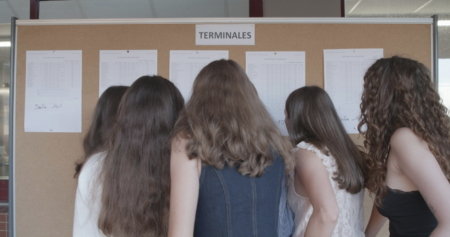
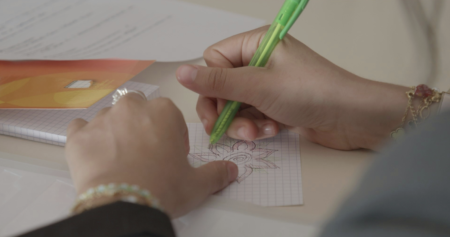
Jean-Luc Cesco: The film is tentatively titled *What If We Created a Society? * It’s a working title. The documentary takes place in a high school near Dijon and follows a final-year class for an entire school year. The idea is to observe the moment when these students reach the age where they can vote for the first time. The film therefore focuses on their relationship to politics, their desire, or lack thereof, for civic participation. Rémi Jennequin: The main visual challenge comes from the setting itself. A classroom is a rather visually barren space: white walls, little contrast. The only room for maneuver concerns lighting, particularly the roller shutters. The other difficulty is discretion. You have to be present to capture the glances between the students and the teacher, while remaining as unobtrusive as possible. I’m also careful not to use too much camera movement. If the camera moves too much, it can create artificial commotion in the classroom.
 Léo Schrepel: Regarding cameras, in the documentary field, I was talking earlier about the miniaturization of camera bodies. Today you can shoot almost anything with a phone. So I imagine that’s been a huge change for documentary filmmaking.
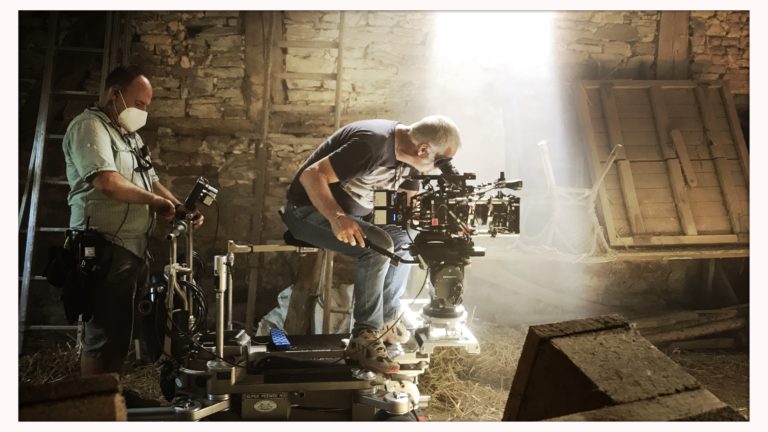
Rémi Jennequin: Yes, but it’s a bit of a double-edged sword. It’s interesting because directors can film themselves. The location scouting footage already gives an idea of their vision. But when you then have to integrate that footage into a coherent edit with the cinematographer’s footage, it can become complicated. These small cameras aren’t ergonomic: no ND filter, no XLR input, few direct controls. I’m quite attached to having my eye inside the camera, in a kind of small black box. With these very lightweight cameras, you’re often forced to add accessories. But since I often work alone on documentaries, too many accessories can also become a logistical problem.
There’s something that seems important to me in our profession. In the relationship between a cinematographer and a director, there’s a huge amount of time spent discussing, watching films, and reading scripts. All this work exists thanks to something very precious: the intermittent worker status. Today, this status is regularly called into question. But the quality of films depends directly on these working conditions. If I didn’t have this status, I wouldn’t be able to spend so much time on the phone with a director to prepare a film, review their references, and read their scripts. All this invisible work is essential, though. It’s often where films truly begin to exist.