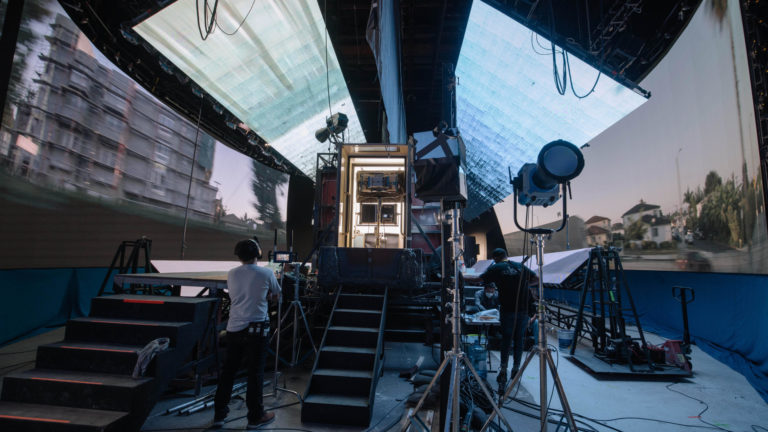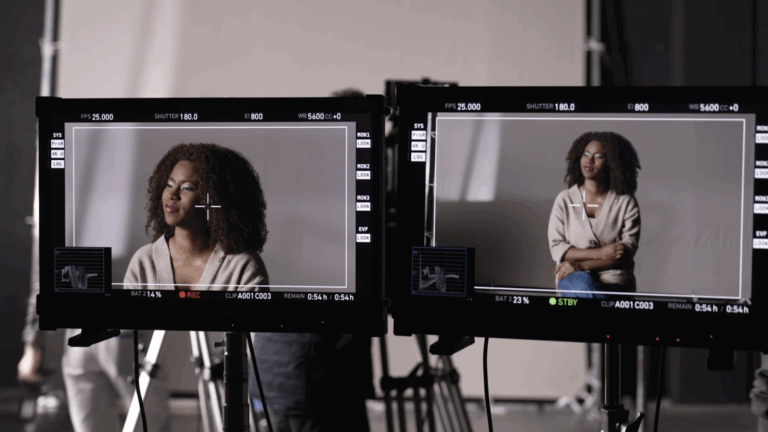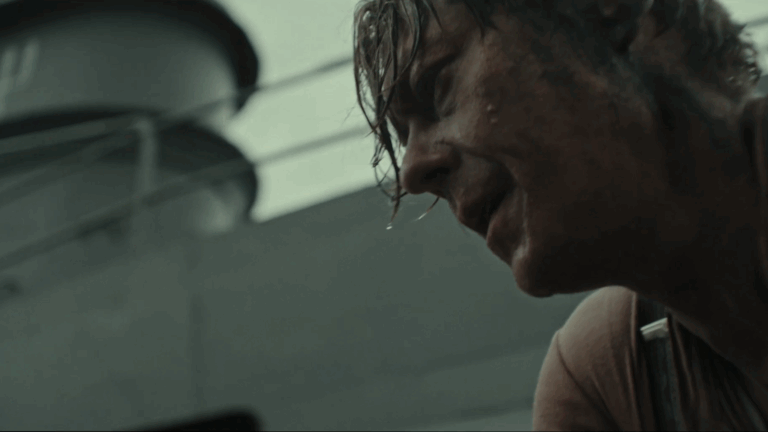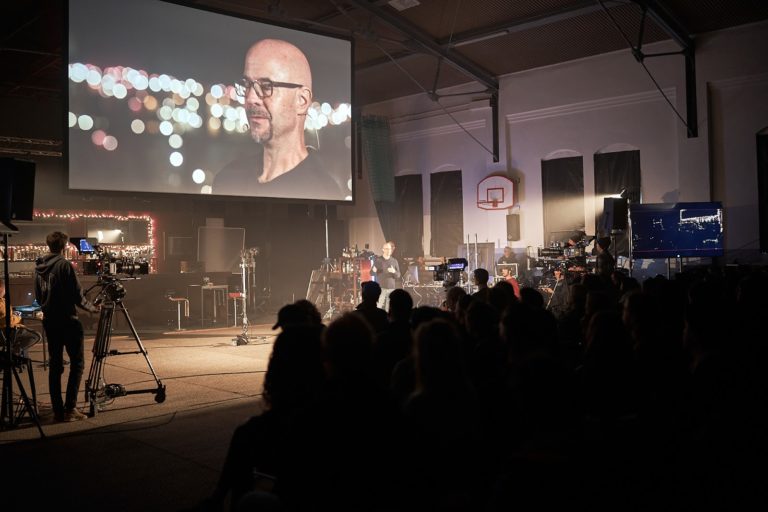
On a bar set built in a Torun high school gymnasium, cinematographer Cory Geryak gave a Masterclass, presented by our partner Arri, where he demonstrated his approach to lighting two scenes. Because the gaffer of Inception and The Dark Knight Rises was showing his working method, the masterclass had to refuse a lot of people, so we had to use our wits and strategies to attend.
Cory Geryak had a long career in lighting as a gaffer (Her, Spike Jonze, 2014; The Dark Knight Rises, Christopher Nolan, 2012; Inception, Christopher Nolan, 2010) before he became a cinematographer.
All the lighting and camera equipment, including the recording, came from Arri Rentals (except for a few Astera tubes integrated into the set). A Rosco SoftDrop® backing has been rigged for the exterior of the bar, and was used in all its forms as C. Geryak presented us with day and night lighting setups, which his team had pre-lit the day before.
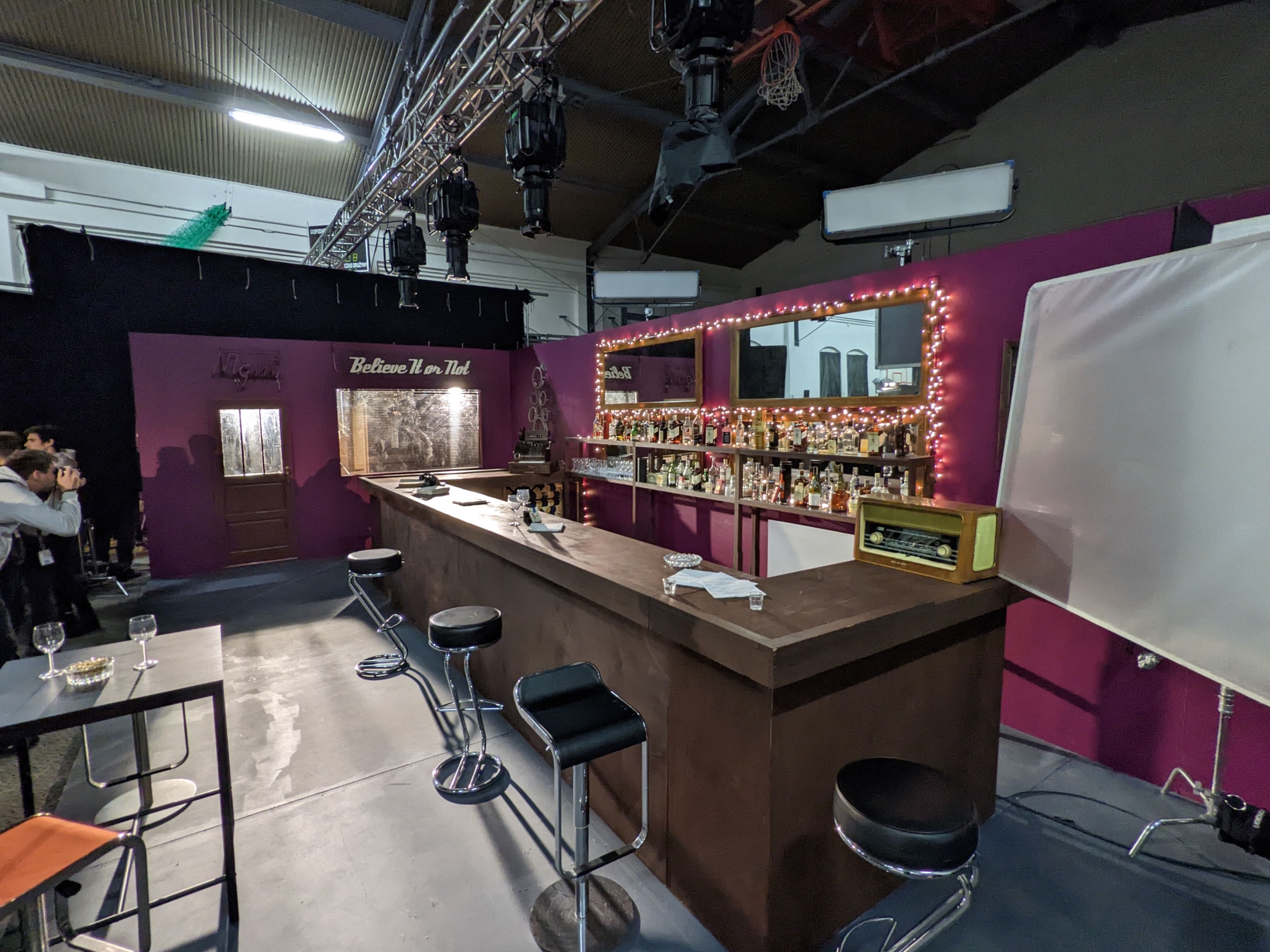
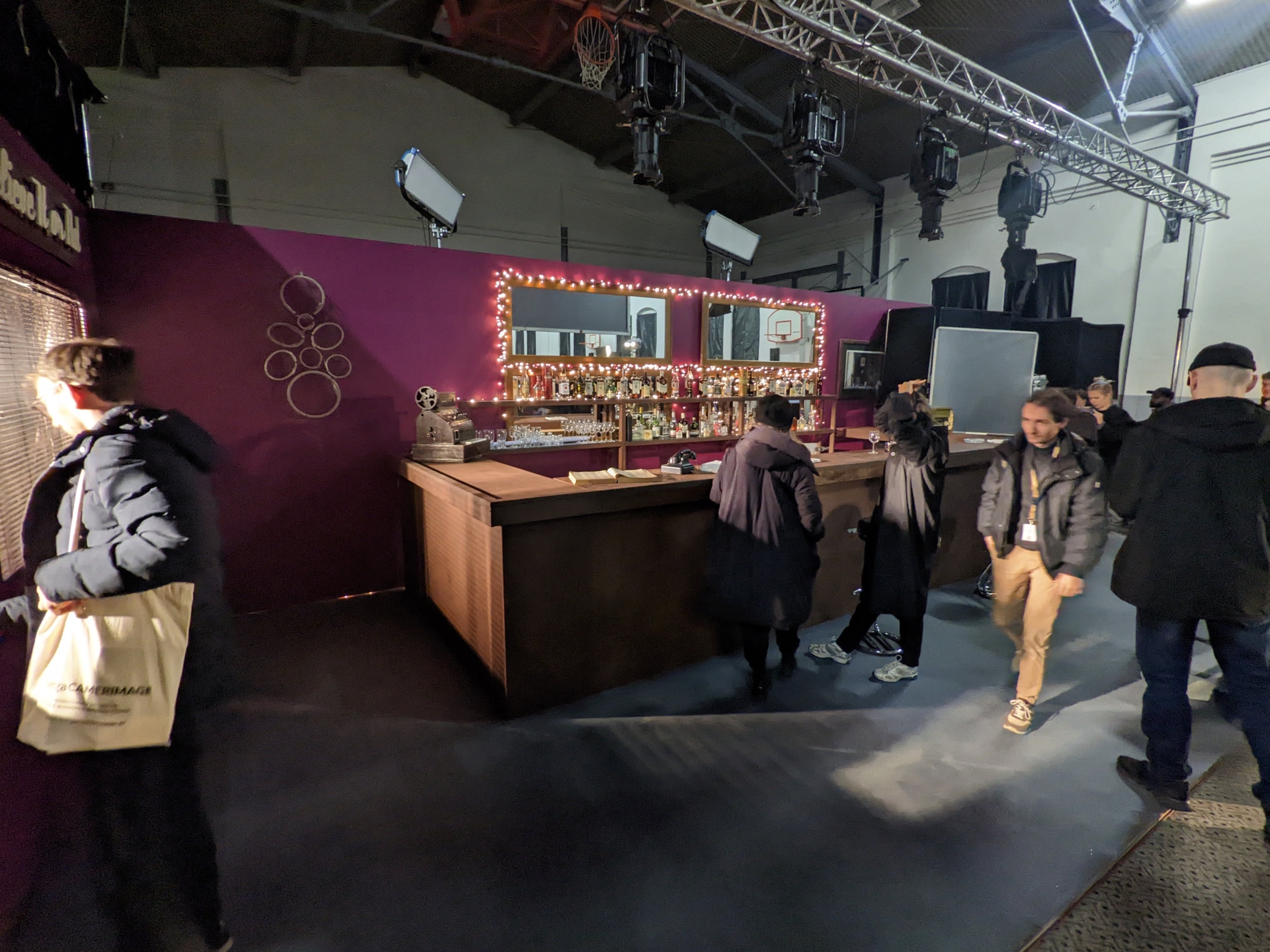
The director of photography demonstrated two shots, one wide and one close up. After a short presentation, the camera was set up and he asked his lighting board operator to turn on each light one by one. As the lights were turned on, he made a few comments about the set up, then made some adjustments, all while expressing thoughts to the audience.

The scene was shot on an Alexa 35 with Signature Zoom 24-75mm. The first shot, wide, side tracking at 30mm, T4, ISO 800, 4600K. The second shot, close up, static, keeps the same settings with a 40mm focal length.
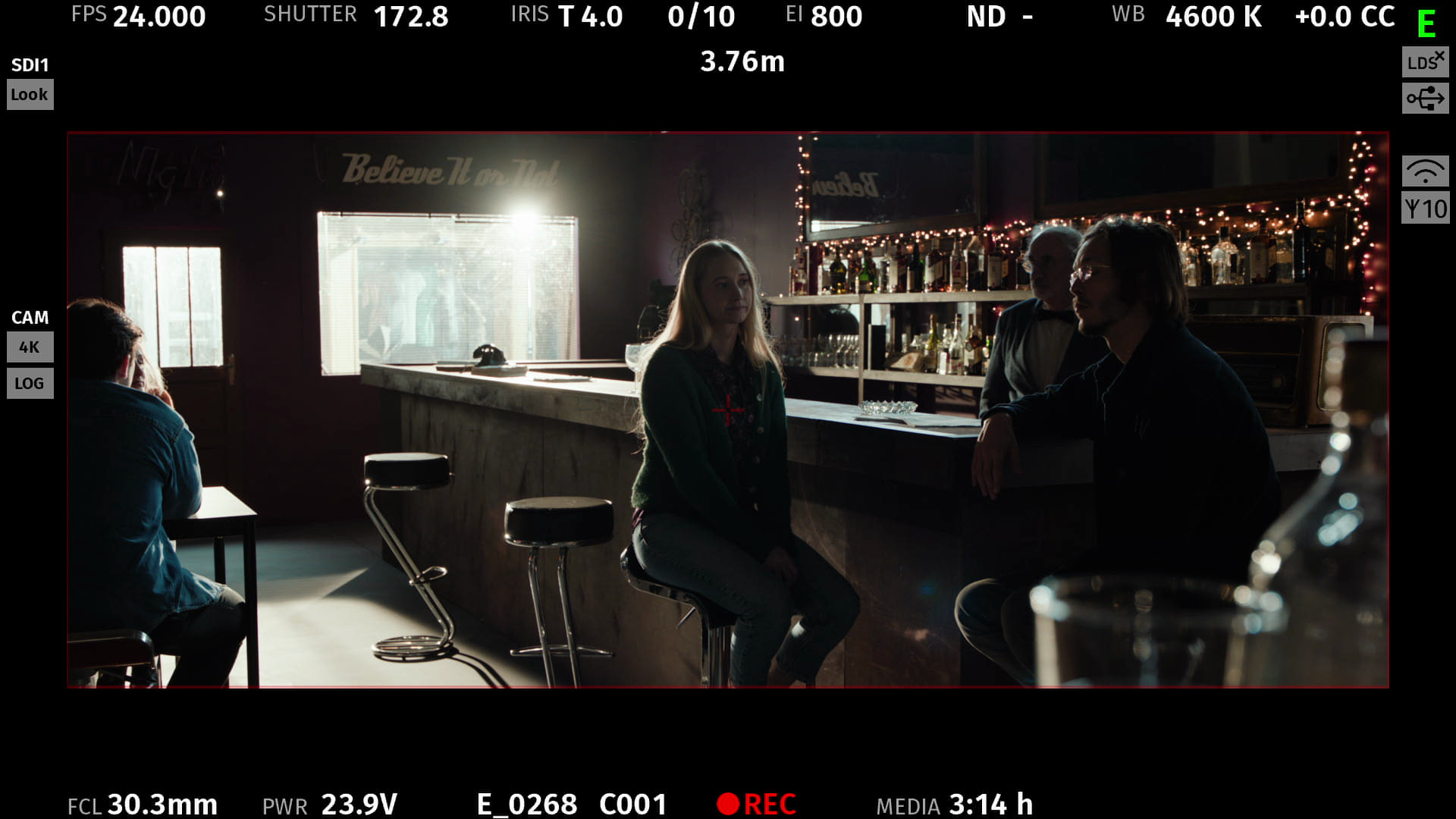
Wide shot still, day scene – photo credit : Arri Academy
Cory Geryak started by lighting his backdrop to directly establish the fact that the scene was daylight, then he turned on his skylight and finally his sunlight effect (keylight). “I like to start from scratch beginning with the background, then the set, to feel the environment, and finally finish with the actors once their positions are set. I light the bar here like I would light a real location, through the windows, not placing too many sources above the walls to keep a natural feel. We are lucky here to have a nice set, it’s not always the case and sometimes you have to choose what to show and what to hide, to be judicious with your camera angles and your lighting. Here, the bar has nice textures and I like the reflections in the bottles, which the hard sources outside bring out well. We’ll even play the flare of the sun to reinforce the feeling that it’s bright outside.”
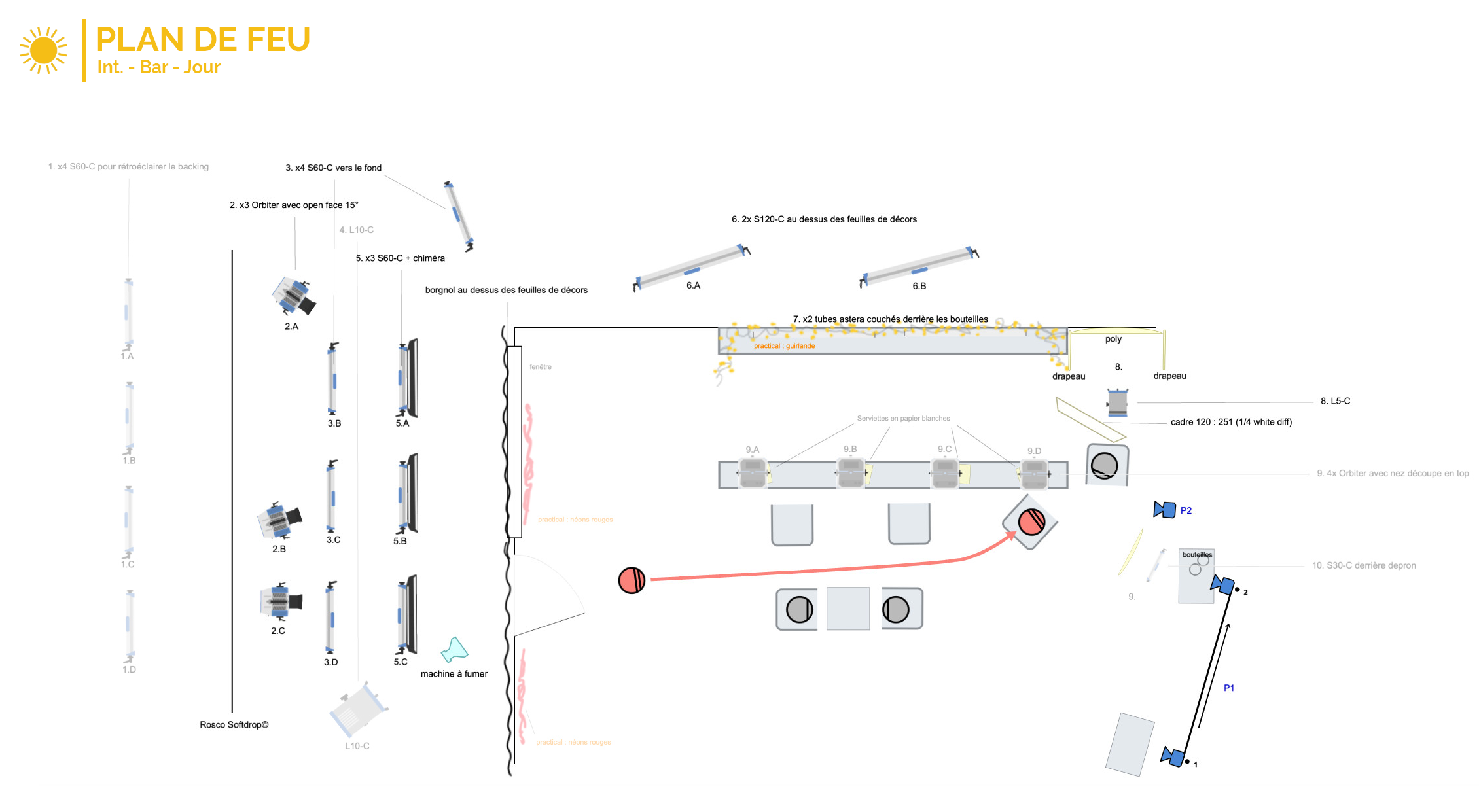
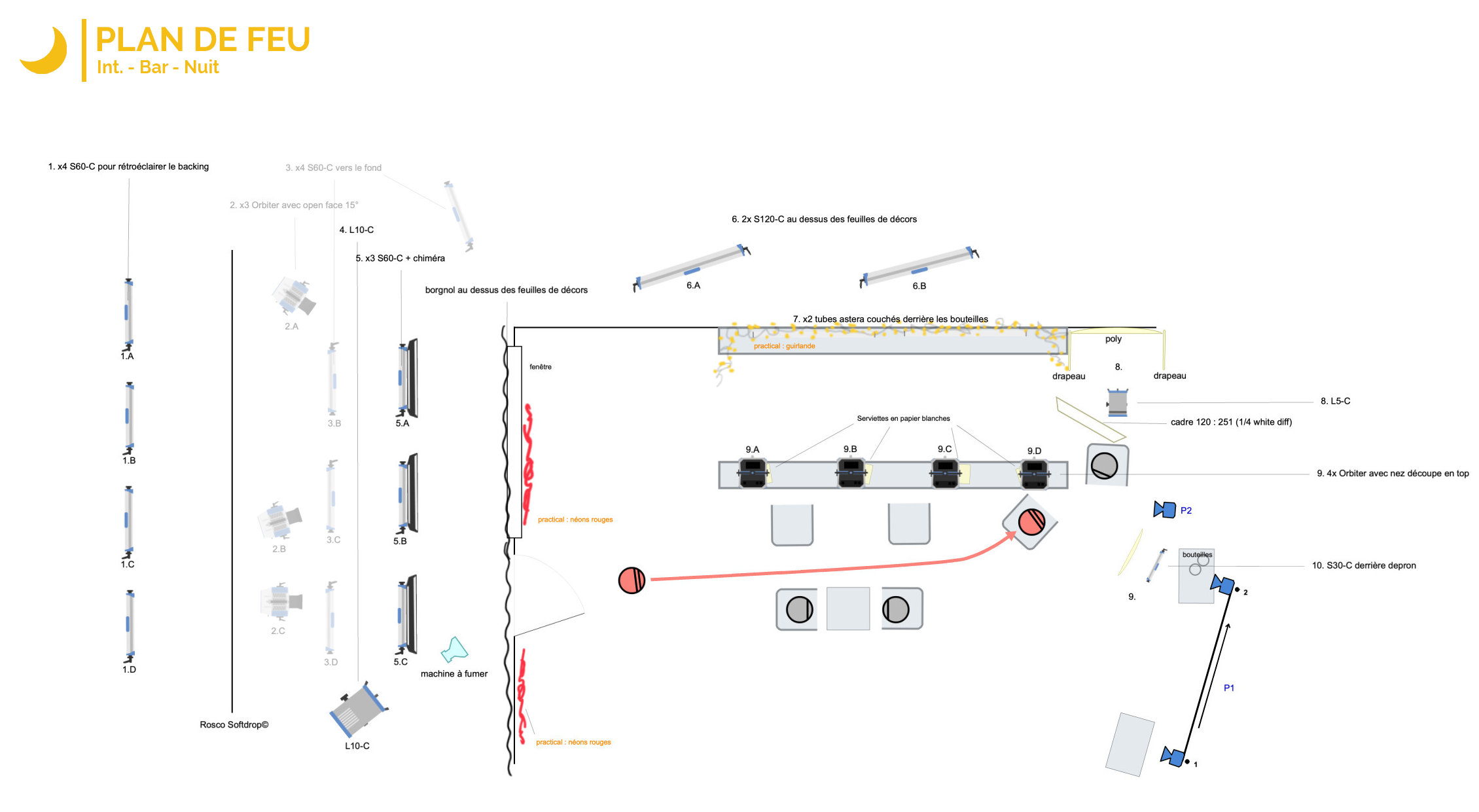
The sun is broken down into three sources, Orbiters with a 15° open face bowl at around 5000K. One of the Orbiters (2.B on the lighting plan) reveals shines in the bottles displayed on the bar shelves. Another (2.C) illuminates the floor through the glass door. As for the last one (2.A), it illuminates the whole scene, outlining the characters at the bar with a blacklight and appearing in the shot at the corner of the window.
The skylight is recreated using three Skypanel S60-Cs with chimeras above the window from the outside, set at around 7000K, creating a cooler glow on the floor and furniture.
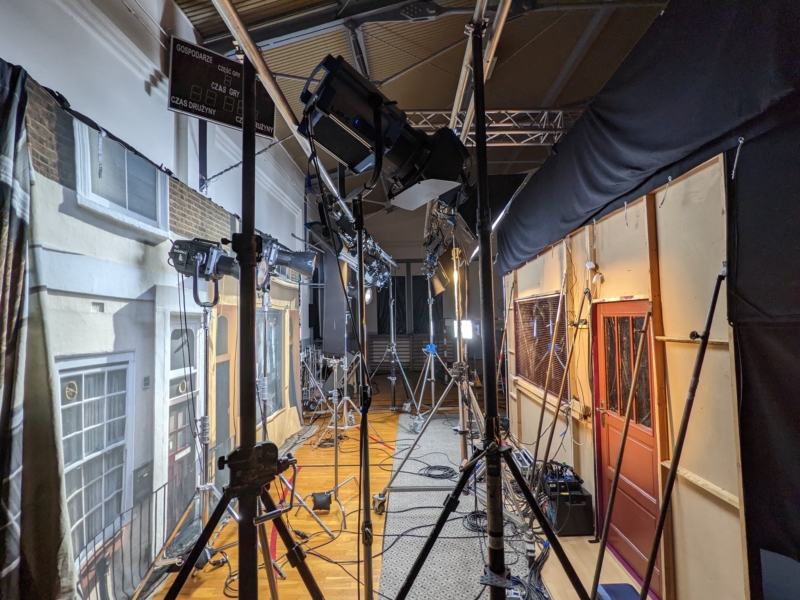
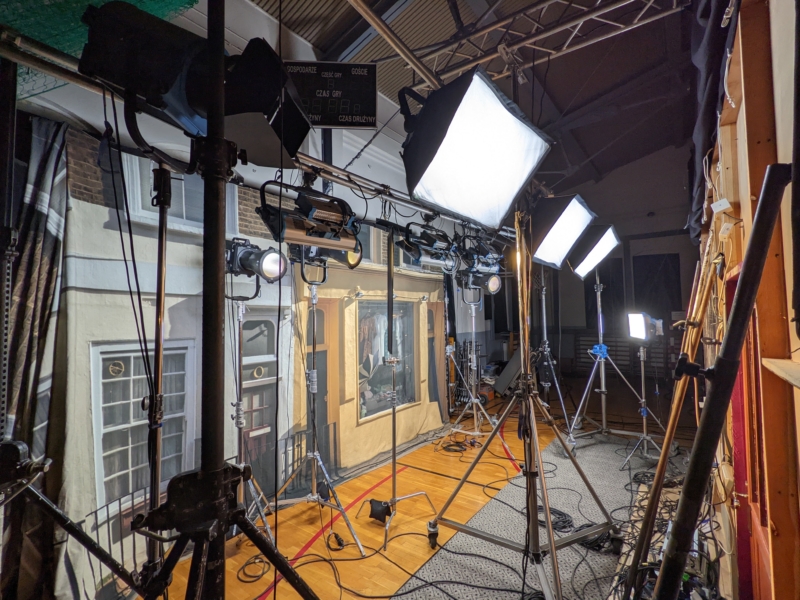
Photos of the exterior setup
When C. Geryak was asked about multiple shadows on this type of set up (here three different sources create direct sunlight and therefore, multiple shadows on the floor), he emphasized the necessity to use flags, which he thought might be more popular in Europe!
For the next shot, C. Geryak framed the actress in a close up on the left side of the frame, thus facing her interlocutor on the right, shot over the shoulder. The change of shot size, and the closeness to the actress, requires a few adjustments to the light, which he comments on in detail.
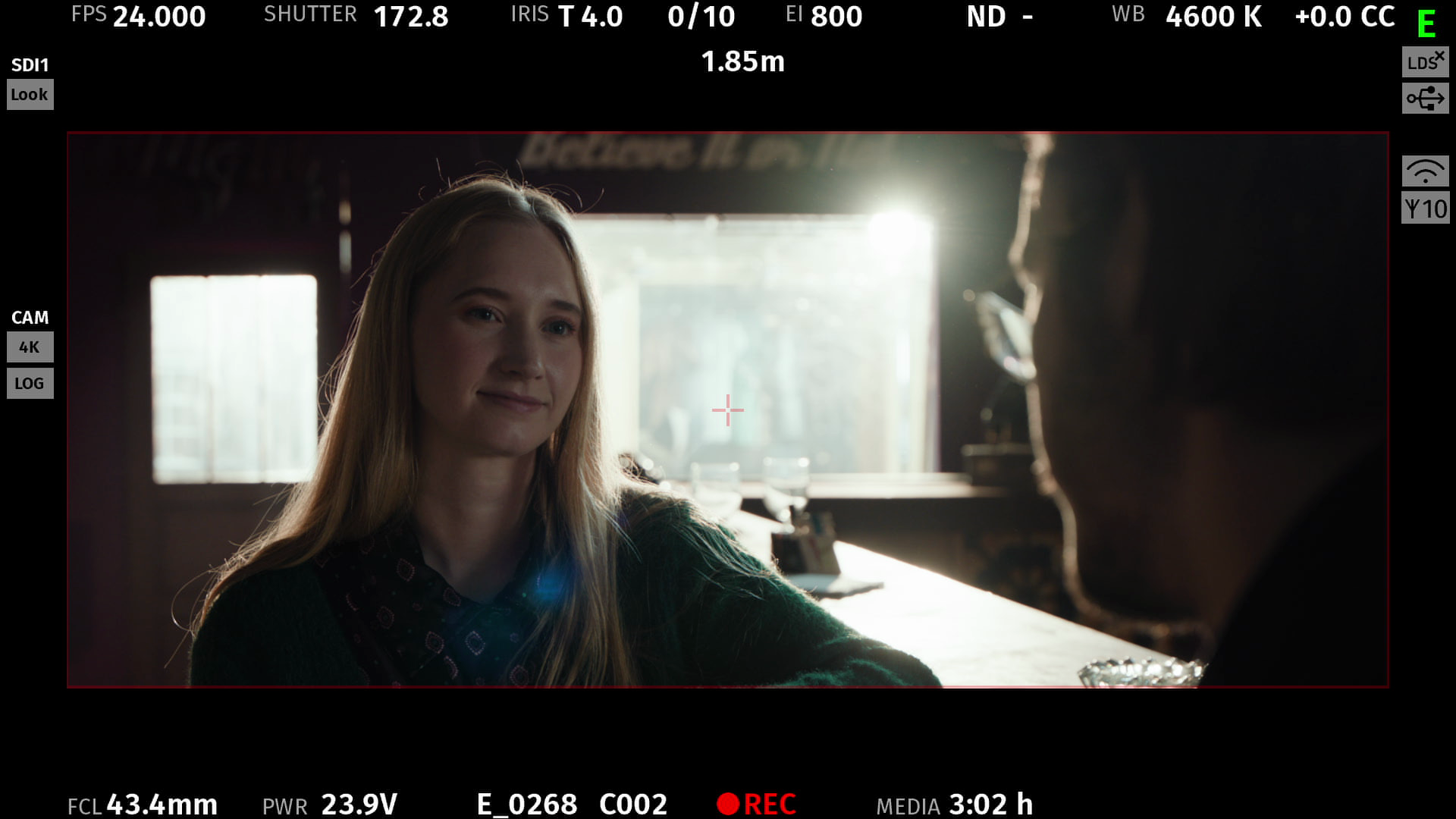
Close up shot still, day scene – photo credit : Arri Academy
In this angle, one of the Skypanels (n°6.B on the lighting plan above), creates unflattering shadows on the face of our actress; he therefore chooses to turn it off, leaving only the other Skypanel (n°6.A) to create a backlight on the subject. In front of a foam core bounce, ¾ in front of the actress, he adds a diffusion frame (251, ¼ white diffusion) at about 1 meter, in order to obtain a more flattering light on her face, because the tight shot reveals more of her skin texture.
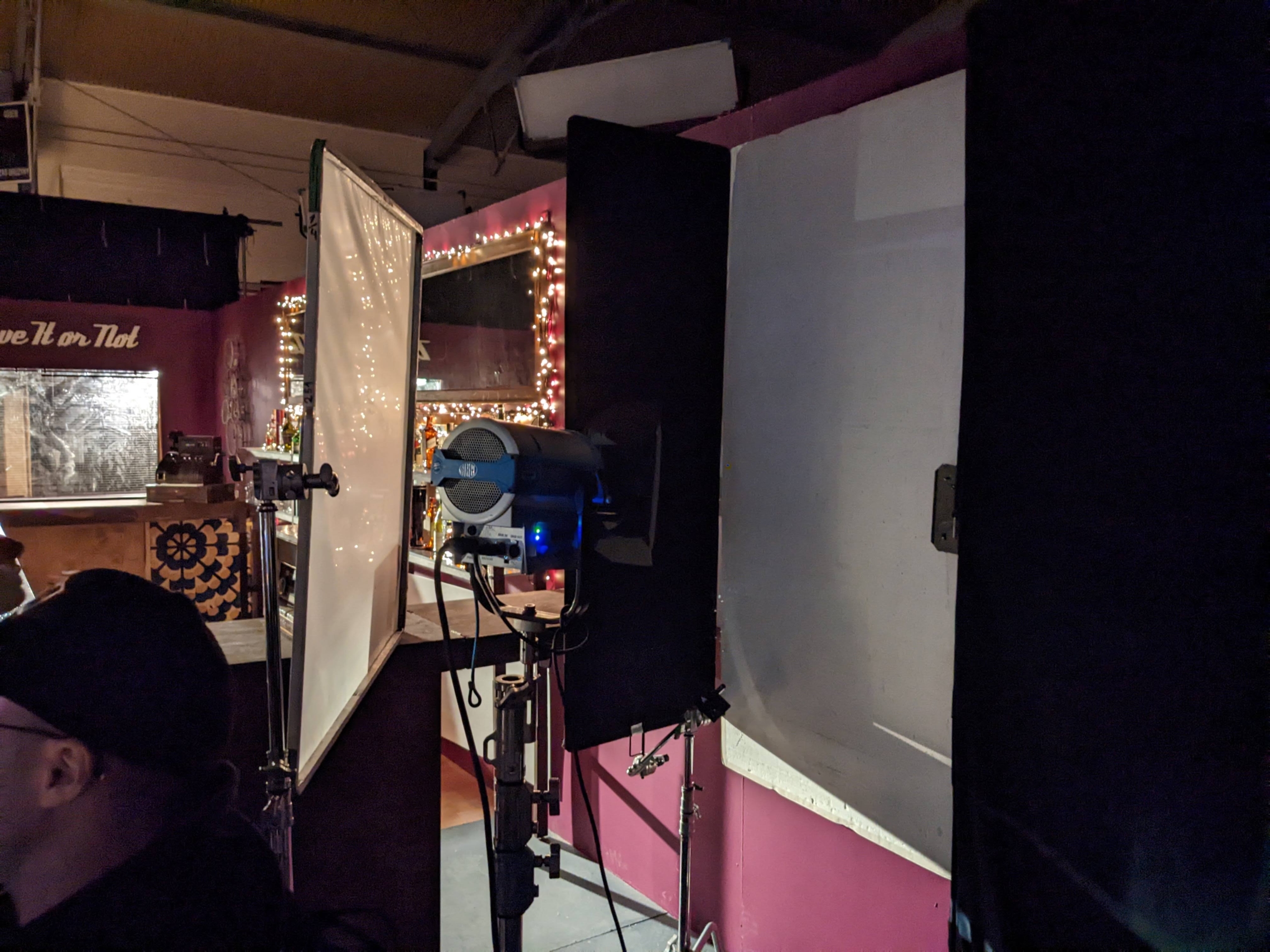
Photo of the setup next to the actress
In the second shot, the window overlooking the street is prominent in the frame, and the brightest element in the image. C. Geryak mentions his preference for this contrast, where faces of the characters are not the brightest parts of the image. On the set of Memento (2000), cinematographer Wally Pfister gave C. Geryak the following instruction : yes characters faces can be dark, as long as they still have an eye light. It was especially on The Dark Knight and The Dark Knight Rises where he learned not to be afraid of darkness and contrast, as long as the important information stand out.
For this exercise, the director of photography worked without a light meter, but what is his usual method of measuring the amount of light? C. Geryak trusts his eye first; he then adjusts by looking at the monitor. He usually lights brighter than necessary too, and puts an ND 0.3 or 0.6 filter in front of the lens before he even starts working. This allows him a certain level of adaptability in case of changes requested by the director (shooting with a smaller stop for example).
The sequences of this workshop are filmed with the Alexa 35, the latest Arri digital camera which, compared to the Alexa Mini, offers +2.5 stops of dynamic range thanks to LogC4. His lighting set up would be, on film, quite similar. He would work at 400ASA for a 500ASA film: overexposing by ⅓ of a stop allows him to reduce the contrast and then lower his entire signal to get deeper blacks. “To shoot that same close up shot on film, I would have paid more attention to the backdrop, which I would have overexposed by 4 stops. And I would have used a light meter.”
The movements of the characters are, in this case, practical in relation to the light. Nobody gets too close to the door or window, there’s not a large range of motion, which is rarely the case in a real shoot, especially if it is a recurring set. The fall off between the window and the bar is very important here because the sun is recreated from a small, not very bright source near the window. “In an ideal world, where we would want the light to come from further away and the fall off to be less extreme, I would let the door be brighter, and then as the character moves through the room, she would start to pick up light from sources inside, coming from the same direction as the sun, and ends up at the bar, with no sun, in a different environment, with a more sculpted light.”
“If this daytime scene had to take place on a rainy day, I would not have played the sun, but rather softer sources coming from outside. I also would have relied more on interior sources.” The cinematographer then directs the lighting board operator to recreate, in just a few minutes, a cloudy day.
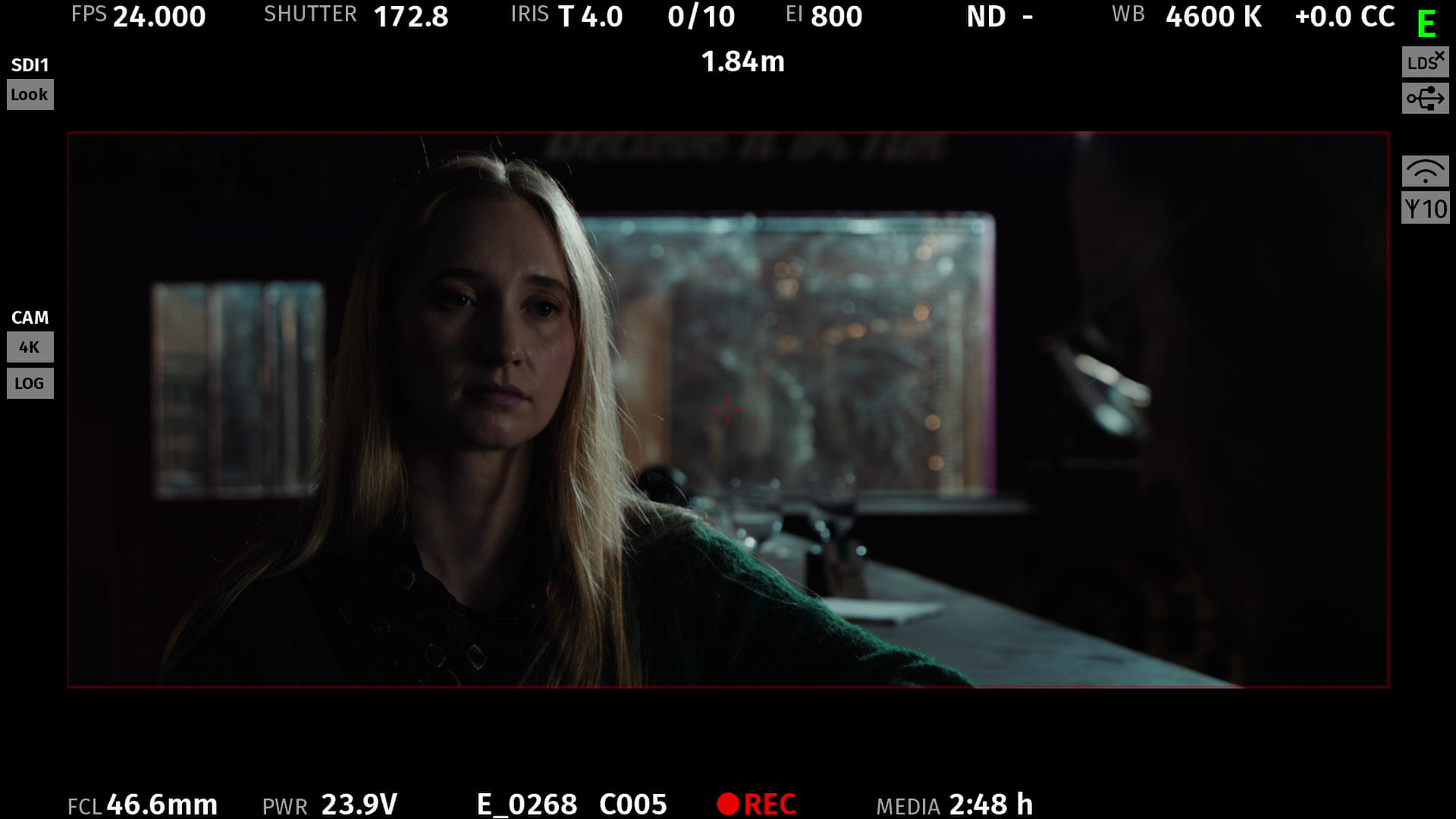
Close up shot still, rainy day scene – photo credit : Arri Academy

After lighting the bar for a daylight scene, Cory Geryak presents the same two shots (wide, side tracking with a 30mm, and close up, static, with a 40mm; both at T2.8), but with a nighttime look. The camera is set at 3200K and ISO 1280.
This time, the practicals are turned on first, so that he can justify them. Because the intensity of the Christmas lights or fake neon lights cannot be dimmed up or down, the other sources must not appear too bright in comparison, at the risk of damaging the credibility of the scene. C. Deryak therefore starts with these practicals to determine the brightness of the other sources. “I increased the ISO to 1280 to get a little more stops. The reason I did this was because of the Christmas lights, I want them to be as bright as possible, but I can’t make them any brighter than they are, so I set my base level from that.”
Here, the keylight consists of four Orbiters with lekos above the bar. Then by adjusting the napkins on the bar, he bounces light back onto our actress’ face.
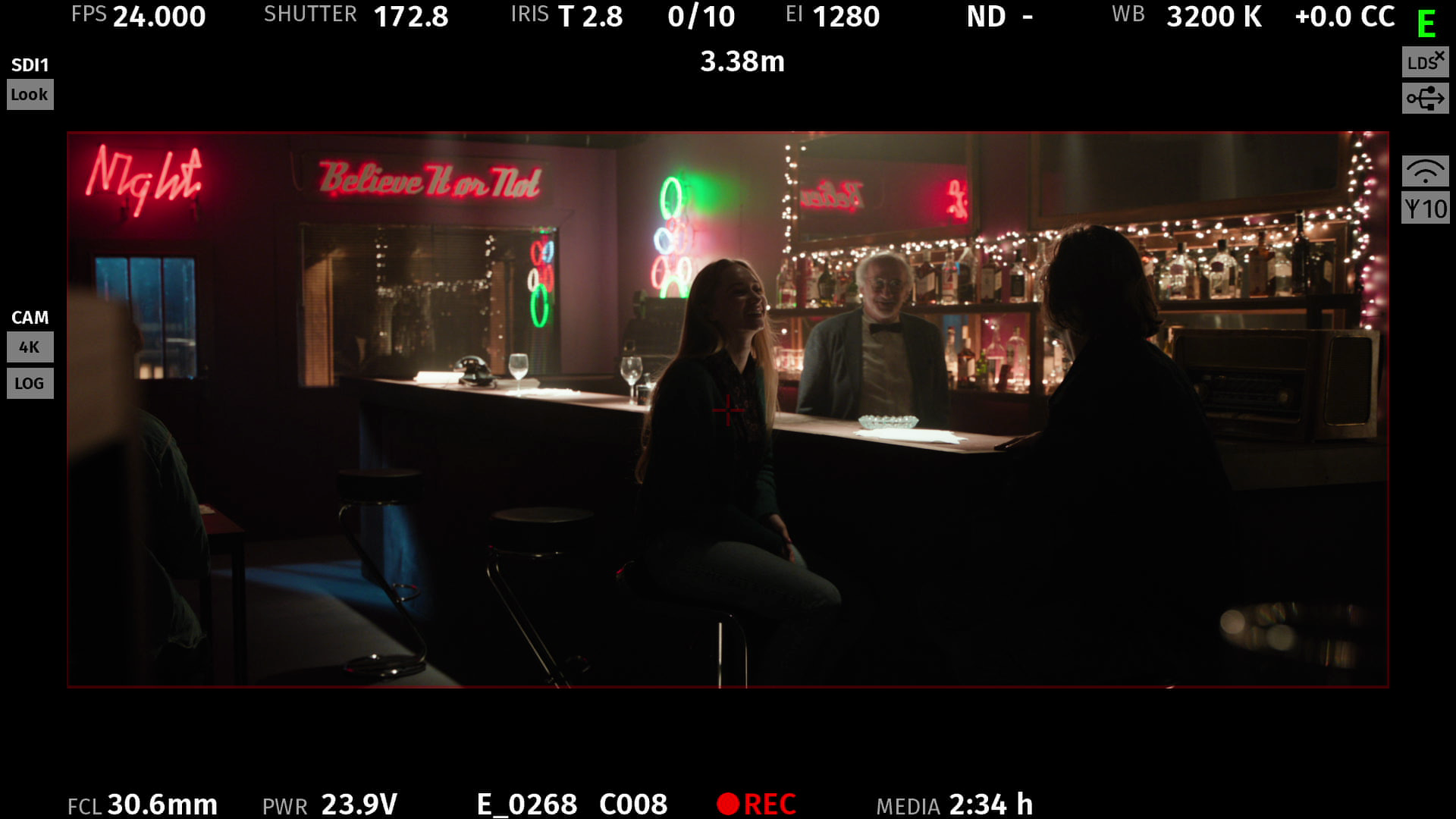
Wide shot still, night scene – photo credit : Arri Academy
The backdrop is then lit from behind, showing only the windows of the buildings, which seem to be lit from inside. A light stream through the glass door is made with an L10-C in blue tones.
When he sets up the close up shot, C. Geryak asks his lighting board operator to switch the S120-C to red, to justify the neon lights on the same side.
C. Geryak explains how he works with a lighting board operator. “It gives some flexibility to change gels quickly for example, it’s very convenient. But they can easily get overwhelmed on a big set. I’ve already had several lighting board operators because there were too many changes to make. Then, observing the monitor, he chooses to enlarge the bounce surface on the bar, while commenting on the changes of light on the actress’ face.
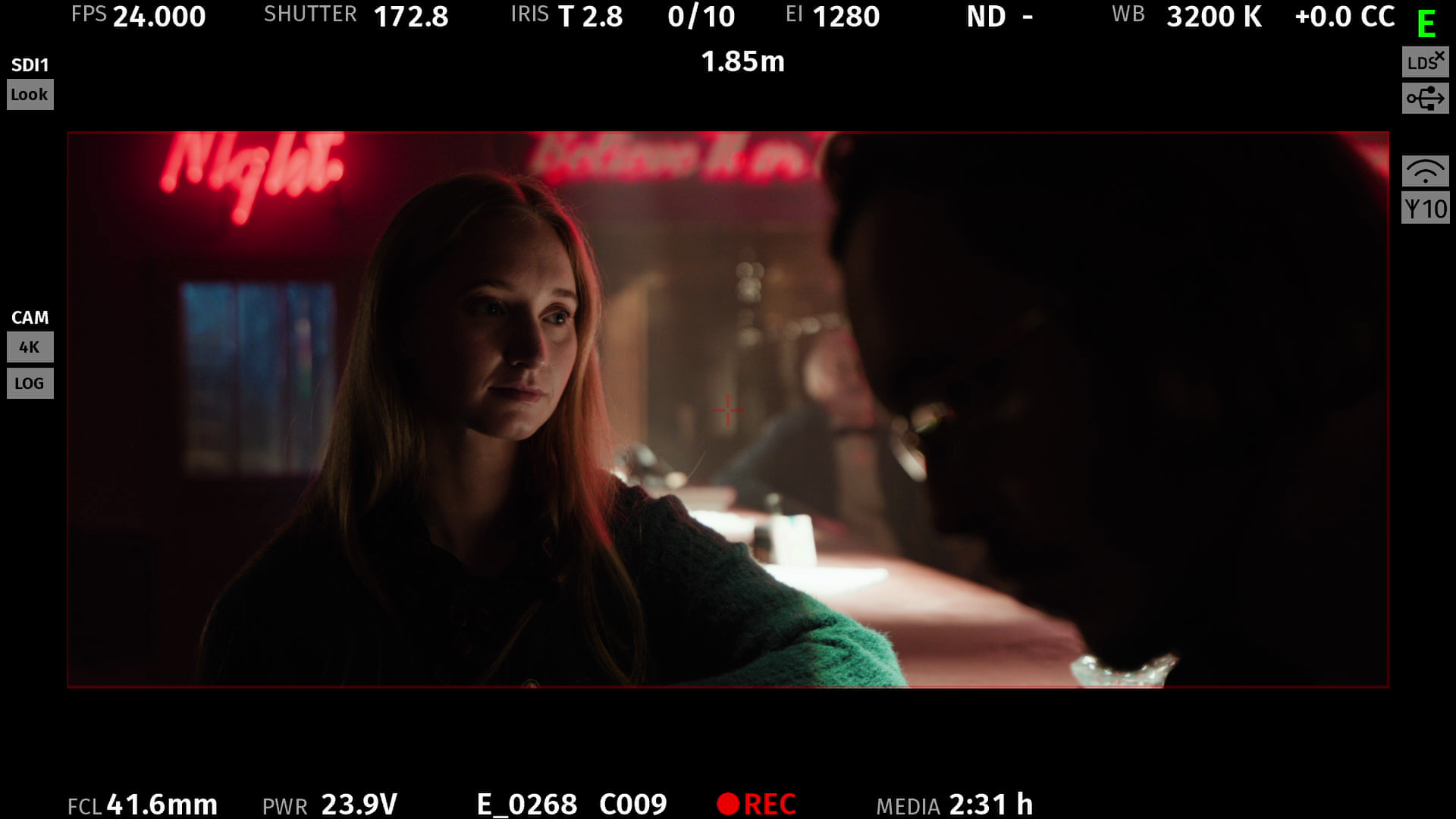
Close up still, night scene – photo credit : Arri Academy
He was then asked, like the daytime scene, how he would have exposed the night scene’s blue light beam if it were shot on film : “Minus three stops, I think”. And for moonlight, what does he use? ¼ or ½ CTB and ¼ plus green on HMIs, he replies. Hard light, or soft light? “It depends, there’s no one way to create moonlight, it depends on the emotion you want to convey.”
Faced with these specific questions, C. Geryak adjusts his light, shows that the development of his image is a gradual construction. He reveals to the attentive audience that there’s no magic formula or pre-established recipe for making light; what counts is the emotion that must be conveyed, and the story to be told: it is above all dedicating the images to the service of a story.
A great thank you to our partner Arri for their collaboration on the illustrations of this article.