Between Toruń and Paris
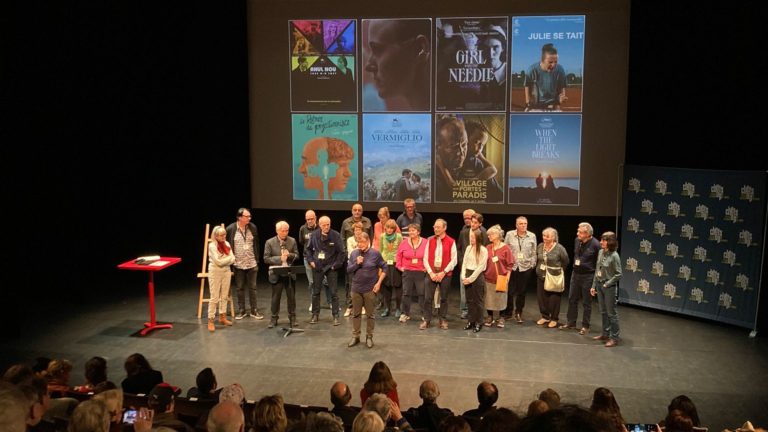
While last year’s Camerimage festival was held only online in the context of the pandemic, this year there was a mix of face-to-face/remote. This made it possible to attend (as best we could) the festival from Paris with the possibility in Toruń to see or rewatch live and replay conferences, screenings and Q&A on the online platform. Very handy especially for simultaneous note taking and screen shots!
With the festival partly online, there were fewer people this year than usual, which implied some advantages such as being able to access the screenings, lectures and some parties quite easily. Being less attendees also meant that it was easier and more frequent to talk to the cinematographers, the various speakers and the manufacturers present, many of whom ended up knowing the Union by heart by the end of the week! There was a very pleasant family atmosphere where we took the time to get to know each other and to keep in touch. And above all, it was incredible to meet only with people from the image industry and to be able to focus on cinematography, leading to very interesting discussions, technically and artistically advanced.
During this Polish week, writing articles on the spot after having attended four conferences in a row the same day and having slept a random number of hours was a great challenge. Overcoming the fear of not knowing how to write well enough, of not finding relevant things to say, of not having enough distance between the beginning of the writing and the publication, fear also of the readers’ judgement to finally realize that it is always more fear than harm, is something quite gratifying and inspiring for the future…
Overall, having had the chance to go to Camerimage to represent the association abroad, to meet many people, including new future partners, future members and future readers of the site, makes you proud to be part of the Union and makes you want to take things further and further, to push them forward with even more determination and energy.
Elie Elfassi
From gloom to metaphysical ecstasy
To be in Toruń… Or not to be. This year, experiencing the Festival from afar turned out to be like a crash course in Zen. For the first three days, the countless bugs in the various Festival sites stirred up in me bursts of ultraviolence against the webmasters. I was groping my way through a tunnel, looking in vain for a way out. Finally, on the fourth day, I let go: I lived through the server breakdowns with the detachment of a Laotian monk. Then suddenly, the doors to Nirvana opened – with an apology from a sheepish webmaster.
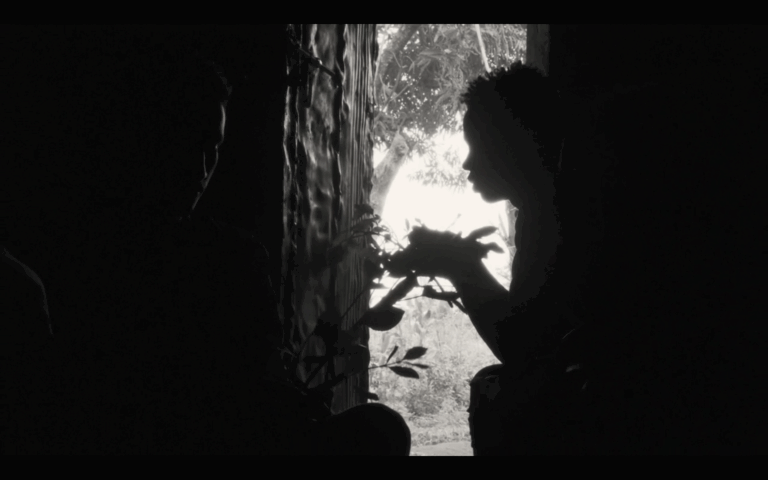
And that’s when I discovered Faya Dayi. On paper, a documentary about the Khat culture in Ethiopia. On the screen, a miraculous film, as if shot in weightlessness, with Tarkovskian poetry. The bewitchingly beautiful images, shot in 4:3 Black and White in the most colorful country on the planet, seemed to be created by a Shaman and intended to penetrate your soul without any artifice.
I immediately contacted Jessica Beshir, who had stayed in New York. It took her ten years to make this film. With two Canon cameras, an innate sense of framing and lighting, and infinite respect for the people that surrounded her. She also went from wanting to control everything to letting go of it all, without losing focus. Her interview with The Union will appear later, as the film will soon be available on MUBI.
This is also what Camerimage is all about: the direct connection, thanks to a film programmed in the official selection, between two foreigners 6,000 kilometers apart. And at the end of the tunnel, a radiant glow.
Pascal Montjovent
All the cinematography
Festivals are an opportunity to see films being screened, to listen to members of the crew talk about the film, but Camerimage is unique in that it is the voice of the cinematographers, with all the specificity of this voice, both technical and artistic. And as in all festivals, it is an opportunity to see films that will not be seen elsewhere : neither in theaters nor online, because such and such a film will not be distributed in France, because there will always be too many films to see online.
The festival is therefore a privileged moment of encounter with films that we do not expect, discovered almost by chance, because the title or the theme inspires us, because we met a member of the film’s team, because we heard about it in one way or another.
The choice to attend this or that screening is made for me by the margin, at Camerimage as at other festivals. At Toruń, I therefore chose instead to see first films by directors, first films by cinematographers, foreign films from countries whose contemporary cinematography is not well known, documentaries and short documentaries as well, whose opportunities for distribution outside festivals are very random. I like the luxury of seeing films that are difficult to see, accepting the possibility of being disappointed, hoping to find a little nugget of cinema, trusting the selectors.
For my first time at Camerimage, I saw a first Chilean film (Matar a Pinochet) and a first Estonian film (Goodbye Soviet Union) which made me want to know more, and led to two interviews with the team.
I saw a first Russian film (Chupacabra) and a first Mexican film (Son of Monarchs), two rather inspired and successful films ; a first Chinese film (Annular Eclipe), a futuristic thriller technically ambitious but a bit too efficient and conventional in terms of staging, or Ted K, a first American film, about the Unabomber, a lone American terrorist of the 80’s – a film visually working around the sociopathic inclinations of its main character, sometimes very inspired and sometimes clumsy.
I also saw Kodokushi, a Turkish documentary filmed in Japan focusing on a special kind of worker, in charge of emptying the apartments of elderly people who have died alone in their homes and a very strange Danish fantasy film, Border, in the well-named Meet the unknown section. And also two screenings of short documentaries, including two films that particularly interested me : Survive, a German film describing the relationship between an artist father obsessed with his own finitude and his drug-addicted son (its cinematographer was awarded a prize), and Brave, a French-Haitian film that is as intimate as it is flamboyant.
And even The French Dispatch by Wes Anderson for good measure, in the presence of its chief operator, who had to undergo a projection cropped on the edges !
Thomas Lallier
The Future
Sometimes the planets align. You knock on the door of an organization, and by a combination of circumstances you find yourself less than a year later participating in its representation in Poland at Camerimage. That was my case, and it was crazy.
If you’ve ever been to a few festivals, you know that there are uptight ones, very uptight ones, even some “sorry you’re not uptight enough to get in” ones and finally some not uptight at all. Camerimage clearly falls into the latter category, its credo: what if we got out of the star system and talked about our craft?
My festival was an endless series of conferences, each one more interesting than the other, of famous and unknown films, of evenings spent chatting with people I met two hours ago on the Arri, Zeiss or DMG stands. Before Camerimage, I had never seen Oscar winners in jeans and sneakers discussing flare and motion control with students in formal wear still a little confused by the situation. Before this festival, I’d never had the opportunity to talk with masters of our craft, understanding at this very moment that these people with incredible careers are just like you, they like to talk about this incredible job of ours. It was an opportunity to realize that there are many people and entities that are willing to welcome you into this beautiful cinematgraphers community.
Lastly, I would say that this festival was really a wake-up call for me. I realized that individually or collectively it is our ambition that will take us where we want to go, and just as a career is built with time, work and the desire to progress, it seems that our association will go as far as we want to take it.
The Camerimage was a great opportunity to talk about our organization, to put it somewhere on the map of professional organizations, to introduce it to potential future partners, to make its members want to defend it and to show that this organization, however young it may be, has all the legitimacy, as long as we give it the chance to grow.
Vincent Tartar
Sharing our love of cinema
Camerimage is a unique opportunity to listen to prestigious cinematographers from all countries and all horizons talking about their work. If my first participation in the festival was only remotely, leading me to choose not to watch the films that were going to be released in theaters soon, I was nevertheless able to attend many fascinating exchanges, instead of just reading the reports as in previous years.
Such a festival also offers the possibility to discover movies that will probably remain unreleased in France. Faya Dayi by Jessica Beshir, seen on Pascal Montjovent’s recommendation, was a cinematographic shock, for the magnificent black and white, the carefully designed frames and the fine and original writing of this documentary dazzled me.
Being part of an editorial group, in which we could exchange advice on films to see, ideas and opinions on our respective articles, brings an extra stimulation. It was an opportunity to rediscover the pleasure of writing, to spend time reflecting on the image and on our work as directors of photography, time that we rarely take and which nevertheless pushes us to deepen our ideas and our conception of the cinematographic image.
The topic of collaboration, especially between the different departments, was recurrent this year throughout the conferences. At the very heart of the festival is the desire to share about our work as cinematographers. Reflecting this fundamental idea, this edition was an opportunity to renew my pleasure of exchanging views on cinematography and cinema in general, by listening to the many invited cinematographers, but also discussing with my comrades of the Union des Chefs Opérateurs.
It was an enriching experience that had no result but making me want to take the trip next year, in order to discover the films in theaters and to take advantage of the side events of the festival, all these more informal meetings and discussions that can start and continue spontaneously outside the official events.
Diane Plas
Expanding our vision
There are events in life that happen to give us breath, to give us time to refocus on our vision. Camerimage proved to be one of those suspended moments that I particularly needed. A moment to take a step back from the reason why I create images. It is a space that allows us cinematographers to reflect on our work together and to come up with common reflections on our profession.
Camerimage is a space of deep exploration that takes us into a truly diverse cinematographic universe. One day is not enough to attend the screening of a long-awaited film, to recover from the discovery of an unexpected masterpiece and to be inspired by the experience shared by one of the masters of this art. Because after all that, we still have to think about the possibilities of the future of our profession. The effervescence of the thoughts about our practices never ceases.
These shared reflections are at the heart of the experience, during the conferences, the discussions with the constructors, and even during the off times of the festival. Indeed, the simplicity of the meetings and exchanges between everyone is striking, whether you are an eminent cinematographer or a young emerging talent. The richness of these encounters opens up unsuspected or forgotten dimensions and leads us to expand our vision and to reconnect with our artistic and technical practices.
The festival offered us strong emotional moments through its meetings, but also through its screenings. For me, the highlight was C’mon C’mon by Mike Mills, the subtle black and white and the sensitive framing of Robbie Ryan. A gentle balance between fiction and documentary that deals with time and its imperceptible yet fulgurant effect on our world. The movie rings like a lesson of hope from a young generation that seeks its future accomplishment and celebrates the present.
And finally, there are the people I went with. Such different profiles that would certainly not have ventured together to such a festival if our organization had not brought them together. Thank you for our sharing and the many to come. You have done a wonderful job representing the diversity and professionalism of the organization and giving it a valuable place on the cinematography scene. This experience is proof that we must keep moving forward with our collaboration, as it has a bright future ahead of it.
Valentine Lequet
Strength in unity
My first Camerimage Festival took place in Bydgoszcz in 2018, I was still a student and I returned to Paris with stars in my eyes and an internship offer at Panavision in New York in hand. I was very proud that I fought my shyness and approached Terra Bliss, then vice-president and managing director of Panavision, to whom I had sent several emails in the hope of an internship in her company. I was also very happy that I met Seamus McGarvey, the extremely kind cinematographer of one of my favorite movies, The Hours by Stephen Daldry. I was convinced, and I still am, after seen so many magnificent films, that I have chosen the best job in the world…
This year, the festival was back in Toruń after a completely virtual edition. I was surprised to discover that many familiar faces roamed the aisles of the famous Market: cinematographers, colorists, manufacturers of cameras, optics and lighting equipment. As a brand new active member of the Union, I was often impressed to introduce myself as a cinematographer to much more experienced professionals. The supportive presence of my seven comrades from the association reassured and carried me. Proof that there is strength in unity! I will forever remember that first night of panic looking for a hotel…
Among my favorite moments of the festival, a meeting with Alice Brooks, cinematographer of the moving Tick Tick Boom and the dizzying In The Heights which made me want to shoot a musical, and the discovery of the delicate work of Robbie Ryan in C’mon C’mon and Haris Zambarloukos in Belfast, which made me dream of black and white. I am leaving, once again, enthusiastic, inspired, driven by the love of this profession which fascinates me more every day!
Naomi Amarger
Applause !
A strange feeling came over me during my first screening at Camerimage : the audience settles down, talks, it gets dark, silence. So far so good. The credits begin, the name of the director of photography appears and we applaud the director of photography ! The public applauds the DOP ! Small moment of surprise. The director is normal, in all the festivals of the world, the director is applauded. But the DOP !? Ok it is a festival of DOP but here it is another thing. There is a conviction, a will. We applaud the DOP !
At this precise moment, I become aware that around me 200 people share the same passion, the same obsession for this profession. There is a group, a community. We are celebrating a DOP, but we are also applauding the entire profession and, of course, ourselves. For a week, cinematographers from all continents meet, exchange and share a common vision. Here and now, we are a family and we know it. And we applaud the DOP !
There is something a bit irrational here, reminding me of the atmosphere of some concerts. Complete strangers, exchanging the knowing look of true enthusiasts. Something important is happening. We proudly wear our badges, we visit the merch store to keep a trace, a souvenir of this moment of communion. We want to be part of this movement. The lights go out, the credits start to roll and we applaud the DOP !
FX Le Reste