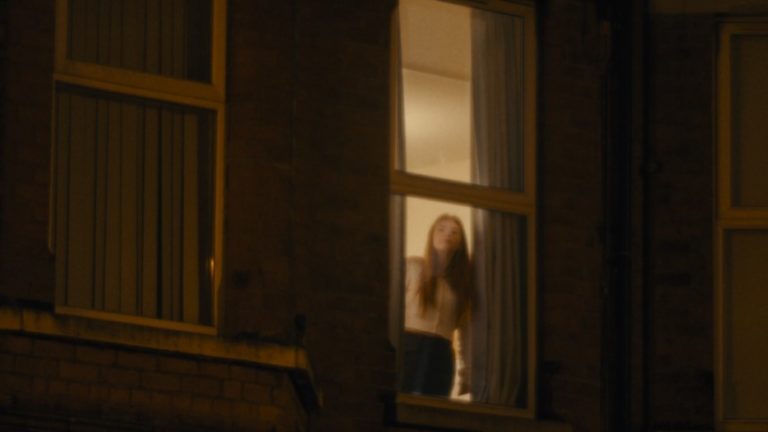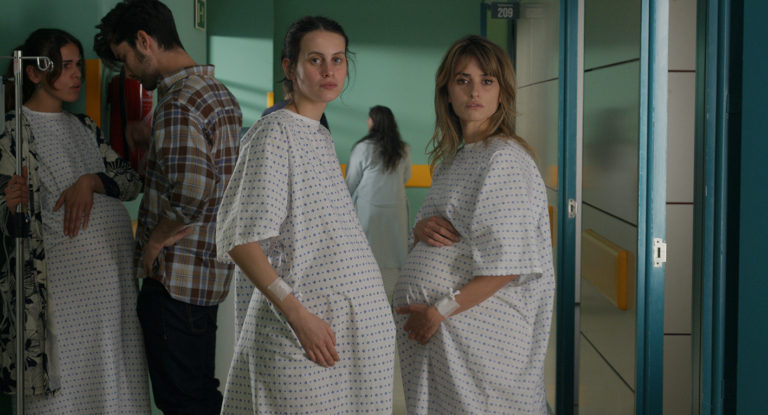
For his 8th and a half (it’s important to him) collaboration with Pedro Almodovar, José Luis Alcaine, AEC, has participated to a Q&A session after the projection of the film Parallel Mothers. During this discussion with the Camerimage audience, the cinematographer talked about his approach to light and colour, which were particularly influenced by his childhood memories.
As a child, José Luis Alcaine grew up in Tangier, where he observed how shadows and lights were transforming depending on the different times of day. In this childhood house in Marocco, he learnt how the sun journey influenced colours, faces and textures. He told us how his love for grazing light, at the end of the day, was born – and how natural light would become years later the one he would want to reproduce.
Almodovar asked that the film was shot in chronological order. To have a better control, it was decided to film in a sound stage. Alcaine hates Fresnel lights, he works without a meter (for this reason his gaffer says that it’s impossible to work with him), and will rather use his eye when it comes to place a light. For according to the cinematographer, the source must always be justified: should it come from outside or inside of the set, the viewer must feel how natural the light is.
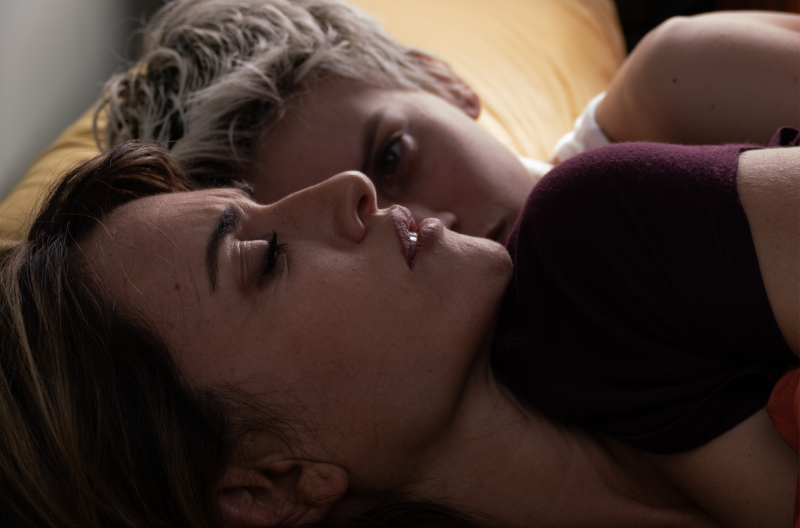
When filming outside, Alcaine uses natural light to tell the story. Once in the sound stage, which was the main situation for Parallel Mothers, he always tries to reproduce the light of the sun. Inspired by his childhood memories, he never forgets that our star illuminates and envelops the places that are filmed, and all the work consists in staying true to its nature.
José Luis Alcaine also told us about his love for diffused light, for its softness and the benefit of using it on actresses. He told us that when he was younger, he used to light by using umbrellas as reflectors, but this time consuming process eventually forced him to change his way of working. In the 80’s, when nobody had had the idea yet, he started to use fluorscent tubes to light his films. He progessivily gave up using them as the LED lighting systems were getting more and more reliable. To him, the tool indeed evolved, but the passion for the diffused nature of the light remained unchanged.
To achieve a color this bright and vivid all along the movie, José Luis had a very personnal process. To “give body to the color”, as he said, he chose to work with at a T-Stop between 11,5 and 16. Which ended up with a double result : an increased depth of field (and a lot of calculation for his camera assistant) in one hand, and a brighter, denser and more intense colour all along the film on the other hand.
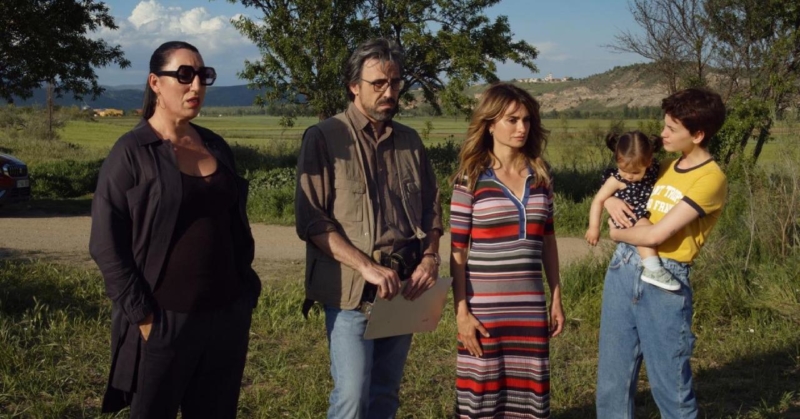
Parallel Mothers is a movie about transmission, heritage, sharing and rediscovering forgotten things. What better experience could we hope for than the one where a cinematographer like José Luis Alcaine shares with such passion and enthusiasm his love for images and lighting ? This dialogue between Alcaine and a new generation of cinematographers was a wonderful illustration of how important it is to share knowledges in our craft. This transmission between passionate professionals should never run dry, and should even be promoted. For this is also what the Camerimage Festival is about.