The short film moves forward with its questions, the same ones as always. What journey can be undertaken in such a limited time? How quickly can an atmosphere be established when one is already about to leave it ? How does one aim for the essential without becoming obsessed with efficiency ? Less scrutinised, expected by no one, it can be used as a springboard to prove one’s readiness for feature-length work, or seized as an opportunity to experiment.
This freedom remains constrained. More precarious, the short film must tighten the frame, make choices, set priorities, learn to suggest. Very often made with younger crews, it nonetheless demands old cinematic tricks and an intelligence acquired through overcoming obstacles over a long filmography. For all positions, it is an accelerated training. Cinematographers know this well.
The Chalon-sur-Saône festival initiated its first short film selection this year. Covering several genres and several production scales (from student film to pre-bought), it offered a panorama of 11 films from recent Francophone production. One distinctive feature: all of them were shot by a female cinematographer who is a member of Femmes à la Caméra.
Sticking Close to the Body
Since the field had to be narrowed, it made sense to bring it back to the flesh. Receptacles of violence, of the world, of its laws and their conditioning, the cameras moved in as close as possible to bodies seeking their emancipation. Thus, Métal Hurlant by Nicolas Aubry (dp Camille Clément), a false chamber piece set inside a truck between a driver trapped behind her wheel, her schedule and her obligations, and a clandestine passenger hidden in the darkness of her trailer, holding his breath so as not to trigger the CO2 detector. Stepping back is impossible. We ride along with them.
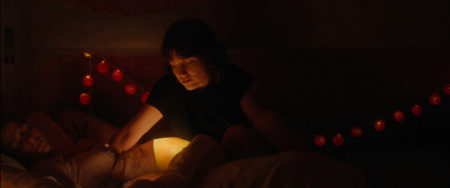
Another claustrophobia: Sanguine by Capucine Pinaud (dp Oksana Kebeleva Luyssen and Bérénice Farges) plays with nested compartments. Opening in the dense red-mauve light of a party in a cramped apartment, it continues as close as possible to its heroine. Alix cannot have children. Her flatmate Suzie becomes pregnant. Swallowing her jealousy, Alix experiences a “bodily inversion”: the blood that flows from her now leaks from her shower. She wakes one night encased in a uterus, which she tries to pierce in order to find her breath.
The war in Ukraine is the subject of Le Soldat Déchiré by Cyril Caine and Anita Volker (dp Clara Pauthier), the only documentary in the selection. We see only one battlefield: the torn and newly reconstructed jaw of Volodymir. A face and still-laboured speech, describing a country redrawn by bombs.
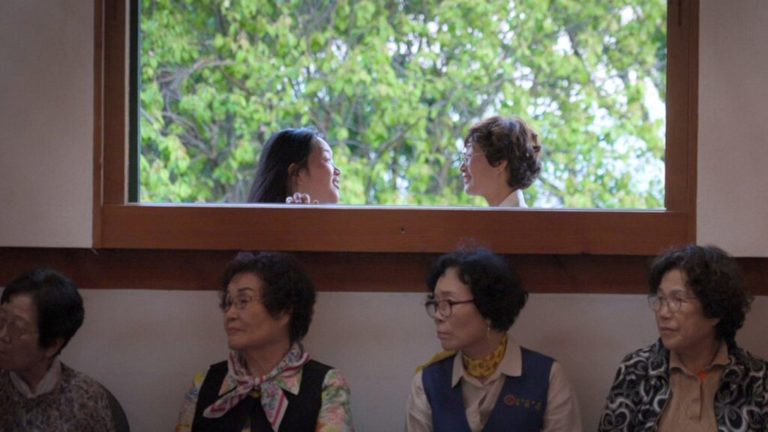
The body also has its own internal off-screen spaces. In Karateka by Florence Fauquet (dp Naomi Amarger), Gabrielle must endure, mid-competition, the dull pain — invisible to the audience — of her sudden period, and hide the blood that risks staining her white uniform before everyone’s eyes. In Habibi by Alexey Evstigneev (dp Chloé Terren), filmed in Kazakhstan to avoid ostracism from his in-laws, Laura must pretend to be pregnant beneath her winter clothes, disguising her body, then inventing the existence of a baby that exists only through traces. Finally, Yasma in Le Diable et la Bicyclette (dp Laetitia de Montalembert) by Sharon Hakim, caught between the obligations and taboos of a multi-faith family, discovers her sexuality on the eve of her first communion. She knows she must hide it. But the object of the offence circulates in plain sight: a young girl riding a bicycle through the city.
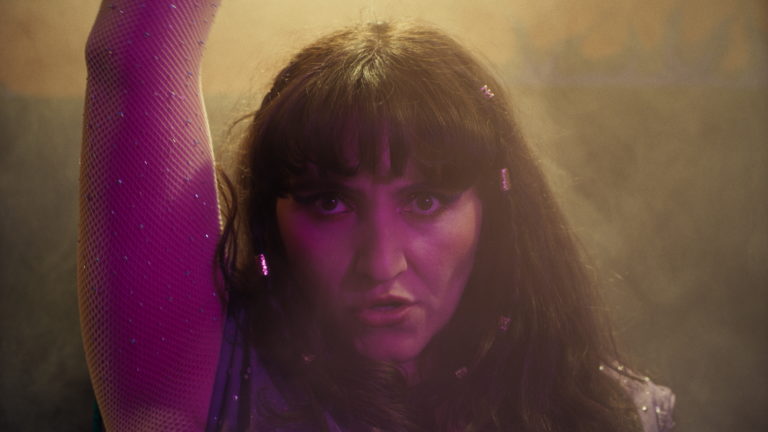
Stay Alive by Emilien Marret (dp Charlotte Michel) and Lady Attila (dp Margot Besson), directed and performed by Apolline Andreys, both lead us to young people trapped in garages, surrounded by spare parts and vehicles going nowhere. Yet the desire to move is there. The scope camera of Stay Alive never stops moving on its tracking shots, encircling Alex and Lucas, calling them towards elsewhere. Lady Attila, enclosed in ever-tighter frames, reclaims her space, her wardrobe, her body and her life through Air Guitar. In the choreographed end credits, she is the one pulling the camera along with her.
Getting Out
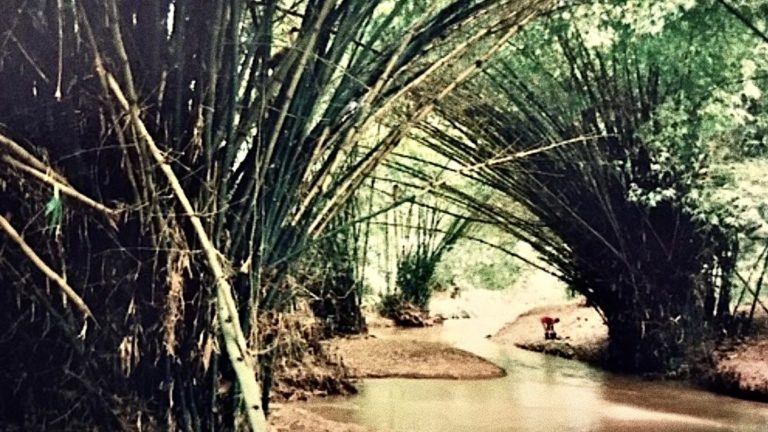
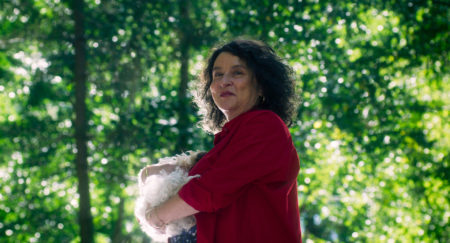
The escape, then. Going out for air. Trying nonetheless to widen the frame. In Ada by Anaïs Vachez (dp Anne-Charlotte Henry and Arthur Bourdeaud), another tale of confinement, a little girl slips from hiding place to hiding place in a house creaking around her and must reach the door to escape her parents’ violence. Plein la Vue by Damien Narcy (dp Lou Besançon) sets up, through voiceover, the calls Mona refuses to take, which represent what she refuses to see: a marriage proposal. No, Mona prefers to flee and go hiking in the mountains. Saillie by Aude Thuries (dp Eva Sehet), an excerpt from a feature film in development, offers a moment of suspension in the woods, between two people who share a passion for the same dog breed but do not dare to draw closer to one another.
Meeting with some cinematographers from Chef-Op En Lumière festival.
Métal Hurlant — Directed by Nicolas Aubry, photographed by Camille Clément
Métal Hurlant is a story of bodies under pressure — in both senses of the word — that have no right or no time to breathe. How did you approach filming these characters with Nicolas? How does one convey that anxiety?
Camille Clément
I think we started by talking about politics. Then about colours — a search around grey and blue, with quite a few reference exchanges, particularly to find the colour of the trailer and the atmosphere of the cab in terms of texture.
Nicolas had a very precise breakdown in mind. He wanted to blend an unbearable realism with a ‘genre’ aesthetic. Obviously Duel comes up quickly as a reference for building tension through editing. A fast-paced film, with no time to breathe. Camera angles that become increasingly violent. Two characters, each in their own space, ignoring each other while physically right next to one another, travelling together. Within this idea of a steamroller in motion, Nicolas wanted to film the road, the truck in its details, the speed. And finally the horror of that CO2 detector — a detector of ‘migrants’, the ‘diabolical machine’ linking these two characters, which allows us to move more towards genre-style shots.
Technical preparation was thus fed by many discussions about how to tell this film, but also by numerous scouting sessions with trucks. We had to go in with a very precise vision of what we were looking for, since the shooting schedule and the number of shots to be made would leave no room for further questions.
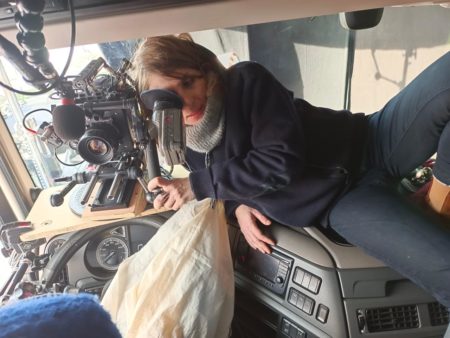
How does one scout and test for a ‘highway film’?
Camille Clément
It means a lot of time in the car, running through the dialogue to find the right loop lengths, the right base camps and the best light angles to make the most of available time (and in the end shooting in both directions because the weather was too unpredictable and there simply wasn’t time!).
It means finding a breakdown truck to tow a semi-trailer cab onto which we hope to place some lighting and a ‘chase vehicle’ crew, keeping our fingers crossed they won’t have a more urgent call-out, since we won’t have a proper tracking truck. And those machines are all red and bounce reflections everywhere! We’ll need to protect our actress!!
It means realising that light no longer enters a cab after 3pm when it’s overcast. It means imagining a truck’s point of view on the road while doing everything by car. It means reality catching up with fiction when you see migrants hiding in the bushes at motorway service stations on the road towards Calais.
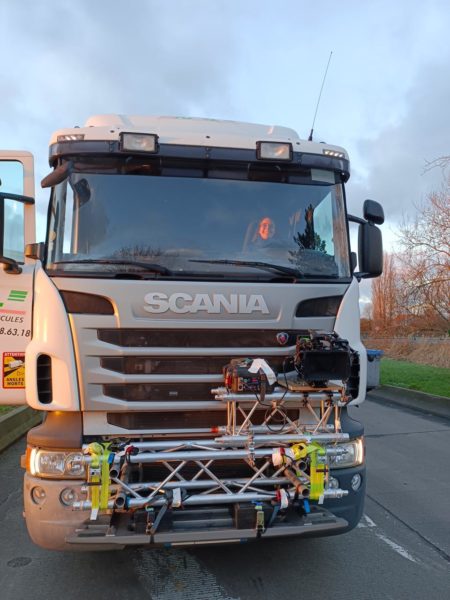
Concretely, how do you film people inside vehicles that are actually moving on that road?
Camille Clément
It’s true that after all that planning on paper, we still had to face reality! And find solutions to get everything into a very tight shooting schedule — especially in January, in northern France, with mostly daytime sequences, an actress without an HGV licence, a short-film budget, a continuous timeline running right up to the magic hour, and snow dropping in mid-shoot. Lots of meetings about the schedule and the breakdown with the first AD (Guillaume Leuillet) and the script supervisor (Claire Delâtre).
We had two vehicles. The first was a spacious single semi-trailer cab, towed by a large breakdown truck, for the shots of our actress supposedly driving. On other, tighter shots, we filmed while stationary, with the illusion of movement created by the lighting.
The second was a twin truck with its trailer, driven by a double for the wide exterior shots. We also used it for the ‘subjective’ road shots, filmed from a vehicle mount (thanks to Guillaume Demaret at Panavision, who gave us a second camera; those shots could therefore be done in parallel with the main unit).
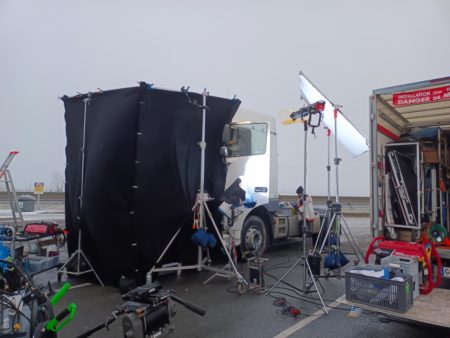
Finally, all the trailer sequences were shot stationary, with a heavy goods vehicle at the base camp, allowing for set dressing and relatively more lighting flexibility. The main challenge there was to light a space that is supposed to be almost completely dark… and in movement. We had many discussions with the production designer Etienne Hubert about designing the trailer in terms of texture, colour and lightness of set, in order to be able to move elements and position the camera quickly. The load of the truck, which must collapse, also had to look realistic.
I knew I needed a very compact camera to squeeze into every corner of the cab. I opted for an Alexa Mini with Cooke S3 Panchros, and an F55 as a second camera for the truck mounts. For lighting, I needed lightweight and controllable equipment, both for mounting onto the cab and for building the ‘technical ceiling’ of the trailer. And still a little HMI on the static shots to create daylight when it had disappeared!
Fortunately I had a very motivated and committed crew who had done a lot of preparation with me to anticipate and be ready to jump on any opportunity for a ‘quick second-unit shot’ — without actually having a second unit, of course.
And driving on the motorway meant an escort from the Northern Motorway Authority — a team that proved wonderfully flexible and accommodating. Then it started to snow and they had to leave urgently to grit the motorway and lift the HGV circulation ban! Nicolas had rehearsed extensively with the actors to manage to sustain performance in the middle of all that logistical chaos! We were lucky to have very focused actors who were fully aware of all these technical constraints.
Sanguine — Directed by Capucine Pinaud, photographed by Oksana Kobeleva Luyssen (lighting) and Bérénice Farges (camera)
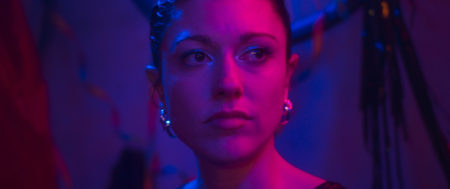
Sanguine is a film very close to the body, both in its subject and in the choice of frames. How did you approach this subject? What were the first images that came to mind when you read the script? Any painterly influences?
Oksana Kobeleva Luyssen
The director, Capucine Pinaud, shared images with us at the same time as the script. She had very precise ideas, which allowed us to quickly find the film’s visual language. In our discussions we talked about Julia Ducournau’s films (Raw, Titane). We focused mainly on the breakdown, on handheld camera, a living frame and the sensation of closeness with the characters. We also studied how the character’s movements are filmed in Mother!, which we liked for its rendering and its distance from the camera.
Pictorially speaking, it was The Five Devils (Les Cinq Diables), shot by Paul Guilhaume, that inspired us most. A dark image with strong contrast and a palette tending towards red, orange and brown in the interiors (and particularly in Suzie’s room, Alix’s flatmate). From the start of prep, we had steered the set dressing in this direction to come as close as possible to that reference.
As the film progresses, we move closer and closer to Alix. The film opens on a waist shot, then we draw gradually nearer, until we suffocate with her in the ‘placenta bed’, ending on her wound — as if the camera had tried to enter her.
Oksana Kobeleva Luyssen
In terms of image, we wanted to be close to Alix from the very first scene. We tried in the breakdown to separate the two friends as their friendship gradually unravels. Shortly before the end, at the placenta scene, a shift occurs and the shots on Alix become very close. The sound design also plays a key role in accessing her distressing sensations. The editing too, with ellipses that amplify the derealisation and the loss of bearings. It feels as though we cling entirely to Alix at that point.
How did you prepare the placenta scene — in terms of texture research, lighting?
Oksana Kobeleva Luyssen
Alix finds herself trapped inside a placenta during one of her hallucinations. This was the hardest scene to visualise during prep because we had to combine several effects to arrive at a result that was both convincing and conveyed the suffocating state in which Alix finds herself.
The placenta was made by Florence Thonnet and Ann Van Nyen. It was a latex sheet — like a second skin — onto which veins had been drawn. On set we also soaked it in liquid fake blood to achieve a shiny, viscous quality.
We first decided to backlight the placenta. This allowed both the texture to emerge and created a shadow-puppet effect. By moving the light sources (Aputure MCs) we could distort the body’s contours as they projected onto the material. To further amplify and fully express this hallucinatory space, we turned to tilt-shift lenses — specifically LensBabys. We imagined that the combined distortions (stretching latex, deformed shadows, optical blur) would make the material appear alive. And it did!
It was wonderful to have that plastic base during shooting, because we knew where we were heading but could also let chance seep into the shots and the breakdown. It was a real moment of research and experimentation.
Was there particular work done on her skin, in terms of image and make-up? The result is very carnal.
Oksana Kobeleva Luyssen
We didn’t have much choice in terms of lenses as we were constrained by the school’s equipment. We originally wanted to shoot with Zeiss Super Speeds but ended up using the Sony Cine Alta, which actually has a fairly soft rendering. Together with the director, we chose to always use them with a Soft Fx and a Black Pro-Mist on top. The more intense the hallucinations, the higher the density of the Black Pro-Mist. We also worked on the overall image texture by adding grain with colourist Marie-Sarah Piron.
As for lighting, I always made sure with my gaffer (Fériel Abdelli) to meter the fixtures with a spectrophotometer. We therefore never had to fight unbalanced colour casts in the grade, as they had been corrected on set. We also favoured tungsten when possible, especially on the final scene. I wanted a golden early-morning light to contrast with the tragedy the character is experiencing. Since we were shooting at night I was able to light from the exterior with a Castor (2.5kW). Even though LED is now very high-performing in terms of colour rendition, I still find tungsten gives a velvety quality to skin. In any case, we achieved a beautiful result with great simplicity, as it was our only light source.
Le Soldat Déchiré — Directed by Cyril Caine & Anita Volker, photographed by Clara Pauthier
You mentioned at the festival, during the post-screening discussion, a particular experience filming bodies that are different. Do you feel that influenced your framing choices here, in finding the right distance with Volodymir?
Clara Pauthier
Yes, I’ve filmed many portraits of women and men with highly interesting, unconventional paths, such as a Danish stuntwoman and intimacy coordinator (Anne Rasmussen), or a blind Paralympic sprinter and rapper (Timothée Adolphe)… Each time, I had to immerse myself in their world quite quickly because the shooting schedule was always tight. It was the same with Volodymyr. I think the distance one sometimes senses is a kind of shyness. Over time I’ve realised I tend to dislike filming people head-on, especially when one knows them relatively little. I like profiles, three-quarter angles — I find they flatter faces. This was particularly true for Volodymyr. I also like giving significant space to the setting, and in this film it lent itself well; there are wide shots that seemed necessary to give the film room to breathe. And it matched the aesthetic intentions set by the two directors, Anita and Cyril.
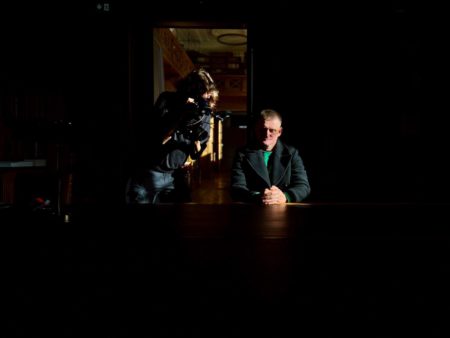
You also light a lot from the side, with low sources, creating chiaroscuro portraits.
Clara Pauthier
I think you’re referring to the sequence filmed in the antique room at the Amiens museum. The directors loved that room, and that almost divine shaft of light evoked for them the works of William Blake. In the scouting photos, I had noticed that large window, thinking it would be beautiful whatever the weather. As chance often works in documentary, the weather was perfect on the morning of the shoot, and the sun lit the chair and the edge of the table in an almost unreal, perfect way. We simply had to place Volodymyr in that setting and used a reflector to soften the dark side of his face. In terms of intention, I found it very powerful to embrace the contrast. It combines with very tight shots, because one had to see his scars.
There is a play with blur. Volodymir retreats into it, emerges from it… Was that a directorial decision? A suggestion? How was it determined?
Clara Pauthier
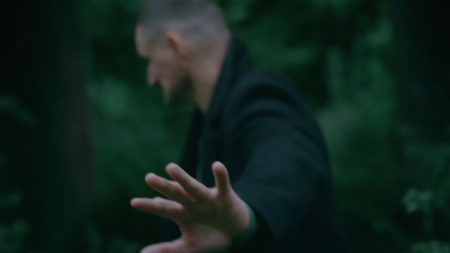
We hadn’t discussed it specifically beforehand, but I already knew that Anita liked to play in the edit with the imperfections of takes. During the sequence under the railway bridge, Volodymyr simulates a flight towards the forest. The blurs are deliberate. But when I’m following Volodymyr as he runs, or when he’s lying on the moss, they are not intentional — though I think it was a good narrative choice to keep them in the edit.
Had you had the chance to meet Volodymir long before the film? Did you know what he was going to say? Did his testimony change how you filmed him during the shoot?
Clara Pauthier
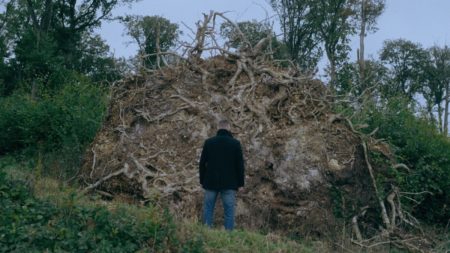
I had not met Volodymyr beforehand; I had simply discussed the project with Anita by phone. Then a moodboard was sent to me so I could learn about his story and the directorial intentions. We had only a day and a half of shooting. Fortunately, we started in the forest, which allowed us to begin gently and get to know each other a little. We started with the shots of Volodymyr with his back against a tree stump, touching the roots. He trusted us fairly quickly and never asked to review the footage. He spoke English, which meant we could understand each other.
It was indeed a very short shoot with a very small budget. How did you approach this production?
Clara Pauthier
There was only budget for expenses. I knew Anita owned a Sony FS7. As for me, I have the full Sony G Master lens range. It seemed a very good pairing, as I’ve been working with Sony for a long time. Although the FS7 is a little dated — especially in terms of its lack of flexibility in the grade — I preferred to have a real camera rather than a photo body with a better sensor. Ergonomics are paramount for me, especially in documentary when working without a camera assistant. The grade was a sensitive point, all the more so given that the colour intentions were quite ambitious. I was therefore glad to be able to do a proper grade in a suite with Erwan Le Geldon at Nuit Calme — that is a precious and rare thing for projects of this kind.
Habibi — Directed by Alexey Evstigneev, photographed by Chloé Terren
Habibi deals with the visible and the hidden. What were your thoughts with the director about imaging this subject?
Chloé Terren
In the script, we entered the film discovering Laura apparently pregnant, on her way to hospital, on a video call with her family. We were therefore momentarily deceived — just as her family is — before discovering through her gestures what is really happening to her. We filmed it as written, but the director chose to cut that sequence in the edit, so that we only gradually understand through her journey what she is living and has organised. The choice was made to let her entourage and the social pressure exist no longer through verbal exchange, but simply through her behaviour and formal characteristics. Also to make the words, when they finally arrive after this long silence, more powerful and resonant.
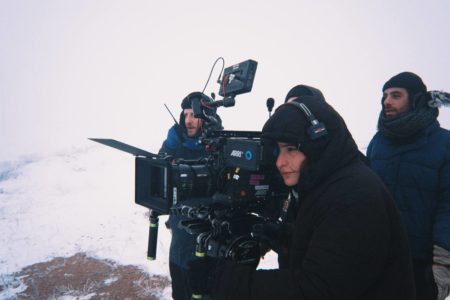
Throughout the film we are very close to Laura. The rest of the world is very distant, often off-screen. How did you think about the distance to keep from Laura?
Chloé Terren
The director had a very strong desire for the world around the character to be distant, ill-defined, in order to manifest an entrapment and a disconnection from her surroundings. This disconnection, this absence of tension with the outside world, is justified by the intensity of the moment, the alienation of the situation — disguising oneself, staging a fiction to keep the peace with one’s own family. Existing as another self in order not to be excluded. In this direction, our character withdraws, distances herself, also so as not to be seen, acting in the shadows. She is at the centre of a kind of off-screen world.
Often, shots of her looking in a direction — which would classically lead to a reverse shot on an object or subject — lead instead to another shot of her. I experience these sequences as a manifestation of the fact that she is surrounded, that her situation has no way out.
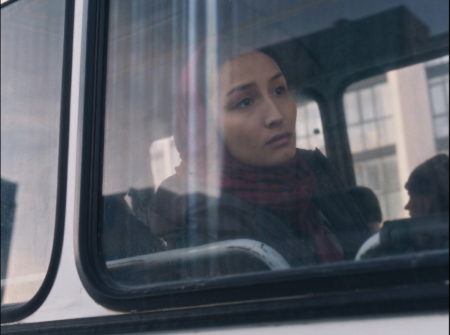
Le Diable et la Bicyclette — Directed by Sharon Hakim, photographed by Laetitia de Montalembert
Like several other films in the selection, this one plays with the shown and the unshown. How did you work on this with the director — concretely, in terms of breakdown and lighting?
Laetitia de Montalembert
The central challenge of the film was to cast a fair — or at least tender — gaze on the sexual awakening of a 13-year-old girl. The discussions about the breakdown revolved around this question: how to suggest as much as possible without ever sexualising the actress? How to show the taboo with gentleness? The most delicate scenes — those involving masturbation — were shot with a minimal crew. The shooting schedule was organised in part around these scenes, so as to approach them without time pressure, putting the actress in the best possible conditions. She is only ever filmed in fragments, to preserve a form of intimacy: a foot, a hand, half a face… The body is never shown in its entirety. Orgasm is rendered through objects falling, or sighs echoing in corners of walls. The film’s image is realistic but sufficiently aesthetic to create the necessary distance and preserve a form of modesty. Sound plays an essential role, and in general, the tone of the film contributes greatly to the gentleness of the gaze.
The filming of the actress is very beautiful. One always feels at the right distance. I believe I heard that she was not a professional actress. How did shooting go with her? Her relationship with the camera?
Laetitia de Montalembert
We were incredibly lucky with Melissa. She learned at an impressive speed — she very quickly understood the technical stakes: positioning within the frame, eyeline directions… And she was extremely receptive to Sharon’s acting directions. All of this made the shoot run very fluidly. It was quite magical, and it contributes greatly to the film’s success. There is something rather privileged in the relationship between an actor and the cinematographer. Being behind the camera, we are in some ways the first spectators, and it was a real pleasure to watch Melissa bring this character to life with such intelligence.
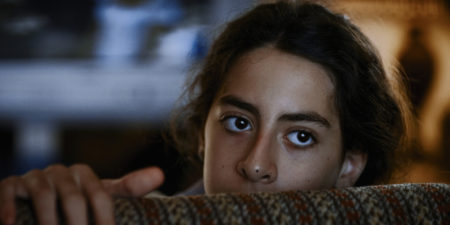
Stay Alive — Directed by Emilien Marret, photographed by Charlotte Michel
In the post-screening debate you mentioned an American influence on the film’s image.
Charlotte Michel
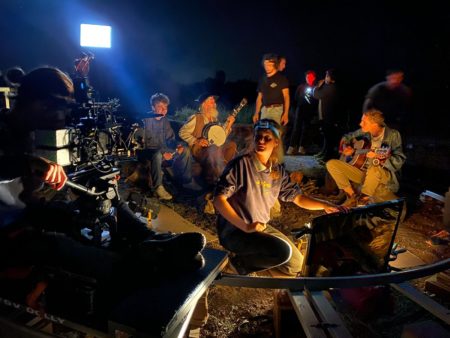
Although Emilien Marret’s film Stay Alive was shot in the south of France, it was originally written for the plains of Flanders. But by winning the screenplay competition at Marseille’s Music & Cinéma festival, Emilien agreed to create a utopia (in the literal sense) around his story. Stay Alive tells the story of the impact of folk music and the imaginative world it carries on the life of a young adult trapped within a family whose functioning has been shattered by a tragedy. Shot in Vitrolles, with Belgian and Irish performers, the film unsettles its references.
We were looking towards Sean Penn’s Into the Wild, Dennis Hopper’s Easy Rider, Chloé Zhao’s Nomadland, and also Felix Van Groeningen’s Alabama Monroe, which fully embraces the American fantasy embedded in the DNA of folk music — the music of Anglo-Saxon immigrants singing both of the homesickness for the house left behind and the hope for a better life on the new continent. I asked myself whether this balance would hold: Alex’s dreamed life within a constrained everyday existence… and then we met Eamon, who plays Peter, found our canyon, and heard Geoffrey Le Goaziou’s original music.
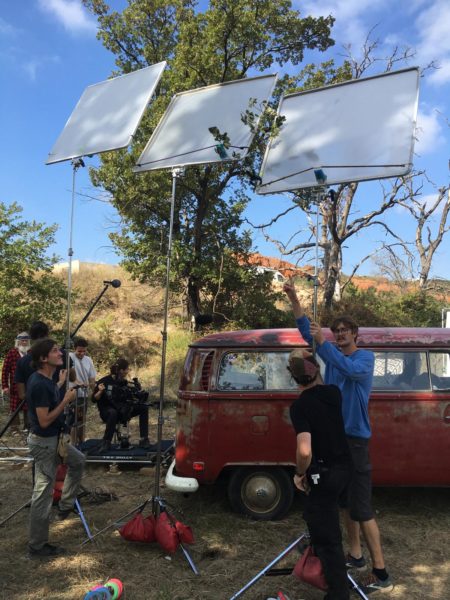
It’s a film with a very mobile camera about people who are stuck and cars that no longer move.
Charlotte Michel
Yes, that’s the entire story of the film: this desire to leave that everything prevents. The family is filmed in static shots. Alex moves but never manages to break free from the rails. The steadicam arrives occasionally to defy the rules. The handheld camera asserts itself gradually.
You also mentioned a film shot almost without electricity, with therefore a very significant interplay with sunlight — and in particular sunsets.
Charlotte Michel
In relation to the script, we carefully separated the locations by taking into account each location’s constraints: no electrical access and many aircraft overhead at the canyon, environmental restrictions for the campfire, etc. Emilien is very sensitive to the atmosphere that natural light brings when captured at exactly the right moment. And the shoot took place in mid-October with already quite short days. We had to observe the sun’s course carefully and work closely with Maurine Aliot, the first AD, to ensure our shooting schedule followed that course precisely.
Emilien and I had a great many images that we brought to the different stages of the film’s making (including silver-process photographs I had taken on the shoot), and the grade was also done with this idea in mind: preserving the density of the sky and not losing the colours of the landscapes and the light.
Saillie – Directed by Aude Thuries, photographed by Eva Sehet
Saillie is a short film made up of a sequence extracted from a feature film that Aude Thuries, the director, is currently preparing. Did you think about the feature in order to find the visual grammar of the short?
Eva Sehet
I have known Aude for over ten years, and I have already made three films with her. Before Saillie existed, I had read several versions of her feature film. I therefore knew perfectly well the context in which this sequence was situated. But Saillie is a pure comedy, whereas the feature film shifts toward a more dramatic tone as the narrative unfolds. We therefore needed to find the right balance between an image that served the comedic stakes of the short and one that also foreshadowed the tone of the upcoming feature. We chose fairly saturated colours, paying particular attention to reds — from the costumes — and greens, combined with a strong contrast and a charcoal-like darkness that one would be less likely to expect in this type of film. We also chose a textured image, with a significant amount of grain added at the point of capture — on the Alexa 35 — then reworked and enhanced in post-production.
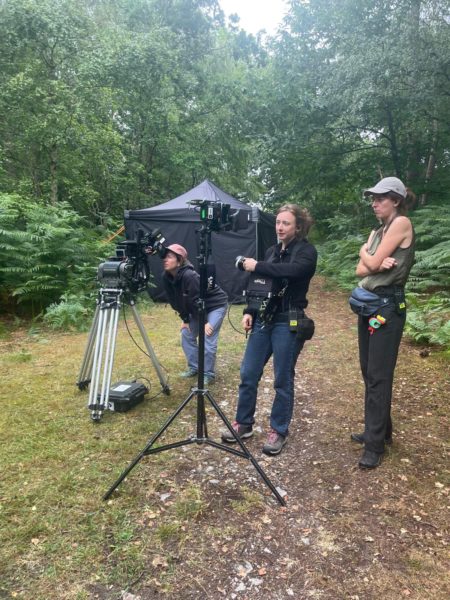
This is a shoot in the woods, a suspended scene of a few minutes, lit solely by natural daylight.
Eva Sehet
The shoot took place over two and a half days: the first part dedicated to near-macro nature shots, and the following two days to the comedy with the actors and the dogs. We were fortunate to have stable weather, as the screenplay consists of a single forest encounter sequence that unfolds in real time over nine minutes. The main lighting challenges were to preserve patches of sunlight filtering through the vegetation — that was Aude’s and my choice to bring dynamism to the image — and to limit green reflections bouncing onto the actors’ faces. Careful location scouting was carried out in order to choose our angles according to the movement of the sun, and I then reshaped the contrast using diffusion silks stretched between the trees, negative fill, and a single LED source — a Pillow Light — to soften the image. Cyril Bossard, my gaffer, spent his time adjusting mirrors and diffusion frames in response to the sun’s movement.
The film tells the story of a hesitant coming-together between two shy people, brought together by their pedigree dogs. What were the directing challenges?
Eva Sehet
The two actors, Noémie Lvovsky and Guillaume Gallienne, never share the frame throughout the entire first part of the film, right up until the mating between the two dogs. An erotic tension then develops between the two characters; we chose to handle this moment through a series of successive zoom-ins on the faces of the two characters, who thus appear to draw closer to each other while remaining perfectly still. Then comes the break: the frames widen, the characters move apart, and the forest reclaims a dominant presence in the image.
Plein la Vue — Directed by Damien Narcy, photographed by Lou Besançon
You shot in the mountains without electricity. How were the location scouts planned? What was the interplay with the sun?
Lou Besançon
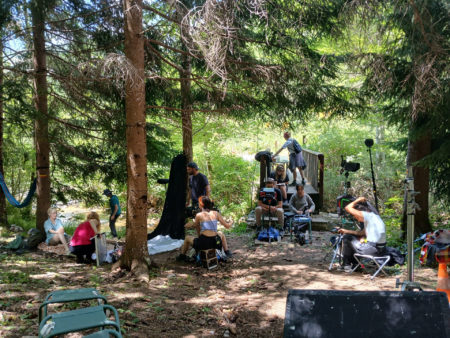
From the outset it was clear that the director wanted to shoot all the night sequences in the mountains — therefore in clearings that were hard to access and without electricity. We went on a lot of hikes, the two of us but also with the film’s producer and other heads of department, to find locations that would work. In the end we opted for spots relatively close to a power source, making it possible to draw from it. We also decided that fire, controlled by a fire rig, would be our main light source and the element around which I would build the frames.
For the walking or movement scenes, we decided to accept the direct and sometimes harsh sunlight. We also thought about organising the schedule according to the times of day when the sun would work best for each location: preferring backlight or side light. For this, I would wander with the gaffer and the first AD across the various locations, tracking the sun and giving estimates of what would work best on camera. We had to be in total communication and collaboration with the direction for any of this to function.
For scenes in fixed locations, we often chose to use reflectors and white sheets to give the whole film the impression of bright sunshine.
The film is about the coming-together of two women. How did you approach this subject in terms of image, with the director? At what distance to film them? Was there a clear evolution in the breakdown along those lines?
Lou Besançon
The question of the growing intimacy between the two characters was at the centre of our discussions from the start. The film’s credibility rests largely on their on-screen relationship; many things were found during rehearsals with the actresses. I attended some of those rehearsals to test the breakdown we had imagined in advance.
The second question that arose fairly quickly was how to make their nascent love believable without slipping into voyeurism or sensationalism. You sense the desire they feel for one another, but that desire is theirs. I didn’t want to push the characters into positions of women-as-objects, but rather to let the frame follow them. It was important to me to manage to express desire without the bodies being fragmented. They lead the dance, and the camera accompanies them.
Fairly quickly the two characters share the frame, finding and binding themselves within it. We wanted to see them together as much as possible, and the breakdown followed that idea.
The river sequence was also a major consideration, as the director needed the character to be completely nude. We felt, however, that there was no point in exposing her to the camera continuously. This is why we see her bathing nude in the sunlight, but the camera keeps its distance — almost as if adopting Mona’s own fearful and timid point of view. Indeed, Mona watches and sketches Krystal but keeps her distance, not daring to come closer. It is Krystal who approaches, and thus ‘chooses’ her own frame size. She is active and subject to this scene rather than passive and object of it.