This year, my joy was returning to the splendid Documentary Theater in Toruń to attend the two screenings of short documentaries in competition.
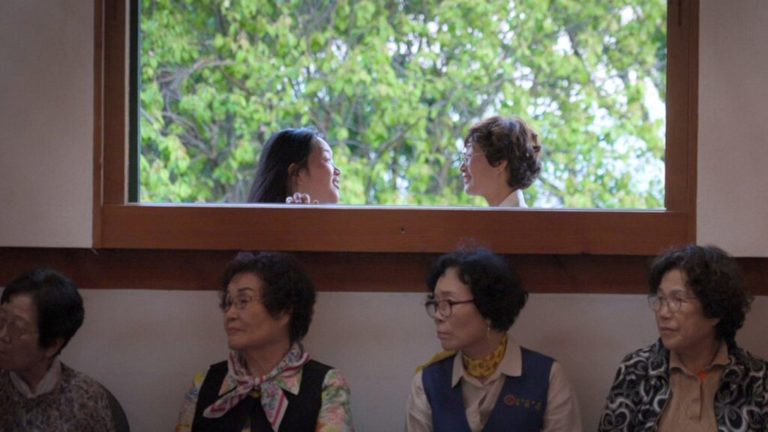
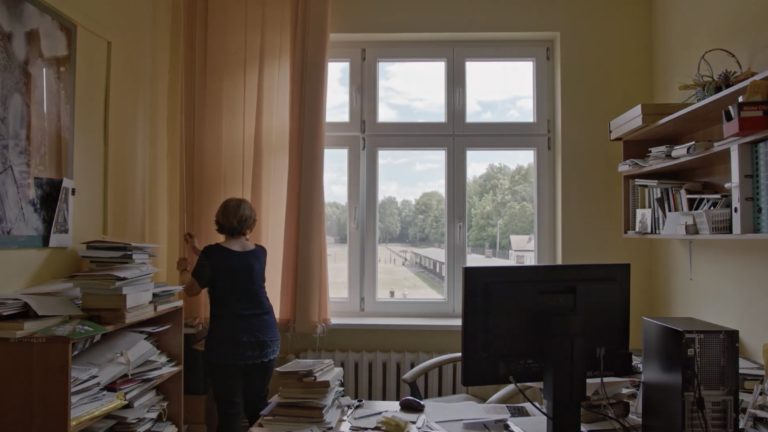
The first four films transported me successively to South Korea, Thailand, Colombia, and… Marseille. Marine Ottogalli, my fellow viewer, asked me which one I preferred. I didn’t know what to tell her at the time because, although I enjoyed them all very much, none offered the dual satisfaction of incredible visuals (it’s a festival of cinematographers!) combined with a truly unique narrative that could pique my curiosity. Then came the second screening. That’s where I discovered No Mean City, directed by Ross McClean and sublimely captured by Ronnie McQuillan. A rare gem, precise, hypnotic. The film also won the jury’s first prize, a well-deserved award.
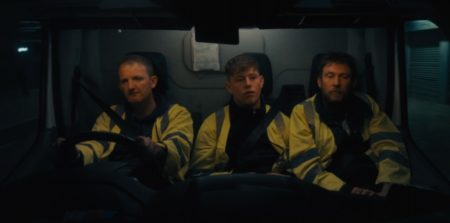
The documentary opens with a close-up of a sodium light bulb, accompanied by a warm, electrical hum that fills the room. Then the bulb goes out.
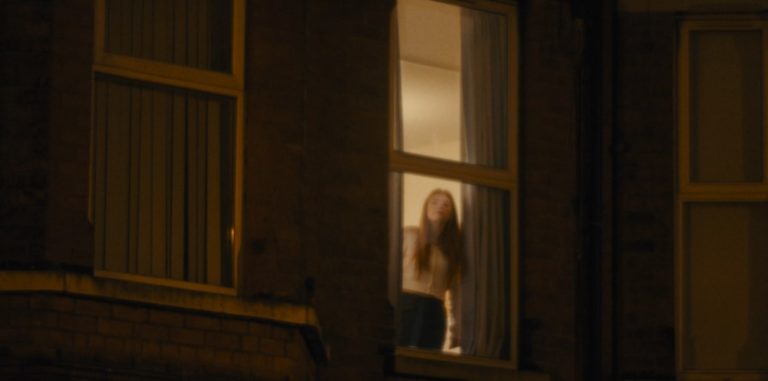
We then follow two workers and their apprentice in their van, driving through Belfast, as they replace the old sodium lamps with cooler-beaming LEDs. From the very first nighttime shots of the city, the framing instinctively draws our eyes upward to these streetlights and their magnificent orange glow.
What a brilliant idea to use blackpromist filters to illustrate a film about urban light! I am instantly captivated by the poetry that emanates from it. Then comes the nostalgia: the LEDs installed by the workers alter the mood of the city. The warmth disappears, and we are suddenly cold. We witness a silent transformation.
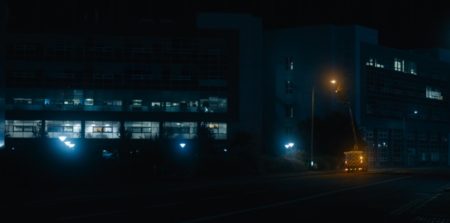
Light itself emerges as a central character: it questions what we lose in the advance of modernization. The interactions between the workers and the night visitors evoke this technological shift, but also the fading traditions. A little further on, some locals light a large, traditional pallet bonfire. They smile, enjoy ice cream, and celebrate together: they are reclaiming the night and making the city feel alive and welcoming once more.
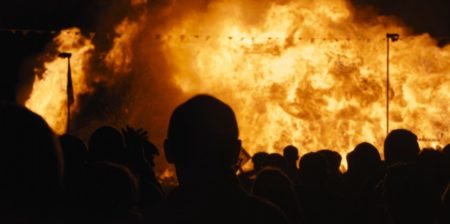
Director Ross McClean explains:
“For us the film talks about tradition, nostalgia, change and modernity. For us this old tradition of lighting huge bonfires was something that represented the past. And the nocturnal culture in the city. It also related to our old lamplighter in the cafe when he talks about the warm glow from a fire being natural. So there’s something primitive about including it.”
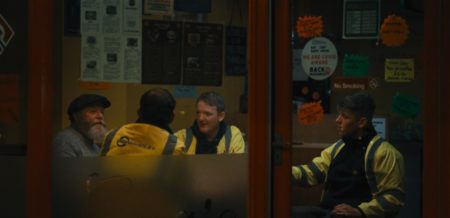
The film also explores the question of transmission. We inevitably become attached to Paddie, a 16-year-old apprentice, who silently learns the skills of a profession destined to disappear. In a café, surrounded by his colleagues, he listens to Jimmy recount, with a touch of nostalgia, that they are the last lamplighters in Belfast.
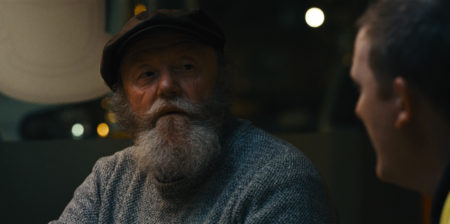
No Mean City thus paints a portrait of a city in the throes of transformation, captured through the changing light. And congrats to Ronnie McQuillan, whose cinematography manages to elevate this transformation with remarkable finesse and sensitivity.
Read an article about other short documentaries of Camerimage 2025.