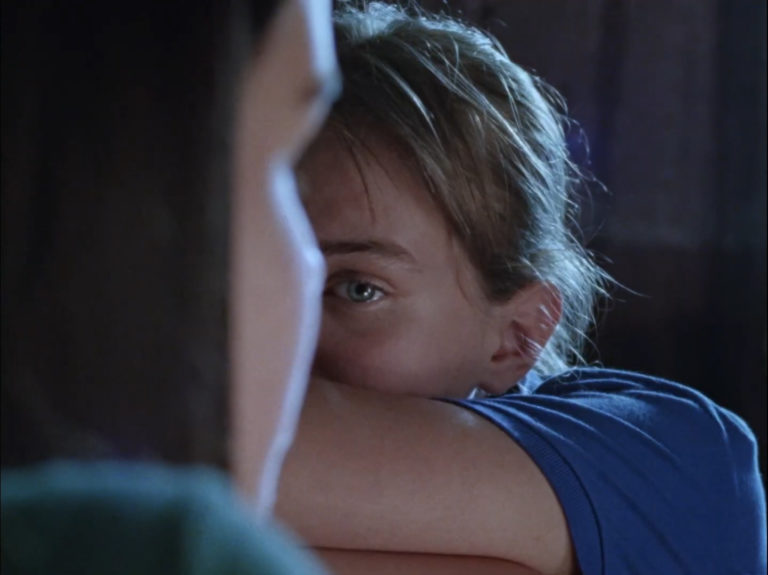
An intimate reconstruction of a telescoping of memory, When The Phone Rang plunges us into the daily life of a teenage girl, at the moment when her personal history and the history of her country take a turn.
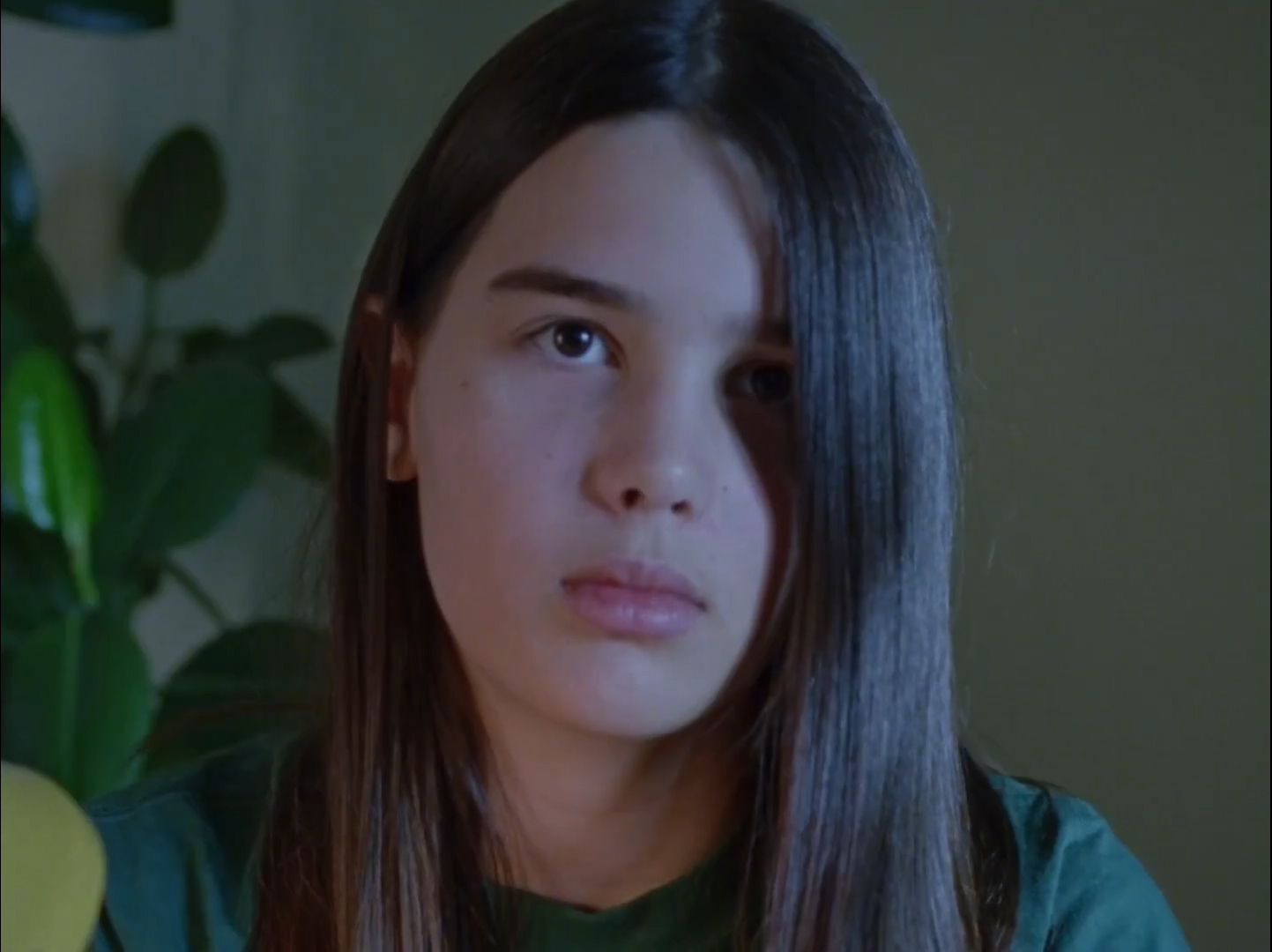
Seen through Lana’s eyes, the breakup of Yugoslavia is a distant yet omnipresent reality, precipitating family turmoil and shaping the end of childhood, marked by an obsessive phone call announcing her grandmother’s death as a sign of the end of an era. Matin DiCicco, a US-based cinematographer, brought this story, inspired by director Iva Radivojević’s personal experience, to life on film. A vibrant Super 16 shot with deliberate framing, it was selected and awarded at numerous festivals before being presented at the 46th Manaki Brothers Film Festival. An interview with a multi-talented cinematographer who also directs his own projects. – How did you meet Iva? Iva and I met when I hired her to edit my feature film All That Passes By Through a Window That Doesn’t Open (2017). She’s a very creative editor, and our collaboration was fantastic. Later, I helped her with the New York sections of her film Aleph , and shortly after, we started discussing When the Phone Rang . – How did she sketch out the idea for the film, and how did you approach the preparation? The initial script Iva showed me didn’t have much dialogue but rather numerous descriptions of locations and atmospheres, all of which influenced the framing choices and the film’s design. Initially, Iva wanted the film to be primarily composed of close-ups or medium shots, to immerse the audience in Lana and the children’s world rather than evoking the outside world (and the context of the ongoing conflict in the country). From there, we started thinking about the transitions between the different sequences: there were always repetitions in the voiceovers, so we had to reuse some of the footage we had shot, like memories that keep coming back. Was the choice of film obvious, or did you question it when comparing it to digital? From the beginning, Iva said she wanted to shoot this film on film, so there really wasn’t any discussion about a digital recording. She felt that the grain should evoke memories of that time, memories recalled or sometimes derived from old family photos. The entire film is dictated by constraints: a script based on memories, a tiny budget, period costumes, props, and locations, etc. The idea of imposing the limitations of shooting on film on us was therefore quite fitting. Our colorist in Athens, Dmitris Karteris, also really helped us create a texture that evokes a somewhat hazy memory: a low contrast that highlights the vibrant colors we chose for the costumes and sets. He also helped us manage the grain, as sometimes the 50D is too sharp and needs a bit of grittiness, and we also had to reduce the grain somewhat on our nighttime exteriors shot on 500T. It was the first time Iva and her producers had worked with film, and since the film wasn’t developed during shooting, it was a little nerve-wracking waiting until the end of filming to finally see the footage. But everything went very well, and we developed and digitized the images in Budapest at the NFI-Magyar FilmLabor. Even though there wasn’t a lab in Serbia, it was important for us to work with a local lab. Budapest was only three hours from our shooting location, which was always preferable to sending the film to Germany or elsewhere. It seemed only right that the film should be released in the region. 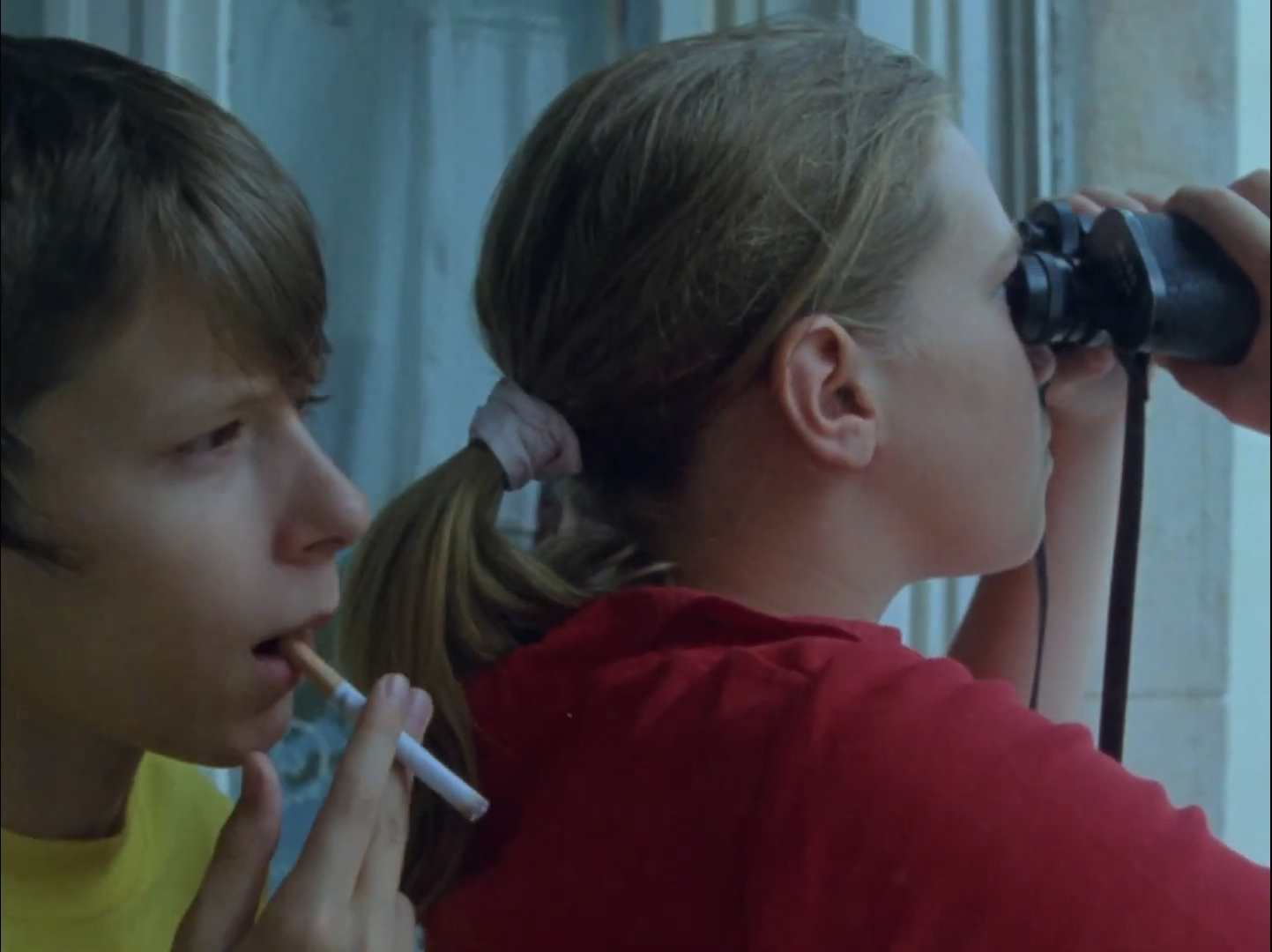 – What camera and lenses did you use, and what motivated your choice? I brought my own Aaton XTRplus kit to Serbia; it was the most logical solution given our limited budget. I love the Aaton’s design and ergonomics. Our camera assistant, Bojan Đurišić, had a lot of experience with 16mm and 35mm formats, but only on Arri cameras, so he was very enthusiastic about using the Aaton. We shot with a set of Zeiss S16 mk1 lenses. I believe it’s the first set designed for Super 16 that Zeiss commercially released. They’re good lenses—compact and fast. – Filming abroad is always an experience that blends expertise with discovery. Which cities did you film in, and what motivated your choice of locations? The film is set in Novi Sad and was shot in many places that exist in Iva’s memory, such as the burek shop, the Panda Video Club, and the apartment building where she grew up, where we filmed the children who live there. Again, due to budget constraints, we had to be creative with the filming locations and ended up shooting in eight different spots within the four-room apartment we had rented. Every day, we had to rearrange the furniture and sets to prepare for the next day’s shoot, but we had a fantastic small crew and everyone helped each other out. – What was your approach to lighting? What was the most difficult sequence to shoot, either technically or in terms of directing?
 – Speaking more specifically about your career path, what came first, the desire to become a director or a cinematographer? I got started thanks to my interest in photography, which led me to work for several years as a gaffer on sets in Los Angeles: feature films, music videos, some incredible, others appalling. For me, working as a gaffer was much more satisfying than being a camera assistant because the filming locations were always different, the technical challenges varied. I think that’s why I gravitated towards documentary filmmaking in my early days, because of the great diversity of personalities and locations, which changed daily from one project to the next. My desire to direct simply came from the idea that I wanted to make a film about railway workers in Azerbaijan. I think it was a bit of a reaction to other films I was working on as a cinematographer, a desire to try something different… – What are your upcoming projects (as a director or cinematographer)? I just finished shooting a concert film for directors Michael Palmieri and Donal Mosher and cinematographer Jarred Alterman, and I’m currently working on some other documentaries that are still under wraps. I’ve been working on a new film for far too long, about eight years now, but I should be finishing shooting soon. It’s a film about isolation, space travel, and the boundaries between worlds, shot on 16mm and digital. I’m always looking for new films to collaborate with other people, and I’m always excited to take my Aaton with me to new places! The film trailer Martin DiCicco’s website